|
시장보고서
상품코드
1964492
유체 공정 부품 시장 규모, 점유율, 성장 분석 : 유체 제어 밸브별, 펌프별, 호스 및 피팅별, 계측 기기별, 최종사용자별, 지역별 - 업계 예측(2026-2033년)Fluid Process Components Market Size, Share, and Growth Analysis, By Fluid Control Valves (Ball Valves, Gate Valves), By Pumps, By Hoses and Fittings, By Instrumentation, By End-user, By Region - Industry Forecast 2026-2033 |
||||||

세계의 유체 공정 부품 시장 규모는 2024년에 6억 6,100만 달러로 평가되었으며, 2025년 7억 1,388만 달러에서 2033년까지 13억 2,134만 달러로 성장할 전망입니다. 예측 기간(2026-2033년) 동안 CAGR은 8.0%로 예측됩니다.
세계 유체 공정 부품 시장은 주로 다양한 산업 분야에서 공정 효율성과 안전성 향상에 대한 요구로 인해 주도되고 있습니다. 석유 및 가스, 화학, 제약, 수처리 산업에서 액체 및 기체를 관리하는 사업자에게 정밀한 유량 제어, 신뢰할 수 있는 작동 메커니즘, 통합 진단 기능은 필수적입니다. 이러한 부품의 성능은 생산 연속성, 에너지 소비, 환경 규제 준수에 큰 영향을 미칩니다. 수동 시스템에서 자동화 시스템으로의 현저한 전환이 진행되어 운영 효율을 높이는 지능형 제어 밸브가 실현되었습니다. IoT가 촉진하는 연결성은 실시간 모니터링과 예지보전을 가능하게 하고, 예기치 못한 다운타임을 최소화하며, 수명주기 비용을 절감할 수 있습니다. 이러한 진화는 IoT 지원 개조 및 서비스 계약의 기회를 창출하고, 신흥 시장에서 확장 가능한 솔루션에 대한 투자를 유도하며, 전 세계적으로 탈탄소화 산업을 촉진하고 있습니다.
세계 유체 공정 부품 시장의 촉진요인
산업 자동화 추세는 제조 및 가공 환경에서 정확한 제어, 모니터링 및 원활한 통합을 실현하는 고품질 유체 공정 부품에 대한 수요를 크게 증가시키고 있습니다. 이에 따라 공급업체들은 부품의 성능과 상호운용성 향상에 주력하고 있으며, 이는 자동화 솔루션의 광범위한 채택을 촉진하고 첨단 밸브, 펌프, 센서, 제어장치의 선택을 촉진하고 있습니다. 이러한 자동화 목표와 부품의 기능성과의 시너지 효과는 혁신을 촉진하고, 공급업체의 투자를 촉진하고, 조달 선택에 영향을 미치며, 궁극적으로 프로세스 효율성 향상과 운영 변동성 최소화를 통해 지속적인 시장 성장에 기여하고 있습니다.
세계 유체 공정 부품 시장의 억제요인
첨단 유체 공정 부품의 구매, 설치 및 통합에 필요한 막대한 투자는 특히 수익성이 낮고 자산 수명주기가 긴 산업에서 잠재적 구매자에게 도전이 될 수 있습니다. 기업은 초기 비용을 피하기 위해 기능 강화를 늦추거나 더 간단한 대안을 선택할 수 있으며, 그 결과 업데이트 속도가 느려지고 고급 제품에 대한 수요가 제한될 수 있습니다. 또한, 투자 회수 기간이 길다는 인식과 새로운 구성요소의 도입에 전문적인 엔지니어링 지식이 필요하다는 요구사항은 기술적으로 진보된 솔루션이 존재함에도 불구하고 빠른 도입을 더욱 방해하여 시장 성장을 저해하고 있습니다.
세계 유체 공정 부품 시장 동향
세계 유체 공정 부품 시장은 디지털화와 스마트 커넥티비티로 인해 큰 변화를 겪고 있습니다. 첨단 디지털 센서와 산업용 IoT 플랫폼의 통합으로 유체 공정 시스템의 모니터링 및 유지보수가 강화되어 원격 모니터링 및 예지보전이 가능해졌습니다. 이러한 기술 혁신을 통해 자산 소유자는 가동 시간을 극대화하고 서비스 주기를 최적화하는 한편, 공급망 운영을 실시간 요구사항과 긴밀하게 연계할 수 있게 됩니다. 벤더들은 상호 운용 가능한 아키텍처와 소프트웨어 지원 제품을 우선시하고, 하드웨어와 분석 기능 및 서비스를 결합하여 전 세계 다양한 산업 생태계에서 보다 장기적인 고객 관계와 새로운 지속적인 수익 모델을 창출하고 있습니다.
자주 묻는 질문
목차
소개
조사 방법
주요 요약
시장 역학과 전망
주요 시장 인사이트
세계의 유체 공정 부품 시장 규모 : 유체 제어 밸브별 & CAGR(2026-2033년)
세계의 유체 공정 부품 시장 규모 : 펌프별 & CAGR(2026-2033년)
세계의 유체 공정 부품 시장 규모 : 호스 및 피팅별 & CAGR(2026-2033년)
세계의 유체 공정 부품 시장 규모 : 계측 기기별 & CAGR(2026-2033년)
세계의 유체 공정 부품 시장 규모 : 최종사용자별 & CAGR(2026-2033년)
세계의 유체 공정 부품 시장 규모 & CAGR(2026-2033년)
경쟁 정보
주요 기업 개요
결론과 제안
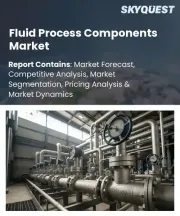
KSM 26.03.23Global Fluid Process Components Market size was valued at USD 661.0 Million in 2024 and is poised to grow from USD 713.88 Million in 2025 to USD 1321.34 Million by 2033, growing at a CAGR of 8.0% during the forecast period (2026-2033).
The global fluid process components market is primarily driven by the urgent need for enhanced process efficiency and safety within various industrial sectors. Precise flow control, dependable actuation, and integrated diagnostics are essential for operators managing liquids and gases across oil and gas, chemical, pharmaceutical, and water treatment industries. The performance of these components significantly affects production continuity, energy consumption, and adherence to environmental regulations. A notable transition from manual to automated systems has occurred, culminating in intelligent control valves that enhance operational efficiency. Connectivity, fueled by IoT, facilitates real-time monitoring and predictive maintenance, minimizing unplanned downtime and reducing lifecycle costs. This evolution creates opportunities for IoT-enabled retrofits and service contracts, attracting investment in scalable solutions within emerging markets and decarbonizing industries globally.
Top-down and bottom-up approaches were used to estimate and validate the size of the Global Fluid Process Components market and to estimate the size of various other dependent submarkets. The research methodology used to estimate the market size includes the following details: The key players in the market were identified through secondary research, and their market shares in the respective regions were determined through primary and secondary research. This entire procedure includes the study of the annual and financial reports of the top market players and extensive interviews for key insights from industry leaders such as CEOs, VPs, directors, and marketing executives. All percentage shares split, and breakdowns were determined using secondary sources and verified through Primary sources. All possible parameters that affect the markets covered in this research study have been accounted for, viewed in extensive detail, verified through primary research, and analyzed to get the final quantitative and qualitative data.
Global Fluid Process Components Market Segments Analysis
Global fluid process components market is segmented by fluid control valves, pumps, hoses and fittings, instrumentation, end-user and region. Based on fluid control valves, the market is segmented into Ball Valves, Gate Valves and Globe Valves. Based on pumps, the market is segmented into Centrifugal Pumps and Positive Displacement Pumps. Based on hoses and fittings, the market is segmented into Flexible Hoses and Metal Fittings. Based on instrumentation, the market is segmented into Flow Meters and Pressure Sensors. Based on end-user, the market is segmented into OEMs and Aftermarket. Based on region, the market is segmented into North America, Europe, Asia Pacific, Latin America and Middle East & Africa.
Driver of the Global Fluid Process Components Market
The growing trend of industrial automation is significantly boosting the demand for high-quality fluid process components that provide accurate control, monitoring, and seamless integration within manufacturing and processing environments. In response, suppliers are focused on enhancing the performance and interoperability of their components, which facilitates the wider adoption of automated solutions and promotes the selection of advanced valves, pumps, sensors, and control devices. This synergy between automation goals and component functionality stimulates innovation, drives supplier investments, and influences procurement choices, ultimately contributing to sustained market growth through increased process efficiency and minimized operational variability.
Restraints in the Global Fluid Process Components Market
The considerable investment needed for the acquisition, installation, and integration of advanced fluid process components poses a challenge for potential buyers, especially in industries characterized by narrow profit margins and extended asset lifecycles. Companies may delay enhancements or opt for simpler alternatives to evade initial expenses, resulting in reduced replacement rates and limited demand for high-end products. Moreover, the perception of extended payback periods, along with the requirement for specialized engineering expertise to deploy new components, further hinders swift adoption, thus constraining market growth despite the presence of technologically advanced solutions.
Market Trends of the Global Fluid Process Components Market
The Global Fluid Process Components market is experiencing a significant transformation driven by digitalization and smart connectivity. The integration of advanced digital sensors and industrial IoT platforms is enhancing the monitoring and maintenance of fluid process systems, allowing for remote monitoring and predictive diagnostics. This technological shift is enabling asset owners to maximize uptime and optimize service cycles, while closely aligning supply chain operations with real-time needs. Vendors are increasingly prioritizing interoperable architectures and software-enabled offerings, combining hardware with analytical capabilities and services, thereby creating longer-lasting customer relationships and new recurring revenue models across diverse industrial ecosystems worldwide.
Table of Contents
Introduction
- Objectives of the Study
- Market Definition & Scope
Research Methodology
- Research Process
- Secondary & Primary Data Methods
- Market Size Estimation Methods
Executive Summary
- Global Market Outlook
- Key Market Highlights
- Segmental Overview
- Competition Overview
Market Dynamics & Outlook
- Macro-Economic Indicators
- Drivers & Opportunities
- Restraints & Challenges
- Supply Side Trends
- Demand Side Trends
- Porters Analysis & Impact
- Competitive Rivalry
- Threat of Substitute
- Bargaining Power of Buyers
- Threat of New Entrants
- Bargaining Power of Suppliers
Key Market Insights
- Key Success Factors
- Market Impacting Factors
- Top Investment Pockets
- Ecosystem Mapping
- Market Attractiveness Index 2025
- PESTEL Analysis
- Regulatory Landscape
Global Fluid Process Components Market Size by Fluid Control Valves & CAGR (2026-2033)
- Market Overview
- Ball Valves
- Gate Valves
- Globe Valves
Global Fluid Process Components Market Size by Pumps & CAGR (2026-2033)
- Market Overview
- Centrifugal Pumps
- Single-stage Pumps
- Multi-stage Pumps
- Positive Displacement Pumps
- Gear Pumps
- Diaphragm Pumps
Global Fluid Process Components Market Size by Hoses and Fittings & CAGR (2026-2033)
- Market Overview
- Flexible Hoses
- Metal Fittings
Global Fluid Process Components Market Size by Instrumentation & CAGR (2026-2033)
- Market Overview
- Flow Meters
- Electromagnetic Flow Meters
- Ultrasonic Flow Meters
- Pressure Sensors
Global Fluid Process Components Market Size by End-user & CAGR (2026-2033)
- Market Overview
- OEMs
- Aftermarket
Global Fluid Process Components Market Size & CAGR (2026-2033)
- North America (Fluid Control Valves, Pumps, Hoses and Fittings, Instrumentation, End-user)
- US
- Canada
- Europe (Fluid Control Valves, Pumps, Hoses and Fittings, Instrumentation, End-user)
- Germany
- Spain
- France
- UK
- Italy
- Rest of Europe
- Asia Pacific (Fluid Control Valves, Pumps, Hoses and Fittings, Instrumentation, End-user)
- China
- India
- Japan
- South Korea
- Rest of Asia-Pacific
- Latin America (Fluid Control Valves, Pumps, Hoses and Fittings, Instrumentation, End-user)
- Mexico
- Brazil
- Rest of Latin America
- Middle East & Africa (Fluid Control Valves, Pumps, Hoses and Fittings, Instrumentation, End-user)
- GCC Countries
- South Africa
- Rest of Middle East & Africa
Competitive Intelligence
- Top 5 Player Comparison
- Market Positioning of Key Players, 2025
- Strategies Adopted by Key Market Players
- Recent Developments in the Market
- Company Market Share Analysis, 2025
- Company Profiles of All Key Players
- Company Details
- Product Portfolio Analysis
- Company's Segmental Share Analysis
- Revenue Y-O-Y Comparison (2023-2025)
Key Company Profiles
- Emerson Electric Co.
- Company Overview
- Business Segment Overview
- Financial Updates
- Key Developments
- Honeywell International Inc.
- Company Overview
- Business Segment Overview
- Financial Updates
- Key Developments
- Parker Hannifin Corporation
- Company Overview
- Business Segment Overview
- Financial Updates
- Key Developments
- Siemens AG
- Company Overview
- Business Segment Overview
- Financial Updates
- Key Developments
- Flowserve Corporation
- Company Overview
- Business Segment Overview
- Financial Updates
- Key Developments
- Valmet Oyj
- Company Overview
- Business Segment Overview
- Financial Updates
- Key Developments
- Alfa Laval AB
- Company Overview
- Business Segment Overview
- Financial Updates
- Key Developments
- Cameron International Corporation
- Company Overview
- Business Segment Overview
- Financial Updates
- Key Developments
- Gates Corporation
- Company Overview
- Business Segment Overview
- Financial Updates
- Key Developments
- ITT Inc.
- Company Overview
- Business Segment Overview
- Financial Updates
- Key Developments
- Metso Outotec Corporation
- Company Overview
- Business Segment Overview
- Financial Updates
- Key Developments
- KSB SE & Co. KGaA
- Company Overview
- Business Segment Overview
- Financial Updates
- Key Developments
- SMC Corporation
- Company Overview
- Business Segment Overview
- Financial Updates
- Key Developments
- Burkert Fluid Control Systems
- Company Overview
- Business Segment Overview
- Financial Updates
- Key Developments
- Swagelok Company
- Company Overview
- Business Segment Overview
- Financial Updates
- Key Developments
- Grundfos Holding A/S
- Company Overview
- Business Segment Overview
- Financial Updates
- Key Developments
- Azbil Corporation
- Company Overview
- Business Segment Overview
- Financial Updates
- Key Developments
- Xylem Inc.
- Company Overview
- Business Segment Overview
- Financial Updates
- Key Developments
- SPX Flow, Inc.
- Company Overview
- Business Segment Overview
- Financial Updates
- Key Developments
- Badger Meter, Inc.
- Company Overview
- Business Segment Overview
- Financial Updates
- Key Developments