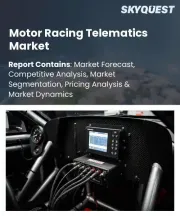
|
시장보고서
상품코드
1964625
모터 레이싱 텔레매틱스 시장 규모, 점유율, 성장 분석 : 유형별, 용도 유형별, 차량 유형별, 기술 유형별, 최종사용자별, 도입 유형별, 지역별 - 업계 예측(2026-2033년)Motor Racing Telematics Market Size, Share, and Growth Analysis, By Type, By Application Types, By Vehicle Type, By Technology Type, By End User, By Deployment Type, By Region - Industry Forecast 2026-2033 |
||||||

세계의 모터 레이싱 텔레매틱스 시장 규모는 2024년에 41억 달러로 평가되었고, 2025년 44억 9,000만 달러에서 2033년까지 92억 달러로 성장할 전망입니다. 예측 기간(2026-2033년) CAGR은 9.4%를 나타낼 것으로 예측됩니다.
경쟁 우위를 추구하는 팀과 제조업체들 사이에서 성능 최적화 및 안전 데이터 강화에 대한 수요가 증가함에 따라 세계 모터 레이싱 텔레매틱스 시장의 성장을 주도하고 있습니다. 이 시장은 센서, 데이터 수집 시스템, 텔레메트리 링크, 분석 플랫폼 등 중요한 차량 역학, 엔진 지표, 운전자 데이터를 포착하고 적시에 의사결정을 내릴 수 있도록 하는 다양한 기술을 포함하고 있습니다. 고급 분석 기술과 머신러닝의 통합은 매우 중요하며, 원시 데이터를 의미 있는 인사이트으로 전환하여 신뢰성과 전략성을 높이고 상업적 매력을 향상시킬 수 있는 의미 있는 인사이트으로 전환할 수 있습니다. 이러한 발전을 통해 팀은 예측 알고리즘을 활용하여 부품 관리와 피트 전략을 개선하고, 레이스 결과를 향상시킬 뿐만 아니라, 스폰서 확보와 방송 및 e스포츠 채널을 통한 몰입형 팬 경험을 창출할 수 있게 되었습니다. 그 결과, OEM은 도로 차량 개발에 최첨단 텔레매틱스를 도입하여 시장의 지속적인 확대에 기여하고 있습니다.
세계 모터 레이싱 텔레매틱스 시장 성장 촉진요인
첨단 센서 시스템을 텔레매틱스 플랫폼에 통합함으로써 정확한 차량 역학, 생체 정보, 환경 데이터를 수집하여 레이싱 팀과 엔지니어의 성능 분석 및 의사결정을 강화할 수 있습니다. 이러한 고정밀 데이터에 대한 접근은 드라이버 육성 및 전략적 레이스 계획의 개선뿐만 아니라 차량 셋업의 최적화에 기여하며, 텔레매틱스 솔루션은 경쟁 우위를 확보하는 데 필수적인 요소로 자리 잡았습니다. 이러한 시스템이 제공하는 고급 기능은 제조업체와 레이싱 팀이 첨단 통합 솔루션에 대한 투자를 촉진하고, 센서 개발자와 소프트웨어 개발자의 협력을 강화하며, 프로 및 아마추어 레이싱 용도를 위한 맞춤형 텔레매틱스 제품 제작을 촉진합니다. 를 자극하고 있습니다.
세계 모터 레이싱 텔레매틱스 시장 성장 억제요인
세계 모터 레이싱 텔레매틱스 시장은 주로 도입 및 통합에 따른 높은 비용이 주요 과제입니다. 이러한 비용은 특히 제한된 예산으로 활동하는 소규모 레이싱 팀이나 풀뿌리 참가자들의 도입률을 억제할 수 있습니다. 센서 설치, 데이터 인프라 구축, 기존 차량 시스템에 맞는 솔루션 커스터마이징에 따른 재정적 부담은 잠재적인 투자를 가로막고, 종합적인 시스템 도입이 아닌 단계적 또는 부분적인 도입으로 이어질 수 있습니다. 또한, 텔레매틱스의 잠재력을 최대한 활용하기 위한 재정적 위험과 전문 기술 지식의 필요성에 대한 우려도 시장 성장을 늦추는 요인으로 작용하고 있으며, 수요는 주로 기존 팀과 제조업체에 의해 주도되고 있습니다.
세계 모터 레이싱 텔레매틱스 시장 동향
세계 모터 레이싱 텔레매틱스 시장에서는 팀들이 머신러닝과 고급 분석을 활용함에 따라 AI 기반 성능 분석으로 전환하는 움직임이 두드러지게 나타나고 있습니다. 이러한 추세는 종합적인 텔레매틱스 데이터 분석을 통해 실시간 코칭, 전략 최적화, 차량 설정 최적화를 가능하게 합니다. 고급 알고리즘을 통해 멀티 센서의 입력 데이터를 사용자 친화적인 대시보드로 변환하여 피트 전략 및 드라이버 육성을 위한 지침으로 활용합니다. 이러한 혁신은 엔지니어, 데이터 사이언스자, 운전자 간의 긴밀한 협업을 촉진하는 동시에 서비스 제공업체에 새로운 서비스 지향적 수익원을 창출하고 있습니다. 하드웨어에서 소프트웨어 중심의 우위로의 전환에 따라, 팀은 지속적인 성능 향상을 실현하고 세계 레이싱 환경경쟁 구도를 재편하고 있습니다.
자주 묻는 질문
목차
서론
조사 방법
주요 요약
시장 역학과 전망
주요 시장 인사이트
세계의 모터 레이싱 텔레매틱스 시장 규모 : 유형별&CAGR(2026-2033)
세계의 모터 레이싱 텔레매틱스 시장 규모 : 용도 유형별&CAGR(2026-2033)
세계의 모터 레이싱 텔레매틱스 시장 규모 : 차량 유형별&CAGR(2026-2033)
세계의 모터 레이싱 텔레매틱스 시장 규모 : 기술 유형별&CAGR(2026-2033)
세계의 모터 레이싱 텔레매틱스 시장 규모 : 최종사용자별&CAGR(2026-2033)
세계의 모터 레이싱 텔레매틱스 시장 규모 : 도입 유형별&CAGR(2026-2033)
세계의 모터 레이싱 텔레매틱스 시장 규모 : 지역별&CAGR(2026-2033)
경쟁 정보
주요 기업 개요
결론과 제안
LSH 26.03.31Global Motor Racing Telematics Market size was valued at USD 4.1 Billion in 2024 and is poised to grow from USD 4.49 Billion in 2025 to USD 9.2 Billion by 2033, growing at a CAGR of 9.4% during the forecast period (2026-2033).
The global motor racing telematics market is being propelled by an increasing demand for optimization of performance and enhanced safety data among teams and manufacturers striving for competitive advantages. This market encompasses a range of technologies, including sensors, data acquisition systems, telemetry links, and analytics platforms that capture critical vehicle dynamics, engine metrics, and driver data for timely decision-making. The integration of advanced analytics and machine learning has proven pivotal, enabling the transformation of raw data into meaningful insights that enhance reliability and strategy while boosting commercial appeal. These advancements allow teams to utilize predictive algorithms for better component management and pit strategies, which not only improve race outcomes but also attract sponsorship and create immersive fan experiences through broadcast and e-sports channels. Consequently, original equipment manufacturers are adopting cutting-edge telematics for road vehicle development, contributing to sustained market expansion.
Top-down and bottom-up approaches were used to estimate and validate the size of the Global Motor Racing Telematics market and to estimate the size of various other dependent submarkets. The research methodology used to estimate the market size includes the following details: The key players in the market were identified through secondary research, and their market shares in the respective regions were determined through primary and secondary research. This entire procedure includes the study of the annual and financial reports of the top market players and extensive interviews for key insights from industry leaders such as CEOs, VPs, directors, and marketing executives. All percentage shares split, and breakdowns were determined using secondary sources and verified through Primary sources. All possible parameters that affect the markets covered in this research study have been accounted for, viewed in extensive detail, verified through primary research, and analyzed to get the final quantitative and qualitative data.
Global Motor Racing Telematics Market Segments Analysis
Global motor racing telematics market is segmented by type, application types, vehicle type, technology type, end user, deployment type and region. Based on type, the market is segmented into Motor Racing Telematics and Remote Location System. Based on application types, the market is segmented into Fleet Management, Insurance Telematics, Vehicle Tracking, Driver Behavior Monitoring and Maintenance and Diagnostics. Based on vehicle type, the market is segmented into Passenger Cars, Motorcycles, Commercial Vehicles, Heavy-Duty Trucks and Fleet Vehicles. Based on technology type, the market is segmented into GPS-Based Telematics, Cellular Network Telematics, Satellite Telematics, Integrated Telematics Systems and Hardware-Based Solutions. Based on end user, the market is segmented into Individual Consumers, Logistics Companies, Insurance Firms, Government and Public Sector and Ride-Hailing Services. Based on deployment type, the market is segmented into Cloud-Based Telematics, On-Premises Telematics, Hybrid Deployment, Embedded Telematics and Mobile Telematics Solutions. Based on region, the market is segmented into North America, Europe, Asia Pacific, Latin America and Middle East & Africa.
Driver of the Global Motor Racing Telematics Market
The integration of sophisticated sensor systems into telematics platforms allows for the collection of accurate vehicle dynamics, biometric information, and environmental data, enhancing performance analysis and decision-making for racing teams and engineers. This access to high-fidelity data not only improves driver coaching and strategic race planning but also optimizes vehicle setups, making telematics solutions crucial for gaining a competitive edge. The heightened capabilities provided by these systems attract manufacturers and racing teams to invest in advanced integrated solutions, promote collaboration between sensor and software developers, and stimulate the creation of tailored telematics offerings for both professional and amateur racing applications.
Restraints in the Global Motor Racing Telematics Market
The Global Motor Racing Telematics market faces significant challenges primarily due to the high costs associated with implementation and integration. These expenses can restrict adoption rates, especially for smaller racing teams and grassroots participants operating within tight budgets. The financial burden of installing sensors, establishing data infrastructure, and customizing solutions to fit existing vehicle systems may hinder potential investment and lead to incremental or partial implementation instead of comprehensive systems. Additionally, concerns regarding financial risk and the requirement for specialized technical knowledge to harness the full potential of telematics contribute to a slower market growth, with demand primarily driven by well-established teams and manufacturers.
Market Trends of the Global Motor Racing Telematics Market
The Global Motor Racing Telematics market is experiencing a notable shift towards AI-driven performance insights as teams leverage machine learning and advanced analytics. This trend empowers real-time coaching, strategic refinement, and optimal vehicle setups by analyzing comprehensive telematics data. Enhanced algorithms translate multi-sensor inputs into user-friendly dashboards that guide pit strategies and driver development. Such innovations are fostering closer collaboration among engineers, data scientists, and drivers, while also creating new service-oriented revenue streams for providers. As the emphasis transitions from hardware to software-driven advantages, teams can achieve continuous performance enhancements, reshaping competitive dynamics across the global racing landscape.
Table of Contents
Introduction
- Objectives of the Study
- Market Definition & Scope
Research Methodology
- Research Process
- Secondary & Primary Data Methods
- Market Size Estimation Methods
Executive Summary
- Global Market Outlook
- Key Market Highlights
- Segmental Overview
- Competition Overview
Market Dynamics & Outlook
- Macro-Economic Indicators
- Drivers & Opportunities
- Restraints & Challenges
- Supply Side Trends
- Demand Side Trends
- Porters Analysis & Impact
- Competitive Rivalry
- Threat of Substitute
- Bargaining Power of Buyers
- Threat of New Entrants
- Bargaining Power of Suppliers
Key Market Insights
- Key Success Factors
- Market Impacting Factors
- Top Investment Pockets
- Ecosystem Mapping
- Market Attractiveness Index 2025
- PESTEL Analysis
- Regulatory Landscape
Global Motor Racing Telematics Market Size by Type & CAGR (2026-2033)
- Market Overview
- Motor Racing Telematics
- Remote Location System
Global Motor Racing Telematics Market Size by Application Types & CAGR (2026-2033)
- Market Overview
- Fleet Management
- Insurance Telematics
- Vehicle Tracking
- Driver Behavior Monitoring
- Maintenance and Diagnostics
Global Motor Racing Telematics Market Size by Vehicle Type & CAGR (2026-2033)
- Market Overview
- Passenger Cars
- Motorcycles
- Commercial Vehicles
- Heavy-Duty Trucks
- Fleet Vehicles
Global Motor Racing Telematics Market Size by Technology Type & CAGR (2026-2033)
- Market Overview
- GPS-Based Telematics
- Cellular Network Telematics
- Satellite Telematics
- Integrated Telematics Systems
- Hardware-Based Solutions
Global Motor Racing Telematics Market Size by End User & CAGR (2026-2033)
- Market Overview
- Individual Consumers
- Logistics Companies
- Insurance Firms
- Government and Public Sector
- Ride-Hailing Services
Global Motor Racing Telematics Market Size by Deployment Type & CAGR (2026-2033)
- Market Overview
- Cloud-Based Telematics
- On-Premises Telematics
- Hybrid Deployment
- Embedded Telematics
- Mobile Telematics Solutions
Global Motor Racing Telematics Market Size & CAGR (2026-2033)
- North America (Type, Application Types, Vehicle Type, Technology Type, End User, Deployment Type)
- US
- Canada
- Europe (Type, Application Types, Vehicle Type, Technology Type, End User, Deployment Type)
- Germany
- Spain
- France
- UK
- Italy
- Rest of Europe
- Asia Pacific (Type, Application Types, Vehicle Type, Technology Type, End User, Deployment Type)
- China
- India
- Japan
- South Korea
- Rest of Asia-Pacific
- Latin America (Type, Application Types, Vehicle Type, Technology Type, End User, Deployment Type)
- Mexico
- Brazil
- Rest of Latin America
- Middle East & Africa (Type, Application Types, Vehicle Type, Technology Type, End User, Deployment Type)
- GCC Countries
- South Africa
- Rest of Middle East & Africa
Competitive Intelligence
- Top 5 Player Comparison
- Market Positioning of Key Players, 2025
- Strategies Adopted by Key Market Players
- Recent Developments in the Market
- Company Market Share Analysis, 2025
- Company Profiles of All Key Players
- Company Details
- Product Portfolio Analysis
- Company's Segmental Share Analysis
- Revenue Y-O-Y Comparison (2023-2025)
Key Company Profiles
- Agero
- Company Overview
- Business Segment Overview
- Financial Updates
- Key Developments
- Airbiquity
- Company Overview
- Business Segment Overview
- Financial Updates
- Key Developments
- Continental
- Company Overview
- Business Segment Overview
- Financial Updates
- Key Developments
- Verizon Telematics
- Company Overview
- Business Segment Overview
- Financial Updates
- Key Developments
- Visteon Corporation
- Company Overview
- Business Segment Overview
- Financial Updates
- Key Developments
- AT&T
- Company Overview
- Business Segment Overview
- Financial Updates
- Key Developments
- Aptiv Plc
- Company Overview
- Business Segment Overview
- Financial Updates
- Key Developments
- Comtech Telecommunications
- Company Overview
- Business Segment Overview
- Financial Updates
- Key Developments
- Ericsson
- Company Overview
- Business Segment Overview
- Financial Updates
- Key Developments
- OCTO Telematics S.p.A
- Company Overview
- Business Segment Overview
- Financial Updates
- Key Developments
- PTC Inc.
- Company Overview
- Business Segment Overview
- Financial Updates
- Key Developments
- Robert Bosch GmbH
- Company Overview
- Business Segment Overview
- Financial Updates
- Key Developments
- TomTom International
- Company Overview
- Business Segment Overview
- Financial Updates
- Key Developments
- Valeo SA
- Company Overview
- Business Segment Overview
- Financial Updates
- Key Developments
- Vodafone Group Plc
- Company Overview
- Business Segment Overview
- Financial Updates
- Key Developments
- Magneti Marelli
- Company Overview
- Business Segment Overview
- Financial Updates
- Key Developments
- DXC Technology Co.
- Company Overview
- Business Segment Overview
- Financial Updates
- Key Developments
- Fleet Complete
- Company Overview
- Business Segment Overview
- Financial Updates
- Key Developments
- Geotab Inc.
- Company Overview
- Business Segment Overview
- Financial Updates
- Key Developments
- Teletrac Navman
- Company Overview
- Business Segment Overview
- Financial Updates
- Key Developments