|
시장보고서
상품코드
1973195
아연 공기 배터리 시장 규모, 점유율, 성장 분석 : 배터리 유형별, 형상별, 용량 범위별, 전극 재료별, 용도별, 지역별 - 업계 예측(2026-2033년)Zinc Air Batteries Market Size, Share, and Growth Analysis, By Battery Type (Rechargeable, Non-Rechargeable), By Form Factor (Button Cells, Coin Cells), By Capacity Range, By Electrode Material, By Application, By Region - Industry Forecast 2026-2033 |
||||||

세계의 아연 공기 배터리 시장 규모는 2024년에 1억 3,420만 달러로 평가되었으며, 2025년 1억 4,185만 달러에서 2033년까지 2억 2,102만 달러로 성장할 전망입니다. 예측 기간(2026-2033년) 동안 CAGR은 5.7%로 예측됩니다.
세계 아연 공기 배터리 시장은 안전하고 비용 효율적이며 고에너지 저장 솔루션에 대한 수요에 힘입어 견조한 성장세를 보이고 있습니다. 초기에는 보청기용으로 사용되었으나, 현재는 백업 전원, 재생에너지 통합 등 다양한 용도로 확대되어 탈탄소화 및 에너지 안보의 요구에 부응하고 있습니다. 제조 기술과 공급망의 발전은 신흥 시장에서의 채택 확대를 촉진하고 있습니다. 공기 음극 촉매, 전해질 조성, 셀 구조의 혁신으로 배터리 효율과 수명을 향상시키는 동시에 소유비용을 절감하고 있습니다. 또한, 납축배터리의 규제 전환과 리튬 공급에 대한 우려가 아연계 대체품으로의 전환을 촉진하고, 투자 유치와 생산 확대로 이어지고 있습니다. AI 기술의 활용은 설계 최적화 및 제조 공정 개선을 더욱 가속화하여 다양한 산업 분야에서 아연 공기 배터리의 매력을 높이고 있습니다.
세계 아연 공기 배터리 시장의 촉진요인
세계 아연 공기 배터리 시장은 높은 에너지 밀도와 경량 설계와 같은 본 배터리의 장점에 의해 주도되고 있습니다. 이는 보청기, 웨어러블 기기, 휴대형 가젯 등 휴대용 민생 전자기기에서 가볍고 내구성이 뛰어난 전원에 대한 수요 증가와 맞물려 있습니다. 제조업체들은 장비의 수명을 늘리면서 크기와 무게를 줄이는 기술 혁신에 초점을 맞추고 있으며, 아연 공기 배터리 기술의 발전과 공급망 확장을 위한 투자를 촉진하고 있습니다. 또한, 소비자의 편의성에 대한 요구가 높아지고 배터리 교체 주기가 길어짐에 따라, 각 제조사들이 제품 라인에 아연 공기 배터리 옵션을 추가하여 다양화를 꾀하는 계기가 되었습니다.
세계 아연 공기 배터리 시장의 억제요인
세계 아연 공기 배터리 시장은 성장 잠재력을 저해하는 몇 가지 도전에 직면해 있습니다. 제한된 사이클 수명과 신뢰할 수 있는 충전 기능과 관련된 복잡성에 대한 우려는 빈번한 사용과 장시간 작동이 필요한 애플리케이션에서 실용성을 떨어뜨리고 있습니다. 이러한 매력의 감소는 특히 소비자 전자제품과 차량 파워트레인에 영향을 미치고 있으며, 이해관계자들은 더 나은 유지보수성과 긴 수명을 약속하는 기존 충전식 기술을 선호하는 경향이 있습니다. 또한, 신뢰할 수 있는 장수명 충전 가능성에 대한 지속적인 불확실성은 시스템 통합업체와 OEM 제조업체에 일정한 경각심을 불러일으키고 있습니다. 이러한 망설임은 결국 조달 결정에 영향을 미치고, 투자를 억제하고, 전체 시장의 발전을 제한하고, 장기적인 비용 우위에 영향을 미칩니다.
세계 아연 공기 배터리 시장 동향
세계 아연 공기 배터리 시장은 웨어러블 기기 및 IoT 기기의 보급 확대로 인해 괄목할만한 성장세를 보이고 있습니다. 아연공기전지의 화학적 특성을 활용한 경량 및 소형 설계, 안정적인 저소비 전력 방전, 본질적인 안전성 등의 특징이 이러한 용도에 특히 적합하기 때문입니다. 제조업체들은 플렉서블 패키징과 마이크로 폼팩터 분야에서 혁신을 거듭하고 있으며, 이를 통해 첨단 센서, 의료용 패치, 소비자 액세서리를 개발할 수 있게 되었습니다. 안전성과 제조성이 최우선 과제로 떠오르면서 업계 협력이 활성화되고, 제품 라인이 확대되고 있습니다. 이러한 변화는 신뢰성을 해치지 않는 긴 수명과 사용자 중심의 설계를 중시하는 것으로, 시장의 지속적인 성장을 견인하고 있습니다.
자주 묻는 질문
목차
소개
조사 방법
주요 요약
시장 역학과 전망
주요 시장 인사이트
세계의 아연 공기 배터리 시장 규모 : 배터리 유형별 & CAGR(2026-2033년)
세계의 아연 공기 배터리 시장 규모 : 폼팩터별 & CAGR(2026-2033년)
세계의 아연 공기 배터리 시장 규모 : 용량 범위별 & CAGR(2026-2033년)
세계의 아연 공기 배터리 시장 규모 : 전극 재료별 & CAGR(2026-2033년)
세계의 아연 공기 배터리 시장 규모 : 용도별 & CAGR(2026-2033년)
세계의 아연 공기 배터리 시장 규모 & CAGR(2026-2033년)
경쟁 정보
주요 기업 개요
결론과 제안
KSM 26.03.30Global Zinc Air Batteries Market size was valued at USD 134.2 Million in 2024 and is poised to grow from USD 141.85 Million in 2025 to USD 221.02 Million by 2033, growing at a CAGR of 5.7% during the forecast period (2026-2033).
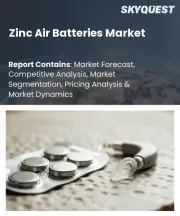
The global zinc air batteries market is experiencing robust growth driven by the demand for safe, cost-effective, and high-energy storage solutions. Originally utilized in hearing aids, zinc air batteries are expanding into diverse applications such as backup power and renewable energy integration, addressing decarbonization and energy security needs. Advances in manufacturing and supply chains are facilitating increased adoption in emerging markets. Innovations in air cathode catalysts, electrolyte formulations, and cell architecture are enhancing battery efficiency and longevity while reducing ownership costs. Additionally, regulatory shifts away from lead-acid batteries and concerns over lithium supply encourage a shift toward zinc-based alternatives, attracting investments and expanding production. AI technologies are further accelerating innovation, optimizing designs, and improving manufacturing processes, thus enhancing the appeal of zinc air batteries to various industries.
Top-down and bottom-up approaches were used to estimate and validate the size of the Global Zinc Air Batteries market and to estimate the size of various other dependent submarkets. The research methodology used to estimate the market size includes the following details: The key players in the market were identified through secondary research, and their market shares in the respective regions were determined through primary and secondary research. This entire procedure includes the study of the annual and financial reports of the top market players and extensive interviews for key insights from industry leaders such as CEOs, VPs, directors, and marketing executives. All percentage shares split, and breakdowns were determined using secondary sources and verified through Primary sources. All possible parameters that affect the markets covered in this research study have been accounted for, viewed in extensive detail, verified through primary research, and analyzed to get the final quantitative and qualitative data.
Global Zinc Air Batteries Market Segments Analysis
Global zinc air batteries market is segmented by battery type, form factor, capacity range, electrode material, application and region. Based on battery type, the market is segmented into Rechargeable and Non-Rechargeable. Based on form factor, the market is segmented into Button Cells, Coin Cells, Cylindrical Cells, Pouch Cells and Prismatic Cells. Based on capacity range, the market is segmented into 100 mAh, 100-500 mAh, 500-1000 mAh, 1000-2000 mAh and > 2000 mAh. Based on electrode material, the market is segmented into Zinc-Manganese Dioxide, Zinc-Iron Oxide, Zinc-Nickel Oxide, Zinc-Silver Oxide and Other Advanced Electrodes. Based on application, the market is segmented into Consumer Electronics, Medical Devices, Military Defense, Automotive, Aerospace, Industrial and Others. Based on region, the market is segmented into North America, Europe, Asia Pacific, Latin America and Middle East & Africa.
Driver of the Global Zinc Air Batteries Market
The Global Zinc Air Batteries market is being propelled by the advantages these batteries offer, including their high energy-to-weight ratio and straightforward design. This aligns well with the increasing need for lightweight and durable power sources in portable consumer electronics, particularly in devices like hearing aids, wearables, and handheld gadgets. Manufacturers are focusing on innovations that extend device longevity while reducing size and weight, encouraging investments in zinc air technology advancements and supply chain growth. Additionally, the rising consumer demand for convenience and longer periods between battery replacements is driving greater adoption and inspiring manufacturers to diversify by incorporating zinc air battery options within their product lines.
Restraints in the Global Zinc Air Batteries Market
The Global Zinc Air Batteries market faces several challenges that hinder its growth potential. Concerns about the limited cycle life and the complexities associated with dependable recharging capabilities reduce their practicality for applications requiring frequent use or extended operational durations. This diminished appeal particularly affects consumer electronics and vehicle powertrains, as stakeholders prefer established rechargeable technologies that promise better maintenance and longevity. Additionally, the ongoing uncertainty regarding dependable, long-lasting rechargeability instills a level of caution among system integrators and original equipment manufacturers. This hesitancy ultimately influences procurement decisions, stifles investment, and restricts overall market development, impacting long-term cost advantages.
Market Trends of the Global Zinc Air Batteries Market
The Global Zinc Air Batteries market is experiencing significant momentum due to the increasing adoption of wearables and IoT devices. The unique properties of zinc air chemistry-such as its lightweight, compact design, stable low drain discharge, and inherent safety-make it particularly suited for these applications. Manufacturers are innovating in flexible packaging and micro form factors, enabling the development of advanced sensors, medical patches, and consumer accessories. As safety and manufacturability become paramount, industry collaborations are flourishing, allowing for expanded product offerings. This shift emphasizes long-lasting, user-centered design that does not compromise on reliability, driving sustained growth in the market.
Table of Contents
Introduction
- Objectives of the Study
- Market Definition & Scope
Research Methodology
- Research Process
- Secondary & Primary Data Methods
- Market Size Estimation Methods
Executive Summary
- Global Market Outlook
- Key Market Highlights
- Segmental Overview
- Competition Overview
Market Dynamics & Outlook
- Macro-Economic Indicators
- Drivers & Opportunities
- Restraints & Challenges
- Supply Side Trends
- Demand Side Trends
- Porters Analysis & Impact
- Competitive Rivalry
- Threat of Substitute
- Bargaining Power of Buyers
- Threat of New Entrants
- Bargaining Power of Suppliers
Key Market Insights
- Key Success Factors
- Market Impacting Factors
- Top Investment Pockets
- Ecosystem Mapping
- Market Attractiveness Index 2025
- PESTEL Analysis
- Regulatory Landscape
Global Zinc Air Batteries Market Size by Battery Type & CAGR (2026-2033)
- Market Overview
- Rechargeable
- Non-Rechargeable
Global Zinc Air Batteries Market Size by Form Factor & CAGR (2026-2033)
- Market Overview
- Button Cells
- Coin Cells
- Cylindrical Cells
- Pouch Cells
- Prismatic Cells
Global Zinc Air Batteries Market Size by Capacity Range & CAGR (2026-2033)
- Market Overview
- 100 mAh
- 100-500 mAh
- 500-1000 mAh
- 1000-2000 mAh
- > 2000 mAh
Global Zinc Air Batteries Market Size by Electrode Material & CAGR (2026-2033)
- Market Overview
- Zinc-Manganese Dioxide
- Zinc-Iron Oxide
- Zinc-Nickel Oxide
- Zinc-Silver Oxide
- Other Advanced Electrodes
Global Zinc Air Batteries Market Size by Application & CAGR (2026-2033)
- Market Overview
- Consumer Electronics
- Small Devices
- Hearing Aids
- Others
- Medical Devices
- Military Defense
- Automotive
- Aerospace
- Industrial
- Others
Global Zinc Air Batteries Market Size & CAGR (2026-2033)
- North America (Battery Type, Form Factor, Capacity Range, Electrode Material, Application)
- US
- Canada
- Europe (Battery Type, Form Factor, Capacity Range, Electrode Material, Application)
- Germany
- Spain
- France
- UK
- Italy
- Rest of Europe
- Asia Pacific (Battery Type, Form Factor, Capacity Range, Electrode Material, Application)
- China
- India
- Japan
- South Korea
- Rest of Asia-Pacific
- Latin America (Battery Type, Form Factor, Capacity Range, Electrode Material, Application)
- Mexico
- Brazil
- Rest of Latin America
- Middle East & Africa (Battery Type, Form Factor, Capacity Range, Electrode Material, Application)
- GCC Countries
- South Africa
- Rest of Middle East & Africa
Competitive Intelligence
- Top 5 Player Comparison
- Market Positioning of Key Players, 2025
- Strategies Adopted by Key Market Players
- Recent Developments in the Market
- Company Market Share Analysis, 2025
- Company Profiles of All Key Players
- Company Details
- Product Portfolio Analysis
- Company's Segmental Share Analysis
- Revenue Y-O-Y Comparison (2023-2025)
Key Company Profiles
- Duracell
- Company Overview
- Business Segment Overview
- Financial Updates
- Key Developments
- Nantenergy
- Company Overview
- Business Segment Overview
- Financial Updates
- Key Developments
- ZAF Energy System
- Company Overview
- Business Segment Overview
- Financial Updates
- Key Developments
- Varta AG
- Company Overview
- Business Segment Overview
- Financial Updates
- Key Developments
- Zinc8 Energy Solutions
- Company Overview
- Business Segment Overview
- Financial Updates
- Key Developments
- Electric Fuel Battery Corporation
- Company Overview
- Business Segment Overview
- Financial Updates
- Key Developments
- Thunderzee
- Company Overview
- Business Segment Overview
- Financial Updates
- Key Developments
- Phinenergy
- Company Overview
- Business Segment Overview
- Financial Updates
- Key Developments
- EnerSys
- Company Overview
- Business Segment Overview
- Financial Updates
- Key Developments
- Mitsubishi Materials Corporation
- Company Overview
- Business Segment Overview
- Financial Updates
- Key Developments
- GP Batteries
- Company Overview
- Business Segment Overview
- Financial Updates
- Key Developments
- AZA Battery
- Company Overview
- Business Segment Overview
- Financial Updates
- Key Developments
- Eos Energy Enterprises
- Company Overview
- Business Segment Overview
- Financial Updates
- Key Developments
- Zinc Power
- Company Overview
- Business Segment Overview
- Financial Updates
- Key Developments
- Vionx Energy
- Company Overview
- Business Segment Overview
- Financial Updates
- Key Developments
- Zinc Air Battery Corporation
- Company Overview
- Business Segment Overview
- Financial Updates
- Key Developments
- Ravoyac
- Company Overview
- Business Segment Overview
- Financial Updates
- Key Developments
- Renata SA
- Company Overview
- Business Segment Overview
- Financial Updates
- Key Developments
- PowerZinc
- Company Overview
- Business Segment Overview
- Financial Updates
- Key Developments
- GP Batteries International
- Company Overview
- Business Segment Overview
- Financial Updates
- Key Developments