|
시장보고서
상품코드
1973328
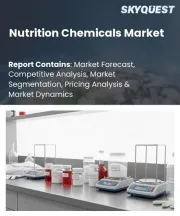
영양 화학제품 시장 규모, 점유율, 성장 분석 : 유형별, 원료별, 제제 유형별, 용도별, 최종사용자별, 지역별-업계 예측(2026-2033년)Nutrition Chemicals Market Size, Share, and Growth Analysis, By Type (Vitamins, Minerals), By Source (Naturally Occurring, Synthetic), By Formulation Type, By Application, By End-User, By Region - Industry Forecast 2026-2033 |
||||||

세계의 영양 화학제품 시장 규모는 2024년에 117억 달러로 평가되었고, 2025년 123억 3,000만 달러에서 2033년까지 187억 8,000만 달러로 성장할 전망입니다. 또한, 예측 기간(2026-2033년) CAGR은 5.4%를 나타낼 것으로 예측됩니다.
세계 영양화학제품 시장은 식품, 사료, 의약품, 퍼스널케어 분야에서 활용되는 비타민, 아미노산, 카로티노이드, 미네랄, 기능성 생리활성물질 등 필수 화합물공급망을 포괄하고 있습니다. 이러한 화합물은 공중보건 향상, 농업 생산성 향상, 제품 차별화를 촉진하는 데 매우 중요한 역할을 하고 있습니다. 시장은 전통적인 방식에서 비용 절감과 제품 다양화를 실현하는 현대적 생명공학 혁신으로 전환하며 크게 진화해 왔습니다. 건강에 대한 관심 증가와 인구 통계학적 변화가 수요를 증가시키는 한편, 정밀 발효 및 마이크로 캡슐화 기술의 발전으로 생산 효율과 원료 안정성이 향상되고 있습니다. AI의 적용은 배합 공정을 더욱 효율화하여 개발 주기를 단축하고 원료 조합을 최적화할 수 있습니다. 이러한 역동적인 시장 환경은 수직적 통합과 새로운 공급망에 대한 투자를 촉진하여 성장을 가속화하고 차별화 기회를 확대하고 있습니다.
세계 영양 화학제품 시장 성장 촉진요인
강화 식품 및 음료에 대한 소비자의 선호도가 높아짐에 따라 세계 영양화학제품 시장의 주요 촉진요인으로 작용하고 있습니다. 이러한 추세에 따라 제조업체들은 제품의 영양 프로파일을 개선하고 경쟁 구도에서 차별화를 위해 제품의 재배합을 촉진하고 있습니다. 이에 따라 원료 공급업체들은 제품 포트폴리오를 확장하고, 용도 지원 및 품질 보증을 강화해야 하며, 식품, 음료, 건강보조식품을 포함한 다양한 분야에서 영양화학물질의 채택을 가속화해야 합니다. 배합 기술자와 원료 공급업체 간의 공동 혁신은 제품 개발의 기술적 과제를 완화하고, 브랜드가 소비자의 요구에 효과적으로 대응하고 시장 출시 가능한 솔루션을 개발할 수 있게 합니다. 이를 통해 영양화학 산업의 지속적인 성장을 가속할 수 있습니다.
세계 영양화학제품 시장 성장 억제요인
세계 각국의 서로 다른 규제 체계의 복잡성은 영양화학제품 시장 제조업체들에게 큰 도전이 되고 있습니다. 다양한 안전 및 표시 기준을 준수하기 위해서는 종합적인 테스트, 상세한 문서화, 경우에 따라서는 제품 재설계가 필요하며, 이는 혁신과 시장 개척에서 자원을 빼앗아 갈 수 있습니다. 이러한 업무 부담은 특히 다양한 규제 환경을 탐색하고 필요한 인증을 획득하는 데 어려움을 겪을 수 있는 소규모 공급업체에게 더욱 큰 부담으로 작용할 수 있습니다. 그 결과, 사업 규모 확대와 신규 시장 진출이 제한되어 결국 성장에 제동이 걸리고, 영양화학제품 시장 전체의 모멘텀이 침체될 수 있습니다.
세계 영양화학제품 시장 동향
세계 영양화학제품 시장에서는 식물 유래 원료를 채택하는 추세가 두드러지게 나타나고 있습니다. 기업들은 제품을 재설계하고 식물성 단백질, 섬유질, 기능성 추출물을 통합하는 움직임을 가속화하고 있습니다. 이러한 변화는 지속가능성과 클린 라벨에 대한 소비자의 요구가 높아지면서 식음료 및 보충제 제조업체들이 추적 가능성과 매력도를 높일 수 있는 식물성 및 대체 원료를 찾게 된 데서 비롯된 것으로 보입니다. 농업 공급업체와의 협력 강화와 혁신적인 가공 기술에 대한 투자로 확장 가능한 공급망과 안정적인 품질의 기반을 구축하고 있습니다. 이러한 진화하는 환경은 원료 기능성의 혁신을 촉진하고, 전략적 제휴의 기회를 창출하며, 시장 기업들이 변화하는 소비자의 기대에 부응할 수 있도록 돕고 있습니다.
자주 묻는 질문
목차
서론
조사 방법
주요 요약
시장 역학과 전망
주요 시장 인사이트
세계의 영양 화학제품 시장 규모 : 유형별&CAGR(2026-2033)
세계의 영양 화학제품 시장 규모 : 소스별&CAGR(2026-2033)
세계의 영양 화학제품 시장 규모 : 제제 유형별&CAGR(2026-2033)
세계의 영양 화학제품 시장 규모 : 용도별&CAGR(2026-2033)
세계의 영양 화학제품 시장 규모 : 최종사용자별&CAGR(2026-2033)
세계의 영양 화학제품 시장 규모&CAGR(2026-2033)
경쟁 정보
주요 기업 개요
결론과 제안
LSH 26.04.01Global Nutrition Chemicals Market size was valued at USD 11.7 Billion in 2024 and is poised to grow from USD 12.33 Billion in 2025 to USD 18.78 Billion by 2033, growing at a CAGR of 5.4% during the forecast period (2026-2033).
The global nutrition chemicals market encompasses the supply chain of essential compounds such as vitamins, amino acids, carotenoids, minerals, and functional bioactives utilized across food, feed, pharmaceuticals, and personal care sectors. These compounds play a pivotal role in enhancing public health, driving agricultural productivity, and fostering product differentiation. The market has evolved significantly, transitioning from traditional methods to modern biotechnological innovations that reduce costs and diversify offerings. Rising health concerns and demographic changes have heightened demand, while advancements in precision fermentation and microencapsulation enhance production efficiency and ingredient stability. AI applications further streamline formulation processes, enabling faster development cycles and optimizing ingredient combinations. This dynamic market environment encourages vertical integration and investment in novel supply chains, accelerating growth and expanding opportunities for differentiation.
Top-down and bottom-up approaches were used to estimate and validate the size of the Global Nutrition Chemicals market and to estimate the size of various other dependent submarkets. The research methodology used to estimate the market size includes the following details: The key players in the market were identified through secondary research, and their market shares in the respective regions were determined through primary and secondary research. This entire procedure includes the study of the annual and financial reports of the top market players and extensive interviews for key insights from industry leaders such as CEOs, VPs, directors, and marketing executives. All percentage shares split, and breakdowns were determined using secondary sources and verified through Primary sources. All possible parameters that affect the markets covered in this research study have been accounted for, viewed in extensive detail, verified through primary research, and analyzed to get the final quantitative and qualitative data.
Global Nutrition Chemicals Market Segments Analysis
Global nutrition chemicals market is segmented by type, source, formulation type, application, end-user and region. Based on type, the market is segmented into Vitamins, Minerals, Amino Acids, Fatty Acids and Antioxidants. Based on source, the market is segmented into Naturally Occurring, Synthetic, Plant-Based and Animal-Based. Based on formulation type, the market is segmented into Powder, Liquid, Granules, Tablets and Capsules. Based on application, the market is segmented into Food and Beverages, Dietary Supplements, Pharmaceuticals, Animal Feed, Personal Care Products and Others. Based on end-user, the market is segmented into Health-Conscious Consumers, Fitness Enthusiasts, Elderly Population, Children and Infants, Medical Patients and Others. Based on region, the market is segmented into North America, Europe, Asia Pacific, Latin America and Middle East & Africa.
Driver of the Global Nutrition Chemicals Market
The rising consumer inclination towards fortified foods and beverages is a key driver for the Global Nutrition Chemicals market. This trend encourages manufacturers to reformulate their products to improve nutritional profiles and stand out in a competitive landscape. As a result, ingredient suppliers are prompted to broaden their portfolios and enhance application support and quality assurance, which accelerates the adoption of nutrition chemicals across various sectors, including food, beverages, and dietary supplements. Collaborative innovations between formulators and ingredient suppliers help to reduce technical challenges in product development, allowing brands to effectively meet consumer demands and develop market-ready solutions that foster ongoing growth within the nutrition chemicals industry.
Restraints in the Global Nutrition Chemicals Market
The complexity of varying regulatory frameworks around the globe presents significant challenges for manufacturers in the nutrition chemicals market. Compliance with differing safety and labeling standards necessitates comprehensive testing, extensive documentation, and, sometimes, reformulation of products, which can divert resources away from innovation and market development. This operational burden is particularly pronounced for smaller suppliers, who may struggle to navigate the diverse regulatory landscape and obtain essential certifications. Consequently, this can restrict their ability to scale operations and penetrate new markets, ultimately hindering growth and stagnating the overall momentum of the nutrition chemicals market.
Market Trends of the Global Nutrition Chemicals Market
The Global Nutrition Chemicals market is witnessing a significant trend toward the adoption of plant-based ingredients, as companies reformulate their products to incorporate plant-derived proteins, fibers, and functional extracts. This shift is driven by rising consumer demand for sustainability and cleaner labels, prompting food, beverage, and supplement manufacturers to explore botanical and alternative sources that enhance traceability and appeal. Enhanced collaboration with agricultural suppliers and investments in innovative processing technologies are paving the way for scalable supply chains and consistent quality. This evolving landscape fosters innovation in ingredient functionality, creating opportunities for strategic partnerships and enabling market players to align with evolving consumer expectations.
Table of Contents
Introduction
- Objectives of the Study
- Market Definition & Scope
Research Methodology
- Research Process
- Secondary & Primary Data Methods
- Market Size Estimation Methods
Executive Summary
- Global Market Outlook
- Key Market Highlights
- Segmental Overview
- Competition Overview
Market Dynamics & Outlook
- Macro-Economic Indicators
- Drivers & Opportunities
- Restraints & Challenges
- Supply Side Trends
- Demand Side Trends
- Porters Analysis & Impact
- Competitive Rivalry
- Threat of Substitute
- Bargaining Power of Buyers
- Threat of New Entrants
- Bargaining Power of Suppliers
Key Market Insights
- Key Success Factors
- Market Impacting Factors
- Top Investment Pockets
- Ecosystem Mapping
- Market Attractiveness Index 2025
- PESTEL Analysis
- Regulatory Landscape
Global Nutrition Chemicals Market Size by Type & CAGR (2026-2033)
- Market Overview
- Vitamins
- Minerals
- Amino Acids
- Fatty Acids
- Antioxidants
Global Nutrition Chemicals Market Size by Source & CAGR (2026-2033)
- Market Overview
- Naturally Occurring
- Synthetic
- Plant-Based
- Animal-Based
Global Nutrition Chemicals Market Size by Formulation Type & CAGR (2026-2033)
- Market Overview
- Powder
- Liquid
- Granules
- Tablets
- Capsules
Global Nutrition Chemicals Market Size by Application & CAGR (2026-2033)
- Market Overview
- Food and Beverages
- Dietary Supplements
- Pharmaceuticals
- Animal Feed
- Personal Care Products
- Others
Global Nutrition Chemicals Market Size by End-User & CAGR (2026-2033)
- Market Overview
- Health-Conscious Consumers
- Fitness Enthusiasts
- Elderly Population
- Children and Infants
- Medical Patients
- Others
Global Nutrition Chemicals Market Size & CAGR (2026-2033)
- North America (Type, Source, Formulation Type, Application, End-User)
- US
- Canada
- Europe (Type, Source, Formulation Type, Application, End-User)
- Germany
- Spain
- France
- UK
- Italy
- Rest of Europe
- Asia Pacific (Type, Source, Formulation Type, Application, End-User)
- China
- India
- Japan
- South Korea
- Rest of Asia-Pacific
- Latin America (Type, Source, Formulation Type, Application, End-User)
- Mexico
- Brazil
- Rest of Latin America
- Middle East & Africa (Type, Source, Formulation Type, Application, End-User)
- GCC Countries
- South Africa
- Rest of Middle East & Africa
Competitive Intelligence
- Top 5 Player Comparison
- Market Positioning of Key Players, 2025
- Strategies Adopted by Key Market Players
- Recent Developments in the Market
- Company Market Share Analysis, 2025
- Company Profiles of All Key Players
- Company Details
- Product Portfolio Analysis
- Company's Segmental Share Analysis
- Revenue Y-O-Y Comparison (2023-2025)
Key Company Profiles
- BASF
- Company Overview
- Business Segment Overview
- Financial Updates
- Key Developments
- Lonza
- Company Overview
- Business Segment Overview
- Financial Updates
- Key Developments
- Evonik Industries
- Company Overview
- Business Segment Overview
- Financial Updates
- Key Developments
- IFF
- Company Overview
- Business Segment Overview
- Financial Updates
- Key Developments
- TATA Chemicals
- Company Overview
- Business Segment Overview
- Financial Updates
- Key Developments
- FMC Corporation
- Company Overview
- Business Segment Overview
- Financial Updates
- Key Developments
- Glanbia PLC
- Company Overview
- Business Segment Overview
- Financial Updates
- Key Developments
- Cargill, Incorporated
- Company Overview
- Business Segment Overview
- Financial Updates
- Key Developments
- Kemin Industries, Inc.
- Company Overview
- Business Segment Overview
- Financial Updates
- Key Developments
- Nutrien Ltd.
- Company Overview
- Business Segment Overview
- Financial Updates
- Key Developments
- Royal DSM N.V.
- Company Overview
- Business Segment Overview
- Financial Updates
- Key Developments
- Yara International
- Company Overview
- Business Segment Overview
- Financial Updates
- Key Developments
- Tate & Lyle PLC
- Company Overview
- Business Segment Overview
- Financial Updates
- Key Developments
- Ingredion Incorporated
- Company Overview
- Business Segment Overview
- Financial Updates
- Key Developments
- Archer Daniels Midland Company
- Company Overview
- Business Segment Overview
- Financial Updates
- Key Developments
- Chr. Hansen Holding A/S
- Company Overview
- Business Segment Overview
- Financial Updates
- Key Developments
- Ajinomoto Co., Inc.
- Company Overview
- Business Segment Overview
- Financial Updates
- Key Developments
- Prinova Group
- Company Overview
- Business Segment Overview
- Financial Updates
- Key Developments
- Kerry Group plc
- Company Overview
- Business Segment Overview
- Financial Updates
- Key Developments
- Balchem Corp.
- Company Overview
- Business Segment Overview
- Financial Updates
- Key Developments