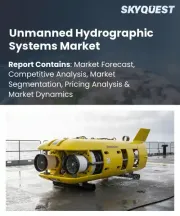
|
시장보고서
상품코드
1973593
무인 수로 측량 시스템 시장 규모, 점유율, 성장 분석 : 구성요소별, 시스템 유형별, 전개 방식별, 제어 레벨별, 응용 분야별, 최종사용자별, 지역별 - 업계 예측(2026-2033년)Unmanned Hydrographic Systems Market Size, Share, and Growth Analysis, By Component, By System Type, By Deployment Mode, By Control Level, By Application Area, By End Users, By Region - Industry Forecast 2026-2033 |
||||||

세계의 무인 수로 측량 시스템 시장 규모는 2024년에 45억 4,000만 달러로 평가되었으며, 2025년 53억 달러에서 2033년까지 183억 7,000만 달러로 성장할 전망입니다. 예측 기간(2026-2033년) 동안 CAGR은 16.8%로 예측됩니다.
세계 무인 수로 측량 시스템 시장은 고해상도 해저 데이터에 대한 수요 증가와 위험을 최소화하면서 운영 효율성을 향상시키는 기술 발전에 힘입어 크게 성장하고 있습니다. 기술 혁신으로 수문 측량은 대형 유인 선박에서 멀티빔 소나 및 정밀 측위 도구를 활용한 소형 자율 플랫폼으로 전환되고 있습니다. 정확한 심도 데이터는 안전한 항해, 환경 모니터링, 해양 에너지 사업에 필수적입니다. 자율성, 센서 융합, 클라우드 분석의 통합은 이 시장을 더욱 촉진하고, 시간 제약이 있는 요구를 충족시키기 위해 보다 빈번하고 반복적인 측량을 실현할 수 있습니다. 또한, AI 기술은 첨단 센서 융합과 자동화된 품질 관리를 통해 데이터 정확도를 향상시켜 보다 정밀한 심도도를 생성합니다. 이러한 발전은 투자에 대한 신뢰를 높이고, 수익 기회를 강화하며, 양식업 및 환경 평가에 대한 적용 범위를 확대할 것입니다.
세계 무인 수로 측량 시스템 시장 촉진요인
세계 무인 수로 측량 시스템 시장은 자율 항법 기술의 눈부신 발전에 힘입어 성장하고 있습니다. 이를 통해 운영 효율성이 향상되고, 대형 유인 선박에 대한 의존도를 최소화할 수 있습니다. 이러한 진화를 통해 개선된 센서, 고급 알고리즘, 강화된 플랫폼 제어를 통해 열악한 환경에서도 장기간 무인 시스템을 안정적으로 운영할 수 있으며, 보다 빈번하고 비용 효율적인 측량 조사를 실현할 수 있습니다. 그 결과, 상업적 사용자와 정부 기관 모두 보다 안전하고 경제적인 데이터 수집 수단으로 이러한 솔루션에 점점 더 매력을 느끼고 있습니다. 이러한 변화는 무인 플랫폼에 대한 투자를 촉진할 뿐만 아니라, 임무 능력의 범위를 확장하고 서비스 제공업체가 경쟁력 있는 측량 서비스를 제공할 수 있게함으로써 전체 시장의 확대와 기술 발전을 촉진하고 있습니다.
세계 무인 수로 측량 시스템 시장의 저해요인
전 세계 무인 수로 측량 시스템 시장은 복잡하고 불일치한 규제 체계로 인해 무인 해양 작업을 감독하는 데 있어 심각한 도전에 직면해 있습니다. 선박 인증, 통신 프로토콜, 가시권 밖 운용에 대한 국가별 상이한 규제는 불확실성을 야기하고, 도입 지연 및 운용 능력의 제한으로 이어질 수 있습니다. 제조업체와 운영자는 시장 출시 시간을 연장하고 상업적 확장성을 저해하는 단편적인 승인 프로세스를 해결해야 합니다. 또한, 다양한 안전 및 환경 기준을 충족해야 하는 필요성은 서비스 확장 및 국경을 넘나드는 노력에 대한 추가적인 장벽이 되고 있습니다. 결과적으로 이러한 요인들은 무인 수로 측량 시스템의 도입 속도를 늦추는 요인이 되고 있으며, 이는 뚜렷한 기술적 이점에도 불구하고 무인 수로 측량 시스템의 도입 속도를 늦추고 있습니다.
세계 무인 수로 측량 시스템 시장 동향
전 세계 무인 수로 측량 시스템 시장에서는 자율성 통합을 향한 두드러진 추세가 진행 중이며, 이는 운영 효율성과 범용성에 혁명을 일으키고 있습니다. 지능형 항법, 적응형 항로 계획, 협력적 함대 행동이 보편화됨에 따라 수동 제어에 대한 의존도가 감소하고, 장기간에 걸친 복잡한 측량 임무가 가능해집니다. 이러한 변화를 통해 운영자는 인력을 보다 전략적인 역할에 배치할 수 있으며, 시스템이 일상적인 데이터 수집을 자율적으로 관리함으로써 전반적인 생산성을 향상시킬 수 있습니다. 고도의 자율성의 증가는 열악한 환경에서의 안전성을 향상시킬 뿐만 아니라, 확장 가능한 도입과 모듈식 및 상호 운용 가능한 플랫폼의 개발을 촉진합니다. 이로 인해 응용 범위가 확대되고 상업 분야와 과학 분야 모두에서 기술 도입이 가속화되고 있습니다.
자주 묻는 질문
목차
소개
조사 방법
주요 요약
시장 역학과 전망
주요 시장 인사이트
세계의 무인 수로 측량 시스템 시장 규모 : 구성요소별 & CAGR(2026-2033년)
세계의 무인 수로 측량 시스템 시장 규모 : 시스템 유형별 & CAGR(2026-2033년)
세계의 무인 수로 측량 시스템 시장 규모 : 전개 방식별 & CAGR(2026-2033년)
세계의 무인 수로 측량 시스템 시장 규모 : 제어 레벨별 & CAGR(2026-2033년)
세계의 무인 수로 측량 시스템 시장 규모 : 응용 분야별 & CAGR(2026-2033년)
세계의 무인 수로 측량 시스템 시장 규모 : 최종사용자별 & CAGR(2026-2033년)
세계의 무인 수로 측량 시스템 시장 규모 : 지역별 & CAGR(2026-2033년)
경쟁 정보
주요 기업 개요
결론과 제안
KSM 26.04.08Global Unmanned Hydrographic Systems Market size was valued at USD 4.54 Billion in 2024 and is poised to grow from USD 5.3 Billion in 2025 to USD 18.37 Billion by 2033, growing at a CAGR of 16.8% during the forecast period (2026-2033).
The global unmanned hydrographic systems market is significantly driven by the increasing demand for high-resolution seabed data, alongside advancements that enhance operational efficiency while minimizing risk. Technological innovations have shifted hydrographic surveying from large, crewed vessels to smaller autonomous platforms, utilizing multibeam sonar and precise positioning tools. Accurate bathymetric data is vital for safe navigation, environmental monitoring, and offshore energy initiatives. The integration of autonomy, sensor fusion, and cloud analytics further propels this market, enabling more frequent, repeatable surveys that meet time-sensitive needs. Moreover, AI technologies enhance data accuracy through advanced sensor fusion and automated quality control, resulting in cleaner bathymetric maps. These developments foster confidence in investments, bolster revenue opportunities, and expand applications in aquaculture and environmental assessment.
Top-down and bottom-up approaches were used to estimate and validate the size of the Global Unmanned Hydrographic Systems market and to estimate the size of various other dependent submarkets. The research methodology used to estimate the market size includes the following details: The key players in the market were identified through secondary research, and their market shares in the respective regions were determined through primary and secondary research. This entire procedure includes the study of the annual and financial reports of the top market players and extensive interviews for key insights from industry leaders such as CEOs, VPs, directors, and marketing executives. All percentage shares split, and breakdowns were determined using secondary sources and verified through Primary sources. All possible parameters that affect the markets covered in this research study have been accounted for, viewed in extensive detail, verified through primary research, and analyzed to get the final quantitative and qualitative data.
Global Unmanned Hydrographic Systems Market Segments Analysis
Global unmanned hydrographic systems market is segmented by component, system type, deployment mode, control level, application area, end users and region. Based on component, the market is segmented into Sonar Systems, Navigation and Positioning Systems, Communication Systems, Payload Sensors and Power Systems. Based on system type, the market is segmented into Autonomous Surface Vehicles (ASVs), Autonomous Underwater Vehicles (AUVs), Remotely Operated Vehicles (ROVs), Unmanned Underwater Gliders and Hybrid Unmanned Systems. Based on deployment mode, the market is segmented into Onshore, Offshore and Inland Water. Based on control level, the market is segmented into Fully Autonomous Systems, Semi-Autonomous Systems and Remotely Operated Systems. Based on application area, the market is segmented into Hydrographic Surveying, Marine Research and Exploration, Oil & Gas Exploration, Defense and Security, Environmental Monitoring, Coastal Mapping and Others. Based on end users, the market is segmented into Government & Defense, Commercial Survey Companies, Research Institutions, Oil & Gas Companies and Environmental Agencies. Based on region, the market is segmented into North America, Europe, Asia Pacific, Latin America and Middle East & Africa.
Driver of the Global Unmanned Hydrographic Systems Market
The Global Unmanned Hydrographic Systems market is propelled by significant advancements in autonomous navigation technologies, which enhance operational efficiency and minimize reliance on large crewed vessels. This evolution facilitates more frequent and cost-effective hydrographic surveys, as improved sensors, sophisticated algorithms, and enhanced platform control allow unmanned systems to perform reliably in challenging environments for extended durations. Consequently, both commercial and governmental users are increasingly attracted to these solutions for safer and more economical data collection. This shift not only promotes investment in unmanned platforms but also broadens the range of mission capabilities, allowing service providers to deliver competitive survey offerings and fueling overall market expansion and technological progress.
Restraints in the Global Unmanned Hydrographic Systems Market
The Global Unmanned Hydrographic Systems market faces significant challenges due to the intricate and inconsistent regulatory frameworks that oversee unmanned maritime operations. These varying national regulations regarding vessel certification, communication protocols, and beyond-visual-line-of-sight operations create uncertainty, leading to potential delays in deployment and limiting operational capabilities. Manufacturers and operators must contend with a fragmented approval process that prolongs time to market and hinders commercial scalability. Furthermore, the necessity to meet diverse safety and environmental standards presents additional obstacles for service expansion and cross-border initiatives. Consequently, these factors contribute to a slower pace of adoption of unmanned hydrographic systems, despite their notable technical benefits.
Market Trends of the Global Unmanned Hydrographic Systems Market
The Global Unmanned Hydrographic Systems market is experiencing a significant trend toward autonomy integration, revolutionizing operational efficiency and versatility. As intelligent navigation, adaptive route planning, and cooperative fleet behaviors become commonplace, reliance on manual control diminishes, allowing for extended, intricate survey missions. This shift enables operators to delegate personnel to more strategic roles, enhancing overall productivity as systems autonomously manage routine data collection. The rise of advanced autonomy not only enhances safety in demanding environments but also fosters scalable implementation and the development of modular, interoperable platforms, thus expanding the range of applications and accelerating technology adoption among both commercial and scientific sectors.
Table of Contents
Introduction
- Objectives of the Study
- Market Definition & Scope
Research Methodology
- Research Process
- Secondary & Primary Data Methods
- Market Size Estimation Methods
Executive Summary
- Global Market Outlook
- Key Market Highlights
- Segmental Overview
- Competition Overview
Market Dynamics & Outlook
- Macro-Economic Indicators
- Drivers & Opportunities
- Restraints & Challenges
- Supply Side Trends
- Demand Side Trends
- Porters Analysis & Impact
- Competitive Rivalry
- Threat of Substitute
- Bargaining Power of Buyers
- Threat of New Entrants
- Bargaining Power of Suppliers
Key Market Insights
- Key Success Factors
- Market Impacting Factors
- Top Investment Pockets
- Ecosystem Mapping
- Market Attractiveness Index 2025
- PESTEL Analysis
- Regulatory Landscape
- Case Studies
- Technology Analysis
- Value Chain Analysis
Global Unmanned Hydrographic Systems Market Size by Component & CAGR (2026-2033)
- Market Overview
- Sonar Systems
- Navigation and Positioning Systems
- Communication Systems
- Payload Sensors
- Power Systems
Global Unmanned Hydrographic Systems Market Size by System Type & CAGR (2026-2033)
- Market Overview
- Autonomous Surface Vehicles (ASVs)
- Autonomous Underwater Vehicles (AUVs)
- Remotely Operated Vehicles (ROVs)
- Unmanned Underwater Gliders
- Hybrid Unmanned Systems
Global Unmanned Hydrographic Systems Market Size by Deployment Mode & CAGR (2026-2033)
- Market Overview
- Onshore
- Offshore
- Inland Water
Global Unmanned Hydrographic Systems Market Size by Control Level & CAGR (2026-2033)
- Market Overview
- Fully Autonomous Systems
- Semi-Autonomous Systems
- Remotely Operated Systems
Global Unmanned Hydrographic Systems Market Size by Application Area & CAGR (2026-2033)
- Market Overview
- Hydrographic Surveying
- Marine Research and Exploration
- Oil & Gas Exploration
- Defense and Security
- Environmental Monitoring
- Coastal Mapping
- Others
Global Unmanned Hydrographic Systems Market Size by End Users & CAGR (2026-2033)
- Market Overview
- Government & Defense
- Commercial Survey Companies
- Research Institutions
- Oil & Gas Companies
- Environmental Agencies
Global Unmanned Hydrographic Systems Market Size & CAGR (2026-2033)
- North America (Component, System Type, Deployment Mode, Control Level, Application Area, End Users)
- US
- Canada
- Europe (Component, System Type, Deployment Mode, Control Level, Application Area, End Users)
- Germany
- Spain
- France
- UK
- Italy
- Rest of Europe
- Asia Pacific (Component, System Type, Deployment Mode, Control Level, Application Area, End Users)
- China
- India
- Japan
- South Korea
- Rest of Asia-Pacific
- Latin America (Component, System Type, Deployment Mode, Control Level, Application Area, End Users)
- Mexico
- Brazil
- Rest of Latin America
- Middle East & Africa (Component, System Type, Deployment Mode, Control Level, Application Area, End Users)
- GCC Countries
- South Africa
- Rest of Middle East & Africa
Competitive Intelligence
- Top 5 Player Comparison
- Market Positioning of Key Players, 2025
- Strategies Adopted by Key Market Players
- Recent Developments in the Market
- Company Market Share Analysis, 2025
- Company Profiles of All Key Players
- Company Details
- Product Portfolio Analysis
- Company's Segmental Share Analysis
- Revenue Y-O-Y Comparison (2023-2025)
Key Company Profiles
- Ocean Infinity
- Company Overview
- Business Segment Overview
- Financial Updates
- Key Developments
- Teledyne Marine
- Company Overview
- Business Segment Overview
- Financial Updates
- Key Developments
- XOcean
- Company Overview
- Business Segment Overview
- Financial Updates
- Key Developments
- Bluefin Robotics
- Company Overview
- Business Segment Overview
- Financial Updates
- Key Developments
- Subsea Tech
- Company Overview
- Business Segment Overview
- Financial Updates
- Key Developments
- ASV Global
- Company Overview
- Business Segment Overview
- Financial Updates
- Key Developments
- Kongsberg Maritime
- Company Overview
- Business Segment Overview
- Financial Updates
- Key Developments
- SeaRobotics
- Company Overview
- Business Segment Overview
- Financial Updates
- Key Developments
- iXblue
- Company Overview
- Business Segment Overview
- Financial Updates
- Key Developments
- Hydroid
- Company Overview
- Business Segment Overview
- Financial Updates
- Key Developments
- RBR
- Company Overview
- Business Segment Overview
- Financial Updates
- Key Developments
- Ocius Technology
- Company Overview
- Business Segment Overview
- Financial Updates
- Key Developments
- Eca Group
- Company Overview
- Business Segment Overview
- Financial Updates
- Key Developments
- Vanguard Robotics
- Company Overview
- Business Segment Overview
- Financial Updates
- Key Developments
- Marine Technology Reporter
- Company Overview
- Business Segment Overview
- Financial Updates
- Key Developments
- SBG Systems
- Company Overview
- Business Segment Overview
- Financial Updates
- Key Developments
- Makai Ocean Engineering
- Company Overview
- Business Segment Overview
- Financial Updates
- Key Developments
- L3 Harris Technologies
- Company Overview
- Business Segment Overview
- Financial Updates
- Key Developments
- GeoIQ
- Company Overview
- Business Segment Overview
- Financial Updates
- Key Developments
- Quantum Marine Engineering
- Company Overview
- Business Segment Overview
- Financial Updates
- Key Developments