|
시장보고서
상품코드
2026360
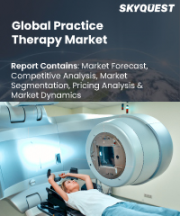
치료 실무 시장 규모, 점유율 및 성장 분석 : 요법 유형별, 제공 형태별, 용도별, 지역별 - 업계 예측(2026-2033년)Practice Therapy Market Size, Share, and Growth Analysis, By Therapy Type (Physical Therapy, Occupational Therapy), By Delivery Mode (In-Person Therapy, Teletherapy/Online Therapy), By Application, By Region - Industry Forecast 2026-2033 |
||||||

세계의 치료 실무 시장 규모는 2024년에 6,427억 9,000만 달러로 평가되었고, 2025년 7,302억 1,000만 달러에서 2033년에는 2조 252억 4,000만 달러로 확대될 전망이며, 예측 기간(2026-2033년)에 CAGR 13.6%로 성장할 전망입니다.
치료 실무 시장은 괄목할 만한 성장을 보이고 있으며, 그 주요 요인은 전 세계 암 발병률 증가에 기인합니다. 이에 따라, 뇌나 소아 환자 등 민감한 부위를 포함한 다양한 종양 유형에 대한 효과적인 치료법이 요구되고 있습니다. 이 치료법은 건강한 조직을 보존하면서 고선량의 방사선을 조사할 수 있어 그 채택이 확대되고 있습니다. 소형의 비용 효율적인 양성자 치료 시스템, MRI 유도하 접근법 등 기술 발전도 치료의 정확성을 높여 시장 확대에 중요한 역할을 하고 있습니다. 그러나 치료센터 설립에 따른 높은 비용, 지불자의 지원을 받기 위해 더 많은 근거가 필요한 상황, 변화하는 상환 환경 등의 과제는 여전히 남아있습니다. 또한, 시설이 선진 지역에 집중되어 있어 접근성이 제한되어 있어 시장 성장을 뒷받침하기 위해서는 보다 광범위한 지리적 보급과 숙련된 인력 확보가 필요하다는 점이 부각되고 있습니다.
세계 양성자 치료 시장의 성장 요인
세계 암 유병률 증가는 양성자선 치료 시장의 확대에 큰 영향을 미치고 있습니다. 다양한 종양 유형에 대한 효과적이고 표적화된 치료법을 찾는 환자들이 늘어남에 따라, 치료 실무의 매력은 환자와 의료진 모두에게 지속적으로 증가하고 있습니다. 이러한 수요는 다양한 종양학적 요구를 충족시킬 수 있는 이 치료법의 잠재력을 부각시키며, 현대의 암 치료 전략에서 필수적인 요소로 자리매김하고 있습니다. 정확하고 개인화된 솔루션을 제공함으로써, 치료 실무는 환자의 예후를 개선하고 암 관리 분야에서 의료계의 시급한 요구를 충족시키는 데 있어 매우 중요한 역할을 할 준비가 되어 있습니다.
세계 치료 실무 시장을 억제하는 요인들
치료 실무에 대한 급여 체계는 끊임없이 변화하고 있으며, 지역에 따라 크게 달라집니다. 통일된 상환 정책의 부재와 더불어 비용 효과성에 대한 추가적인 증거와 연구의 필요성은 지불자의 의사결정에 영향을 미치고, 치료 실무의 광범위한 수용과 도입에 장벽이 될 수 있습니다. 이러한 문제는 환자와 의료 제공업체의 접근을 제한하고, 궁극적으로 치료 실무의 잠재적 성장과 주류 의료 관행에의 통합을 방해할 수 있습니다. 이러한 문제를 해결하는 것은 치료 현장에서 혁신적인 치료 솔루션의 채택을 촉진하고, 보다 지원적인 환경을 조성하기 위해 필수적입니다.
세계 치료 실무 시장 동향
세계 치료 실무 시장에서는 적은 횟수의 조사로 더 높은 방사선량을 투여하는 '저분할 조사'의 채택이 증가하는 두드러진 추세를 보이고 있습니다. 이 방법은 기존의 분할 조사 방식과 동등한 효과를 발휘할 수 있을 뿐만 아니라, 전체 치료 기간을 단축하여 환자의 편의성을 높입니다. 그 효과와 이점을 뒷받침하는 증거가 증가함에 따라, 의료 서비스 제공업체들은 치료 프로토콜에 저분할 조사를 점점 더 많이 도입하고 있습니다. 이러한 변화는 치료 현장에서 환자 치료와 자원 활용을 최적화하기 위한 광범위한 움직임과 일치하며, 이를 통해 치료 패러다임을 재구성하고 전 세계적으로 실제 치료 연구 방법론의 혁신을 주도하고 있습니다.
자주 묻는 질문
목차
서론
조사 방법
주요 요약
시장 역학과 전망
주요 시장 인사이트
세계의 치료 실무 시장 규모 : 치료 유형별
세계의 치료 실무 시장 규모 : 제공 형태별
세계의 치료 실무 시장 규모 : 용도별
세계의 치료 실무 시장 규모 : 최종사용자별
세계의 치료 실무 시장 규모 : 지역별
경쟁 정보
주요 기업 개요
결론과 제안
LSH 26.05.26Global Practice Therapy Market size was valued at USD 642.79 Billion in 2024 and is poised to grow from USD 730.21 Billion in 2025 to USD 2025.24 Billion by 2033, growing at a CAGR of 13.6% during the forecast period (2026-2033).
The Practice Therapy market is experiencing significant growth, primarily driven by the rising global incidence of cancer, necessitating effective treatment options for various tumor types, including those in delicate areas like the brain and pediatric cases. This therapy's capability to administer higher radiation doses while preserving healthy tissues has facilitated its increasing adoption. Technological advancements, including compact and cost-effective proton therapy systems and MRI-guided approaches, have also played a vital role in market expansion by enhancing treatment precision. However, challenges persist, including the high costs associated with establishing therapy centers and an evolving reimbursement landscape that requires further evidence for payer support. Additionally, the concentration of facilities in developed regions limits access, underscoring the need for broader geographic availability and skilled personnel to support market growth.
Top-down and bottom-up approaches were used to estimate and validate the size of the Global Practice Therapy market and to estimate the size of various other dependent submarkets. The research methodology used to estimate the market size includes the following details: The key players in the market were identified through secondary research, and their market shares in the respective regions were determined through primary and secondary research. This entire procedure includes the study of the annual and financial reports of the top market players and extensive interviews for key insights from industry leaders such as CEOs, VPs, directors, and marketing executives. All percentage shares split, and breakdowns were determined using secondary sources and verified through Primary sources. All possible parameters that affect the markets covered in this research study have been accounted for, viewed in extensive detail, verified through primary research, and analyzed to get the final quantitative and qualitative data.
Global Practice Therapy Market Segments Analysis
Global Practice Therapy Market is segmented by therapy type, delivery mode, application, end-user and region. Based on therapy type, the market is segmented into physical therapy, occupational therapy, speech therapy, psychotherapy, rehabilitation therapy and complementary and alternative therapies. Based on delivery mode, the market is segmented into in-person therapy, teletherapy/online therapy and hybrid therapy (combination of in-person and online). Based on application, the market is segmented into pain management, mental health disorders, post-surgery recovery, injury rehabilitation, chronic disease management and developmental disorders. Based on end-user, the market is segmented into individual patients, hospitals and clinics, rehabilitation centers, home care settings and corporate wellness programs. Based on region, the market is segmented into North America, Europe, Asia Pacific, Latin America and Middle East & Africa.
Driver of the Global Practice Therapy Market
The increasing prevalence of cancer worldwide serves as a major influence on the expansion of the Practice Therapy market. As more patients seek effective and targeted treatment options for different tumor types, the appeal of Practice Therapy continues to grow among both patients and healthcare professionals. This demand underscores the therapy's potential in addressing diverse oncology needs, making it a critical component in contemporary cancer treatment strategies. By providing accurate and personalized solutions, Practice Therapy is poised to play a pivotal role in enhancing patient outcomes and meeting the urgent needs of the healthcare sector in cancer management.
Restraints in the Global Practice Therapy Market
The reimbursement framework for practice therapy is continually changing and differs significantly across various regions. The absence of uniform reimbursement policies coupled with the necessity for additional evidence and studies on cost-effectiveness may influence the decisions made by payers, creating an obstacle to the broader acceptance and implementation of practice therapy. These challenges can limit access for patients and healthcare providers, ultimately hindering the potential growth and integration of practice therapy into mainstream healthcare practices. Addressing these issues is crucial for fostering a more supportive environment that encourages the adoption of innovative therapeutic solutions in practice therapy.
Market Trends of the Global Practice Therapy Market
The Global Practice Therapy market is witnessing a significant trend towards the increased adoption of hypofractionation, characterized by the administration of higher radiation doses in fewer sessions. This method not only potentially matches the efficacy of traditional fractionation but also enhances patient convenience by reducing the overall duration of treatment. With growing evidence supporting its effectiveness and benefits, healthcare providers are increasingly integrating hypofractionation into their therapeutic protocols. This shift aligns with a broader movement towards optimizing patient care and resource utilization within the therapeutic landscape, thereby reshaping treatment paradigms and driving innovation in practice therapy methodologies globally.
Table of Contents
Introduction
- Objectives of the Study
- Market Definition & Scope
Research Methodology
- Research Process
- Secondary & Primary Data Methods
- Market Size Estimation Methods
Executive Summary
- Global Market Outlook
- Key Market Highlights
- Segmental Overview
- Competition Overview
Market Dynamics & Outlook
- Macro-Economic Indicators
- Drivers & Opportunities
- Restraints & Challenges
- Supply Side Trends
- Demand Side Trends
- Porters Analysis & Impact
- Competitive Rivalry
- Threat of Substitute
- Bargaining Power of Buyers
- Threat of New Entrants
- Bargaining Power of Suppliers
Key Market Insights
- Key Success Factors
- Market Impacting Factors
- Top Investment Pockets
- Ecosystem Mapping
- Market Attractiveness Index 2025
- PESTEL Analysis
- Regulatory Landscape
Global Practice Therapy Market Size by Therapy Type & CAGR (2026-2033)
- Market Overview
- Physical Therapy
- Orthopedic
- Neurological
- Cardiopulmonary
- Pediatric
- Geriatric
- Occupational Therapy
- Speech Therapy
- Speech Delays
- Autism Spectrum Disorders (ASD)
- Psychotherapy
- Cognitive Behavioral Therapy (CBT)
- Dialectical Behavior Therapy (DBT)
- Interpersonal Therapy
- Substance Abuse Rehabilitation
- Rehabilitation Therapy
- Post-Surgical Rehabilitation
- Complementary And Alternative Therapies
- Acupuncture
- Chiropractic Therapy
Global Practice Therapy Market Size by Delivery Mode & CAGR (2026-2033)
- Market Overview
- In-Person Therapy
- Teletherapy
- Video Consultation
- Audio Consultation
- Mobile App-Based Therapy
- Hybrid Therapy
Global Practice Therapy Market Size by Application & CAGR (2026-2033)
- Market Overview
- Pain Management
- Mental Health Disorders
- Post-Surgery Recovery
- Injury Rehabilitation
- Chronic Disease Management
- Developmental Disorders
- Others
Global Practice Therapy Market Size by End User & CAGR (2026-2033)
- Market Overview
- Individual Patients
- Hospitals and Clinics
- Rehabilitation Centers
- Home Care Settings
- Corporate Wellness Programs
Global Practice Therapy Market Size & CAGR (2026-2033)
- North America (Therapy Type, Delivery Mode, Application, End User)
- US
- Canada
- Europe (Therapy Type, Delivery Mode, Application, End User)
- Germany
- Spain
- France
- UK
- Italy
- Rest of Europe
- Asia Pacific (Therapy Type, Delivery Mode, Application, End User)
- China
- India
- Japan
- South Korea
- Rest of Asia-Pacific
- Latin America (Therapy Type, Delivery Mode, Application, End User)
- Mexico
- Brazil
- Rest of Latin America
- Middle East & Africa (Therapy Type, Delivery Mode, Application, End User)
- GCC Countries
- South Africa
- Rest of Middle East & Africa
Competitive Intelligence
- Top 5 Player Comparison
- Market Positioning of Key Players, 2025
- Strategies Adopted by Key Market Players
- Recent Developments in the Market
- Company Market Share Analysis, 2025
- Company Profiles of All Key Players
- Company Details
- Product Portfolio Analysis
- Company's Segmental Share Analysis
- Revenue Y-O-Y Comparison (2023-2025)
Key Company Profiles
- IBA (Ion Beam Applications SA)
- Company Overview
- Business Segment Overview
- Financial Updates
- Key Developments
- Varian Medical Systems
- Company Overview
- Business Segment Overview
- Financial Updates
- Key Developments
- Hitachi, Ltd.
- Company Overview
- Business Segment Overview
- Financial Updates
- Key Developments
- Mitsubishi Electric Corporation
- Company Overview
- Business Segment Overview
- Financial Updates
- Key Developments
- Mevion Medical Systems
- Company Overview
- Business Segment Overview
- Financial Updates
- Key Developments
- Sumitomo Heavy Industries, Ltd.
- Company Overview
- Business Segment Overview
- Financial Updates
- Key Developments
- ProTom International
- Company Overview
- Business Segment Overview
- Financial Updates
- Key Developments
- Optivus Proton Therapy
- Company Overview
- Business Segment Overview
- Financial Updates
- Key Developments
- ProNova Solutions, LLC
- Company Overview
- Business Segment Overview
- Financial Updates
- Key Developments
- Advanced Oncotherapy
- Company Overview
- Business Segment Overview
- Financial Updates
- Key Developments
- Accuray Incorporated
- Company Overview
- Business Segment Overview
- Financial Updates
- Key Developments
- RaySearch Laboratories
- Company Overview
- Business Segment Overview
- Financial Updates
- Key Developments
- Elekta AB
- Company Overview
- Business Segment Overview
- Financial Updates
- Key Developments
- ViewRay, Inc.
- Company Overview
- Business Segment Overview
- Financial Updates
- Key Developments
- Siemens Healthineers
- Company Overview
- Business Segment Overview
- Financial Updates
- Key Developments
- Brainlab AG
- Company Overview
- Business Segment Overview
- Financial Updates
- Key Developments
- TomoTherapy, Inc.
- Company Overview
- Business Segment Overview
- Financial Updates
- Key Developments
- AccuBoost
- Company Overview
- Business Segment Overview
- Financial Updates
- Key Developments
- Clarity Pharma
- Company Overview
- Business Segment Overview
- Financial Updates
- Key Developments
- C-Rad AB
- Company Overview
- Business Segment Overview
- Financial Updates
- Key Developments