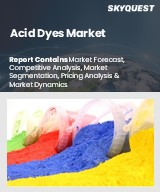
|
시장보고서
상품코드
2035745
산성 염료 시장 규모, 점유율 및 성장 분석 : 제품 유형별, 형태별, 용도별, 최종 이용 산업별, 유통 채널별, 지역별 - 업계 예측(2026-2033년)Acid Dyes Market Size, Share, and Growth Analysis, By Product Type, By Form, By Application, By End Use Industry, By Distribution Channel, By Region - Industry Forecast 2026-2033 |
||||||

세계의 산성 염료 시장 규모는 2024년에 29억 5,000만 달러로 평가되었고, 2025년 31억 3,000만 달러에서 2033년까지 50억 3,000만 달러로 확대되어 예측 기간(2026-2033년)에 CAGR 6.1%를 보일 전망입니다.
세계 산성 염료 시장은 특히 아시아태평양과 라틴아메리카 등 개발도상국의 섬유 및 가죽 산업 확대에 힘입어 견조한 성장세를 보이고 있습니다. 중국, 인도 등의 국가에서 도시화와 가처분 소득 증가로 인해, 선명하고 고품질의 섬유 및 가죽 제품에 대한 수요가 증가하고 있습니다. 산성 염료는 선명한 발색이 가능하기 때문에 선호되며, 패션 및 홈 텍스타일에 적합합니다. 동시에 환경의 지속가능성이 시장을 재구성하고 있으며, 생산자들은 환경 친화적이고 생분해성 염료를 개발하고, 물 절약형 및 에너지 효율이 높은 기술을 채택하고 있습니다. 그러나 우수한 특성과 효율성을 갖춘 반응성 염료와 같은 대체 염색 기술의 채택이 증가함에 따라 산성 염료의 성장 가능성은 억제되고 있습니다. 이는 결국 산성 염료의 경쟁력을 떨어뜨려 시장 확대에 영향을 미치고 있습니다.
세계 산성 염료 시장의 성장 요인
세계 산성 염료 수요는 실크, 울 등 단백질 섬유에 선명한 색을 내기 위해 산성 염료를 사용하는 가죽 및 섬유 산업의 영향을 많이 받습니다. 홈 텍스타일과 패션 분야 모두에서 고품질의 선명한 색상의 소재에 대한 수요가 증가함에 따라 산성 염료 소비가 증가하고 있습니다. 또한, 가죽 산업에서는 산성 염료의 우수한 침투성과 견뢰도를 인정받아 무두질 및 염색 공정에서 선호되는 선택이 되고 있습니다. 이러한 특성의 유리한 조합은 가죽 제품 시장의 지속적인 성장과 확장을 촉진하고 궁극적으로 산성 염료에 대한 추가 수요를 촉진하고 있습니다.
세계 산성 염료 시장 성장 억제요인
세계 산성 염료 시장은 원료, 특히 염료 제조에 사용되는 화학물질과 중간 비용의 변동으로 인해 심각한 문제에 직면해 있습니다. 이러한 재료공급 상황과 수요의 변동은 예측할 수 없는 가격 변동을 초래하고, 궁극적으로 염료의 전체 생산 비용에 영향을 미칠 수 있습니다. 이러한 불안정성은 완제품의 안정적인 가격 전략 수립을 어렵게 만들고 있습니다. 또한, 세계 경제 상황과 규제 당국의 결정에 대한 예측 불가능성은 불확실성을 증가시켜 제품 개발자가 정확한 예측을 하고 시장에서 가격 안정성을 유지하는 능력을 제한하고 있습니다. 결과적으로 이러한 요인들은 산업의 성장과 지속가능성에 제약을 가하고 있습니다.
세계 산성 염료 시장 동향
세계 산성 염료 시장은 현재 섬유 및 가죽 산업 수요 증가에 힘입어 견조한 성장세를 보이고 있습니다. 아시아태평양, 특히 중국, 인도 등의 국가들은 광범위한 제조 능력으로 인해 여전히 시장을 주도하고 있습니다. 그러나 제조업체들은 원자재 가격 변동과 엄격한 환경 규제 등의 문제에 직면해 있으며, 혁신적이고 유연한 대응이 요구되고 있습니다. 이러한 장벽에도 불구하고, 기술 발전과 환경 친화적인 생산 및 사용 방식을 우선시하는 지속 가능한 노력에 대한 관심이 높아지면서 시장 전망은 밝습니다. 이를 통해 환경의식이 높아지는 소비자 환경에서도 시장의 존재의의를 확실히 하고 있습니다.
자주 묻는 질문
목차
서론
조사 방법
주요 요약
시장 역학과 전망
주요 시장 인사이트
세계의 산성 염료 시장 규모 : 제품 유형별
세계의 산성 염료 시장 규모 : 형태별
세계의 산성 염료 시장 규모 : 용도별
세계의 산성 염료 시장 규모 : 최종 이용 산업별
세계의 산성 염료 시장 규모 : 유통 채널별
세계의 산성 염료 시장 규모 : 지역별
경쟁 정보
주요 기업 개요
결론과 제안
LSH 26.06.01Global Acid Dyes Market size was valued at USD 2.95 Billion in 2024 and is poised to grow from USD 3.13 Billion in 2025 to USD 5.03 Billion by 2033, growing at a CAGR of 6.1% during the forecast period (2026-2033).
The global acid dyes market is experiencing robust growth, driven by the expanding textile and leather industries, particularly in developing regions like Asia-Pacific and Latin America. Urbanization and rising disposable incomes in countries such as China and India are increasing the demand for vibrant, high-quality textiles and leather goods. Acid dyes are preferred for their ability to deliver vivid colors, making them suitable for fashion and home textiles. Simultaneously, environmental sustainability is reshaping the market, with producers developing eco-friendly, biodegradable dyes and adopting low-water, energy-efficient technologies. However, the growth potential of acid dyes is tempered by the rising adoption of alternative dyeing technologies, such as reactive dyes, which offer superior properties and efficiency, ultimately diminishing the competitive edge of acid dyes and impacting market expansion.
Top-down and bottom-up approaches were used to estimate and validate the size of the Global Acid Dyes market and to estimate the size of various other dependent submarkets. The research methodology used to estimate the market size includes the following details: The key players in the market were identified through secondary research, and their market shares in the respective regions were determined through primary and secondary research. This entire procedure includes the study of the annual and financial reports of the top market players and extensive interviews for key insights from industry leaders such as CEOs, VPs, directors, and marketing executives. All percentage shares split, and breakdowns were determined using secondary sources and verified through Primary sources. All possible parameters that affect the markets covered in this research study have been accounted for, viewed in extensive detail, verified through primary research, and analyzed to get the final quantitative and qualitative data.
Global Acid Dyes Market Segments Analysis
Global Acid Dyes Market is segmented by Product Type, Form, Application, End Use Industry, Distribution Channel and region. Based on Product Type, the market is segmented into Strong Acid Dyes, Weak Acid Dyes, Milling Acid Dyes, Metal-Complex Acid Dyes, Leveling Acid Dyes and Others. Based on Form, the market is segmented into Powder Acid Dyes, Liquid Acid Dyes, Granular Acid Dyes, Pre-Dissolved Acid Dyes and Others. Based on Application, the market is segmented into Wool Dyeing, Silk Dyeing, Nylon Dyeing, Leather Dyeing, Paper Coloring, Ink Manufacturing and Others. Based on End Use Industry, the market is segmented into Textile Industry, Leather Industry, Paper & Packaging Industry, Printing & Publishing, Automotive Interiors and Others. Based on Distribution Channel, the market is segmented into Direct and Indirect. Based on region, the market is segmented into North America, Europe, Asia Pacific, Latin America and Middle East & Africa.
Driver of the Global Acid Dyes Market
The global demand for acid dyes is significantly influenced by the leather and textile industries, which utilize these dyes to achieve vibrant colors on protein fibers like silk and wool. The increasing desire for high-quality, vividly colored materials in both home textiles and fashion contributes to the rising consumption of acid dyes. Additionally, the leather industry appreciates acid dyes for their superior penetration and fastness qualities, making them a preferred choice for tanning and dyeing processes. This favorable combination of traits fosters continuous growth and expansion in the market for leather goods, ultimately fueling further demand for acid dyes.
Restraints in the Global Acid Dyes Market
The Global Acid Dyes market faces significant challenges stemming from the volatility of raw materials, particularly the chemicals used in dye production and intermediate costs. Variations in the availability and demand for these materials can lead to unpredictable pricing, ultimately affecting the overall manufacturing expenses of the dyes. This inconsistency creates difficulties in establishing stable pricing strategies for finished products. Furthermore, the unpredictability of global economic conditions and regulatory decisions adds to the uncertainty, limiting the ability of product developers to make accurate forecasts and maintain price stability in the market. Consequently, these factors impose constraints on the industry's growth and sustainability.
Market Trends of the Global Acid Dyes Market
The Global Acid Dyes market is currently experiencing robust growth driven primarily by increasing demand from the textile and leather industries. The Asia-Pacific region, particularly countries like China and India, remains a dominant force due to their extensive manufacturing capabilities. However, manufacturers face challenges such as fluctuating raw material costs and stringent environmental regulations, which necessitate innovative and adaptive approaches. Despite these hurdles, the market's trajectory appears promising, bolstered by advancements in technology and a growing focus on sustainable practices that prioritize eco-friendly production and application methods, ensuring relevance in an increasingly conscientious consumer landscape.
Table of Contents
Introduction
- Objectives of the Study
- Market Definition & Scope
Research Methodology
- Research Process
- Secondary & Primary Data Methods
- Market Size Estimation Methods
Executive Summary
- Global Market Outlook
- Key Market Highlights
- Segmental Overview
- Competition Overview
Market Dynamics & Outlook
- Macro-Economic Indicators
- Drivers & Opportunities
- Restraints & Challenges
- Supply Side Trends
- Demand Side Trends
- Porters Analysis & Impact
- Competitive Rivalry
- Threat of Substitute
- Bargaining Power of Buyers
- Threat of New Entrants
- Bargaining Power of Suppliers
Key Market Insights
- Key Success Factors
- Market Impacting Factors
- Top Investment Pockets
- Ecosystem Mapping
- Market Attractiveness Index 2025
- PESTEL Analysis
- Regulatory Landscape
Global Acid Dyes Market Size by Product Type & CAGR (2026-2033)
- Market Overview
- Strong Acid Dyes
- Weak Acid Dyes
- Milling Acid Dyes
- Metal-Complex Acid Dyes
- Leveling Acid Dyes
- Others
Global Acid Dyes Market Size by Form & CAGR (2026-2033)
- Market Overview
- Powder Acid Dyes
- Liquid Acid Dyes
- Granular Acid Dyes
- Pre-Dissolved Acid Dyes
- Others
Global Acid Dyes Market Size by Application & CAGR (2026-2033)
- Market Overview
- Wool Dyeing
- Silk Dyeing
- Nylon Dyeing
- Leather Dyeing
- Paper Coloring
- Ink Manufacturing
- Others
Global Acid Dyes Market Size by End Use Industry & CAGR (2026-2033)
- Market Overview
- Textile Industry
- Leather Industry
- Paper & Packaging Industry
- Printing & Publishing
- Automotive Interiors
- Others
Global Acid Dyes Market Size by Distribution Channel & CAGR (2026-2033)
- Market Overview
- Direct
- Indirect
Global Acid Dyes Market Size & CAGR (2026-2033)
- North America (Product Type, Form, Application, End Use Industry, Distribution Channel)
- US
- Canada
- Europe (Product Type, Form, Application, End Use Industry, Distribution Channel)
- Germany
- Spain
- France
- UK
- Italy
- Rest of Europe
- Asia Pacific (Product Type, Form, Application, End Use Industry, Distribution Channel)
- China
- India
- Japan
- South Korea
- Rest of Asia-Pacific
- Latin America (Product Type, Form, Application, End Use Industry, Distribution Channel)
- Mexico
- Brazil
- Rest of Latin America
- Middle East & Africa (Product Type, Form, Application, End Use Industry, Distribution Channel)
- GCC Countries
- South Africa
- Rest of Middle East & Africa
Competitive Intelligence
- Top 5 Player Comparison
- Market Positioning of Key Players, 2025
- Strategies Adopted by Key Market Players
- Recent Developments in the Market
- Company Market Share Analysis, 2025
- Company Profiles of All Key Players
- Company Details
- Product Portfolio Analysis
- Company's Segmental Share Analysis
- Revenue Y-O-Y Comparison (2023-2025)
Key Company Profiles
- BASF SE
- Company Overview
- Business Segment Overview
- Financial Updates
- Key Developments
- Huntsman Corporation
- Company Overview
- Business Segment Overview
- Financial Updates
- Key Developments
- Clariant AG
- Company Overview
- Business Segment Overview
- Financial Updates
- Key Developments
- Archroma Holding AG
- Company Overview
- Business Segment Overview
- Financial Updates
- Key Developments
- LANXESS AG
- Company Overview
- Business Segment Overview
- Financial Updates
- Key Developments
- DyStar Group (Zhejiang Longsheng Group Co., Ltd.)
- Company Overview
- Business Segment Overview
- Financial Updates
- Key Developments
- Sumitomo Chemical Co., Ltd.
- Company Overview
- Business Segment Overview
- Financial Updates
- Key Developments
- Atul Ltd.
- Company Overview
- Business Segment Overview
- Financial Updates
- Key Developments
- Kiri Industries Limited
- Company Overview
- Business Segment Overview
- Financial Updates
- Key Developments
- Heubach Group
- Company Overview
- Business Segment Overview
- Financial Updates
- Key Developments
- Sudarshan Chemical Industries Limited
- Company Overview
- Business Segment Overview
- Financial Updates
- Key Developments
- Nippon Kayaku Co., Ltd.
- Company Overview
- Business Segment Overview
- Financial Updates
- Key Developments
- Sun Chemical Corporation (DIC Corporation)
- Company Overview
- Business Segment Overview
- Financial Updates
- Key Developments
- Everlight Chemical Industrial Corporation
- Company Overview
- Business Segment Overview
- Financial Updates
- Key Developments
- Zhejiang Longsheng Group Co., Ltd.
- Company Overview
- Business Segment Overview
- Financial Updates
- Key Developments
- Rudolf GmbH
- Company Overview
- Business Segment Overview
- Financial Updates
- Key Developments
- Sachtleben Chemie GmbH (Venator Materials PLC)
- Company Overview
- Business Segment Overview
- Financial Updates
- Key Developments
- Milliken & Company
- Company Overview
- Business Segment Overview
- Financial Updates
- Key Developments
- Kyung-In Synthetic Corporation (KISCO)
- Company Overview
- Business Segment Overview
- Financial Updates
- Key Developments
- Zhejiang Jihua Group Co., Ltd.
- Company Overview
- Business Segment Overview
- Financial Updates
- Key Developments