|
시장보고서
상품코드
2036289
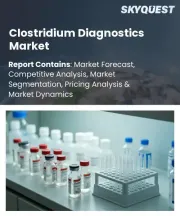
클로스트리듐 진단 시장 규모, 점유율, 성장 분석 : 제품 유형별, 기술별(분자진단), 병원체 유형별, 용도별, 최종사용자별, 지역별 - 업계 예측(2026-2033년)Clostridium Diagnostics Market Size, Share, and Growth Analysis, By Product Type, By Technology, Molecular Diagnostics, By Pathogen Type, By Application, By End-User, By Region - Industry Forecast 2026-2033 |
||||||

세계의 클로스트리듐 진단 시장 규모는 2024년에 35억 달러로 평가되었으며, 2025년 39억 2,000만 달러에서 2033년까지 97억 1,000만 달러로 확대되어 예측 기간(2026-2033년) 동안 CAGR 12.0%로 성장할 것으로 전망됩니다.
세계 클로스트리듐 진단 시장은 주로 클로스트리듐 디피실 및 기타 클로스트리듐 속 박테리아의 신속한 검출에 대한 요구가 증가함에 따라 진단 우선순위가 크게 변화하고 있습니다. 이 시장에는 분자 검사, 독소 면역 측정법, POC(Point-of-Care)(PoC) 플랫폼 등 다양한 진단 기법이 포함됩니다. 감염 확산을 최소화하고 효과적인 항생제 사용을 유도하며 입원 비용을 줄이기 위해서는 신속하고 정확한 진단이 필수적입니다. 신속한 검사 솔루션에 대한 수요 증가는 현재 시장 성장을 주도하고 있습니다. 빠른 결과가 감염 대책 강화로 이어지고, 조달 전략에도 영향을 미치기 때문입니다. 병원이 반복되는 집단 감염에 대처하는 과정에서 첨단 분자진단 플랫폼에 대한 투자로 환자의 격리 기간과 입원 기간이 크게 단축되었습니다. 또한, AI의 통합으로 진단의 정확성과 효율성이 향상되고, 감염을 조기에 발견할 수 있으며, 검사실 자동화가 촉진되고 있습니다. 이를 통해 임상 현장에서의 채택이 확산되어 시장 역학이 개선되고 있습니다.
세계 클로스트리듐 진단 시장의 촉진요인
세계 클로스트리듐 진단 시장은 분자 검사법 및 현장 검사 플랫폼의 획기적인 발전으로 인해 주도되고 있습니다. 이를 통해 진단 시간을 대폭 단축하고 신뢰성을 향상시켰습니다. 이러한 발전으로 의료진은 클로스트리듐 감염을 더 빨리 발견하고 적시에 치료 개입을 할 수 있게 되었습니다. 검사법의 민감도와 특이도가 향상됨에 따라 임상적 판단의 불확실성이 줄어들고, 항균제의 올바른 사용에 대한 노력이 강화되며, 병원과 외래 환경 모두에서 진단법이 더 광범위하게 도입되고 있습니다. 또한, 제조업체들은 이러한 기술적 진보를 활용하여 상업적으로 실행 가능한 키트와 플랫폼을 개발하여 시장의 신뢰를 높이고, 제품 라인업을 확장하고, 유통 및 교육에 대한 투자를 촉진하고 있습니다. 이 모든 것이 시장의 지속적인 확대에 기여하고 있습니다.
세계 클로스트리듐 진단 시장의 억제요인
클로스트리듐 진단 검사에 따른 높은 비용과 예측할 수 없는 상환 관행이 결합되어, 특히 다른 의료적 필요를 우선시해야 하는 예산 제약에 직면한 병원과 검사실이 새로운 진단 기술 도입을 주저하는 요인으로 작용하고 있습니다. 보험회사는 특정 적응증이나 확립된 검사법에 대해서만 보험 적용을 제한할 수 있으며, 이로 인해 의료 서비스 제공자의 수익원이 불안정해져 새로운 진단 솔루션에 대한 투자를 저해할 수 있습니다. 이러한 비용 회수에 대한 불확실성은 의사결정권자들이 새로운 검사 도입을 미루거나 기존 검사법을 계속 사용하게 만드는 요인으로 작용합니다. 결과적으로 이러한 상황은 구매 의욕을 떨어뜨리고 규모의 경제를 달성할 수 있는 기회를 제한하여 시장 성장을 저해하고 있습니다.
세계 클로스트리듐 진단 시장 동향
전 세계 클로스트리듐 진단 시장에서는 기존 임상 워크플로우에 진단 솔루션을 통합하려는 움직임이 두드러지게 나타나고 있습니다. 이러한 추세는 실용적인 결과를 신속하게 제공하고, 진료 현장의 의사결정을 촉진하며, 검사 정보 시스템과의 원활한 연계를 가능하게 하는 플랫폼의 필요성을 강조하고 있습니다. 이해관계자들은 진단 처리 능력과 임상의의 채택을 촉진하는 사용자 친화적인 디자인, 상호운용성, 워크플로우 자동화를 점점 더 우선순위에 두고 있습니다. 의료 서비스 제공자가 환자 관리 개선, 업무 부담 감소, 다직종 진료팀 간 협업 강화를 목표로 하고 있는 만큼, 표준화된 보고에 중점을 두고 수작업을 최소화하는 벤더가 경쟁 우위를 점하고 있습니다.
자주 묻는 질문
목차
소개
조사 방법
주요 요약
시장 역학과 전망
주요 시장 인사이트
세계의 클로스트리듐 진단 시장 규모 : 제품 유형별
세계의 클로스트리듐 진단 시장 규모 : 기술별(분자진단)
세계의 클로스트리듐 진단 시장 규모 : 병원체 유형별
세계의 클로스트리듐 진단 시장 규모 : 용도별
세계의 클로스트리듐 진단 시장 규모 : 최종사용자별
세계의 클로스트리듐 진단 시장 규모 : 지역별
경쟁 정보
주요 기업 개요
결론과 제안
KSM 26.05.29Global Clostridium Diagnostics Market size was valued at USD 3.5 Billion in 2024 and is poised to grow from USD 3.92 Billion in 2025 to USD 9.71 Billion by 2033, growing at a CAGR of 12.0% during the forecast period (2026-2033).
The global Clostridium diagnostics market is primarily driven by the increasing need for rapid detection of Clostridioides difficile and other Clostridium species, reshaping diagnostic priorities significantly. This market includes a variety of diagnostic methods such as molecular assays, toxin immunoassays, and point-of-care platforms; timely and accurate diagnosis is crucial for minimizing transmission, guiding effective antibiotic use, and lowering hospitalization expenses. Heightened demand for swift testing solutions now fuels market growth, as prompt results enhance infection control measures and influence procurement strategies. As hospitals address recurring outbreaks, investments in advanced molecular platforms have notably decreased patient isolation periods and length of stay. Additionally, the integration of AI enhances diagnostic precision and efficiency, enabling early infection detection and supporting laboratory automation, thereby driving broader clinical adoption and improved market dynamics.
Top-down and bottom-up approaches were used to estimate and validate the size of the Global Clostridium Diagnostics market and to estimate the size of various other dependent submarkets. The research methodology used to estimate the market size includes the following details: The key players in the market were identified through secondary research, and their market shares in the respective regions were determined through primary and secondary research. This entire procedure includes the study of the annual and financial reports of the top market players and extensive interviews for key insights from industry leaders such as CEOs, VPs, directors, and marketing executives. All percentage shares split, and breakdowns were determined using secondary sources and verified through Primary sources. All possible parameters that affect the markets covered in this research study have been accounted for, viewed in extensive detail, verified through primary research, and analyzed to get the final quantitative and qualitative data.
Global Clostridium Diagnostics Market Segments Analysis
Global clostridium diagnostics market is segmented by product type, technology, pathogen type, application, end-user and region. Based on product type, the market is segmented into Reagents & Kits, Instruments and Software & Diagnostic Platforms. Based on technology, the market is segmented into Immunoassays, Molecular Diagnostics (PCR, NAAT), Enzyme Immunoassays (EIA) and Rapid Diagnostic Tests. Based on pathogen type, the market is segmented into Clostridium difficile, Clostridium perfringens, Clostridium botulinum, Clostridium tetani and Clostridium sordellii. Based on application, the market is segmented into Clinical Diagnostics, Infection Surveillance and Research. Based on end-user, the market is segmented into Hospitals, Diagnostic Laboratories, Physician Clinics, Research Institutes and Others. Based on region, the market is segmented into North America, Europe, Asia Pacific, Latin America and Middle East & Africa.
Driver of the Global Clostridium Diagnostics Market
The Global Clostridium Diagnostics market is driven by significant advancements in molecular assays and point-of-care testing platforms, which have significantly reduced diagnostic times and improved reliability. These developments allow healthcare professionals to detect Clostridium infections more swiftly, facilitating timely treatment interventions. Enhanced sensitivity and specificity in testing methods diminish uncertainty in clinical decision-making while bolstering antibiotic stewardship initiatives, leading to a wider implementation of diagnostics in both hospital and outpatient environments. Additionally, manufacturers are capitalizing on these technological improvements to create commercially viable kits and platforms, boosting market confidence, broadening product ranges, and encouraging investments in distribution and training, all of which contribute to ongoing market expansion.
Restraints in the Global Clostridium Diagnostics Market
The high costs associated with Clostridium diagnostic tests, coupled with unpredictable reimbursement practices, hinder hospitals and laboratories from embracing newer diagnostic technologies, especially when they face budgetary limitations that prioritize other healthcare necessities. Insurers may limit coverage to certain indications or well-established assays, resulting in inconsistent revenue streams for healthcare providers and deterring investment in novel diagnostic solutions. This uncertainty regarding cost recovery influences decision-makers to postpone the acquisition of new tests or continue using traditional methods. Consequently, this situation impedes market growth by diminishing purchasing commitments and restricting opportunities for achieving economies of scale.
Market Trends of the Global Clostridium Diagnostics Market
The Global Clostridium Diagnostics market is witnessing a significant trend towards the integration of diagnostic solutions within existing clinical workflows. This shift emphasizes the need for platforms that expedite the delivery of actionable results, facilitate point-of-care decision making, and align seamlessly with laboratory information systems. Stakeholders are increasingly prioritizing user-friendly designs, interoperability, and workflow automation, which enhance diagnostic throughput and clinician adoption. Vendors that focus on standardized reporting and require minimal hands-on processing are gaining a competitive edge, as healthcare providers aim to improve patient management, reduce administrative burdens, and foster enhanced coordination across multidisciplinary care teams.
Table of Contents
Introduction
- Objectives of the Study
- Market Definition & Scope
Research Methodology
- Research Process
- Secondary & Primary Data Methods
- Market Size Estimation Methods
Executive Summary
- Global Market Outlook
- Key Market Highlights
- Segmental Overview
- Competition Overview
Market Dynamics & Outlook
- Macro-Economic Indicators
- Drivers & Opportunities
- Restraints & Challenges
- Supply Side Trends
- Demand Side Trends
- Porters Analysis & Impact
- Competitive Rivalry
- Threat of Substitute
- Bargaining Power of Buyers
- Threat of New Entrants
- Bargaining Power of Suppliers
Key Market Insights
- Key Success Factors
- Market Impacting Factors
- Top Investment Pockets
- Ecosystem Mapping
- Market Attractiveness Index 2025
- PESTEL Analysis
- Regulatory Landscape
- Value Chain Analysis
- Case Studies
- Technology Assessment
- Customer & Buying Criteria Analysis
- Pipeline Analysis
- Disease Epidemiology
Global Clostridium Diagnostics Market Size by Product Type & CAGR (2026-2033)
- Market Overview
- Reagents & Kits
- Instruments
- Software & Diagnostic Platforms
Global Clostridium Diagnostics Market Size by Technology & CAGR (2026-2033)
- Market Overview
- Immunoassays
- Molecular Diagnostics (PCRNAAT)
- Enzyme Immunoassays (EIA)
- Rapid Diagnostic Tests
Global Clostridium Diagnostics Market Size by Pathogen Type & CAGR (2026-2033)
- Market Overview
- Clostridium difficile
- Clostridium perfringens
- Clostridium botulinum
- Clostridium tetani
- Clostridium sordellii
Global Clostridium Diagnostics Market Size by Application & CAGR (2026-2033)
- Market Overview
- Clinical Diagnostics
- Infection Surveillance
- Research
Global Clostridium Diagnostics Market Size by End-User & CAGR (2026-2033)
- Market Overview
- Hospitals
- Diagnostic Laboratories
- Physician Clinics
- Research Institutes
- Others
Global Clostridium Diagnostics Market Size & CAGR (2026-2033)
- North America (Product Type, Technology, Pathogen Type, Application, End-User)
- US
- Canada
- Europe (Product Type, Technology, Pathogen Type, Application, End-User)
- Germany
- Spain
- France
- UK
- Italy
- Rest of Europe
- Asia Pacific (Product Type, Technology, Pathogen Type, Application, End-User)
- China
- India
- Japan
- South Korea
- Rest of Asia-Pacific
- Latin America (Product Type, Technology, Pathogen Type, Application, End-User)
- Mexico
- Brazil
- Rest of Latin America
- Middle East & Africa (Product Type, Technology, Pathogen Type, Application, End-User)
- GCC Countries
- South Africa
- Rest of Middle East & Africa
Competitive Intelligence
- Top 5 Player Comparison
- Market Positioning of Key Players, 2025
- Strategies Adopted by Key Market Players
- Recent Developments in the Market
- Company Market Share Analysis, 2025
- Company Profiles of All Key Players
- Company Details
- Product Portfolio Analysis
- Company's Segmental Share Analysis
- Revenue Y-O-Y Comparison (2023-2025)
Key Company Profiles
- Abbott Laboratories
- Company Overview
- Business Segment Overview
- Financial Updates
- Key Developments
- F. Hoffmann-La Roche Ltd
- Company Overview
- Business Segment Overview
- Financial Updates
- Key Developments
- Siemens Healthineers AG
- Company Overview
- Business Segment Overview
- Financial Updates
- Key Developments
- Becton, Dickinson and Company
- Company Overview
- Business Segment Overview
- Financial Updates
- Key Developments
- Beckman Coulter Inc.
- Company Overview
- Business Segment Overview
- Financial Updates
- Key Developments
- bioMerieux SA
- Company Overview
- Business Segment Overview
- Financial Updates
- Key Developments
- Thermo Fisher Scientific Inc.
- Company Overview
- Business Segment Overview
- Financial Updates
- Key Developments
- QIAGEN N.V.
- Company Overview
- Business Segment Overview
- Financial Updates
- Key Developments
- DiaSorin S.p.A.
- Company Overview
- Business Segment Overview
- Financial Updates
- Key Developments
- Hologic Inc.
- Company Overview
- Business Segment Overview
- Financial Updates
- Key Developments
- Meridian Bioscience Inc.
- Company Overview
- Business Segment Overview
- Financial Updates
- Key Developments
- Trinity Biotech Plc
- Company Overview
- Business Segment Overview
- Financial Updates
- Key Developments
- Fujirebio Holdings Inc.
- Company Overview
- Business Segment Overview
- Financial Updates
- Key Developments
- Sysmex Corporation
- Company Overview
- Business Segment Overview
- Financial Updates
- Key Developments
- Olympus Corporation
- Company Overview
- Business Segment Overview
- Financial Updates
- Key Developments
- TECHLAB Inc.
- Company Overview
- Business Segment Overview
- Financial Updates
- Key Developments
- Diazyme Laboratories Inc.
- Company Overview
- Business Segment Overview
- Financial Updates
- Key Developments
- Summit Therapeutics Inc.
- Company Overview
- Business Segment Overview
- Financial Updates
- Key Developments
- Huvepharma EOOD
- Company Overview
- Business Segment Overview
- Financial Updates
- Key Developments
- Ferring Pharmaceuticals
- Company Overview
- Business Segment Overview
- Financial Updates
- Key Developments