
|
시장보고서
상품코드
2036351
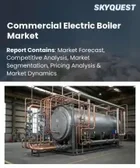
상업용 전기 보일러 시장 규모, 점유율 및 성장 분석 : 기술별, 용량별, 최종 용도 산업별, 지역별 - 업계 예측(2026-2033년)Commercial Electric Boiler Market Size, Share, and Growth Analysis, By Technology (Resistance Boilers, Electrode Boilers), By Capacity (Less Than 10 MMBtu/Hr, 10-50 MMBtu/Hr), By End-Use Industry, By Region - Industry Forecast 2026-2033 |
||||||

세계의 상업용 전기 보일러 시장 규모는 2024년에 43억 2,000만 달러로 평가되며, 2025년 45억 5,000만 달러에서 2033년까지 69억 4,000만 달러로 확대하며, 예측 기간(2026-2033년)에 CAGR 5.4%로 성장할 것으로 전망되고 있습니다.
세계의 상업용 전기 보일러 시장은 주로 저탄소 난방 솔루션에 대한 수요에 의해 주도되고 있습니다. 이는 기관 및 건물 소유주가 엄격한 배출 규제에 대응해야 하는 상황이기 때문입니다. 특히 효율성과 실내 공기질이 필수적인 호텔, 의료, 교육 등의 분야에서는 전기저항식 및 침지형 보일러가 선호되고 있습니다. 재생에너지의 부상과 함께이 전기 보일러는 보조 옵션에서 주요 난방 시스템으로 전환하고 있습니다. 재생에너지의 비용이 감소함에 따라 시설 운영자에게 전기화는 점점 더 비용 경쟁력 있는 선택이 되고 있으며, 특히 병원 및 식품 가공 산업에서 그 보급이 가속화되고 있습니다. 또한 IoT 기술은 지속적인 모니터링과 원격 관리를 통해 운영 효율성을 높이고, 유지보수를 효율화하며, 데이터에 기반한 의사결정을 촉진하여 시장 성장을 더욱 가속화하고, 에너지 관리를 간소화합니다.
세계의 상업용 전기보일러 시장 촉진요인
세계의 상업용 전기보일러 시장은 정부 인센티브, 배출가스 규제, 청정 에너지에 대한 노력 등 다양한 요인에 의해 크게 영향을 받고 있습니다. 이러한 요소들은 장벽을 최소화하고 프로젝트의 경제성을 높임으로써 전기 보일러 도입에 유리한 환경을 조성하고 있습니다. 지원적인 정책 프레임워크를 통해 시설 관리자와 개발자는 시설 업데이트 계획에서 전기 난방 솔루션을 우선순위에 두고 자금 조달 및 인허가 절차를 간소화할 수 있습니다. 또한 명확한 규제 지침은 제조업체가 혁신에 투자하고 생산 능력을 확대하여 전기 보일러 및 지원 인프라의 공급을 강화하도록 장려하고 있습니다. 이러한 요인들이 복합적으로 작용하여 인지된 위험을 줄이고 주요 이해관계자들 사이에서 시장 수용을 가속화하고 있습니다.
세계 상업용 전기보일러 시장 억제요인
세계 상업용 전기보일러 시장은 특정 지역의 전기요금 폭등과 변동성이라는 심각한 도전에 직면해 있습니다. 이로 인해 사업자의 운영비용이 증가하고 재무적 불확실성이 높아질 수 있습니다. 이러한 인식은 잠재적인 투자 의욕을 떨어뜨릴 수 있으며, 의사결정권자가 설비 선택에 있으며, 비용 측면을 우선시하는 요인으로 작용할 수 있습니다. 그 결과, 기존 화석연료 시스템에 대한 의존도를 유지하는 경향을 볼 수 있습니다. 또한 에너지 공급의 장기적 안정성과 비용에 대한 우려는 시설 관리자와 투자자들의 전기보일러 도입 의욕을 더욱 떨어뜨리고 있으며, 기술적 역량과 환경적 이점에도 불구하고 보급률을 저해하고 있습니다. 이러한 요인들은 시장에서 지속적인 제약요인으로 작용하고 있습니다.
세계 상업용 전기보일러 시장 동향
다양한 분야에서 탈탄소화에 대한 관심이 높아지면서 세계 상업용 전기보일러 시장은 괄목할 만한 성장세를 보이고 있습니다. 조직은 지속가능성에 대한 약속을 이동하고 변화하는 규제를 준수하기 위해 저탄소 난방 솔루션을 적극적으로 모색하고 있습니다. 전기 보일러는 시설내 화석 연료 소비를 줄이고, 기업의 환경 목표에 부합하며, 투자자의 요구를 충족시키기 위한 매력적인 선택이 되고 있습니다. 주요 조달 결정은 수명주기 배출량 및 공급업체의 지속가능성 주장에 따라 크게 좌우되며, 조직은 규제 변화에 대비하여 시설의 미래성을 확보하기 위해 노력하고 있습니다. 이러한 추세는 이해관계자의 압력, 기업의 넷 제로 목표 추구, 신축 및 개보수 모두에서 전기 난방 솔루션 채택에 따른 평판상 이점으로 인해 더욱 가속화되고 있습니다.
자주 묻는 질문
목차
서론
조사 방법
개요
시장 역학과 전망
주요 시장 인사이트
세계의 상업용 전기 보일러 시장 규모 : 기술별
세계의 상업용 전기 보일러 시장 규모 : 용량별
세계의 상업용 전기 보일러 시장 규모 : 최종 사용 산업별
세계의 상업용 전기 보일러 시장 규모 : 지역별
경쟁 정보
주요 기업 개요
결론과 제안
KSA 26.05.26Global Commercial Electric Boiler Market size was valued at USD 4.32 Billion in 2024 and is poised to grow from USD 4.55 Billion in 2025 to USD 6.94 Billion by 2033, growing at a CAGR of 5.4% during the forecast period (2026-2033).
The global commercial electric boiler market is primarily driven by the need for low-carbon heating solutions, as institutions and building owners seek to meet stringent emissions regulations. Electric-resistance and immersion boilers are particularly favored in sectors like hospitality, healthcare, and education, where efficiency and indoor air quality are essential. With the rise of renewable energy sources, these electric boilers have transitioned from backup options to main heating systems. As the cost of renewable energy declines, facilities find electrification increasingly cost-competitive, prompting widespread adoption, especially in hospitals and food processing. Additionally, IoT technology enhances operational efficiency through continuous monitoring and remote management, streamlining maintenance and facilitating data-driven decisions, thus further accelerating market growth and simplifying energy management.
Top-down and bottom-up approaches were used to estimate and validate the size of the Global Commercial Electric Boiler market and to estimate the size of various other dependent submarkets. The research methodology used to estimate the market size includes the following details: The key players in the market were identified through secondary research, and their market shares in the respective regions were determined through primary and secondary research. This entire procedure includes the study of the annual and financial reports of the top market players and extensive interviews for key insights from industry leaders such as CEOs, VPs, directors, and marketing executives. All percentage shares split, and breakdowns were determined using secondary sources and verified through Primary sources. All possible parameters that affect the markets covered in this research study have been accounted for, viewed in extensive detail, verified through primary research, and analyzed to get the final quantitative and qualitative data.
Global Commercial Electric Boiler Market Segments Analysis
Global commercial electric boiler market is segmented by technology, capacity, end-use industry and region. Based on technology, the market is segmented into Resistance Boilers, Electrode Boilers and Hybrid Boiler-Heat-Pump. Based on capacity, the market is segmented into Less Than 10 MMBtu/Hr, 10-50 MMBtu/Hr, 50-100 MMBtu/Hr and Others. Based on end-use industry, the market is segmented into Data Centers, Healthcare Facilities, Educational Institutions, Offices and Commercial Buildings and Others. Based on region, the market is segmented into North America, Europe, Asia Pacific, Latin America and Middle East & Africa.
Driver of the Global Commercial Electric Boiler Market
The global commercial electric boiler market is significantly influenced by various factors, including government incentives, emissions regulations, and commitments to clean energy. These elements foster a positive landscape for the adoption of electric boilers by minimizing obstacles and enhancing the financial viability of projects. Supportive policy frameworks lead facility managers and developers to prioritize electric heating solutions in their upgrade plans and streamline the financing and permitting processes. Moreover, clear regulatory guidelines inspire manufacturers to invest in innovation and expand production capabilities, enhancing the availability of electric boilers and their supporting infrastructure. Collectively, these factors diminish perceived risks and expedite market acceptance among key stakeholders.
Restraints in the Global Commercial Electric Boiler Market
The Global Commercial Electric Boiler market faces significant challenges due to high and volatile electricity prices in certain regions, which can lead to heightened operational costs and financial uncertainty for commercial operators. This perception may discourage potential investments, prompting decision-makers to prioritize cost considerations when selecting equipment. Consequently, there is a tendency to maintain reliance on traditional fossil fuel systems. Furthermore, anxieties regarding the long-term stability and cost of energy supply further diminish the readiness of facility managers and investors to embrace electric boilers, hindering adoption rates despite their technical capabilities and environmental advantages. These factors contribute to ongoing market constraints.
Market Trends of the Global Commercial Electric Boiler Market
The Global Commercial Electric Boiler market is experiencing significant growth as the emphasis on decarbonization intensifies across various sectors. Organizations are actively seeking low-carbon heating solutions to meet sustainability commitments and comply with evolving regulations. Electric boilers present an attractive option for reducing onsite fossil fuel consumption, aligning with corporate environmental goals, and fulfilling investor demands. Key procurement decisions are heavily influenced by lifecycle emissions and supplier sustainability claims, while organizations strive to future-proof their facilities against regulatory changes. This trend is further fueled by stakeholder pressure, the pursuit of corporate net-zero targets, and the reputational benefits associated with adopting electric heating solutions in both new constructions and retrofits.
Table of Contents
Introduction
- Objectives of the Study
- Market Definition & Scope
Research Methodology
- Research Process
- Secondary & Primary Data Methods
- Market Size Estimation Methods
Executive Summary
- Global Market Outlook
- Key Market Highlights
- Segmental Overview
- Competition Overview
Market Dynamics & Outlook
- Macro-Economic Indicators
- Drivers & Opportunities
- Restraints & Challenges
- Supply Side Trends
- Demand Side Trends
- Porters Analysis & Impact
- Competitive Rivalry
- Threat of Substitute
- Bargaining Power of Buyers
- Threat of New Entrants
- Bargaining Power of Suppliers
Key Market Insights
- Key Success Factors
- Market Impacting Factors
- Top Investment Pockets
- Ecosystem Mapping
- Market Attractiveness Index 2025
- PESTEL Analysis
- Regulatory Landscape
Global Commercial Electric Boiler Market Size by Technology & CAGR (2026-2033)
- Market Overview
- Resistance Boilers
- Electrode Boilers
- Hybrid Boiler-Heat-Pump
Global Commercial Electric Boiler Market Size by Capacity & CAGR (2026-2033)
- Market Overview
- Less Than 10 MMBtu/Hr
- 10-50 MMBtu/Hr
- 50-100 MMBtu/Hr
- Others
Global Commercial Electric Boiler Market Size by End-Use Industry & CAGR (2026-2033)
- Market Overview
- Data Centers
- Healthcare Facilities
- Educational Institutions
- Offices and Commercial Buildings
- Others
Global Commercial Electric Boiler Market Size & CAGR (2026-2033)
- North America (Technology, Capacity, End-Use Industry)
- US
- Canada
- Europe (Technology, Capacity, End-Use Industry)
- Germany
- Spain
- France
- UK
- Italy
- Rest of Europe
- Asia Pacific (Technology, Capacity, End-Use Industry)
- China
- India
- Japan
- South Korea
- Rest of Asia-Pacific
- Latin America (Technology, Capacity, End-Use Industry)
- Mexico
- Brazil
- Rest of Latin America
- Middle East & Africa (Technology, Capacity, End-Use Industry)
- GCC Countries
- South Africa
- Rest of Middle East & Africa
Competitive Intelligence
- Top 5 Player Comparison
- Market Positioning of Key Players, 2025
- Strategies Adopted by Key Market Players
- Recent Developments in the Market
- Company Market Share Analysis, 2025
- Company Profiles of All Key Players
- Company Details
- Product Portfolio Analysis
- Company's Segmental Share Analysis
- Revenue Y-O-Y Comparison (2023-2025)
Key Company Profiles
- Bosch
- Company Overview
- Business Segment Overview
- Financial Updates
- Key Developments
- Viessmann
- Company Overview
- Business Segment Overview
- Financial Updates
- Key Developments
- Vaillant Group
- Company Overview
- Business Segment Overview
- Financial Updates
- Key Developments
- BDR Thermea Group
- Company Overview
- Business Segment Overview
- Financial Updates
- Key Developments
- A. O. Smith
- Company Overview
- Business Segment Overview
- Financial Updates
- Key Developments
- Lochinvar
- Company Overview
- Business Segment Overview
- Financial Updates
- Key Developments
- Watts Water
- Company Overview
- Business Segment Overview
- Financial Updates
- Key Developments
- Cleaver-Brooks
- Company Overview
- Business Segment Overview
- Financial Updates
- Key Developments
- Fulton
- Company Overview
- Business Segment Overview
- Financial Updates
- Key Developments
- Precision Boilers
- Company Overview
- Business Segment Overview
- Financial Updates
- Key Developments
- Chromalox
- Company Overview
- Business Segment Overview
- Financial Updates
- Key Developments
- Reimers Electra Steam
- Company Overview
- Business Segment Overview
- Financial Updates
- Key Developments
- Sussman Electric Boilers
- Company Overview
- Business Segment Overview
- Financial Updates
- Key Developments
- Acme Engineering
- Company Overview
- Business Segment Overview
- Financial Updates
- Key Developments
- Lattner Boiler
- Company Overview
- Business Segment Overview
- Financial Updates
- Key Developments
- Thermo-Dynamics
- Company Overview
- Business Segment Overview
- Financial Updates
- Key Developments
- Therma-Flow
- Company Overview
- Business Segment Overview
- Financial Updates
- Key Developments
- Vapor Power
- Company Overview
- Business Segment Overview
- Financial Updates
- Key Developments
- Electro Industries
- Company Overview
- Business Segment Overview
- Financial Updates
- Key Developments


