|
시장보고서
상품코드
2048704
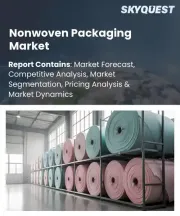
부직포 포장 시장 규모, 점유율 및 성장 분석 : 제품 유형별, 소재별, 기술별, 용도별, 최종사용자별, 유통 채널별, 지역별 - 업계 예측(2026-2033년)Nonwoven Packaging Market Size, Share, and Growth Analysis, By Product Type (Bags & Sacks, Wraps & Pouches), By Material, By Technology, By Application, By End User, By Distribution Channel, By Region - Industry Forecast 2026-2033 |
||||||

세계의 부직포 포장 시장 규모는 2024년 35억 달러, 2025년 38억 달러에서 2033년까지 72억 9,000만 달러로 확대되어 예측 기간(2026-2033년)에 CAGR 8.5%를 보일 전망입니다.
세계 부직포 포장 시장은 전통적인 직조 방식이 아닌 섬유의 결합과 얽힘으로 만들어진 직물로 구성되어 있습니다. 이 소재는 쇼핑백, 보호용 랩, 식품용 라이너 등 다양한 산업 분야에서 널리 사용되고 있습니다. 시장 성장의 큰 원동력은 지속가능성에 대한 관심이 높아지면서 제조업체들이 친환경적이고 경제적으로 실현 가능한 대체품으로 전환하고 있다는 점입니다. 부직포는 경량성과 더불어 내구성, 보호 성능 등의 장점을 제공하여 그 매력을 더하고 있습니다. 스펀본드 및 멜 트블로운 폴리프로필렌 기술이 발전함에 따라 여과, 헬스케어 등의 분야에서 부직포의 채택이 급증하고 있습니다. 일회용 플라스틱 금지에 대한 규제가 강화됨에 따라 지속 가능한 솔루션에 대한 수요가 증가함에 따라 가공업체들은 부직포 포장용 고급 생산 능력에 대한 투자를 늘려야할 것입니다.
세계 부직포 포장 시장 성장 요인
세계 부직포 포장 시장의 주요 시장 성장 촉진요인 중 하나는 다양한 산업 분야에서 지속 가능하고 친환경적인 포장 솔루션에 대한 수요가 증가하고 있다는 점입니다. 소비자의 환경 의식이 높아짐에 따라 각 브랜드는 기존 포장재를 대체할 수 있는 대안을 적극적으로 모색하고 있으며, 그 결과 부직포의 채택이 급증하고 있습니다. 이 소재들은 경량성, 비용 효율성, 다용도성 등 우수한 특성을 가지고 있을 뿐만 아니라 생분해성, 재활용이 가능하다는 장점을 가지고 있습니다. 또한, 플라스틱 사용 감소를 촉진하는 정부 규제가 시장 성장을 더욱 촉진하고 있으며, 제조업체는 지속가능성 목표에 따라 친환경 제품에 대한 소비자의 기대에 부응하는 부직포 포장 솔루션을 혁신하고 개발해야 하는 상황에 직면해 있습니다.
세계 부직포 포장 시장 성장 억제요인
세계 부직포 포장 시장의 주요 시장 성장 억제요인 중 하나는 환경 지속가능성에 대한 규제 당국의 감시가 강화되고 있다는 점입니다. 정부와 조직이 플라스틱 폐기물을 줄이고 생분해성 소재의 보급을 목표로 보다 엄격한 정책으로 전환함에 따라 제조업체는 이러한 요구 사항을 충족하기 위해 생산 공정과 재료를 조정해야 하는 과제에 직면해 있습니다. 이러한 압력은 운영 비용 증가를 가져올 뿐만 아니라 환경 친화적 인 대안을 개발하기 위해 연구 개발에 대한 투자를 필요로합니다. 이러한 문제는 부직포 포장 부문의 성장을 저해하고, 특히 환경 규제가 엄격한 지역에서 기존 포장 옵션과 비교했을 때 경쟁에 영향을 미칠 수 있습니다.
세계 부직포 포장 시장 동향
세계 부직포 포장 시장에서는 지속 가능한 솔루션에 대한 소비자 수요가 증가함에 따라 제조업체들이 바이오 소재를 점점 더 많이 채택하면서 큰 변화가 일어나고 있습니다. 각 업체들은 환경에 미치는 영향 없이 성능을 향상시키기 위해 원료 공급처의 다양화, 가공기술의 개선과 함께 생분해성 섬유의 채택을 적극적으로 모색하고 있습니다. 이러한 추세는 공급망 전반의 협력을 촉진하고 있으며, 이해관계자들이 협력하여 생분해성 표준을 수립하고 인증하는 데에 노력하고 있습니다. 업계가 친환경 대체품으로 전환하는 가운데, 혁신적인 소재와 지속 가능한 노력의 통합은 보다 광범위한 지속가능성 목표에 따라 부직포 포장의 산업 환경을 재편할 것으로 예측됩니다.
자주 묻는 질문
목차
서론
조사 방법
주요 요약
시장 역학과 전망
주요 시장 인사이트
세계의 부직포 포장 시장 규모 : 제품 유형별
세계의 부직포 포장 시장 규모 : 소재별
세계의 부직포 포장 시장 규모 : 기술별
세계의 부직포 포장 시장 규모 : 용도별
세계의 부직포 포장 시장 규모 : 최종사용자별
세계의 부직포 포장 시장 규모 : 유통 채널별
세계의 부직포 포장 시장 규모 : 지역별
경쟁 정보
주요 기업 개요
결론과 제안
LSH 26.06.09Global Nonwoven Packaging Market size was valued at USD 3.5 Billion in 2024 and is poised to grow from USD 3.8 Billion in 2025 to USD 7.29 Billion by 2033, growing at a CAGR of 8.5% during the forecast period (2026-2033).
The global nonwoven packaging market consists of fabrics created through fiber bonding or entanglement, rather than traditional weaving. These materials are commonly utilized in shopping bags, protective wraps, and food liners across diverse industries. A significant driver of market growth is the rising focus on sustainability, compelling manufacturers to transition to eco-friendly and economically viable alternatives. Nonwoven fabrics offer advantages like reduced weight alongside durability and protection, bolstering their appeal. The adoption of nonwovens has surged in sectors such as filtration and healthcare, with advancements in spunbond and meltblown polypropylene technologies. As regulations shift towards banning single-use plastics, there will be increased demand for sustainable solutions, pushing converters to invest in advanced production capabilities for nonwoven packaging.
Top-down and bottom-up approaches were used to estimate and validate the size of the Global Nonwoven Packaging market and to estimate the size of various other dependent submarkets. The research methodology used to estimate the market size includes the following details: The key players in the market were identified through secondary research, and their market shares in the respective regions were determined through primary and secondary research. This entire procedure includes the study of the annual and financial reports of the top market players and extensive interviews for key insights from industry leaders such as CEOs, VPs, directors, and marketing executives. All percentage shares split, and breakdowns were determined using secondary sources and verified through Primary sources. All possible parameters that affect the markets covered in this research study have been accounted for, viewed in extensive detail, verified through primary research, and analyzed to get the final quantitative and qualitative data.
Global Nonwoven Packaging Market Segments Analysis
Global nonwoven packaging market is segmented by product type, material, technology, application, end user, distribution channel and region. Based on product type, the market is segmented into Bags & Sacks, Wraps & Pouches, Sterilization Packaging, Protective Packaging and Industrial Packaging. Based on material, the market is segmented into Polypropylene (PP), Polyethylene (PE), Polyester and Biodegradable Nonwoven Materials. Based on technology, the market is segmented into Spunbond, Meltblown, Needle Punch and Composite Nonwoven Technology. Based on application, the market is segmented into Food & Beverage Packaging, Healthcare & Medical Packaging, Retail Packaging, Industrial Packaging, Agricultural Packaging and Others. Based on end user, the market is segmented into Retail & E-commerce, Healthcare, Food Industry, Industrial Manufacturing, Agriculture and Others. Based on distribution channel, the market is segmented into Direct Sales, Distributors and Online Channels. Based on region, the market is segmented into North America, Europe, Asia Pacific, Latin America and Middle East & Africa.
Driver of the Global Nonwoven Packaging Market
One key market driver for the Global Nonwoven Packaging Market is the increasing demand for sustainable and eco-friendly packaging solutions across various industries. As consumers become more environmentally conscious, brands are actively seeking alternatives to traditional packaging materials, leading to a surge in the adoption of nonwoven fabrics. These materials offer superior properties such as lightweight, cost-effectiveness, and versatility while being biodegradable and recyclable. Moreover, government regulations promoting the reduction of plastic use further fuel market growth, compelling manufacturers to innovate and develop nonwoven packaging solutions that align with sustainability goals and meet consumer expectations for environmentally responsible products.
Restraints in the Global Nonwoven Packaging Market
One significant market restraint for the global nonwoven packaging market is the increasing regulatory scrutiny concerning environmental sustainability. As governments and organizations shift towards stricter policies aimed at reducing plastic waste and promoting biodegradable materials, manufacturers face challenges in adapting their production processes and materials to meet these requirements. This pressure not only results in increased operational costs but also demands investment in research and development to innovate eco-friendly alternatives. Such challenges may hinder the growth of the nonwoven packaging sector and affect its competitiveness compared to traditional packaging options, particularly in regions with stringent environmental regulations.
Market Trends of the Global Nonwoven Packaging Market
The Global Nonwoven Packaging market is witnessing a significant shift as manufacturers increasingly adopt biobased materials, driven by a growing consumer demand for sustainable solutions. Companies are actively seeking to incorporate biodegradable fibers while diversifying their raw material sources and refining processing techniques to enhance performance without compromising environmental impact. This trend is fostering greater collaboration across supply chains, with stakeholders working together to establish and certify composability standards. As the industry pivots towards eco-friendly alternatives, the integration of innovative materials and sustainable practices is poised to reshape the landscape of nonwoven packaging, aligning with broader sustainability goals.
Table of Contents
Introduction
- Objectives of the Study
- Market Definition & Scope
Research Methodology
- Research Process
- Secondary & Primary Data Methods
- Market Size Estimation Methods
Executive Summary
- Global Market Outlook
- Key Market Highlights
- Segmental Overview
- Competition Overview
Market Dynamics & Outlook
- Macro-Economic Indicators
- Drivers & Opportunities
- Restraints & Challenges
- Supply Side Trends
- Demand Side Trends
- Porters Analysis & Impact
- Competitive Rivalry
- Threat of Substitute
- Bargaining Power of Buyers
- Threat of New Entrants
- Bargaining Power of Suppliers
Key Market Insights
- Key Success Factors
- Market Impacting Factors
- Top Investment Pockets
- Ecosystem Mapping
- Market Attractiveness Index 2025
- PESTEL Analysis
- Regulatory Landscape
- Value Chain Analysis
- Case Studies
- Raw Material Analysis
Global Nonwoven Packaging Market Size by Product Type & CAGR (2026-2033)
- Market Overview
- Bags & Sacks
- Wraps & Pouches
- Sterilization Packaging
- Protective Packaging
- Industrial Packaging
Global Nonwoven Packaging Market Size by Material & CAGR (2026-2033)
- Market Overview
- Polypropylene (PP)
- Polyethylene (PE)
- Polyester
- Biodegradable Nonwoven Materials
Global Nonwoven Packaging Market Size by Technology & CAGR (2026-2033)
- Market Overview
- Spunbond
- Meltblown
- Needle Punch
- Composite Nonwoven Technology
Global Nonwoven Packaging Market Size by Application & CAGR (2026-2033)
- Market Overview
- Food & Beverage Packaging
- Healthcare & Medical Packaging
- Retail Packaging
- Industrial Packaging
- Agricultural Packaging
- Others
Global Nonwoven Packaging Market Size by End User & CAGR (2026-2033)
- Market Overview
- Retail & E-commerce
- Healthcare
- Food Industry
- Industrial Manufacturing
- Agriculture
- Others
Global Nonwoven Packaging Market Size by Distribution Channel & CAGR (2026-2033)
- Market Overview
- Direct Sales
- Distributors
- Online Channels
Global Nonwoven Packaging Market Size & CAGR (2026-2033)
- North America (Product Type, Material, Technology, Application, End User, Distribution Channel)
- US
- Canada
- Europe (Product Type, Material, Technology, Application, End User, Distribution Channel)
- Germany
- Spain
- France
- UK
- Italy
- Rest of Europe
- Asia Pacific (Product Type, Material, Technology, Application, End User, Distribution Channel)
- China
- India
- Japan
- South Korea
- Rest of Asia-Pacific
- Latin America (Product Type, Material, Technology, Application, End User, Distribution Channel)
- Mexico
- Brazil
- Rest of Latin America
- Middle East & Africa (Product Type, Material, Technology, Application, End User, Distribution Channel)
- GCC Countries
- South Africa
- Rest of Middle East & Africa
Competitive Intelligence
- Top 5 Player Comparison
- Market Positioning of Key Players, 2025
- Strategies Adopted by Key Market Players
- Recent Developments in the Market
- Company Market Share Analysis, 2025
- Company Profiles of All Key Players
- Company Details
- Product Portfolio Analysis
- Company's Segmental Share Analysis
- Revenue Y-O-Y Comparison (2023-2025)
Key Company Profiles
- Berry Global
- Company Overview
- Business Segment Overview
- Financial Updates
- Key Developments
- Freudenberg Group
- Company Overview
- Business Segment Overview
- Financial Updates
- Key Developments
- Ahlstrom
- Company Overview
- Business Segment Overview
- Financial Updates
- Key Developments
- Kimberly-Clark
- Company Overview
- Business Segment Overview
- Financial Updates
- Key Developments
- DuPont
- Company Overview
- Business Segment Overview
- Financial Updates
- Key Developments
- Johns Manville
- Company Overview
- Business Segment Overview
- Financial Updates
- Key Developments
- Suominen Corporation
- Company Overview
- Business Segment Overview
- Financial Updates
- Key Developments
- Toray Industries
- Company Overview
- Business Segment Overview
- Financial Updates
- Key Developments
- Fitesa
- Company Overview
- Business Segment Overview
- Financial Updates
- Key Developments
- PFNonwovens
- Company Overview
- Business Segment Overview
- Financial Updates
- Key Developments
- Fibertex Nonwovens
- Company Overview
- Business Segment Overview
- Financial Updates
- Key Developments
- Asahi Kasei
- Company Overview
- Business Segment Overview
- Financial Updates
- Key Developments
- Mitsui Chemicals
- Company Overview
- Business Segment Overview
- Financial Updates
- Key Developments
- Glatfelter Corporation
- Company Overview
- Business Segment Overview
- Financial Updates
- Key Developments
- Avgol Industries
- Company Overview
- Business Segment Overview
- Financial Updates
- Key Developments
- TWE Group
- Company Overview
- Business Segment Overview
- Financial Updates
- Key Developments
- Mogul
- Company Overview
- Business Segment Overview
- Financial Updates
- Key Developments
- ANDRITZ
- Company Overview
- Business Segment Overview
- Financial Updates
- Key Developments
- Hollingsworth & Vose
- Company Overview
- Business Segment Overview
- Financial Updates
- Key Developments
- RadiciGroup
- Company Overview
- Business Segment Overview
- Financial Updates
- Key Developments