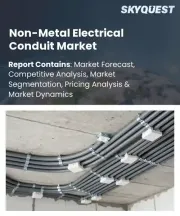
|
시장보고서
상품코드
2048730
비금속 전기 배관 시장 규모, 점유율 및 성장 분석 : 제품 유형별, 배관 사이즈별, 용도별, 최종 이용 산업별, 설치 유형별, 유통 채널별, 지역별 - 업계 예측(2026-2033년)Non-Metal Electrical Conduit Market Size, Share, and Growth Analysis, By Product Type, By Conduit Size, By Application, By End-use Industry, By Installation Type, By Distribution Channel, By Region - Industry Forecast 2026-2033 |
||||||

세계의 비금속 전기 배관 시장 규모는 2024년 42억 달러, 2025년 44억 6,000만 달러에서 2033년까지 72억 2,000만 달러로 확대되어 예측 기간(2026-2033년)에 CAGR 6.2%를 보일 전망입니다.
세계 비금속 전기 배관 시장은 건설 및 인프라에 대한 막대한 투자와 부식 방지 전기 시스템에 대한 수요 증가로 인해 빠르게 성장하고 있습니다. 재생에너지에 대한 노력의 확대와 전기화 활동 증가는 이러한 추세를 더욱 강화하는 한편, 비용 효율적인 배선 보호 솔루션에 대한 수요가 증가하면서 시장 성장을 가속하고 있습니다. 난연성, 자외선 저항성 및 고성능 소재의 제조 기술 발전은 제조업체에게 새로운 비즈니스 기회를 창출하고 있습니다. 또한, 다양한 분야에서 PVC, HDPE 및 유리섬유 도관의 사용 증가와 더불어 아시아태평양, 아프리카, 라틴아메리카 등 신흥 지역의 활발한 건설 활동이 수요 증가를 뒷받침하고 있습니다. 그러나 원자재 가격 변동, 플라스틱 관련 환경 문제, 엄격한 안전 규제 등의 문제가 시장 확대에 걸림돌이 될 수 있습니다.
세계 비금속 전기 배관 시장은 제품 유형, 배관 크기, 용도, 최종 사용 산업, 설치 유형, 유통 채널 및 지역별로 세분화되어 있습니다. 제품 유형에 따라 시장은 PVC 전기 배관, HDPE 전기 배관, 유리 섬유 전기 배관, 유연한 비금속 배관, 경질 비금속 배관, 골판지 비금속 배관 및 기타로 분류됩니다. 도관 크기에 따라 시장은 1인치 미만, 1인치에서 2인치, 2인치 이상으로 분류됩니다. 용도에 따라 시장은 주택 건설, 상업용 건설, 산업 건설, 통신 인프라, 유틸리티 및 전력 분배, 교통 인프라 및 기타로 분류됩니다. 최종 사용 산업을 기준으로 시장은 건설, 에너지 및 유틸리티, 통신, 제조, 운송 및 기타로 분류됩니다. 설치 유형에 따라 시장은 지하 설치, 지상 설치 및 은폐 설치로 분류됩니다. 유통 채널에 따라 시장은 직접 판매, 전기 장비 도매상, 온라인 판매로 나뉩니다. 지역별로는 북미, 유럽, 아시아태평양, 라틴아메리카, 중동 및 아프리카로 분류됩니다.
세계 비금속 전기 도관 시장의 성장 요인
전기공과 엔지니어들 사이에서 비금속 전기 도관에 대한 수요가 증가하고 있는 배경에는 뛰어난 내구성이 있습니다. 부식에 강하고 가볍기 때문에 다양한 환경에서의 취급 용이성과 설치 용이성이 향상됩니다. 비금속으로 제작되어 특히 부식성 환경이나 습기가 많은 환경에서 향후 유지 보수 필요성을 크게 줄여 실용적인 선택이 될 수 있습니다. 이러한 신뢰성으로 인해 건축가들은 이러한 도관의 사용을 권장하고 있으며, 프로젝트 관리자들도 장기적인 이점과 효율적인 설치 프로세스를 이유로 프로젝트에서 이러한 도관을 선호하고 있습니다. 따라서 비금속 전기 도관 시장은 계속 호황을 누리고 있습니다.
세계 비금속 전기 배관 시장 성장 억제요인
세계 비금속 전기 배관 시장의 주요 시장 성장 억제요인 중 하나는 대체 재료 및 첨단 배선 솔루션에 대한 수요 증가입니다. 산업계와 소비자들이 가볍고 유연하며 설치가 용이한 옵션을 점점 더 중요시하는 가운데, 전통적인 비금속 배관은 연질 플라스틱 배관 및 첨단 케이블 관리 시스템과 같은 혁신적인 제품과의 경쟁에 직면해 있습니다. 또한, 에너지 효율과 지속 가능한 건축 방식에 대한 관심이 높아짐에 따라 이해관계자들은 보다 친환경적인 대안을 모색하고 있으며, 이는 비금속 전선관 시장의 성장을 저해할 수 있습니다. 이러한 시장 수요의 변화는 전체 시장의 잠재력을 제한하고, 제조업체가 경쟁력을 유지하는 데 어려움을 겪을 수 있습니다.
세계 비금속 전기 배관 시장 동향
세계 비금속 전기 도관 시장에서는 환경적 성능과 순환 경제 원칙에 대한 관심이 높아짐에 따라 지속 가능한 소재를 채택하는 경향이 두드러지게 나타나고 있습니다. 이러한 변화는 설계자와 시공업체가 수명주기 평가, 탄소 배출량 감소 및 재활용성을 우선시함에 따라 재활용 가능한 폴리머 및 바이오 폴리머 수지로 만든 덕트 시스템에 대한 선호도가 증가하고 있음을 보여줍니다. 각 제조업체들은 제품 재설계와 재활용 정책 강화를 통해 이러한 수요에 대응하고 있습니다. 그 결과, 각 기업들은 디자인 프로세스, 조달 전략, 마케팅 방식을 재검토하고, 명확한 환경적 가치 제안을 강조하며, 밸류체인의 투명성을 향상시키고, 환경에 대한 소비자의 기대에 부응하기 위해 노력하고 있습니다.
자주 묻는 질문
목차
서론
조사 방법
주요 요약
시장 역학과 전망
주요 시장 인사이트
세계의 비금속 전기 배관 시장 규모 : 제품 유형별
세계의 비금속 전기 배관 시장 규모 : 도관사이즈별
세계의 비금속 전기 배관 시장 규모 : 용도별
세계의 비금속 전기 배관 시장 규모 : 최종 사용 산업별
세계의 비금속 전기 배관 시장 규모 : 설치 유형별
세계의 비금속 전기 배관 시장 규모 : 유통 채널별
세계의 비금속 전기 배관 시장 규모 : 지역별
경쟁 정보
주요 기업 개요
결론과 제안
LSH 26.06.10Global Non-Metal Electrical Conduit Market size was valued at USD 4.2 Billion in 2024 and is poised to grow from USD 4.46 Billion in 2025 to USD 7.22 Billion by 2033, growing at a CAGR of 6.2% during the forecast period (2026-2033).
The global market for non-metal electrical conduits is experiencing a surge driven by significant investments in construction and infrastructure, alongside a heightened demand for corrosion-resistant electrical systems. The expansion of renewable energy initiatives and increased electrification activities amplify this trend, while the preference for cost-effective wiring protection solutions bolsters market growth. Advances in manufacturing flame-retardant, UV resistant, and high-performance materials are unlocking new opportunities for manufacturers. Additionally, the rising use of PVC, HDPE, and fiberglass conduits across various sectors, coupled with robust construction activities in emerging regions such as Asia Pacific, Africa, and Latin America, supports increasing demand. However, challenges such as raw material price volatility, environmental concerns related to plastics, and strict safety regulations may hinder market expansion.
Top-down and bottom-up approaches were used to estimate and validate the size of the Global Non-Metal Electrical Conduit market and to estimate the size of various other dependent submarkets. The research methodology used to estimate the market size includes the following details: The key players in the market were identified through secondary research, and their market shares in the respective regions were determined through primary and secondary research. This entire procedure includes the study of the annual and financial reports of the top market players and extensive interviews for key insights from industry leaders such as CEOs, VPs, directors, and marketing executives. All percentage shares split, and breakdowns were determined using secondary sources and verified through Primary sources. All possible parameters that affect the markets covered in this research study have been accounted for, viewed in extensive detail, verified through primary research, and analyzed to get the final quantitative and qualitative data.
Global Non-Metal Electrical Conduit Market Segments Analysis
Global non-metal electrical conduit market is segmented by product type, conduit size, application, end-use industry, installation type, distribution channel,and region. Based on product type, the market is segmented into PVC electrical conduits, HDPE electrical conduits, fiberglass electrical conduits, flexible non-metal conduits, rigid non-metal conduits, corrugated non-metalconduits,and others. Based on conduit size, the market is segmented into below 1 inch, 1 inch to 2inches,and above 2 inches. Based on application, the market is segmented into residential construction, commercial construction, industrial construction, telecommunications infrastructure, utility & power distribution, transportationinfrastructure,and others. Based on end-use industry, the market is segmented into construction, energy & utilities, telecommunications, manufacturing, transportation,and others. Based on installation type, the market is segmented into underground installation, surfaceinstallation,and concealed installation. Based on distribution channel, the market is segmented into direct sales, electrical distributors,and online sales. Based on region, the market is segmented into North America, Europe, Asia Pacific, Latin America,and Middle East & Africa.
Driver of the Global Non-Metal Electrical Conduit Market
The increasing preference for non-metallic electrical conduits among electrical installers and engineers can be attributed to their superior durability, as they are resistant to corrosion and lightweight, which enhances their ease of handling and installation in various environments. Their non-metallic composition significantly reduces the need for future maintenance, particularly in corrosive or humid settings, making them a practical choice. This reliability encourages architects to advocate for their use, leading project managers to favor these conduits in their projects due to the long-term advantages and streamlined installation process they offer. Thus, the market for non-metal electrical conduit continues to thrive.
Restraints in the Global Non-Metal Electrical Conduit Market
One significant market restraint for the global non-metal electrical conduit market is the increasing preference for alternative materials and advanced wiring solutions. As industries and consumers increasingly prioritize lightweight, flexible, and easy-to-install options, traditional non-metal conduits face competition from innovative products such as flexible plastic conduits and advanced cable management systems. Additionally, the rising focus on energy efficiency and sustainable building practices may push stakeholders towards more eco-friendly alternatives, thereby hindering the growth of the non-metal conduit market. These shifts in market demand can limit the overall market potential and pose challenges for manufacturers in retaining their competitive edge.
Market Trends of the Global Non-Metal Electrical Conduit Market
The Global Non-Metal Electrical Conduit market is witnessing a significant trend towards sustainable material adoption, driven by an increasing emphasis on environmental performance and circular economy principles. This shift highlights the growing preference for ducting systems made from recyclable polymers and biopolymer resins, as specifiers and constructors prioritize life-cycle assessments, lower embodied carbon footprints, and recyclability. Manufacturers are responding to this demand through product reformulation and enhanced recycling initiatives. Consequently, companies are adapting their design processes, sourcing strategies, and marketing approaches to emphasize clear environmental value propositions and improve supply chain transparency, ensuring alignment with eco-conscious consumer expectations.
Table of Contents
Introduction
- Objectives of the Study
- Market Definition & Scope
Research Methodology
- Research Process
- Secondary & Primary Data Methods
- Market Size Estimation Methods
Executive Summary
- Global Market Outlook
- Key Market Highlights
- Segmental Overview
- Competition Overview
Market Dynamics & Outlook
- Macro-Economic Indicators
- Drivers & Opportunities
- Restraints & Challenges
- Supply Side Trends
- Demand Side Trends
- Porters Analysis & Impact
- Competitive Rivalry
- Threat of Substitute
- Bargaining Power of Buyers
- Threat of New Entrants
- Bargaining Power of Suppliers
Key Market Insights
- Key Success Factors
- Market Impacting Factors
- Top Investment Pockets
- Ecosystem Mapping
- Market Attractiveness Index 2025
- PESTEL Analysis
- Regulatory Landscape
Global Non-Metal Electrical Conduit Market Size by Product Type & CAGR (2026-2033)
- Market Overview
- PVC Electrical Conduits
- HDPE Electrical Conduits
- Fiberglass Electrical Conduits
- Flexible Non-metal Conduits
- Rigid Non-metal Conduits
- Corrugated Non-metal Conduits
- Others
Global Non-Metal Electrical Conduit Market Size by Conduit Size & CAGR (2026-2033)
- Market Overview
- Below 1 Inch
- 1 Inch to 2 Inches
- Above 2 Inches
Global Non-Metal Electrical Conduit Market Size by Application & CAGR (2026-2033)
- Market Overview
- Residential Construction
- Commercial Construction
- Industrial Construction
- Telecommunications Infrastructure
- Utility & Power Distribution
- Transportation Infrastructure
- Others
Global Non-Metal Electrical Conduit Market Size by End-use Industry & CAGR (2026-2033)
- Market Overview
- Construction
- Energy & Utilities
- Telecommunications
- Manufacturing
- Transportation
- Others
Global Non-Metal Electrical Conduit Market Size by Installation Type & CAGR (2026-2033)
- Market Overview
- Underground Installation
- Surface Installation
- Concealed Installation
Global Non-Metal Electrical Conduit Market Size by Distribution Channel & CAGR (2026-2033)
- Market Overview
- Direct Sales
- Electrical Distributors
- Online Sales
Global Non-Metal Electrical Conduit Market Size & CAGR (2026-2033)
- North America (Product Type, Conduit Size, Application, End-use Industry, Installation Type, Distribution Channel)
- US
- Canada
- Europe (Product Type, Conduit Size, Application, End-use Industry, Installation Type, Distribution Channel)
- Germany
- Spain
- France
- UK
- Italy
- Rest of Europe
- Asia Pacific (Product Type, Conduit Size, Application, End-use Industry, Installation Type, Distribution Channel)
- China
- India
- Japan
- South Korea
- Rest of Asia-Pacific
- Latin America (Product Type, Conduit Size, Application, End-use Industry, Installation Type, Distribution Channel)
- Mexico
- Brazil
- Rest of Latin America
- Middle East & Africa (Product Type, Conduit Size, Application, End-use Industry, Installation Type, Distribution Channel)
- GCC Countries
- South Africa
- Rest of Middle East & Africa
Competitive Intelligence
- Top 5 Player Comparison
- Market Positioning of Key Players, 2025
- Strategies Adopted by Key Market Players
- Recent Developments in the Market
- Company Market Share Analysis, 2025
- Company Profiles of All Key Players
- Company Details
- Product Portfolio Analysis
- Company's Segmental Share Analysis
- Revenue Y-O-Y Comparison (2023-2025)
Key Company Profiles
- Atkore
- Company Overview
- Business Segment Overview
- Financial Updates
- Key Developments
- JM Eagle
- Company Overview
- Business Segment Overview
- Financial Updates
- Key Developments
- Cantex
- Company Overview
- Business Segment Overview
- Financial Updates
- Key Developments
- ABB
- Company Overview
- Business Segment Overview
- Financial Updates
- Key Developments
- Legrand
- Company Overview
- Business Segment Overview
- Financial Updates
- Key Developments
- Schneider Electric
- Company Overview
- Business Segment Overview
- Financial Updates
- Key Developments
- Acuity Brands
- Company Overview
- Business Segment Overview
- Financial Updates
- Key Developments
- National Pipe and Plastics
- Company Overview
- Business Segment Overview
- Financial Updates
- Key Developments
- Prime Conduit
- Company Overview
- Business Segment Overview
- Financial Updates
- Key Developments
- Champion Fiberglass
- Company Overview
- Business Segment Overview
- Financial Updates
- Key Developments
- IPEX
- Company Overview
- Business Segment Overview
- Financial Updates
- Key Developments
- Dura-Line
- Company Overview
- Business Segment Overview
- Financial Updates
- Key Developments
- Astral
- Company Overview
- Business Segment Overview
- Financial Updates
- Key Developments
- Finolex Industries
- Company Overview
- Business Segment Overview
- Financial Updates
- Key Developments
- Aliaxis
- Company Overview
- Business Segment Overview
- Financial Updates
- Key Developments
- Mexichem
- Company Overview
- Business Segment Overview
- Financial Updates
- Key Developments
- Pars Ethylene Kish
- Company Overview
- Business Segment Overview
- Financial Updates
- Key Developments
- Pipelife
- Company Overview
- Business Segment Overview
- Financial Updates
- Key Developments
- Polyplastic Group
- Company Overview
- Business Segment Overview
- Financial Updates
- Key Developments
- China Lesso Group
- Company Overview
- Business Segment Overview
- Financial Updates
- Key Developments