|
시장보고서
상품코드
2048769
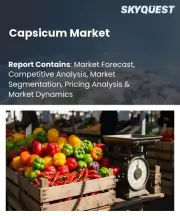
고추 시장 규모, 점유율 및 성장 분석 : 제품 유형별, 품종별, 용도별, 유통경로별, 지역별 - 업계 예측(2026-2033년)Capsicum Market Size, Share, and Growth Analysis, By Product Type (Fresh Capsicum/Peppers, Dried/Powdered), By Variety (Bell Peppers, Chili Peppers), By Application, By Distribution, By Region - Industry Forecast 2026-2033 |
||||||

세계의 고추 시장 규모는 2024년 525억 2,000만 달러, 2025년 556억 8,000만 달러에서 2033년까지 888억 5,000만 달러로 확대되어 예측 기간(2026-2033년)에 CAGR 6.02%를 보일 전망입니다.
세계 고추 시장은 다양한 고품질 신선 및 가공 고추에 대한 소비자의 선호도 변화에 영향을 받아 생산, 무역 및 밸류체인에 큰 변화를 가져오고 있습니다. 건강 지향적인 식생활 트렌드가 확산되면서 소비자들은 영양가 높은 식품을 찾게 되었고, 특히 네덜란드와 스페인의 농부들은 고추의 재배 효율을 높이기 위해 온실을 활용하고 있습니다. 동시에 멕시코와 인도도 고추 수출을 확대되고 있습니다. 콜드체인 냉장기술의 혁신으로 계절적 생산의 제약을 극복하고 연중 공급이 가능해졌습니다. 또한, 부가가치 가공이 중요한 트렌드로 떠오르고 있으며, 신선한 수확물을 상온에서 보관할 수 있는 제품으로 전환하여 소매 및 외식 산업에서 수요 및 공급의 균형을 맞추고 있습니다. 가공업체와 농가의 협력은 품질과 안정성을 향상시키고, 수출 기회 확대와 저장 솔루션에 대한 투자를 촉진하고 있습니다.
세계 고추 시장의 성장 요인
세계 고추 시장은 천연 착색제, 향미증진제, 영양학적 이점을 추구하는 식품 제조업체에게 매력적으로 작용하는 고추의 다재다능한 특성에 힘입어 크게 성장하고 있습니다. 소비자의 취향이 편리하고 바로 먹을 수 있는 음식으로 바뀌면서 고추의 감각적 매력과 건강 증진 효과로 인해 포장 식품에서 고추의 인기가 높아지고 있습니다. 고추에서 추출한 성분을 도입함으로써 제조업체는 제품의 혁신과 다양화를 꾀할 수 있으며, 이는 소비자 수요를 충족시킬 뿐만 아니라 조달 활동을 강화하고 작물의 지속가능성을 향상시킬 수 있습니다. 이러한 추세는 새로운 부가가치 제품 창출을 촉진하고 시장의 장기적인 확장을 촉진하는 동시에 고추를 식품 산업에서 주요한 존재로 자리매김하고 있습니다.
세계 파프리카 시장 성장 억제요인
파프리카 시장은 생산과 유통의 효율성을 저해하는 계절적 변동 및 물류 제약과 관련된 몇 가지 과제에 직면해 있습니다. 이러한 요인들은 공급량 및 품질 변동으로 이어져 제조업체공급 안정성을 저해하는 결과를 초래하고 있습니다. 파프리카는 부패하기 쉽고 수확 후 빠른 처리가 필요하기 때문에 제품의 품질을 유지하기 위해서는 탄탄한 콜드체인이 필수적입니다. 안타깝게도 많은 지역에서 콜드체인 인프라가 부족하여 연중 안정적인 조달이 어려운 실정입니다. 이러한 공급의 불안정성은 장기적인 계약 체결을 복잡하게 만들고, 제조업체가 가공 사업을 확장하는 것을 방해하며, 제품 개발에 불확실성을 가져옵니다. 그 결과, 안정적인 원료에 대한 접근이 제한되어 시장 확대 기회가 제한될 수 있습니다.
세계 고추 시장 동향
세계 고추 시장에서는 프리미엄화와 다양화라는 두드러진 추세를 볼 수 있습니다. 소비자들이 고부가가치 고추 품종과 독특한 맛을 점점 더 많이 찾는 가운데, 업계는 색상, 편의성, 브랜딩과 같은 특성을 우선시하는 혁신적인 제품으로 이에 대응하고 있습니다. 소매업체와 가공업체들은 품질 향상과 산지를 중시하는 제품에 집중하고 있으며, 그 결과 선발 육종과 차별화된 포장에 대한 투자가 급증하고 있습니다. 이러한 변화를 통해 기업은 기존의 단순한 상품 물량 확보의 틀을 넘어 요리의 다양성과 새로운 경험에 대한 수요 증가에 부응하면서 더 높은 가격 프리미엄을 획득하고 수익률을 최적화할 수 있게 되었습니다.
자주 묻는 질문
목차
서론
조사 방법
주요 요약
시장 역학과 전망
주요 시장 인사이트
세계의 고추 시장 규모 : 제품 유형별
세계의 고추 시장 규모 : 품종별
세계의 고추 시장 규모 : 용도별
세계의 고추 시장 규모 : 유통별
세계의 고추 시장 규모 : 지역별
경쟁 정보
주요 기업 개요
결론과 제안
LSH 26.06.10Global Capsicum Market size was valued at USD 52.52 Billion in 2024 and is poised to grow from USD 55.68 Billion in 2025 to USD 88.85 Billion by 2033, growing at a CAGR of 6.02% during the forecast period (2026-2033).
The global capsicum market is primarily influenced by shifting consumer preferences for a variety of high-quality fresh and processed peppers, significantly transforming production, trade, and value chains. As health-conscious eating trends rise, consumers increasingly seek nutrient-dense foods, prompting farmers, particularly in the Netherlands and Spain, to utilize greenhouses for enhanced pepper cultivation. Concurrently, Mexico and India are boosting their pepper exports. Innovations in cold chain refrigeration have enabled year-round supply, overcoming the limitations of seasonal production. Additionally, value-added processing is a critical trend, as it converts perishable harvests into shelf-stable products, aligning supply with demand in retail and foodservice sectors. The collaboration between processors and farmers enhances consistency and quality, fostering increased export opportunities and investments in storage solutions.
Top-down and bottom-up approaches were used to estimate and validate the size of the Global Capsicum market and to estimate the size of various other dependent submarkets. The research methodology used to estimate the market size includes the following details: The key players in the market were identified through secondary research, and their market shares in the respective regions were determined through primary and secondary research. This entire procedure includes the study of the annual and financial reports of the top market players and extensive interviews for key insights from industry leaders such as CEOs, VPs, directors, and marketing executives. All percentage shares split, and breakdowns were determined using secondary sources and verified through Primary sources. All possible parameters that affect the markets covered in this research study have been accounted for, viewed in extensive detail, verified through primary research, and analyzed to get the final quantitative and qualitative data.
Global Capsicum Market Segments Analysis
Global capsicum market is segmented by product type, variety, application, distribution and region. Based on product type, the market is segmented into Fresh Capsicum/Peppers, Dried/Powdered, Frozen, Canned/Processed and Oleoresin. Based on variety, the market is segmented into Bell Peppers, Chili Peppers, Paprika and Cayenne. Based on application, the market is segmented into Food Industry, Pharmaceuticals and Cosmetics. Based on distribution, the market is segmented into Retail, Food Service and Industrial B2B. Based on region, the market is segmented into North America, Europe, Asia Pacific, Latin America and Middle East & Africa.
Driver of the Global Capsicum Market
The Global Capsicum market is significantly driven by the ingredient's multifunctionality, appealing to food manufacturers who seek natural colorants, flavor enhancers, and nutritional benefits. As consumer preferences shift towards convenient, ready-to-eat meals, capsicum's ability to enhance sensory appeal and promote health benefits makes it increasingly popular in packaged food products. By incorporating capsicum derivatives, manufacturers can innovate and diversify their offerings, which not only meets consumer demand but also bolsters their procurement efforts and crop sustainability. This trend fosters the creation of new, value-added products, fueling the market's long-term expansion and positioning capsicum as a key player in the food industry.
Restraints in the Global Capsicum Market
The Capsicum market faces several challenges related to seasonal variations and logistical constraints that hinder production and distribution efficiency. These factors contribute to fluctuations in availability and quality, resulting in an unreliable supply for manufacturers. Given that Capsicum is highly perishable and demands immediate post-harvest handling, a robust cold chain is crucial for maintaining product integrity. Unfortunately, insufficient cold chain infrastructure in many regions complicates consistent year-round sourcing. Such supply inconsistencies complicate long-term contractual agreements, deter manufacturers from scaling processing operations, and introduce uncertainty into product development efforts, ultimately limiting access to stable raw material quantities and constraining market expansion opportunities.
Market Trends of the Global Capsicum Market
The global capsicum market is witnessing a pronounced trend towards premiumization and diversification. As consumers increasingly seek out high-value capsicum varieties and unique flavor profiles, the sector is responding with innovative product offerings that prioritize attributes such as color, convenience, and branding. Retailers and processors are focusing on enhanced quality and origin-linked products, leading to a surge in investments in selective breeding and differentiated packaging. This shift enables companies to command higher price premiums and optimize margins while catering to a growing demand for culinary versatility and novel experiences, transcending the traditional reliance on commodity volume alone.
Table of Contents
Introduction
- Objectives of the Study
- Market Definition & Scope
Research Methodology
- Research Process
- Secondary & Primary Data Methods
- Market Size Estimation Methods
Executive Summary
- Global Market Outlook
- Key Market Highlights
- Segmental Overview
- Competition Overview
Market Dynamics & Outlook
- Macro-Economic Indicators
- Drivers & Opportunities
- Restraints & Challenges
- Supply Side Trends
- Demand Side Trends
- Porters Analysis & Impact
- Competitive Rivalry
- Threat of Substitute
- Bargaining Power of Buyers
- Threat of New Entrants
- Bargaining Power of Suppliers
Key Market Insights
- Key Success Factors
- Market Impacting Factors
- Top Investment Pockets
- Ecosystem Mapping
- Market Attractiveness Index 2025
- PESTEL Analysis
- Regulatory Landscape
Global Capsicum Market Size by Product Type & CAGR (2026-2033)
- Market Overview
- Fresh Capsicum/Peppers
- Dried/Powdered
- Frozen
- Canned/Processed
- Oleoresin
Global Capsicum Market Size by Variety & CAGR (2026-2033)
- Market Overview
- Bell Peppers
- Chili Peppers
- Paprika
- Cayenne
Global Capsicum Market Size by Application & CAGR (2026-2033)
- Market Overview
- Food Industry
- Pharmaceuticals
- Cosmetics
Global Capsicum Market Size by Distribution & CAGR (2026-2033)
- Market Overview
- Retail
- Food Service
- Industrial B2B
Global Capsicum Market Size & CAGR (2026-2033)
- North America (Product Type, Variety, Application, Distribution)
- US
- Canada
- Europe (Product Type, Variety, Application, Distribution)
- Germany
- Spain
- France
- UK
- Italy
- Rest of Europe
- Asia Pacific (Product Type, Variety, Application, Distribution)
- China
- India
- Japan
- South Korea
- Rest of Asia-Pacific
- Latin America (Product Type, Variety, Application, Distribution)
- Mexico
- Brazil
- Rest of Latin America
- Middle East & Africa (Product Type, Variety, Application, Distribution)
- GCC Countries
- South Africa
- Rest of Middle East & Africa
Competitive Intelligence
- Top 5 Player Comparison
- Market Positioning of Key Players, 2025
- Strategies Adopted by Key Market Players
- Recent Developments in the Market
- Company Market Share Analysis, 2025
- Company Profiles of All Key Players
- Company Details
- Product Portfolio Analysis
- Company's Segmental Share Analysis
- Revenue Y-O-Y Comparison (2023-2025)
Key Company Profiles
- McCormick & Company
- Company Overview
- Business Segment Overview
- Financial Updates
- Key Developments
- Heinz (Kraft Heinz)
- Company Overview
- Business Segment Overview
- Financial Updates
- Key Developments
- Olam International
- Company Overview
- Business Segment Overview
- Financial Updates
- Key Developments
- Conagra Brands
- Company Overview
- Business Segment Overview
- Financial Updates
- Key Developments
- Del Monte Foods
- Company Overview
- Business Segment Overview
- Financial Updates
- Key Developments
- Piquillo Peppers
- Company Overview
- Business Segment Overview
- Financial Updates
- Key Developments
- Greenfire Capsicums
- Company Overview
- Business Segment Overview
- Financial Updates
- Key Developments
- Sunpure Capsicums
- Company Overview
- Business Segment Overview
- Financial Updates
- Key Developments
- Kalsec Inc.
- Company Overview
- Business Segment Overview
- Financial Updates
- Key Developments
- Dohler Group
- Company Overview
- Business Segment Overview
- Financial Updates
- Key Developments
- Synthite Industries
- Company Overview
- Business Segment Overview
- Financial Updates
- Key Developments
- Universal Oleoresins
- Company Overview
- Business Segment Overview
- Financial Updates
- Key Developments
- Paprika Szeged
- Company Overview
- Business Segment Overview
- Financial Updates
- Key Developments
- Migros Group
- Company Overview
- Business Segment Overview
- Financial Updates
- Key Developments
- Agropec Capsaicin
- Company Overview
- Business Segment Overview
- Financial Updates
- Key Developments