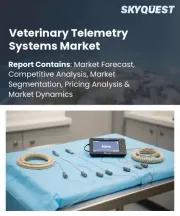
|
시장보고서
상품코드
2048874
동물용 원격 생체신호 모니터링 시스템 시장 규모, 점유율 및 성장 분석 : 제품 유형별, 동물 유형별, 용도별, 기술별, 최종사용자별, 도입 형태별, 지역별 - 업계 예측(2026-2033년)Veterinary Telemetry Systems Market Size, Share, and Growth Analysis, By Product Type, By Animal Type, By Application, By Technology, By End User, By Deployment Type, By Region - Industry Forecast 2026-2033 |
||||||

세계의 동물용 원격 생체신호 모니터링 시스템 시장 규모는 2024년 12억 달러, 2025년 12억 9,000만 달러에서 2033년까지 22억 6,000만 달러로 확대되어 예측 기간(2026-2033년)에 CAGR 7.3%를 보일 전망입니다.
세계 동물용 원격 생체신호 모니터링 시스템 시장은 기술 발전과 종합적인 동물 의료에 대한 수요 증가에 힘입어 괄목할 만한 성장을 거듭하고 있습니다. 유선 및 무선 원격 측정 장비의 통합으로 심전도(ECG), 호흡수, 체온 등 중요한 생리적 파라미터의 지속적인 모니터링이 가능해져 임상, 연구 및 현장 환경에서 진단 능력과 환자 결과를 개선하고 있습니다. 컴팩트하고 휴대 가능한 텔레메트리 솔루션으로의 전환으로 말 경기 및 수술을 포함한 다양한 환경에서 사용이 가능해졌습니다. 또한, 클라우드 분석은 커넥티드 디바이스의 기능을 강화하여 수의사에게 합리적인 가격의 모니터링 솔루션과 실행 가능한 인사이트를 제공합니다. 센서 감도의 향상과 모바일 네트워크의 가용성 향상은 생리적 변화의 조기 발견에 기여하고 적시에 개입을 촉진하며 입원 기간을 단축시킵니다. 이러한 추세는 구독형 소프트웨어에 대한 수요와 제조업체와 원격 의료 제공업체와의 제휴와 함께 원격 모니터링 기술의 보급을 촉진하고 있습니다.
세계 동물용 원격 생체신호 모니터링 시스템 시장 성장 촉진요인
수의사와 반려동물 보호자들 사이에서 원격 모니터링에 대한 관심이 높아지면서 전통적인 임상 환경을 넘어 동물의 지속적인 건강 상태를 추적할 수 있는 첨단 원격 측정 솔루션에 대한 수요가 크게 증가하고 있습니다. 이러한 추세에 따라 많은 의료 서비스 제공업체들은 소프트웨어 플랫폼과 원활하게 연동되는 웨어러블 및 임베디드 장치를 채택하여 지속적인 건강 모니터링, 예방 의료 및 원격 진료 서비스를 강화하기 위해 노력하고 있습니다. 수의학 텔레메트리 분야의 제품 혁신과 보급의 주요 원동력은 건강 문제를 조기에 발견할 수 있는 이점이 널리 인식되어 동물에 대한 보다 효과적인 치료 조정을 가능하게 한다는 점입니다. 그 결과, 이러한 원격 측정 솔루션의 개발 및 도입에 대한 투자가 증가하고 있으며, 동물병원 내 통합을 더욱 촉진하고 있습니다.
세계 동물용 원격 생체신호 모니터링 시스템 시장 성장 억제요인
세계 동물용 원격 생체신호 모니터링 시스템 시장이 직면한 가장 큰 제약 중 하나는 필요한 하드웨어, 관련 소프트웨어 및 직원 교육에 필요한 막대한 초기 투자 비용입니다. 이러한 높은 비용은 많은 소규모 동물병원이나 현장 업무에서 이러한 첨단 시스템 도입을 망설이게 하는 요인이 될 수 있습니다. 또한, 의사결정권자들은 조달의 복잡성과 장기적인 혜택에 대한 불확실성으로 인해 환자 치료를 위한 혁신적인 기술을 채택하는 대신 전통적인 모니터링 방법을 고수하는 경우가 많습니다. 또한, 기존 워크플로우에 텔레메트리를 통합하는 것에 대한 우려와 전담 관리 지원의 필요성은 조직이 이러한 솔루션을 광범위하게 도입하는 데 걸림돌이 되고 있으며, 그 결과 이러한 투자를 뒷받침할 수 있는 재정적, 운영적 자원을 갖춘 대규모 기관에 주로 제한적으로 활용되고 있습니다. 제한되어 있습니다.
세계 동물용 원격 생체신호 모니터링 시스템 시장 동향
세계 수의용 원격 측정 시스템 시장에서는 동물 복지에 대한 관심 증가와 지속적인 건강 관리에 대한 수요를 배경으로 원격 모니터링 솔루션의 도입이 두드러진 추세를 보이고 있습니다. 휴대용 원격 측정 기기의 혁신과 클라우드 기술의 결합으로 수의사와 보호자는 생리적, 행동적 데이터를 실시간으로 파악할 수 있게 되어 예방적 건강 관리와 수술 후 관리의 질을 향상시킬 수 있게 되었습니다. 이러한 시너지 효과로 동물병원과 반려동물 보호자와의 연결이 강화되고, 원격 진료 및 개별 건강관리 플랜을 포함한 서비스 제공 모델이 촉진되고 있습니다. 시장은 상호운용성을 우선시하는 방향으로 진화하고 있으며, 동물병원의 진료관리 시스템과 원활하게 통합되어 궁극적으로 축산 분야의 모든 측면에서 임상적 성과를 향상시킬 수 있습니다.
자주 묻는 질문
목차
서론
조사 방법
주요 요약
시장 역학과 전망
주요 시장 인사이트
세계의 동물용 원격 생체신호 모니터링 시스템 시장 규모 : 제품 유형별
세계의 동물용 원격 생체신호 모니터링 시스템 시장 규모 : 동물 유형별
세계의 동물용 원격 생체신호 모니터링 시스템 시장 규모 : 용도별
세계의 동물용 원격 생체신호 모니터링 시스템 시장 규모 : 기술별
세계의 동물용 원격 생체신호 모니터링 시스템 시장 규모 : 최종사용자별
세계의 동물용 원격 생체신호 모니터링 시스템 시장 규모 : 전개 유형별
세계의 동물용 원격 생체신호 모니터링 시스템 시장 규모 : 지역별
경쟁 정보
주요 기업 개요
결론과 제안
LSH 26.06.11Global Veterinary Telemetry Systems Market size was valued at USD 1.2 Billion in 2024 and is poised to grow from USD 1.29 Billion in 2025 to USD 2.26 Billion by 2033, growing at a CAGR of 7.3% during the forecast period (2026-2033).
The global veterinary telemetry systems market is experiencing significant growth driven by advancements in technology and increasing demand for comprehensive animal healthcare. The integration of both wired and wireless telemetry devices facilitates continuous monitoring of vital physiological parameters such as ECG, respiratory rate, and temperature, enhancing diagnostic capabilities and patient outcomes across clinical, research, and field settings. The shift towards compact, portable telemetry solutions allows use in various environments, including equine events and surgeries. Additionally, cloud analytics enhance connected devices, offering affordable monitoring solutions and actionable insights for veterinarians. Improved sensor sensitivity and mobile network availability contribute to early detection of physiological changes, promoting timely interventions and reducing hospitalization duration. This trend, along with subscription software demand and collaborations between manufacturers and telehealth providers, fosters the acceptance of remote monitoring technologies.
Top-down and bottom-up approaches were used to estimate and validate the size of the Global Veterinary Telemetry Systems market and to estimate the size of various other dependent submarkets. The research methodology used to estimate the market size includes the following details: The key players in the market were identified through secondary research, and their market shares in the respective regions were determined through primary and secondary research. This entire procedure includes the study of the annual and financial reports of the top market players and extensive interviews for key insights from industry leaders such as CEOs, VPs, directors, and marketing executives. All percentage shares split, and breakdowns were determined using secondary sources and verified through Primary sources. All possible parameters that affect the markets covered in this research study have been accounted for, viewed in extensive detail, verified through primary research, and analyzed to get the final quantitative and qualitative data.
Global Veterinary Telemetry Systems Market Segments Analysis
Global veterinary telemetry systems market is segmented by by product type, by animal type, by application, by technology, by end user, by deployment type and region. Based on by product type, the market is segmented into Wearable Veterinary Telemetry Systems, Implantable Veterinary Telemetry Systems, Remote Monitoring Software Platforms, Wireless Data Acquisition Systems and Others. Based on by animal type, the market is segmented into Companion Animals, Livestock Animals and Research Animals. Based on by application, the market is segmented into Cardiology Monitoring, Neurology Monitoring, Respiratory Monitoring, Activity & Behavior Monitoring, Post-surgical Monitoring, Research & Drug Development and Others. Based on by technology, the market is segmented into Radio Frequency Telemetry, Bluetooth-enabled Telemetry, Wi-Fi-enabled Telemetry and Cloud-connected Telemetry Systems. Based on by end user, the market is segmented into Veterinary Hospitals & Clinics, Animal Research Laboratories, Livestock Farms, Academic & Research Institutes and Others. Based on by deployment type, the market is segmented into On-premises Systems and Cloud-based Systems. Based on region, the market is segmented into North America, Europe, Asia Pacific, Latin America and Middle East & Africa.
Driver of the Global Veterinary Telemetry Systems Market
The rising preference for remote monitoring among veterinarians and pet owners is significantly boosting the demand for advanced telemetry solutions, which enable continuous health tracking of animals beyond traditional clinical environments. This growing trend has prompted many providers to adopt wearable and implantable devices that seamlessly integrate with software platforms, enhancing ongoing health monitoring, preventive care, and teleconsultation services. A key motivator behind product innovation and availability in the veterinary telemetry sector is the recognized benefit of early health issue detection, leading to more effective care coordination for animals. Consequently, investments in the development and deployment of these telemetry solutions are on the rise, fostering greater integration within veterinary practices.
Restraints in the Global Veterinary Telemetry Systems Market
One significant constraint facing the Global Veterinary Telemetry Systems market is the substantial initial investment required for the necessary hardware, accompanying software, and staff training. These high costs may deter many smaller veterinary practices and field operations from embracing these advanced systems. Additionally, the complexities associated with procurement and the uncertainties about the long-term benefits often lead decision-makers to stick with traditional monitoring methods instead of adopting innovative technology for patient care. Furthermore, concerns regarding the integration of telemetry into established workflows and the need for dedicated management support further hinder organizations from widely implementing these solutions, thereby restricting access primarily to larger institutions that possess the financial and operational resources to support such investments.
Market Trends of the Global Veterinary Telemetry Systems Market
The Global Veterinary Telemetry Systems market is witnessing a significant trend towards the adoption of remote monitoring solutions, driven by an increasing emphasis on animal welfare and the demand for continuous health oversight. Innovations in portable telemetry devices, combined with cloud technology, are allowing veterinarians and caregivers to access real-time physiological and behavioral data, enabling proactive health management and enhanced post-operative care. This synergy fosters stronger connections between veterinary practices and pet owners, promoting service delivery models that include remote consultations and tailored wellness plans. The market is evolving to prioritize interoperability, integrating seamlessly with veterinary practice management systems, ultimately leading to improved clinical outcomes across all facets of the animal-husbandry sector.
Table of Contents
Introduction
- Objectives of the Study
- Market Definition & Scope
Research Methodology
- Research Process
- Secondary & Primary Data Methods
- Market Size Estimation Methods
Executive Summary
- Global Market Outlook
- Key Market Highlights
- Segmental Overview
- Competition Overview
Market Dynamics & Outlook
- Macro-Economic Indicators
- Drivers & Opportunities
- Restraints & Challenges
- Supply Side Trends
- Demand Side Trends
- Porters Analysis & Impact
- Competitive Rivalry
- Threat of Substitute
- Bargaining Power of Buyers
- Threat of New Entrants
- Bargaining Power of Suppliers
Key Market Insights
- Key Success Factors
- Market Impacting Factors
- Top Investment Pockets
- Ecosystem Mapping
- Market Attractiveness Index 2025
- PESTEL Analysis
- Regulatory Landscape
Global Veterinary Telemetry Systems Market Size by Product Type & CAGR (2026-2033)
- Market Overview
- Wearable Veterinary Telemetry Systems
- ECG Monitoring Systems
- Temperature Monitoring Systems
- Blood Pressure Monitoring Systems
- Others
- Implantable Veterinary Telemetry Systems
- Remote Monitoring Software Platforms
- Wireless Data Acquisition Systems
- Others
Global Veterinary Telemetry Systems Market Size by Animal Type & CAGR (2026-2033)
- Market Overview
- Companion Animals
- Dogs
- Cats
- Others
- Livestock Animals
- Cattle
- Swine
- Poultry
- Others
- Research Animals
Global Veterinary Telemetry Systems Market Size by Application & CAGR (2026-2033)
- Market Overview
- Cardiology Monitoring
- Neurology Monitoring
- Respiratory Monitoring
- Activity & Behavior Monitoring
- Post-surgical Monitoring
- Research & Drug Development
- Others
Global Veterinary Telemetry Systems Market Size by Technology & CAGR (2026-2033)
- Market Overview
- Radio Frequency Telemetry
- Bluetooth-enabled Telemetry
- Wi-Fi-enabled Telemetry
- Cloud-connected Telemetry Systems
Global Veterinary Telemetry Systems Market Size by End User & CAGR (2026-2033)
- Market Overview
- Veterinary Hospitals & Clinics
- Animal Research Laboratories
- Livestock Farms
- Academic & Research Institutes
- Others
Global Veterinary Telemetry Systems Market Size by Deployment Type & CAGR (2026-2033)
- Market Overview
- On-premises Systems
- Cloud-based Systems
Global Veterinary Telemetry Systems Market Size & CAGR (2026-2033)
- North America (By Product Type, By Animal Type, By Application, By Technology, By End User, By Deployment Type)
- US
- Canada
- Europe (By Product Type, By Animal Type, By Application, By Technology, By End User, By Deployment Type)
- Germany
- Spain
- France
- UK
- Italy
- Rest of Europe
- Asia Pacific (By Product Type, By Animal Type, By Application, By Technology, By End User, By Deployment Type)
- China
- India
- Japan
- South Korea
- Rest of Asia-Pacific
- Latin America (By Product Type, By Animal Type, By Application, By Technology, By End User, By Deployment Type)
- Mexico
- Brazil
- Rest of Latin America
- Middle East & Africa (By Product Type, By Animal Type, By Application, By Technology, By End User, By Deployment Type)
- GCC Countries
- South Africa
- Rest of Middle East & Africa
Competitive Intelligence
- Top 5 Player Comparison
- Market Positioning of Key Players, 2025
- Strategies Adopted by Key Market Players
- Recent Developments in the Market
- Company Market Share Analysis, 2025
- Company Profiles of All Key Players
- Company Details
- Product Portfolio Analysis
- Company's Segmental Share Analysis
- Revenue Y-O-Y Comparison (2023-2025)
Key Company Profiles
- Data Sciences International
- Company Overview
- Business Segment Overview
- Financial Updates
- Key Developments
- Bionet America
- Company Overview
- Business Segment Overview
- Financial Updates
- Key Developments
- Midmark Corporation
- Company Overview
- Business Segment Overview
- Financial Updates
- Key Developments
- Masimo
- Company Overview
- Business Segment Overview
- Financial Updates
- Key Developments
- Nonin Medical
- Company Overview
- Business Segment Overview
- Financial Updates
- Key Developments
- Vetland Medical
- Company Overview
- Business Segment Overview
- Financial Updates
- Key Developments
- Telemetry Research
- Company Overview
- Business Segment Overview
- Financial Updates
- Key Developments
- Lepu Medical
- Company Overview
- Business Segment Overview
- Financial Updates
- Key Developments
- Mindray Animal Medical
- Company Overview
- Business Segment Overview
- Financial Updates
- Key Developments
- Esaote
- Company Overview
- Business Segment Overview
- Financial Updates
- Key Developments
- Biopac Systems
- Company Overview
- Business Segment Overview
- Financial Updates
- Key Developments
- Kent Scientific
- Company Overview
- Business Segment Overview
- Financial Updates
- Key Developments
- Emka Technologies
- Company Overview
- Business Segment Overview
- Financial Updates
- Key Developments
- iWorx Systems
- Company Overview
- Business Segment Overview
- Financial Updates
- Key Developments
- PaceTech
- Company Overview
- Business Segment Overview
- Financial Updates
- Key Developments
- Avante Animal Health
- Company Overview
- Business Segment Overview
- Financial Updates
- Key Developments
- Digicare Biomedical Technology
- Company Overview
- Business Segment Overview
- Financial Updates
- Key Developments
- M3-Diagnostics
- Company Overview
- Business Segment Overview
- Financial Updates
- Key Developments
- Smiths Medical
- Company Overview
- Business Segment Overview
- Financial Updates
- Key Developments
- Nihon Kohden
- Company Overview
- Business Segment Overview
- Financial Updates
- Key Developments