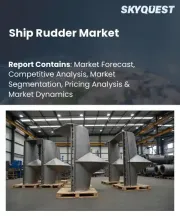
|
시장보고서
상품코드
2054047
선박용 타 시장 규모, 점유율, 성장 분석 : 타 종류별, 재질별, 선박 종류별, 용도별, 최종사용자별, 조타 기구별, 지역별 - 업계 예측(2026-2033년)Ship Rudder Market Size, Share, and Growth Analysis, By Rudder Type (Spade Rudders, Semi-spade Rudders), By Material Type, By Vessel Type, By Application, By End User, By Steering Mechanism, By Region - Industry Forecast 2026-2033 |
||||||

세계의 선박용 타 시장 규모는 2024년에 11억 9,000만 달러로 평가되었으며, 2025년 12억 6,000만 달러에서 2033년까지 19억 4,000만 달러로 확대되어 예측 기간(2026-2033년) 동안 CAGR 5.6%로 성장할 것으로 전망됩니다.
세계 선박용 타 시장은 연비 효율이 높고 기동성이 뛰어난 선박에 대한 수요 증가에 힘입어 상선 건조 부문의 설계 우선순위가 변화하고 있습니다. 여기에는 첨단 기술을 포함한 다양한 조타 시스템의 제조, 개조 및 유지보수가 포함됩니다. 환경 규제가 강화됨에 따라 조타기 설계의 혁신은 연료 소비와 배출량 감소에 초점을 맞추고 있으며, 제조업체들은 유체역학 연구와 스마트 제어 시스템에 대한 투자를 가속화하고 있습니다. 또한, IoT를 활용한 예지보전은 센서와 분석 기능을 통합하여 상태 기반 유지보수를 가능하게 하고 선주의 자산 관리를 강화하는 등 시장에 혁명을 일으키고 있습니다. 서비스 중심의 계약으로 전환하는 이러한 추세는 견고한 파트너십을 뒷받침하고, 끊임없이 변화하는 해운업계에서 다운타임과 예기치 못한 수리를 최소화하면서 궁극적으로 선박의 성능을 향상시키고 있습니다.
세계 선박용 타 시장의 성장요인
세계 선박용 타 시장의 주요 시장 촉진요인 중 하나는 국제 무역 및 해운 활동의 확대에 힘입어 해운 산업의 성장입니다. 전 세계 물동량이 증가함에 따라 보다 효율적이고 진보된 선박에 대한 요구가 증가하고 있으며, 이에 따라 기동성, 연료 효율성 및 운영 성능을 향상시키는 혁신적인 조타기 설계에 대한 수요가 증가하고 있습니다. 또한, 스마트 시스템 및 자동화 시스템 도입과 같은 기술 발전으로 조선사 및 운항사들은 고성능 조타기에 대한 투자를 진행하고 있습니다. 이러한 추세는 선박의 안전과 환경 기준의 향상을 요구하는 규제 압력에 의해 더욱 강화되고 있습니다.
세계 선박용 타 시장의 억제요인
세계 선박용 타 시장의 중요한 시장 억제요인 중 하나는 선박 배출가스 저감을 위한 엄격한 환경 규제에 대한 관심이 높아지고 있다는 점입니다. 해운업계가 지속가능성 표준을 준수해야 하는 상황에서 조선사들은 기존의 방향타 구조를 필요로 하지 않는 대체 추진 시스템이나 설계를 선택할 수 있습니다. 통합 조타 시스템 및 첨단 조타 솔루션을 포함한 혁신적인 기술로의 전환은 전통적인 조타 시스템에 대한 수요를 감소시킬 수 있습니다. 또한, 친환경 대체 기술의 연구개발에 따른 높은 비용으로 인해 기존 선박용 타 제조업체의 시장 역학이 더욱 복잡해지고 있습니다.
세계 선박용 타 시장 동향
전 세계 선박용 타 시장에서는 유체역학적 효율 최적화를 위한 뚜렷한 추세를 볼 수 있습니다. 각 업체들은 연료 소비를 줄이고 항해 경제성을 향상시키기 위해 항력을 최소화하고 선체와의 흐름 통합성을 높이는 혁신적인 방향타 설계에 점점 더 집중하고 있습니다. 전산유체역학 및 표면처리 기술의 발전으로 특정 선종 및 운항 프로파일에 맞는 보다 컴팩트하고 효율적인 조타기의 개발이 진행되고 있습니다. 선주와 조선소들은 추진 효율을 높일 뿐만 아니라 기동성과 안전성을 향상시킬 수 있는 개조 및 신조 옵션을 적극적으로 모색하고 있습니다. 설계자, 선급협회, 운항사 간의 협력을 통해 상업용 선단 전체에서 성능 중심의 방향타 솔루션이 널리 채택되고 있습니다.
자주 묻는 질문
목차
소개
조사 방법
주요 요약
시장 역학과 전망
주요 시장 인사이트
세계의 선박용 타 시장 규모 : 타 종류별
세계의 선박용 타 시장 규모 : 소재 유형별
세계의 선박용 타 시장 규모 : 선종별
세계의 선박용 타 시장 규모 : 용도별
세계의 선박용 타 시장 규모 : 최종사용자별
세계의 선박용 타 시장 규모 : 조타 기구별
세계의 선박용 타 시장 규모 : 지역별
경쟁 정보
주요 기업 개요
결론과 제안
KSM 26.06.12Global Ship Rudder Market size was valued at USD 1.19 Billion in 2024 and is poised to grow from USD 1.26 Billion in 2025 to USD 1.94 Billion by 2033, growing at a CAGR of 5.6% during the forecast period (2026-2033).
The global ship rudder market is increasingly driven by the need for fuel-efficient and highly maneuverable vessels, prompting a shift in design priorities within the commercial shipbuilding sector. This encompasses the manufacture, retrofitting, and maintenance of a wide variety of rudder systems, including advanced technologies. As environmental regulations tighten, innovations in rudder design focus on reducing fuel consumption and emissions, spurring manufacturers to invest in hydrodynamic research and smart control systems. Additionally, IoT-enabled predictive maintenance is revolutionizing the market by integrating sensors and analytics, enabling condition-based maintenance and enhancing asset management for shipowners. This trend towards service-oriented contracts supports robust partnerships, ultimately improving vessel performance while minimizing downtime and unexpected repairs in an evolving maritime landscape.
Top-down and bottom-up approaches were used to estimate and validate the size of the Global Ship Rudder market and to estimate the size of various other dependent submarkets. The research methodology used to estimate the market size includes the following details: The key players in the market were identified through secondary research, and their market shares in the respective regions were determined through primary and secondary research. This entire procedure includes the study of the annual and financial reports of the top market players and extensive interviews for key insights from industry leaders such as CEOs, VPs, directors, and marketing executives. All percentage shares split, and breakdowns were determined using secondary sources and verified through Primary sources. All possible parameters that affect the markets covered in this research study have been accounted for, viewed in extensive detail, verified through primary research, and analyzed to get the final quantitative and qualitative data.
Global Ship Rudder Market Segments Analysis
Global ship rudder market is segmented by rudder type, material type, vessel type, application, end user, steering mechanism and region. Based on rudder type, the market is segmented into Spade Rudders, Semi-spade Rudders, Flap Rudders, Becker Rudders, Schilling Rudders, Pleuger Rudders and Others. Based on material type, the market is segmented into Steel Rudders, Aluminum Rudders, Composite Rudders and Others. Based on vessel type, the market is segmented into Cargo Ships, Tankers, Container Ships, Naval Vessels, Passenger Ships, Fishing Vessels and Others. Based on application, the market is segmented into Commercial Shipping, Naval & Defense Operations, Offshore Operations, Inland Waterway Transport and Others. Based on end user, the market is segmented into Shipbuilders, Shipping Companies, Naval Forces, Offshore Service Providers and Others. Based on steering mechanism, the market is segmented into Hydraulic Steering Systems, Electro-hydraulic Steering Systems and Electric Steering Systems. Based on region, the market is segmented into North America, Europe, Asia Pacific, Latin America and Middle East & Africa.
Driver of the Global Ship Rudder Market
One of the key market drivers for the global ship rudder market is the increasing growth of the maritime industry, fueled by rising international trade and shipping activities. As global demand for goods escalates, there is a corresponding need for more efficient and advanced vessels, thereby driving the requirement for innovative rudder designs that enhance maneuverability, fuel efficiency, and operational performance. Furthermore, advancements in technology, such as the incorporation of smart and automated systems, are prompting shipbuilders and operators to invest in high-performance rudders. This trend is further bolstered by regulatory pressures to improve vessel safety and environmental standards.
Restraints in the Global Ship Rudder Market
One significant market restraint for the global ship rudder market is the increasing emphasis on strict environmental regulations aimed at reducing emissions from marine vessels. As the shipping industry faces pressure to comply with sustainability standards, shipbuilders may opt for alternative propulsion systems or designs that do not require traditional rudder structures. This shift towards innovative technologies, including integrated steering systems and advanced maneuvering solutions, can potentially diminish the demand for conventional rudder systems. Additionally, the high costs associated with research and development of eco-friendly alternatives further complicate the market dynamics for traditional ship rudder manufacturers.
Market Trends of the Global Ship Rudder Market
The Global Ship Rudder market is experiencing a notable trend towards hydrodynamic efficiency optimization. Companies are increasingly focusing on innovative rudder designs that minimize drag and enhance flow integration with the hull, aimed at reducing fuel consumption and improving voyage economics. Advances in computational fluid dynamics and surface treatments are leading to the development of more compact and efficient rudders tailored to specific vessel types and operational profiles. Shipowners and shipyards are actively pursuing retrofit and newbuild options that not only boost propulsion efficiency but also enhance maneuverability and safety. Collaborative efforts among designers, classification societies, and operators are fostering the widespread adoption of performance-driven rudder solutions across commercial fleets.
Table of Contents
Introduction
- Objectives of the Study
- Market Definition & Scope
Research Methodology
- Research Process
- Secondary & Primary Data Methods
- Market Size Estimation Methods
Executive Summary
- Global Market Outlook
- Key Market Highlights
- Segmental Overview
- Competition Overview
Market Dynamics & Outlook
- Macro-Economic Indicators
- Drivers & Opportunities
- Restraints & Challenges
- Supply Side Trends
- Demand Side Trends
- Porters Analysis & Impact
- Competitive Rivalry
- Threat of Substitute
- Bargaining Power of Buyers
- Threat of New Entrants
- Bargaining Power of Suppliers
Key Market Insights
- Key Success Factors
- Market Impacting Factors
- Top Investment Pockets
- Ecosystem Mapping
- Market Attractiveness Index 2025
- PESTEL Analysis
- Regulatory Landscape
Global Ship Rudder Market Size by Rudder Type & CAGR (2026-2033)
- Market Overview
- Spade Rudders
- Semi-spade Rudders
- Flap Rudders
- Becker Rudders
- Schilling Rudders
- Pleuger Rudders
- Others
Global Ship Rudder Market Size by Material Type & CAGR (2026-2033)
- Market Overview
- Steel Rudders
- Aluminum Rudders
- Composite Rudders
- Others
Global Ship Rudder Market Size by Vessel Type & CAGR (2026-2033)
- Market Overview
- Cargo Ships
- Tankers
- Container Ships
- Naval Vessels
- Passenger Ships
- Fishing Vessels
- Others
Global Ship Rudder Market Size by Application & CAGR (2026-2033)
- Market Overview
- Commercial Shipping
- Naval & Defense Operations
- Offshore Operations
- Inland Waterway Transport
- Others
Global Ship Rudder Market Size by End User & CAGR (2026-2033)
- Market Overview
- Shipbuilders
- Shipping Companies
- Naval Forces
- Offshore Service Providers
- Others
Global Ship Rudder Market Size by Steering Mechanism & CAGR (2026-2033)
- Market Overview
- Hydraulic Steering Systems
- Electro-hydraulic Steering Systems
- Electric Steering Systems
Global Ship Rudder Market Size & CAGR (2026-2033)
- North America (Rudder Type, Material Type, Vessel Type, Application, End User, Steering Mechanism)
- US
- Canada
- Europe (Rudder Type, Material Type, Vessel Type, Application, End User, Steering Mechanism)
- Germany
- Spain
- France
- UK
- Italy
- Rest of Europe
- Asia Pacific (Rudder Type, Material Type, Vessel Type, Application, End User, Steering Mechanism)
- China
- India
- Japan
- South Korea
- Rest of Asia-Pacific
- Latin America (Rudder Type, Material Type, Vessel Type, Application, End User, Steering Mechanism)
- Mexico
- Brazil
- Rest of Latin America
- Middle East & Africa (Rudder Type, Material Type, Vessel Type, Application, End User, Steering Mechanism)
- GCC Countries
- South Africa
- Rest of Middle East & Africa
Competitive Intelligence
- Top 5 Player Comparison
- Market Positioning of Key Players, 2025
- Strategies Adopted by Key Market Players
- Recent Developments in the Market
- Company Market Share Analysis, 2025
- Company Profiles of All Key Players
- Company Details
- Product Portfolio Analysis
- Company's Segmental Share Analysis
- Revenue Y-O-Y Comparison (2023-2025)
Key Company Profiles
- Wartsila
- Company Overview
- Business Segment Overview
- Financial Updates
- Key Developments
- Kongsberg Maritime
- Company Overview
- Business Segment Overview
- Financial Updates
- Key Developments
- Rolls-Royce Marine
- Company Overview
- Business Segment Overview
- Financial Updates
- Key Developments
- SCHOTTEL Group
- Company Overview
- Business Segment Overview
- Financial Updates
- Key Developments
- Becker Marine Systems
- Company Overview
- Business Segment Overview
- Financial Updates
- Key Developments
- Nakashima Propeller
- Company Overview
- Business Segment Overview
- Financial Updates
- Key Developments
- Kawasaki Heavy Industries
- Company Overview
- Business Segment Overview
- Financial Updates
- Key Developments
- Damen Shipyards Group
- Company Overview
- Business Segment Overview
- Financial Updates
- Key Developments
- MAN Energy Solutions
- Company Overview
- Business Segment Overview
- Financial Updates
- Key Developments
- Kobelt Manufacturing
- Company Overview
- Business Segment Overview
- Financial Updates
- Key Developments
- Nufoss Services
- Company Overview
- Business Segment Overview
- Financial Updates
- Key Developments
- Ulstein Group
- Company Overview
- Business Segment Overview
- Financial Updates
- Key Developments
- Niigata Power Systems
- Company Overview
- Business Segment Overview
- Financial Updates
- Key Developments
- Teignbridge Propellers International
- Company Overview
- Business Segment Overview
- Financial Updates
- Key Developments
- BVT Surface Fleet
- Company Overview
- Business Segment Overview
- Financial Updates
- Key Developments
- Brunvoll
- Company Overview
- Business Segment Overview
- Financial Updates
- Key Developments
- Fincantieri
- Company Overview
- Business Segment Overview
- Financial Updates
- Key Developments
- L&T Shipbuilding
- Company Overview
- Business Segment Overview
- Financial Updates
- Key Developments
- Thrustmaster of Texas
- Company Overview
- Business Segment Overview
- Financial Updates
- Key Developments
- Hydromaster Propulsion
- Company Overview
- Business Segment Overview
- Financial Updates
- Key Developments