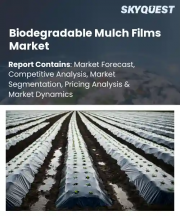
|
시장보고서
상품코드
2064618
생분해성 멀칭 필름 시장 규모, 점유율 및 성장 분석 : 소재별, 작물별, 두께별, 용도별, 유통경로별, 지역별 - 업계 예측(2026-2033년)Biodegradable Mulch Films Market Size, Share, and Growth Analysis, By Material Type (Polylactic Acid, Polyhydroxyalkanoate ), By Crop Type, By Thickness, By End-Use, By Distribution, By Region - Industry Forecast 2026-2033 |
||||||

세계의 생분해성 멀칭 필름 시장 규모는 2024년에 6억 8,450만 달러로 평가되었고, 2025년 7억 5,172만 달러에서 2033년까지 15억 8,240만 달러로 확대되어 예측 기간(2026-2033년)에 CAGR 9.82%를 기록할 전망입니다.
세계 생분해성 멀칭 필름 시장은 규제 압력에 따른 환경적으로 지속 가능한 관행으로의 전환에 힘입어 성장하고 있으며, 기존의 폴리에틸렌 플라스틱에서 퇴비화 가능한 대체재로 전환하는 추세가 가속화되고 있습니다. PLA나 PBAT 등의 고분자 혼합물로 제조되는 이러한 생분해성 필름은 토양 내에서 분해되므로, 플라스틱 폐기물을 대폭 줄이고 처리 비용을 절감하며 토양의 건강을 증진시킵니다. 특히 각 지역에서 지원책과 금지 조치가 도입됨에 따라, 시장은 틈새 시장 단계에서 더 광범위한 상업적 응용 단계로 전환되고 있습니다. 제조 기술의 발전으로 비용 효율성과 성능이 향상됨에 따라, 딸기나 토마토 등의 작물 재배 농가에서 이러한 필름을 도입하고 있습니다. 또한, 토양에 혼합하기 쉬우므로 플라스틱 폐기물 관리 인프라가 제한적인 지역에서도 공급망을 효율화할 수 있어, 전 세계적인 성장 기회를 촉진하고 있습니다.
세계 생분해성 멀칭 필름 시장의 성장 요인
세계 생분해성 멀칭 필름 시장은 이러한 지속 가능한 소재의 채택을 촉진하는 정부의 규제와 정책에 큰 영향을 받고 있습니다. 명확한 기준을 마련하고 조달 인센티브를 제공함으로써, 이러한 노력은 시장의 불확실성을 줄이고 생분해성 제품에 대한 투자를 촉진하고 있습니다. 정책 주도형 수요가 증가함에 따라, 제조업체들은 연구 개발을 통해 생산 능력 강화와 제품 성능 향상에 힘쓰도록 유도되고 있습니다. 또한, 보조금과 시범 프로그램을 통해 농가들이 위험을 덜 느끼면서 이러한 대체품을 검토할 수 있도록 지원받고 있는 한편, 인증 제도는 공급망 전반에 걸쳐 구매자의 신뢰를 높이고 있습니다. 이러한 요소들이 결합되어, 생분해성 멀칭 필름은 농업 현장에서 더욱 현실적이고 매력적인 선택지가 되고 있습니다.
세계 생분해성 멀칭 필름 시장의 제약 요인
세계 생분해성 멀칭 필름 시장은 기존 플라스틱 수지에 비해 생분해성 고분자 소재의 비용이 높다는 점으로 인해 중대한 제약에 직면해 있습니다. 이러한 가격 차이로 인해 완성된 멀티필름의 소매 가격이 상승하여, 예산에 민감한 생산자나 유통업체가 이를 구하기 어려워지고 있습니다. 또한, 생산 비용의 상승은 제조업체의 이익률을 압박하여 생산 능력 확대나 전문적인 가공 기술에 대한 투자를 저해할 가능성이 있습니다. 비용 대비 효과를 중시하는 조달 방침에서는 더 저렴한 비생분해성 제품이 우선적으로 선정될 가능성이 있으며, 이는 생분해성 대체품의 보급을 더욱 저해하게 될 것입니다. 또한, 생산자들 사이에서 경제적 위험에 대한 우려는 환경적 이점이 있음에도 불구하고, 기존의 플라스틱 멀칭에서 벗어나는 것을 지연시키는 요인이 될 수 있습니다.
세계 생분해성 멀칭 필름 시장 동향
세계 생분해성 멀칭 필름 시장은 지속 가능한 농업 관행을 장려하는 정책 이니셔티브와 규제 체계에 힘입어 뚜렷한 상승세를 보이고 있습니다. 제조업체, 연구 기관, 보급 서비스 간의 협력을 강화함으로써, 인증을 받은 공급업체가 환경 기준을 준수함을 보장할 수 있는 투명성이 더욱 높은 생태계가 조성되고 있습니다. 이러한 역동적인 인프라는 구매자가 느끼는 위험을 줄일 뿐만 아니라, 제품 승인 절차와 농민 대상 교육을 가속화합니다. 지원 정책이 시행됨에 따라 업계 기준이 확립되고, 표시의 정확성이 향상됩니다. 이를 통해 생산자는 작물의 생산성 요구에 부합하는 정보를 바탕으로 선택을 할 수 있게 되며, 동시에 다양한 밸류체인 전반에 걸쳐 순환형 농업의 원칙이 촉진됩니다.
자주 묻는 질문
목차
서론
조사 방법
주요 요약
시장 역학과 전망
주요 시장 인사이트
세계의 생분해성 멀칭 필름 시장 규모 : 소재 유형별
세계의 생분해성 멀칭 필름 시장 규모 : 작물 유형별
세계의 생분해성 멀칭 필름 시장 규모 : 두께별
세계의 생분해성 멀칭 필름 시장 규모 : 최종 용도별
세계의 생분해성 멀칭 필름 시장 규모 : 유통별
세계의 생분해성 멀칭 필름 시장 규모 : 지역별
경쟁 정보
주요 기업 개요
결론과 제안
LSH 26.06.26Global Biodegradable Mulch Films Market size was valued at USD 684.5 Million in 2024 and is poised to grow from USD 751.72 Million in 2025 to USD 1582.4 Million by 2033, growing at a CAGR of 9.82% during the forecast period (2026-2033).
The global biodegradable mulch films market is driven by a shift towards environmentally sustainable practices influenced by regulatory pressures, encouraging the replacement of traditional polyethylene plastics with compostable alternatives. Made from polymer formulations such as PLA and PBAT, these biodegradable films decompose in soil, significantly mitigating plastic waste, lowering disposal costs, and promoting soil health. The market has transitioned from niche trials to broader commercial applications, particularly as various regions implement supportive incentives and bans. Advancements in manufacturing technologies have improved cost-efficiency and performance, enticing farmers to adopt these films for crops like strawberries and tomatoes. With their ease of incorporation into the soil, these films also streamline supply chains in regions with limited plastic waste management infrastructure, fostering growth opportunities globally.
Top-down and bottom-up approaches were used to estimate and validate the size of the Global Biodegradable Mulch Films market and to estimate the size of various other dependent submarkets. The research methodology used to estimate the market size includes the following details: The key players in the market were identified through secondary research, and their market shares in the respective regions were determined through primary and secondary research. This entire procedure includes the study of the annual and financial reports of the top market players and extensive interviews for key insights from industry leaders such as CEOs, VPs, directors, and marketing executives. All percentage shares split, and breakdowns were determined using secondary sources and verified through Primary sources. All possible parameters that affect the markets covered in this research study have been accounted for, viewed in extensive detail, verified through primary research, and analyzed to get the final quantitative and qualitative data.
Global Biodegradable Mulch Films Market Segments Analysis
Global biodegradable mulch films market is segmented by material type, crop type, thickness, end-use, distribution and region. Based on material type, the market is segmented into Polylactic Acid (PLA), Polyhydroxyalkanoate (PHA), Starch Blends and PBAT (Polybutylene Adipate Terephthalate). Based on crop type, the market is segmented into Vegetables, Fruits and Cereals & Grains. Based on thickness, the market is segmented into Below 10 Micron, 10-15 Micron and Above 15 Micron. Based on end-use, the market is segmented into Open Field Farming and Greenhouse. Based on distribution, the market is segmented into Direct to Farms and Agricultural Dealers. Based on region, the market is segmented into North America, Europe, Asia Pacific, Latin America and Middle East & Africa.
Driver of the Global Biodegradable Mulch Films Market
The Global Biodegradable Mulch Films market is significantly influenced by government regulations and supportive policies that promote the adoption of these sustainable materials. By establishing clear standards and providing procurement incentives, these initiatives reduce market uncertainty and encourage investment in biodegradable options. As policy-driven demand grows, manufacturers are motivated to enhance their production capacity and elevate product performance through research and development. Additionally, subsidies and pilot programs support farmers in exploring these alternatives with less perceived risk, while certification frameworks foster buyer confidence throughout supply chains. Together, these elements make biodegradable mulch films a more viable and appealing choice for agricultural practices.
Restraints in the Global Biodegradable Mulch Films Market
The global biodegradable mulch films market faces significant constraints due to the higher costs associated with biodegradable polymer materials in comparison to traditional plastic resins. This price disparity leads to increased retail prices for finished mulch films, making them less accessible to budget-conscious growers and distributors. Additionally, the elevated production costs can strain manufacturers' profit margins, hindering their ability to expand capacity and invest in specialized processing technologies. Procurement policies that emphasize cost-effectiveness may prioritize cheaper non-biodegradable options, further impeding the adoption of biodegradable alternatives. Concerns about economic risk among growers can also slow the transition from established plastic mulches despite their environmental advantages.
Market Trends of the Global Biodegradable Mulch Films Market
The global biodegradable mulch films market is experiencing a significant upward trend driven by policy initiatives and regulatory frameworks promoting sustainable agricultural practices. Increased collaboration among manufacturers, research institutions, and extension services is fostering a more transparent ecosystem, where certified suppliers can assure compliance with environmental standards. This dynamic infrastructure not only mitigates perceived risks for buyers but also accelerates product approval processes and farmer education. As supportive policies emerge, they establish sector standards and enhance labeling accuracy, empowering growers to make informed choices that align with their crop performance needs while promoting the principles of circular agriculture across various value chains.
Table of Contents
Introduction
- Objectives of the Study
- Market Definition & Scope
Research Methodology
- Research Process
- Secondary & Primary Data Methods
- Market Size Estimation Methods
Executive Summary
- Global Market Outlook
- Key Market Highlights
- Segmental Overview
- Competition Overview
Market Dynamics & Outlook
- Macro-Economic Indicators
- Drivers & Opportunities
- Restraints & Challenges
- Supply Side Trends
- Demand Side Trends
- Porters Analysis & Impact
- Competitive Rivalry
- Threat of Substitute
- Bargaining Power of Buyers
- Threat of New Entrants
- Bargaining Power of Suppliers
Key Market Insights
- Key Success Factors
- Market Impacting Factors
- Top Investment Pockets
- Ecosystem Mapping
- Market Attractiveness Index 2025
- PESTEL Analysis
- Regulatory Landscape
Global Biodegradable Mulch Films Market Size by Material Type & CAGR (2026-2033)
- Market Overview
- Polylactic Acid (PLA)
- Polyhydroxyalkanoate (PHA)
- Starch Blends
- PBAT (Polybutylene Adipate Terephthalate)
Global Biodegradable Mulch Films Market Size by Crop Type & CAGR (2026-2033)
- Market Overview
- Vegetables
- Fruits
- Cereals & Grains
Global Biodegradable Mulch Films Market Size by Thickness & CAGR (2026-2033)
- Market Overview
- Below 10 Micron
- 10-15 Micron
- Above 15 Micron
Global Biodegradable Mulch Films Market Size by End-Use & CAGR (2026-2033)
- Market Overview
- Open Field Farming
- Greenhouse
Global Biodegradable Mulch Films Market Size by Distribution & CAGR (2026-2033)
- Market Overview
- Direct to Farms
- Agricultural Dealers
Global Biodegradable Mulch Films Market Size & CAGR (2026-2033)
- North America (Material Type, Crop Type, Thickness, End-Use, Distribution)
- US
- Canada
- Europe (Material Type, Crop Type, Thickness, End-Use, Distribution)
- Germany
- Spain
- France
- UK
- Italy
- Rest of Europe
- Asia Pacific (Material Type, Crop Type, Thickness, End-Use, Distribution)
- China
- India
- Japan
- South Korea
- Rest of Asia-Pacific
- Latin America (Material Type, Crop Type, Thickness, End-Use, Distribution)
- Mexico
- Brazil
- Rest of Latin America
- Middle East & Africa (Material Type, Crop Type, Thickness, End-Use, Distribution)
- GCC Countries
- South Africa
- Rest of Middle East & Africa
Competitive Intelligence
- Top 5 Player Comparison
- Market Positioning of Key Players, 2025
- Strategies Adopted by Key Market Players
- Recent Developments in the Market
- Company Market Share Analysis, 2025
- Company Profiles of All Key Players
- Company Details
- Product Portfolio Analysis
- Company's Segmental Share Analysis
- Revenue Y-O-Y Comparison (2023-2025)
Key Company Profiles
- BASF SE (Ecovio)
- Company Overview
- Business Segment Overview
- Financial Updates
- Key Developments
- Novamont SpA
- Company Overview
- Business Segment Overview
- Financial Updates
- Key Developments
- BioBag International
- Company Overview
- Business Segment Overview
- Financial Updates
- Key Developments
- RKW Group
- Company Overview
- Business Segment Overview
- Financial Updates
- Key Developments
- AEP Industries
- Company Overview
- Business Segment Overview
- Financial Updates
- Key Developments
- Armando Alvarez Group
- Company Overview
- Business Segment Overview
- Financial Updates
- Key Developments
- Coveris Holdings
- Company Overview
- Business Segment Overview
- Financial Updates
- Key Developments
- Barbier Group
- Company Overview
- Business Segment Overview
- Financial Updates
- Key Developments
- Ab Rani Plast Oy
- Company Overview
- Business Segment Overview
- Financial Updates
- Key Developments
- Sphere Group
- Company Overview
- Business Segment Overview
- Financial Updates
- Key Developments
- Plastika Kritis SA
- Company Overview
- Business Segment Overview
- Financial Updates
- Key Developments
- Biofilm Inc.
- Company Overview
- Business Segment Overview
- Financial Updates
- Key Developments
- Natur-Tyme
- Company Overview
- Business Segment Overview
- Financial Updates
- Key Developments
- Cargill Inc.
- Company Overview
- Business Segment Overview
- Financial Updates
- Key Developments
- TotalEnergies Corbion
- Company Overview
- Business Segment Overview
- Financial Updates
- Key Developments