|
시장보고서
상품코드
2064666
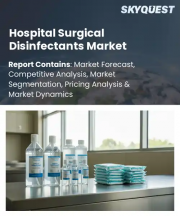
병원용 수술 소독제 시장 규모, 점유율 및 성장 분석 : 제품 형태별, 화학 조성별, 용도별, 조달 모델별, 지역별 - 업계 예측(2026-2033년)Hospital Surgical Disinfectants Market Size, Share, and Growth Analysis, By Product Formulation (Liquid Disinfectants, Spray Disinfectants), By Chemical Composition, By Application Type, By Procurement Model, By Region - Industry Forecast 2026-2033 |
||||||

세계의 병원용 수술 소독제 시장 규모는 2024년에 5억 1,920만 달러로 평가되었고, 2025년 5억 5,658만 달러에서 2033년까지 9억 7,071만 달러로 확대될 전망이며, 예측 기간(2026-2033년)에 CAGR 7.2%를 기록할 것으로 예측됩니다.
병원용 외과 소독제 시장은 병원 내 감염 발생률 증가, 외과적 시술 증가, 그리고 감염 예방에 대한 관심 고조로 인해 성장하고 있습니다. 효과적인 수술 부위 감염 예방에 대한 수요가 시장 확대를 견인하고 있으며, 전 세계 의료비의 급증과 외과 수술 건수 증가도 이를 더욱 뒷받침하고 있습니다. 의료 기관들이 품질 보증 기준을 충족하기 위해 노력하는 가운데, 엄격한 의료 규제도 고효능 소독제에 대한 수요를 촉진하는 데 중요한 역할을 하고 있습니다. 즉각적인 효과나 환경 배려와 같은 소독제 처방에 대한 혁신이 주목을 받고 있습니다. 그러나 화학 물질의 독성에 대한 우려, 첨단 기술에 따른 높은 비용, 그리고 대체적인 감염 관리 방식의 부상 등의 과제가 장기적으로는 시장 성장을 저해할 가능성이 있습니다. 전반적으로 볼 때, 향후 전망은 여전히 밝습니다.
세계 병원용 수술 소독제 시장은 제품 제형, 화학 조성, 용도, 조달 모델 및 지역별로 분류됩니다. 제품 제형에 따라 시장은 액체 소독제, 스프레이 소독제, 소독용 물티슈, 기타로 구분됩니다. 화학 조성에 따라 시장 세분화에서는 알코올계 제제, 4급 암모늄 화합물, 염소 및 과산화수소 제제, 글루탈알데히드 및 오르토프탈알데히드, 기타로 분류됩니다. 용도 유형에 따라 시장 세분화에서는 수술 기구 소독, 수술 전 피부 소독, 수술대 및 표면 소독, 의료기기 및 설비의 멸균, 기타로 분류됩니다. 조달 모델에 따라 시장은 의료기관 대상 직접 B2B 및 의료용품 유통 네트워크로 분류됩니다. 지역에 따라 시장은 북미, 유럽, 아시아태평양, 라틴아메리카, 중동 및 아프리카로 분류됩니다.
세계 병원용 수술 소독제 시장의 성장 요인
병원에서 외과 수술 수요가 증가함에 따라, 환자와 직원의 안전을 확보하기 위해 의료시설들이 강력한 항균 솔루션을 우선시하는 가운데, 고성능 소독제의 필요성이 커지고 있습니다. 감염 관리 프로토콜은 현재의 멸균 관행에 부합하는 광범위 스펙트럼 소독제의 채택을 더욱 촉진하고 있으며, 이는 구매 결정에 영향을 미치고 제품 혁신을 이끌고 있습니다. 병원에서는 기존의 업무 흐름 및 멸균 공정에 원활하게 통합될 수 있는 효과적이고 즉각적인 소독제를 필요로 하고 있습니다. 그 결과, 이러한 수요에 힘입어 공급업체들은 의료 환경의 변화하는 요구에 부응하기 위해 제품 라인업의 다양화와 유통 네트워크 강화에 주력하고 있습니다.
세계 병원용 수술 소독제 시장의 제약 요인
세계 병원용 수술 소독제 시장은 특수 외과용 소독제로 인한 높은 비용으로 인해 큰 제약에 직면해 있습니다. 의료 서비스 제공업체가 예산 제약 하에 운영될 경우, 선택적인 구매 결정을 내릴 수밖에 없으며, 많은 경우 더 저렴한 대안을 선택하고 있습니다. 예산 담당자가 단기적인 지출과 장기적인 이익을 저울질하기 때문에 임상적 우월성이 입증되었음에도 불구하고 이러한 재정적 압박이 신제제의 도입 지연을 초래할 가능성이 있습니다. 특히 소규모 병원의 경우, 기본적인 감염 관리 용품을 우선적으로 확보해야 하는 경우가 있습니다. 게다가 높은 가격 책정은 시장 침투와 도입률을 저해하며, 효과성에 대한 주장과 비용 대비 효과가 높은 솔루션 간의 균형을 맞추는 데 있어 과제를 야기하고 있습니다.
세계 병원용 수술 소독제 시장 동향
세계 병원용 수술 소독제 시장에서는 의료 분야 조달에서 지속가능성에 대한 중요성이 커지고 있는 것을 배경으로, 친환경 제품에 대한 수요가 현저히 증가하는 추세를 보이고 있습니다. 병원에서는 생분해성 처방을 도입하여 잔류물을 줄인 외과용 소독제를 도입하려는 움직임이 점점 더 강해지고 있으며, 환경에 대한 책임을 다하려는 자세가 두드러지고 있습니다. 이러한 변화로 인해 제조업체들은 퇴비화 기준을 준수하는 동시에, 보다 친환경적인 화학 기술과 투명성이 높은 공급망에 대한 투자를 해야 하는 상황에 놓여 있습니다. 또한, 노동 위생에 대한 배려와 지역 사회의 제안의 영향으로 이해관계자간의 협력이 촉진되어, 최종 사용자는 환경에 미치는 영향을 저해하지 않으면서도 검증된 항균 효과를 우선시하도록 유도되고 있습니다. 이러한 요소들이 궁극적으로 외과용 소독제 제품의 미래 모습을 형성해 나갈 것입니다.
자주 묻는 질문
목차
서론
조사 방법
주요 요약
시장 역학과 전망
주요 시장 인사이트
세계의 병원용 수술 소독제 시장 규모 : 제품 형태별
세계의 병원용 수술 소독제 시장 규모 : 화학 조성별
세계의 병원용 수술 소독제 시장 규모 : 용도 유형별
세계의 병원용 수술 소독제 시장 규모 : 조달 모델별
세계의 병원용 수술 소독제 시장 규모 : 지역별
경쟁 정보
주요 기업 개요
결론과 제안
LSH 26.06.29Global Hospital Surgical Disinfectants Market size was valued at USD 519.2 Million in 2024 and is poised to grow from USD 556.58 Million in 2025 to USD 970.71 Million by 2033, growing at a CAGR of 7.2% during the forecast period (2026-2033).
The hospital surgical disinfectants market is being propelled by the rising incidence of hospital-acquired infections, increasing surgical interventions, and a heightened focus on infection prevention. The demand for effective surgical site infection prevention is stimulating market expansion, further supported by a surge in global healthcare spending and an uptick in surgical procedures. Stringent healthcare regulations also play a crucial role in driving demand for high-efficacy disinfectants, as healthcare organizations strive to meet quality assurance standards. Innovations in disinfectant formulations, such as rapidly acting and environmentally friendly products, are gaining traction. However, challenges including concerns over chemical toxicity, high costs associated with advanced technologies, and the rise of alternative infection control methods may hinder market growth over time. Overall, the future landscape remains promising.
Top-down and bottom-up approaches were used to estimate and validate the size of the Global Hospital Surgical Disinfectants market and to estimate the size of various other dependent submarkets. The research methodology used to estimate the market size includes the following details: The key players in the market were identified through secondary research, and their market shares in the respective regions were determined through primary and secondary research. This entire procedure includes the study of the annual and financial reports of the top market players and extensive interviews for key insights from industry leaders such as CEOs, VPs, directors, and marketing executives. All percentage shares split, and breakdowns were determined using secondary sources and verified through Primary sources. All possible parameters that affect the markets covered in this research study have been accounted for, viewed in extensive detail, verified through primary research, and analyzed to get the final quantitative and qualitative data.
Global Hospital Surgical Disinfectants Market Segments Analysis
Global hospital surgical disinfectants market is segmented by product formulation, chemical composition, application type, procurement model, and region. Based on product formulation, the market is segmented into liquid disinfectants, spray disinfectants, disinfectant wipes, and others. Based on chemical composition, the market is segmented into alcohol-based formulations, quaternary ammonium compounds, chlorine and hydrogen peroxide formulations, Glutaraldehyde and Ortho-phthalaldehyde, and others. Based on application type, the market is segmented into surgical instrument disinfection, pre-operative skin preparation, surgical table and surface disinfection, medical device and equipment sterilization, and others. Based on procurement model, the market is segmented into Direct Institutional B2B and medical supply distribution networks. Based on region, the market is segmented into North America, Europe, Asia Pacific, Latin America, and Middle East & Africa.
Driver of the Global Hospital Surgical Disinfectants Market
The increasing demand for surgical procedures in hospitals is driving the necessity for advanced disinfectants, as medical facilities prioritize robust antimicrobial solutions to ensure the safety of patients and staff. Infection control protocols are further encouraging the adoption of broad-spectrum disinfectants that align with current sterilization practices, influencing purchasing choices and guiding product innovation. Hospitals are seeking effective and fast-acting disinfectants that can seamlessly integrate into their existing workflows and sterilization processes. Consequently, this demand is motivating suppliers to diversify their product offerings and enhance their distribution networks to meet the evolving needs of healthcare environments.
Restraints in the Global Hospital Surgical Disinfectants Market
The Global Hospital Surgical Disinfectants market faces significant restraints due to the high costs associated with specialized surgical disinfectants. Healthcare providers operating under budget constraints are compelled to make selective purchasing decisions, often opting for more affordable alternatives. This financial pressure may lead to delays in adopting new formulations, despite their proven clinical advantages, as budget managers weigh short-term expenditures against long-term benefits. Smaller hospitals, in particular, may be forced to prioritize basic infection control products. Furthermore, the high pricing can hinder market penetration and adoption rates, creating a challenging environment for balancing efficacy claims with cost-effective solutions.
Market Trends of the Global Hospital Surgical Disinfectants Market
The Global Hospital Surgical Disinfectants market is experiencing a significant trend towards eco-conscious product demand, driven by a growing emphasis on sustainability within healthcare procurement. Hospitals are increasingly seeking surgical disinfectants that feature biodegradable formulations and reduced persistent residues, highlighting a commitment to environmental responsibility. This shift compels manufacturers to invest in greener chemistries and transparent supply chains while ensuring compliance with compostability standards. Additionally, the influence of occupational health considerations and community advocacy fosters collaboration among stakeholders, motivating end-users to prioritize proven antimicrobial efficacy without compromising ecological impact, ultimately shaping the future landscape of surgical disinfectant products.
Table of Contents
Introduction
- Objectives of the Study
- Market Definition & Scope
Research Methodology
- Research Process
- Secondary & Primary Data Methods
- Market Size Estimation Methods
Executive Summary
- Global Market Outlook
- Key Market Highlights
- Segmental Overview
- Competition Overview
Market Dynamics & Outlook
- Macro-Economic Indicators
- Drivers & Opportunities
- Restraints & Challenges
- Supply Side Trends
- Demand Side Trends
- Porters Analysis & Impact
- Competitive Rivalry
- Threat of Substitute
- Bargaining Power of Buyers
- Threat of New Entrants
- Bargaining Power of Suppliers
Key Market Insights
- Key Success Factors
- Market Impacting Factors
- Top Investment Pockets
- Ecosystem Mapping
- Market Attractiveness Index 2025
- PESTEL Analysis
- Regulatory Landscape
Global Hospital Surgical Disinfectants Market Size by Product Formulation & CAGR (2026-2033)
- Market Overview
- Liquid Disinfectants
- Spray Disinfectants
- Disinfectant Wipes
- Others
Global Hospital Surgical Disinfectants Market Size by Chemical Composition & CAGR (2026-2033)
- Market Overview
- Alcohol-Based Formulations
- Quaternary Ammonium Compounds
- Chlorine and Hydrogen Peroxide Formulations
- Glutaraldehyde and Ortho-phthalaldehyde
- Others
Global Hospital Surgical Disinfectants Market Size by Application Type & CAGR (2026-2033)
- Market Overview
- Surgical Instrument Disinfection
- Pre-operative Skin Preparation
- Surgical Table and Surface Disinfection
- Medical Device and Equipment Sterilization
- Others
Global Hospital Surgical Disinfectants Market Size by Procurement Model & CAGR (2026-2033)
- Market Overview
- Direct Institutional B2B
- Medical Supply Distribution Networks
Global Hospital Surgical Disinfectants Market Size & CAGR (2026-2033)
- North America (Product Formulation, Chemical Composition, Application Type, Procurement Model)
- US
- Canada
- Europe (Product Formulation, Chemical Composition, Application Type, Procurement Model)
- Germany
- Spain
- France
- UK
- Italy
- Rest of Europe
- Asia Pacific (Product Formulation, Chemical Composition, Application Type, Procurement Model)
- China
- India
- Japan
- South Korea
- Rest of Asia-Pacific
- Latin America (Product Formulation, Chemical Composition, Application Type, Procurement Model)
- Mexico
- Brazil
- Rest of Latin America
- Middle East & Africa (Product Formulation, Chemical Composition, Application Type, Procurement Model)
- GCC Countries
- South Africa
- Rest of Middle East & Africa
Competitive Intelligence
- Top 5 Player Comparison
- Market Positioning of Key Players, 2025
- Strategies Adopted by Key Market Players
- Recent Developments in the Market
- Company Market Share Analysis, 2025
- Company Profiles of All Key Players
- Company Details
- Product Portfolio Analysis
- Company's Segmental Share Analysis
- Revenue Y-O-Y Comparison (2023-2025)
Key Company Profiles
- Ecolab
- Company Overview
- Business Segment Overview
- Financial Updates
- Key Developments
- 3M Company
- Company Overview
- Business Segment Overview
- Financial Updates
- Key Developments
- Procter & Gamble
- Company Overview
- Business Segment Overview
- Financial Updates
- Key Developments
- Reckitt Benckiser Group
- Company Overview
- Business Segment Overview
- Financial Updates
- Key Developments
- Clorox Company
- Company Overview
- Business Segment Overview
- Financial Updates
- Key Developments
- Johnson & Johnson
- Company Overview
- Business Segment Overview
- Financial Updates
- Key Developments
- Kimberly-Clark Corporation
- Company Overview
- Business Segment Overview
- Financial Updates
- Key Developments
- B. Braun SE
- Company Overview
- Business Segment Overview
- Financial Updates
- Key Developments
- Cardinal Health
- Company Overview
- Business Segment Overview
- Financial Updates
- Key Developments
- Medline Industries
- Company Overview
- Business Segment Overview
- Financial Updates
- Key Developments
- Paul Hartmann AG
- Company Overview
- Business Segment Overview
- Financial Updates
- Key Developments
- Solvay
- Company Overview
- Business Segment Overview
- Financial Updates
- Key Developments
- BASF SE
- Company Overview
- Business Segment Overview
- Financial Updates
- Key Developments
- Evonik Industries
- Company Overview
- Business Segment Overview
- Financial Updates
- Key Developments
- Schulke & Mayr
- Company Overview
- Business Segment Overview
- Financial Updates
- Key Developments
- Sterling Drug
- Company Overview
- Business Segment Overview
- Financial Updates
- Key Developments
- Metrex Research
- Company Overview
- Business Segment Overview
- Financial Updates
- Key Developments
- Whiteley Corporation
- Company Overview
- Business Segment Overview
- Financial Updates
- Key Developments
- Gojo Industries
- Company Overview
- Business Segment Overview
- Financial Updates
- Key Developments
- Tristel
- Company Overview
- Business Segment Overview
- Financial Updates
- Key Developments