|
시장보고서
상품코드
2079838
육류 소독 처리 시장 : 시장 규모, 점유율 및 성장 분석 - 소독 기술별, 육류 유형별, 가공 단계별, 용도별, 최종 사용자별, 설비 유형별, 지역별 업계 예측(2026-2033년)Meats Disinfection Processing Market Size, Share, and Growth Analysis, By Disinfection Technology, By Meat Type, By Processing Stage, By Application, By End User, By Equipment Type, By Region - Industry Forecast 2026-2033 |
||||||

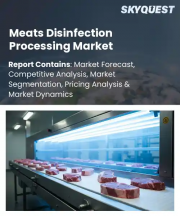
세계의 육류 소독 처리 시장 규모는 2024년에 28억 4,000만 달러로 평가되었고, 2025년 30억 3,000만 달러에서 2033년까지 51억 달러로 확대될 전망이며, 예측 기간(2026-2033년) CAGR 6.7%로 성장할 전망입니다.
세계의 육류 소독 처리 시장은 식중독 발생 증가와 엄격한 규제 기준 속에서 돼지고기, 소고기, 닭고기, 수산물에 포함된 유해한 병원체를 제거하고 소비자의 안전을 확보해야 한다는 매우 중요한 요구에 힘입어 성장하고 있습니다. 기존의 화학적 방법은 펄스 광이나 고압 처리(HPP)와 같은 비열처리 기술로 진화하고 있으며, 이는 시장의 큰 변화를 반영하고 있습니다. 안전하고 고품질의 단백질에 대한 수요가 증가함에 따라 매출이 크게 상승하고 있으며, 효과적인 살균 방법의 시급성이 부각되고 있습니다. 스프레이 냉각 시스템과 같은 혁신적인 기술은 미생물 수를 줄이고 유통 기한을 연장함으로써 소매 폐기물을 최소화할 수 있어 주목을 받고 있습니다. AI를 활용한 자동화는 실시간 감지, 예측 모델링, 자율적인 프로세스를 통해 안전성과 효율성을 향상시키며 시장에 혁명을 일으키고 있습니다. 이를 통해 전 세계적으로 확장 가능한 성장과 첨단 살균 솔루션에 대한 투자가 가능해졌습니다.
세계 육류 소독 처리 시장의 성장 요인
소비자들의 안전에 대한 인식이 높아짐에 따라, 육류 공급망에서 엄격한 소독 절차에 대한 수요가 크게 증가하고 있습니다. 소매업체와 소비자들은 육류 제품에 유해한 병원체가 포함되어 있지 않은지 확인하는 데 점점 더 주의를 기울이고 있으며, 이에 따라 검증된 처리 방법과 체계적인 위생 대책으로의 전환이 진행되고 있습니다. 이러한 추세가 시장 확대를 주도하며, 소독 용도로 특화된 전문 기기의 도입 확대로 이어지고 있습니다. 안전 의식이 지속적으로 발전함에 따라 추적 가능한 안전 프로토콜에 대한 기대가 높아지고 있으며, 가공 시설에서 신뢰할 수 있는 소독 솔루션의 중요한 역할이 부각됨과 동시에 업계 전반에 걸친 지속적인 개선 노력이 촉진되고 있습니다.
세계 육류 소독 처리 시장의 제약 요인
세계의 육류 소독 처리 시장은 주로 막대한 설비 투자가 필요하다는 이유로 뚜렷한 제약에 직면해 있습니다. 많은 육류 가공업체들은 낮은 이익률 속에서 사업을 운영하고 있어, 필수 운영 경비에 중점을 둘 수밖에 없습니다. 첨단 소독 기술의 도입 및 검증에 수반되는 비용은 많은 중소기업의 재정 능력을 초과하는 경우가 종종 있습니다. 그 결과, 이들 기업은 필요한 설비 교체를 미루거나 효과가 낮은 방법에 의존할 수밖에 없게 되어, 우수한 솔루션이 시장에 확산되는 것을 방해하고 있습니다. 이러한 재정적 장벽은 기술의 신속한 도입과 보급을 저해하며, 업계 내 안전에 대한 우려가 계속해서 커지고 있음에도 불구하고, 결국 시장 전체의 성장을 제한하게 될 것입니다.
세계 육류 소독 처리 시장 동향
지속적으로 진화하고 있는 전 세계 육류 소독 처리 시장에서는 육류의 품질을 유지하면서 식품 안전성을 높이는 첨단 비열처리 기술로의 뚜렷한 전환이 나타나고 있습니다. 고압 처리, 펄스 광, 콜드 플라즈마와 같은 기술은 관능적 특성과 영양가를 손상시키지 않으면서 미생물 위험을 효과적으로 줄일 수 있다는 점에서 가공업체들 사이에서 주목을 받고 있습니다. 이러한 혁신적인 기술은 에너지 소비를 줄일 뿐만 아니라, 가공을 최소화한 식품을 원하는 소비자의 요구에도 부응하고 있습니다. 이해관계자들은 이러한 기술의 범용성을 인식하고, 제품 라인업의 다양화를 도모하는 한편, 품질 유지와 일관된 안전성 확보가 필수적인 프리미엄 시장 부문에 진출하는 데 이를 활용하고 있습니다.
자주 묻는 질문
목차
서론
조사 방법
주요 요약
시장 역학 및 전망
주요 시장 인사이트
세계의 육류 소독 처리 시장 규모 : 소독 기술별
세계의 육류 소독 처리 시장 규모 : 고기 유형별
세계의 육류 소독 처리 시장 규모 : 가공 단계별
세계의 육류 소독 처리 시장 규모 : 용도별
세계의 육류 소독 처리 시장 규모 : 최종 사용자별
세계의 육류 소독 처리 시장 규모 : 기기 유형별
세계의 육류 소독 처리 시장 규모 : 지역별
경쟁 정보
주요 기업 개요
결론 및 제안
AJY 26.07.13Global Meats Disinfection Processing Market size was valued at USD 2.84 Billion in 2024 and is poised to grow from USD 3.03 Billion in 2025 to USD 5.1 Billion by 2033, growing at a CAGR of 6.7% during the forecast period (2026-2033).
The global meats disinfection processing market is driven by the critical need to eliminate harmful pathogens in pork, beef, poultry, and seafood, ensuring consumer safety amidst rising food-borne illness outbreaks and stringent regulatory standards. Traditional chemical methods have evolved towards non-thermal technologies like pulsed light and high-pressure processing, reflecting a significant market shift. The increasing demand for safe, high-quality protein has propelled revenues significantly, highlighting the urgency of effective disinfection methods. Innovations like spray-chilling systems are gaining traction for their ability to reduce microbial loads and enhance shelf life, minimizing retail waste. AI-driven automation is revolutionizing the market by enhancing safety and efficiency through real-time detection, predictive modeling, and autonomous processes, enabling scalable growth and investment in advanced disinfection solutions globally.
Top-down and bottom-up approaches were used to estimate and validate the size of the Global Meats Disinfection Processing market and to estimate the size of various other dependent submarkets. The research methodology used to estimate the market size includes the following details: The key players in the market were identified through secondary research, and their market shares in the respective regions were determined through primary and secondary research. This entire procedure includes the study of the annual and financial reports of the top market players and extensive interviews for key insights from industry leaders such as CEOs, VPs, directors, and marketing executives. All percentage shares split, and breakdowns were determined using secondary sources and verified through Primary sources. All possible parameters that affect the markets covered in this research study have been accounted for, viewed in extensive detail, verified through primary research, and analyzed to get the final quantitative and qualitative data.
Global Meats Disinfection Processing Market Segments Analysis
Global meats disinfection processing market is segmented by disinfection technology, meat type, processing stage, application, end user, equipment type and region. Based on disinfection technology, no specific sub-segments were identified. Based on meat type, no specific sub-segments were identified. Based on processing stage, no specific sub-segments were identified. Based on application, no specific sub-segments were identified. Based on end user, no specific sub-segments were identified. Based on equipment type, no specific sub-segments were identified. Based on region, the market is segmented into North America, Europe, Asia Pacific, Latin America and Middle East & Africa.
Driver of the Global Meats Disinfection Processing Market
The growing awareness among consumers regarding safety is significantly boosting the demand for stringent disinfection processes within the meat supply chain. Retailers and consumers are increasingly vigilant about ensuring that meat products are devoid of harmful pathogens, prompting a shift towards validated treatment methods and systematic sanitation measures. This trend drives the market expansion and leads to greater adoption of specialized equipment tailored for disinfection purposes. As safety awareness continues to evolve, the expectations for traceable safety protocols increase, highlighting the essential role of dependable disinfection solutions in processing facilities and promoting ongoing improvement initiatives across the industry.
Restraints in the Global Meats Disinfection Processing Market
The Global Meats Disinfection Processing market faces notable limitations primarily due to high capital investment requirements. Many meat processors operate with narrow profit margins, necessitating a focus on essential operational expenditures. The expenses associated with the installation and validation of advanced disinfection technologies often surpass the financial capabilities of smaller to medium-sized enterprises. As a result, these companies may postpone necessary upgrades or resort to less effective methods, hindering the market acceptance of superior solutions. This financial barrier impedes swift adoption and technology dissemination, ultimately restricting overall market expansion, even as safety concerns within the industry continue to rise.
Market Trends of the Global Meats Disinfection Processing Market
In the evolving Global Meats Disinfection Processing market, there is a notable shift towards advanced non-thermal technologies that enhance food safety while preserving the quality of meat products. Methods such as high-pressure processing, pulsed light, and cold plasma are gaining traction among processors due to their ability to effectively mitigate microbial risks without compromising sensory attributes or nutritional value. These innovations not only reduce energy consumption but also cater to consumer demand for minimally processed foods. As industry stakeholders recognize the versatility of these technologies, they are leveraging them to diversify product offerings and tap into premium market segments where maintaining quality and ensuring consistent safety are vital.
Table of Contents
Introduction
- Objectives of the Study
- Market Definition & Scope
Research Methodology
- Research Process
- Secondary & Primary Data Methods
- Market Size Estimation Methods
Executive Summary
- Global Market Outlook
- Key Market Highlights
- Segmental Overview
- Competition Overview
Market Dynamics & Outlook
- Macro-Economic Indicators
- Drivers & Opportunities
- Restraints & Challenges
- Supply Side Trends
- Demand Side Trends
- Porters Analysis & Impact
- Competitive Rivalry
- Threat of Substitute
- Bargaining Power of Buyers
- Threat of New Entrants
- Bargaining Power of Suppliers
Key Market Insights
- Key Success Factors
- Market Impacting Factors
- Top Investment Pockets
- Ecosystem Mapping
- Market Attractiveness Index 2025
- PESTEL Analysis
- Regulatory Landscape
Global Meats Disinfection Processing Market Size by Disinfection Technology & CAGR (2026-2033)
- Market Overview
- Chemical Disinfection
- Ultraviolet (UV) Disinfection
- Thermal Disinfection
- Others
Global Meats Disinfection Processing Market Size by Meat Type & CAGR (2026-2033)
- Market Overview
- Poultry
- Beef
- Pork
- Others
Global Meats Disinfection Processing Market Size by Processing Stage & CAGR (2026-2033)
- Market Overview
- Carcass Decontamination
- Primal & Cut Processing
- Packaged Meat Processing
- Others
Global Meats Disinfection Processing Market Size by Application & CAGR (2026-2033)
- Market Overview
- Pathogen Reduction
- Shelf-Life Extension
- Surface Decontamination
- Others
Global Meats Disinfection Processing Market Size by End User & CAGR (2026-2033)
- Market Overview
- Slaughterhouses
- Meat Processing Plants
- Meat Packaging Facilities
- Others
Global Meats Disinfection Processing Market Size by Equipment Type & CAGR (2026-2033)
- Market Overview
- Spray Systems
- Immersion Systems
- UV Systems
- Others
Global Meats Disinfection Processing Market Size & CAGR (2026-2033)
- North America (Disinfection Technology, Meat Type, Processing Stage, Application, End User, Equipment Type)
- US
- Canada
- Europe (Disinfection Technology, Meat Type, Processing Stage, Application, End User, Equipment Type)
- Germany
- Spain
- France
- UK
- Italy
- Rest of Europe
- Asia Pacific (Disinfection Technology, Meat Type, Processing Stage, Application, End User, Equipment Type)
- China
- India
- Japan
- South Korea
- Rest of Asia-Pacific
- Latin America (Disinfection Technology, Meat Type, Processing Stage, Application, End User, Equipment Type)
- Mexico
- Brazil
- Rest of Latin America
- Middle East & Africa (Disinfection Technology, Meat Type, Processing Stage, Application, End User, Equipment Type)
- GCC Countries
- South Africa
- Rest of Middle East & Africa
Competitive Intelligence
- Top 5 Player Comparison
- Market Positioning of Key Players, 2025
- Strategies Adopted by Key Market Players
- Recent Developments in the Market
- Company Market Share Analysis, 2025
- Company Profiles of All Key Players
- Company Details
- Product Portfolio Analysis
- Company's Segmental Share Analysis
- Revenue Y-O-Y Comparison (2023-2025)
Key Company Profiles
- Marel hf.
- Company Overview
- Business Segment Overview
- Financial Updates
- Key Developments
- JBT Marel Corporation
- Company Overview
- Business Segment Overview
- Financial Updates
- Key Developments
- GEA Group AG
- Company Overview
- Business Segment Overview
- Financial Updates
- Key Developments
- Meyn Food Processing Technology B.V.
- Company Overview
- Business Segment Overview
- Financial Updates
- Key Developments
- Bettcher Industries, Inc.
- Company Overview
- Business Segment Overview
- Financial Updates
- Key Developments
- Baader Global SE
- Company Overview
- Business Segment Overview
- Financial Updates
- Key Developments
- Prime Equipment Group, Inc.
- Company Overview
- Business Segment Overview
- Financial Updates
- Key Developments
- Frontmatec Group ApS
- Company Overview
- Business Segment Overview
- Financial Updates
- Key Developments
- CTB, Inc.
- Company Overview
- Business Segment Overview
- Financial Updates
- Key Developments
- John Bean Technologies Corporation
- Company Overview
- Business Segment Overview
- Financial Updates
- Key Developments
- STERIS plc
- Company Overview
- Business Segment Overview
- Financial Updates
- Key Developments
- Ecolab Inc.
- Company Overview
- Business Segment Overview
- Financial Updates
- Key Developments
- Neogen Corporation
- Company Overview
- Business Segment Overview
- Financial Updates
- Key Developments
- Birko Corporation
- Company Overview
- Business Segment Overview
- Financial Updates
- Key Developments
- CID LINES NV
- Company Overview
- Business Segment Overview
- Financial Updates
- Key Developments
- Kersia Group
- Company Overview
- Business Segment Overview
- Financial Updates
- Key Developments
- Evonik Industries AG
- Company Overview
- Business Segment Overview
- Financial Updates
- Key Developments
- Lanxess AG
- Company Overview
- Business Segment Overview
- Financial Updates
- Key Developments
- Diversey Holdings, Ltd.
- Company Overview
- Business Segment Overview
- Financial Updates
- Key Developments
- Hydro Systems Company
- Company Overview
- Business Segment Overview
- Financial Updates
- Key Developments