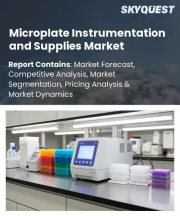
|
시장보고서
상품코드
2079843
마이크로플레이트용 기기 및 소모품 시장 : 시장 규모, 점유율, 성장 분석 - 제품 유형별, 기술별, 용도별, 최종 사용자별, 플레이트 형식별, 동작 모드별, 지역별 업계 예측(2026-2033년)Microplate Instrumentation and Supplies Market Size, Share, and Growth Analysis, By Product Type, By Technology, By Application, By End User, By Plate Format, By Mode of Operation, By Region - Industry Forecast 2026-2033 |
||||||

세계의 마이크로플레이트용 기기 및 소모품 시장 규모는 2024년에 44억 달러로 평가되었고, 2025년 45억 8,000만 달러에서 2033년까지 63억 2,000만 달러로 확대될 전망이며, 예측 기간(2026-2033년) CAGR 4.1%로 성장할 전망입니다.
세계의 마이크로플레이트용 기기 및 소모품 시장에는 신약 개발 및 임상 진단 분야에서 고처리량 스크리닝을 가능하게 하는 리더, 세척기, 인큐베이터, 소모품 등의 필수 구성 요소가 포함됩니다. 그 중요성은 수천 개의 샘플을 동시에 처리할 수 있다는 점에 있으며, 데이터의 무결성을 높이는 동시에 비용을 최소화하고 시장 출시까지의 시간을 단축하는 데 있습니다. 바이오 제조 및 맞춤형 의료 분야에서 신속하고 다중 분석에 대한 수요가 급증하면서 성장이 가속화되고 있으며, 확장성이 뛰어난 분석 플랫폼이 요구되고 있습니다. 학술 연구소에서 수탁 연구 기관(CRO)으로의 확대는 자동 플레이트 핸들링 장치의 부상을 보여줍니다. 재현성이 보장된 분석 데이터에 대한 규제 요건에 따라, 연구소들은 이미징 기능과 분석 기능을 결합한 첨단 마이크로플레이트 시스템에 대한 투자를 확대되고 있습니다. 이러한 추세에 따라 공급업체들은 다양한 환경에 적합한 범용성이 높은 모듈식 솔루션을 개발할 수밖에 없게 되었으며, 서비스 계약이나 전용 소모품을 통해 수익을 창출하고 있습니다.
세계 마이크로플레이트용 기기 및 소모품 시장의 성장 요인
로봇을 이용한 액체 처리 및 자동 플레이트 리더로의 전환 추세가 확대됨에 따라, 수작업의 필요성이 최소화되고, 분석 소요 시간이 단축되며, 재현성이 향상되고 있습니다. 이에 따라 연구소는 더 높은 처리량을 자랑하는 워크플로우 도입을 추진하고 있습니다. 실험 효율이 향상됨에 따라 연구자들은 데이터 분석 및 혁신적인 연구에 더 많은 자원을 할당할 수 있게 되었으며, 그 결과 첨단 자동화 기술과 원활하게 통합될 수 있는 적응성이 뛰어난 마이크로플레이트 플랫폼에 대한 수요가 증가하고 있습니다. 완전 자동화된 실험실 환경으로의 전환은 마이크로플레이트 장비 시장의 지속적인 성장을 뒷받침하고 있으며, 각 공급업체들은 현대 실험실의 변화하는 요구 사항에 부응하기 위해 호환 가능한 모듈과 소프트웨어 인터페이스를 개발하고 있습니다.
세계 마이크로플레이트용 기기 및 소모품 시장의 제약 요인
세계의 마이크로플레이트용 기기 및 소모품 시장은 주로 첨단 마이크로플레이트 리더, 자동 분주 장치, 그리고 통합 소프트웨어 솔루션에 따른 높은 초기 비용으로 인해 발생하는 문제에 직면해 있습니다. 이러한 막대한 자금 투자는 소규모 연구 기관이나 신생 생명공학 기업들이 최신 기술을 신속하게 도입하는 데 주저하게 만드는 요인이 됩니다. 예산 제약이나 예측 불가능한 수익에 대응해 경비를 합리화해야 할 필요성 때문에 조직은 업그레이드를 미루거나 더 저렴한 구형 장비를 선택하는 경우가 종종 있습니다. 이러한 소극적인 태도는 고품질 장비에 대한 당장 수요를 감소시키고, 예산을 중시하는 지역에서 시장 확대를 저해하며, 직접적인 설비 투자 대신 공유 핵심 시설에 대한 의존을 부추기고 있습니다.
세계의 마이크로플레이트용 기기 및 소모품 시장 동향
세계의 마이크로플레이트용 기기 및 소모품 시장에서는 자동화된 워크플로우 솔루션 통합을 향한 뚜렷한 추세가 나타나고 있습니다. 연구소에서는 마이크로플레이트 리더, 리퀴드 핸들러, 데이터 관리 플랫폼을 통합한 완전 자동화 시스템이 점점 더 많이 도입되고 있으며, 이를 통해 공정이 합리화되고 수작업으로 인한 처리 오류가 최소화되며 처리량이 향상되고 있습니다. 이러한 변화로 인해 숙련된 담당자는 부가가치가 더 높은 업무에 집중할 수 있게 되었으며, 공급업체 측도 이에 대응하여 원격 모니터링 및 실시간 프로토콜 조정이 가능한 클라우드 기반 오케스트레이션 소프트웨어와 하드웨어를 번들로 제공합니다. 운영 효율성에 대한 중시는 종합적인 자동화 생태계에 대한 투자를 이끌어내고 있으며, 전 세계 연구 현장에서 학술 기관의 핵심 부서부터 산업계의 연구개발 부서에 이르기까지 폭넓은 분야에서 공감을 얻고 있습니다.
자주 묻는 질문
목차
서론
조사 방법
주요 요약
시장 역학 및 전망
주요 시장 인사이트
세계의 마이크로플레이트용 기기 및 소모품 시장 규모 : 제품 유형별
세계의 마이크로플레이트용 기기 및 소모품 시장 규모 : 기술별
세계의 마이크로플레이트용 기기 및 소모품 시장 규모 : 용도별
세계의 마이크로플레이트용 기기 및 소모품 시장 규모 : 최종 사용자별
세계의 마이크로플레이트용 기기 및 소모품 시장 규모 : 플레이트 포맷별
세계의 마이크로플레이트용 기기 및 소모품 시장 규모 : 운영 모드별
세계의 마이크로플레이트용 기기 및 소모품 시장 규모 : 지역별
경쟁 정보
주요 기업 개요
결론 및 제안
AJY 26.07.13Global Microplate Instrumentation And Supplies Market size was valued at USD 4.4 Billion in 2024 and is poised to grow from USD 4.58 Billion in 2025 to USD 6.32 Billion by 2033, growing at a CAGR of 4.1% during the forecast period (2026-2033).
The global microplate instrumentation and supplies market includes essential components like readers, washers, incubators, and consumables that facilitate high-throughput screening for drug discovery and clinical diagnostics. Its significance lies in the ability to process thousands of samples simultaneously, enhancing data integrity while minimizing costs and accelerating time-to-market. The surge in demand for rapid, multiplexed assays in biomanufacturing and personalized medicine has fueled growth, necessitating scalable testing platforms. Expansion beyond academic labs into contract research organizations showcases the rise in automated plate handling devices. Regulatory demands for reproducible assay data drive laboratories to invest in advanced microplate systems combining imaging and analytical functions. This trend compels suppliers to develop versatile, modular solutions suited for various settings, generating revenue through service contracts and specialized consumables.
Top-down and bottom-up approaches were used to estimate and validate the size of the Global Microplate Instrumentation And Supplies market and to estimate the size of various other dependent submarkets. The research methodology used to estimate the market size includes the following details: The key players in the market were identified through secondary research, and their market shares in the respective regions were determined through primary and secondary research. This entire procedure includes the study of the annual and financial reports of the top market players and extensive interviews for key insights from industry leaders such as CEOs, VPs, directors, and marketing executives. All percentage shares split, and breakdowns were determined using secondary sources and verified through Primary sources. All possible parameters that affect the markets covered in this research study have been accounted for, viewed in extensive detail, verified through primary research, and analyzed to get the final quantitative and qualitative data.
Global Microplate Instrumentation And Supplies Market Segments Analysis
Global microplate instrumentation and supplies market is segmented by product type, technology, application, end user, plate format, mode of operation and region. Based on product type, the market is segmented into Microplate Readers, Microplate Washers, Microplate Dispensers, Microplate Incubators, Microplates & Consumables and Others. Based on technology, the market is segmented into Absorbance Detection, Fluorescence Detection, Luminescence Detection and Multimode Detection. Based on application, the market is segmented into Drug Discovery, Clinical Diagnostics, Genomics & Proteomics Research, ELISA Testing and Others. Based on end user, the market is segmented into Pharmaceutical & Biotechnology Companies, Academic & Research Institutes, Clinical Diagnostic Laboratories, Contract Research Organizations (CROs) and Others. Based on plate format, the market is segmented into 6-Well Plates, 24-Well Plates, 96-Well Plates, 384-Well Plates and Others. Based on mode of operation, the market is segmented into Automated Systems and Semi-Automated Systems. Based on region, the market is segmented into North America, Europe, Asia Pacific, Latin America and Middle East & Africa.
Driver of the Global Microplate Instrumentation And Supplies Market
The growing trend towards robotic liquid handling and automated plate readers minimizes the need for manual processes, accelerates assay turnaround times, and improves reproducibility, which drives laboratories to embrace higher-throughput workflows. This enhancement in experimental efficiency allows researchers to dedicate additional resources to data analysis and innovative research, subsequently boosting the demand for adaptable microplate platforms that integrate seamlessly with advanced automation technologies. The transition to fully automated laboratory environments propels the continuous growth of the microplate instrumentation market, prompting vendors to create interchangeable modules and software interfaces that cater to the changing requirements of modern laboratories.
Restraints in the Global Microplate Instrumentation And Supplies Market
The Global Microplate Instrumentation and Supplies market faces challenges primarily stemming from the high initial costs associated with advanced microplate readers, automated dispensers, and integrated software solutions. These substantial financial investments can discourage smaller research institutions and emerging biotech companies from adopting the latest technology promptly. Budget constraints and the necessity to rationalize expenses against unpredictable returns often lead organizations to delay upgrades or choose more affordable legacy equipment. This reluctance diminishes immediate demand for high-quality instruments, hampers market expansion in budget-conscious areas, and prompts reliance on shared core facilities instead of direct capital investments.
Market Trends of the Global Microplate Instrumentation And Supplies Market
The Global Microplate Instrumentation and Supplies market is witnessing a significant trend towards the integration of automated workflow solutions. Laboratories are increasingly embracing fully automated systems that unify microplate readers, liquid handlers, and data management platforms, leading to streamlined processes that minimize manual handling errors and enhance throughput. This shift allows skilled personnel to focus on higher-value tasks while vendors respond by bundling hardware with cloud-based orchestration software for remote monitoring and real-time protocol adjustments. The emphasis on operational efficiency is attracting investment in comprehensive automation ecosystems, resonating with both academic cores and industrial R&D settings across global research landscapes.
Table of Contents
Introduction
- Objectives of the Study
- Market Definition & Scope
Research Methodology
- Research Process
- Secondary & Primary Data Methods
- Market Size Estimation Methods
Executive Summary
- Global Market Outlook
- Key Market Highlights
- Segmental Overview
- Competition Overview
Market Dynamics & Outlook
- Macro-Economic Indicators
- Drivers & Opportunities
- Restraints & Challenges
- Supply Side Trends
- Demand Side Trends
- Porters Analysis & Impact
- Competitive Rivalry
- Threat of Substitute
- Bargaining Power of Buyers
- Threat of New Entrants
- Bargaining Power of Suppliers
Key Market Insights
- Key Success Factors
- Market Impacting Factors
- Top Investment Pockets
- Ecosystem Mapping
- Market Attractiveness Index 2025
- PESTEL Analysis
- Regulatory Landscape
- Disease Epidemiology
Global Microplate Instrumentation and Supplies Market Size by Product Type & CAGR (2026-2033)
- Market Overview
- Microplate Readers
- Microplate Washers
- Microplate Dispensers
- Microplate Incubators
- Microplates & Consumables
- Others
Global Microplate Instrumentation and Supplies Market Size by Technology & CAGR (2026-2033)
- Market Overview
- Absorbance Detection
- Fluorescence Detection
- Luminescence Detection
- Multimode Detection
Global Microplate Instrumentation and Supplies Market Size by Application & CAGR (2026-2033)
- Market Overview
- Drug Discovery
- Clinical Diagnostics
- Genomics & Proteomics Research
- ELISA Testing
- Others
Global Microplate Instrumentation and Supplies Market Size by End User & CAGR (2026-2033)
- Market Overview
- Pharmaceutical & Biotechnology Companies
- Academic & Research Institutes
- Clinical Diagnostic Laboratories
- Contract Research Organizations (CROs)
- Others
Global Microplate Instrumentation and Supplies Market Size by Plate Format & CAGR (2026-2033)
- Market Overview
- 6-Well Plates
- 24-Well Plates
- 96-Well Plates
- 384-Well Plates
- Others
Global Microplate Instrumentation and Supplies Market Size by Mode of Operation & CAGR (2026-2033)
- Market Overview
- Automated Systems
- Semi-Automated Systems
Global Microplate Instrumentation and Supplies Market Size & CAGR (2026-2033)
- North America (Product Type, Technology, Application, End User, Plate Format, Mode of Operation)
- US
- Canada
- Europe (Product Type, Technology, Application, End User, Plate Format, Mode of Operation)
- Germany
- Spain
- France
- UK
- Italy
- Rest of Europe
- Asia Pacific (Product Type, Technology, Application, End User, Plate Format, Mode of Operation)
- China
- India
- Japan
- South Korea
- Rest of Asia-Pacific
- Latin America (Product Type, Technology, Application, End User, Plate Format, Mode of Operation)
- Mexico
- Brazil
- Rest of Latin America
- Middle East & Africa (Product Type, Technology, Application, End User, Plate Format, Mode of Operation)
- GCC Countries
- South Africa
- Rest of Middle East & Africa
Competitive Intelligence
- Top 5 Player Comparison
- Market Positioning of Key Players, 2025
- Strategies Adopted by Key Market Players
- Recent Developments in the Market
- Company Market Share Analysis, 2025
- Company Profiles of All Key Players
- Company Details
- Product Portfolio Analysis
- Company's Segmental Share Analysis
- Revenue Y-O-Y Comparison (2023-2025)
Key Company Profiles
- Thermo Fisher Scientific Inc.
- Company Overview
- Business Segment Overview
- Financial Updates
- Key Developments
- Agilent Technologies, Inc.
- Company Overview
- Business Segment Overview
- Financial Updates
- Key Developments
- Revvity, Inc.
- Company Overview
- Business Segment Overview
- Financial Updates
- Key Developments
- Bio-Rad Laboratories, Inc.
- Company Overview
- Business Segment Overview
- Financial Updates
- Key Developments
- Beckman Coulter Life Sciences
- Company Overview
- Business Segment Overview
- Financial Updates
- Key Developments
- BMG LABTECH GmbH
- Company Overview
- Business Segment Overview
- Financial Updates
- Key Developments
- Tecan Group Ltd.
- Company Overview
- Business Segment Overview
- Financial Updates
- Key Developments
- Promega Corporation
- Company Overview
- Business Segment Overview
- Financial Updates
- Key Developments
- Corning Incorporated
- Company Overview
- Business Segment Overview
- Financial Updates
- Key Developments
- Greiner Bio-One International GmbH
- Company Overview
- Business Segment Overview
- Financial Updates
- Key Developments
- Eppendorf SE
- Company Overview
- Business Segment Overview
- Financial Updates
- Key Developments
- Hamilton Company
- Company Overview
- Business Segment Overview
- Financial Updates
- Key Developments
- Berthold Technologies GmbH & Co. KG
- Company Overview
- Business Segment Overview
- Financial Updates
- Key Developments
- Hudson Robotics, Inc.
- Company Overview
- Business Segment Overview
- Financial Updates
- Key Developments
- Rayto Life and Analytical Sciences Co., Ltd.
- Company Overview
- Business Segment Overview
- Financial Updates
- Key Developments
- Shenzhen Mindray Bio-Medical Electronics Co., Ltd.
- Company Overview
- Business Segment Overview
- Financial Updates
- Key Developments
- Enzo Biochem, Inc.
- Company Overview
- Business Segment Overview
- Financial Updates
- Key Developments
- Sartorius AG
- Company Overview
- Business Segment Overview
- Financial Updates
- Key Developments
- Aurora Biomed Inc.
- Company Overview
- Business Segment Overview
- Financial Updates
- Key Developments
- Biochrom Ltd.
- Company Overview
- Business Segment Overview
- Financial Updates
- Key Developments
Conclusion & Recommendations

(주말 및 공휴일 제외)


