|
시장보고서
상품코드
2091205
정형외과용 제조 아웃소싱 시장 규모, 점유율 및 성장 분석 : 제품 유형별, 소재별, 서비스 구성 요소별, 임상 용도별, 지역별 - 업계 예측(2026-2033년)Outsourced Orthopedic Manufacturing Market Size, Share, and Growth Analysis, By Product Type, By Material Base, By Service Component, By Clinical Application, By Region - Industry Forecast 2026-2033 |
||||||

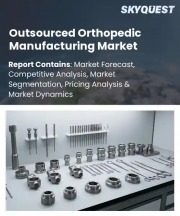
세계의 정형외과용 제조 아웃소싱 시장 규모는 2024년에 195억 7,000만 달러로 평가되며, 2025년 209억 6,000만 달러에서 2033년까지 362억 8,000만 달러로 확대하며, 예측 기간(2026-2033년)에 CAGR 7.1%로 성장할 것으로 전망되고 있습니다.
전 세계 정형외과용 제조 아웃소싱 시장에서는 의료 시설 및 의료기기 제조업체를 대상으로 임플란트, 수술 기구 및 부속 기기의 설계, 제조, 조립을 담당하는 제3자 공급업체들이 활발히 활동하고 있습니다. 고령화가 진행되고 근골격계 질환의 유병률이 증가함에 따라 높은 수준의 엔지니어링 역량을 갖추면서도 설비 투자를 절감하려는 수요가 높아지고 있습니다. 이 분야에서는 기본적인 부품의 프레스 가공에서 시작해, 적층 제조 및 AI를 활용한 품질관리를 도입한 첨단 생산 라인으로의 전환이 진행되고 있습니다. ISO 13485 및 MDSAP와 같은 규격 준수는 클린룸 환경 및 디지털 추적성에 대한 투자를 촉진하고 있으며, 맞춤형 임플란트 시장의 기회를 창출하고 있습니다. AI를 활용한 자동화는 제조 효율을 높이고, 설계, 생산, 물류를 최적화합니다. 한편, 예측 유지보수 및 자동 검사는 품질과 규정 준수를 향상시키며, 확장성과 신뢰성을 추구하는 OEM 업체들에게 아웃소싱은 점점 더 현실적인 선택지가 되고 있습니다.
전 세계 정형외과 제조 아웃소싱 시장의 성장 요인
맞춤형 정형외과 솔루션에 대한 수요가 증가함에 따라 제조업체들은 아웃소싱 방안을 모색하고 있습니다. 이를 통해 사업을 신속하게 확장하고 전문 지식을 활용할 수 있게 됩니다. 외부 시설을 활용함으로써 기업은 혁신적인 설계에 주력하는 한편, 설비 및 인건비와 관련된 설비 투자를 최소화할 수 있습니다. 이러한 협력적인 접근 방식은 시장 출시 기간을 단축하고 제품의 차별화를 촉진하는 한편, 외과의사와 환자가 원하는 맞춤형 적합성과 치료 결과 개선에 대한 기대에 부응함으로써 시장 전체의 성장에 기여하고 있습니다. 또한 3D 프린팅과 같은 첨단 제조 기술을 아웃소싱 네트워크에 통합함으로써 더욱 세밀한 맞춤화가 가능해졌고, 혁신의 주기가 가속화되어 시장의 호조세가 확고해지고 있습니다.
세계 정형외과용 제조 아웃소싱 시장의 제약 요인
전 세계 정형외과용 제조 아웃소싱 시장은 국가마다 승인 절차, 품질 기준, 문서화 요건이 서로 다른 일관성 없는 규제 환경으로 인해 큰 과제에 직면해 있습니다. 이러한 복잡성으로 인해 포괄적인 시험, 인증 및 빈번한 감사가 필요하게 되며, 이는 제품 출시를 지연시키거나 아웃소싱 파트너의 운영상의 어려움을 가중시킬 수 있습니다. 제조사가 제3자 시설에 의존하는 경우, 현지 규정을 준수하지 못하면 제품 리콜이나 법적 조치, 평판 하락으로 이어져 투자를 저해하고 시장 성장을 방해할 우려가 있습니다. 또한 지역 간 기준을 통일하는 데 필요한 노력은 조정을 복잡하게 만들고 소요 기간을 길어지게 합니다.
세계 정형외과용 의료기기 수탁제조 시장의 동향
전 세계 정형외과용 의료기기 제조 아웃소싱 시장에서는 디지털 트윈 기술 통합을 향한 뚜렷한 추세가 나타나고 있습니다. 이 기술은 정형외과용 임플란트의 수명 주기 관리에 혁명을 일으키고 있습니다. 가상 복제본을 활용하여 설계, 제조 및 수술 후 결과를 시뮬레이션함으로써, 기업은 적합도의 향상과 실물 프로토타입에 대한 의존도 감소를 실현하고 있습니다. 이 기술은 엔지니어, 외과의사, 환자 간의 실시간 협력을 촉진하고, 밸류체인 내의 민첩성을 높이고 있습니다. 그 결과, 제약사는 변화하는 임상적 요구와 보험 급여 환경에 신속하게 대응할 수 있게 되었으며, 아웃소싱 파트너십에 대한 신뢰가 높아지고 있습니다. 전반적으로 볼 때, 이러한 추세는 궁극적으로 정형외과 분야에서 환자의 치료 성과를 향상시키는 것을 목표로 하는 혁신적인 접근 방식을 의미합니다.
자주 묻는 질문
목차
서론
조사 방법
개요
시장 역학과 전망
주요 시장 인사이트
세계의 정형외과용 제조 아웃소싱 시장 규모 : 제품 유형별
세계의 정형외과용 제조 아웃소싱 시장 규모 : 소재별
세계의 정형외과용 제조 아웃소싱 시장 규모 : 서비스 구성 요소별
세계의 정형외과용 제조 아웃소싱 시장 규모 : 임상 용도별
세계의 정형외과용 제조 아웃소싱 시장 규모 : 지역별
경쟁 정보
주요 기업 개요
결론과 제안
KSA 26.07.23Global Outsourced Orthopedic Manufacturing Market size was valued at USD 19.57 Billion in 2024 and is poised to grow from USD 20.96 Billion in 2025 to USD 36.28 Billion by 2033, growing at a CAGR of 7.1% during the forecast period (2026-2033).
The global outsourced orthopedic manufacturing market features third-party providers that design, produce, and assemble implants, instruments, and ancillary devices for healthcare facilities and equipment makers. As the aging population and prevalence of musculoskeletal disorders rise, the demand for reduced capital expenditure alongside advanced engineering capabilities has grown. The sector has transitioned from basic component stamping to sophisticated production lines, utilizing additive manufacturing and AI-driven quality control. Compliance with standards like ISO 13485 and MDSAP encourages investments in cleanroom environments and digital traceability, presenting opportunities for personalized implants. AI-driven automation enhances manufacturing efficiency, optimizing design, production, and logistics, while predictive maintenance and automated inspections improve quality and compliance, making outsourcing an increasingly viable option for OEMs seeking scalability and reliability.
Top-down and bottom-up approaches were used to estimate and validate the size of the Global Outsourced Orthopedic Manufacturing market and to estimate the size of various other dependent submarkets. The research methodology used to estimate the market size includes the following details: The key players in the market were identified through secondary research, and their market shares in the respective regions were determined through primary and secondary research. This entire procedure includes the study of the annual and financial reports of the top market players and extensive interviews for key insights from industry leaders such as CEOs, VPs, directors, and marketing executives. All percentage shares split, and breakdowns were determined using secondary sources and verified through Primary sources. All possible parameters that affect the markets covered in this research study have been accounted for, viewed in extensive detail, verified through primary research, and analyzed to get the final quantitative and qualitative data.
Global Outsourced Orthopedic Manufacturing Market Segments Analysis
Global outsourced orthopedic manufacturing market is segmented by product type, material base, service component, clinical application and region. Based on product type, the market is segmented into Implants, Surgical Instruments, Cases, Trays and Others. Based on material base, the market is segmented into Titanium, Stainless Steel, Cobalt-Chromium, Ceramics, Polymers and Others. Based on service component, the market is segmented into Manufacturing Services, Engineering Services, Quality Services and Regulatory Services. Based on clinical application, the market is segmented into Joint Reconstruction, Spine Surgery, Trauma Surgery, Sports Medicine, Extremities and Others. Based on region, the market is segmented into North America, Europe, Asia Pacific, Latin America and Middle East & Africa.
Driver of the Global Outsourced Orthopedic Manufacturing Market
The increasing demand for personalized orthopedic solutions is prompting manufacturers to seek outsourcing options, allowing them to scale operations quickly and access specialized knowledge. By utilizing external facilities, companies can concentrate on innovative designs while minimizing capital expenditures associated with equipment and labor. This collaborative approach accelerates time-to-market, improves product differentiation, and fulfills the expectations of surgeons and patients for customized fitting and enhanced outcomes, contributing to the overall growth of the market. Furthermore, the integration of advanced manufacturing technologies, such as 3D printing, within outsourced networks facilitates further customization and speeds up innovation cycles, solidifying the market's positive momentum.
Restraints in the Global Outsourced Orthopedic Manufacturing Market
The global outsourced orthopedic manufacturing market faces significant challenges due to a disjointed regulatory environment, where varying approval processes, quality standards, and documentation requirements exist across different countries. This complexity necessitates comprehensive testing, certification, and frequent audits, which can impede product launches and escalate operational challenges for outsourcing partners. In instances where manufacturers depend on third-party facilities, any failure to comply with local regulations may lead to product recalls, legal repercussions, and harm to their reputation, deterring investment and hindering market growth. Additionally, the effort required to unify standards across regions complicates coordination and lengthens timelines.
Market Trends of the Global Outsourced Orthopedic Manufacturing Market
The Global Outsourced Orthopedic Manufacturing market is experiencing a notable trend towards the integration of digital twin technology, which revolutionizes the lifecycle management of orthopedic implants. By utilizing virtual replicas to simulate design, manufacturing, and post-operative outcomes, companies are achieving enhanced fit precision and reduced reliance on physical prototypes. This technology fosters real-time collaboration among engineers, surgeons, and patients, promoting agility within the value chain. As a result, manufacturers can adapt more swiftly to changing clinical needs and reimbursement environments, instilling greater trust in outsourced partnerships. Overall, this trend signifies a transformative approach that ultimately aims to improve patient outcomes in the orthopedic sector.
Table of Contents
Introduction
- Objectives of the Study
- Market Definition & Scope
Research Methodology
- Research Process
- Secondary & Primary Data Methods
- Market Size Estimation Methods
Executive Summary
- Global Market Outlook
- Key Market Highlights
- Segmental Overview
- Competition Overview
Market Dynamics & Outlook
- Macro-Economic Indicators
- Drivers & Opportunities
- Restraints & Challenges
- Supply Side Trends
- Demand Side Trends
- Porters Analysis & Impact
- Competitive Rivalry
- Threat of Substitute
- Bargaining Power of Buyers
- Threat of New Entrants
- Bargaining Power of Suppliers
Key Market Insights
- Key Success Factors
- Market Impacting Factors
- Top Investment Pockets
- Ecosystem Mapping
- Market Attractiveness Index 2025
- PESTEL Analysis
- Regulatory Landscape
Global Outsourced Orthopedic Manufacturing Market Size by Product Type & CAGR (2026-2033)
- Market Overview
- Implants
- Surgical Instruments
- Cases
- Trays
- Others
Global Outsourced Orthopedic Manufacturing Market Size by Material Base & CAGR (2026-2033)
- Market Overview
- Titanium
- Stainless Steel
- Cobalt-Chromium
- Ceramics
- Polymers
- Others
Global Outsourced Orthopedic Manufacturing Market Size by Service Component & CAGR (2026-2033)
- Market Overview
- Manufacturing Services
- Engineering Services
- Quality Services
- Regulatory Services
Global Outsourced Orthopedic Manufacturing Market Size by Clinical Application & CAGR (2026-2033)
- Market Overview
- Joint Reconstruction
- Spine Surgery
- Trauma Surgery
- Sports Medicine
- Extremities
- Others
Global Outsourced Orthopedic Manufacturing Market Size & CAGR (2026-2033)
- North America (Product Type, Material Base, Service Component, Clinical Application)
- US
- Canada
- Europe (Product Type, Material Base, Service Component, Clinical Application)
- Germany
- Spain
- France
- UK
- Italy
- Rest of Europe
- Asia Pacific (Product Type, Material Base, Service Component, Clinical Application)
- China
- India
- Japan
- South Korea
- Rest of Asia-Pacific
- Latin America (Product Type, Material Base, Service Component, Clinical Application)
- Mexico
- Brazil
- Rest of Latin America
- Middle East & Africa (Product Type, Material Base, Service Component, Clinical Application)
- GCC Countries
- South Africa
- Rest of Middle East & Africa
Competitive Intelligence
- Top 5 Player Comparison
- Market Positioning of Key Players, 2025
- Strategies Adopted by Key Market Players
- Recent Developments in the Market
- Company Market Share Analysis, 2025
- Company Profiles of All Key Players
- Company Details
- Product Portfolio Analysis
- Company's Segmental Share Analysis
- Revenue Y-O-Y Comparison (2023-2025)
Key Company Profiles
- LISI S.A.
- Company Overview
- Business Segment Overview
- Financial Updates
- Key Developments
- NN, Inc.
- Company Overview
- Business Segment Overview
- Financial Updates
- Key Developments
- Integer Holdings Corporation
- Company Overview
- Business Segment Overview
- Financial Updates
- Key Developments
- Tecomet, Inc.
- Company Overview
- Business Segment Overview
- Financial Updates
- Key Developments
- Orchid Orthopedic Solutions LLC
- Company Overview
- Business Segment Overview
- Financial Updates
- Key Developments
- Paragon Medical, Inc.
- Company Overview
- Business Segment Overview
- Financial Updates
- Key Developments
- Autocam Medical
- Company Overview
- Business Segment Overview
- Financial Updates
- Key Developments
- Avalign Technologies Inc.
- Company Overview
- Business Segment Overview
- Financial Updates
- Key Developments
- Intech Medical SAS
- Company Overview
- Business Segment Overview
- Financial Updates
- Key Developments
- Marle Group
- Company Overview
- Business Segment Overview
- Financial Updates
- Key Developments
- Norman Noble Inc.
- Company Overview
- Business Segment Overview
- Financial Updates
- Key Developments
- Norwood Medical
- Company Overview
- Business Segment Overview
- Financial Updates
- Key Developments
- Resolve Surgical Technologies
- Company Overview
- Business Segment Overview
- Financial Updates
- Key Developments
- SpiTrex Orthopedics
- Company Overview
- Business Segment Overview
- Financial Updates
- Key Developments
- Tegra Medical
- Company Overview
- Business Segment Overview
- Financial Updates
- Key Developments
- Velocity Medtech
- Company Overview
- Business Segment Overview
- Financial Updates
- Key Developments
- Viant Medical
- Company Overview
- Business Segment Overview
- Financial Updates
- Key Developments
- Elos Medtech AB
- Company Overview
- Business Segment Overview
- Financial Updates
- Key Developments
- Cretex Medical
- Company Overview
- Business Segment Overview
- Financial Updates
- Key Developments
- Sandvik Applied Manufacturing
- Company Overview
- Business Segment Overview
- Financial Updates
- Key Developments