|
시장보고서
상품코드
2091257
스마트 가전 시장 규모, 점유율, 성장 분석 : 제품 유형별, 연결 기술별, 용도별, 판매 채널별, 최종사용자별, 지역별 - 업계 예측(2026-2033년)Smart Appliance Market Size, Share, and Growth Analysis, By Product Type (Smart Kitchen Appliances, Smart Laundry Appliances), By Connectivity Technology, By Application, By Distribution Channel, By End User, By Region - Industry Forecast 2026-2033 |
||||||

세계의 스마트 가전 시장 규모는 2024년에 545억 달러로 평가되었으며, 2025년 620억 2,000만 달러에서 2033년까지 1,744억 5,000만 달러로 확대되어 예측 기간(2026-2033년) 동안 CAGR 13.8%로 성장할 것으로 전망됩니다.
세계 스마트 가전 시장에는 스마트폰이나 음성 비서를 통해 원격으로 모니터링 및 조작이 가능한 냉장고, 오븐, 세탁기 등의 인터넷 연결 기기가 폭넓게 포함됩니다. 이 시장은 에너지 효율 향상, 예측 유지보수, 편의성 증대를 실현함으로써 성장하고 있으며, 이는 지속가능성에 대한 노력과 홈 오토메이션에 대한 수요 증가와 부합합니다. 광대역의 보급과 클라우드 기술의 발전이 성장을 뒷받침하고 있는 한편, AI와 IoT와 같은 혁신을 통해 기존의 가전제품은 사용자의 취향에 맞춰 조정될 수 있는 지능형 시스템으로 더욱 변모하고 있습니다. 제조사는 이용 데이터를 분석함으로써 사용자에게 맞춤형 에너지 절약 방안을 제안하고 예방적 유지보수 알림을 제공할 수 있으며, 구독형 서비스를 통해 소비자의 참여도를 높이고 지속적인 수익을 창출할 수 있습니다. 이러한 시너지 효과로 인해 스마트 가전 분야의 수요와 혁신이 지속적으로 촉진되고 있습니다.
세계 스마트 가전 시장의 성장요인
세계 스마트 가전 시장의 주요 성장 촉진요인 중 하나는 에너지 효율이 뛰어나고 친환경적인 홈 솔루션에 대한 소비자의 수요가 증가하고 있다는 점입니다. 각 가정이 에너지 소비를 줄이고 공과금을 절약하기 위해 노력하는 가운데, 첨단 기술과 IoT 기능을 탑재한 스마트 가전은 원격 모니터링, 사용 현황 최적화, 에너지 사용량 추적 등의 기능을 제공하고 있습니다. 또한, 지속가능성과 환경에 미치는 영향에 대한 인식이 높아짐에 따라, 보다 친환경적인 라이프스타일에 기여하는 가전제품으로의 전환이 촉진되고 있습니다. 이러한 스마트하고 효율적이며 사용자 친화적인 솔루션에 대한 수요가 제조사의 혁신과 제품 라인업 확충을 촉진하고, 궁극적으로는 스마트 가전 분야의 성장을 이끌고 있습니다.
세계 스마트 가전 시장의 제약요인
세계 스마트 가전 시장의 주요 제약요인 중 하나는 이러한 첨단 기술을 구매하여 기존의 가정용 시스템에 통합하는 데 따르는 높은 초기 비용입니다. 많은 소비자들은 기존 가전제품에 비해 가격이 비싸다는 이유로 스마트 가전 구매를 주저할 가능성이 있으며, 이는 보급에 걸림돌이 될 우려가 있습니다. 게다가 스마트 가전은 대개 인터넷 연결이나 데이터 공유가 필요하기 때문에 사이버 보안 및 데이터 개인정보 보호에 대한 우려가 소비자의 신뢰를 더욱 훼손할 가능성이 있습니다. 이러한 요인들은, 특히 가격에 민감한 지역에서 합리적인 가격이 소비자들에게 여전히 중요한 고려 사항인 경우, 성장 속도를 둔화시키고 시장의 잠재력을 제한할 가능성이 있습니다.
세계 스마트 가전 시장의 동향
세계 스마트 가전 시장에서는 AI를 활용한 개인 맞춤화에 대한 큰 추세가 나타나고 있습니다. 소비자들은 자신의 생활 리듬과 취향에 자연스럽게 맞춰지는 기기를 원하고 있습니다. 각 제조사는 사용자의 습관을 파악하고, 최적의 설정을 제안하며, 음성 비서와의 연동을 가능하게 하기 위해 가전제품에 첨단 기계 학습 알고리즘을 탑재하여 전반적인 사용자 경험을 향상시키고 있습니다. 이러한 진화는 생태계 간의 연계를 한층 더 촉진하고, 구독형 서비스 모델 도입의 길을 열어주며, 각 브랜드가 단순한 하드웨어 기능을 넘어 차별화를 꾀할 수 있게 해줍니다. 직관적이고 상황에 맞는 솔루션을 제공하는 데 주력하는 기업은 고객 충성도를 구축하고, 시장 내 입지를 확대하며, 지속가능한 소비를 촉진하는 동시에 스마트홈 혁신의 미래에 영향을 미치는 데 있어 유리한 입장에 있습니다.
자주 묻는 질문
목차
소개
조사 방법
주요 요약
시장 역학과 전망
주요 시장 인사이트
세계의 스마트 가전 시장 규모 : 제품 유형별
세계의 스마트 가전 시장 규모 : 커넥티비티 기술별
세계의 스마트 가전 시장 규모 : 용도별
세계의 스마트 가전 시장 규모 : 유통 채널별
세계의 스마트 가전 시장 규모 : 최종사용자별
세계의 스마트 가전 시장 규모 : 지역별
경쟁 정보
주요 기업 개요
결론과 제안
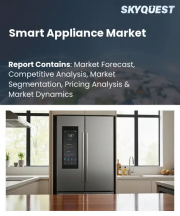
KSM 26.07.22Global Smart Appliance Market size was valued at USD 54.5 Billion in 2024 and is poised to grow from USD 62.02 Billion in 2025 to USD 174.45 Billion by 2033, growing at a CAGR of 13.8% during the forecast period (2026-2033).
The global smart appliance market encompasses a range of internet-connected devices such as refrigerators, ovens, and washing machines that allow remote monitoring and control via smartphones and voice assistants. This market thrives on delivering energy efficiency, predictive maintenance, and enhanced user convenience, aligning with sustainability initiatives and the growing need for home automation. The expansion of broadband and advancements in cloud technology have fueled growth, while innovations like AI and IoT further transform ordinary appliances into intelligent systems capable of adapting to user preferences. By analyzing usage data, manufacturers can provide tailored energy-saving suggestions and proactive maintenance notifications, driving consumer engagement and recurring revenue through subscription-based services. This synergy propels ongoing demand and innovation within the smart appliance sector.
Top-down and bottom-up approaches were used to estimate and validate the size of the Global Smart Appliance market and to estimate the size of various other dependent submarkets. The research methodology used to estimate the market size includes the following details: The key players in the market were identified through secondary research, and their market shares in the respective regions were determined through primary and secondary research. This entire procedure includes the study of the annual and financial reports of the top market players and extensive interviews for key insights from industry leaders such as CEOs, VPs, directors, and marketing executives. All percentage shares split, and breakdowns were determined using secondary sources and verified through Primary sources. All possible parameters that affect the markets covered in this research study have been accounted for, viewed in extensive detail, verified through primary research, and analyzed to get the final quantitative and qualitative data.
Global Smart Appliance Market Segments Analysis
Global smart appliance market is segmented by product type, connectivity technology, application, distribution channel, end user and region. Based on product type, the market is segmented into Smart Kitchen Appliances, Smart Laundry Appliances, Smart Cleaning Appliances, Smart Air Care Appliances, Smart Water Appliances and Others. Based on connectivity technology, the market is segmented into Wi-Fi, Bluetooth, Zigbee/Z-Wave and Others. Based on application, the market is segmented into Cooking & Food Preparation, Cleaning, Laundry Care, Air Quality Management, Energy Management and Others. Based on distribution channel, the market is segmented into Online Retail, Specialty Electronics Stores, Supermarkets & Hypermarkets, Brand Stores and Others. Based on end user, the market is segmented into Residential, Commercial and Others. Based on region, the market is segmented into North America, Europe, Asia Pacific, Latin America and Middle East & Africa.
Driver of the Global Smart Appliance Market
One of the key market drivers for the global smart appliance market is the increasing consumer demand for energy-efficient and environmentally-friendly home solutions. As households strive to reduce energy consumption and lower utility bills, smart appliances, equipped with advanced technologies and IoT capabilities, offer features such as remote monitoring, usage optimization, and energy usage tracking. Additionally, rising awareness of sustainability and environmental impact fosters a shift towards appliances that contribute to a greener lifestyle. This demand for smart, efficient, and user-friendly solutions is propelling manufacturers to innovate and expand their offerings, ultimately driving growth in the smart appliance sector.
Restraints in the Global Smart Appliance Market
One key market restraint for the global smart appliance market is the high initial cost associated with purchasing and integrating these advanced technologies into existing household systems. Many consumers may be hesitant to invest in smart appliances due to their premium pricing compared to traditional appliances, which can deter widespread adoption. Additionally, concerns regarding cybersecurity and data privacy may further inhibit consumer confidence, as smart appliances often require internet connectivity and data sharing. These factors can lead to a slower growth trajectory and limit the market potential, particularly in price-sensitive regions where affordability remains a crucial consideration for consumers.
Market Trends of the Global Smart Appliance Market
The Global Smart Appliance market is witnessing a significant trend towards AI-driven personalization, where consumers demand devices that seamlessly adapt to their unique routines and preferences. Manufacturers are integrating sophisticated machine learning algorithms within appliances to capture user habits, recommend optimal settings, and enable compatibility with voice assistants, enhancing the overall user experience. This evolution fosters greater ecosystem connectivity and paves the way for subscription-based service models, allowing brands to differentiate themselves beyond mere hardware features. Companies focusing on delivering intuitive and context-aware solutions are well-positioned to build customer loyalty, expand their market presence, and influence the future of smart home innovation while promoting sustainable consumption.
Table of Contents
Introduction
- Objectives of the Study
- Market Definition & Scope
Research Methodology
- Research Process
- Secondary & Primary Data Methods
- Market Size Estimation Methods
Executive Summary
- Global Market Outlook
- Key Market Highlights
- Segmental Overview
- Competition Overview
Market Dynamics & Outlook
- Macro-Economic Indicators
- Drivers & Opportunities
- Restraints & Challenges
- Supply Side Trends
- Demand Side Trends
- Porters Analysis & Impact
- Competitive Rivalry
- Threat of Substitute
- Bargaining Power of Buyers
- Threat of New Entrants
- Bargaining Power of Suppliers
Key Market Insights
- Key Success Factors
- Market Impacting Factors
- Top Investment Pockets
- Ecosystem Mapping
- Market Attractiveness Index 2025
- PESTEL Analysis
- Regulatory Landscape
- Customer & Buying Criteria Analysis
Global Smart Appliance Market Size by Product Type & CAGR (2026-2033)
- Market Overview
- Smart Kitchen Appliances
- Smart Laundry Appliances
- Smart Cleaning Appliances
- Smart Air Care Appliances
- Smart Water Appliances
- Others
Global Smart Appliance Market Size by Connectivity Technology & CAGR (2026-2033)
- Market Overview
- Wi-Fi
- Bluetooth
- Zigbee/Z-Wave
- Others
Global Smart Appliance Market Size by Application & CAGR (2026-2033)
- Market Overview
- Cooking & Food Preparation
- Cleaning
- Laundry Care
- Air Quality Management
- Energy Management
- Others
Global Smart Appliance Market Size by Distribution Channel & CAGR (2026-2033)
- Market Overview
- Online Retail
- Specialty Electronics Stores
- Supermarkets & Hypermarkets
- Brand Stores
- Others
Global Smart Appliance Market Size by End User & CAGR (2026-2033)
- Market Overview
- Residential
- Commercial
- Others
Global Smart Appliance Market Size & CAGR (2026-2033)
- North America (Product Type, Connectivity Technology, Application, Distribution Channel, End User)
- US
- Canada
- Europe (Product Type, Connectivity Technology, Application, Distribution Channel, End User)
- Germany
- Spain
- France
- UK
- Italy
- Rest of Europe
- Asia Pacific (Product Type, Connectivity Technology, Application, Distribution Channel, End User)
- China
- India
- Japan
- South Korea
- Rest of Asia-Pacific
- Latin America (Product Type, Connectivity Technology, Application, Distribution Channel, End User)
- Mexico
- Brazil
- Rest of Latin America
- Middle East & Africa (Product Type, Connectivity Technology, Application, Distribution Channel, End User)
- GCC Countries
- South Africa
- Rest of Middle East & Africa
Competitive Intelligence
- Top 5 Player Comparison
- Market Positioning of Key Players, 2025
- Strategies Adopted by Key Market Players
- Recent Developments in the Market
- Company Market Share Analysis, 2025
- Company Profiles of All Key Players
- Company Details
- Product Portfolio Analysis
- Company's Segmental Share Analysis
- Revenue Y-O-Y Comparison (2023-2025)
Key Company Profiles
- Samsung Electronics Co., Ltd.
- Company Overview
- Business Segment Overview
- Financial Updates
- Key Developments
- LG Electronics Inc.
- Company Overview
- Business Segment Overview
- Financial Updates
- Key Developments
- Whirlpool Corporation
- Company Overview
- Business Segment Overview
- Financial Updates
- Key Developments
- Haier Smart Home Co., Ltd.
- Company Overview
- Business Segment Overview
- Financial Updates
- Key Developments
- Electrolux AB
- Company Overview
- Business Segment Overview
- Financial Updates
- Key Developments
- BSH Hausgerate GmbH
- Company Overview
- Business Segment Overview
- Financial Updates
- Key Developments
- Midea Group Co., Ltd.
- Company Overview
- Business Segment Overview
- Financial Updates
- Key Developments
- Panasonic Holdings Corporation
- Company Overview
- Business Segment Overview
- Financial Updates
- Key Developments
- Hitachi, Ltd.
- Company Overview
- Business Segment Overview
- Financial Updates
- Key Developments
- Sharp Corporation
- Company Overview
- Business Segment Overview
- Financial Updates
- Key Developments
- GE Appliances
- Company Overview
- Business Segment Overview
- Financial Updates
- Key Developments
- Hisense Home Appliances Group Co., Ltd.
- Company Overview
- Business Segment Overview
- Financial Updates
- Key Developments
- Arcelik A.S.
- Company Overview
- Business Segment Overview
- Financial Updates
- Key Developments
- Xiaomi Corporation
- Company Overview
- Business Segment Overview
- Financial Updates
- Key Developments
- TCL Electronics Holdings Limited
- Company Overview
- Business Segment Overview
- Financial Updates
- Key Developments
- Roborock Technology Co., Ltd.
- Company Overview
- Business Segment Overview
- Financial Updates
- Key Developments
- Ecovacs Robotics Co., Ltd.
- Company Overview
- Business Segment Overview
- Financial Updates
- Key Developments
- iRobot Corporation
- Company Overview
- Business Segment Overview
- Financial Updates
- Key Developments
- Vestel Elektronik Sanayi ve Ticaret A.S.
- Company Overview
- Business Segment Overview
- Financial Updates
- Key Developments
- Gree Electric Appliances, Inc. of Zhuhai
- Company Overview
- Business Segment Overview
- Financial Updates
- Key Developments