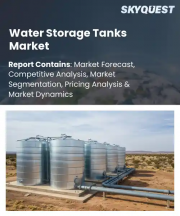
|
시장보고서
상품코드
2091662
저수 탱크 시장 규모, 점유율 및 성장 분석 : 재료 유형별, 설치 유형별, 용량별, 용도별, 최종사용자별, 유통 채널별, 지역별 - 업계 예측(2026-2033년)Water Storage Tanks Market Size, Share, and Growth Analysis, By Material Type, By Installation Type, By Capacity, By Application, By End User, By Distribution Channel, By Region - Industry Forecast 2026-2033 |
||||||

세계의 저수 탱크 시장 규모는 2024년에 251억 달러로 평가되며, 2025년 263억 달러에서 2033년까지 382억 8,000만 달러로 확대하며, 예측 기간(2026-2033년)에 CAGR 4.8%로 성장할 것으로 전망되고 있습니다.
전 세계 저수 탱크 시장에서는 지자체, 산업, 농업, 주택 등 다양한 분야에서 집수, 배수, 물 관리에 대한 수요가 증가함에 따라 지상형 및 지하형 솔루션이 발전하고 있으며, 큰 변화가 나타나고 있습니다. 시장 성장의 주요 촉진요인으로는 기후 변화, 도시 확장, 인구 증가 속에서 견고한 인프라에 대한 필요성이 높아지고 있다는 점을 들 수 있으며, 이에 따라 혁신적인 물 관리 시스템에 대한 의존도가 높아지고 있습니다. 기존의 강철 탱크에서 IoT 연결 등 스마트 기술이 접목된 첨단 복합재 솔루션으로 전환함으로써, 원격 모니터링, 누수 감지, 예측 유지보수가 가능해집니다. 이러한 전환은 지자체 및 산업 분야의 운영 효율성 향상, 비용 절감, 기능 강화를 촉진하며, 급변하는 환경에서 데이터를 활용하여 제품 라인업을 최적화할 수 있는 탱크 제조업체에게 큰 비즈니스 기회를 창출하고 있습니다.
세계 저수 탱크 시장의 성장 요인
도시화가 진행됨에 따라 배수 네트워크의 현대화, 신규 주택 프로젝트 건설, 지역 인프라 확충을 배경으로 신뢰성이 높은 저수 솔루션에 대한 수요가 크게 증가하고 있습니다. 변동하는 물 소비량에 대응하고, 사용 피크 시간대나 비상 시에 예비 공급을 확보하기 위해서는 견고한 저수 탱크에 대한 지속적인 수요가 필수적입니다. 그 결과, 각 제조사들은 이렇게 진화하는 도시의 수요에 부응하기 위해 생산 능력 확대와 탱크 설계 혁신에 힘쓰고 있습니다. 또한 스마트 감시 시스템의 도입으로 운영 효율이 향상되었으며, 지자체의 노력에 힘입어 이러한 첨단 솔루션의 보급이 촉진되고, 장기적인 서비스 계약 체결도 수월해지고 있습니다.
세계 저수조 시장의 제약 요인
전 세계 저수조 시장은 주로 대규모 저수조의 구매 및 설치에 필요한 막대한 초기 투자 비용이 장벽으로 작용하여, 많은 개발업체들이 주저하게 만들고 있습니다. 신흥 경제국에서는 예산 범위 내의 자본 배분이 제한적이라는 점이 또 다른 과제로 대두되고 있으며, 이로 인해 설비 설치가 지연되고 탱크 시장의 확대를 저해하고 있습니다. 또한 이러한 탱크의 구조적 무결성을 확보하기 위해서는 특수한 자재와 전문 지식이 필요하므로, 설치 장소에 대한 치밀한 계획과 준비가 필수적입니다. 또한 일부 기업은 비용 절감을 위해 대체 저수 솔루션을 선택하고 있으며, 이로 인해 기존 저수 인프라 및 관련 처리 설비에 대한 수요가 더욱 감소하고 있습니다.
세계 저수조 시장의 동향
전 세계 저수조 시장에서는 제조사들이 재활용 플라스틱, HDPE, 복합 섬유 등 친환경 소재를 설계에 도입하는 사례가 늘어나고 있으며, 지속가능성으로의 큰 전환이 나타나고 있습니다. 이러한 추세는 엄격한 환경 규제와 환경에 미치는 영향을 최소화하는 제품에 대한 소비자의 선호도가 높아짐에 따라 주도되고 있습니다. 이러한 최신 소재는 기존의 강철 탱크와 동등한 내구성을 갖추고 있을 뿐만 아니라, 경량화와 내식성 등의 장점도 있으며, 설치 편의성 향상에도 기여하고 있습니다. 이해관계자들이 실적이 입증된 이산화탄소 배출 감축 대책을 시행하고 있는 공급업체를 우선적으로 선택하는 가운데, 지속가능한 저수 솔루션에 대한 수요는 급증할 것으로 예상되며, 이는 업계 전반에 걸친 환경적 책임에 대한 폭넓은 노력을 반영하고 있습니다.
자주 묻는 질문
목차
서론
조사 방법
개요
시장 역학과 전망
주요 시장 인사이트
세계의 저수 탱크 시장 규모 : 재료 유형별
세계의 저수 탱크 시장 규모 : 설치 유형별
세계의 저수 탱크 시장 규모 : 용량별
세계의 저수 탱크 시장 규모 : 용도별
세계의 저수 탱크 시장 규모 : 최종사용자별
세계의 저수 탱크 시장 규모 : 유통 채널별
세계의 저수 탱크 시장 규모 : 지역별
경쟁 정보
주요 기업 개요
결론과 제안
KSA 26.07.27Global Water Storage Tanks Market size was valued at USD 25.10 Billion in 2024 and is poised to grow from USD 26.30 Billion in 2025 to USD 38.28 Billion by 2033, growing at a CAGR of 4.8% during the forecast period (2026-2033).
The global water storage tanks market is witnessing significant trends as both above-ground and below-ground solutions evolve to meet increasing needs for water collection, distribution, and management across various sectors, including municipal, industrial, agricultural, and residential. Key drivers of market growth include the necessity for resilient infrastructure amid climate variability, urban expansion, and population growth, leading to heightened dependencies on innovative water management systems. The shift from traditional steel tanks to advanced composite solutions incorporated with smart technology-such as IoT connectivity-enables remote monitoring, leak detection, and predictive maintenance. This transition fosters operational efficiency, reduced costs, and enhanced capabilities for municipalities and industries, creating substantial opportunities for tank manufacturers adept at leveraging data to optimize their product offerings in a rapidly changing landscape.
Top-down and bottom-up approaches were used to estimate and validate the size of the Global Water Storage Tanks market and to estimate the size of various other dependent submarkets. The research methodology used to estimate the market size includes the following details: The key players in the market were identified through secondary research, and their market shares in the respective regions were determined through primary and secondary research. This entire procedure includes the study of the annual and financial reports of the top market players and extensive interviews for key insights from industry leaders such as CEOs, VPs, directors, and marketing executives. All percentage shares split, and breakdowns were determined using secondary sources and verified through Primary sources. All possible parameters that affect the markets covered in this research study have been accounted for, viewed in extensive detail, verified through primary research, and analyzed to get the final quantitative and qualitative data.
Global Water Storage Tanks Market Segments Analysis
Global water storage tanks market is segmented by material type, installation type, capacity, application, end user, distribution channel and region. Based on material type, the market is segmented into plastic tanks, steel tanks, concrete tanks and others. Based on installation type, the market is segmented into above ground tanks and underground tanks. Based on capacity, the market is segmented into up to 5,000 liters, 5,001-50,000 liters and above 50,000 liters. Based on application, the market is segmented into residential water storage, commercial water storage, industrial water storage and others. Based on end user, the market is segmented into residential, commercial, industrial and others. Based on distribution channel, the market is segmented into direct sales, dealers & distributors and others. Based on region, the market is segmented into North America, Europe, Asia Pacific, Latin America and Middle East & Africa.
Driver of the Global Water Storage Tanks Market
The expanding urban landscape has significantly heightened the demand for dependable water storage solutions, driven by the modernization of water distribution networks, construction of new residential projects, and enhancement of community infrastructure. This ongoing need for robust tanks is essential to accommodate fluctuating water consumption and ensure backup during peak usage and emergency situations. Consequently, manufacturers are ramping up production capacities and innovating tank designs to adapt to these evolving urban needs. The integration of smart monitoring systems has also boosted operational efficiency, promoting widespread adoption of these advanced solutions in municipal initiatives and facilitating long-term service agreements.
Restraints in the Global Water Storage Tanks Market
The Global Water Storage Tanks market faces significant constraints, primarily due to the substantial upfront investment required for the purchase and installation of large-scale tanks, which deters many developers. In emerging economies, limited capital allocation within budgets poses additional challenges, leading to delays in installation and hindering the expansion of the tank market. Furthermore, the need for specialized materials and expertise to ensure the structural integrity of these tanks necessitates meticulous planning and preparation of physical sites. Additionally, some companies are opting for alternative storage solutions to cut costs, further diminishing their demand for traditional water storage infrastructure and associated treatment equipment.
Market Trends of the Global Water Storage Tanks Market
The Global Water Storage Tanks market is witnessing a significant shift towards sustainability as manufacturers increasingly adopt eco-friendly materials such as recycled plastics, HDPE, and composite fibers in their designs. This trend is driven by stringent environmental regulations and a growing consumer preference for products that minimize ecological impact. These modern materials not only match the durability of traditional steel tanks but also offer advantages like reduced weight and corrosion resistance, facilitating easier installation. As stakeholders prioritize suppliers with proven carbon emission reduction practices, the demand for sustainable water storage solutions is poised to surge, reflecting a broader commitment to environmental responsibility across the industry.
Table of Contents
Introduction
- Objectives of the Study
- Market Definition & Scope
Research Methodology
- Research Process
- Secondary & Primary Data Methods
- Market Size Estimation Methods
Executive Summary
- Global Market Outlook
- Key Market Highlights
- Segmental Overview
- Competition Overview
Market Dynamics & Outlook
- Macro-Economic Indicators
- Drivers & Opportunities
- Restraints & Challenges
- Supply Side Trends
- Demand Side Trends
- Porters Analysis & Impact
- Competitive Rivalry
- Threat of Substitute
- Bargaining Power of Buyers
- Threat of New Entrants
- Bargaining Power of Suppliers
Key Market Insights
- Key Success Factors
- Market Impacting Factors
- Top Investment Pockets
- Ecosystem Mapping
- Market Attractiveness Index 2025
- PESTEL Analysis
- Regulatory Landscape
Global Water Storage Tanks Market Size by Material Type & CAGR (2026-2033)
- Market Overview
- Plastic Tanks
- Steel Tanks
- Concrete Tanks
- Others
Global Water Storage Tanks Market Size by Installation Type & CAGR (2026-2033)
- Market Overview
- Above Ground Tanks
- Underground Tanks
Global Water Storage Tanks Market Size by Capacity & CAGR (2026-2033)
- Market Overview
- Up to 5000 Liters
- 5001-50000 Liters
- Above 50000 Liters
Global Water Storage Tanks Market Size by Application & CAGR (2026-2033)
- Market Overview
- Residential Water Storage
- Commercial Water Storage
- Industrial Water Storage
- Others
Global Water Storage Tanks Market Size by End User & CAGR (2026-2033)
- Market Overview
- Residential
- Commercial
- Industrial
- Others
Global Water Storage Tanks Market Size by Distribution Channel & CAGR (2026-2033)
- Market Overview
- Direct Sales
- Dealers & Distributors
- Others
Global Water Storage Tanks Market Size & CAGR (2026-2033)
- North America (Material Type, Installation Type, Capacity, Application, End User, Distribution Channel)
- US
- Canada
- Europe (Material Type, Installation Type, Capacity, Application, End User, Distribution Channel)
- Germany
- Spain
- France
- UK
- Italy
- Rest of Europe
- Asia Pacific (Material Type, Installation Type, Capacity, Application, End User, Distribution Channel)
- China
- India
- Japan
- South Korea
- Rest of Asia-Pacific
- Latin America (Material Type, Installation Type, Capacity, Application, End User, Distribution Channel)
- Mexico
- Brazil
- Rest of Latin America
- Middle East & Africa (Material Type, Installation Type, Capacity, Application, End User, Distribution Channel)
- GCC Countries
- South Africa
- Rest of Middle East & Africa
Competitive Intelligence
- Top 5 Player Comparison
- Market Positioning of Key Players, 2025
- Strategies Adopted by Key Market Players
- Recent Developments in the Market
- Company Market Share Analysis, 2025
- Company Profiles of All Key Players
- Company Details
- Product Portfolio Analysis
- Company's Segmental Share Analysis
- Revenue Y-O-Y Comparison (2023-2025)
Key Company Profiles
- CST Industries, Inc.
- Company Overview
- Business Segment Overview
- Financial Updates
- Key Developments
- Tank Connection, LLC
- Company Overview
- Business Segment Overview
- Financial Updates
- Key Developments
- Caldwell Tanks, Inc.
- Company Overview
- Business Segment Overview
- Financial Updates
- Key Developments
- Superior Tank Co., Inc.
- Company Overview
- Business Segment Overview
- Financial Updates
- Key Developments
- Balmoral Tanks Limited
- Company Overview
- Business Segment Overview
- Financial Updates
- Key Developments
- Permastore Limited
- Company Overview
- Business Segment Overview
- Financial Updates
- Key Developments
- Containment Solutions, Inc.
- Company Overview
- Business Segment Overview
- Financial Updates
- Key Developments
- Snyder Industries, LLC
- Company Overview
- Business Segment Overview
- Financial Updates
- Key Developments
- Sintex Industries Limited
- Company Overview
- Business Segment Overview
- Financial Updates
- Key Developments
- ZCL Composites Inc.
- Company Overview
- Business Segment Overview
- Financial Updates
- Key Developments
- Balmoral Group Holdings Ltd.
- Company Overview
- Business Segment Overview
- Financial Updates
- Key Developments
- Fiber Technology Corporation
- Company Overview
- Business Segment Overview
- Financial Updates
- Key Developments
- Protank LLC
- Company Overview
- Business Segment Overview
- Financial Updates
- Key Developments
- American Tank Company, Inc.
- Company Overview
- Business Segment Overview
- Financial Updates
- Key Developments
- Tarsco Bolted Tank
- Company Overview
- Business Segment Overview
- Financial Updates
- Key Developments
- AG Growth International Inc.
- Company Overview
- Business Segment Overview
- Financial Updates
- Key Developments
- BH Tank
- Company Overview
- Business Segment Overview
- Financial Updates
- Key Developments
- Belding Tank Technologies, Inc.
- Company Overview
- Business Segment Overview
- Financial Updates
- Key Developments
- Royal Building Products
- Company Overview
- Business Segment Overview
- Financial Updates
- Key Developments
- RotoTank (Pty) Ltd.
- Company Overview
- Business Segment Overview
- Financial Updates
- Key Developments


