|
시장보고서
상품코드
2091665
천연석 슬래브 시장 규모, 점유율 및 성장 분석 : 석재 유형별, 마감별, 두께별, 용도별, 최종 용도 산업별, 유통 채널별, 지역별 - 업계 예측(2026-2033년)Natural Stone Slab Market Size, Share, and Growth Analysis, By Stone Type, By Finish Type, By Thickness, By Application, By End-use Industry, By Distribution Channel, By Region - Industry Forecast 2026-2033 |
||||||

세계의 천연석 슬래브 시장 규모는 2024년에 512억 달러로 평가되며, 2025년 536억 6,000만 달러에서 2033년까지 780억 8,000만 달러로 확대할 전망이며, 예측 기간(2026-2033년)에 CAGR 4.8%로 성장할 것으로 전망되고 있습니다.
세계의 천연석 슬래브 시장은 채석된 석재를 얇고 균일한 판 형태로 가공한 것으로, 바닥재, 조리대, 외장재 등 다양한 용도로 사용되고 있습니다. 이 시장은 합성 소재에 비해 내구성, 미적 매력, 그리고 친환경적인 특성을 바탕으로 성장하고 있습니다. 주거 및 상업 프로젝트에서 고급스러운 마감 처리에 대한 수요가 점점 더 높아지는 가운데, 도시화가 중요한 성장 요인으로 부상하고 있습니다. 또한 지속가능한 인테리어에 대한 소비자의 선호도가 높아짐에 따라 그린 빌딩 인증의 영향도 받아, 건축가와 개발업자들은 탄소발자국이 적은 석재 슬래브를 선택해야 하는 상황에 놓여 있습니다. 또한 AI를 활용한 자동화를 통해 절단 및 가공의 효율화, 폐기물 감축, 리드타임 단축이 이루어지면서 시장에 혁명적인 변화를 가져오고 있습니다. 그 결과, 제조업체는 디자인 동향과 건설 일정에 보다 적절하게 대응할 수 있게 되었으며, 시장의 성장과 업무 효율화가 촉진되고 있습니다.
세계 천연석 슬래브 시장의 성장 요인
도시 지역의 지속적인 확장과 인프라 정비 노력에 힘입어 내구성이 뛰어나고 시각적으로도 매력적인 표면 자재에 대한 수요가 끊임없이 발생하고 있으며, 천연석 슬래브는 파사드, 바닥재, 외장재 등의 용도로 선호되는 선택지가 되고 있습니다. 건축가와 개발업자 모두 이 자재의 강도와 시대를 초월한 매력을 높이 평가하고 있으며, 이는 그들의 장기적인 건설 목표와 잘 부합합니다. 도시의 확장에 따라 이러한 도시화의 진전은 천연석 슬래브에 대한 수요를 크게 증가시키고 있으며, 제조업체들은 생산 능력 확충과 제품 라인 혁신을 서둘러야 하는 상황에 놓여 있습니다. 또한 이러한 추세는 개발도상국의 대도시권 전체에서 효율적인 배송을 보장하기 위한 물류 시스템에 대한 투자를 촉진하고 있습니다.
세계 천연석 슬래브 시장의 제약 요인
세계 천연석 슬래브 시장은 채석, 절단, 마감 등 생산 과정에서 막대한 자원을 필요로 한다는 점에서 과제에 직면해 있습니다. 이러한 공정에는 중장비와 숙련된 인력이 필수적입니다. 이러한 작업은 에너지 집약적일 뿐만 아니라, 방대한 양의 슬래브를 먼 곳의 시장으로 운송하는 데 드는 물류 비용이 더해져 막대한 운영 비용이 발생합니다. 그 결과, 높은 원가 구조로 인해 엔지니어드 스톤이나 도자기 타일과 같은 대체 소재에 비해 가격 경쟁력이 저해되고 있습니다. 이러한 상황으로 인해 비용을 중시하는 개발업체들은 보다 저렴한 대체품을 검토할 수밖에 없게 되었으며, 그 결과 시장 성장이 제한되는 한편, 제조사들은 수익성을 유지하기 위해 비용 절감 방안을 모색할 수밖에 없는 처지에 놓여 있습니다. 또한 에너지 가격의 변동으로 인해 생산 비용이 더욱 상승할 가능성이 있습니다.
세계 천연석 슬래브 시장의 동향
세계 천연석 슬래브 시장에서는 지속가능한 디자인에 대한 관심이 높아지는 것을 배경으로 뚜렷한 추세가 나타나고 있습니다. 건축가와 디자이너들은 미적 매력을 지닐 뿐만 아니라 환경의 지속가능성이라는 목표에도 부합하는 천연석 슬래브에 주목하고 있습니다. 소비자들은 화학 약품 사용을 최소화하고 유지 관리가 간편한 표면재에 점점 더 매력을 느끼고 있는 반면, 건설업체들은 건물의 수명을 연장해 주는 천연석의 뛰어난 내구성을 높이 평가하고 있습니다. 이러한 수요 변화에 따라 공급업체는 책임감 있게 자재를 조달하고, 폐기물 감축 노력을 실천하며, 조달 프로세스에 관한 이야기를 강조해야 합니다. 그린 빌딩 인증에 대한 관심이 높아짐에 따라 친환경 석재 솔루션에 대한 수요가 시장 성장을 촉진할 것이며, 지속가능성이 시장 촉진요인으로 확고히 자리 잡을 것으로 예상됩니다.
자주 묻는 질문
목차
서론
조사 방법
개요
시장 역학과 전망
주요 시장 인사이트
세계의 천연석 슬래브 시장 규모 : 석재 유형별
세계의 천연석 슬래브 시장 규모 : 마감 유형별
세계의 천연석 슬래브 시장 규모 : 두께별
세계의 천연석 슬래브 시장 규모 : 용도별
세계의 천연석 슬래브 시장 규모 : 최종 사용 산업별
세계의 천연석 슬래브 시장 규모 : 유통 채널별
세계의 천연석 슬래브 시장 규모 : 지역별
경쟁 정보
주요 기업 개요
결론과 제안
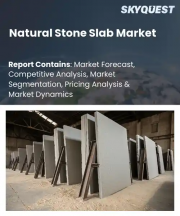
KSA 26.07.21Global Natural Stone Slab Market size was valued at USD 51.2 Billion in 2024 and is poised to grow from USD 53.66 Billion in 2025 to USD 78.08 Billion by 2033, growing at a CAGR of 4.8% during the forecast period (2026-2033).
The global natural stone slab market consists of quarried stone panels processed into thin, uniform sheets for various applications, including flooring, countertops, and exterior cladding. This market thrives on the material's durability, aesthetic appeal, and environmentally friendly characteristics compared to synthetic options. Urbanization is a significant driver, as residential and commercial projects increasingly seek premium finishes. Additionally, a growing consumer preference for sustainable interiors is pushing architects and developers to select stone slabs with lower carbon footprints, influenced by green-building certifications. Furthermore, AI-driven automation is revolutionizing the market by enhancing efficiency in cutting and processing, reducing waste, and improving lead times. As a result, manufacturers are better equipped to meet design trends and construction schedules, stimulating market growth and operational excellence.
Top-down and bottom-up approaches were used to estimate and validate the size of the Global Natural Stone Slab market and to estimate the size of various other dependent submarkets. The research methodology used to estimate the market size includes the following details: The key players in the market were identified through secondary research, and their market shares in the respective regions were determined through primary and secondary research. This entire procedure includes the study of the annual and financial reports of the top market players and extensive interviews for key insights from industry leaders such as CEOs, VPs, directors, and marketing executives. All percentage shares split, and breakdowns were determined using secondary sources and verified through Primary sources. All possible parameters that affect the markets covered in this research study have been accounted for, viewed in extensive detail, verified through primary research, and analyzed to get the final quantitative and qualitative data.
Global Natural Stone Slab Market Segments Analysis
Global natural stone slab market is segmented by by stone type, by finish type, by thickness, by application, by end-use industry, by distribution channel and region. Based on by stone type, the market is segmented into Granite Slabs, Marble Slabs, Limestone Slabs, Travertine Slabs, Slate Slabs, Quartzite Slabs, Sandstone Slabs, Onyx Slabs and Others. Based on by finish type, the market is segmented into Polished, Honed, Flamed, Brushed, Leathered, Sandblasted and Others. Based on by thickness, the market is segmented into Below 10 mm, 10 mm to 20 mm and Above 20 mm. Based on by application, the market is segmented into Flooring, Wall Cladding, Countertops, Staircases, Facades, Monuments & Decorative Applications and Others. Based on by end-use industry, the market is segmented into Residential Construction, Commercial Construction, Institutional Construction, Infrastructure Projects, Hospitality Sector and Others. Based on by distribution channel, the market is segmented into Direct Sales, Distributors & Wholesalers, Specialty Stone Retailers and Online Sales. Based on region, the market is segmented into North America, Europe, Asia Pacific, Latin America and Middle East & Africa.
Driver of the Global Natural Stone Slab Market
The continuous growth of urban areas and infrastructure initiatives generates a consistent demand for durable and visually appealing surfaces, making natural stone slabs a favored choice for applications such as facades, flooring, and cladding. Both architects and developers value the material for its strength and enduring charm, which align well with their long-term construction objectives. As cities expand, this rising urbanization significantly enhances the demand for natural stone slabs, prompting manufacturers to increase production capabilities and innovate their product lines. Additionally, this trend fosters investment in logistics systems to ensure efficient delivery across developing metropolitan areas.
Restraints in the Global Natural Stone Slab Market
The global natural stone slab market faces challenges due to the extensive resources required for production, including quarrying, cutting, and finishing, which rely on heavy machinery and skilled labor. These operations are not only energy-intensive but also incur substantial operational costs that are exacerbated by the logistics of transporting hefty slabs to far-off markets. As a result, heightened cost structures hinder price competitiveness compared to alternative materials like engineered stone or porcelain tiles. This situation leads cost-sensitive developers to consider more affordable substitutes, thereby restricting market growth and pushing manufacturers to explore strategies for cost reduction to maintain profitability. Additionally, variability in energy prices may further increase production costs.
Market Trends of the Global Natural Stone Slab Market
The Global Natural Stone Slab market is experiencing a significant trend driven by the rising preference for sustainable design. Architects and designers are focusing on natural stone slabs that not only offer aesthetic appeal but also align with environmental sustainability goals. Consumers are increasingly drawn to low-maintenance surfaces that minimize chemical use, while builders appreciate the long-lasting durability of natural stone, which enhances building lifecycles. This evolving demand compels suppliers to responsibly source materials, utilize waste-reduction practices, and emphasize the sourcing narrative. As interest in green building certifications expands, the appetite for eco-friendly stone solutions is expected to propel market growth, solidifying sustainability as a key market driver.
Table of Contents
Introduction
- Objectives of the Study
- Market Definition & Scope
Research Methodology
- Research Process
- Secondary & Primary Data Methods
- Market Size Estimation Methods
Executive Summary
- Global Market Outlook
- Key Market Highlights
- Segmental Overview
- Competition Overview
Market Dynamics & Outlook
- Macro-Economic Indicators
- Drivers & Opportunities
- Restraints & Challenges
- Supply Side Trends
- Demand Side Trends
- Porters Analysis & Impact
- Competitive Rivalry
- Threat of Substitute
- Bargaining Power of Buyers
- Threat of New Entrants
- Bargaining Power of Suppliers
Key Market Insights
- Key Success Factors
- Market Impacting Factors
- Top Investment Pockets
- Ecosystem Mapping
- Market Attractiveness Index 2025
- PESTEL Analysis
- Regulatory Landscape
Global Natural Stone Slab Market Size by Stone Type & CAGR (2026-2033)
- Market Overview
- Granite Slabs
- Marble Slabs
- Limestone Slabs
- Travertine Slabs
- Slate Slabs
- Quartzite Slabs
- Sandstone Slabs
- Onyx Slabs
- Others
Global Natural Stone Slab Market Size by Finish Type & CAGR (2026-2033)
- Market Overview
- Polished
- Honed
- Flamed
- Brushed
- Leathered
- Sandblasted
- Others
Global Natural Stone Slab Market Size by Thickness & CAGR (2026-2033)
- Market Overview
- Below 10 mm
- 10 mm to 20 mm
- Above 20 mm
Global Natural Stone Slab Market Size by Application & CAGR (2026-2033)
- Market Overview
- Flooring
- Wall Cladding
- Countertops
- Kitchen Countertops
- Bathroom Countertops
- Staircases
- Facades
- Monuments & Decorative Applications
- Others
Global Natural Stone Slab Market Size by End-use Industry & CAGR (2026-2033)
- Market Overview
- Residential Construction
- Commercial Construction
- Institutional Construction
- Infrastructure Projects
- Hospitality Sector
- Others
Global Natural Stone Slab Market Size by Distribution Channel & CAGR (2026-2033)
- Market Overview
- Direct Sales
- Distributors & Wholesalers
- Specialty Stone Retailers
- Online Sales
Global Natural Stone Slab Market Size & CAGR (2026-2033)
- North America (By Stone Type, By Finish Type, By Thickness, By Application, By End-use Industry, By Distribution Channel)
- US
- Canada
- Europe (By Stone Type, By Finish Type, By Thickness, By Application, By End-use Industry, By Distribution Channel)
- Germany
- Spain
- France
- UK
- Italy
- Rest of Europe
- Asia Pacific (By Stone Type, By Finish Type, By Thickness, By Application, By End-use Industry, By Distribution Channel)
- China
- India
- Japan
- South Korea
- Rest of Asia-Pacific
- Latin America (By Stone Type, By Finish Type, By Thickness, By Application, By End-use Industry, By Distribution Channel)
- Mexico
- Brazil
- Rest of Latin America
- Middle East & Africa (By Stone Type, By Finish Type, By Thickness, By Application, By End-use Industry, By Distribution Channel)
- GCC Countries
- South Africa
- Rest of Middle East & Africa
Competitive Intelligence
- Top 5 Player Comparison
- Market Positioning of Key Players, 2025
- Strategies Adopted by Key Market Players
- Recent Developments in the Market
- Company Market Share Analysis, 2025
- Company Profiles of All Key Players
- Company Details
- Product Portfolio Analysis
- Company's Segmental Share Analysis
- Revenue Y-O-Y Comparison (2023-2025)
Key Company Profiles
- Levantina y Asociados de Minerales S.A.
- Company Overview
- Business Segment Overview
- Financial Updates
- Key Developments
- Polycor Inc.
- Company Overview
- Business Segment Overview
- Financial Updates
- Key Developments
- Cosentino S.A.
- Company Overview
- Business Segment Overview
- Financial Updates
- Key Developments
- Antolini Luigi & C. S.p.A.
- Company Overview
- Business Segment Overview
- Financial Updates
- Key Developments
- Temmer Marble
- Company Overview
- Business Segment Overview
- Financial Updates
- Key Developments
- Mumal Marbles Pvt. Ltd.
- Company Overview
- Business Segment Overview
- Financial Updates
- Key Developments
- Aro Granite Industries Ltd.
- Company Overview
- Business Segment Overview
- Financial Updates
- Key Developments
- Dimpomar Rochas Portuguesas S.A.
- Company Overview
- Business Segment Overview
- Financial Updates
- Key Developments
- Vetter Stone Company
- Company Overview
- Business Segment Overview
- Financial Updates
- Key Developments
- Dermitzakis Bros S.A.
- Company Overview
- Business Segment Overview
- Financial Updates
- Key Developments
- Xishi Group Co. Ltd.
- Company Overview
- Business Segment Overview
- Financial Updates
- Key Developments
- Fox Marble Holdings plc
- Company Overview
- Business Segment Overview
- Financial Updates
- Key Developments
- Pokarna Limited
- Company Overview
- Business Segment Overview
- Financial Updates
- Key Developments
- Topalidis S.A.
- Company Overview
- Business Segment Overview
- Financial Updates
- Key Developments
- MGT Stone Co.
- Company Overview
- Business Segment Overview
- Financial Updates
- Key Developments
- R.E.D. Graniti S.p.A.
- Company Overview
- Business Segment Overview
- Financial Updates
- Key Developments
- Dal-Tile Corporation
- Company Overview
- Business Segment Overview
- Financial Updates
- Key Developments
- Tab India Granites Pvt. Ltd.
- Company Overview
- Business Segment Overview
- Financial Updates
- Key Developments
- Stone World Canada Inc.
- Company Overview
- Business Segment Overview
- Financial Updates
- Key Developments
- Arizona Tile LLC
- Company Overview
- Business Segment Overview
- Financial Updates
- Key Developments