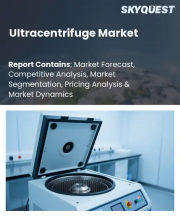
|
시장보고서
상품코드
2102447
초원심분리기 시장 규모, 점유율 및 성장 분석 : 제품 유형별, 로터 유형별, 동작 모드별, 용도별, 최종사용자별, 유통 채널별, 지역별 - 업계 예측(2026-2033년)Ultracentrifuge Market Size, Share, and Growth Analysis, By Product Type, By Rotor Type, By Operation Mode, By Application, By End User, By Distribution Channel, By Region - Industry Forecast 2026-2033 |
||||||

세계의 초원심분리기 시장 규모는 2024년에 4억 8,200만 달러로 평가되며, 2025년 5억 562만 달러에서 2033년에는 3,276만 달러로 확대하며, 예측 기간(2026-2033년)에 CAGR 4.9%로 성장할 것으로 전망되고 있습니다.
전 세계 초원심분리기 시장은 생명공학 및 제약 분야의 신속한 정제 공정 수요 증가에 힘입어 인상적인 성장을 달성하고 있습니다. 이는 바이오의약품의 시장 출시 기간을 단축하는 데 필수적인 요소입니다. 시장에 영향을 미치는 주요 동향으로는 분석 기능과 연결성의 통합을 들 수 있으며, 이를 통해 분리 원시 데이터로부터 유용한 공정 개선 인사이트를 얻을 수 있게 되었습니다. 혁신적인 제조사들은 로터의 회전수, 온도, 진동을 모니터링하는 센서를 도입하고 있으며, 이를 통해 고부가가치 바이오의약품의 유지보수 예측 정확도를 높이고 가동 중지 시간을 최소화하고 있습니다. 또한 AI를 활용한 자동화의 부상으로 시스템 제어에 기계학습을 접목하고, 원심 분리 프로파일을 최적화하며, 실시간 온도 조절이 가능해지면서 시장 구조가 재편되고 있습니다. 수동 조작에서 데이터 중심의 워크플로로 전환됨에 따라 재현성이 향상될 뿐만 아니라, 위탁 제조 기업(CMO)의 관심도 끌면서, 첨단 소프트웨어와 서비스를 갖춘 모듈식이며 확장성이 뛰어난 초원심분리기에 대한 수요를 견인하고 있습니다.
전 세계 초원심분리기 시장은 제품 유형, 로터 유형, 작동 모드, 용도, 최종사용자, 유통 채널 및 지역별로 구분됩니다. 제품 유형에 따라 시장은 분취용 초원심분리기와 분석용 초원심분리기로 분류됩니다. 로터 유형에 따라 시장은 고정각 로터, 스윙 버킷 로터, 수직 로터, 준수직 로터 및 기타로 분류됩니다. 작동 모드에 따라 시장은 바닥 설치형 초원심분리기와 탁상형 초원심분리기로 분류됩니다. 용도에 따라 시장은 단백질체학·유전체학 연구, 세포생물학 연구, 바이러스학, 나노테크놀러지 연구, 제약·생명공학 연구, 임상·진단 연구, 기타로 분류됩니다. 최종사용자별로는 제약·생명공학 기업, 학술·연구 기관, 임상·진단 검사실, 위탁 연구 기관(CRO), 정부·공중보건 연구소로 구분됩니다. 유통 채널별로는 직판, 판매 대리점·딜러, 온라인 판매로 구분됩니다. 지역별로는 북미, 유럽, 아시아태평양, 라틴아메리카, 중동 및 아프리카로 구분됩니다.
전 세계 초원심분리기 시장의 성장 요인
바이오의약품 파이프라인이 확대됨에 따라 매우 높은 순도와 구조적 완전성을 갖춘 생체 분자를 효과적으로 분리할 수 있는 정제 공정에 대한 수요가 증가하고 있습니다. 초원심분리 기술은 이러한 요건을 충족하는 비화학적 고분해능 분리법을 제공하여, 제조업체가 제품의 활성을 유지하면서 엄격한 품질 기준을 달성할 수 있도록 합니다. 고부가가치 치료제에 대한 수요 증가와 초원심분리의 실질적인 이점이 시너지를 발휘함에 따라 다양한 연구 및 생산 환경에서 그 도입이 더욱 촉진되고 있습니다. 그 결과, 이러한 추세는 특히 종양학, 면역학, 희귀질환과 같은 주요 치료 분야에서 전 세계 초원심분리기 시장 전체를 견인하고 있습니다.
전 세계 초원심분리기 시장의 제약 요인
전 세계 초원심분리기 시장은 주로 복잡한 공학 기술, 정밀한 로터, 고속 구동 기구를 통합한 이러한 첨단 시스템에 따른 높은 구매 가격으로 인해 큰 제약에 직면해 있습니다. 이러한 막대한 초기 투자는 소규모 연구 그룹이나 신생 생명공학 기업의 해당 장비 도입을 저해할 가능성이 있으며, 많은 경우 더 저렴한 대안을 모색하거나 원심분리 서비스를 외부에 위탁하는 결과로 이어집니다. 그 결과, 이러한 추세는 직접적인 도입률을 저하시켜, 특히 예산 제약으로 인해 설비 투자가 어려운 지역에서 시장 성장을 저해하고 있습니다. 또한 지속적인 유지보수 및 운영 비용도 잠재적 사용자에게 또 다른 장벽이 되어 연구계 내에서의 보급을 방해하고 있습니다.
전 세계 초원심분리기 시장 동향
전 세계 초원심분리기 시장은 특히 생물제제 및 세포 치료 분야의 첨단 바이오의약품 용도에 대한 수요 증가에 힘입어 인상적인 성장을 달성하고 있습니다. 바이러스, 단백질, 세포외 소포의 고분해능 분리에 대한 수요가 증가함에 따라 각 제조사는 엄격한 순도 요건을 준수하기 위해 로터 설계 및 제어 소프트웨어의 혁신을 추진하고 있습니다. 이러한 진화로 인해 기존의 연구실뿐만 아니라 대규모 생산 환경에서도 초원심분리기의 도입이 촉진되고 있습니다. 생명공학 기업과의 제휴도 확대되면서, 진화하는 우수 제조 기준(GMP) 및 규제 기준을 준수하는 확장성이 뛰어난 플랫폼 솔루션의 공동 개발이 이루어지고 있습니다. 이를 통해 운영 효율이 향상되고, 배치 간 편차가 최소화되고 있습니다.
자주 묻는 질문
목차
서론
조사 방법
개요
시장 역학과 전망
주요 시장 인사이트
세계의 초원심분리기 시장 규모 : 제품 유형별
세계의 초원심분리기 시장 규모 : 로터 유형별
세계의 초원심분리기 시장 규모 : 오퍼레이션 모드별
세계의 초원심분리기 시장 규모 : 용도별
세계의 초원심분리기 시장 규모 : 최종사용자별
세계의 초원심분리기 시장 규모 : 유통 채널별
세계의 초원심분리기 시장 규모 : 지역별
경쟁 정보
주요 기업 개요
결론과 제안
KSA 26.08.05Global Ultracentrifuge Market size was valued at USD 482.0 Million in 2024 and is poised to grow from USD 505.62 Million in 2025 to USD 32.76 Million by 2033, growing at a CAGR of 4.9% during the forecast period (2026-2033).
The global ultracentrifuge market is experiencing significant growth driven by the increasing demand for rapid purification processes in the biotech and pharmaceutical sectors, essential for accelerating the time-to-market for biologics. Key trends influencing the market include the integration of analytics and connectivity, enabling raw separation data to yield insightful process improvements. Innovative manufacturers are implementing sensors to monitor rotor speed, temperature, and vibration, enhancing maintenance anticipation and minimizing downtime for high-value biologics. Additionally, the rise of AI-driven automation is reshaping the market by incorporating machine learning into system controls, optimizing spin profiles, and facilitating real-time temperature adjustments. This transition from manual operations to data-centric workflows not only enhances reproducibility but also attracts contract manufacturing organizations, driving the demand for modular, scalable ultracentrifuges enhanced with sophisticated software and services.
Top-down and bottom-up approaches were used to estimate and validate the size of the Global Ultracentrifuge market and to estimate the size of various other dependent submarkets. The research methodology used to estimate the market size includes the following details: The key players in the market were identified through secondary research, and their market shares in the respective regions were determined through primary and secondary research. This entire procedure includes the study of the annual and financial reports of the top market players and extensive interviews for key insights from industry leaders such as CEOs, VPs, directors, and marketing executives. All percentage shares split, and breakdowns were determined using secondary sources and verified through Primary sources. All possible parameters that affect the markets covered in this research study have been accounted for, viewed in extensive detail, verified through primary research, and analyzed to get the final quantitative and qualitative data.
Global Ultracentrifuge Market Segments Analysis
The global ultracentrifuge market is segmented by product type, rotor type, operation mode, application, end user, distribution channel and region. Based on product type, the market is segmented into Preparative Ultracentrifuges and Analytical Ultracentrifuges. Based on rotor type, the market is segmented into Fixed-Angle Rotors, Swinging-Bucket Rotors, Vertical Rotors, Near-Vertical Rotors and Others. Based on operation mode, the market is segmented into Floor-Standing Ultracentrifuges and Benchtop Ultracentrifuges. Based on application, the market is segmented into Proteomics & Genomics Research, Cell Biology Research, Virology, Nanotechnology Research, Pharmaceutical & Biotechnology Research, Clinical & Diagnostic Research and Others. Based on end user, the market is segmented into Pharmaceutical & Biotechnology Companies, Academic & Research Institutes, Clinical & Diagnostic Laboratories, Contract Research Organizations (CROs) and Government & Public Health Laboratories. Based on distribution channel, the market is segmented into Direct Sales, Distributors & Dealers and Online Sales. Based on region, the market is segmented into North America, Europe, Asia Pacific, Latin America and Middle East & Africa.
Driver of the Global Ultracentrifuge Market
The increasing growth of biopharmaceutical pipelines is driving a heightened demand for purification processes that can effectively isolate biomolecules with exceptional purity and structural integrity. Ultracentrifuge technology offers a non-chemical, high-resolution separation method that fulfills these requirements, enabling manufacturers to achieve stringent quality standards while preserving the activity of their products. This alignment between the rising demand for high-value therapeutics and the practical advantages of ultracentrifugation fosters greater adoption across various research and production environments. Consequently, this trend propels the overall global ultracentrifuge market forward, particularly in key therapeutic areas such as oncology, immunology, and rare diseases.
Restraints in the Global Ultracentrifuge Market
The global ultracentrifuge market faces significant constraints primarily due to the high purchase prices associated with these advanced systems, which incorporate intricate engineering, precision rotors, and high-speed drive mechanisms. This substantial initial investment can deter smaller research groups and emerging biotech firms from acquiring such equipment, often leading them to pursue more affordable alternatives or outsource centrifugation services. Consequently, this trend reduces direct adoption rates and curtails market growth, particularly in regions where budget constraints make capital procurement challenging. Additionally, ongoing maintenance and operational expenses present further obstacles for potential users, hindering wider acceptance within the research community.
Market Trends of the Global Ultracentrifuge Market
The Global Ultracentrifuge market is witnessing a significant surge driven by the increasing demand for advanced biopharma applications, particularly in biologics and cell-based therapies. The need for high-resolution separation of viruses, proteins, and extracellular vesicles is propelling manufacturers to innovate in rotor designs and control software, ensuring compliance with stringent purity requirements. This evolution is facilitating a broader adoption of ultracentrifuges beyond traditional research laboratories into expansive production environments. Collaborations with biotech companies are emerging to co-develop scalable platform solutions, aligning with evolving good manufacturing practices and regulatory standards, thereby enhancing operational efficiency and minimizing batch inconsistencies.
Table of Contents
Introduction
- Objectives of the Study
- Market Definition & Scope
Research Methodology
- Research Process
- Secondary & Primary Data Methods
- Market Size Estimation Methods
Executive Summary
- Global Market Outlook
- Key Market Highlights
- Segmental Overview
- Competition Overview
Market Dynamics & Outlook
- Macro-Economic Indicators
- Drivers & Opportunities
- Restraints & Challenges
- Supply Side Trends
- Demand Side Trends
- Porters Analysis & Impact
- Competitive Rivalry
- Threat of Substitute
- Bargaining Power of Buyers
- Threat of New Entrants
- Bargaining Power of Suppliers
Key Market Insights
- Key Success Factors
- Market Impacting Factors
- Top Investment Pockets
- Ecosystem Mapping
- Market Attractiveness Index 2025
- PESTEL Analysis
- Regulatory Landscape
Global Ultracentrifuge Market Size by Product Type & CAGR (2026-2033)
- Market Overview
- Preparative Ultracentrifuges
- Analytical Ultracentrifuges
Global Ultracentrifuge Market Size by Rotor Type & CAGR (2026-2033)
- Market Overview
- Fixed-Angle Rotors
- Swinging-Bucket Rotors
- Vertical Rotors
- Near-Vertical Rotors
- Others
Global Ultracentrifuge Market Size by Operation Mode & CAGR (2026-2033)
- Market Overview
- Floor-Standing Ultracentrifuges
- Benchtop Ultracentrifuges
Global Ultracentrifuge Market Size by Application & CAGR (2026-2033)
- Market Overview
- Proteomics & Genomics Research
- Cell Biology Research
- Virology
- Nanotechnology Research
- Pharmaceutical & Biotechnology Research
- Clinical & Diagnostic Research
- Others
Global Ultracentrifuge Market Size by End User & CAGR (2026-2033)
- Market Overview
- Pharmaceutical & Biotechnology Companies
- Academic & Research Institutes
- Clinical & Diagnostic Laboratories
- Contract Research Organizations (CROs)
- Government & Public Health Laboratories
Global Ultracentrifuge Market Size by Distribution Channel & CAGR (2026-2033)
- Market Overview
- Direct Sales
- Distributors & Dealers
- Online Sales
Global Ultracentrifuge Market Size & CAGR (2026-2033)
- North America (Product Type, Rotor Type, Operation Mode, Application, End User, Distribution Channel)
- US
- Canada
- Europe (Product Type, Rotor Type, Operation Mode, Application, End User, Distribution Channel)
- Germany
- Spain
- France
- UK
- Italy
- Rest of Europe
- Asia Pacific (Product Type, Rotor Type, Operation Mode, Application, End User, Distribution Channel)
- China
- India
- Japan
- South Korea
- Rest of Asia-Pacific
- Latin America (Product Type, Rotor Type, Operation Mode, Application, End User, Distribution Channel)
- Mexico
- Brazil
- Rest of Latin America
- Middle East & Africa (Product Type, Rotor Type, Operation Mode, Application, End User, Distribution Channel)
- GCC Countries
- South Africa
- Rest of Middle East & Africa
Competitive Intelligence
- Top 5 Player Comparison
- Market Positioning of Key Players, 2025
- Strategies Adopted by Key Market Players
- Recent Developments in the Market
- Company Market Share Analysis, 2025
- Company Profiles of All Key Players
- Company Details
- Product Portfolio Analysis
- Company's Segmental Share Analysis
- Revenue Y-O-Y Comparison (2023-2025)
Key Company Profiles
- Danaher Corporation
- Company Overview
- Business Segment Overview
- Financial Updates
- Key Developments
- Thermo Fisher Scientific Inc
- Company Overview
- Business Segment Overview
- Financial Updates
- Key Developments
- Eppendorf SE
- Company Overview
- Business Segment Overview
- Financial Updates
- Key Developments
- Sigma Laborzentrifugen GmbH
- Company Overview
- Business Segment Overview
- Financial Updates
- Key Developments
- Andreas Hettich GmbH & Co KG
- Company Overview
- Business Segment Overview
- Financial Updates
- Key Developments
- Kubota Corporation
- Company Overview
- Business Segment Overview
- Financial Updates
- Key Developments
- Hitachi Koki Co Ltd
- Company Overview
- Business Segment Overview
- Financial Updates
- Key Developments
- NuAire Inc
- Company Overview
- Business Segment Overview
- Financial Updates
- Key Developments
- Hermle Labortechnik GmbH
- Company Overview
- Business Segment Overview
- Financial Updates
- Key Developments
- QIAGEN NV
- Company Overview
- Business Segment Overview
- Financial Updates
- Key Developments
- Centurion Scientific Ltd
- Company Overview
- Business Segment Overview
- Financial Updates
- Key Developments
- Bio-Rad Laboratories Inc
- Company Overview
- Business Segment Overview
- Financial Updates
- Key Developments
- Agilent Technologies Inc
- Company Overview
- Business Segment Overview
- Financial Updates
- Key Developments
- Haier Biomedical
- Company Overview
- Business Segment Overview
- Financial Updates
- Key Developments
- Madras Scientific
- Company Overview
- Business Segment Overview
- Financial Updates
- Key Developments
- Mtor Life Sciences Private Limited
- Company Overview
- Business Segment Overview
- Financial Updates
- Key Developments
- Ikon Instruments
- Company Overview
- Business Segment Overview
- Financial Updates
- Key Developments
- Bio Equip Inc
- Company Overview
- Business Segment Overview
- Financial Updates
- Key Developments
- Horiba Ltd
- Company Overview
- Business Segment Overview
- Financial Updates
- Key Developments
- Shimadzu Corporation
- Company Overview
- Business Segment Overview
- Financial Updates
- Key Developments