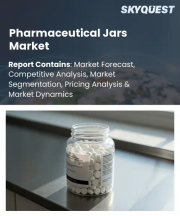
|
시장보고서
상품코드
2120185
의약품용 용기 시장 규모, 점유율, 성장 분석 : 소재별, 용량별, 폐쇄 방식별, 용도별, 최종사용자별, 지역별 - 업계 예측(2026-2033년)Pharmaceutical Jars Market Size, Share, and Growth Analysis, By Material (Plastic, Glass), By Capacity (Up to 100 mL, 101-500 mL), By Closure Type, By Application, By End User, By Region - Industry Forecast 2026-2033 |
||||||

세계의 의약품용 용기 시장 규모는 2024년에 84억 2,000만 달러로 평가되며, 2025년 89억 1,000만 달러에서 2033년까지 139억 9,000만 달러로 확대되어, 예측 기간(2026-2033년) 동안 CAGR 5.8%로 성장할 것으로 전망됩니다.
세계 의약품용 용기 시장은 경구용 고형 제제를 습기, 빛, 오염으로부터 보호하여 의약품의 안전성과 규제 준수를 보장하는 데 필수적입니다. 어린이 안전 포장 및 위변조 방지 포장에 대한 규제 요건이 강화되면서 제조업체의 기술 혁신이 촉진되고 있습니다. 기존에 주류를 이루던 유리 용기는 비용 효율성과 지속가능성에 대한 고려로 인해 폴리에틸렌 및 폴리프로필렌 제품으로 점차 대체되고 있습니다. 자동화와 통합은 포장 기준 준수를 강화하는 동시에 오류와 인건비를 최소화하기 위해 이 분야에 영향을 미치는 중요한 동향이 되고 있습니다. 또한, 스마트 라벨링 시스템의 발전으로 안전 규제 준수가 용이해지고 있습니다. IoT 대응 기술을 채택한 공급업체들은, 특히 제약 업계 내에서 규정 준수 및 친환경 솔루션에 대한 수요가 지속적으로 증가하는 가운데, 시장의 진화로부터 혜택을 볼 수 있는 유리한 위치에 있습니다.
세계 의약품용 용기 시장의 성장요인
세계 의약품용 용기 시장은 의약품 공급망에서 무균성에 대한 중요성이 커지는 것을 배경으로 눈부신 성장을 이루고 있습니다. 제조업체들은 의료 분야에서 환자 안전에 대한 관심이 높아지는 것에 대응하여, 기밀성이 높고 오염 없는 환경을 제공하는 용기의 개발을 우선시하고 있습니다. 이에 따라 의료 서비스 제공자들은 보관 및 유통 과정 전반에 걸쳐 제품의 무결성을 유지할 수 있는 용기를 선호하게 되었습니다. 그 결과, 고도의 무균 용기에 대한 수요가 증가하고 있으며, 공급업체들은 생산능력을 강화하고 엄격한 위생 기준을 준수하는 포장 솔루션을 혁신해야 하는 압박을 받고 있습니다. 이러한 인식의 증대는 진화하는 무균 지침에 대응하기 위해 용기 제조업체와 제약 회사 간의 협력을 촉진하고 있습니다.
세계 의약품용 용기 시장의 제약요인
세계 의약품용 용기 시장은 각 지역 보건 당국이 의무화한 엄격한 안전성, 재료 및 표시 관련 규제로 인해 큰 제약을 받고 있습니다. 제조업체는 규정 준수를 보장하기 위해 복잡한 시험 및 문서화 절차를 거쳐야만 하며, 이로 인해 개발 기간이 길어지거나 변화하는 기준을 충족하기 위해 지속적인 조정이 필요할 수 있습니다. 이는 제품 출시를 지연시킬 뿐만 아니라 관리상의 문제도 야기하므로, 주요 기업들은 혁신적인 용기 설계에 대한 투자나 제품 포트폴리오 다각화를 재검토하게 만들고 있습니다. 결국 이러한 요인들이 시장 성장을 제한하고 혁신의 속도를 둔화시키고 있습니다. 또한 잦은 인증 취득의 필요성이 운영 비용을 상승시켜, 신규 진입 기업들이 시장에 진입하기 어려운 상황이 되고 있습니다.
세계 의약품용 용기 시장의 동향
세계 의약품용 용기 시장에서는 제조사들이 친환경 솔루션에 대한 소비자의 증가하는 수요에 대응하고 엄격한 규제를 준수하는 가운데, 지속가능한 포장으로의 큰 흐름이 나타나고 있습니다. 각 기업은 재활용 가능하거나 생분해성 소재를 제공하는 공급업체와 적극적으로 협력하고, 수명주기 평가를 실시하여 제품 설계를 최적화하고 있습니다. 이러한 선구적인 노력은 브랜드 평판을 높일 뿐만 아니라, 규제 변경 가능성으로 인한 공급망의 취약성을 완화하는 데에도 기여합니다. 포장 전략에서 지속가능성을 우선시하는 기업들은 경쟁 우위를 확보하고 있으며, 전 세계 이해관계자들의 변화하는 기대에 부응하는 동시에, 역동적으로 변화하는 시장 상황 속에서 궁극적으로 장기적인 수익성을 뒷받침하고 있습니다.
자주 묻는 질문
목차
소개
조사 방법
주요 요약
시장 역학과 전망
주요 시장 인사이트
세계의 의약품용 용기 시장 규모 : 소재별
세계의 의약품용 용기 시장 규모 : 용량별
세계의 의약품용 용기 시장 규모 : 캡 종류별
세계의 의약품용 용기 시장 규모 : 용도별
세계의 의약품용 용기 시장 규모 : 최종사용자별
세계의 의약품용 용기 시장 규모 : 지역별
경쟁 정보
주요 기업 개요
결론과 제안
KSM 26.09.01Global Pharmaceutical Jars Market size was valued at USD 8.42 Billion in 2024 and is poised to grow from USD 8.91 Billion in 2025 to USD 13.99 Billion by 2033, growing at a CAGR of 5.8% during the forecast period (2026-2033).
The global pharmaceutical jars market is essential for safeguarding oral solid dosage forms from moisture, light, and contamination, thereby ensuring drug safety and adherence to regulations. Increasing regulatory demands for child-resistant and tamper-evident packaging have driven manufacturers to innovate. The historical prevalence of glass jars is being replaced by polyethylene and polypropylene options, due to cost efficiency and sustainability concerns. Automation and integration are pivotal trends impacting the sector, as they enhance compliance with packaging standards while minimizing errors and labor costs. Additionally, advancements in smart labeling systems facilitate adherence to safety regulations. Suppliers adopting IoT-enabled technologies are well-positioned to benefit from the market's evolution, particularly as demand for compliance and eco-friendly solutions continues to grow within the pharmaceutical industry.
Top-down and bottom-up approaches were used to estimate and validate the size of the Global Pharmaceutical Jars market and to estimate the size of various other dependent submarkets. The research methodology used to estimate the market size includes the following details: The key players in the market were identified through secondary research, and their market shares in the respective regions were determined through primary and secondary research. This entire procedure includes the study of the annual and financial reports of the top market players and extensive interviews for key insights from industry leaders such as CEOs, VPs, directors, and marketing executives. All percentage shares split, and breakdowns were determined using secondary sources and verified through Primary sources. All possible parameters that affect the markets covered in this research study have been accounted for, viewed in extensive detail, verified through primary research, and analyzed to get the final quantitative and qualitative data.
Global Pharmaceutical Jars Market Segments Analysis
Global pharmaceutical jars market is segmented by material, capacity, closure type, application, end user and region. Based on material, the market is segmented into plastic, glass and metal. Based on capacity, the market is segmented into up to 100 mL, 101-500 mL and above 500 mL. Based on closure type, the market is segmented into screw cap, child-resistant cap and tamper-evident cap. Based on application, the market is segmented into tablets & capsules, powders and creams & ointments. Based on end user, the market is segmented into pharmaceutical companies, contract packaging companies and compounding pharmacies. Based on region, the market is segmented into North America, Europe, Asia Pacific, Latin America and Middle East & Africa.
Driver of the Global Pharmaceutical Jars Market
The Global Pharmaceutical Jars market is experiencing significant growth driven by an increased emphasis on sterility in pharmaceutical supply chains. Manufacturers are prioritizing the creation of jars that offer airtight, contamination-free environments, aligning with the healthcare sector's heightened focus on patient safety. This has led healthcare providers to prefer containers that maintain product integrity throughout storage and distribution processes. Consequently, there is a growing demand for advanced sterile jars, prompting suppliers to enhance production capabilities and innovate packaging solutions that adhere to stringent hygiene standards. This rising awareness is fostering collaboration between jar manufacturers and pharmaceutical companies to align with evolving aseptic guidelines.
Restraints in the Global Pharmaceutical Jars Market
The Global Pharmaceutical Jars market faces significant restraints due to stringent safety, material, and labeling regulations mandated by health authorities across various regions. Manufacturers are compelled to navigate complex testing and documentation processes to ensure compliance, which can extend development timelines and require ongoing adjustments to satisfy changing standards. This not only delays product launches but also adds administrative challenges, leading companies to reconsider investments in innovative jar designs or the diversification of their product portfolios. Ultimately, these factors limit market growth and slow down innovation, while the frequent need for certification raises operational costs, making it challenging for new players to enter the market.
Market Trends of the Global Pharmaceutical Jars Market
The Global Pharmaceutical Jars market is experiencing a significant trend towards sustainable packaging as manufacturers address the growing consumer demand for environmentally friendly solutions and comply with stringent regulations. Companies are actively collaborating with suppliers that provide recyclable or biodegradable materials, implementing life-cycle assessments to optimize their product designs. This proactive approach not only bolsters brand reputation but also reduces supply-chain vulnerabilities linked to potential regulatory changes. Firms that prioritize sustainability in their packaging strategies are gaining a competitive edge, aligning themselves with the evolving expectations of stakeholders globally and ultimately supporting their long-term profitability in a dynamically changing market landscape.
Table of Contents
Introduction
- Objectives of the Study
- Market Definition & Scope
Research Methodology
- Research Process
- Secondary & Primary Data Methods
- Market Size Estimation Methods
Executive Summary
- Global Market Outlook
- Key Market Highlights
- Segmental Overview
- Competition Overview
Market Dynamics & Outlook
- Macro-Economic Indicators
- Drivers & Opportunities
- Restraints & Challenges
- Supply Side Trends
- Demand Side Trends
- Porters Analysis & Impact
- Competitive Rivalry
- Threat of Substitute
- Bargaining Power of Buyers
- Threat of New Entrants
- Bargaining Power of Suppliers
Key Market Insights
- Key Success Factors
- Market Impacting Factors
- Top Investment Pockets
- Ecosystem Mapping
- Market Attractiveness Index 2025
- PESTEL Analysis
- Regulatory Landscape
Global Pharmaceutical Jars Market Size by Material & CAGR (2026-2033)
- Market Overview
- Plastic
- Glass
- Metal
Global Pharmaceutical Jars Market Size by Capacity & CAGR (2026-2033)
- Market Overview
- Up to 100 mL
- 101-500 mL
- Above 500 mL
Global Pharmaceutical Jars Market Size by Closure Type & CAGR (2026-2033)
- Market Overview
- Screw Cap
- Child-Resistant Cap
- Tamper-Evident Cap
Global Pharmaceutical Jars Market Size by Application & CAGR (2026-2033)
- Market Overview
- Tablets & Capsules
- Powders
- Creams & Ointments
Global Pharmaceutical Jars Market Size by End User & CAGR (2026-2033)
- Market Overview
- Pharmaceutical Companies
- Contract Packaging Companies
- Compounding Pharmacies
Global Pharmaceutical Jars Market Size & CAGR (2026-2033)
- North America (Material, Capacity, Closure Type, Application, End User)
- US
- Canada
- Europe (Material, Capacity, Closure Type, Application, End User)
- Germany
- Spain
- France
- UK
- Italy
- Rest of Europe
- Asia Pacific (Material, Capacity, Closure Type, Application, End User)
- China
- India
- Japan
- South Korea
- Rest of Asia-Pacific
- Latin America (Material, Capacity, Closure Type, Application, End User)
- Mexico
- Brazil
- Rest of Latin America
- Middle East & Africa (Material, Capacity, Closure Type, Application, End User)
- GCC Countries
- South Africa
- Rest of Middle East & Africa
Competitive Intelligence
- Top 5 Player Comparison
- Market Positioning of Key Players, 2025
- Strategies Adopted by Key Market Players
- Recent Developments in the Market
- Company Market Share Analysis, 2025
- Company Profiles of All Key Players
- Company Details
- Product Portfolio Analysis
- Company's Segmental Share Analysis
- Revenue Y-O-Y Comparison (2023-2025)
Key Company Profiles
- Gerresheimer AG
- Company Overview
- Business Segment Overview
- Financial Updates
- Key Developments
- SCHOTT Pharma AG & Co. KGaA
- Company Overview
- Business Segment Overview
- Financial Updates
- Key Developments
- Berry Global Group, Inc.
- Company Overview
- Business Segment Overview
- Financial Updates
- Key Developments
- Amcor plc
- Company Overview
- Business Segment Overview
- Financial Updates
- Key Developments
- AptarGroup, Inc.
- Company Overview
- Business Segment Overview
- Financial Updates
- Key Developments
- Berlin Packaging
- Company Overview
- Business Segment Overview
- Financial Updates
- Key Developments
- O.Berk Company, LLC
- Company Overview
- Business Segment Overview
- Financial Updates
- Key Developments
- Alpha Packaging
- Company Overview
- Business Segment Overview
- Financial Updates
- Key Developments
- Comar LLC
- Company Overview
- Business Segment Overview
- Financial Updates
- Key Developments
- DWK Life Sciences GmbH
- Company Overview
- Business Segment Overview
- Financial Updates
- Key Developments
- SGD Pharma
- Company Overview
- Business Segment Overview
- Financial Updates
- Key Developments
- Stoelzle Glass Group
- Company Overview
- Business Segment Overview
- Financial Updates
- Key Developments
- Piramal Glass Private Limited
- Company Overview
- Business Segment Overview
- Financial Updates
- Key Developments
- Beatson Clark Ltd.
- Company Overview
- Business Segment Overview
- Financial Updates
- Key Developments
- Origin Pharma Packaging
- Company Overview
- Business Segment Overview
- Financial Updates
- Key Developments
- Plastipak Holdings, Inc.
- Company Overview
- Business Segment Overview
- Financial Updates
- Key Developments
- ALPLA Group
- Company Overview
- Business Segment Overview
- Financial Updates
- Key Developments
- Pretium Packaging
- Company Overview
- Business Segment Overview
- Financial Updates
- Key Developments
- West Pharmaceutical Services, Inc.
- Company Overview
- Business Segment Overview
- Financial Updates
- Key Developments
- TekniPlex Healthcare
- Company Overview
- Business Segment Overview
- Financial Updates
- Key Developments