|
시장보고서
상품코드
2121037
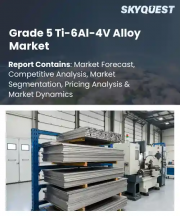
등급 5 Ti-6 Al-4V 합금 시장 규모, 점유율 및 성장 분석 : 제품 형태별, 제조 프로세스별, 용도별, 최종사용자별, 지역별 - 업계 예측(2026-2033년)Grade 5 Ti-6Al-4V Alloy Market Size, Share, and Growth Analysis, By Product Form (Sheets & Plates, Bars & Rods), By Manufacturing Process, By Application, By End User, By Region - Industry Forecast 2026-2033 |
||||||

세계의 등급 5 Ti-6 Al-4V 합금 시장 규모는 2024년에 47억 2,000만 달러로 평가되며, 2025년 50억 6,000만 달러에서 2033년까지 88억 3,000만 달러로 확대할 전망이며, 예측 기간(2026-2033년)에 CAGR 7.2%로 성장할 것으로 전망되고 있습니다.
세계의 5등급 Ti-6Al-4V 합금 시장은 항공우주 및 방위 분야의 수요 증가에 힘입어 인상적인 성장을 달성하고 있습니다. 이 분야에서는 경량 항공기 부품에 있으며, 해당 합금의 뛰어난 강도 대 중량비, 내피로성 및 내식성이 필수적입니다. 또한 이 합금의 생체 적합성 덕분에 의료 용도, 특히 정형외과 및 치과용 임플란트 분야에서 인기가 높아지고 있습니다. 적층 제조 및 니어넷쉐이프 가공 기술의 발전으로 재료 낭비를 최소화하면서 복잡한 형상의 경량 부품을 제조할 수 있게 되었습니다. 더불어 자동차 업계의 경량화 노력, 우주 탐사 및 산업 용도 수요가 더욱 증가하고 있습니다. 설계 과정에 AI를 통합함으로써 혁신적인 경량 구조를 실현할 수 있게 되어 효율과 성능이 향상됩니다. 이로 인해 개발 주기가 단축되고 지속가능성 지표도 강화되므로, 등급 5 Ti-6Al-4V는 향후 용도에서 점점 더 매력적인 소재가 되고 있습니다.
전 세계 5등급 Ti-6Al-4V 합금 시장은 제품 형태, 제조 공정, 용도, 최종사용자 및 지역별로 세분화되어 있습니다. 제품 형태에 따라 시장은 시트·플레이트, 바·로드, 튜브·파이프, 와이어, 단조품, 분말 및 기타로 분류됩니다. 제조 공정에 따라 시장은 단조, 주조, 압연, 적층 제조, 기계 가공으로 분류됩니다. 용도별로는 시장이 항공우주·방위, 의료·헬스케어, 자동차, 산업 장비, 에너지, 기타로 분류됩니다. 최종사용자별로는 시장이 항공우주 OEM 및 공급업체, 의료기기 제조업체, 자동차 제조업체, 산업기기 제조업체, 기타로 분류됩니다. 지역별로는 시장이 북미, 유럽, 아시아태평양, 라틴아메리카, 중동 및 아프리카로 분류됩니다.
세계 등급 5 Ti-6Al-4V 합금 시장의 성장 요인
5등급 Ti-6Al-4V 합금 세계 시장은 민간 및 방위 용도의 새로운 항공기 개발 계획을 지원하기 위해, 경량적이면서도 견고한 소재에 대한 항공우주 부문의 수요 증가에 크게 이끌리고 있습니다. Ti-6Al-4V의 뛰어난 강도 대 중량 비율은 연료 소비량 감소 및 배기가스 저감에 기여하므로 선호되는 선택지가 되고 있습니다. 항공기 제조사들이 첨단 추진 기술을 갖춘 차세대 기체를 개발함에 따라 큰 응력이나 극심한 온도 변화를 견딜 수 있는 합금이 요구되고 있습니다. 이러한 수요 증가에 따라 공급업체들은 생산 능력 강화에 주력하며 고품질의 Ti-6Al-4V 부재를 안정적으로 공급하기 위해 노력하고 있으며, 이는 궁극적으로 전 세계 제조업체부터 최종사용자에 이르기까지 밸류체인 전반에 이점을 가져다주고 있습니다.
세계 등급 5 Ti-6Al-4V 합금 시장의 제약 요인
전 세계 등급 5 Ti-6Al-4V 합금 시장은 주로 이 소재에 수반되는 높은 비용이라는 이유로 중대한 과제에 직면해 있습니다. 이 소재는 기존의 강재나 알루미늄 합금에 비해 여전히 상당히 고가입니다. 이러한 가격 차이로 인해 조달 부서는 초기 구매 가격뿐만 아니라 총 소유 비용까지 평가할 수밖에 없게 되었습니다. 엄격한 예산 제약 하에서 사업을 운영하는 조직은, 특히 설계를 개선함으로써 성능 차이를 줄일 수 있는 경우, 저비용 대체재를 선택하는 경우가 많습니다. 그 결과, 이러한 비용에 대한 민감성이 자동차나 소비재 등, 소재의 장점보다 경제적 실현 가능성을 우선시하여 의사결정이 이루어지는 경향이 있는 다양한 산업 분야에서 이 소재의 광범위한 채택을 저해하고 있습니다. 또한 전문적인 취급 및 인증에 관한 요건 역시 비용을 중시하는 기업이 이러한 전환을 주저하게 만드는 요인이 되고 있습니다.
세계 등급 5 Ti-6Al-4V 합금 시장의 동향
전 세계 5등급 Ti-6Al-4V 합금 시장에서는 특히 항공우주 및 의료 분야에서 첨단 적층 제조 기술로의 대대적인 전환이 나타나고 있습니다. 금속 3D 프린팅에 채택된 적층 제조법을 통해 기존의 기계 가공으로는 실현하기 어려웠던 복잡한 격자 구조의 제작이 가능해집니다. 이러한 혁신으로 인해 개발 기간이 단축되고 재료 낭비가 줄어들기 때문에 최종사용자와 가까운 곳에서 주문형 생산이 가능한, 더 기동성이 높은 공급망이 실현됩니다. 프린터의 신뢰성이 향상되고 후처리 기술이 발전함에 따라 각 제조사들은 다양한 분야와 규제 환경에서 고성능 티타늄 부품을 제조하기 위한 주요 기법으로 적층 조형을 점점 더 적극적으로 도입하고 있습니다.
자주 묻는 질문
목차
서론
조사 방법
개요
시장 역학과 전망
주요 시장 인사이트
세계의 등급 5 Ti-6 Al-4V 합금 시장 규모 : 제품 형태별
세계의 등급 5 Ti-6 Al-4V 합금 시장 규모 : 제조 프로세스별
세계의 등급 5 Ti-6 Al-4V 합금 시장 규모 : 용도별
세계의 등급 5 Ti-6 Al-4V 합금 시장 규모 : 최종사용자별
세계의 등급 5 Ti-6 Al-4V 합금 시장 규모 : 지역별
경쟁 정보
주요 기업 개요
결론과 제안
KSA 26.08.31Global Grade 5 Ti-6Al-4V Alloy Market size was valued at USD 4.72 Billion in 2024 and is poised to grow from USD 5.06 Billion in 2025 to USD 8.83 Billion by 2033, growing at a CAGR of 7.2% during the forecast period (2026-2033).
The global market for Grade 5 Ti-6Al-4V alloy is experiencing significant growth, fueled by increasing demand from the aerospace and defense sectors, where its exceptional strength-to-weight ratio, fatigue resistance, and corrosion resistance are critical for lightweight aircraft components. The alloy's biocompatibility also enhances its popularity in medical applications, particularly in orthopedic and dental implants. Advances in additive manufacturing and near-net-shape processing are enabling the production of intricate lightweight components while minimizing material waste. Additionally, automotive weight reduction initiatives, space exploration, and industrial applications are further driving demand. The integration of AI in design processes allows for innovative lightweight structures, improving efficiencies and performance, thereby accelerating development cycles and bolstering sustainability metrics, making Grade 5 Ti-6Al-4V increasingly appealing for future applications.
Top-down and bottom-up approaches were used to estimate and validate the size of the Global Grade 5 Ti-6Al-4V Alloy market and to estimate the size of various other dependent submarkets. The research methodology used to estimate the market size includes the following details: The key players in the market were identified through secondary research, and their market shares in the respective regions were determined through primary and secondary research. This entire procedure includes the study of the annual and financial reports of the top market players and extensive interviews for key insights from industry leaders such as CEOs, VPs, directors, and marketing executives. All percentage shares split, and breakdowns were determined using secondary sources and verified through Primary sources. All possible parameters that affect the markets covered in this research study have been accounted for, viewed in extensive detail, verified through primary research, and analyzed to get the final quantitative and qualitative data.
Global Grade 5 Ti-6Al-4V Alloy Market Segments Analysis
The global grade 5 ti-6al-4v alloy market is segmented by product form, manufacturing process, application, end user and region. Based on product form, the market is segmented into Sheets & Plates, Bars & Rods, Tubes & Pipes, Wires, Forgings, Powders and Others. Based on manufacturing process, the market is segmented into Forging, Casting, Rolling, Additive Manufacturing and Machining. Based on application, the market is segmented into Aerospace & Defense, Medical & Healthcare, Automotive, Industrial Equipment, Energy and Others. Based on end user, the market is segmented into Aerospace OEMs & Suppliers, Medical Device Manufacturers, Automotive Manufacturers, Industrial Manufacturers and Others. Based on region, the market is segmented into North America, Europe, Asia Pacific, Latin America and Middle East & Africa.
Driver of the Global Grade 5 Ti-6Al-4V Alloy Market
The global market for Grade 5 Ti-6Al-4V Alloy is significantly driven by the aerospace sector's increasing demand for lightweight yet robust materials to support new aircraft initiatives in both commercial and defense applications. The exceptional strength-to-weight ratio of Ti-6Al-4V makes it a preferred choice, as it contributes to reduced fuel consumption and lower emissions. As aircraft manufacturers develop next-generation airframes with advanced propulsion technologies, they require alloys that can withstand substantial stress and extreme temperature variations. This growing need encourages suppliers to enhance their production capacity, ensuring that high-quality Ti-6Al-4V components are consistently available, ultimately benefiting the entire value chain from manufacturers to end users globally.
Restraints in the Global Grade 5 Ti-6Al-4V Alloy Market
The Global Grade 5 Ti-6Al-4V Alloy market faces significant challenges primarily due to the high cost associated with this material, which remains considerably more expensive than traditional steels and aluminum alloys. This price disparity compels procurement teams to evaluate total ownership costs beyond the initial purchase price. Organizations operating under strict budget constraints frequently opt for lower-cost alternatives, particularly when design improvements can mitigate performance discrepancies. Consequently, this cost sensitivity hinders broader adoption in various industries, such as automotive and consumer goods, where decisions tend to prioritize economic viability over material benefits. Additionally, the requirements for specialized handling and certification may further deter cost-focused companies from making the necessary switch.
Market Trends of the Global Grade 5 Ti-6Al-4V Alloy Market
The Global Grade 5 Ti-6Al-4V Alloy market is witnessing a significant shift towards advanced additive manufacturing techniques, particularly in aerospace and medical applications. The layered deposition method employed in metal 3D printing allows for the creation of complex lattice structures that are challenging to achieve through conventional machining. This innovation enhances development timelines and reduces material waste, leading to a more agile supply chain capable of on-demand production closer to end-users. As the reliability of printers improves and post-processing technologies advance, manufacturers increasingly embrace additive manufacturing as a primary method for fabricating high-performance titanium components across various sectors and regulatory landscapes.
Table of Contents
Introduction
- Objectives of the Study
- Market Definition & Scope
Research Methodology
- Research Process
- Secondary & Primary Data Methods
- Market Size Estimation Methods
Executive Summary
- Global Market Outlook
- Key Market Highlights
- Segmental Overview
- Competition Overview
Market Dynamics & Outlook
- Macro-Economic Indicators
- Drivers & Opportunities
- Restraints & Challenges
- Supply Side Trends
- Demand Side Trends
- Porters Analysis & Impact
- Competitive Rivalry
- Threat of Substitute
- Bargaining Power of Buyers
- Threat of New Entrants
- Bargaining Power of Suppliers
Key Market Insights
- Key Success Factors
- Market Impacting Factors
- Top Investment Pockets
- Ecosystem Mapping
- Market Attractiveness Index 2025
- PESTEL Analysis
- Regulatory Landscape
Global Grade 5 Ti-6Al-4V Alloy Market Size by Product Form & CAGR (2026-2033)
- Market Overview
- Sheets & Plates
- Bars & Rods
- Tubes & Pipes
- Wires
- Forgings
- Powders
- Others
Global Grade 5 Ti-6Al-4V Alloy Market Size by Manufacturing Process & CAGR (2026-2033)
- Market Overview
- Forging
- Casting
- Rolling
- Additive Manufacturing
- Machining
Global Grade 5 Ti-6Al-4V Alloy Market Size by Application & CAGR (2026-2033)
- Market Overview
- Aerospace & Defense
- Medical & Healthcare
- Automotive
- Industrial Equipment
- Energy
- Others
Global Grade 5 Ti-6Al-4V Alloy Market Size by End User & CAGR (2026-2033)
- Market Overview
- Aerospace OEMs & Suppliers
- Medical Device Manufacturers
- Automotive Manufacturers
- Industrial Manufacturers
- Others
Global Grade 5 Ti-6Al-4V Alloy Market Size & CAGR (2026-2033)
- North America (Product Form, Manufacturing Process, Application, End User)
- US
- Canada
- Europe (Product Form, Manufacturing Process, Application, End User)
- Germany
- Spain
- France
- UK
- Italy
- Rest of Europe
- Asia Pacific (Product Form, Manufacturing Process, Application, End User)
- China
- India
- Japan
- South Korea
- Rest of Asia-Pacific
- Latin America (Product Form, Manufacturing Process, Application, End User)
- Mexico
- Brazil
- Rest of Latin America
- Middle East & Africa (Product Form, Manufacturing Process, Application, End User)
- GCC Countries
- South Africa
- Rest of Middle East & Africa
Competitive Intelligence
- Top 5 Player Comparison
- Market Positioning of Key Players, 2025
- Strategies Adopted by Key Market Players
- Recent Developments in the Market
- Company Market Share Analysis, 2025
- Company Profiles of All Key Players
- Company Details
- Product Portfolio Analysis
- Company's Segmental Share Analysis
- Revenue Y-O-Y Comparison (2023-2025)
Key Company Profiles
- ATI Inc.
- Company Overview
- Business Segment Overview
- Financial Updates
- Key Developments
- TIMET
- Company Overview
- Business Segment Overview
- Financial Updates
- Key Developments
- VSMPO-AVISMA Corporation
- Company Overview
- Business Segment Overview
- Financial Updates
- Key Developments
- Kobe Steel, Ltd.
- Company Overview
- Business Segment Overview
- Financial Updates
- Key Developments
- Toho Titanium Co., Ltd.
- Company Overview
- Business Segment Overview
- Financial Updates
- Key Developments
- Osaka Titanium Technologies Co., Ltd.
- Company Overview
- Business Segment Overview
- Financial Updates
- Key Developments
- Western Metal Materials Co., Ltd.
- Company Overview
- Business Segment Overview
- Financial Updates
- Key Developments
- Baoji Titanium Industry Co., Ltd.
- Company Overview
- Business Segment Overview
- Financial Updates
- Key Developments
- BaoTi Group Ltd.
- Company Overview
- Business Segment Overview
- Financial Updates
- Key Developments
- Carpenter Technology Corporation
- Company Overview
- Business Segment Overview
- Financial Updates
- Key Developments
- Haynes International, Inc.
- Company Overview
- Business Segment Overview
- Financial Updates
- Key Developments
- Precision Castparts Corp.
- Company Overview
- Business Segment Overview
- Financial Updates
- Key Developments
- Aubert & Duval
- Company Overview
- Business Segment Overview
- Financial Updates
- Key Developments
- Hermith GmbH
- Company Overview
- Business Segment Overview
- Financial Updates
- Key Developments
- Daido Steel Co., Ltd.
- Company Overview
- Business Segment Overview
- Financial Updates
- Key Developments
- Fushun Special Steel Co., Ltd.
- Company Overview
- Business Segment Overview
- Financial Updates
- Key Developments
- Zhejiang Jiuli Hi-Tech Metals Co., Ltd.
- Company Overview
- Business Segment Overview
- Financial Updates
- Key Developments
- VDM Metals GmbH
- Company Overview
- Business Segment Overview
- Financial Updates
- Key Developments
- Titanium Industries, Inc.
- Company Overview
- Business Segment Overview
- Financial Updates
- Key Developments
- Supra Alloys
- Company Overview
- Business Segment Overview
- Financial Updates
- Key Developments