
|
시장보고서
상품코드
2131590
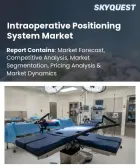
수술중 포지셔닝 시스템 시장 규모, 점유율 및 성장 분석 : 제품 유형별, 외과수술 유형별, 최종사용자별, 지역별 - 업계 예측(2026-2033년)Intraoperative Positioning System Market Size, Share, and Growth Analysis, By Product Type (Positioning Tables, Positioning Accessories), By Surgery Type, By End User, By Region - Industry Forecast 2026-2033 |
||||||

세계의 수술중 포지셔닝 시스템 시장 규모는 2024년에 18억 4,000만 달러로 평가되며, 2025년 20억 2,000만 달러에서 2033년까지 42억 달러로 확대하며, 예측 기간(2026-2033년)에 CAGR 9.6%로 성장할 것으로 전망되고 있습니다.
전 세계 수술 중 포지셔닝 시스템(IPS) 시장은 전동 수술대, 광학 추적 솔루션, 로봇용 고정 장치 등 수술 중 환자의 위치 정밀도를 향상시키는 기술이 특징입니다. 정확한 포지셔닝은 수술 시간 단축, 합병증 감소 및 외과 의사의 업무 효율 향상에 직접적으로 기여하므로 매우 중요합니다. 이 시장은 특히 척추외과 및 신경외과 분야의 최소 침습 수술 수요 급증에 힘입어 눈부신 발전을 이루어 왔습니다. 이러한 수술에서는 손상을 방지하기 위해 높은 정밀도가 요구됩니다. AI를 활용한 자동화의 도입은 이 시장 상황을 근본적으로 변화시키고 있으며, 수작업에서 데이터베이스의 예측형 프로세스로 전환시키고 있습니다. 스마트 센서와 기계학습 알고리즘은 최적의 위치 설정을 촉진하고, 수술 워크플로우를 개선하며, 실시간 조정을 가능하게 합니다. 그 결과, 병원에서는 IPS에 대한 투자를 점점 더 우선시하게 되었으며, 포괄적 지불 모델을 중시하는 의료 현장에서 시장 기회의 확대가 두드러지고 있습니다.
전 세계 수술 중 포지셔닝 시스템 시장의 성장 요인
전 세계 수술 중 위치 결정 시스템 시장은 외과의사에게 뛰어난 해부학적 시각화를 제공하는 실시간 영상 기술의 발전에 크게 힘입어 성장하고 있습니다. 이 기능을 통해 임플란트의 정확한 위치 조정이 가능해져 수술 실수를 최소화하고 환자의 예후를 개선합니다. 그 결과, 임상 현장에서의 신뢰도가 높아지면서 병원이 이러한 최첨단 솔루션에 투자하도록 유도되고, 다양한 외과 분야에서 통합 내비게이션 시스템에 대한 수요가 촉진되고 있습니다. 이러한 기술이 초래하는 업무 효율성 향상은 수술 시간 단축 및 마취 시간 단축으로 이어지며, 안전 대책 강화를 요구하는 규제 당국의 의향과도 부합합니다. 이러한 요인들이 복합적으로 작용하여 의료 기관에서의 도입 확대가 촉진될 뿐만 아니라, 시장의 지속적인 성장도 지원하고 있습니다.
전 세계 수술 중 포지셔닝 시스템 시장의 제약 요인
수술 중 위치 확인 시스템은 하드웨어 구입비, 소프트웨어 라이선스 비용, 직원 교육비 등 막대한 초기 투자가 필요하여 많은 의료 기관에 재정적 장벽이 되고 있습니다. 이는 예산이 빠듯한 의료 기관이나 보험 환급 제도가 제한적인 지역에서 특히 두드러집니다. 이러한 경제적 부담으로 인해 경영진은 당면한 재정적 우려와 예상되는 투자 수익률(ROI)을 비교 검토하게 되며, 그 결과 조달까지의 기간이 길어지고 신중한 의사결정이 이루어지게 됩니다. 그 결과 시장 성장이 저해되고, 소규모 의료기관이나 자원이 부족한 의료기관의 도입이 방해받고 있습니다. 또한 정기적인 시스템 업그레이드의 필요성은 예산 관리를 더욱 복잡하게 만들고, 다른 중요한 요구 사항에 대한 자금 배분을 방해하고 있습니다.
전 세계 수술 중 포지셔닝 시스템 시장의 동향
전 세계 수술 중 포지셔닝 시스템 시장에서는 AI를 활용한 내비게이션 시스템의 통합을 특징으로 하는 중요한 동향이 나타나고 있습니다. 인공지능(AI)과 기계학습의 도입은 이러한 시스템의 유효성에 혁명을 일으키고 있으며, 개별 환자의 해부학적 구조와 수술 목적에 맞춘 실시간 적응형 정렬을 가능하게 하고 있습니다. AI 모듈은 영상 데이터를 분석하여 최적의 기구 궤적을 예측하고, 지지 구조를 자율적으로 조정하는 능력을 향상시키고 있습니다. 이러한 진화를 통해 수술 정밀도가 향상되고 수술 시간이 단축되며, 최소 침습 수술 기술의 보급이 촉진되고 있습니다. 이 기술을 도입한 병원에서는 워크플로우 조정이 개선되고 수술팀의 자신감이 높아지고 있는 것으로 보고되고 있으며, 이는 전 세계적인 보급으로 이어져 지속적인 임상 혁신을 촉진하고 있습니다.
자주 묻는 질문
목차
서론
조사 방법
개요
시장 역학과 전망
주요 시장 인사이트
세계의 수술중 포지셔닝 시스템 시장 규모 : 제품 유형별
세계의 수술중 포지셔닝 시스템 시장 규모 : 외과수술 유형별
세계의 수술중 포지셔닝 시스템 시장 규모 : 최종사용자별
세계의 수술중 포지셔닝 시스템 시장 규모 : 지역별
경쟁 정보
주요 기업 개요
결론과 제안
KSA 26.10.02Global Intraoperative Positioning System Market size was valued at USD 1.84 Billion in 2024 and is poised to grow from USD 2.02 Billion in 2025 to USD 4.2 Billion by 2033, growing at a CAGR of 9.6% during the forecast period (2026-2033).
The global intraoperative positioning system (IPS) market is characterized by technologies that enhance patient alignment during surgical procedures, including motorized tables, optical tracking solutions, and robotic fixtures. Accurate positioning is critical as it directly contributes to reduced surgical time, fewer complications, and improved surgeon ergonomics. The market has witnessed significant advancements driven by the surge in demand for minimally invasive surgeries, particularly in spine and neurosurgery, necessitating precision to prevent injuries. The integration of AI-driven automation is fundamentally transforming this landscape, shifting manual tasks to data-rich, predictive processes. Smart sensors and machine-learning algorithms facilitate optimal positioning, enhance operational workflows, and enable real-time adjustments. Consequently, hospitals are increasingly prioritizing IPS investments, underscoring a growing market opportunity in healthcare settings emphasizing bundled-payment models.
Top-down and bottom-up approaches were used to estimate and validate the size of the Global Intraoperative Positioning System market and to estimate the size of various other dependent submarkets. The research methodology used to estimate the market size includes the following details: The key players in the market were identified through secondary research, and their market shares in the respective regions were determined through primary and secondary research. This entire procedure includes the study of the annual and financial reports of the top market players and extensive interviews for key insights from industry leaders such as CEOs, VPs, directors, and marketing executives. All percentage shares split, and breakdowns were determined using secondary sources and verified through Primary sources. All possible parameters that affect the markets covered in this research study have been accounted for, viewed in extensive detail, verified through primary research, and analyzed to get the final quantitative and qualitative data.
Global Intraoperative Positioning System Market Segments Analysis
Global intraoperative positioning system market is segmented by product type, surgery type, end user and region. Based on product type, the market is segmented into Positioning Tables and Positioning Accessories. Based on surgery type, the market is segmented into General Surgery, Orthopedic Surgery, Neurosurgery, Cardiovascular Surgery and Other Surgeries. Based on end user, the market is segmented into Hospitals, Ambulatory Surgical Centers and Specialty Clinics. Based on region, the market is segmented into North America, Europe, Asia Pacific, Latin America and Middle East & Africa.
Driver of the Global Intraoperative Positioning System Market
The Global Intraoperative Positioning System market is significantly driven by advancements in real-time imaging technologies, which grant surgeons superior anatomical visualization. This capability enables precise alignment of implants, minimizing procedural errors and enhancing patient outcomes. As a result, clinical confidence is bolstered, prompting hospitals to invest in these state-of-the-art solutions and stimulating demand for integrated navigation systems across various surgical fields. Operational efficiencies stemming from these technologies lead to shorter surgery durations, reduced anesthesia exposure, and align with regulatory preferences for enhanced safety measures. This combination of factors not only encourages wider institutional adoption but also propels the market toward ongoing growth.
Restraints in the Global Intraoperative Positioning System Market
The significant initial investment required for intraoperative positioning systems, including costs for hardware acquisition, software licensing, and staff training, creates a financial hurdle for numerous healthcare facilities. This is particularly evident in institutions with tight budgets or in areas where reimbursement policies are limited. This economic burden results in extended procurement timelines and careful decision-making, as leaders evaluate the anticipated return on investment alongside pressing financial concerns. Consequently, market growth is stifled, hindering access for smaller or under-resourced facilities. Moreover, the necessity for regular system upgrades further complicates budget management and diverts funds from other critical needs.
Market Trends of the Global Intraoperative Positioning System Market
The Global Intraoperative Positioning System market is witnessing a significant trend characterized by the integration of AI-driven navigation systems. The incorporation of artificial intelligence and machine learning is revolutionizing the efficacy of these systems, allowing for real-time adaptive alignment tailored to individual patient anatomy and surgical intent. AI modules are becoming adept at analyzing imaging data to predict optimal instrument trajectories and autonomously adjusting support structures. This evolution enhances procedural precision, decreases operative times, and supports the rise of minimally invasive surgical techniques. Hospitals that embrace this technology report improved workflow coordination and increased confidence among surgical teams, leading to a wider acceptance and fostering ongoing clinical innovation globally.
Table of Contents
Introduction
- Objectives of the Study
- Market Definition & Scope
Research Methodology
- Research Process
- Secondary & Primary Data Methods
- Market Size Estimation Methods
Executive Summary
- Global Market Outlook
- Key Market Highlights
- Segmental Overview
- Competition Overview
Market Dynamics & Outlook
- Macro-Economic Indicators
- Drivers & Opportunities
- Restraints & Challenges
- Supply Side Trends
- Demand Side Trends
- Porters Analysis & Impact
- Competitive Rivalry
- Threat of Substitute
- Bargaining Power of Buyers
- Threat of New Entrants
- Bargaining Power of Suppliers
Key Market Insights
- Key Success Factors
- Market Impacting Factors
- Top Investment Pockets
- Ecosystem Mapping
- Market Attractiveness Index 2025
- PESTEL Analysis
- Regulatory Landscape
Global Intraoperative Positioning System Market Size by Product Type & CAGR (2026-2033)
- Market Overview
- Positioning Tables
- Positioning Accessories
- Head Positioners
- Limb Positioners
- Body Supports
- Restraints & Stabilizers
Global Intraoperative Positioning System Market Size by Surgery Type & CAGR (2026-2033)
- Market Overview
- General Surgery
- Orthopedic Surgery
- Neurosurgery
- Cardiovascular Surgery
- Other Surgeries
Global Intraoperative Positioning System Market Size by End User & CAGR (2026-2033)
- Market Overview
- Hospitals
- Ambulatory Surgical Centers
- Specialty Clinics
Global Intraoperative Positioning System Market Size & CAGR (2026-2033)
- North America (Product Type, Surgery Type, End User)
- US
- Canada
- Europe (Product Type, Surgery Type, End User)
- Germany
- Spain
- France
- UK
- Italy
- Rest of Europe
- Asia Pacific (Product Type, Surgery Type, End User)
- China
- India
- Japan
- South Korea
- Rest of Asia-Pacific
- Latin America (Product Type, Surgery Type, End User)
- Mexico
- Brazil
- Rest of Latin America
- Middle East & Africa (Product Type, Surgery Type, End User)
- GCC Countries
- South Africa
- Rest of Middle East & Africa
Competitive Intelligence
- Top 5 Player Comparison
- Market Positioning of Key Players, 2025
- Strategies Adopted by Key Market Players
- Recent Developments in the Market
- Company Market Share Analysis, 2025
- Company Profiles of All Key Players
- Company Details
- Product Portfolio Analysis
- Company's Segmental Share Analysis
- Revenue Y-O-Y Comparison (2023-2025)
Key Company Profiles
- Brainlab AG
- Company Overview
- Business Segment Overview
- Financial Updates
- Key Developments
- Stryker Corporation
- Company Overview
- Business Segment Overview
- Financial Updates
- Key Developments
- Zimmer Biomet Holdings, Inc.
- Company Overview
- Business Segment Overview
- Financial Updates
- Key Developments
- Getinge AB
- Company Overview
- Business Segment Overview
- Financial Updates
- Key Developments
- Hill-Rom Holdings, Inc.
- Company Overview
- Business Segment Overview
- Financial Updates
- Key Developments
- Merivaara Corporation
- Company Overview
- Business Segment Overview
- Financial Updates
- Key Developments
- Mizuho OSI
- Company Overview
- Business Segment Overview
- Financial Updates
- Key Developments
- Schaerer Medical AG
- Company Overview
- Business Segment Overview
- Financial Updates
- Key Developments
- Skytron LLC
- Company Overview
- Business Segment Overview
- Financial Updates
- Key Developments
- Allen Medical Systems, Inc.
- Company Overview
- Business Segment Overview
- Financial Updates
- Key Developments
- STERIS plc
- Company Overview
- Business Segment Overview
- Financial Updates
- Key Developments
- Medifa GmbH
- Company Overview
- Business Segment Overview
- Financial Updates
- Key Developments
- Trumpf Medical Systems, Inc.
- Company Overview
- Business Segment Overview
- Financial Updates
- Key Developments
- Eschmann Holdings Ltd.
- Company Overview
- Business Segment Overview
- Financial Updates
- Key Developments
- Image Diagnostics, Inc.
- Company Overview
- Business Segment Overview
- Financial Updates
- Key Developments
- Leoni AG
- Company Overview
- Business Segment Overview
- Financial Updates
- Key Developments
- Bender GmbH & Co. KG
- Company Overview
- Business Segment Overview
- Financial Updates
- Key Developments
- Dr. Mach GmbH & Co. KGaA
- Company Overview
- Business Segment Overview
- Financial Updates
- Key Developments
- OPT SurgiSystems S.r.l.
- Company Overview
- Business Segment Overview
- Financial Updates
- Key Developments
- Famed zywiec Sp. z o.o.
- Company Overview
- Business Segment Overview
- Financial Updates
- Key Developments


