|
시장보고서
상품코드
1989132
LED 재배용 조명 시장 예측(-2034년) : 스펙트럼별, 와트수별, 설치 유형별, 용도별, 최종사용자별, 유통 채널별, 지역별 세계 분석LED Grow Light Market Forecasts to 2034 - Global Analysis By Spectrum, Wattage (Low Power, Medium Power, and High Power ), Installation Type, Application, End User, Distribution Channel, and By Geography |
||||||

Stratistics MRC에 따르면 세계의 LED 재배용 조명 시장은 2026년에 85억 달러 규모에 달하고, 예측 기간 동안 CAGR 19.1%로 성장하여 2034년까지 344억 달러에 달할 것으로 전망됩니다.
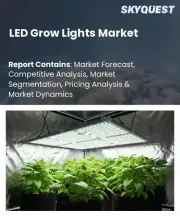
LED 재배용 조명은 광합성에 최적화된 전자기 스펙트럼을 방출하여 식물의 성장을 촉진하도록 설계된 에너지 효율이 높은 조명 시스템입니다. 이러한 첨단 조명 솔루션은 제어 환경 농업에서 연중 재배, 성장 주기 단축 및 수확량 증가를 가능하게 합니다. 이 시장은 실내 농장, 온실, 수직 농장 및 연구 시설을 대상으로 하며, 우수한 에너지 효율과 스펙트럼 제어 능력으로 인해 LED 기술이 기존 조명을 대체하고 있습니다.
연중 내내 작물 생산에 대한 수요 증가
계절에 상관없이 신선한 농산물을 얻을 수 있다는 소비자의 기대가 LED 조명을 활용한 환경제어형 농업의 보급을 촉진하고 있습니다. 전통적인 야외 농업은 기상 패턴과 계절의 변화로 인한 제약에 직면하고 있으며, 실내 재배는 그 공급 격차를 효과적으로 메우고 있습니다. LED 재배용 조명은 외부 기후에 영향을 받지 않는 안정적인 재배 환경을 구현하여 농가가 신선한 채소, 과일, 허브에 대한 지속적인 소비자 수요를 충족시킬 수 있게 해줍니다. 이 능력은 전통적인 농업이 연중 내내 큰 제약에 직면하는 도시 지역이나 기후가 까다로운 지역에서 특히 가치가 있습니다.
높은 초기 투자 비용
LED 재배용 조명 시스템에 따른 막대한 초기 비용은 장기적인 에너지 절감 효과를 기대할 수 있음에도 불구하고, 가격에 민감한 생산자들에게는 여전히 도입 장벽으로 작용하고 있습니다. 고품질 LED 설비를 도입하기 위해서는 조명기구, 스펙트럼 커스터마이징 및 지원 인프라에 대한 막대한 설비 투자가 필요합니다. 소규모 농가나 개발도상국의 사업자들은 이러한 비용을 감당할 수 없어 시장 침투를 방해하고 있습니다. 투자 회수 기간은 개선되는 추세이지만, 여전히 많은 사업자가 허용할 수 있는 범위를 넘어섭니다. 이러한 투자 장벽으로 인해 자금력이 있는 상업적 사업자와 기존 조명과 전통적 재배 방식에 의존하는 소규모 사업자들 사이에 시장 세분화가 발생하고 있습니다.
스마트 농업 기술과의 통합
IoT(사물인터넷) 및 자동 제어 시스템의 발전은 LED 재배용 조명의 최적화와 시장 확대를 위한 큰 기회를 창출하고 있습니다. 식물의 건강 상태, 성장 단계, 환경 조건을 모니터링하는 스마트 센서는 효율성을 극대화하기 위해 광 스펙트럼과 조도를 자동으로 조정할 수 있습니다. 데이터 분석 플랫폼은 재배 정보를 처리하고 조명 전략을 지속적으로 개선하여 에너지 소비를 줄이면서 작물 수확량을 향상시킵니다. 이러한 기술 통합을 통해 LED 시스템은 단일 제품이 아닌 종합적인 정밀농업 솔루션의 구성요소로 자리매김하여 가치 제안을 강화하고 소프트웨어 및 모니터링 서비스를 통해 지속적인 수익원을 창출하고 있습니다.
대체 조명 기술로 인한 경쟁 심화
경쟁 조명 기술의 지속적인 개선은 LED 시장의 우위를 약화시킬 수 있으며, 업계 전체에 가격 압력을 가하고 있습니다. 고압 나트륨 램프 및 형광등 제조업체들은 초기 비용을 낮추면서 제품의 효율과 스펙트럼 성능을 향상시키기 위해 지속적으로 노력하고 있습니다. 연구기관에서 나오는 새로운 조명 기술은 광합성 최적화를 위한 새로운 접근 방식을 제공하여 LED의 우위에 도전할 수 있습니다. 이러한 경쟁 환경은 지속적인 혁신과 가격 인하를 강요하여 LED 제조업체의 수익률을 압박하는 한편, 가격에 민감한 시장 부문에서 생산자에게 여러 가지 현실적인 선택지를 제공하여 LED 기술로의 전환을 늦추고 있습니다.
COVID-19의 영향:
COVID-19 팬데믹은 기존 농업의 공급망 취약성을 부각시키고, 지역 밀착형 환경 제어형 식품 생산에 대한 관심을 가속화했습니다. 봉쇄로 인한 식품 유통 경로의 혼란은 소비자의 식량 안보에 대한 인식을 높이고, 실내 농업 프로젝트에 대한 투자를 촉진했습니다. 식당이 문을 닫으면서 농산물 수요는 소매 채널로 옮겨갔고, 품질이 안정적인 실내 재배업체에 유리하게 작용했습니다. 공급망 문제로 인해 LED 장비의 납품이 일시적으로 지연되었지만, 결국 지역 밀착형 제어 환경 농업의 비즈니스 사례를 강화하게 되었습니다. 팬데믹 이후, 탄력적인 식량 시스템에 대한 지속적인 강조는 실내 농업 및 관련 LED 조명 기술의 도입에 대한 모멘텀을 유지하고 있습니다.
예측 기간 동안 '신규 설치' 부문이 가장 큰 규모를 형성할 것으로 예상됩니다.
예측 기간 동안 '신규 설치' 부문이 가장 큰 시장 점유율을 차지할 것으로 예상됩니다. 이는 전 세계 실내 농업 시설의 급속한 확장에 힘입은 것입니다. 수직 농장, 상업용 온실, 연구 센터의 신규 건설 프로젝트에서는 설계 단계부터 LED 기술을 채택하여 설계와의 최적 통합을 통해 이점을 얻고 있습니다. 환경 제어형 농업을 지원하기 위한 정부의 노력으로 최신 LED 시스템을 갖춘 새로운 시설 개발에 자금이 투입되고 있습니다. 농업 기술 관련 스타트업에 대한 벤처 캐피털 투자는 최첨단 조명 시설을 갖춘 새로운 시설의 건설을 촉진하고 있습니다. 환경 통제하에 재배 면적이 근본적으로 확대됨에 따라 예측 기간 동안 신규 설치가 시장 수익의 대부분을 차지할 것으로 예상됩니다.
예측 기간 동안 수직 농업 부문은 가장 높은 CAGR을 보일 것으로 예상됩니다.
예측 기간 동안 수직 농업 부문은 가장 높은 성장률을 보일 것으로 예상되며, 이는 도시 환경에서 이 공간 절약형 재배 방식이 빠르게 확대되고 있음을 반영합니다. 수직농법은 전적으로 인공조명에 의존하기 때문에 다층 재배 구성에 최적화된 LED 솔루션에 대한 수요가 급증하고 있습니다. 도시 인구 증가와 토지 부족으로 인해 소비 거점 인근의 수직 농업 프로젝트에 대한 투자가 증가하고 있습니다. LED의 효율성과 스펙트럼 제어의 기술적 진보로 인해 수직 농업의 경제성이 점점 더 실현가능해지고 있습니다. 도시농업 스타트업에 대한 벤처 캐피털의 유입은 수직농장 개발을 가속화하고 있으며, 특수 LED 조명 시스템에 대한 집중적인 수요를 창출하고 있습니다.
가장 큰 점유율을 차지하는 지역:
예측 기간 동안 북미는 대마초 재배 합법화, 첨단 농업 기술 도입, 대규모 벤처 캐피털 투자에 힘입어 가장 큰 시장 점유율을 유지할 것으로 예상됩니다. 미국과 캐나다는 상업용 온실 및 수직 농법 개발을 주도하고 있으며, 정교한 재배자들이 고품질 LED 솔루션을 찾고 있습니다. 환경제어형 농업에 대한 견고한 규제 프레임워크가 시장의 안정성을 보장하고 있습니다. 주요 LED 제조업체는 북미에 본사를 두고 제품 공급 및 기술 지원을 보장합니다. 지역 내 연구기관들은 조명 기술을 지속적으로 발전시키고 있으며, LED 재배용 조명 시스템의 최대 시장으로서 북미의 입지를 더욱 공고히 하고 있습니다.
CAGR이 가장 높은 지역:
예측 기간 동안 아시아태평양은 식량 안보에 대한 우려, 급속한 도시화, 농업 현대화에 대한 정부 지원 등을 배경으로 가장 높은 CAGR을 보일 것으로 예상됩니다. 중국, 일본, 싱가포르 등의 국가들은 수입 의존도를 줄이고 밀집된 도시 인구에게 신선한 식량을 공급하기 위해 수직농법에 많은 투자를 하고 있습니다. 일본과 싱가포르의 토지 부족으로 인해 공간 절약형 재배 솔루션에 대한 수요가 특히 절실하게 요구되고 있습니다. 농업 기술 도입에 대한 정부 보조금으로 인해 지역 전체에 LED 도입이 가속화되고 있습니다. 인구의 증가와 가처분 소득의 증가로 LED 조명을 이용한 제어된 환경에서 재배되는 고품질 신선식품은 큰 시장 가능성을 가지고 있습니다.
무료 커스터마이징 서비스:
본 보고서를 구매한 모든 고객은 아래 무료 맞춤화 옵션 중 하나를 이용할 수 있습니다:
- 기업 프로파일링
- 추가 시장 플레이어에 대한 종합적인 프로파일링(최대 3개사)
- 주요 기업 SWOT 분석(최대 3개사)
- 지역별 세분화
- 고객의 요청에 따라 주요 국가 및 지역의 시장 추정 및 예측, CAGR(주 : 타당성 확인에 따라 다름)
- 경쟁사 벤치마킹
- 제품 포트폴리오, 지리적 분포, 전략적 제휴에 기반한 주요 기업 벤치마킹
목차
제1장 주요 요약
제2장 조사 프레임워크
제3장 시장 역학과 동향 분석
제4장 경쟁 환경과 전략적 평가
제5장 세계의 LED 재배용 조명 시장 : 스펙트럼별
제6장 세계의 LED 재배용 조명 시장 : 와트수별
제7장 세계의 LED 재배용 조명 시장 : 설치 유형별
제8장 세계의 LED 재배용 조명 시장 : 용도별
제9장 세계의 LED 재배용 조명 시장 : 최종사용자별
제10장 세계의 LED 재배용 조명 시장 : 유통 채널별
제11장 세계의 LED 재배용 조명 시장 : 지역별
제12장 전략적 시장 정보
제13장 업계 동향과 전략적 대처
제14장 기업 개요
KSM 26.04.20According to Stratistics MRC, the Global LED Grow Light Market is accounted for $8.5 billion in 2026 and is expected to reach $34.4 billion by 2034 growing at a CAGR of 19.1% during the forecast period. LED grow lights are energy-efficient lighting systems designed to stimulate plant growth by emitting electromagnetic spectrum optimized for photosynthesis. These advanced lighting solutions enable year-round cultivation, faster growth cycles, and higher crop yields across controlled environment agriculture. The market serves indoor farms, greenhouses, vertical farms, and research facilities, with LED technology increasingly replacing traditional lighting due to superior energy efficiency and spectrum control capabilities.
Market Dynamics:
Driver:
Rising demand for year-round crop production
Consumer expectations for fresh produce availability regardless of season are driving adoption of controlled environment agriculture supported by LED lighting. Traditional outdoor farming faces limitations from weather patterns and seasonal changes, creating supply gaps that indoor cultivation fills effectively. LED grow lights enable consistent growing conditions independent of external climate, allowing farmers to meet continuous consumer demand for fresh vegetables, fruits, and herbs. This capability proves particularly valuable in urban areas and regions with harsh climates where traditional agriculture faces significant constraints throughout the calendar year.
Restraint:
High initial investment requirements
The substantial upfront costs associated with LED grow light systems continue to deter adoption among price-sensitive growers despite long-term energy savings. Quality LED installations require significant capital expenditure for fixtures, spectrum customization, and supporting infrastructure. Small-scale farmers and operations in developing regions find these costs prohibitive, limiting market penetration. Financial payback periods, while improving, still extend beyond what many operators find acceptable. This investment barrier creates market segmentation between well-capitalized commercial operations and smaller players who continue relying on conventional lighting or traditional growing methods.
Opportunity:
Integration with smart farming technologies
Advancements in Internet of Things and automated control systems create significant opportunities for LED grow light optimization and market expansion. Smart sensors monitoring plant health, growth stages, and environmental conditions can automatically adjust light spectra and intensity for maximum efficiency. Data analytics platforms process growing information to refine lighting strategies continuously, improving crop yields while reducing energy consumption. This technological integration positions LED systems as components of comprehensive precision agriculture solutions rather than standalone products, increasing value propositions and creating recurring revenue streams through software and monitoring services.
Threat:
Intensifying competition from alternative lighting technologies
Ongoing improvements in competing lighting technologies threaten to erode LED market advantages and create price pressure across the industry. High-pressure sodium and fluorescent lighting manufacturers continue enhancing their products' efficiency and spectrum capabilities while maintaining lower initial costs. New lighting technologies emerging from research laboratories may offer alternative approaches to photosynthesis optimization that challenge LED dominance. This competitive landscape forces continuous innovation and price reductions, compressing margins for LED manufacturers while giving growers multiple viable options that slow the transition to LED technology across price-sensitive market segments.
Covid-19 Impact:
The COVID-19 pandemic highlighted supply chain vulnerabilities in traditional agriculture, accelerating interest in local, controlled environment food production. Lockdown disruptions to food distribution channels increased consumer awareness of food security, driving investment in indoor farming projects. Restaurant closures shifted produce demand toward retail channels, favoring consistent-quality indoor growers. Supply chain challenges temporarily delayed LED equipment deliveries but ultimately strengthened the business case for local controlled environment agriculture. Post-pandemic, continued emphasis on resilient food systems sustains momentum for indoor farming and associated LED lighting technology adoption.
The New Installations segment is expected to be the largest during the forecast period
The New Installations segment is expected to account for the largest market share during the forecast period, driven by the rapid expansion of indoor farming facilities globally. New construction projects in vertical farms, commercial greenhouses, and research centers specify LED technology from the outset, benefiting from optimized design integration. Government initiatives supporting controlled environment agriculture fund new facility development with modern LED systems. Venture capital investment in agricultural technology startups fuels new facility construction with state-of-the-art lighting. The fundamental growth in cultivated area under controlled environments ensures new installations dominate market revenue throughout the forecast timeline.
The Vertical Farming segment is expected to have the highest CAGR during the forecast period
Over the forecast period, the Vertical Farming segment is predicted to witness the highest growth rate, reflecting the rapid expansion of this space-efficient cultivation approach in urban environments. Vertical farms depend entirely on artificial lighting, creating intensive demand for LED solutions optimized for multi-layer growing configurations. Urban population growth and land scarcity drive investment in vertical farming projects near consumption centers. Technological advances in LED efficiency and spectrum control make vertical farming economics increasingly viable. Venture capital flowing into urban agriculture startups accelerates vertical farm development, creating concentrated demand for specialized LED lighting systems.
Region with largest share:
During the forecast period, the North America region is expected to hold the largest market share, supported by legal cannabis cultivation, advanced agricultural technology adoption, and significant venture capital investment. The United States and Canada lead in commercial greenhouse and vertical farming development, with sophisticated growers demanding premium LED solutions. Strong regulatory frameworks for controlled environment agriculture provide market stability. Major LED manufacturers maintain North American headquarters, ensuring product availability and technical support. Research institutions across the region continuously advance lighting technology, reinforcing North America's position as the largest market for LED grow light systems.
Region with highest CAGR:
Over the forecast period, the Asia Pacific region is anticipated to exhibit the highest CAGR, driven by food security concerns, rapid urbanization, and government support for agricultural modernization. Countries including China, Japan, and Singapore invest heavily in vertical farming to reduce import dependence and ensure fresh food access for dense urban populations. Land scarcity in Japan and Singapore creates particular urgency for space-efficient growing solutions. Government subsidies for agricultural technology adoption accelerate LED deployment across the region. Large populations and rising disposable incomes create substantial market potential for premium fresh produce grown under controlled environments with LED lighting.
Key players in the market
Some of the key players in LED Grow Light Market include Signify Holding, ams OSRAM, Heliospectra, Gavita International, Hortilux Schreder, Valoya, LumiGrow, California LightWorks, Illumitex, Fluence Bioengineering, Everlight Electronics, LEDVANCE, Agrolux, Illuminar Lighting, and Samsung Electronics.
Key Developments:
In February 2026, At Fruit Logistica 2026, Gavita International and Agrolux introduced the Agrolux Operating System, a new digital foundation for wireless communication and control of greenhouse lighting.
In December 2025, Samsung concluded final shipments of its horticultural LED components, marking its formal exit from the dedicated LED grow light manufacturing market.
In June 2025, At GreenTech 2025, ams OSRAM is set to showcase the OSCONIQ(TM) P 3737 GEN 2, a high-power LED achieving 82.4% total efficiency in Hyper Red, designed to shorten crop cycles and reduce the number of LEDs required per fixture.
Spectrums Covered:
- Narrow Spectrum
- Broad Spectrum
Wattages Covered:
- Low Power (<100W)
- Medium Power (100-300W)
- High Power (>300W)
Installation Types Covered:
- New Installations
- Retrofit Installations
Applications Covered:
- Indoor Farming
- Commercial Greenhouses
- Vertical Farming
- Turf and Landscaping
- Research Facilities
- Other Applications
End Users Covered:
- Commercial Growers
- Horticulture Companies
- Research Institutions
- Home Growers
- Urban Farming Operators
Distribution Channels Covered:
- Direct Sales
- Distributors and Integrators
- Online Retail
- Specialty Stores
Regions Covered:
- North America
- United States
- Canada
- Mexico
- Europe
- United Kingdom
- Germany
- France
- Italy
- Spain
- Netherlands
- Belgium
- Sweden
- Switzerland
- Poland
- Rest of Europe
- Asia Pacific
- China
- Japan
- India
- South Korea
- Australia
- Indonesia
- Thailand
- Malaysia
- Singapore
- Vietnam
- Rest of Asia Pacific
- South America
- Brazil
- Argentina
- Colombia
- Chile
- Peru
- Rest of South America
- Rest of the World (RoW)
- Middle East
- Saudi Arabia
- United Arab Emirates
- Qatar
- Israel
- Rest of Middle East
- Africa
- South Africa
- Egypt
- Morocco
- Rest of Africa
What our report offers:
- Market share assessments for the regional and country-level segments
- Strategic recommendations for the new entrants
- Covers Market data for the years 2023, 2024, 2025, 2026, 2027, 2028, 2030, 2032 and 2034
- Market Trends (Drivers, Constraints, Opportunities, Threats, Challenges, Investment Opportunities, and recommendations)
- Strategic recommendations in key business segments based on the market estimations
- Competitive landscaping mapping the key common trends
- Company profiling with detailed strategies, financials, and recent developments
- Supply chain trends mapping the latest technological advancements
Free Customization Offerings:
All the customers of this report will be entitled to receive one of the following free customization options:
- Company Profiling
- Comprehensive profiling of additional market players (up to 3)
- SWOT Analysis of key players (up to 3)
- Regional Segmentation
- Market estimations, Forecasts and CAGR of any prominent country as per the client's interest (Note: Depends on feasibility check)
- Competitive Benchmarking
- Benchmarking of key players based on product portfolio, geographical presence, and strategic alliances
Table of Contents
1 Executive Summary
- 1.1 Market Snapshot and Key Highlights
- 1.2 Growth Drivers, Challenges, and Opportunities
- 1.3 Competitive Landscape Overview
- 1.4 Strategic Insights and Recommendations
2 Research Framework
- 2.1 Study Objectives and Scope
- 2.2 Stakeholder Analysis
- 2.3 Research Assumptions and Limitations
- 2.4 Research Methodology
- 2.4.1 Data Collection (Primary and Secondary)
- 2.4.2 Data Modeling and Estimation Techniques
- 2.4.3 Data Validation and Triangulation
- 2.4.4 Analytical and Forecasting Approach
3 Market Dynamics and Trend Analysis
- 3.1 Market Definition and Structure
- 3.2 Key Market Drivers
- 3.3 Market Restraints and Challenges
- 3.4 Growth Opportunities and Investment Hotspots
- 3.5 Industry Threats and Risk Assessment
- 3.6 Technology and Innovation Landscape
- 3.7 Emerging and High-Growth Markets
- 3.8 Regulatory and Policy Environment
- 3.9 Impact of COVID-19 and Recovery Outlook
4 Competitive and Strategic Assessment
- 4.1 Porter's Five Forces Analysis
- 4.1.1 Supplier Bargaining Power
- 4.1.2 Buyer Bargaining Power
- 4.1.3 Threat of Substitutes
- 4.1.4 Threat of New Entrants
- 4.1.5 Competitive Rivalry
- 4.2 Market Share Analysis of Key Players
- 4.3 Product Benchmarking and Performance Comparison
5 Global LED Grow Light Market, By Spectrum
- 5.1 Narrow Spectrum
- 5.1.1 Red Spectrum
- 5.1.2 Blue Spectrum
- 5.1.3 Green Spectrum
- 5.2 Broad Spectrum
- 5.2.1 Full Spectrum
- 5.2.2 White Spectrum
6 Global LED Grow Light Market, By Wattage
- 6.1 Low Power (<100W)
- 6.2 Medium Power (100-300W)
- 6.3 High Power (>300W)
7 Global LED Grow Light Market, By Installation Type
- 7.1 New Installations
- 7.2 Retrofit Installations
8 Global LED Grow Light Market, By Application
- 8.1 Indoor Farming
- 8.2 Commercial Greenhouses
- 8.3 Vertical Farming
- 8.4 Turf and Landscaping
- 8.5 Research Facilities
- 8.6 Other Applications
9 Global LED Grow Light Market, By End User
- 9.1 Commercial Growers
- 9.2 Horticulture Companies
- 9.3 Research Institutions
- 9.4 Home Growers
- 9.5 Urban Farming Operators
10 Global LED Grow Light Market, By Distribution Channel
- 10.1 Direct Sales
- 10.2 Distributors and Integrators
- 10.3 Online Retail
- 10.4 Specialty Stores
11 Global LED Grow Light Market, By Geography
- 11.1 North America
- 11.1.1 United States
- 11.1.2 Canada
- 11.1.3 Mexico
- 11.2 Europe
- 11.2.1 United Kingdom
- 11.2.2 Germany
- 11.2.3 France
- 11.2.4 Italy
- 11.2.5 Spain
- 11.2.6 Netherlands
- 11.2.7 Belgium
- 11.2.8 Sweden
- 11.2.9 Switzerland
- 11.2.10 Poland
- 11.2.11 Rest of Europe
- 11.3 Asia Pacific
- 11.3.1 China
- 11.3.2 Japan
- 11.3.3 India
- 11.3.4 South Korea
- 11.3.5 Australia
- 11.3.6 Indonesia
- 11.3.7 Thailand
- 11.3.8 Malaysia
- 11.3.9 Singapore
- 11.3.10 Vietnam
- 11.3.11 Rest of Asia Pacific
- 11.4 South America
- 11.4.1 Brazil
- 11.4.2 Argentina
- 11.4.3 Colombia
- 11.4.4 Chile
- 11.4.5 Peru
- 11.4.6 Rest of South America
- 11.5 Rest of the World (RoW)
- 11.5.1 Middle East
- 11.5.1.1 Saudi Arabia
- 11.5.1.2 United Arab Emirates
- 11.5.1.3 Qatar
- 11.5.1.4 Israel
- 11.5.1.5 Rest of Middle East
- 11.5.2 Africa
- 11.5.2.1 South Africa
- 11.5.2.2 Egypt
- 11.5.2.3 Morocco
- 11.5.2.4 Rest of Africa
- 11.5.1 Middle East
12 Strategic Market Intelligence
- 12.1 Industry Value Network and Supply Chain Assessment
- 12.2 White-Space and Opportunity Mapping
- 12.3 Product Evolution and Market Life Cycle Analysis
- 12.4 Channel, Distributor, and Go-to-Market Assessment
13 Industry Developments and Strategic Initiatives
- 13.1 Mergers and Acquisitions
- 13.2 Partnerships, Alliances, and Joint Ventures
- 13.3 New Product Launches and Certifications
- 13.4 Capacity Expansion and Investments
- 13.5 Other Strategic Initiatives
14 Company Profiles
- 14.1 Signify Holding
- 14.2 ams OSRAM
- 14.3 Heliospectra
- 14.4 Gavita International
- 14.5 Hortilux Schreder
- 14.6 Valoya
- 14.7 LumiGrow
- 14.8 California LightWorks
- 14.9 Illumitex
- 14.10 Fluence Bioengineering
- 14.11 Everlight Electronics
- 14.12 LEDVANCE
- 14.13 Agrolux
- 14.14 Illuminar Lighting
- 14.15 Samsung Electronics