|
시장보고서
상품코드
2059048
집적 수동 소자 시장 예측(-2034년) - 수동 부품 유형, 포장 유형, 기술, 주파수대역, 디바이스 통합, 용도, 최종 이용 산업 및 지역별 분석Integrated Passive Device Market Forecasts to 2034 - Global Analysis By Passive Component Type, Packaging Type, Technology, Frequency Range, Device Integration, Application, End Use Industry, and By Geography |
||||||

Stratistics MRC에 의하면, 세계의 집적 수동 소자 시장은 2026년에 18억 달러에 이르고, 예측 기간 중에 CAGR 8.8%로 성장하여 2034년까지 37억 달러에 달할 전망입니다.
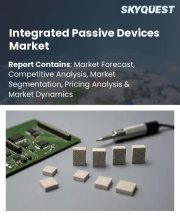
집적 수동 소자(IPD)란 저항기, 커패시터, 인덕터, 발란 등 여러 수동 소자를 단일 칩 또는 기판에 집적시킨 반도체 부품입니다. 이러한 소자는 개별 수동 소자에 비해 실장 면적 감소, 전기적 성능 향상, 기생 효과 저감, 그리고 조립 공정의 간소화라는 큰 이점을 제공합니다. 이 시장은民生용 전자기기의 소형화 추세, 무선 통신 시스템의 보급, 그리고 5G, 사물인터넷(IoT), 자동차용 레이더 분야에서 고주파 성능에 대한 수요가 증가함에 따라 성장하고 있습니다.
5G 및 무선 통신 인프라의 급속한 확대
세계적으로 5G 네트워크가 확산됨에 따라, 소형 폼 팩터에 통합된 고주파·고성능 수동 소자에 대한 전례 없는 수요가 발생하고 있습니다. 기지국, 스마트폰, IoT 기기에서는 기존의 개별 수동 소자로는 과도한 기생 성분이 발생하는 밀리파 주파수 대역에서 효율적인 필터링, 임피던스 정합 및 신호 조정이 요구되고 있습니다. 집적 수동 소자(IPD)는 상호 연결 손실을 최소화하고 단일 다이 상에서 정밀한 부품 매칭을 실현함으로써 뛰어난 성능을 발휘합니다. 전 세계 통신 사업자들이 5G 인프라 구축을 지속하고, 휴대전화 제조업체들이 점점 더 고도화된 기기를 출시함에 따라, 무선 주파수 및 마이크로파 주파수 대역에 걸친 IPD 솔루션에 대한 수요가 증가하면서 시장 확대가 계속해서 크게 가속화되고 있습니다.
초기 설계 및 제조 비용의 높음
집적 수동 소자의 개발 및 제조에는 박막 증착, 포토리소그래피, 웨이퍼 레벨 패키징 등의 특수한 반도체 공정이 필요하며, 이를 위해서는 막대한 설비 투자가 필요합니다. 맞춤형 IPD 설계에는 대개 일회성 엔지니어링 비용이 발생하며, 이는 중소기업이나 소량 생산 용도의 경우 진입 장벽이 될 수 있습니다. 또한, 고품질 IPD를 생산할 수 있는 설비는 제한적이기 때문에 공급 제약이나 가격 압박이 발생할 가능성이 있습니다. 이러한 비용상의 장벽은 가격에 민감한 시장, 특히 기존의 개별 수동 부품이 설치 면적이 크고 전기적 성능 특성도 열악함에도 불구하고 여전히 경제적으로 매력적인 지역에서 IPD의 보급을 지연시키는 요인이 될 수 있습니다.
소형화된 의료 및 웨어러블 기기에 대한 수요 증가
의료 및 피트니스 업계에서는 초소형 부품 통합이 필요한 임베디드 모니터, 보청기, 스마트 패치, 연속 혈당 모니터 등 소형 전자 기기의 도입이 점점 더 확대되고 있습니다. 집적 수동 소자(IPD)는 신뢰성과 전기적 성능을 유지하면서 대폭적인 소형화가 가능하기 때문에 공간이 극히 제한된 용도에 가장 적합합니다. 전 세계적으로 고령화가 진행되고 원격 환자 모니터링이 보급됨에 따라, 의료용 웨어러블 시장은 급속한 성장이 예상됩니다. 이러한 동향은 IPD 제조업체에게 차세대 의료용 전자 기기에 특화된 주파수 및 전력 요구 사항에 부합하는 용도 특화형 솔루션을 개발할 수 있는 큰 성장 기회를 제공합니다.
시스템 온 칩(SoC) 및 첨단 패키징 기술로 인한 치열한 경쟁
수동 기능을 능동 다이 설계에 통합하는 시스템 온 칩(SoC) 솔루션, 수동 집적 기능을 제공하는 첨단 팬아웃 웨이퍼 레벨 패키징 등 신흥 집적 기술은 개별 집적 수동 소자(IPD)에 있어 경쟁상의 위협이 되고 있습니다. 일부 반도체 제조업체들은 수동 기능과 능동 기능을 참신한 방식으로 결합한 대안적인 접근 방식을 개발하고 있으며, 이로 인해 순수한 IPD의 고유한 가치 제안이 희석될 가능성이 있습니다. 이러한 경쟁 기술들이 비용 면에서 동등해지거나 성능 면에서 우위를 점하게 될 경우, 특히 비용 민감도가 매우 높고 설계 주기가 매우 빠듯한 대량 생산형 소비자용 전자기기 분야에서 기존 IPD 제품 시장 점유율을 잠식할 우려가 있습니다.
신종 코로나바이러스(COVID-19)의 영향:
코로나19 팬데믹은 당초 공급망 차질, 공장 가동 중단, 그리고 전자제품에 대한 소비자 지출 감소 등을 통해 집적 수동 소자 시장에 혼란을 초래했습니다. 그러나 그 후 원격 근무, 온라인 학습, 디지털 엔터테인먼트로의 전환으로 인해 노트북, 태블릿, 게임기, 네트워크 장비에 대한 예상치 못한 수요가 발생했습니다. 이 모든 제품에는 무선 연결을 위한 IPD가 내장되어 있습니다. 또한, 팬데믹은 의료 및 산업 분야의 디지털 전환을 가속화하여 커넥티드 기기에 대한 장기적인 수요를 끌어올렸습니다. 단기적인 물류상의 과제는 여전히 남아 있지만, 반도체 부족 사태가 탄탄한 전자기기 공급망을 유지하는 데 있어 소형 고성능 부품의 중요성을 부각시킨 덕분에 전반적인 영향은 다소 긍정적인 편이었습니다.
예측 기간 동안 마이크로파 주파수 부문이 가장 큰 시장 규모를 차지할 것으로 예측됩니다.
마이크로파 주파수 부문은 마이크로파 기반 통신 시스템, 레이더 용도 및 위성 기술의 광범위한 도입에 힘입어, 예측 기간 동안 가장 큰 시장 점유율을 차지할 것으로 예측됩니다. 약 1GHz에서 30GHz에 이르는 주파수 대역은 5G의 서브 6GHz 대역, 첨단 운전자 보조 시스템(ADAS)용 자동차 레이더, 지점 간 무선 백홀, 그리고 항공우주 및 방위 분야에서 매우 중요합니다. 이 주파수 대역에서 작동하는 집적 수동 소자는 뛰어난 안정성과 낮은 삽입 손실을 갖추고 있으며, 필수적인 필터링, 결합 및 임피던스 매칭 기능을 제공합니다. 6GHz 미만 대역에서 5G 네트워크의 지속적인 확대와 자동차에 레이더가 탑재되는 사례가 증가함에 따라, 이 부문은 예측 기간 동안 시장에서 우위를 유지할 것으로 전망됩니다.
예측 기간 동안 멀티 패시브 집적 부문이 가장 높은 연평균 성장률(CAGR)을 보일 것으로 예측됩니다.
예측 기간 동안, 멀티패시브 집적 부문은 업계의 고기능 밀도화와 설계 단순화 추세를 반영하여 가장 높은 성장률을 보일 것으로 전망됩니다. 이 집적 방식에서는 여러 개의 저항기, 커패시터, 인덕터 등의 수동 소자를 단일 소자로 통합함으로써, 부품 수, 기판 공간 및 조립 비용을 절감합니다. 스마트폰, 웨어러블 기기, IoT 센서에서 디스크리트 수동 부품을 사용하면 과도한 면적을 차지하게 되는 복잡한 필터링, 임피던스 매칭 네트워크, 신호 조정 회로와 같은 경우, 멀티 패시브 솔루션이 점점 더 선호되고 있습니다. 설계 엔지니어들이 전기적 성능을 저해하지 않으면서 더 작은 폼 팩터를 추구함에 따라, 멀티 패시브 IPD가 선호되는 솔루션으로 자리 잡고 있으며, 더 단순한 싱글 패시브 디바이스보다 훨씬 빠른 속도로 채택이 확대되고 있습니다.
가장 큰 점유율을 차지하는 지역:
예측 기간 동안 아시아태평양은 소비자용 전자기기 제조, 반도체 조립 및 통신 인프라 구축이 집중되어 있는 점을 배경으로 가장 큰 시장 점유율을 차지할 것으로 예측됩니다. 중국, 한국, 일본, 대만 등에는 집적 수동 소자(IPD)의 주요 수요처인 세계 유수의 스마트폰 제조업체, 파운드리 및 패키징 기업들이 거점을 두고 있습니다. 해당 지역에서의 적극적인 5G 구축과 급속히 성장하는 자동차 전자기기 부문이 수요를 더욱 견인하고 있습니다. 또한, 국내 반도체 생산에 대한 정부의 지원과 지역 내 주요 IPD 공급업체의 존재 등이 선순환을 이끌어내는 생태계를 형성하고 있습니다. 이러한 요인들이 복합적으로 작용함에 따라, 아시아태평양은 예측 기간 동안 명실상부한 시장 선도자로서의 입지를 확고히 하게 될 것입니다.
CAGR이 가장 높은 지역:
예측 기간 동안 북미는 무선 인프라, 방위용 전자기기 및 의료기기 개발 분야의 강력한 혁신에 힘입어 가장 높은 연평균 성장률(CAGR)을 보일 것으로 예측됩니다. 미국은 위성 인터넷 네트워크, 차세대 레이더 시스템, 고성능 컴퓨팅 등을 포함한 첨단 통신 기술 분야에서 주도권을 유지하고 있으며, 이 모든 기술에는 고도의 집적 수동 소자가 필요합니다. CHIPS법에 따른 국내 반도체 제조에 대한 대규모 투자로 인해 현지 생산 능력이 확대될 것으로 예측됩니다. 또한, 커넥티드 헬스케어 기기와 자율주행용 자동차 레이더의 급속한 보급이 지속적인 수요를 창출하고 있습니다. 북미 기업들이 공급망의 회복탄력성과 첨단 포장 솔루션을 점점 더 중요하게 여기면서, 이 지역의 성장률은 다른 성숙 시장을 앞지르는 속도로 가속화되고 있습니다.
무료 맞춤 설정 서비스:
본 보고서를 구매하신 모든 고객님께서는 다음의 무료 맞춤 설정 옵션 중 하나를 선택하여 이용하실 수 있습니다.
- 기업 프로파일링
- 추가 시장 참여자(최대 3개사)에 대한 종합적인 프로파일링
- 주요 기업의 SWOT 분석(최대 3개사)
- 지역별 세분화
- 고객의 요청에 따라 주요 국가 시장 추정 및 전망, 그리고 CAGR(주: 실현 가능성 확인에 따름)
- 경쟁사 벤치마킹
- 제품 포트폴리오, 지리적 확장, 전략적 제휴에 기반한 주요 기업의 벤치마크
목차
제1장 주요 요약
제2장 조사 프레임워크
제3장 시장 역학과 동향 분석
제4장 경쟁 환경과 전략적 평가
제5장 세계의 집적 수동 소자 시장 : 수동 부품 유형별
제6장 세계의 집적 수동 소자 시장 : 포장 유형별
제7장 세계의 집적 수동 소자 시장 : 기술별
제8장 세계의 집적 수동 소자 시장 : 주파수대별
제9장 세계의 집적 수동 소자 시장 : 디바이스 통합별
제10장 세계의 집적 수동 소자 시장 : 용도별
제11장 세계의 집적 수동 소자 시장 : 최종 이용 산업별
제12장 세계의 집적 수동 소자 시장 : 지역별
제13장 전략적 시장 정보
제14장 업계 동향과 전략적 이니셔티브
제15장 기업 개요
LSH 26.06.25According to Stratistics MRC, the Global Integrated Passive Device Market is accounted for $1.8 billion in 2026 and is expected to reach $3.7 billion by 2034 growing at a CAGR of 8.8% during the forecast period. Integrated Passive Devices (IPDs) are semiconductor components that integrate multiple passive elements such as resistors, capacitors, inductors, and baluns into a single chip or substrate. These devices offer significant advantages over discrete passive components, including reduced footprint, improved electrical performance, lower parasitic effects, and simplified assembly. The market is driven by the growing miniaturization of consumer electronics, the proliferation of wireless communication systems, and the increasing demand for high-frequency performance in 5G, Internet of Things (IoT), and automotive radar applications.
Market Dynamics:
Driver:
Rapid expansion of 5G and wireless communication infrastructure
The global rollout of 5G networks is creating unprecedented demand for high-frequency, high-performance passive components integrated into compact form factors. Base stations, smartphones, and IoT devices require efficient filtering, impedance matching, and signal conditioning at millimeter-wave frequencies where traditional discrete passives introduce excessive parasitics. Integrated Passive Devices deliver superior performance by minimizing interconnect losses and providing precise component matching on a single die. As telecommunications operators continue deploying 5G infrastructure worldwide and handset manufacturers launch increasingly sophisticated devices, the need for IPD solutions across radio frequency and microwave frequency bands continues to accelerate market expansion significantly.
Restraint:
High initial design and manufacturing costs
The development and production of Integrated Passive Devices require specialized semiconductor processes such as thin-film deposition, photolithography, and wafer-level packaging, which involve substantial capital investment. Custom IPD designs often require non-recurring engineering expenses that can be prohibitive for smaller companies or lower-volume applications. Additionally, the fabrication facilities capable of producing high-quality IPDs are limited, leading to potential supply constraints and pricing pressures. These cost barriers can slow adoption in price-sensitive markets, particularly in regions where traditional discrete passive components remain economically attractive despite their larger footprint and inferior electrical performance characteristics.
Opportunity:
Growing demand for miniaturized medical and wearable devices
The healthcare and fitness industries are increasingly embracing miniaturized electronic devices such as implantable monitors, hearing aids, smart patches, and continuous glucose monitors that require ultra-compact component integration. Integrated Passive Devices enable significant size reduction while maintaining reliability and electrical performance, making them ideal for applications where space is extremely constrained. As the global population ages and remote patient monitoring gains traction, the medical wearable market is poised for rapid growth. This trend creates substantial opportunities for IPD manufacturers to develop application-specific solutions tailored to the unique frequency and power requirements of next-generation medical electronics.
Threat:
Intense competition from system-on-chip and advanced packaging alternatives
Emerging integration technologies, including system-on-chip (SoC) solutions that embed passive functions into active die designs and advanced fan-out wafer-level packaging that offers passive integration capabilities, pose competitive threats to standalone Integrated Passive Devices. Some semiconductor manufacturers are developing alternative approaches that combine passive and active functions in novel ways, potentially reducing the distinct value proposition of pure-play IPDs. If these competing technologies achieve cost parity or performance advantages, they could erode market share for traditional IPD products, particularly in high-volume consumer electronics where cost sensitivity is paramount and design cycles are extremely aggressive.
Covid-19 Impact:
The COVID-19 pandemic initially disrupted the Integrated Passive Device market through supply chain interruptions, factory shutdowns, and reduced consumer spending on electronics. However, the subsequent shift toward remote work, online learning, and digital entertainment drove unexpected demand for laptops, tablets, gaming consoles, and networking equipment, all of which incorporate IPDs for wireless connectivity. The pandemic also accelerated digital transformation across healthcare and industrial sectors, boosting long-term demand for connected devices. While near-term logistics challenges persisted, the overall impact proved moderately positive as semiconductor shortages highlighted the importance of compact, high-performance components in maintaining resilient electronics supply chains.
The Microwave Frequency segment is expected to be the largest during the forecast period
The Microwave Frequency segment is expected to account for the largest market share during the forecast period, driven by the widespread deployment of microwave-based communication systems, radar applications, and satellite technologies. Frequencies ranging from approximately 1 GHz to 30 GHz are critical for 5G sub-6 GHz bands, automotive radar for advanced driver-assistance systems, point-to-point wireless backhaul, and aerospace defense applications. Integrated Passive Devices operating in this range provide essential filtering, coupling, and matching functions with superior stability and low insertion loss. The ongoing expansion of 5G networks in the sub-6 GHz spectrum, combined with increasing radar content in vehicles, ensures this segment maintains dominant market positioning throughout the forecast timeline.
The Multi-Passive Integration segment is expected to have the highest CAGR during the forecast period
Over the forecast period, the Multi-Passive Integration segment is predicted to witness the highest growth rate, reflecting the industry's shift toward higher functional density and design simplification. This integration approach combines several passive components-such as multiple resistors, capacitors, and inductors-into a single device, reducing component count, board space, and assembly costs. Smartphones, wearables, and IoT sensors increasingly favor multi-passive solutions for complex filtering, impedance matching networks, and signal conditioning circuits where discrete passives would consume excessive area. As design engineers push for ever-smaller form factors without compromising electrical performance, multi-passive IPDs are becoming the preferred solution, driving their adoption at a substantially faster rate than simpler single-passive devices.
Region with largest share:
During the forecast period, the Asia Pacific region is expected to hold the largest market share, driven by the concentration of consumer electronics manufacturing, semiconductor assembly, and telecommunications infrastructure deployment. Countries including China, South Korea, Japan, and Taiwan host the world's leading smartphone manufacturers, foundries, and packaging houses that are primary consumers of Integrated Passive Devices. The region's aggressive 5G rollout and rapidly expanding automotive electronics sector further fuel demand. Additionally, government support for domestic semiconductor production and the presence of major IPD suppliers within the region create a self-reinforcing ecosystem. These factors collectively position Asia Pacific as the undisputed market leader throughout the forecast period.
Region with highest CAGR:
Over the forecast period, North America region is anticipated to exhibit the highest CAGR, supported by strong innovation in wireless infrastructure, defense electronics, and medical device development. The United States maintains leadership in advanced communication technologies, including satellite internet constellations, next-generation radar systems, and high-performance computing, all of which demand sophisticated Integrated Passive Devices. Significant investment in domestic semiconductor manufacturing under the CHIPS Act is expected to expand local production capabilities. Furthermore, the rapid adoption of connected healthcare devices and automotive radar for autonomous driving creates sustained demand. As North American companies increasingly prioritize supply chain resilience and advanced packaging solutions, the region's growth rate accelerates beyond other mature markets.
Key players in the market
Some of the key players in Integrated Passive Device Market include STMicroelectronics N.V., Infineon Technologies AG, Murata Manufacturing Co., Ltd., Taiyo Yuden Co., Ltd., Johanson Technology, Inc., 3D Glass Solutions, Inc., ON Semiconductor Corporation, Texas Instruments Incorporated, NXP Semiconductors N.V., Amkor Technology, Inc., ASE Technology Holding Co., Ltd., Broadcom Inc., Skyworks Solutions, Inc., Qorvo, Inc., Rohm Co., Ltd., Samsung Electro-Mechanics Co., Ltd., TDK Corporation, and Yageo Corporation.
Key Developments:
In March 2026, Murata released its smallest thin-film IPD diplexer to date, specifically designed for 5G mmWave smartphones, occupying 30% less space than previous ceramic-based iterations.
In February 2026, Infineon introduced a new series of silicon-based IPDs optimized for automotive radar systems, focusing on enhancing signal-to-noise ratios in 77GHz autonomous driving sensors.
In January 2026, STMicroelectronics announced the expansion of its IPD-on-Silicon technology to support ultra-wideband (UWB) applications, aiming to integrate complex matching networks and filters into a single die for the next generation of smart-home sensors.
Passive Component Types Covered:
- Integrated Resistors
- Integrated Capacitors
- Integrated Inductors
- Integrated Filters
Packaging Types Covered:
- Wafer-Level Packaging
- Chip-Scale Packaging
- System-in-Package
Technologies Covered:
- Silicon-Based IPD
- Glass-Based IPD
- Ceramic-Based IPD
Frequency Ranges Covered:
- Low Frequency
- Radio Frequency
- Microwave Frequency
Device Integrations Covered:
- Single Passive Integration
- Multi-Passive Integration
Applications Covered:
- RF Modules
- Power Management
- Signal Conditioning
- EMI and RFI Filtering
- Antenna Tuning
- Sensor Modules
End Use Industries Covered:
- Consumer Electronics
- Telecommunications
- Automotive Electronics
- Healthcare Electronics
- Aerospace and Defense
- Industrial Electronics
Regions Covered:
- North America
- United States
- Canada
- Mexico
- Europe
- United Kingdom
- Germany
- France
- Italy
- Spain
- Netherlands
- Belgium
- Sweden
- Switzerland
- Poland
- Rest of Europe
- Asia Pacific
- China
- Japan
- India
- South Korea
- Australia
- Indonesia
- Thailand
- Malaysia
- Singapore
- Vietnam
- Rest of Asia Pacific
- South America
- Brazil
- Argentina
- Colombia
- Chile
- Peru
- Rest of South America
- Rest of the World (RoW)
- Middle East
- Saudi Arabia
- United Arab Emirates
- Qatar
- Israel
- Rest of Middle East
- Africa
- South Africa
- Egypt
- Morocco
- Rest of Africa
What our report offers:
- Market share assessments for the regional and country-level segments
- Strategic recommendations for the new entrants
- Covers Market data for the years 2023, 2024, 2025, 2026, 2027, 2028, 2030, 2032 and 2034
- Market Trends (Drivers, Constraints, Opportunities, Threats, Challenges, Investment Opportunities, and recommendations)
- Strategic recommendations in key business segments based on the market estimations
- Competitive landscaping mapping the key common trends
- Company profiling with detailed strategies, financials, and recent developments
- Supply chain trends mapping the latest technological advancements
Free Customization Offerings:
All the customers of this report will be entitled to receive one of the following free customization options:
- Company Profiling
- Comprehensive profiling of additional market players (up to 3)
- SWOT Analysis of key players (up to 3)
- Regional Segmentation
- Market estimations, Forecasts and CAGR of any prominent country as per the client's interest (Note: Depends on feasibility check)
- Competitive Benchmarking
- Benchmarking of key players based on product portfolio, geographical presence, and strategic alliances
Table of Contents
1 Executive Summary
- 1.1 Market Snapshot and Key Highlights
- 1.2 Growth Drivers, Challenges, and Opportunities
- 1.3 Competitive Landscape Overview
- 1.4 Strategic Insights and Recommendations
2 Research Framework
- 2.1 Study Objectives and Scope
- 2.2 Stakeholder Analysis
- 2.3 Research Assumptions and Limitations
- 2.4 Research Methodology
- 2.4.1 Data Collection (Primary and Secondary)
- 2.4.2 Data Modeling and Estimation Techniques
- 2.4.3 Data Validation and Triangulation
- 2.4.4 Analytical and Forecasting Approach
3 Market Dynamics and Trend Analysis
- 3.1 Market Definition and Structure
- 3.2 Key Market Drivers
- 3.3 Market Restraints and Challenges
- 3.4 Growth Opportunities and Investment Hotspots
- 3.5 Industry Threats and Risk Assessment
- 3.6 Technology and Innovation Landscape
- 3.7 Emerging and High-Growth Markets
- 3.8 Regulatory and Policy Environment
- 3.9 Impact of COVID-19 and Recovery Outlook
4 Competitive and Strategic Assessment
- 4.1 Porter's Five Forces Analysis
- 4.1.1 Supplier Bargaining Power
- 4.1.2 Buyer Bargaining Power
- 4.1.3 Threat of Substitutes
- 4.1.4 Threat of New Entrants
- 4.1.5 Competitive Rivalry
- 4.2 Market Share Analysis of Key Players
- 4.3 Product Benchmarking and Performance Comparison
5 Global Integrated Passive Device Market, By Passive Component Type
- 5.1 Integrated Resistors
- 5.2 Integrated Capacitors
- 5.3 Integrated Inductors
- 5.4 Integrated Filters
6 Global Integrated Passive Device Market, By Packaging Type
- 6.1 Wafer-Level Packaging
- 6.2 Chip-Scale Packaging
- 6.3 System-in-Package
7 Global Integrated Passive Device Market, By Technology
- 7.1 Silicon-Based IPD
- 7.2 Glass-Based IPD
- 7.3 Ceramic-Based IPD
8 Global Integrated Passive Device Market, By Frequency Range
- 8.1 Low Frequency
- 8.2 Radio Frequency
- 8.3 Microwave Frequency
9 Global Integrated Passive Device Market, By Device Integration
- 9.1 Single Passive Integration
- 9.2 Multi-Passive Integration
10 Global Integrated Passive Device Market, By Application
- 10.1 RF Modules
- 10.2 Power Management
- 10.3 Signal Conditioning
- 10.4 EMI and RFI Filtering
- 10.5 Antenna Tuning
- 10.6 Sensor Modules
11 Global Integrated Passive Device Market, By End Use Industry
- 11.1 Consumer Electronics
- 11.2 Telecommunications
- 11.3 Automotive Electronics
- 11.4 Healthcare Electronics
- 11.5 Aerospace and Defense
- 11.6 Industrial Electronics
12 Global Integrated Passive Device Market, By Geography
- 12.1 North America
- 12.1.1 United States
- 12.1.2 Canada
- 12.1.3 Mexico
- 12.2 Europe
- 12.2.1 United Kingdom
- 12.2.2 Germany
- 12.2.3 France
- 12.2.4 Italy
- 12.2.5 Spain
- 12.2.6 Netherlands
- 12.2.7 Belgium
- 12.2.8 Sweden
- 12.2.9 Switzerland
- 12.2.10 Poland
- 12.2.11 Rest of Europe
- 12.3 Asia Pacific
- 12.3.1 China
- 12.3.2 Japan
- 12.3.3 India
- 12.3.4 South Korea
- 12.3.5 Australia
- 12.3.6 Indonesia
- 12.3.7 Thailand
- 12.3.8 Malaysia
- 12.3.9 Singapore
- 12.3.10 Vietnam
- 12.3.11 Rest of Asia Pacific
- 12.4 South America
- 12.4.1 Brazil
- 12.4.2 Argentina
- 12.4.3 Colombia
- 12.4.4 Chile
- 12.4.5 Peru
- 12.4.6 Rest of South America
- 12.5 Rest of the World (RoW)
- 12.5.1 Middle East
- 12.5.1.1 Saudi Arabia
- 12.5.1.2 United Arab Emirates
- 12.5.1.3 Qatar
- 12.5.1.4 Israel
- 12.5.1.5 Rest of Middle East
- 12.5.2 Africa
- 12.5.2.1 South Africa
- 12.5.2.2 Egypt
- 12.5.2.3 Morocco
- 12.5.2.4 Rest of Africa
- 12.5.1 Middle East
13 Strategic Market Intelligence
- 13.1 Industry Value Network and Supply Chain Assessment
- 13.2 White-Space and Opportunity Mapping
- 13.3 Product Evolution and Market Life Cycle Analysis
- 13.4 Channel, Distributor, and Go-to-Market Assessment
14 Industry Developments and Strategic Initiatives
- 14.1 Mergers and Acquisitions
- 14.2 Partnerships, Alliances, and Joint Ventures
- 14.3 New Product Launches and Certifications
- 14.4 Capacity Expansion and Investments
- 14.5 Other Strategic Initiatives
15 Company Profiles
- 15.1 STMicroelectronics N.V.
- 15.2 Infineon Technologies AG
- 15.3 Murata Manufacturing Co., Ltd.
- 15.4 Taiyo Yuden Co., Ltd.
- 15.5 Johanson Technology, Inc.
- 15.6 3D Glass Solutions, Inc.
- 15.7 ON Semiconductor Corporation
- 15.8 Texas Instruments Incorporated
- 15.9 NXP Semiconductors N.V.
- 15.10 Amkor Technology, Inc.
- 15.11 ASE Technology Holding Co., Ltd.
- 15.12 Broadcom Inc.
- 15.13 Skyworks Solutions, Inc.
- 15.14 Qorvo, Inc.
- 15.15 Rohm Co., Ltd.
- 15.16 Samsung Electro-Mechanics Co., Ltd.
- 15.17 TDK Corporation
- 15.18 Yageo Corporation