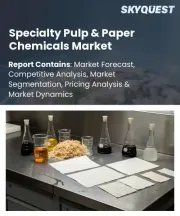
|
시장보고서
상품코드
2129321
펄프 및 제지 공정용 화학제품 시장 예측(-2034년) : 공정 단계별, 화학제품 기능별, 종이 등급별, 형태별, 최종사용자별, 지역별 세계 분석Pulp & Paper Process Chemicals Market Forecasts to 2034 - Global Analysis By Process Stage, Chemical Function, Paper Grade, Form, End User, and Geography |
||||||

Stratistics MRC에 따르면 세계의 펄프 및 제지 공정용 화학제품 시장은 2026년에 164억 달러 규모에 달하고, 예측 기간 동안 CAGR 4.2%로 성장하여 2034년까지 228억 달러에 달할 것으로 전망됩니다.
펄프 및 제지용 공정 화학제품은 생산 효율과 최종 종이의 특성을 향상시키기 위해 펄프화, 표백, 제지, 코팅, 마감 각 공정에서 사용되는 특수 화학제품입니다. 이러한 화학제품에는 표백제, 사이징제, 리텐션제, 소포제, 살균제, 강도 향상제, 코팅용 화학제품, 폐수처리 보조제 등이 포함됩니다. 이들은 침전물과 불순물을 억제하는 동시에 백도, 인쇄 적합성, 강도, 내수성, 기계적 성능 및 생산 일관성 향상에 기여합니다. 펄프 및 제지용 공정 화학 약품은 포장, 인쇄, 티슈, 특수지, 산업용지 제조 전반에 걸쳐 사용되고 있습니다. 고성능 종이 제품 및 지속가능한 생산 공정에 대한 수요 증가가 시장 발전을 주도하고 있습니다.
시장 역학
E-Commerce에 따른 포장지 수요 확대
E-Commerce의 급속한 확대와 지속가능한 포장 솔루션에 대한 소비자의 선호도 증가로 인해 골판지 상자, 카톤, 보호 포장 용도의 포장지 수요가 크게 증가하고 있습니다. 이러한 추세에 따라 펄프 및 제지 제조업체들은 강도 특성을 높이고 이송성을 향상시키는 첨단 화학 약품의 배합을 통해 생산 효율을 최적화하고 있습니다. 제지 공장이 비용과 품질의 균형을 맞추려 하는 가운데, 종이의 강도를 높이고 배수성을 개선하며 재생 섬유 함유율을 높이는 공정용 화학 약품에 대한 수요가 특히 증가하고 있습니다. 플라스틱에서 종이 기반 포장으로의 전환은 밸류체인 전반에 걸쳐 지속적인 성장 기회를 창출하고 있습니다.
원자재 비용과 에너지 가격의 급등
펄프 가격, 에너지 비용 및 화학약품 원료의 공급 상황 변동은 모든 주요 시장에서 공정 화학약품 제조사와 제지 제조사에 중대한 과제를 안겨주고 있습니다. 천연가스 및 전력 가격의 상승은 화학약품 제조와 제지 모두에서 생산 비용을 상승시키고 있습니다. 제지 회사는 투입 비용 상승을 흡수하면서도 이익률을 유지해야 한다는 압박에 직면해 있으며, 그 결과 첨단 화학 기술에 대한 투자 의욕이 제한될 가능성이 있습니다. 펄프 및 제지 생산은 에너지 집약적이기 때문에 에너지 가격 변동에 따른 영향이 더욱 큽니다.
첨단 재활용 및 탈잉크 기술
제지 산업에서 재생 섬유 함유율의 증가와 포장재의 재활용 가능성에 관한 규제 요건의 강화는 첨단 탈잉크 및 불순물 제어 기술에 큰 비즈니스 기회를 창출하고 있습니다. 혁신적인 부유식 탈잉크, 세정식 탈잉크 및 스티키 제어 시스템을 개발하고 있는 공정 화학 기업들은 제지 공장이 순환 경제 모델로 전환되는 과정에서 시장 점유율을 확보할 유리한 위치에 있습니다. 재생 원료의 복잡성이 증가함에 따라, 제품 품질을 유지하면서 재생 섬유 함유율을 극대화하기 위해서는 점점 더 정교한 화학적 솔루션이 요구되고 있습니다.
디지털화로 인한 종이 소비량 감소
디지털 문서, 전자 청구서, 종이 없는 통신 시스템의 도입이 가속화됨에 따라 사무실, 교육 기관, 상업 시설에서의 인쇄용지 및 필기용지 수요가 구조적으로 감소하고 있습니다. 이러한 추세는 신문용지 및 사무용지 부문의 공정용 화학약품 소비량에 영향을 미치며, 해당 제품 카테고리의 생산능력 합리화를 불가피하게 만들고 있습니다. 포장용지 및 티슈 용지에는 성장 기회가 있지만, 업계의 재편과 생산능력의 합리화는 기존 종이 종류에 의존해 온 화학약품 공급업체들에게 과제가 되고 있습니다.
신종 코로나바이러스(COVID-19)의 영향:
COVID-19(COVID-19) 팬데믹은 펄프 및 제지 공정 화학제품 시장에 복잡한 영향을 미쳤습니다. 위생에 대한 인식 제고와 E-Commerce의 성장으로 티슈 및 포장용지 수요는 급증한 반면, 재택근무의 확산으로 사무용지 소비가 감소함에 따라 인쇄용지 및 필기용지 수요는 크게 줄었습니다. 공급망 혼란과 인력 부족으로 인해 화학제품의 공급 상황과 제지 공장 가동에도 일시적인 영향이 발생했습니다. 팬데믹 이후 기간에는 포장용지 및 티슈 용도에서 지속적인 성장이 나타나고 있으며, 제지용 화학약품 제조업체들은 변화하는 시장 수요에 대응하기 위해 생산능력을 확대하고 제품 포트폴리오를 강화하고 있습니다.
예측 기간 동안 제지 부문이 가장 큰 시장 규모를 차지할 것으로 예상됩니다.
제지 부문은 예측 기간 동안 가장 큰 시장 점유율을 차지할 것으로 예상됩니다. 이는 습식 제지 공정이 모든 종이 종류에서 생산 공정 중 화학약품 소비량이 가장 많은 공정이기 때문입니다. 리텐션제, 탈수 보조제, 사이징제 및 강도 첨가제는 필요한 종이 특성을 달성하고 연속 생산 공정에서 기계의 생산성을 최적화하는 데 필수적입니다. 제지 기계의 연속 가동과 원료 배합의 복잡화가 진행되고 있는 것이 이 부문에서 화학 약품에 대한 지속적인 수요를 견인하고 있습니다. 공정 최적화 요건으로 인해 화학약품 소비량은 일정하게 유지되고 있습니다.
재활용 분야는 예측 기간 동안 가장 높은 연평균 성장률(CAGR)을 보일 것으로 예상됩니다.
예측 기간 동안 재활용 부문은 주요 시장에서 재생 섬유의 이용 확대와 포장재의 재활용 가능성에 관한 규제 요건을 배경으로 가장 높은 성장률을 보일 것으로 전망됩니다. 제지 회사들은 회수된 종이의 처리 비율을 높이기 위해 첨단 재활용 기술에 투자하고 있으며, 이로 인해 탈잉크용 화학 약품, 점착 물질 억제제 및 불순물 제거 시스템에 대한 수요가 발생하고 있습니다. 환경 의식의 고조와 기업의 지속가능성 목표로 인해 모든 주요 지역에서 도입이 가속화되고 있습니다. 순환 경제로의 전환은 이 부문의 성장 궤도를 강력하게 뒷받침하고 있습니다.
가장 큰 점유율을 차지하는 지역:
예측 기간 동안 아시아태평양은 세계 제지 생산에서 지배적인 위치를 차지하고 있어 최대 시장 점유율을 유지할 것으로 예상됩니다. 특히 중국, 인도, 인도네시아는 전 세계 종이 및 판지 생산의 상당 부분을 차지하고 있습니다. 이 국가들에는 세계 최대 규모의 제지 시설이 있으며, 모든 생산 단계에서 대량의 화학 약품이 소비되고 있습니다. 국내 소비 확대와 유리한 생산 비용이 이 지역의 시장 내 주도적 위치를 더욱 공고히 하고 있습니다. 산업 발전을 지원하는 정부의 노력 또한 이 지역의 시장 지위를 강화하고 있습니다.
CAGR이 가장 높은 지역:
예측 기간 동안 아시아태평양은 급속한 산업화, 가처분 소득 증가, 그리고 소비재 및 E-Commerce 분야의 포장 수요 증가에 힘입어 가장 높은 CAGR을 보일 것으로 예상됩니다. 중국, 인도 및 동남아시아 국가들은 종이 생산능력을 확대하는 동시에 첨단 공정 제어 시스템을 도입하여 기존 시설의 현대화를 추진하고 있습니다. 양호한 투자 환경과 포장 제품 및 티슈 제품에 대한 국내 수요 확대가 해당 지역 전체의 시장 성장을 가속화하고 있습니다.
무료 맞춤 서비스:
본 보고서를 구매하신 모든 고객께서는 다음 무료 맞춤화 옵션 중 하나를 이용하실 수 있습니다:
- 기업 프로파일링
- 추가 시장 참여 기업(최대 3개사)에 대한 종합적인 프로파일링
- 주요 기업(최대 3개사)에 대한 SWOT 분석
- 고객의 요청에 따라 주요 국가의 시장 추정 및 예측, 그리고 CAGR(주 : 실현 가능성에 따라 달라질 수 있음)
- 제품 포트폴리오, 지리적 확장, 전략적 제휴를 기반으로 한 주요 기업 벤치마킹
목차
제1장 주요 요약
제2장 조사 프레임워크
제3장 시장 역학과 동향 분석
제4장 경쟁 환경과 전략적 평가
제5장 세계의 펄프 및 제지 공정용 화학제품 시장 : 공정 단계별
제6장 세계의 펄프 및 제지 공정용 화학제품 시장 : 화학 기능별
제7장 세계의 펄프 및 제지 공정용 화학제품 시장 : 종이 등급별
제8장 세계의 펄프 및 제지 공정용 화학제품 시장 : 형태별
제9장 세계의 펄프 및 제지 공정용 화학제품 시장 : 최종사용자별
제10장 세계의 펄프 및 제지 공정용 화학제품 시장 : 지역별
제11장 전략적 시장 정보
제12장 업계 동향과 전략적 대처
제13장 기업 개요
KSM 26.09.18According to Stratistics MRC, the Global Pulp & Paper Process Chemicals Market is accounted for $16.4 billion in 2026 and is expected to reach $22.8 billion by 2034 growing at a CAGR of 4.2% during the forecast period. Pulp and paper process chemicals are specialty chemicals used throughout pulping, bleaching, papermaking, coating, and finishing processes to improve production efficiency and final paper properties. These chemicals include bleaching agents, sizing agents, retention aids, defoamers, biocides, strength additives, coating chemicals, and drainage aids. They help improve brightness, printability, strength, water resistance, machine performance, and production consistency while controlling deposits and contaminants. Pulp and paper process chemicals are used across packaging, printing, tissue, specialty paper, and industrial paper manufacturing. Increasing demand for high-performance paper products and sustainable production processes is driving market development.
Market Dynamics
Driver:
Growing packaging paper demand from e-commerce
The rapid expansion of e-commerce and growing consumer preference for sustainable packaging solutions are significantly increasing demand for packaging paper grades across corrugated boxes, cartons, and protective packaging applications. This trend is driving pulp and paper mills to optimize production efficiency through advanced chemical formulations that enhance strength properties and improve runnability. Process chemicals that enhance paper strength, improve drainage, and enable higher recycled fiber content are particularly in demand as mills seek to balance cost and quality. The shift from plastic to paper-based packaging is creating sustained growth opportunities throughout the value chain.
Restraint:
Rising raw material costs and energy prices
Volatility in pulp prices, energy costs, and chemical feedstock availability is creating significant challenges for process chemical manufacturers and paper producers across all major markets. Rising natural gas and electricity prices are increasing production costs for both chemical manufacturing and paper production. Paper mills face pressure to maintain margins while absorbing higher input costs, potentially limiting their willingness to invest in advanced chemical technologies. The energy-intensive nature of pulp and paper production amplifies the impact of energy price fluctuations.
Opportunity:
Advanced recycling and deinking technologies
Increasing recycled fiber content in paper production and growing regulatory requirements for packaging recyclability are creating substantial opportunities for advanced deinking and contaminant control technologies. Process chemical companies developing innovative flotation deinking, washing deinking, and stickies control systems are well-positioned to capture market share as mills transition toward circular economy models. The growing complexity of recycled furnish requires increasingly sophisticated chemical solutions to maintain product quality while maximizing recycled content.
Threat:
Digitalization reducing paper consumption
The accelerating adoption of digital documentation, e-billing, and paperless communication systems is structurally reducing demand for printing and writing paper grades across offices, educational institutions, and commercial establishments. This trend affects process chemical consumption in newsprint and office paper segments, forcing capacity rationalization in these product categories. Although packaging and tissue grades offer growth opportunities, industry consolidation and capacity rationalization present challenges for chemical suppliers dependent on traditional paper grades.
Covid-19 Impact:
The COVID-19 pandemic had mixed impacts on the pulp and paper process chemicals market. While tissue paper and packaging paper demand surged due to increased hygiene awareness and e-commerce growth, printing and writing paper demand declined significantly as remote work reduced office paper consumption. Supply chain disruptions and labor shortages temporarily affected chemical availability and mill operations. The post-pandemic period has witnessed sustained growth in packaging and tissue applications, with process chemical manufacturers expanding production capacity and strengthening their product portfolios to address evolving market requirements.
The papermaking segment is expected to be the largest during the forecast period
The papermaking segment is expected to account for the largest market share during the forecast period as the wet-end papermaking process represents the most intensive chemical consumption point in the production process across all paper grades. Retention aids, drainage aids, sizing agents, and strength additives are essential for achieving required paper properties and optimizing machine productivity in continuous production operations. The continuous operation of paper machines and the growing complexity of furnish formulations drive sustained chemical demand in this segment. Process optimization requirements ensure consistent chemical consumption.
The recycling segment is expected to have the highest CAGR during the forecast period
Over the forecast period, the recycling segment is predicted to witness the highest growth rate driven by increasing recycled fiber utilization and regulatory requirements for packaging recyclability across major markets. Paper mills are investing in advanced recycling technologies to process higher proportions of recovered paper, creating demand for deinking chemicals, stickies control agents, and contaminant removal systems. Growing environmental consciousness and corporate sustainability targets are accelerating adoption across all major regions. The circular economy transition strongly supports this segment's growth trajectory.
Region with largest share:
During the forecast period, the Asia Pacific region is expected to hold the largest market share owing to its dominant position in global paper production, particularly in China, India, and Indonesia, which collectively account for the majority of worldwide paper and board manufacturing. These countries host the world's largest paper manufacturing facilities with extensive chemical consumption across all production stages. Growing domestic consumption and favorable production costs continue reinforcing regional market leadership. Government initiatives supporting industrial development strengthen the region's market position.
Region with highest CAGR:
Over the forecast period, the Asia Pacific region is anticipated to exhibit the highest CAGR driven by rapid industrialization, rising disposable incomes, and increasing packaging demand across consumer goods and e-commerce sectors. China, India, and Southeast Asian countries are expanding paper production capacity while modernizing existing facilities with advanced process control systems. Favorable investment climate and growing domestic demand for packaging and tissue products are accelerating market expansion across the region.
Key players in the market
Some of the key players in the Pulp & Paper Process Chemicals Market include Kemira Oyj, Solenis LLC, Ecolab Inc., Clariant AG, BASF SE, Evonik Industries AG, Nouryon B.V., Buckman Laboratories International, Inc., Imerys S.A., Omya International AG, Ashland Inc., SNF Group, Dow Inc., ERCO Worldwide, and Cargill, Incorporated.
Key Developments:
In April 2025, Kemira Oyj launched a new family of bio-based retention and drainage aids for packaging paper production. The product line, developed using renewable feedstocks, offers comparable performance to traditional synthetic polymers while reducing carbon footprint by up to 30%. The launch responds to growing demand from paper manufacturers for sustainable process chemicals with lower environmental impact.
In February 2025, Solenis LLC expanded its production capacity for microbial control agents used in papermaking systems. The investment supports growing demand from paper mills for effective biocide programs that enable closed water system operations while maintaining microbial control and preventing slime formation that affects product quality.
Process Stages Covered:
- Pulping
- Bleaching
- Stock Preparation
- Papermaking
- Water Treatment
- Recycling
- Other Process Stages
Chemical Functions Covered:
- Retention & Drainage
- Foam Control
- Deinking
- Scale Control
- Microbial Control
- Other Chemical Functions
Paper Grades Covered:
- Packaging Paper
- Tissue Paper
- Printing & Writing Paper
- Newsprint
- Specialty Paper
- Other Paper Grades
Forms Covered:
- Liquid
- Powder
- Emulsion
- Dispersion
- Solid
- Other Forms
End Users Covered:
- Pulp Mills
- Paper Mills
- Recycled Paper Mills
- Integrated Mills
- Converting Mills
- Other End Users
Regions Covered:
- North America
- United States
- Canada
- Mexico
- Europe
- United Kingdom
- Germany
- France
- Italy
- Spain
- Netherlands
- Belgium
- Sweden
- Switzerland
- Poland
- Rest of Europe
- Asia Pacific
- China
- Japan
- India
- South Korea
- Australia
- Indonesia
- Thailand
- Malaysia
- Singapore
- Vietnam
- Rest of Asia Pacific
- South America
- Brazil
- Argentina
- Colombia
- Chile
- Peru
- Rest of South America
- Rest of the World (RoW)
- Middle East
- Saudi Arabia
- United Arab Emirates
- Qatar
- Israel
- Rest of Middle East
- Africa
- South Africa
- Egypt
- Morocco
- Rest of Africa
What our report offers:
- Market share assessments for the regional and country-level segments
- Strategic recommendations for the new entrants
- Covers Market data for the years 2023, 2024, 2025, 2026, 2027, 2028, 2030, 2032 and 2034
- Market Trends (Drivers, Constraints, Opportunities, Threats, Challenges, Investment Opportunities, and recommendations)
- Strategic recommendations in key business segments based on the market estimations
- Competitive landscaping mapping the key common trends
- Company profiling with detailed strategies, financials, and recent developments
- Supply chain trends mapping the latest technological advancements
Free Customization Offerings:
All the customers of this report will be entitled to receive one of the following free customization options:
- Company Profiling
- Comprehensive profiling of additional market players (up to 3)
- SWOT Analysis of key players (up to 3)
- Regional Segmentation
- Market estimations, Forecasts and CAGR of any prominent country as per the client's interest (Note: Depends on feasibility check)
- Competitive Benchmarking
- Benchmarking of key players based on product portfolio, geographical presence, and strategic alliances
Table of Contents
1 Executive Summary
- 1.1 Market Snapshot and Key Highlights
- 1.2 Growth Drivers, Challenges, and Opportunities
- 1.3 Competitive Landscape Overview
- 1.4 Strategic Insights and Recommendations
2 Research Framework
- 2.1 Study Objectives and Scope
- 2.2 Stakeholder Analysis
- 2.3 Research Assumptions and Limitations
- 2.4 Research Methodology
- 2.4.1 Data Collection (Primary and Secondary)
- 2.4.2 Data Modeling and Estimation Techniques
- 2.4.3 Data Validation and Triangulation
- 2.4.4 Analytical and Forecasting Approach
3 Market Dynamics and Trend Analysis
- 3.1 Market Definition and Structure
- 3.2 Key Market Drivers
- 3.3 Market Restraints and Challenges
- 3.4 Growth Opportunities and Investment Hotspots
- 3.5 Industry Threats and Risk Assessment
- 3.6 Technology and Innovation Landscape
- 3.7 Emerging and High-Growth Markets
- 3.8 Regulatory and Policy Environment
- 3.9 Impact of COVID-19 and Recovery Outlook
4 Competitive and Strategic Assessment
- 4.1 Porter's Five Forces Analysis
- 4.1.1 Supplier Bargaining Power
- 4.1.2 Buyer Bargaining Power
- 4.1.3 Threat of Substitutes
- 4.1.4 Threat of New Entrants
- 4.1.5 Competitive Rivalry
- 4.2 Market Share Analysis of Key Players
- 4.3 Product Benchmarking and Performance Comparison
5 Global Pulp & Paper Process Chemicals Market, By Process Stage
- 5.1 Pulping
- 5.2 Bleaching
- 5.3 Stock Preparation
- 5.4 Papermaking
- 5.5 Water Treatment
- 5.6 Recycling
- 5.7 Other Process Stages
6 Global Pulp & Paper Process Chemicals Market, By Chemical Function
- 6.1 Retention & Drainage
- 6.2 Foam Control
- 6.3 Deinking
- 6.4 Scale Control
- 6.5 Microbial Control
- 6.6 Other Chemical Functions
7 Global Pulp & Paper Process Chemicals Market, By Paper Grade
- 7.1 Packaging Paper
- 7.2 Tissue Paper
- 7.3 Printing & Writing Paper
- 7.4 Newsprint
- 7.5 Specialty Paper
- 7.6 Other Paper Grades
8 Global Pulp & Paper Process Chemicals Market, By Form
- 8.1 Liquid
- 8.2 Powder
- 8.3 Emulsion
- 8.4 Dispersion
- 8.5 Solid
- 8.6 Other Forms
9 Global Pulp & Paper Process Chemicals Market, By End User
- 9.1 Pulp Mills
- 9.2 Paper Mills
- 9.3 Recycled Paper Mills
- 9.4 Integrated Mills
- 9.5 Converting Mills
- 9.6 Other End Users
10 Global Pulp & Paper Process Chemicals Market, By Geography
- 10.1 North America
- 10.1.1 United States
- 10.1.2 Canada
- 10.1.3 Mexico
- 10.2 Europe
- 10.2.1 United Kingdom
- 10.2.2 Germany
- 10.2.3 France
- 10.2.4 Italy
- 10.2.5 Spain
- 10.2.6 Netherlands
- 10.2.7 Belgium
- 10.2.8 Sweden
- 10.2.9 Switzerland
- 10.2.10 Poland
- 10.2.11 Rest of Europe
- 10.3 Asia Pacific
- 10.3.1 China
- 10.3.2 Japan
- 10.3.3 India
- 10.3.4 South Korea
- 10.3.5 Australia
- 10.3.6 Indonesia
- 10.3.7 Thailand
- 10.3.8 Malaysia
- 10.3.9 Singapore
- 10.3.10 Vietnam
- 10.3.11 Rest of Asia Pacific
- 10.4 South America
- 10.4.1 Brazil
- 10.4.2 Argentina
- 10.4.3 Colombia
- 10.4.4 Chile
- 10.4.5 Peru
- 10.4.6 Rest of South America
- 10.5 Rest of the World (RoW)
- 10.5.1 Middle East
- 10.5.1.1 Saudi Arabia
- 10.5.1.2 United Arab Emirates
- 10.5.1.3 Qatar
- 10.5.1.4 Israel
- 10.5.1.5 Rest of Middle East
- 10.5.2 Africa
- 10.5.2.1 South Africa
- 10.5.2.2 Egypt
- 10.5.2.3 Morocco
- 10.5.2.4 Rest of Africa
- 10.5.1 Middle East
11 Strategic Market Intelligence
- 11.1 Industry Value Network and Supply Chain Assessment
- 11.2 White-Space and Opportunity Mapping
- 11.3 Product Evolution and Market Life Cycle Analysis
- 11.4 Channel, Distributor, and Go-to-Market Assessment
12 Industry Developments and Strategic Initiatives
- 12.1 Mergers and Acquisitions
- 12.2 Partnerships, Alliances, and Joint Ventures
- 12.3 New Product Launches and Certifications
- 12.4 Capacity Expansion and Investments
- 12.5 Other Strategic Initiatives
13 Company Profiles
- 13.1 Kemira Oyj
- 13.2 Solenis LLC
- 13.3 Ecolab Inc.
- 13.4 Clariant AG
- 13.5 BASF SE
- 13.6 Evonik Industries AG
- 13.7 Nouryon B.V.
- 13.8 Buckman Laboratories International, Inc.
- 13.9 Imerys S.A.
- 13.10 Omya International AG
- 13.11 Ashland Inc.
- 13.12 SNF Group
- 13.13 Dow Inc.
- 13.14 ERCO Worldwide
- 13.15 Cargill, Incorporated