

|
시장보고서
상품코드
1994827
건선 치료제 시장(2025-2035년)Psoriasis Drugs Market, 2025 - 2035: Opportunities, Challenges, Strategies & Forecasts |
||||||

요약:
건선은 전 세계적으로 1억 2,500만 명 이상이 앓고 있는 만성 염증성 피부질환으로, 미국에서는 800만 명 이상이 앓고 있습니다. 두껍고 붉은 색의 비늘을 동반한 반점이 특징이며, 가려움증과 통증을 유발하고 중증도에 관계없이 환자에게 신체적, 심리사회적, 경제적으로 큰 부담을 주고 있습니다. 피부, 모발, 손톱의 외모에 대한 대중의 인식과 기대가 높아지면서 보다 효과적이고 지속적인 치료법을 원하는 환자들이 늘고 있습니다.
이 질환의 관리는 평생에 걸쳐 이루어지며, 과도한 피부 세포의 턴오버를 억제하고 염증을 감소시켜 완치를 달성하는 데 중점을 둡니다. 치료 방법의 선택은 질병의 유형, 체표면적에 대한 관여도 및 전반적인 중증도에 따라 달라집니다. 경증의 경우 보통 외용제로 관리하지만, 중등도에서 중증의 건선에서는 경구용 전신요법, 생물학적 제제 또는 병용요법이 필요한 경우가 많습니다. 지난 10년간 건선 치료는 광범위한 면역 억제에서 고도의 선택적 치료로 전환되었습니다. 기존 생물학적 제제(TNF, IL-12/23, IL-17, IL-23 억제제) 외에도 경구용 저분자 약물(특히 TYK2 억제제)과 차세대 생물학적 제제가 등장하고 있습니다. 이러한 혁신적인 치료법은 전례 없는 완벽한 피부 증상 소실률(PASI 100), 반응 기간 연장, 편의성 및 안전성 향상을 실현하고 있습니다. 그 결과, 시장 성장이 가속화되고 치료 대상 환자층이 확대되는 한편, 건선의 장기적인 질환 개선 효과에 대한 보험사 및 의사의 기대가 크게 높아졌습니다.
SNS Research의 추정에 따르면, 건선 치료제 시장은 2025년 말까지 약 200억 달러의 매출을 기록할 것으로 예측됩니다. 약물의 안정성, 경쟁사 간 특허 분쟁 등의 문제가 있지만, 후기 개발 단계에 있는 여러 신약에 힘입어 예측 기간 동안 시장은 큰 폭의 성장을 이룰 것으로 보입니다.
건선 치료제 시장 : 2025-2035년 - 기회, 과제, 전략 및 예측 보고서는 건선 질환, 치료제 유형, 투여 기술, 주요 동향, 시장 성장 촉진요인, 과제, 투자 잠재력, 주요 치료제, 의약품 개발 파이프라인, 기회, 미래 로드맵, 가치사슬, 에코시스템 참여자 프로파일 및 전략 등 건선 치료제 시장에 대한 상세한 평가를 제공합니다. 시스템 참여자 프로파일 및 전략 등 건선 치료제 생태계에 대한 상세한 평가를 제시하고 있습니다. 또한 이 보고서는 2025년부터 2035년까지 건선 치료제 시장 규모 예측을 제시합니다. 예측은 4개 치료 분류, 3개 투여 경로, 4개 유통 채널, 5개 지역, 26개 주요 국가별로 세분화되어 있습니다.
다룰 주제:
본 보고서에서는 다음과 같은 주제를 다루고 있습니다.
- 건선 치료제 생태계
- 시장 성장 촉진요인과 장벽
- 건선 질환 및 주요 동향
- 주요 약물군 및 주요 건선 치료제 분석
- 향후 의약품 개발 파이프라인
- 건선 치료제 전달 기술
- 산업 로드맵과 가치사슬
- 건선치료제 개발기업을 포함한 주요 생태계 진입기업 66개사 개요와 전략
- 생태계 진입기업에 대한 전략적 제안
- 2025년부터 2035년까지 시장 분석 및 예측
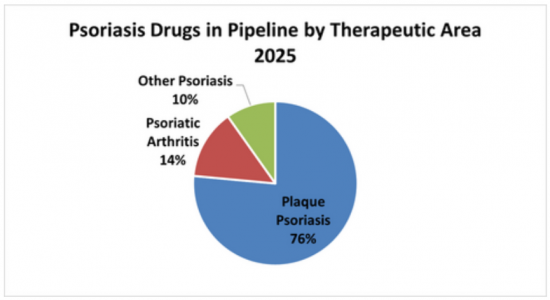
Sample Figure : 치료영역별 건선치료제 개발 파이프라인 내역(%)
본 보고서에는 보고서에서 제시된 모든 수치 예측에 대한 정량적 데이터와 함께 건선 치료제 시장의 임상 개발 파이프라인을 포괄하는 엑셀 데이터 시트와 51개의 유망한 후보 약물을 프로파일링한 엑셀 시트가 함께 제공됩니다.
주요 조사 결과:
본 보고서의 주요 조사 결과는 다음과 같습니다.
- 건선 치료제 세계 시장 규모는 질병 유병률 증가, 진단율 증가, 첨단 치료법에 대한 접근성 확대로 인해 2025년 말까지 196억 달러에 이를 것으로 예측됩니다. 건선의 만성적이고 반복적인 특성을 고려할 때, 장기적인 치료 수요는 안정적이어서 2030년 이후에도 꾸준한 시장 성장을 뒷받침할 것으로 예측됩니다.
- 바이오의약품은 여전히 건선 치료제 시장의 근간을 이루고 있으며, 특히 IL-17 및 IL-23 억제제인 스카이리지(성분명: 리산키주맙)와 트렘피야(성분명: 글리벡)는 우수한 효능과 지속적 반응 프로파일로 인해 지속적으로 채택이 확대되고 있습니다.
- 미국에서는 바이오시밀러 시장 침투율이 여전히 제한적입니다. 상호 교환성 장벽, 소송의 장기화 및 계약 전략으로 인해 FDA 승인을 받은 여러 바이오시밀러의 실용화가 늦어지고 있으며, 그 결과 바이오의약품의 고가 유지로 이어져 비용 측면에서의 경쟁 확대가 지연되고 있습니다.
- 파이프라인 활동은 차세대 면역조절 약물에 점점 더 집중되고 있으며, 전통적인 TNF 및 IL-12/23 프로그램에서 더 새롭고 수익성이 높은 메커니즘으로 전략적 초점이 이동하고 있습니다. 개발 노력은 차세대 IL-23 제제, 선택적 IL-17 경로 조절제, 특히 경구용 TYK2 억제제에 집중하고 있습니다. 비주사 요법에 대한 환자들의 강력한 요구로 인해, 이들은 여전히 주요 상업적 초점이 되고 있습니다. TNF 억제제는 건선성 관절염 및 장기간 병세가 안정된 환자에서 임상적 유용성을 유지하고 있지만, 더 이상 주요 R&D 성장 동력이 되지 못하고 있습니다.
- 바이오로직스를 넘어 경구 및 외용제 분야에서도 혁신이 가속화되고 있습니다. 현재 진행 중인 프로그램에는 TYK2 억제제, 선택적 JAK 경로 조절제, 2세대 PDE4 억제제, 비타민D 관련 또는 병용 외용제 플랫폼, 복약 순응도 향상과 지속적 관해를 목표로 하는 새로운 다중 기전 요법 등이 포함됩니다.
- 면역학 포트폴리오의 높은 전략적 가치를 반영하여 업계의 재편이 더욱 심화되고 있습니다. 합병, 인수, 플랫폼 제휴는 경쟁 우위를 확보하기 위한 핵심 요소로, 주요 면역학 관련 기업들 사이에서 파이프라인 재구축과 다각화를 가속화하고 있습니다.
본 보고서가 답변하는 주요 질문:
본 보고서에서는 다음과 같은 주요 질문에 대한 답변을 제공합니다.
- 건선 치료제 시장 규모는 어느 정도인가?
- 그 성장에 영향을 미치는 트렌드, 과제, 장벽은 무엇인가?
- 부문 및 지역별로 생태계가 어떻게 진화하고 있는가?
- 2030년 시장 규모는 어느 정도이며, 성장률은?
- 가장 높은 성장률을 보일 것으로 예상되는 국가 및 하위 시장
- 건선 치료에서 바이오시밀러 의약품의 전망은 어떤가?
- 건선 치료제 시장 규모는 어느 정도인가?
- 주요 시장 진출기업은 누구이며, 그 전략은 무엇인가?
- 오리지널 의약품의 특허 만료가 시장에 미치는 영향은?
- 건선 치료제 제조업체는 경쟁을 피하기 위해 어떤 전략을 채택해야 하는가?
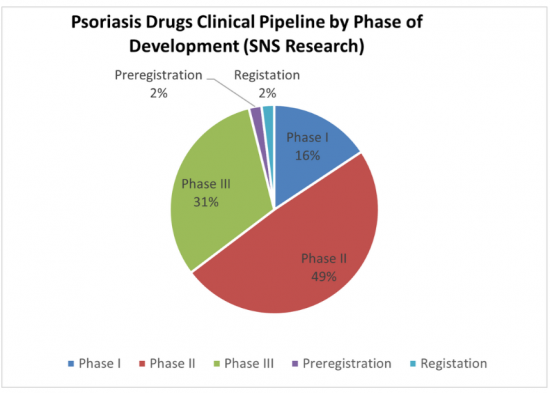
Sample Figure : 개발 단계별 건선치료제 파이프라인 후보물질 분포(%)
예측 세분화:
아래 각 하위 시장과 그 하위 카테고리에 대한 시장 예측을 제공합니다.
치료 분야
- TNF 억제제
- 인터루킨
- 비타민 D 유사체 및 외용 스테로이드
- 기타
투여 경로
- 외용
- 경구
- 비경구
유통 채널
- 진료현장/클리닉
- 소매 약국
- 디지털 약국
- 소비자 직접 판매(D2C)
지역 시장
- 아시아태평양
- 유럽
- 중동 및 아프리카
- 북미
- 라틴아메리카 및 중남미
국가·지역
- 호주
- 브라질
- 캐나다
- 중국
- 이집트
- 프랑스
- 독일
- 그리스
- 인도
- 이스라엘
- 이탈리아
- 일본
- 멕시코
- 네덜란드
- 폴란드
- 포르투갈
- 러시아
- 사우디아라비아
- 남아프리카공화국
- 한국
- 스페인
- 스위스
- 대만
- 튀르키예
- 영국
- 미국
기업 및 단체 목록:
본 보고서에서 언급된 모든 기업 및 단체는 다음과 같습니다.
- Abbott Laboratories
- AbbVie
- AbGenomics International
- Acelyrin
- Aclaris Therapeutics
- Actelion Pharmaceuticals
- Akeso Biopharma
- Akros Pharma
- Akzo Nobel Group
- Almirall
- AltruBio
- Alumis(구 Esker Therapeutics)
- Alvotech
- Amgen
- Anacor Pharmaceuticals
- AnaptysBio
- Arcutis Biotherapeutics
- Artax Biopharma
- Artelo Biosciences
- AstraZeneca
- Azora Therapeutics
- Bausch & Lomb
- Bausch Health
- Bausch Health Ireland Limited
- Bayer
- Biocad
- Biocon Biologics
- Biofrontera AG
- Biogen
- BioMimetix
- Biosintez
- Bio-Thera Solutions
- BMS(Bristol-Myers Squibb)
- Boehringer Ingelheim
- Boston Pharmaceuticals
- Botanix Pharmaceuticals
- Cadila Healthcare
- Cadila Pharmaceuticals
- Can-Fite BioPharma
- Cantargia
- Celgene Corporation
- Celltrion Healthcare
- Cerbios-Pharma
- Cipher Pharmaceuticals
- Coherus BioSciences
- Dermata Therapeutics
- DICE Therapeutics(Eli Lilly가 인수)
- Dr. Reddy's Laboratories
- Dusa Pharmaceuticals
- Eli Lilly and Company
- Enavate Sciences
- Encore Dermatology
- EPI Health
- European Medicines Agency(EMA)
- FDA
- Galderma
- Galectin Therapeutics
- Glenmark Pharmaceuticals
- GSK(GlaxoSmithKline)
- Hanwha Pharmaceutical
- Immutep
- Innovent Biologics
- InSite Vision
- Issar Pharma
- Janssen Biotech
- Janssen Pharmaceutical
- Janssen Research & Development
- Japan Tobacco(JT)
- Jiangsu Hengrui Pharmaceuticals Co.
- Johnson & Johnson
- Kyongbo Pharm
- Kyowa Kirin
- LEO Pharma
- Lipidor AB
- Mabpharm
- Maruho
- Mayne Pharma Group
- MC2 Therapeutics
- Meiji Seika Pharma
- Merck
- Merck & Co.
- MIT
- MoonLake Immunotherapeutics
- Mylan
- Nestle Skin Health
- Novartis
- Ono Pharmaceutical
- Ortho Dermatologics
- Pelthos Therapeutics(Ligand Pharmaceuticals 산하)
- Pfizer
- Pharmalucence
- Photogen Technologies Inc.
- Pierre Fabre Laboratories
- Pola Pharma
- Portal Instruments
- Promius Pharma
- Protagonist Therapeutics
- Provectus Biopharmaceuticals
- Rani Therapeutics
- Samsung
- Samsung Bioepis
- Sandoz
- Sanofi
- SFA Therapeutics
- Shire
- Sudo Biosciences
- Sun Pharma
- Suzhou Zelgen Biopharmaceuticals
- Takeda
- Taro Pharmaceutical Industries
- Teva
- Theravance Biopharma
- U.S. Department of Justice
- U.S. Federal Trade Commission
- UCB
- UNION Therapeutics
- URL Pharma
- Vanda Pharmaceuticals
- Viatris
- Vyne Therapeutics
- XBiotech
- Xbrane Biopharma
- Yangji Pharmaceutical
- Zydus Group
Synopsis:
Psoriasis is a chronic inflammatory skin disorder affecting more than 125 million people globally, including over 8 million in the United States. Characterized by thick, reddened, scaly plaques that cause itching and pain, the disease imposes substantial physical, psychosocial, and economic burdens across all severity levels. Growing public awareness and rising expectations around skin, hair, and nail appearance have increased the number of patients seeking more effective and durable treatment options.
Disease management is lifelong and focuses on achieving remission by slowing excessive skin-cell turnover and reducing inflammation. Treatment selection depends on disease type, body-surface involvement, and overall severity. Mild disease is typically managed with topical therapies, whereas moderate-to-severe psoriasis often requires oral systemics, biologics, or combination approaches. Over the past decade, psoriasis treatment has shifted from broad immunosuppression to highly selective therapies. Established biologics (TNF, IL-12/23, IL-17, and IL-23 inhibitors) have been complemented by oral small molecules (notably TYK2 inhibitors) and next-generation biologics. These innovations are achieving unprecedented complete skin clearance rates (PASI 100), extended duration of response, and improved convenience and safety profiles. As a result, they are driving stronger market growth, expanding the treatable patient population, and significantly increasing payer and physician expectations for long-term disease modification in psoriasis.
SNS Research estimates that the psoriasis drugs market will account for nearly $20 Billion in revenue by the end of 2025. Despite challenges relating to drug stability and patent disputes amongst competition, the market is poised for significant growth over the forecast period, fueled by several novel agents advancing through late-stage development.
The "Psoriasis Drugs Market: 2025 - 2035 - Opportunities, Challenges, Strategies & Forecasts" report presents an in-depth assessment of the psoriasis drugs ecosystem including psoriasis disorders, types of treatment options, delivery technologies, key trends, market drivers, challenges, investment potential, leading therapies, drug development pipeline, opportunities, future roadmap, value chain, ecosystem player profiles and strategies. The report also presents market size forecasts for psoriasis drugs from 2025 through to 2035. The forecasts are further segmented by 4 therapeutic classes, 3 routes of administration, 4 distribution channels, 5 regions and 26 leading countries.
Topics Covered:
The report covers the following topics:
- Psoriasis drugs ecosystem
- Market drivers and barriers
- Psoriasis disorders and key trends
- Analysis of key drug classes and leading psoriasis drugs
- Future drug development pipeline
- Psoriasis drug delivery technologies
- Industry roadmap and value chain
- Profiles and strategies of 66 leading ecosystem players, including psoriasis drug developers
- Strategic recommendations for ecosystem players
- Market analysis and forecasts from 2025 till 2035
Sample Figure: Psoriasis Drugs Development Pipeline Breakdown by Therapeutic Area (%)
The report comes with an associated Excel datasheet suite covering quantitative data from all numeric forecasts presented in the report, as well as an Excel sheet covering clinical drug development pipeline for the psoriasis drugs market, profiling 51 future candidates.
Key Findings:
The report has the following key findings:
- Global psoriasis drug spending is projected to reach $19.6 billion by the end of 2025, driven by rising disease prevalence, increased diagnosis rates, and expanding access to advanced therapies. Given the chronic, relapsing nature of psoriasis, long-term treatment demand remains stable, supporting steady market growth through 2030 and beyond.
- Biologics remain the backbone of the psoriasis therapeutics market, with IL-17 and IL-23 inhibitors, particularly Skyrizi (risankizumab) and Tremfya (guselkumab), continuing to gain adoption due to superior efficacy and durable response profiles.
- In the U.S., biosimilar penetration remains limited. Interchangeability barriers, litigation timelines, and contracting strategies have slowed the real-world uptake of several FDA-approved biosimilars, sustaining premium biologic pricing and delaying broader cost competition.
- Pipeline activity is increasingly concentrated on next-generation immunomodulators, with strategic emphasis shifting away from legacy TNF and IL-12/23 programs and toward newer, higher-yield mechanisms. Development efforts center on next-generation IL-23 agents, selective IL-17 pathway modulators, and especially oral TYK2 inhibitors, which remain a major commercial focus due to strong patient preference for non-injectable therapies. TNF inhibitors retain clinical utility in psoriatic arthritis and long-term stable disease, but they are no longer a primary R&D growth engine.
- Beyond biologics, innovation is accelerating in oral and topical modalities. Active programs include TYK2 inhibitors, selective JAK pathway modulators, second-generation PDE4 inhibitors, vitamin-D-adjacent or combination-topical platforms, and emerging multi-mechanism regimens aimed at improving adherence and sustained clearance.
- Industry consolidation continues to intensify, reflecting the high strategic value of immunology portfolios. Mergers, acquisitions, and platform partnerships remain central to competitive positioning, reshaping pipelines and accelerating diversification among leading immunology players.
Key Questions Answered:
The report provides answers to the following key questions:
- How big is the psoriasis drugs opportunity?
- What trends, challenges and barriers are influencing its growth?
- How is the ecosystem evolving by segment and region?
- What will the market size be in 2030 and at what rate will it grow?
- Which countries and submarkets will see the highest percentage of growth?
- What are the prospects of biosimilar drugs in psoriasis?
- How big is the market for psoriasis drugs?
- Who are the key market players and what are their strategies?
- How will patent expirations of innovator drugs impact the market?
- What strategies should psoriasis drug manufacturers adopt to remain competitive?
Sample Figure: Distribution of Psoriasis Pipeline Candidates by Developmental Phase (%)
Forecast Segmentation:
Market forecasts are provided for each of the following submarkets and their subcategories:
Therapeutic Class
- TNF Inhibitors
- Interleukins
- Vitamin D Analogues & Topical Steroids
- Others
Route of Administration
- Topical
- Oral
- Parenteral
Distribution Channel
- Point-of-Care / Clinic
- Retail Pharmacies
- Digital Pharmacies
- Direct to Consumer (D2C)
Regional Markets
- Asia Pacific
- Europe
- Middle East & Africa
- North America
- Latin & Central America
Country Markets
- Australia
- Brazil
- Canada
- China
- Egypt
- France
- Germany
- Greece
- India
- Israel
- Italy
- Japan
- Mexico
- Netherlands
- Poland
- Portugal
- Russia
- Saudi Arabia
- South Africa
- South Korea
- Spain
- Switzerland
- Taiwan
- Turkey
- UK
- USA
List of Companies & Organizations:
All the companies and organizations mentioned in the report are listed below:
- Abbott Laboratories
- AbbVie
- AbGenomics International
- Acelyrin
- Aclaris Therapeutics
- Actelion Pharmaceuticals
- Akeso Biopharma
- Akros Pharma
- Akzo Nobel Group
- Almirall
- AltruBio
- Alumis (Previously Esker Therapeutics)
- Alvotech
- Amgen
- Anacor Pharmaceuticals
- AnaptysBio
- Arcutis Biotherapeutics
- Artax Biopharma
- Artelo Biosciences
- AstraZeneca
- Azora Therapeutics
- Bausch & Lomb
- Bausch Health
- Bausch Health Ireland Limited
- Bayer
- Biocad
- Biocon Biologics
- Biofrontera AG
- Biogen
- BioMimetix
- Biosintez
- Bio-Thera Solutions
- BMS (Bristol-Myers Squibb)
- Boehringer Ingelheim
- Boston Pharmaceuticals
- Botanix Pharmaceuticals
- Cadila Healthcare
- Cadila Pharmaceuticals
- Can-Fite BioPharma
- Cantargia
- Celgene Corporation
- Celltrion Healthcare
- Cerbios-Pharma
- Cipher Pharmaceuticals
- Coherus BioSciences
- Dermata Therapeutics
- DICE Therapeutics (Acquired by Eli Lilly)
- Dr. Reddy's Laboratories
- Dusa Pharmaceuticals
- Eli Lilly and Company
- Enavate Sciences
- Encore Dermatology
- EPI Health
- European Medicines Agency (EMA)
- FDA
- Galderma
- Galectin Therapeutics
- Glenmark Pharmaceuticals
- GSK (GlaxoSmithKline)
- Hanwha Pharmaceutical
- Immutep
- Innovent Biologics
- InSite Vision
- Issar Pharma
- Janssen Biotech
- Janssen Pharmaceutical
- Janssen Research & Development
- Japan Tobacco (JT)
- Jiangsu Hengrui Pharmaceuticals Co.
- Johnson & Johnson
- Kyongbo Pharm
- Kyowa Kirin
- LEO Pharma
- Lipidor AB
- Mabpharm
- Maruho
- Mayne Pharma Group
- MC2 Therapeutics
- Meiji Seika Pharma
- Merck
- Merck & Co.
- MIT
- MoonLake Immunotherapeutics
- Mylan
- Nestle Skin Health
- Novartis
- Ono Pharmaceutical
- Ortho Dermatologics
- Pelthos Therapeutics (Part of Ligand Pharmaceuticals)
- Pfizer
- Pharmalucence
- Photogen Technologies Inc.
- Pierre Fabre Laboratories
- Pola Pharma
- Portal Instruments
- Promius Pharma
- Protagonist Therapeutics
- Provectus Biopharmaceuticals
- Rani Therapeutics
- Samsung
- Samsung Bioepis
- Sandoz
- Sanofi
- SFA Therapeutics
- Shire
- Sudo Biosciences
- Sun Pharma
- Suzhou Zelgen Biopharmaceuticals
- Takeda
- Taro Pharmaceutical Industries
- Teva
- Theravance Biopharma
- U.S. Department of Justice
- U.S. Federal Trade Commission
- UCB
- UNION Therapeutics
- URL Pharma
- Vanda Pharmaceuticals
- Viatris
- Vyne Therapeutics
- XBiotech
- Xbrane Biopharma
- Yangji Pharmaceutical
- Zydus Group


