|
시장보고서
상품코드
1493585
란셋 시장 - 세계 산업 규모, 점유율, 동향, 기회, 예측 : 유형별, 용도별, 최종사용자별, 지역별, 경쟁별(2019-2029년)Lancets Market - Global Industry Size, Share, Trends, Opportunity, and Forecast, Segmented By Type, By Application, By End User, By Region, and By Competition, 2019-2029F |
||||||

란셋 세계 시장 규모는 2023년 23억 9,000만 달러로 2029년까지 예측 기간 동안 9.83%의 CAGR을 기록할 것으로 예상됩니다.
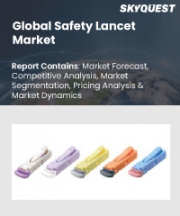
란셋은 진단 검사 및 모니터링 목적으로 소량의 혈액 샘플을 채취하기 위해 피부를 천자하는 데 사용되는 의료기기입니다. 일반적으로 의료 환경, 실험실 및 개인이 혈당 및 기타 건강 매개 변수를 자체 모니터링하는 데 사용됩니다. 란셋은 일반적으로 당뇨병 환자의 혈당 모니터링에 사용되며, 혈당을 자주 모니터링하는 것은 당뇨병 관리에 필수적입니다. 또한 임상 현장에서는 진단 검사, 선별 프로그램, 콜레스테롤 수치, 헤모글로빈 수치, 감염과 같은 다양한 건강 매개 변수를 모니터링하는 데 사용됩니다. 란셋 본체는 바늘을 고정하고 안전하고 통제된 피부 천자를 용이하게 하는 소형 핸드헬드 장치입니다. 란셋 본체는 인체공학적 디자인과 안전 메커니즘을 갖추고 있어 사용자의 편안함을 높이고 우발적 인 바늘 찔림 손상의 위험을 최소화 할 수 있습니다. 많은 란셋은 바늘에 찔리는 손상을 방지하고 교차 오염의 위험을 최소화하기 위해 개폐식 바늘, 보호 캡, 보호막과 같은 안전 메커니즘을 내장하고 있습니다. 이러한 안전 기능은 사용 후 자동으로 또는 간단한 트리거 메커니즘으로 작동하여 바늘을 보호하고 혈액 매개 병원체에 대한 노출을 줄입니다.
| 시장 개요 | |
|---|---|
| 예측 기간 | 2025-2029년 |
| 시장 규모 : 2023년 | 23억 9,000만 달러 |
| 시장 규모 : 2029년 | 42억 달러 |
| CAGR : 2024-2029년 | 9.83% |
| 급성장 부문 | 안전 란셋 |
| 최대 시장 | 북미 |
세계 인구의 고령화에 따라 정기적인 모니터링이 필요한 만성 질환 및 병태의 유병률이 증가하고 있습니다. 란셋은 당뇨병 환자의 혈당 모니터링과 노인의 다양한 진단 검사에 필수적입니다. 기술 발전: 란셋의 디자인과 기술에 대한 끊임없는 혁신은 더 안전하고 효율적이며 사용하기 쉬운 란셋으로 이어집니다. 수납 가능한 바늘, 조정 가능한 삽입 깊이, 자동 랜싱 장치 등의 발전은 환자의 편안함과 순응도를 향상시켜 시장 성장을 촉진할 것입니다. 만성 질환의 조기 발견 및 관리의 중요성에 대한 인식이 높아지면서 란셋에 대한 수요가 증가하고 있습니다. 당뇨병 및 심혈관 질환과 같은 검진 프로그램을 추진하는 의료 기관 및 공중 보건 이니셔티브는 시장 성장을 더욱 촉진할 것입니다. 의료의 분산화와 현장 검사로의 전환은 란셋에 대한 수요를 촉진하고 있습니다. 란셋은 전통적인 검사실 환경이 아닌 곳에서 시행되는 신속 진단 검사를 위한 채혈에 필수적인 구성요소이기 때문입니다.
주요 시장 촉진요인
기술의 발전
인식 제고 및 검진 프로그램 증가
POCT(Point-of-Care Test)에 대한 수요 증가
주요 시장 과제
바늘에 찔린 손상과 안전에 대한 우려
경쟁과 가격 압력
주요 시장 동향
홈 헬스케어
목차
제1장 개요
제2장 조사 방법
제3장 주요 요약
제4장 고객의 소리
제5장 세계의 란셋 시장 전망
- 시장 규모와 예측
- 금액별
- 시장 점유율과 예측
- 유형별(안전 란셋, 표준 란셋, 특수 란셋)
- 용도별(글루코스 검사, 헤모글로빈 검사, 응고 검사, 기타 용도)
- 최종사용자별(병원·진료소, 재택 케어 시설, 기타)
- 지역별
- 기업별(2023)
- 시장 맵
제6장 북미의 란셋 시장 전망
- 시장 규모와 예측
- 금액별
- 시장 점유율과 예측
- 유형별
- 용도별
- 최종사용자별
- 국가별
- 북미 : 국가별 분석
- 미국
- 캐나다
- 멕시코
제7장 유럽의 란셋 시장 전망
- 시장 규모와 예측
- 금액별
- 시장 점유율과 예측
- 유형별
- 용도별
- 최종사용자별
- 국가별
- 유럽 : 국가별 분석
- 독일
- 영국
- 이탈리아
- 프랑스
- 스페인
제8장 아시아태평양의 란셋 시장 전망
- 시장 규모와 예측
- 금액별
- 시장 점유율과 예측
- 유형별
- 용도별
- 최종사용자별
- 국가별
- 아시아태평양 : 국가별 분석
- 중국
- 인도
- 일본
- 한국
- 호주
제9장 남미의 란셋 시장 전망
- 시장 규모와 예측
- 금액별
- 시장 점유율과 예측
- 유형별
- 용도별
- 최종사용자별
- 국가별
- 남미 : 국가별 분석
- 브라질
- 아르헨티나
- 콜롬비아
제10장 중동 및 아프리카의 란셋 시장 전망
- 시장 규모와 예측
- 금액별
- 시장 점유율과 예측
- 유형별
- 용도별
- 최종사용자별
- 국가별
- 중동 및 아프리카 : 국가별 분석
- 남아프리카공화국
- 사우디아라비아
- 아랍에미리트
제11장 시장 역학
- 성장 촉진요인
- 과제
제12장 시장 동향과 발전
- 합병 및 인수(해당되는 경우)
- 제품 발매(있는 경우)
- 최근의 동향
제13장 Porter's Five Forces 분석
- 업계내 경쟁
- 신규 참여의 가능성
- 공급업체의 능력
- 고객의 능력
- 대체품의 위협
제14장 경쟁 상황
- F. Hoffmann-La Roche Ltd
- Ypsomed AG
- B. Braun SE
- Terumo Medical Corporation
- Owen Mumford Ltd
- HTL-STREFA S.A.(MTD Medical Technology and Devices S.p.A.)
- ARKRAY, Inc
- Sarstedt AG & Co. KG
- Medline Industries, Inc.
제15장 전략적 제안
제16장 조사 회사 소개 및 면책사항
ksm 24.06.19Global Lancets Market was valued at USD 2.39 billion in 2023 and will see an impressive growth in the forecast period at a CAGR of 9.83% through 2029. Lancets are medical devices used for puncturing the skin to obtain a small blood sample for diagnostic testing or monitoring purposes. They are commonly used in healthcare settings, laboratories, and by individuals for self-monitoring of blood glucose levels and other health parameters. Lancets are commonly used for blood glucose monitoring in individuals with diabetes, where frequent monitoring of blood glucose levels is essential for diabetes management. They are also used in clinical settings for diagnostic testing, screening programs, and monitoring of various health parameters such as cholesterol levels, hemoglobin levels, and infectious diseases. The lancet body is a small, handheld device that holds the needle and facilitates safe and controlled skin puncture. It may feature ergonomic designs and safety mechanisms to enhance user comfort and minimize the risk of accidental needlestick injuries. Many lancets incorporate safety mechanisms such as retractable needles, protective caps, or shields to prevent needlestick injuries and minimize the risk of cross-contamination. These safety features activate automatically after use or with a simple trigger mechanism to shield the needle and reduce exposure to bloodborne pathogens.
| Market Overview | |
|---|---|
| Forecast Period | 2025-2029 |
| Market Size 2023 | USD 2.39 Billion |
| Market Size 2029 | USD 4.20 Billion |
| CAGR 2024-2029 | 9.83% |
| Fastest Growing Segment | Safety Lancets |
| Largest Market | North America |
As the global population ages, there is a higher prevalence of chronic diseases and conditions that require regular monitoring. Lancets are crucial for blood glucose monitoring in diabetic patients and for various diagnostic tests in the elderly population. Technological Advancements: Continuous innovations in lancet design and technology lead to safer, more efficient, and user-friendly lancets. Advancements such as retractable needles, adjustable penetration depths, and automatic lancing devices improve patient comfort and compliance, driving market growth. Growing awareness about the importance of early detection and management of chronic diseases contributes to the demand for lancets. Healthcare organizations and public health initiatives promoting screening programs for conditions like diabetes and cardiovascular diseases further fuel market growth. The shift towards decentralized healthcare and point-of-care testing drives the demand for lancets, as they are integral components of blood collection for rapid diagnostic tests performed outside traditional laboratory settings.
Key Market Drivers
Technological Advancements
Lancets with retractable needles feature mechanisms that retract the needle into the lancet body after use, reducing the risk of accidental needlestick injuries and preventing cross-contamination. Advanced lancets allow users to adjust the penetration depth of the needle based on individual skin thickness and sensitivity. This customization improves user comfort and ensures optimal blood sample collection. Automatic lancing devices automate the blood sampling process by spring-loading the lancet and activating it with the push of a button or a trigger mechanism. These devices provide consistent and precise lancing, minimizing user variability and discomfort.
Alternate Site Testing (AST) Lancets are designed for blood sampling from alternate sites such as the forearm, palm, or thigh, offering greater flexibility and convenience for patients who prefer to avoid fingerstick testing. Pre-loaded lancets come with pre-installed needles, eliminating the need for manual loading and reducing the risk of needlestick injuries during lancet assembly. This feature enhances user safety and simplifies the blood sampling process. Some lancets feature visual indicators or indicators that audibly click upon activation, providing feedback to users to confirm proper lancing and ensure accurate blood sample collection.
Micro-needle lancets employ ultra-fine needles designed to minimize pain and discomfort during blood sampling. These lancets penetrate the skin with minimal force, reducing tissue trauma and enhancing patient comfort. Lancets with integrated safety mechanisms incorporate features such as needle shields, caps, or locking mechanisms to prevent accidental needlestick injuries and protect users from exposure to contaminated needles. Some lancets are equipped with Bluetooth technology, allowing for wireless connectivity with mobile devices or glucometers. Bluetooth-enabled lancets facilitate seamless data transfer, enabling real-time monitoring and analysis of blood glucose levels. Lancets made from biodegradable materials or environmentally friendly alternatives help reduce environmental impact and promote sustainability in healthcare practices. This factor will help in the development of the Global Lancets Market.
Increasing Awareness and Screening Programs
Diabetes awareness campaigns educate people about the importance of regular blood glucose monitoring, which requires the use of lancets. These campaigns promote early detection, management, and prevention of diabetes-related complications, thereby increasing the demand for lancets. Screening programs for cardiovascular diseases often involve blood tests to assess lipid levels, clotting factors, and other cardiovascular risk markers. Lancets are essential for collecting blood samples during these screenings, contributing to increased demand for lancets. Governments, healthcare organizations, and non-profit agencies promote preventive healthcare initiatives that emphasize regular health screenings and check-ups. Lancets are necessary for blood collection during various screening tests, including cholesterol screenings, hemoglobin tests, and HIV screenings.
Screening programs for women's health issues such as cervical cancer, breast cancer, and sexually transmitted infections (STIs) often involve blood tests. Lancets are used to collect blood samples for STI testing and other health assessments related to women's health, contributing to the demand for lancets. Public health campaigns targeting specific health issues, such as bloodborne infections, anemia, and genetic disorders, raise awareness about the importance of regular blood testing and screening. Lancets play a crucial role in facilitating blood sample collection for diagnostic purposes, driving demand.
Community health fairs and outreach programs often include free or low-cost health screenings for various conditions, including diabetes, hypertension, and infectious diseases. Lancets are needed for on-site blood sampling, making them integral to these community health initiatives and increasing their demand. Health education programs conducted by healthcare providers, schools, workplaces, and community organizations educate individuals about the importance of monitoring their health and seeking preventive care. Lancets are essential tools for blood glucose monitoring, anemia testing, and other health assessments promoted through these education programs. This factor will pace up the demand of the Global Lancets Market.
Rising Demand for Point-of-Care Testing (POCT)
Point-of-care testing (POCT) allows for rapid diagnostic testing outside of traditional laboratory settings, providing immediate results to patients and healthcare providers. Lancets are essential for collecting blood samples for POCT, enabling quick and convenient on-site testing without the need for laboratory facilities. POCT reduces the turnaround time for diagnostic testing, allowing for timely clinical decision-making and patient management. Lancets facilitate rapid blood sample collection, enabling healthcare providers to perform tests such as blood glucose monitoring, cholesterol screening, and infectious disease testing at the point of care. POCT enables healthcare providers to make immediate treatment decisions based on real-time test results, leading to improved patient outcomes and satisfaction. Lancets play a critical role in facilitating timely blood sample collection for POCT, contributing to better patient care and management of acute and chronic conditions. POCT facilitates the monitoring of chronic conditions such as diabetes, cardiovascular diseases, and infectious diseases through regular testing of biomarkers and health parameters. Lancets enable patients and healthcare providers to perform frequent blood tests for disease monitoring and management, promoting early intervention and treatment adjustments as needed.
The decentralization of healthcare services and the shift towards community-based care models increase the demand for POCT and related devices such as lancets. POCT allows for healthcare services to be delivered closer to patients' homes, workplaces, and community settings, improving access to diagnostic testing and promoting early detection of health conditions. POCT is particularly valuable in emergency and urgent care settings where rapid diagnosis and treatment are critical. Lancets enable healthcare providers to quickly collect blood samples for immediate testing, helping to triage patients, guide treatment decisions, and optimize resource utilization in emergency situations. POCT and lancets are invaluable in remote and resource-limited settings where access to laboratory facilities may be limited or unavailable. Lancets allow healthcare providers to perform diagnostic testing in challenging environments such as rural areas, disaster relief operations, and developing countries, improving healthcare access and outcomes for underserved populations. This factor will accelerate the demand of the Global Lancets Market.
Key Market Challenges
Needlestick Injuries and Safety Concerns
Needlestick injuries pose a significant occupational hazard for healthcare workers who handle lancets and other sharp medical devices. These injuries can result in exposure to bloodborne pathogens, such as HIV, hepatitis B, and hepatitis C, leading to potential infections and health risks for healthcare professionals. Safety concerns also extend to patients who use lancets for self-monitoring of blood glucose levels and other medical purposes. Improper handling or disposal of lancets can increase the risk of needlestick injuries and cross-contamination, posing safety risks to patients, caregivers, and family members. Regulatory agencies impose stringent guidelines and standards for the design, manufacturing, and usage of lancets to minimize the risk of needlestick injuries and ensure user safety. Compliance with regulatory requirements can be challenging for lancet manufacturers and healthcare facilities, necessitating investments in safety features and training programs. Needlestick injuries can lead to the transmission of infectious diseases from contaminated lancets or blood samples. Preventing needlestick injuries is essential for reducing the risk of infection transmission and maintaining a safe healthcare environment for patients and healthcare workers. Needlestick injuries can result in significant healthcare costs, including medical treatment, testing, and potential long-term consequences for affected individuals. Healthcare facilities may incur additional expenses related to employee compensation, insurance claims, and productivity losses associated with needlestick injuries.
Competition and Pricing Pressure
The lancets market is highly competitive, with numerous manufacturers offering a wide range of products. The saturation of the market intensifies competition among manufacturers, leading to pricing pressures as companies strive to gain market share and maintain profitability. Intense competition often results in price wars among lancet manufacturers. Companies may lower prices to attract customers, leading to downward pressure on profit margins and overall pricing levels within the market. Many lancet products offer similar functionalities and features, making it challenging for manufacturers to differentiate their offerings and justify premium pricing. This lack of product differentiation exacerbates pricing pressures and intensifies competition in the market. The entry of generic or private-label lancet brands further intensifies competition and pricing pressures in the market. Generic brands often offer comparable quality at lower prices, enticing price-conscious consumers and eroding market share for established brands. Healthcare providers, including hospitals, clinics, and laboratories, often negotiate pricing contracts with lancet manufacturers to secure favorable pricing terms. The bargaining power of healthcare providers can exert additional pressure on manufacturers to lower prices and offer discounts to remain competitive in the market. Lancet manufacturers may implement cost reduction strategies to mitigate pricing pressures and maintain profitability. These strategies may include streamlining manufacturing processes, optimizing supply chain management, and outsourcing production to lower-cost regions.
Key Market Trends
Home Healthcare
With the increasing prevalence of chronic diseases such as diabetes, hypertension, and cardiovascular diseases, there is a growing need for regular monitoring of health parameters, including blood glucose levels. Lancets play a crucial role in home healthcare by enabling patients to perform self-monitoring of blood glucose levels conveniently and effectively. There is a growing emphasis on patient-centered care and empowerment, where patients take an active role in managing their health conditions. Lancets empower patients to monitor their health from the comfort of their homes, promoting self-management and adherence to treatment plans. Home healthcare offers patients the convenience of monitoring their health without the need for frequent visits to healthcare facilities. Lancets designed for home use are user-friendly, portable, and often feature pain-reducing technologies, enhancing patient comfort and compliance with blood sampling procedures. Technological advancements have led to the development of innovative lancets and blood glucose monitoring devices that are specifically designed for home use. These devices may feature wireless connectivity, data storage, and analysis capabilities, enabling patients to track their health data and share it with healthcare providers remotely. The COVID-19 pandemic has accelerated the adoption of home healthcare solutions, as patients seek to minimize exposure to healthcare settings and reduce the risk of infection transmission. Lancets enable patients to perform blood sampling and monitoring at home, reducing the need for in-person clinic visits and promoting social distancing measures.
Segmental Insights
Type Insights
The Safety Lancets segment is projected to experience rapid growth in the Global Lancets Market during the forecast period. Safety lancets are designed with built-in safety mechanisms to minimize the risk of needlestick injuries among healthcare professionals and patients. With an increasing focus on workplace safety and infection control, there is a growing demand for safety lancets across healthcare settings. Regulatory agencies and healthcare organizations have implemented stringent guidelines and mandates aimed at reducing needlestick injuries and promoting safe blood collection practices. Compliance with these regulations often requires the use of safety lancets, driving market growth. Needlestick injuries pose a significant occupational hazard for healthcare workers, exposing them to the risk of bloodborne infections and injuries. Safety lancets offer an effective solution for mitigating this risk, leading to their widespread adoption in hospitals, clinics, and other healthcare settings. Safety lancets are designed to be user-friendly and less intimidating for patients, particularly those who require frequent blood sampling. The ease of use and reduced discomfort associated with safety lancets can improve patient compliance with blood collection procedures, driving market growth. The prevalence of chronic diseases such as diabetes and hypertension is increasing worldwide, necessitating regular blood monitoring and testing. Safety lancets are an essential tool for collecting blood samples for diagnostic purposes, contributing to their growing demand in the healthcare industry. Increasing healthcare expenditure and investments in healthcare infrastructure, particularly in emerging markets, are fueling the adoption of safety lancets. Healthcare facilities are prioritizing the purchase of safety lancets to ensure compliance with safety standards and protect the well-being of their staff and patients.
Regional Insights
North America emerged as the dominant region in the Global Lancets Market in 2023. North America has a relatively high prevalence of chronic diseases such as diabetes. Lancets are essential for blood glucose monitoring, which is a routine part of managing diabetes. The large diabetic population in North America drives the demand for lancets and related products. North America boasts advanced healthcare infrastructure and facilities, which support the diagnosis, treatment, and management of various medical conditions, including diabetes and other diseases that require blood testing. The availability of healthcare services and products, including lancets, contributes to the dominance of North America in the lancets market. The region has been at the forefront of technological advancements in healthcare, including the development of innovative lancets with improved safety features and ease of use. Technological innovation drives market growth and enhances the adoption of lancets among healthcare professionals and patients.
Key Market Players
F. Hoffmann-La Roche Ltd
Ypsomed AG
B. Braun SE
Terumo Medical Corporation
Owen Mumford Ltd
HTL-STREFA S.A. (MTD Medical Technology and Devices S.p.A.)
ARKRAY, Inc
Sarstedt AG & Co. KG
Medline Industries, Inc.
Report Scope:
In this report, the Global Lancets Market has been segmented into the following categories, in addition to the industry trends which have also been detailed below:
Lancets Market, By Type:
-
Safety Lancets
Standard Lancets
Specialty Lancets
Lancets Market, By Application:
-
Glucose Testing
Haemoglobin Testing
Coagulation Testing
Other Applications
Lancets Market, By End User:
-
Hospitals and Clinics
Home Care Settings
Others
Lancets Market, By Region:
-
North America
United States
Canada
Mexico
-
Europe
Germany
United Kingdom
France
Italy
Spain
-
Asia-Pacific
China
Japan
India
Australia
South Korea
-
South America
Brazil
Argentina
Colombia
-
Middle East & Africa
South Africa
Saudi Arabia
UAE
Competitive Landscape
Company Profiles: Detailed analysis of the major companies present in the Global Lancets Market.
Available Customizations:
Global Lancets Market report with the given market data, TechSci Research offers customizations according to a company's specific needs. The following customization options are available for the report:
Company Information
Detailed analysis and profiling of additional market players (up to five).
Table of Contents
1. Product Overview
- 1.1. Market Definition
- 1.2. Scope of the Market
- 1.2.1. Markets Covered
- 1.2.2. Years Considered for Study
- 1.2.3. Key Market Segmentations
2. Research Methodology
- 2.1. Objective of the Study
- 2.2. Baseline Methodology
- 2.3. Key Industry Partners
- 2.4. Major Association and Secondary Sources
- 2.5. Forecasting Methodology
- 2.6. Data Triangulation & Validation
- 2.7. Assumptions and Limitations
3. Executive Summary
- 3.1. Overview of the Market
- 3.2. Overview of Key Market Segmentations
- 3.3. Overview of Key Market Players
- 3.4. Overview of Key Regions/Countries
- 3.5. Overview of Market Drivers, Challenges, Trends
4. Voice of Customer
5. Global Lancets Market Outlook
- 5.1. Market Size & Forecast
- 5.1.1. By Value
- 5.2. Market Share & Forecast
- 5.2.1. By Type (Safety Lancets, Standard Lancets, Specialty Lancets)
- 5.2.2. By Application (Glucose Testing, Haemoglobin Testing, Coagulation Testing, Other Applications)
- 5.2.3. By End User (Hospitals and Clinics, Home Care Settings, Others)
- 5.2.4. By Region
- 5.2.5. By Company (2023)
- 5.3. Market Map
6. North America Lancets Market Outlook
- 6.1. Market Size & Forecast
- 6.1.1. By Value
- 6.2. Market Share & Forecast
- 6.2.1. By Type
- 6.2.2. By Application
- 6.2.3. By End User
- 6.2.4. By Country
- 6.3. North America: Country Analysis
- 6.3.1. United States Lancets Market Outlook
- 6.3.1.1. Market Size & Forecast
- 6.3.1.1.1. By Value
- 6.3.1.2. Market Share & Forecast
- 6.3.1.2.1. By Type
- 6.3.1.2.2. By Application
- 6.3.1.2.3. By End User
- 6.3.1.1. Market Size & Forecast
- 6.3.2. Canada Lancets Market Outlook
- 6.3.2.1. Market Size & Forecast
- 6.3.2.1.1. By Value
- 6.3.2.2. Market Share & Forecast
- 6.3.2.2.1. By Type
- 6.3.2.2.2. By Application
- 6.3.2.2.3. By End User
- 6.3.2.1. Market Size & Forecast
- 6.3.3. Mexico Lancets Market Outlook
- 6.3.3.1. Market Size & Forecast
- 6.3.3.1.1. By Value
- 6.3.3.2. Market Share & Forecast
- 6.3.3.2.1. By Type
- 6.3.3.2.2. By Application
- 6.3.3.2.3. By End User
- 6.3.3.1. Market Size & Forecast
- 6.3.1. United States Lancets Market Outlook
7. Europe Lancets Market Outlook
- 7.1. Market Size & Forecast
- 7.1.1. By Value
- 7.2. Market Share & Forecast
- 7.2.1. By Type
- 7.2.2. By Application
- 7.2.3. By End User
- 7.2.4. By Country
- 7.3. Europe: Country Analysis
- 7.3.1. Germany Lancets Market Outlook
- 7.3.1.1. Market Size & Forecast
- 7.3.1.1.1. By Value
- 7.3.1.2. Market Share & Forecast
- 7.3.1.2.1. By Type
- 7.3.1.2.2. By Application
- 7.3.1.2.3. By End User
- 7.3.1.1. Market Size & Forecast
- 7.3.2. United Kingdom Lancets Market Outlook
- 7.3.2.1. Market Size & Forecast
- 7.3.2.1.1. By Value
- 7.3.2.2. Market Share & Forecast
- 7.3.2.2.1. By Type
- 7.3.2.2.2. By Application
- 7.3.2.2.3. By End User
- 7.3.2.1. Market Size & Forecast
- 7.3.3. Italy Lancets Market Outlook
- 7.3.3.1. Market Size & Forecast
- 7.3.3.1.1. By Value
- 7.3.3.2. Market Share & Forecast
- 7.3.3.2.1. By Type
- 7.3.3.2.2. By Application
- 7.3.3.2.3. By End User
- 7.3.3.1. Market Size & Forecast
- 7.3.4. France Lancets Market Outlook
- 7.3.4.1. Market Size & Forecast
- 7.3.4.1.1. By Value
- 7.3.4.2. Market Share & Forecast
- 7.3.4.2.1. By Type
- 7.3.4.2.2. By Application
- 7.3.4.2.3. By End User
- 7.3.4.1. Market Size & Forecast
- 7.3.5. Spain Lancets Market Outlook
- 7.3.5.1. Market Size & Forecast
- 7.3.5.1.1. By Value
- 7.3.5.2. Market Share & Forecast
- 7.3.5.2.1. By Type
- 7.3.5.2.2. By Application
- 7.3.5.2.3. By End User
- 7.3.5.1. Market Size & Forecast
- 7.3.1. Germany Lancets Market Outlook
8. Asia-Pacific Lancets Market Outlook
- 8.1. Market Size & Forecast
- 8.1.1. By Value
- 8.2. Market Share & Forecast
- 8.2.1. By Type
- 8.2.2. By Application
- 8.2.3. By End User
- 8.2.4. By Country
- 8.3. Asia-Pacific: Country Analysis
- 8.3.1. China Lancets Market Outlook
- 8.3.1.1. Market Size & Forecast
- 8.3.1.1.1. By Value
- 8.3.1.2. Market Share & Forecast
- 8.3.1.2.1. By Type
- 8.3.1.2.2. By Application
- 8.3.1.2.3. By End User
- 8.3.1.1. Market Size & Forecast
- 8.3.2. India Lancets Market Outlook
- 8.3.2.1. Market Size & Forecast
- 8.3.2.1.1. By Value
- 8.3.2.2. Market Share & Forecast
- 8.3.2.2.1. By Type
- 8.3.2.2.2. By Application
- 8.3.2.2.3. By End User
- 8.3.2.1. Market Size & Forecast
- 8.3.3. Japan Lancets Market Outlook
- 8.3.3.1. Market Size & Forecast
- 8.3.3.1.1. By Value
- 8.3.3.2. Market Share & Forecast
- 8.3.3.2.1. By Type
- 8.3.3.2.2. By Application
- 8.3.3.2.3. By End User
- 8.3.3.1. Market Size & Forecast
- 8.3.4. South Korea Lancets Market Outlook
- 8.3.4.1. Market Size & Forecast
- 8.3.4.1.1. By Value
- 8.3.4.2. Market Share & Forecast
- 8.3.4.2.1. By Type
- 8.3.4.2.2. By Application
- 8.3.4.2.3. By End User
- 8.3.4.1. Market Size & Forecast
- 8.3.5. Australia Lancets Market Outlook
- 8.3.5.1. Market Size & Forecast
- 8.3.5.1.1. By Value
- 8.3.5.2. Market Share & Forecast
- 8.3.5.2.1. By Type
- 8.3.5.2.2. By Application
- 8.3.5.2.3. By End User
- 8.3.5.1. Market Size & Forecast
- 8.3.1. China Lancets Market Outlook
9. South America Lancets Market Outlook
- 9.1. Market Size & Forecast
- 9.1.1. By Value
- 9.2. Market Share & Forecast
- 9.2.1. By Type
- 9.2.2. By Application
- 9.2.3. By End User
- 9.2.4. By Country
- 9.3. South America: Country Analysis
- 9.3.1. Brazil Lancets Market Outlook
- 9.3.1.1. Market Size & Forecast
- 9.3.1.1.1. By Value
- 9.3.1.2. Market Share & Forecast
- 9.3.1.2.1. By Type
- 9.3.1.2.2. By Application
- 9.3.1.2.3. By End User
- 9.3.1.1. Market Size & Forecast
- 9.3.2. Argentina Lancets Market Outlook
- 9.3.2.1. Market Size & Forecast
- 9.3.2.1.1. By Value
- 9.3.2.2. Market Share & Forecast
- 9.3.2.2.1. By Type
- 9.3.2.2.2. By Application
- 9.3.2.2.3. By End User
- 9.3.2.1. Market Size & Forecast
- 9.3.3. Colombia Lancets Market Outlook
- 9.3.3.1. Market Size & Forecast
- 9.3.3.1.1. By Value
- 9.3.3.2. Market Share & Forecast
- 9.3.3.2.1. By Type
- 9.3.3.2.2. By Application
- 9.3.3.2.3. By End User
- 9.3.3.1. Market Size & Forecast
- 9.3.1. Brazil Lancets Market Outlook
10. Middle East and Africa Lancets Market Outlook
- 10.1. Market Size & Forecast
- 10.1.1. By Value
- 10.2. Market Share & Forecast
- 10.2.1. By Type
- 10.2.2. By Application
- 10.2.3. By End User
- 10.2.4. By Country
- 10.3. MEA: Country Analysis
- 10.3.1. South Africa Lancets Market Outlook
- 10.3.1.1. Market Size & Forecast
- 10.3.1.1.1. By Value
- 10.3.1.2. Market Share & Forecast
- 10.3.1.2.1. By Type
- 10.3.1.2.2. By Application
- 10.3.1.2.3. By End User
- 10.3.1.1. Market Size & Forecast
- 10.3.2. Saudi Arabia Lancets Market Outlook
- 10.3.2.1. Market Size & Forecast
- 10.3.2.1.1. By Value
- 10.3.2.2. Market Share & Forecast
- 10.3.2.2.1. By Type
- 10.3.2.2.2. By Application
- 10.3.2.2.3. By End User
- 10.3.2.1. Market Size & Forecast
- 10.3.3. UAE Lancets Market Outlook
- 10.3.3.1. Market Size & Forecast
- 10.3.3.1.1. By Value
- 10.3.3.2. Market Share & Forecast
- 10.3.3.2.1. By Type
- 10.3.3.2.2. By Application
- 10.3.3.2.3. By End User
- 10.3.3.1. Market Size & Forecast
- 10.3.1. South Africa Lancets Market Outlook
11. Market Dynamics
- 11.1. Drivers
- 11.2. Challenges
12. Market Trends & Developments
- 12.1. Merger & Acquisition (If Any)
- 12.2. Product Launches (If Any)
- 12.3. Recent Developments
13. Porter's Five Forces Analysis
- 13.1. Competition in the Industry
- 13.2. Potential of New Entrants
- 13.3. Power of Suppliers
- 13.4. Power of Customers
- 13.5. Threat of Substitute Product
14. Competitive Landscape
- 14.1. F. Hoffmann-La Roche Ltd
- 14.1.1. Business Overview
- 14.1.2. Company Snapshot
- 14.1.3. Products & Services
- 14.1.4. Financials (As Reported)
- 14.1.5. Recent Developments
- 14.1.6. Key Personnel Details
- 14.1.7. SWOT Analysis
- 14.2. Ypsomed AG
- 14.3. B. Braun SE
- 14.4. Terumo Medical Corporation
- 14.5. Owen Mumford Ltd
- 14.6. HTL-STREFA S.A. (MTD Medical Technology and Devices S.p.A.)
- 14.7. ARKRAY, Inc
- 14.8. Sarstedt AG & Co. KG
- 14.9.Medline Industries, Inc.