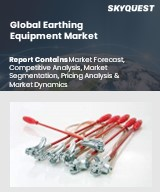
|
시장보고서
상품코드
1779199
접지 장비 시장 : 산업 규모, 점유율, 동향, 기회, 예측 - 제품별, 최종 사용자별, 지역별, 경쟁(2020-2030년)Earthing Equipment Market - Global Industry Size, Share, Trends, Opportunity, and Forecast, Segmented, By Product, By End-User, By Region, By Competition, 2020-2030F |
||||||

접지 장비 시장의 2024년 시장 규모는 61억 8,000만 달러로 평가되었고, 2030년에는 95억 달러에 이를 전망이며, CAGR 7.27%로 성장이 예측되고 있습니다.
접지 장비 시장이란 전기 에너지를 안전하게 지중에 방전하도록 설계된 컴포넌트나 시스템의 제조, 유통, 설치, 유지보수에 초점을 맞춘 세계 산업을 말하며, 이로써 낙뢰, 고장 전류, 전압 서지 등의 전기적 위험으로부터 사람들, 기기, 인프라를 보호합니다.
| 시장 개요 | |
|---|---|
| 예측 기간 | 2026-2030년 |
| 시장 규모(2024년) | 61억 8,000만 달러 |
| 시장 규모(2030년) | 95억 달러 |
| CAGR(2025-2030년) | 7.27% |
| 급성장 부문 | GI 아싱 플랫 |
| 최대 시장 | 북미 |
접지는 아싱이라고도 불리며 발전, 송배전, 공업제조, 석유 및 가스, 건설, 운수, 통신, 주택 및 상업 빌딩 등 폭넓은 분야에서 기본적인 안전 요건이 되고 있습니다. 이 시장에는 접지봉, 접지 도체, 접지판, 클램프, 접지 컴파운드, 검사 피트 등의 다양한 기기와 더불어 화학 접지 시스템, 디지털 고장 검출 장치, 통합 접지 보호 네트워크 등의 고급 솔루션이 포함됩니다. 접지 장비의 주된 기능은 전기설비 및 대지 사이에 직접적인 물리적 접속을 만듦으로써 전기 시스템이 안전한 파라미터 내에서 동작하도록 하는 것이며, 그로 인해 기기의 손상, 화재의 위험 또는 사람에게 위해로 이어지는 전압의 축적을 막는 것입니다.
시장 성장 촉진요인
산업 및 인프라 부문의 규제 및 안전 규정 준수
주요 시장 과제
고급 접지 시스템의 높은 비용 및 가격에 민감한 시장에서의 제한적인 채택
주요 시장 동향
안전성, 컴플라이언스, 표준화에 대한 관심 증가
목차
제1장 개요
제2장 조사 방법
제3장 주요 요약
제4장 고객의 목소리
제5장 세계의 접지 장비 시장 전망
- 시장 규모 및 예측
- 금액별
- 시장 점유율 및 예측
- 제품별(MS아싱 플랫, GI아싱 플랫, CI아싱 플랫)
- 최종 사용자별(공업, 상업, 주택)
- 지역별
- 기업별(2024년)
- 시장 맵
제6장 북미의 접지 장비 시장 전망
- 시장 규모 및 예측
- 시장 점유율 및 예측
- 북미 : 국가별 분석
- 미국
- 캐나다
- 멕시코
제7장 유럽의 접지 장비 시장 전망
- 시장 규모 및 예측
- 시장 점유율 및 예측
- 유럽 : 국가별 분석
- 독일
- 영국
- 이탈리아
- 프랑스
- 스페인
제8장 아시아태평양의 접지 장비 시장 전망
- 시장 규모 및 예측
- 시장 점유율 및 예측
- 아시아태평양 : 국가별 분석
- 중국
- 인도
- 일본
- 한국
- 호주
제9장 남미의 접지 장비 시장 전망
- 시장 규모 및 예측
- 시장 점유율 및 예측
- 남미 : 국가별 분석
- 브라질
- 아르헨티나
- 콜롬비아
제10장 중동 및 아프리카의 접지 장비 시장 전망
- 시장 규모 및 예측
- 시장 점유율 및 예측
- 중동 및 아프리카 : 국가별 분석
- 남아프리카
- 사우디아라비아
- 아랍에미리트(UAE)
- 쿠웨이트
- 튀르키예
제11장 시장 역학
- 성장 촉진요인
- 과제
제12장 시장 동향 및 발전
- 합병 및 인수
- 제품 출시
- 최근 동향
제13장 기업 프로파일
- ABB Ltd.
- Siemens AG
- Schneider Electric SE
- Harger Lightning & Grounding
- Pentair plc
- Crompton Greaves Ltd.
- Eaton Corporation plc
- Mersen Group
- OBO Bettermann GmbH & Co. KG
- Raychem RPG Pvt. Ltd.
제14장 전략적 제안
제15장 기업 소개 및 면책사항
AJY 25.08.04The Earthing Equipment Market was valued at USD 6.18 Billion in 2024 and is expected to reach USD 9.50 Billion by 2030 with a CAGR of 7.27%. The Earthing Equipment Market refers to the global industry focused on the manufacturing, distribution, installation, and maintenance of components and systems designed to safely discharge electrical energy into the ground, thereby protecting people, equipment, and infrastructure from electrical hazards such as lightning strikes, fault currents, and voltage surges.
| Market Overview | |
|---|---|
| Forecast Period | 2026-2030 |
| Market Size 2024 | USD 6.18 Billion |
| Market Size 2030 | USD 9.50 Billion |
| CAGR 2025-2030 | 7.27% |
| Fastest Growing Segment | GI Earthing Flat |
| Largest Market | North America |
Earthing, also known as grounding, is a fundamental safety requirement across a wide range of sectors including power generation, transmission and distribution, industrial manufacturing, oil and gas, construction, transportation, telecommunications, and residential and commercial buildings. The market encompasses a variety of equipment such as ground rods, earthing conductors, earth plates, clamps, earthing compounds, and inspection pits, along with advanced solutions like chemical earthing systems, digital fault detection devices, and integrated earthing protection networks. The primary function of earthing equipment is to ensure electrical systems operate within safe parameters by creating a direct physical connection between electrical installations and the earth, thereby preventing the build-up of voltages that can lead to equipment damage, fire hazards, or harm to personnel.
Key Market Drivers
Regulatory and Safety Compliance in Industrial and Infrastructure Sectors
As industrial operations and infrastructure development evolve globally, escalating emphasis on regulatory compliance and worker safety is fueling demand for robust earthing equipment. Increasingly stringent international and national safety standards-such as IEC, NEC, IEEE, and OSHA-prescribe accurate earthing and bonding protocols to mitigate risks associated with electrical shock, arc flash incidents, lightning strikes, and static discharge. Industries handling flammable liquids, gases, or dust-laden environments, including oil & gas, petrochemicals, mining, and grain processing, typically operate under high-hazard conditions where the potential for electrostatic ignition can cause catastrophic consequences.
In order to adhere to evolving safety frameworks and avoid substantial penalties or shutdowns, organizations are investing heavily in certified earthing solutions-from grounding rods and grids to clamps, cables, mats, and monitoring systems. The rise of next-generation infrastructure, including smart grids, electric vehicle (EV) charging stations, renewable energy installations, data centers, and high-speed rail, introduces fresh safety compliance challenges. For instance, EV charging stations must integrate grounding solutions that prevent leakage currents and ensure proper equipment isolation, while distributed solar and wind power systems require earthing mechanisms capable of handling bidirectional currents and lightning protection. This creates a pipeline of sales growth for earthing equipment manufacturers offering comprehensive, specification-aligned product lines.
Additionally, construction companies and engineering consultants are increasingly adopting digital compliance tools-such as earthing simulation software and IoT-enabled monitor-logger systems-that facilitate real-time compliance verification and safety auditing. By bundling grounding hardware with intelligent monitoring and certification services, solution providers are capturing recurring revenue and strengthening brand trust with safety-conscious clients. Overall, compliance-driven modernization of equipment and infrastructure is an enduring driver in the earthing equipment market, pushing organizations to re-evaluate grounding designs, upgrade aging systems, and deploy comprehensive safety solutions aligned with contemporary standards-all contributing to sustained demand for product innovation, certification, and lifecycle support.Over 85% of industrial and infrastructure projects globally are governed by mandatory regulatory and safety compliance frameworks. Approximately 75% of construction and industrial firms allocate 10-20% of project budgets to compliance and safety measures. More than 90% of infrastructure projects undergo routine inspections to meet occupational safety and environmental standards. Around 70% of workplace accidents in industrial settings have been reduced due to stricter safety protocols. Global demand for compliance management solutions in these sectors is growing at a CAGR of over 12%. Over 60 countries have upgraded or introduced new regulatory codes for infrastructure safety in the past five years.
Key Market Challenges
High Cost of Advanced Earthing Systems and Limited Adoption in Price-Sensitive Markets
One of the primary challenges confronting the earthing equipment market is the high cost associated with advanced and customized grounding systems, which significantly limits their adoption, especially in developing and price-sensitive markets. As industries evolve toward more complex electrical infrastructure and automation, the need for robust and technically sophisticated earthing solutions increases. However, many of these advanced systems-such as chemical earthing, copper-bonded rods, and integrated fault-detection systems-come with a high initial cost, both in terms of materials and installation.
This cost becomes a major hurdle in cost-driven sectors such as small-scale manufacturing, residential construction, and rural electrification programs, where budgets are often tight and cost-cutting measures are prevalent. Moreover, while earthing is a safety-critical requirement, it is often viewed as a non-revenue-generating investment, leading to reduced prioritization during planning and procurement phases. This mindset further diminishes the willingness to invest in higher-quality, durable grounding systems that offer long-term benefits. Additionally, in regions where awareness about proper grounding practices is low, users may opt for substandard or locally assembled alternatives that do not meet performance or safety standards, thereby undermining the growth of formal market participants.
Compounding this challenge is the difficulty in demonstrating immediate ROI for high-end earthing solutions, especially in environments where equipment failure due to earthing issues is infrequent or poorly documented. Installation complexities, logistical challenges in remote areas, and lack of skilled labor for proper implementation further inflate the cost and risk of adoption. In certain industries, especially those operating under tight regulatory constraints, delays and uncertainties around certification, safety audits, and compliance also discourage companies from upgrading to newer technologies.
Collectively, these financial, behavioral, and logistical barriers form a substantial impediment to the wider adoption of advanced earthing systems, particularly in regions that hold significant market potential due to infrastructure growth but lack the economic flexibility to absorb high upfront costs. For manufacturers and service providers, addressing this challenge may require a shift toward cost-effective, modular designs, flexible pricing models, and extensive training programs to promote awareness and increase trust in long-term performance outcomes. Unless these cost-related and perception-based issues are effectively managed, the market for high-performance earthing equipment is likely to remain constrained in several high-growth but cost-sensitive segments.
Key Market Trends
Increasing Focus on Safety, Compliance, and Standardization
Occupational safety and regulatory compliance have become paramount drivers in the earthing equipment market, reflecting broader industrial health & safety mandates and growing concern over electrical hazards in industrial, utility, and infrastructure settings. As governments and standards organizations-particularly in regions like Europe, North America, and Asia Pacific-tighten regulations around electrical grounding, earthing equipment manufacturers are innovating to meet increasingly rigorous technical requirements and certification thresholds. In heavy industries such as oil & gas, petrochemical, mining, and power generation, workplace incidents related to stray voltages or ground faults can lead to costly downtime, equipment damage, and serious injury.
In response, end users are transitioning from basic static grounding rods or simple strap systems to advanced modular earthing solutions featuring real-time monitoring, fault detection, durable construction, and ease of use. Standardization efforts are also intensifying: major industry bodies are publishing updated specifications for grounding resistance values, maintenance intervals, and inspection protocols. Manufacturers are responding with comprehensive product offerings that conform to these enhanced technical standards while minimizing total cost of ownership. Smart earthing equipment-featuring sensors, IoT connectivity, and wireless telemetry-enables remote diagnostics, condition-based maintenance, and data logging to demonstrate compliance to auditors and insurers.
Integrated systems using digital certificates, QR-code traceability, and version-controlled firmware further facilitate audits. Meanwhile, global trade has encouraged harmonized testing protocols (e.g., CE marking, IEC standards, UL listings), enabling manufacturers to export compliant earthing solutions with minimal adaptation at the country level. As a result, customers in diverse geographies-including developing economies building out industrial infrastructure-are increasingly prioritizing certified, pre-qualified ground protection systems backed by vendor warranties, traceability, and aftermarket service capabilities. This trend elevates product differentiation: vendors that can deliver turnkey grounding kits combining conductive paths, surge protection, bonding straps, and smart monitoring devices, backed by training, calibration, and maintenance services, stand to capture significant share.
Crucially, this shift toward compliance-driven procurement also promotes recurring revenue through service contracts, spare parts sales, and compliance software modules, enabling manufacturers to transition from commodity-oriented sales to subscription-style business models. As global concerns about ESG (Environmental, Social, Governance) intensify, enterprises are held more accountable for workplace safety records; investing in best-in-class earthing solutions becomes both a risk mitigation and reputational strategy. In summary, the dual pressures of regulatory crackdown and enterprise risk awareness are transforming earthing equipment from a basic infrastructure necessity into a value-added service ecosystem-encouraging innovation in certification-backed, smart, traceable, and service-supported product portfolios.
Key Market Players
- ABB Ltd.
- Siemens AG
- Schneider Electric SE
- Harger Lightning & Grounding
- Pentair plc
- Crompton Greaves Ltd.
- Eaton Corporation plc
- Mersen Group
- OBO Bettermann GmbH & Co. KG
- Raychem RPG Pvt. Ltd.
Report Scope:
In this report, the Global Earthing Equipment Market has been segmented into the following categories, in addition to the industry trends which have also been detailed below:
Earthing Equipment Market, By Product:
- MS Earthing Flat
- GI Earthing Flat
- CI Earthing Flat
Earthing Equipment Market, By End-User:
- Industrial
- Commercial
- Residential
Earthing Equipment Market, By Region:
- North America
- United States
- Canada
- Mexico
- Europe
- France
- United Kingdom
- Italy
- Germany
- Spain
- Asia-Pacific
- China
- India
- Japan
- Australia
- South Korea
- South America
- Brazil
- Argentina
- Colombia
- Middle East & Africa
- South Africa
- Saudi Arabia
- UAE
- Kuwait
- Turkey
Competitive Landscape
Company Profiles: Detailed analysis of the major companies presents in the Global Earthing Equipment Market.
Available Customizations:
Global Earthing Equipment Market report with the given Market data, Tech Sci Research offers customizations according to a company's specific needs. The following customization options are available for the report:
Company Information
- Detailed analysis and profiling of additional Market players (up to five).
Table of Contents
1. Product Overview
- 1.1. Market Definition
- 1.2. Scope of the Market
- 1.2.1. Markets Covered
- 1.2.2. Years Considered for Study
- 1.3. Key Market Segmentations
2. Research Methodology
- 2.1. Objective of the Study
- 2.2. Baseline Methodology
- 2.3. Formulation of the Scope
- 2.4. Assumptions and Limitations
- 2.5. Sources of Research
- 2.5.1. Secondary Research
- 2.5.2. Primary Research
- 2.6. Approach for the Market Study
- 2.6.1. The Bottom-Up Approach
- 2.6.2. The Top-Down Approach
- 2.7. Methodology Followed for Calculation of Market Size & Market Shares
- 2.8. Forecasting Methodology
- 2.8.1. Data Triangulation & Validation
3. Executive Summary
- 3.1. Overview of the Market
- 3.2. Overview of Key Market Segmentations
- 3.3. Overview of Key Market Players
- 3.4. Overview of Key Regions/Countries
- 3.5. Overview of Market Drivers, Challenges, and Trends
4. Voice of Customer
5. Global Earthing Equipment Market Outlook
- 5.1. Market Size & Forecast
- 5.1.1. By Value
- 5.2. Market Share & Forecast
- 5.2.1. By Product (MS Earthing Flat, GI Earthing Flat, and CI Earthing Flat)
- 5.2.2. By End-User (Industrial, Commercial, and Residential)
- 5.2.3. By Region
- 5.3. By Company (2024)
- 5.4. Market Map
6. North America Earthing Equipment Market Outlook
- 6.1. Market Size & Forecast
- 6.1.1. By Value
- 6.2. Market Share & Forecast
- 6.2.1. By Product
- 6.2.2. By End-User
- 6.2.3. By Country
- 6.3. North America: Country Analysis
- 6.3.1. United States Earthing Equipment Market Outlook
- 6.3.1.1. Market Size & Forecast
- 6.3.1.1.1. By Value
- 6.3.1.2. Market Share & Forecast
- 6.3.1.2.1. By Product
- 6.3.1.2.2. By End-User
- 6.3.1.1. Market Size & Forecast
- 6.3.2. Canada Earthing Equipment Market Outlook
- 6.3.2.1. Market Size & Forecast
- 6.3.2.1.1. By Value
- 6.3.2.2. Market Share & Forecast
- 6.3.2.2.1. By Product
- 6.3.2.2.2. By End-User
- 6.3.2.1. Market Size & Forecast
- 6.3.3. Mexico Earthing Equipment Market Outlook
- 6.3.3.1. Market Size & Forecast
- 6.3.3.1.1. By Value
- 6.3.3.2. Market Share & Forecast
- 6.3.3.2.1. By Product
- 6.3.3.2.2. By End-User
- 6.3.3.1. Market Size & Forecast
- 6.3.1. United States Earthing Equipment Market Outlook
7. Europe Earthing Equipment Market Outlook
- 7.1. Market Size & Forecast
- 7.1.1. By Value
- 7.2. Market Share & Forecast
- 7.2.1. By Product
- 7.2.2. By End-User
- 7.2.3. By Country
- 7.3. Europe: Country Analysis
- 7.3.1. Germany Earthing Equipment Market Outlook
- 7.3.1.1. Market Size & Forecast
- 7.3.1.1.1. By Value
- 7.3.1.2. Market Share & Forecast
- 7.3.1.2.1. By Product
- 7.3.1.2.2. By End-User
- 7.3.1.1. Market Size & Forecast
- 7.3.2. United Kingdom Earthing Equipment Market Outlook
- 7.3.2.1. Market Size & Forecast
- 7.3.2.1.1. By Value
- 7.3.2.2. Market Share & Forecast
- 7.3.2.2.1. By Product
- 7.3.2.2.2. By End-User
- 7.3.2.1. Market Size & Forecast
- 7.3.3. Italy Earthing Equipment Market Outlook
- 7.3.3.1. Market Size & Forecast
- 7.3.3.1.1. By Value
- 7.3.3.2. Market Share & Forecast
- 7.3.3.2.1. By Product
- 7.3.3.2.2. By End-User
- 7.3.3.1. Market Size & Forecast
- 7.3.4. France Earthing Equipment Market Outlook
- 7.3.4.1. Market Size & Forecast
- 7.3.4.1.1. By Value
- 7.3.4.2. Market Share & Forecast
- 7.3.4.2.1. By Product
- 7.3.4.2.2. By End-User
- 7.3.4.1. Market Size & Forecast
- 7.3.5. Spain Earthing Equipment Market Outlook
- 7.3.5.1. Market Size & Forecast
- 7.3.5.1.1. By Value
- 7.3.5.2. Market Share & Forecast
- 7.3.5.2.1. By Product
- 7.3.5.2.2. By End-User
- 7.3.5.1. Market Size & Forecast
- 7.3.1. Germany Earthing Equipment Market Outlook
8. Asia-Pacific Earthing Equipment Market Outlook
- 8.1. Market Size & Forecast
- 8.1.1. By Value
- 8.2. Market Share & Forecast
- 8.2.1. By Product
- 8.2.2. By End-User
- 8.2.3. By Country
- 8.3. Asia-Pacific: Country Analysis
- 8.3.1. China Earthing Equipment Market Outlook
- 8.3.1.1. Market Size & Forecast
- 8.3.1.1.1. By Value
- 8.3.1.2. Market Share & Forecast
- 8.3.1.2.1. By Product
- 8.3.1.2.2. By End-User
- 8.3.1.1. Market Size & Forecast
- 8.3.2. India Earthing Equipment Market Outlook
- 8.3.2.1. Market Size & Forecast
- 8.3.2.1.1. By Value
- 8.3.2.2. Market Share & Forecast
- 8.3.2.2.1. By Product
- 8.3.2.2.2. By End-User
- 8.3.2.1. Market Size & Forecast
- 8.3.3. Japan Earthing Equipment Market Outlook
- 8.3.3.1. Market Size & Forecast
- 8.3.3.1.1. By Value
- 8.3.3.2. Market Share & Forecast
- 8.3.3.2.1. By Product
- 8.3.3.2.2. By End-User
- 8.3.3.1. Market Size & Forecast
- 8.3.4. South Korea Earthing Equipment Market Outlook
- 8.3.4.1. Market Size & Forecast
- 8.3.4.1.1. By Value
- 8.3.4.2. Market Share & Forecast
- 8.3.4.2.1. By Product
- 8.3.4.2.2. By End-User
- 8.3.4.1. Market Size & Forecast
- 8.3.5. Australia Earthing Equipment Market Outlook
- 8.3.5.1. Market Size & Forecast
- 8.3.5.1.1. By Value
- 8.3.5.2. Market Share & Forecast
- 8.3.5.2.1. By Product
- 8.3.5.2.2. By End-User
- 8.3.5.1. Market Size & Forecast
- 8.3.1. China Earthing Equipment Market Outlook
9. South America Earthing Equipment Market Outlook
- 9.1. Market Size & Forecast
- 9.1.1. By Value
- 9.2. Market Share & Forecast
- 9.2.1. By Product
- 9.2.2. By End-User
- 9.2.3. By Country
- 9.3. South America: Country Analysis
- 9.3.1. Brazil Earthing Equipment Market Outlook
- 9.3.1.1. Market Size & Forecast
- 9.3.1.1.1. By Value
- 9.3.1.2. Market Share & Forecast
- 9.3.1.2.1. By Product
- 9.3.1.2.2. By End-User
- 9.3.1.1. Market Size & Forecast
- 9.3.2. Argentina Earthing Equipment Market Outlook
- 9.3.2.1. Market Size & Forecast
- 9.3.2.1.1. By Value
- 9.3.2.2. Market Share & Forecast
- 9.3.2.2.1. By Product
- 9.3.2.2.2. By End-User
- 9.3.2.1. Market Size & Forecast
- 9.3.3. Colombia Earthing Equipment Market Outlook
- 9.3.3.1. Market Size & Forecast
- 9.3.3.1.1. By Value
- 9.3.3.2. Market Share & Forecast
- 9.3.3.2.1. By Product
- 9.3.3.2.2. By End-User
- 9.3.3.1. Market Size & Forecast
- 9.3.1. Brazil Earthing Equipment Market Outlook
10. Middle East and Africa Earthing Equipment Market Outlook
- 10.1. Market Size & Forecast
- 10.1.1. By Value
- 10.2. Market Share & Forecast
- 10.2.1. By Product
- 10.2.2. By End-User
- 10.2.3. By Country
- 10.3. Middle East and Africa: Country Analysis
- 10.3.1. South Africa Earthing Equipment Market Outlook
- 10.3.1.1. Market Size & Forecast
- 10.3.1.1.1. By Value
- 10.3.1.2. Market Share & Forecast
- 10.3.1.2.1. By Product
- 10.3.1.2.2. By End-User
- 10.3.1.1. Market Size & Forecast
- 10.3.2. Saudi Arabia Earthing Equipment Market Outlook
- 10.3.2.1. Market Size & Forecast
- 10.3.2.1.1. By Value
- 10.3.2.2. Market Share & Forecast
- 10.3.2.2.1. By Product
- 10.3.2.2.2. By End-User
- 10.3.2.1. Market Size & Forecast
- 10.3.3. UAE Earthing Equipment Market Outlook
- 10.3.3.1. Market Size & Forecast
- 10.3.3.1.1. By Value
- 10.3.3.2. Market Share & Forecast
- 10.3.3.2.1. By Product
- 10.3.3.2.2. By End-User
- 10.3.3.1. Market Size & Forecast
- 10.3.4. Kuwait Earthing Equipment Market Outlook
- 10.3.4.1. Market Size & Forecast
- 10.3.4.1.1. By Value
- 10.3.4.2. Market Share & Forecast
- 10.3.4.2.1. By Product
- 10.3.4.2.2. By End-User
- 10.3.4.1. Market Size & Forecast
- 10.3.5. Turkey Earthing Equipment Market Outlook
- 10.3.5.1. Market Size & Forecast
- 10.3.5.1.1. By Value
- 10.3.5.2. Market Share & Forecast
- 10.3.5.2.1. By Product
- 10.3.5.2.2. By End-User
- 10.3.5.1. Market Size & Forecast
- 10.3.1. South Africa Earthing Equipment Market Outlook
11. Market Dynamics
- 11.1. Drivers
- 11.2. Challenges
12. Market Trends & Developments
- 12.1. Merger & Acquisition (If Any)
- 12.2. Product Launches (If Any)
- 12.3. Recent Developments
13. Company Profiles
- 13.1. ABB Ltd.
- 13.1.1. Business Overview
- 13.1.2. Key Revenue and Financials
- 13.1.3. Recent Developments
- 13.1.4. Key Personnel/Key Contact Person
- 13.1.5. Key Product/Services Offered
- 13.2. Siemens AG
- 13.3. Schneider Electric SE
- 13.4. Harger Lightning & Grounding
- 13.5. Pentair plc
- 13.6. Crompton Greaves Ltd.
- 13.7. Eaton Corporation plc
- 13.8. Mersen Group
- 13.9. OBO Bettermann GmbH & Co. KG
- 13.10. Raychem RPG Pvt. Ltd.