|
시장보고서
상품코드
1914633
방송용 스위처 시장 - 세계 산업 규모, 점유율, 동향, 기회, 예측 : 유형별, 용도별, 포트 수별, 포트 유형별, 비디오 해상도별, 지역별 및 경쟁 상황(2021-2031년)Broadcast Switchers Market - Global Industry Size, Share, Trends, Opportunity, and Forecast, Segmented By Type, By Application, By Number of Ports, By Port Type, By Video Resolution, By Region & Competition, 2021-2031F |
||||||

세계의 방송용 스위처 시장은 2025년 34억 9,000만 달러에서 2031년까지 48억 7,000만 달러로 확대되고, CAGR 5.71%를 달성할 것으로 예측됩니다.
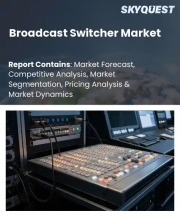
영상 제작의 핵심 장비인 방송용 스위처는 전문 스튜디오나 이동식 유닛의 사령탑 역할을 하며, 운영자가 다양한 영상 소스를 선택, 합성, 조작하여 녹화 또는 라이브 스트리밍을 위한 통합 출력으로 통합할 수 있게 해줍니다. 이러한 시장 성장은 기존 워크플로우에 비해 뛰어난 유연성과 확장성을 제공하는 IP 기반 아키텍처로의 전환이 가속화되고, 데이터 속도와 해상도 증가에 대응하기 위해 인프라 업그레이드가 필요한 초고화질(UHD) 스포츠 생중계 컨텐츠가 전 세계적으로 확산되고 있는 데 따른 것입니다. 전 세계적인 UHD 컨텐츠의 보급 촉진으로 뒷받침되고 있습니다.
| 시장 개요 | |
|---|---|
| 예측 기간 | 2027-2031년 |
| 시장 규모 : 2025년 | 34억 9,000만 달러 |
| 시장 규모 : 2031년 | 48억 7,000만 달러 |
| CAGR : 2026-2031년 | 5.71% |
| 가장 빠르게 성장하는 부문 | 프로덕션 스위처 |
| 최대 시장 | 북미 |
이러한 발전에도 불구하고, 시장 확대는 현대적 시스템을 도입하는 데 필요한 막대한 자금과 전문 기술 지식으로 인해 어려움을 겪고 있습니다. 수익성 유지에 대한 압박에 직면한 방송 사업자들은 신기술에 대한 자본 투자를 미루는 경우가 많으며, 이러한 추세는 업계가 하드웨어 의존에서 소프트웨어 중심 솔루션으로 전환하고 있는 상황에서 더욱 복잡해지고 있습니다. 국제방송미디어기술협회(IABM)에 따르면, 2025년 기술 구성은 소프트웨어 중심으로 전환되어 하드웨어가 41%, 소프트웨어가 48%를 차지할 것으로 예상됩니다.
이러한 진화는 복잡하고 안전한 제작 환경을 관리하는 데 필요한 특정 IT 역량이 부족한 조직에게는 큰 장벽이 될 수 있습니다.
시장 촉진요인
세계 방송용 스위처 시장은 원격 제작 워크플로우와 클라우드 기반 기술의 채택으로 근본적으로 재편되고 있습니다. 업계가 기존 SDI 환경에서 IP 기반 프레임워크로 전환하는 가운데, 시설에서는 리소스 공유 및 분산 운영을 가능하게 하는 소프트웨어 정의 스위처를 우선적으로 도입하고 있습니다. 이러한 기술적 진화를 통해 제작팀은 다양한 위치에서 비디오 피드를 제어할 수 있어 변동하는 작업량에 대한 확장성이 향상되고 물류 비용을 크게 절감할 수 있습니다. 이러한 전환의 기세는 업계 전반의 확산으로 두드러지게 나타나고 있습니다. 2024년 4월 하이비전이 발표한 '방송 혁신 보고서 2024'에 따르면, 방송 사업자의 84%가 클라우드 기반 기술을 워크플로우에 통합하고 있으며, 제조사들은 하이브리드 클라우드 환경에서 끊김 없는 저지연 성능을 구현하기 위해 스위처 인터페이스를 재설계해야 한다고 밝혔습니다. 스위처 인터페이스를 재설계해야 하는 상황에 직면해 있습니다.
동시에 라이브 엔터테인먼트와 스포츠 중계의 급격한 증가는 인프라 강화의 주요 원동력이 되고 있습니다. 고품질 시청 경험을 제공하기 위해 방송 사업자들은 고해상도 포맷과 복잡한 멀티 카메라 구성에 대한 대응 능력을 확대하고 있으며, 신호 품질 저하 없이 방대한 양의 입력을 처리할 수 있는 강력한 스위칭 솔루션이 요구되고 있습니다. 현대의 제작 요구 사항의 규모는 세계 주요 이벤트에 의해 보여집니다. 2024년 7월에 발표된 국제올림픽위원회(IOC)의 '파리 2024 사실과 수치'에 따르면, 올림픽 방송 서비스(OBS)는 11,000시간 이상의 컨텐츠를 제작하여 새로운 기록을 세웠습니다. 이러한 고성능 신뢰성에 대한 수요는 2024년 2월 발표된 EVS의 '2023 회계연도 결산'에 반영되어 업계 선두주자의 재무적 성장을 촉진하고 있습니다. 이번 결산에서 라이브 제작 기술에 대한 지속적인 투자로 사상 최대인 1억 7,320만 유로의 매출을 기록했다고 밝혔습니다.
시장의 과제
방송용 스위처 시장 성장의 주요 장벽은 현대적 시스템을 도입하는 데 필요한 막대한 자본 투자와 전문적 기술 지식입니다. 업계가 복잡한 IP 기반 아키텍처로 전환함에 따라, 조직은 고가의 인프라 업데이트에 대한 자금 조달과 심각한 IT 기술 부족이라는 이중고에 직면해 있습니다. 이러한 운영 및 경제적 압박으로 인해 방송 사업자들은 첨단 스위칭 솔루션으로 업그레이드하는 대신 레거시 장비의 수명을 연장하거나 자본 프로젝트를 연기해야 하는 상황에 처해 있습니다. 결과적으로 이러한 높은 진입장벽은 시장 확대에 필수적인 전환율을 늦추고 있으며, 특히 자원이 한정된 중견 방송사들에게 영향을 미치고 있는 실정입니다.
이러한 투자 망설임은 재정 긴축을 중시하는 최근 업계 동향이 실증적으로 뒷받침하고 있습니다. 2024년 DPP 데이터에 따르면, 공영방송사 기술 책임자의 73%가 새로운 기술 도입보다 업무 효율화를 우선시하며, 비용 절감을 주요 사업 목표로 꼽았다고 합니다. 이러한 비용 절감에 대한 집중적인 노력은 차세대 방송용 스위처에 투입되는 예산을 크게 제한하고, 결과적으로 이러한 미션 크리티컬한 시스템의 보급이 정체되어 전체 시장의 성장 궤도를 저해하고 있습니다.
시장 동향
세계 방송용 스위처 시장은 지능형 장면 감지 및 AI 기반 자동화의 통합으로 변화하고 있습니다. 이를 통해 복잡한 생방송 제작의 인적 오류를 최소화하면서 운영 효율을 높이고 있습니다. 각 제조사들은 머신러닝 알고리즘을 스위처 인터페이스에 내장하여 실시간 장면 분류, 매크로 실행, 카메라 추적 등 정형화된 기능을 자동화하고 있습니다. 기술 디렉터가 기계적인 작업보다 창의적인 스토리텔링에 집중할 수 있는 환경을 조성하고 있습니다. 이러한 기술적 변화는 적은 인력으로 높은 품질의 출력을 원하는 업계의 요구에 부응하는 것으로, 그 빠른 보급은 최근 데이터에도 반영되어 있습니다. 2025년 2월 발표된 하이비전의 'Broadcast Transformation Report 2025'에 따르면, 현재 25%의 방송 사업자가 인공지능을 활용하고 있으며, 이 수치는 전년 대비 2배 이상 증가한 수치입니다.
동시에 소셜 미디어와 디지털 플랫폼을 넘나드는 옴니채널 컨텐츠 유통 수요를 충족시키기 위해 멀티 포맷 스위처의 개발이 가속화되고 있습니다. 시청자의 분산화로 인해 방송사들은 기존의 선형적 전송을 넘어선 컨텐츠 전송을 요구하고 있으며, 최신 스위처는 표준 SDI 출력 외에도 SRT와 같은 다양한 스트리밍 프로토콜과 다중 종횡비를 기본적으로 지원하도록 설계되어 있습니다. 이 기능을 통해 모바일 기기용 세로형 동영상과 TV용 가로형 포맷을 동시에 제작할 수 있어 디지털 퍼스트 전략의 워크플로우 효율을 높일 수 있습니다. IABM이 2024년 4월 발표한 'State of MediaTech Report'에 따르면, 2024년 초 유튜브에서 채널 4 프로그램의 전체 에피소드 시청 횟수가 2024년 초에 331% 급증한 것으로 나타나, 원활한 멀티 플랫폼 전송이 가능한 스위처의 필요성이 강조되었습니다. 원활한 멀티 플랫폼 전송이 가능한 스위처의 필요성이 매우 중요하다는 점을 강조하고 있습니다.
자주 묻는 질문
목차
제1장 개요
제2장 조사 방법
제3장 주요 요약
제4장 고객의 소리
제5장 세계의 방송용 스위처 시장 전망
- 시장 규모 및 예측
- 금액별
- 시장 점유율과 예측
- 유형별(프로덕션 스위처, 마스터 컨트롤 스위처, 라우팅 스위처)
- 용도별(스튜디오 제작, 제작 트럭, 뉴스 제작, 스포츠 방송, 포스트 프로덕션, 기타)
- 포트 수별(16포트 미만, 16- 40포트, 40- 250포트, 250포트 이상)
- 포트 유형별(동축, 비압축 IP, 압축 IP, 기타)
- 영상 해상도별(4K, 고화질, 표준 세밀)
- 지역별
- 기업별(2025)
- 시장 맵
제6장 북미의 방송용 스위처 시장 전망
- 시장 규모 및 예측
- 시장 점유율과 예측
- 북미 : 국가별 분석
- 미국
- 캐나다
- 멕시코
제7장 유럽의 방송용 스위처 시장 전망
- 시장 규모 및 예측
- 시장 점유율과 예측
- 유럽 : 국가별 분석
- 독일
- 프랑스
- 영국
- 이탈리아
- 스페인
제8장 아시아태평양의 방송용 스위처 시장 전망
- 시장 규모 및 예측
- 시장 점유율과 예측
- 아시아태평양 : 국가별 분석
- 중국
- 인도
- 일본
- 한국
- 호주
제9장 중동 및 아프리카의 방송용 스위처 시장 전망
- 시장 규모 및 예측
- 시장 점유율과 예측
- 중동 및 아프리카 : 국가별 분석
- 사우디아라비아
- 아랍에미리트
- 남아프리카공화국
제10장 남미의 방송용 스위처 시장 전망
- 시장 규모 및 예측
- 시장 점유율과 예측
- 남미 : 국가별 분석
- 브라질
- 콜롬비아
- 아르헨티나
제11장 시장 역학
- 성장 촉진요인
- 과제
제12장 시장 동향과 발전
- 인수합병
- 제품 출시
- 최근 동향
제13장 세계의 방송용 스위처 시장 : SWOT 분석
제14장 Porter's Five Forces 분석
- 업계내 경쟁
- 신규 참여의 가능성
- 공급업체의 능력
- 고객의 능력
- 대체품의 위협
제15장 경쟁 구도
- Blackmagic Design Pty. Ltd.
- Broadcast Pix, Inc.
- Evertz Microsystems Ltd.
- FOR-A Company Ltd.
- Grass Valley USA LLC
- Imagine Communications
- Ikegami Electronics U.S.A. Inc.
- NewTek, Inc.
- Panasonic Corporation
- Sony Electronics, Inc.
- Utah Scientific, Inc
제16장 전략적 제안
제17장 조사 회사 소개 및 면책사항
KSM 26.02.04The Global Broadcast Switchers Market is projected to expand from USD 3.49 Billion in 2025 to USD 4.87 Billion by 2031, achieving a compound annual growth rate (CAGR) of 5.71%. As mission-critical components in video production, broadcast switchers act as the central command hub within professional studios and mobile units, allowing operators to select, composite, and manipulate various video feeds into a unified output for recording or live transmission. This market growth is primarily bolstered by the industry's accelerating transition toward IP-based architectures, which provide superior flexibility and scalability compared to traditional workflows, alongside the global push for Ultra High Definition content in live sports that necessitates infrastructure upgrades to handle increased data rates and resolutions.
| Market Overview | |
|---|---|
| Forecast Period | 2027-2031 |
| Market Size 2025 | USD 3.49 Billion |
| Market Size 2031 | USD 4.87 Billion |
| CAGR 2026-2031 | 5.71% |
| Fastest Growing Segment | Production Switchers |
| Largest Market | North America |
Despite these advancements, market expansion is hindered by the significant financial requirements and specialized technical expertise needed to deploy modern systems. Broadcasters facing intense pressure to sustain profitability often postpone capital investments in new technologies, a trend further complicated by the industry's transformation from hardware reliance to software-centric solutions. According to the International Trade Association for Broadcast and Media (IABM), the technology mix in 2025 will be increasingly software-driven, accounting for 48% of the sector compared to 41% for hardware. This evolution presents a substantial obstacle for organizations that lack the specific IT capabilities required to manage these complex and secure production environments.
Market Driver
The Global Broadcast Switchers Market is being fundamentally reshaped by the adoption of remote production workflows and cloud-based technologies. As the industry moves from legacy SDI environments to IP-based frameworks, facilities are prioritizing software-defined switchers that facilitate resource pooling and decentralized operations. This technological evolution enables production teams to control video feeds from various locations, thereby enhancing scalability for fluctuating workloads and significantly lowering logistics costs. The momentum of this transition is evident in widespread industry adoption; according to the 'Broadcast Transformation Report 2024' by Haivision in April 2024, 84% of broadcasters have integrated cloud-based technologies into their workflows, prompting manufacturers to re-engineer switcher interfaces for seamless, low-latency performance in hybrid cloud environments.
Concurrently, the exponential growth of live entertainment and sports broadcasting serves as a major catalyst for infrastructure enhancements. To deliver premium viewing experiences, broadcasters are expanding their capabilities to support high-resolution formats and complex multi-camera configurations, necessitating robust switching solutions that can handle immense input volumes without sacrificing signal quality. The magnitude of modern production requirements is illustrated by major global events; the International Olympic Committee's 'Paris 2024 Facts and Figures' from July 2024 noted that Olympic Broadcasting Services generated over 11,000 hours of content, setting a new record. This demand for high-performance reliability fuels financial growth for industry leaders, as reflected in EVS's 'Full Year 2023 Results' from February 2024, which reported record revenues of EUR 173.2 million due to sustained investment in live production technology.
Market Challenge
A major impediment to growth in the broadcast switchers market is the substantial capital investment and specialized technical knowledge required to deploy modern systems. As the sector shifts toward complex IP-based architectures, organizations encounter the dual burden of funding costly infrastructure replacements while simultaneously addressing a critical shortage of IT skills. These operational and economic pressures compel broadcasters to prolong the lifespan of legacy equipment and postpone capital projects rather than upgrading to advanced switching solutions. Consequently, these high barriers to entry retard the migration rate essential for market expansion, a challenge that particularly affects mid-tier broadcasters with finite resources.
This hesitation to invest is empirically reinforced by recent industry trends emphasizing fiscal austerity. According to data from the DPP in 2024, 73% of technology leaders at public service broadcasters cited cost reduction as their primary business objective, prioritizing operational efficiency over the acquisition of new technology. This prevailing focus on cost containment severely limits the budgets available for next-generation broadcast switchers, thereby stalling the widespread adoption of these mission-critical systems and hindering the overall growth trajectory of the market.
Market Trends
The Global Broadcast Switchers Market is being revolutionized by the integration of intelligent scene detection and AI-driven automation, which enhance operational efficiency while minimizing manual errors during complex live productions. Manufacturers are increasingly incorporating machine learning algorithms into switcher interfaces to automate routine functions such as real-time scene categorization, macro execution, and camera tracking, thereby enabling technical directors to prioritize creative storytelling over mechanical tasks. This technological shift meets the industry's demand for high-quality output using leaner teams, and its rapid acceptance is reflected in recent data; according to Haivision's 'Broadcast Transformation Report 2025' from February 2025, 25% of broadcasters now utilize artificial intelligence, a figure that has more than doubled since the previous year.
Simultaneously, the development of multi-format switchers is accelerating to satisfy the demand for omnichannel content delivery across social media and digital platforms. Driven by viewer fragmentation that compels broadcasters to distribute content beyond traditional linear feeds, modern switchers are engineered to natively support various streaming protocols like SRT and multiple aspect ratios alongside standard SDI outputs. This functionality facilitates the simultaneous production of vertical video for mobile devices and horizontal formats for television, streamlining workflows for digital-first strategies. This trend is underscored by shifting consumption habits; the IABM's 'State of MediaTech Report' from April 2024 highlighted that full episode views of Channel 4 programming on YouTube surged by 331% in early 2024, emphasizing the critical need for switchers capable of seamless multi-platform distribution.
Key Market Players
- Blackmagic Design Pty. Ltd.
- Broadcast Pix, Inc.
- Evertz Microsystems Ltd.
- FOR-A Company Ltd.
- Grass Valley USA LLC
- Imagine Communications
- Ikegami Electronics U.S.A. Inc.
- NewTek, Inc.
- Panasonic Corporation
- Sony Electronics, Inc.
- Utah Scientific, Inc
Report Scope
In this report, the Global Broadcast Switchers Market has been segmented into the following categories, in addition to the industry trends which have also been detailed below:
Broadcast Switchers Market, By Type
- Production Switchers
- Master Control Switchers
- Routing Switchers
Broadcast Switchers Market, By Application
- Studio Production
- Production Trucks
- News Production
- Sports Broadcasting
- Post-Production
- Others
Broadcast Switchers Market, By Number of Ports
- Less than 16 Ports
- 16 to 40 Ports
- 40 to 250 Ports
- More than 250 Ports
Broadcast Switchers Market, By Port Type
- Coaxial
- Uncompressed IP
- Compressed IP
- Others
Broadcast Switchers Market, By Video Resolution
- 4K
- High Definition
- Standard Definition
Broadcast Switchers Market, By Region
- North America
- United States
- Canada
- Mexico
- Europe
- France
- United Kingdom
- Italy
- Germany
- Spain
- Asia Pacific
- China
- India
- Japan
- Australia
- South Korea
- South America
- Brazil
- Argentina
- Colombia
- Middle East & Africa
- South Africa
- Saudi Arabia
- UAE
Competitive Landscape
Company Profiles: Detailed analysis of the major companies present in the Global Broadcast Switchers Market.
Available Customizations:
Global Broadcast Switchers Market report with the given market data, TechSci Research offers customizations according to a company's specific needs. The following customization options are available for the report:
Company Information
- Detailed analysis and profiling of additional market players (up to five).
Table of Contents
1. Product Overview
- 1.1. Market Definition
- 1.2. Scope of the Market
- 1.2.1. Markets Covered
- 1.2.2. Years Considered for Study
- 1.2.3. Key Market Segmentations
2. Research Methodology
- 2.1. Objective of the Study
- 2.2. Baseline Methodology
- 2.3. Key Industry Partners
- 2.4. Major Association and Secondary Sources
- 2.5. Forecasting Methodology
- 2.6. Data Triangulation & Validation
- 2.7. Assumptions and Limitations
3. Executive Summary
- 3.1. Overview of the Market
- 3.2. Overview of Key Market Segmentations
- 3.3. Overview of Key Market Players
- 3.4. Overview of Key Regions/Countries
- 3.5. Overview of Market Drivers, Challenges, Trends
4. Voice of Customer
5. Global Broadcast Switchers Market Outlook
- 5.1. Market Size & Forecast
- 5.1.1. By Value
- 5.2. Market Share & Forecast
- 5.2.1. By Type (Production Switchers, Master Control Switchers, Routing Switchers)
- 5.2.2. By Application (Studio Production, Production Trucks, News Production, Sports Broadcasting, Post-Production, Others)
- 5.2.3. By Number of Ports (Less than 16 Ports, 16 to 40 Ports, 40 to 250 Ports, More than 250 Ports)
- 5.2.4. By Port Type (Coaxial, Uncompressed IP, Compressed IP, Others)
- 5.2.5. By Video Resolution (4K, High Definition, Standard Definition)
- 5.2.6. By Region
- 5.2.7. By Company (2025)
- 5.3. Market Map
6. North America Broadcast Switchers Market Outlook
- 6.1. Market Size & Forecast
- 6.1.1. By Value
- 6.2. Market Share & Forecast
- 6.2.1. By Type
- 6.2.2. By Application
- 6.2.3. By Number of Ports
- 6.2.4. By Port Type
- 6.2.5. By Video Resolution
- 6.2.6. By Country
- 6.3. North America: Country Analysis
- 6.3.1. United States Broadcast Switchers Market Outlook
- 6.3.1.1. Market Size & Forecast
- 6.3.1.1.1. By Value
- 6.3.1.2. Market Share & Forecast
- 6.3.1.2.1. By Type
- 6.3.1.2.2. By Application
- 6.3.1.2.3. By Number of Ports
- 6.3.1.2.4. By Port Type
- 6.3.1.2.5. By Video Resolution
- 6.3.1.1. Market Size & Forecast
- 6.3.2. Canada Broadcast Switchers Market Outlook
- 6.3.2.1. Market Size & Forecast
- 6.3.2.1.1. By Value
- 6.3.2.2. Market Share & Forecast
- 6.3.2.2.1. By Type
- 6.3.2.2.2. By Application
- 6.3.2.2.3. By Number of Ports
- 6.3.2.2.4. By Port Type
- 6.3.2.2.5. By Video Resolution
- 6.3.2.1. Market Size & Forecast
- 6.3.3. Mexico Broadcast Switchers Market Outlook
- 6.3.3.1. Market Size & Forecast
- 6.3.3.1.1. By Value
- 6.3.3.2. Market Share & Forecast
- 6.3.3.2.1. By Type
- 6.3.3.2.2. By Application
- 6.3.3.2.3. By Number of Ports
- 6.3.3.2.4. By Port Type
- 6.3.3.2.5. By Video Resolution
- 6.3.3.1. Market Size & Forecast
- 6.3.1. United States Broadcast Switchers Market Outlook
7. Europe Broadcast Switchers Market Outlook
- 7.1. Market Size & Forecast
- 7.1.1. By Value
- 7.2. Market Share & Forecast
- 7.2.1. By Type
- 7.2.2. By Application
- 7.2.3. By Number of Ports
- 7.2.4. By Port Type
- 7.2.5. By Video Resolution
- 7.2.6. By Country
- 7.3. Europe: Country Analysis
- 7.3.1. Germany Broadcast Switchers Market Outlook
- 7.3.1.1. Market Size & Forecast
- 7.3.1.1.1. By Value
- 7.3.1.2. Market Share & Forecast
- 7.3.1.2.1. By Type
- 7.3.1.2.2. By Application
- 7.3.1.2.3. By Number of Ports
- 7.3.1.2.4. By Port Type
- 7.3.1.2.5. By Video Resolution
- 7.3.1.1. Market Size & Forecast
- 7.3.2. France Broadcast Switchers Market Outlook
- 7.3.2.1. Market Size & Forecast
- 7.3.2.1.1. By Value
- 7.3.2.2. Market Share & Forecast
- 7.3.2.2.1. By Type
- 7.3.2.2.2. By Application
- 7.3.2.2.3. By Number of Ports
- 7.3.2.2.4. By Port Type
- 7.3.2.2.5. By Video Resolution
- 7.3.2.1. Market Size & Forecast
- 7.3.3. United Kingdom Broadcast Switchers Market Outlook
- 7.3.3.1. Market Size & Forecast
- 7.3.3.1.1. By Value
- 7.3.3.2. Market Share & Forecast
- 7.3.3.2.1. By Type
- 7.3.3.2.2. By Application
- 7.3.3.2.3. By Number of Ports
- 7.3.3.2.4. By Port Type
- 7.3.3.2.5. By Video Resolution
- 7.3.3.1. Market Size & Forecast
- 7.3.4. Italy Broadcast Switchers Market Outlook
- 7.3.4.1. Market Size & Forecast
- 7.3.4.1.1. By Value
- 7.3.4.2. Market Share & Forecast
- 7.3.4.2.1. By Type
- 7.3.4.2.2. By Application
- 7.3.4.2.3. By Number of Ports
- 7.3.4.2.4. By Port Type
- 7.3.4.2.5. By Video Resolution
- 7.3.4.1. Market Size & Forecast
- 7.3.5. Spain Broadcast Switchers Market Outlook
- 7.3.5.1. Market Size & Forecast
- 7.3.5.1.1. By Value
- 7.3.5.2. Market Share & Forecast
- 7.3.5.2.1. By Type
- 7.3.5.2.2. By Application
- 7.3.5.2.3. By Number of Ports
- 7.3.5.2.4. By Port Type
- 7.3.5.2.5. By Video Resolution
- 7.3.5.1. Market Size & Forecast
- 7.3.1. Germany Broadcast Switchers Market Outlook
8. Asia Pacific Broadcast Switchers Market Outlook
- 8.1. Market Size & Forecast
- 8.1.1. By Value
- 8.2. Market Share & Forecast
- 8.2.1. By Type
- 8.2.2. By Application
- 8.2.3. By Number of Ports
- 8.2.4. By Port Type
- 8.2.5. By Video Resolution
- 8.2.6. By Country
- 8.3. Asia Pacific: Country Analysis
- 8.3.1. China Broadcast Switchers Market Outlook
- 8.3.1.1. Market Size & Forecast
- 8.3.1.1.1. By Value
- 8.3.1.2. Market Share & Forecast
- 8.3.1.2.1. By Type
- 8.3.1.2.2. By Application
- 8.3.1.2.3. By Number of Ports
- 8.3.1.2.4. By Port Type
- 8.3.1.2.5. By Video Resolution
- 8.3.1.1. Market Size & Forecast
- 8.3.2. India Broadcast Switchers Market Outlook
- 8.3.2.1. Market Size & Forecast
- 8.3.2.1.1. By Value
- 8.3.2.2. Market Share & Forecast
- 8.3.2.2.1. By Type
- 8.3.2.2.2. By Application
- 8.3.2.2.3. By Number of Ports
- 8.3.2.2.4. By Port Type
- 8.3.2.2.5. By Video Resolution
- 8.3.2.1. Market Size & Forecast
- 8.3.3. Japan Broadcast Switchers Market Outlook
- 8.3.3.1. Market Size & Forecast
- 8.3.3.1.1. By Value
- 8.3.3.2. Market Share & Forecast
- 8.3.3.2.1. By Type
- 8.3.3.2.2. By Application
- 8.3.3.2.3. By Number of Ports
- 8.3.3.2.4. By Port Type
- 8.3.3.2.5. By Video Resolution
- 8.3.3.1. Market Size & Forecast
- 8.3.4. South Korea Broadcast Switchers Market Outlook
- 8.3.4.1. Market Size & Forecast
- 8.3.4.1.1. By Value
- 8.3.4.2. Market Share & Forecast
- 8.3.4.2.1. By Type
- 8.3.4.2.2. By Application
- 8.3.4.2.3. By Number of Ports
- 8.3.4.2.4. By Port Type
- 8.3.4.2.5. By Video Resolution
- 8.3.4.1. Market Size & Forecast
- 8.3.5. Australia Broadcast Switchers Market Outlook
- 8.3.5.1. Market Size & Forecast
- 8.3.5.1.1. By Value
- 8.3.5.2. Market Share & Forecast
- 8.3.5.2.1. By Type
- 8.3.5.2.2. By Application
- 8.3.5.2.3. By Number of Ports
- 8.3.5.2.4. By Port Type
- 8.3.5.2.5. By Video Resolution
- 8.3.5.1. Market Size & Forecast
- 8.3.1. China Broadcast Switchers Market Outlook
9. Middle East & Africa Broadcast Switchers Market Outlook
- 9.1. Market Size & Forecast
- 9.1.1. By Value
- 9.2. Market Share & Forecast
- 9.2.1. By Type
- 9.2.2. By Application
- 9.2.3. By Number of Ports
- 9.2.4. By Port Type
- 9.2.5. By Video Resolution
- 9.2.6. By Country
- 9.3. Middle East & Africa: Country Analysis
- 9.3.1. Saudi Arabia Broadcast Switchers Market Outlook
- 9.3.1.1. Market Size & Forecast
- 9.3.1.1.1. By Value
- 9.3.1.2. Market Share & Forecast
- 9.3.1.2.1. By Type
- 9.3.1.2.2. By Application
- 9.3.1.2.3. By Number of Ports
- 9.3.1.2.4. By Port Type
- 9.3.1.2.5. By Video Resolution
- 9.3.1.1. Market Size & Forecast
- 9.3.2. UAE Broadcast Switchers Market Outlook
- 9.3.2.1. Market Size & Forecast
- 9.3.2.1.1. By Value
- 9.3.2.2. Market Share & Forecast
- 9.3.2.2.1. By Type
- 9.3.2.2.2. By Application
- 9.3.2.2.3. By Number of Ports
- 9.3.2.2.4. By Port Type
- 9.3.2.2.5. By Video Resolution
- 9.3.2.1. Market Size & Forecast
- 9.3.3. South Africa Broadcast Switchers Market Outlook
- 9.3.3.1. Market Size & Forecast
- 9.3.3.1.1. By Value
- 9.3.3.2. Market Share & Forecast
- 9.3.3.2.1. By Type
- 9.3.3.2.2. By Application
- 9.3.3.2.3. By Number of Ports
- 9.3.3.2.4. By Port Type
- 9.3.3.2.5. By Video Resolution
- 9.3.3.1. Market Size & Forecast
- 9.3.1. Saudi Arabia Broadcast Switchers Market Outlook
10. South America Broadcast Switchers Market Outlook
- 10.1. Market Size & Forecast
- 10.1.1. By Value
- 10.2. Market Share & Forecast
- 10.2.1. By Type
- 10.2.2. By Application
- 10.2.3. By Number of Ports
- 10.2.4. By Port Type
- 10.2.5. By Video Resolution
- 10.2.6. By Country
- 10.3. South America: Country Analysis
- 10.3.1. Brazil Broadcast Switchers Market Outlook
- 10.3.1.1. Market Size & Forecast
- 10.3.1.1.1. By Value
- 10.3.1.2. Market Share & Forecast
- 10.3.1.2.1. By Type
- 10.3.1.2.2. By Application
- 10.3.1.2.3. By Number of Ports
- 10.3.1.2.4. By Port Type
- 10.3.1.2.5. By Video Resolution
- 10.3.1.1. Market Size & Forecast
- 10.3.2. Colombia Broadcast Switchers Market Outlook
- 10.3.2.1. Market Size & Forecast
- 10.3.2.1.1. By Value
- 10.3.2.2. Market Share & Forecast
- 10.3.2.2.1. By Type
- 10.3.2.2.2. By Application
- 10.3.2.2.3. By Number of Ports
- 10.3.2.2.4. By Port Type
- 10.3.2.2.5. By Video Resolution
- 10.3.2.1. Market Size & Forecast
- 10.3.3. Argentina Broadcast Switchers Market Outlook
- 10.3.3.1. Market Size & Forecast
- 10.3.3.1.1. By Value
- 10.3.3.2. Market Share & Forecast
- 10.3.3.2.1. By Type
- 10.3.3.2.2. By Application
- 10.3.3.2.3. By Number of Ports
- 10.3.3.2.4. By Port Type
- 10.3.3.2.5. By Video Resolution
- 10.3.3.1. Market Size & Forecast
- 10.3.1. Brazil Broadcast Switchers Market Outlook
11. Market Dynamics
- 11.1. Drivers
- 11.2. Challenges
12. Market Trends & Developments
- 12.1. Merger & Acquisition (If Any)
- 12.2. Product Launches (If Any)
- 12.3. Recent Developments
13. Global Broadcast Switchers Market: SWOT Analysis
14. Porter's Five Forces Analysis
- 14.1. Competition in the Industry
- 14.2. Potential of New Entrants
- 14.3. Power of Suppliers
- 14.4. Power of Customers
- 14.5. Threat of Substitute Products
15. Competitive Landscape
- 15.1. Blackmagic Design Pty. Ltd.
- 15.1.1. Business Overview
- 15.1.2. Products & Services
- 15.1.3. Recent Developments
- 15.1.4. Key Personnel
- 15.1.5. SWOT Analysis
- 15.2. Broadcast Pix, Inc.
- 15.3. Evertz Microsystems Ltd.
- 15.4. FOR-A Company Ltd.
- 15.5. Grass Valley USA LLC
- 15.6. Imagine Communications
- 15.7. Ikegami Electronics U.S.A. Inc.
- 15.8. NewTek, Inc.
- 15.9. Panasonic Corporation
- 15.10. Sony Electronics, Inc.
- 15.11. Utah Scientific, Inc