|
시장보고서
상품코드
1935065
착색 농축액 시장 : 세계 산업 규모, 점유율, 동향, 기회, 예측 - 형상별, 수지 유형별, 최종 용도 산업별, 지역별 및 경쟁(2021-2031년)Colour Concentrates Market - Global Industry Size, Share, Trends, Opportunity, and Forecast, Segmented By Form, By Resin Type, By End-Use Industry, By Region & Competition, 2021-2031F |
||||||

세계의 컬러 컨센트레이트 시장은 2025년 79억 8,000만 달러에서 2031년까지 118억 5,000만 달러로 확대하며, CAGR 6.81%를 기록할 것으로 예측되고 있습니다.
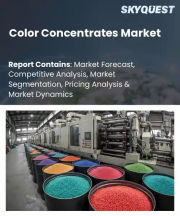
기술적으로 마스터배치로 알려진 컬러 컴파운드는 고농도의 안료 또는 첨가제를 적합한 캐리어 수지에 분산시켜 제조 공정에서 원료 폴리머에 착색하는 데 사용되는 정밀한 배합물입니다. 이 시장은 기본적으로 소비자 포장 분야에서 브랜드 차별화의 필요성이 증가하고, 자동차 및 건설 산업에서 미적으로 일관되고 내구성이 뛰어난 소재에 대한 수요가 증가함에 따라 지원되고 있습니다. 이러한 분야에서는 재료의 성능을 손상시키지 않고 특정 기능적 특성과 시각적 매력을 얻기 위해 컴파운드에 대한 의존도가 높아지고 있습니다.
| 시장 개요 | |
|---|---|
| 예측 기간 | 2027-2031 |
| 시장 규모 : 2025년 | 79억 8,000만 달러 |
| 시장 규모 : 2031년 | 118억 5,000만 달러 |
| CAGR : 2026-2031년 | 6.81% |
| 가장 빠르게 성장하는 부문 | 액체 컬러 농축제 |
| 최대 시장 | 북미 |
유럽 마스터배치 컴파운더 협회(EuMBC)의 2025년 조사에 따르면 이해관계자들의 예측에 따르면 마스터배치 부문의 내년도 성장률은 0-5% 범위로 예상됩니다. 이러한 긍정적인 전망에도 불구하고 유색 플라스틱의 재활용 가능성에 대한 엄격한 환경 규제로 인해 시장 확대에 큰 장벽이 존재합니다. 특히 근적외선 선별 시스템이 기존 카본블랙 안료에 대한 기술적 문제로 인해 제조업체는 규제 준수를 위해 값비싼 배합 변경을 해야 하는 등 많은 어려움을 겪고 있습니다.
시장 성장 촉진요인
연포장 및 경질 포장 분야 수요 급증은 컬러 컴파운드 시장의 주요 원동력이 되고 있습니다. 이는 급성장하는 E-Commerce 환경과 시각적 브랜드 차별화의 필요성에 의해 촉진되고 있습니다. 소비재 제조업체들이 디스플레이 효과 향상과 제품 보호를 위해 노력하는 가운데, 필름, 병, 용기용 마스터배치의 소비가 급증하고 있습니다. 이러한 추세는 포장 부문의 견고한 실적에 의해 구체적으로 수치화되고 있습니다. Flexible Packaging Association(Flexible Packaging Association)이 2024년 8월에 발표한 '미국 연포장 산업 현황 보고서'에 따르면 미국 연포장 산업의 2023년 연간 매출액은 약 429억 달러에 달할 것으로 추정됩니다. 이러한 큰 시장 규모는 원료 폴리머를 매력적인 시장성 있는 소비재로 전환하는 과정에서 색채 배합이 중요한 역할을 한다는 것을 지원합니다. 이는 진화하는 물류 및 미적 요구 사항을 충족시키기 위한 것입니다.
동시에, 지속가능한 바이오 배합의 채택이 가속화됨에 따라 업계는 재편되고 있으며, 제조업체는 재생 재료와 호환되는 고급 농축제를 개발해야 합니다. 이러한 전환은 주로 순환 경제의 목표에 의해 추진되고 있으며, 사용한 수지(PCR)를 신제품에 통합해야 할 필요성이 대두되고 있습니다. 재생원료에 내재된 황변이나 미적 불균일성을 보정하기 위해 특수 착색제가 요구되는 경우가 많습니다. 예를 들어 미국 PET 용기 자원 협회가 2024년 12월에 발표한 '2023년 PET 재활용 보고서'에 따르면 2023년 미국 PET병의 평균 재활용 PET 함량은 16.2%로 사상 최고치를 기록했습니다. 이러한 지속가능한 착색을 필요로 하는 기판의 규모는 여전히 방대합니다. 유럽 플라스틱 협회(Plastics Europe)에 따르면 2024년유럽의 플라스틱 총 생산량은 2023년5,400 만 톤으로 안정적이며, 현재 점점 더 복잡하고 환경 친화적인 컬러 솔루션을 필요로하는 폴리머 생산량이 매우 많다는 것을 보여줍니다.
시장이 해결해야 할 과제
유색 플라스틱의 재활용 가능성, 특히 카본블랙 안료와 선별 인프라의 기술적 비호환성에 초점을 맞춘 엄격한 규제 상황은 세계 컬러 컴파운드 시장의 성장에 큰 장벽이 되고 있습니다. 표준 카본블랙은 근적외선(NIR)을 흡수하므로 현대 재활용에 필수적인 광학 선별 시스템에서는 검출이 불가능합니다. 이 때문에 제조업체는 NIR 감지 가능한 안료를 사용하여 제품을 재구성해야 하지만, 이는 비용이 많이 들고 기술적으로 통합하기가 어렵습니다. 이러한 강제적 전환은 생산능력 확대와 혁신에 대한 자본투입을 저해하고, 생산효율의 병목현상을 야기하는 동시에 전체 밸류체인의 이익률을 압박하고 있습니다.
이러한 규제 대응 압력의 경제적 영향은 최근 산업 성과 지표에서 두드러지게 나타나고 있으며, 이는 업스트림 공급업체에 직접적인 영향을 미치는 광범위한 경기 둔화를 반영하고 있습니다. 유럽 플라스틱 협회(Plastics Europe)에 따르면 2024년 유럽 플라스틱 산업의 매출액은 3,980억 유로로 감소했습니다. 이는 제조 비용의 상승과 규제 제약으로 인한 급격한 축소로 인한 것입니다. 이러한 경기 둔화는 엄격한 순환 경제 기준을 충족시키기 위한 재정적 부담이 시장 발전을 직접적으로 저해하고 산업 전반의 경쟁력을 떨어뜨리는 현실을 부각시키고 있습니다.
시장 동향
특수효과 안료 및 감각 안료의 보급이 주요 동향으로 부상하고 있습니다. 이는 자동차 및 가전 분야에서 고부가가치 제품 차별화에 대한 니즈에 따른 것입니다. 포장용 표준 착색제와는 달리, 이러한 첨단 배합 기술은 진주광택, 메탈릭, 열변색 첨가제를 활용하여 역동적인 시각적 질감을 만들어냅니다. 이를 통해 브랜드 인지도와 제품 인지도를 높일 수 있습니다. 이러한 복잡한 미적 솔루션으로의 전환은 자동차 분야의 소비자 선호도에 따라 수치화되어 있습니다. 이 분야에서는 단색 도장보다 세련된 메탈릭 도장이 점점 더 선호되는 추세입니다. BASF가 2025년 1월에 발표한 'BASF 컬러 보고서 2024'에 따르면 미세한 메탈릭 효과로 표면의 역동성이 강한 회색 계열이 전체 자동차 컬러 시장의 약 20%를 차지했다고 합니다. 이는 이펙트계 안료에 대한 산업 의존도가 높아지고 있음을 반영합니다.
동시에, 디지털 컬러 매칭 기술의 통합은 배합 공정의 효율성과 물리적 샘플에 대한 의존도를 줄여 제조 환경을 변화시키고 있습니다. 이러한 추세는 클라우드 기반 소프트웨어와 AI 기반 분광광도계 채택으로 특징지어지며, 생산자는 정확한 색조 일관성을 달성하고 전 세계 공급망에서 리드 타임을 크게 단축할 수 있게 됩니다. 이러한 디지털 혁신에 대한 업계의 노력은 주요 특수화학 그룹들이 기술 인프라 현대화를 위해 막대한 자본을 투입하고 있다는 점에서 분명하게 드러납니다. 알타나 AG가 2025년 3월에 발표한 '2024년 기업 보고서'에 따르면 공장 설비, 디지털화, 지속가능성에 대한 투자를 30% 증가한 1억 8,000만 유로로 확대하고, 생산 효율을 최적화하기 위한 첨단 디지털 툴의 도입이 전략적 우선순위임을 강조하고 있습니다. 강조했습니다.
자주 묻는 질문
목차
제1장 개요
제2장 조사 방법
제3장 개요
제4장 고객의 소리
제5장 세계의 착색 농축액 시장 전망
- 시장 규모·예측
- 금액별
- 시장 점유율·예측
- 형태별(고체 컬러 컴파운드 및 액체 컬러 컴파운드)
- 수지 유형별(HDPE, LDPE, LLDPE, EVA, 폴리프로필렌, 폴리스티렌, 기타)
- 최종 용도 산업별(연포장, 경질 포장, 건축·건설, 소비재, 라미네이션, 지오텍스타일, 자동차 산업, 기타)
- 지역별
- 기업별(2025)
- 시장 맵
제6장 북미의 착색 농축액 시장 전망
- 시장 규모·예측
- 시장 점유율·예측
- 북미 : 국가별 분석
- 미국
- 캐나다
- 멕시코
제7장 유럽의 착색 농축액 시장 전망
- 시장 규모·예측
- 시장 점유율·예측
- 유럽 : 국가별 분석
- 독일
- 프랑스
- 영국
- 이탈리아
- 스페인
제8장 아시아태평양의 착색 농축액 시장 전망
- 시장 규모·예측
- 시장 점유율·예측
- 아시아태평양 : 국가별 분석
- 중국
- 인도
- 일본
- 한국
- 호주
제9장 중동 및 아프리카의 착색 농축액 시장 전망
- 시장 규모·예측
- 시장 점유율·예측
- 중동 및 아프리카 : 국가별 분석
- 사우디아라비아
- 아랍에미리트
- 남아프리카공화국
제10장 남미의 착색 농축액 시장 전망
- 시장 규모·예측
- 시장 점유율·예측
- 남미 : 국가별 분석
- 브라질
- 콜롬비아
- 아르헨티나
제11장 시장 역학
- 촉진요인
- 과제
제12장 시장 동향과 발전
- 합병과 인수
- 제품 출시
- 최근 동향
제13장 세계의 착색 농축액 시장 : SWOT 분석
제14장 Porter's Five Forces 분석
- 업계내 경쟁
- 신규 참여의 가능성
- 공급업체의 힘
- 고객의 힘
- 대체품의 위협
제15장 경쟁 구도
- Ampacet Corporation
- Ferro Corporation
- Colortech Inc.
- Chroma Color Corporation
- Penn Color, Inc.
- Plasticoncentrates, Inc.
- Plastiblends India Limited
- Alok Masterbatches Limited
- Tosaf Group
- Global Colors Group
제16장 전략적 제안
제17장 조사회사 소개·면책사항
KSA 26.02.26The Global Colour Concentrates Market is projected to expand from USD 7.98 Billion in 2025 to USD 11.85 Billion by 2031, registering a CAGR of 6.81 percent. Technically known as masterbatches, colour concentrates are precise formulations comprising high concentrations of pigments or additives dispersed within a compatible carrier resin, used to colour raw polymers during manufacturing. The market is fundamentally anchored by the intensifying need for brand differentiation within the consumer packaging sector, alongside substantial demand for aesthetically consistent and durable materials in the automotive and construction industries. These sectors increasingly depend on concentrates to attain specific functional properties and visual appeal without compromising material performance.
| Market Overview | |
|---|---|
| Forecast Period | 2027-2031 |
| Market Size 2025 | USD 7.98 Billion |
| Market Size 2031 | USD 11.85 Billion |
| CAGR 2026-2031 | 6.81% |
| Fastest Growing Segment | Liquid Colour Concentrates |
| Largest Market | North America |
According to the European Masterbatchers and Compounders (EuMBC), a 2025 survey of industry stakeholders forecasted a growth range of 0 to 5 percent for the masterbatch sector over the subsequent year. Despite this positive outlook, market expansion faces a significant impediment due to stringent environmental regulations regarding the recyclability of colored plastics. A specific challenge involves the technical difficulties near-infrared sorting systems encounter with conventional carbon black pigments, compelling manufacturers to undertake costly reformulations to ensure compliance.
Market Driver
The escalating demand within the flexible and rigid packaging sectors serves as a primary catalyst for the colour concentrates market, fueled by the booming e-commerce landscape and the necessity for visual brand differentiation. As consumer goods manufacturers strive to enhance shelf appeal and ensure product protection, the consumption of masterbatches for films, bottles, and containers has surged. This trend is specifically quantified by the robust performance of the packaging sector; according to the Flexible Packaging Association's August 2024 'State of the U.S. Flexible Packaging Industry Report', the U.S. flexible packaging industry generated an estimated $42.9 billion in annual sales for 2023. Such significant market value underscores the critical role of colour formulations in converting raw polymers into attractive, marketable consumer goods that meet evolving logistical and aesthetic requirements.
Simultaneously, the industry is being reshaped by the accelerated adoption of sustainable and bio-based formulations, compelling manufacturers to develop advanced concentrates compatible with recycled materials. This shift is largely driven by circular economy goals which necessitate the integration of post-consumer resin (PCR) into new products, often requiring specialized colorants to correct the yellowing or aesthetic inconsistencies inherent in recycled feedstocks. For instance, according to the National Association for PET Container Resources in the '2023 PET Recycling Report' released in December 2024, the average post-consumer recycled PET content in U.S. bottles reached an all-time high of 16.2 percent in 2023. The scale of the substrate material requiring such sustainable coloration remains vast; according to Plastics Europe, in 2024, total European plastics production stabilized at 54 million tonnes in 2023, highlighting the substantial volume of polymer output that now demands increasingly complex and eco-friendly colour solutions.
Market Challenge
The stringent regulatory landscape focusing on the recyclability of colored plastics, particularly the technical incompatibility of carbon black pigments with sorting infrastructure, stands as a formidable barrier to the growth of the Global Colour Concentrates Market. Standard carbon black absorbs near-infrared (NIR) radiation, making it undetectable to the optical sorting systems essential for modern recycling. Consequently, manufacturers are forced to reformulate products using NIR-detectable pigments, which are significantly costlier and technically demanding to integrate. This compulsory shift diverts capital away from capacity expansion and innovation, creating a bottleneck in production efficiency while compressing profit margins across the value chain.
The economic impact of these compliance-driven pressures is evident in recent industrial performance metrics, reflecting a broader slowdown that directly affects upstream suppliers. According to Plastics Europe, in 2024, the turnover for the European plastics industry declined to €398 billion, representing a sharp contraction attributed to rising manufacturing costs and regulatory constraints. This downturn illustrates how the financial strain of meeting strict circular economy standards is directly hampering market development and reducing the overall competitiveness of the sector.
Market Trends
The proliferation of special effect and sensory pigments is emerging as a dominant trend, driven by the need for high-value product differentiation in the automotive and consumer electronics sectors. Unlike standard colorations used in packaging, these advanced formulations utilize pearlescent, metallic, and thermochromic additives to create dynamic visual textures that enhance brand perception and perceived product quality. This shift toward complex aesthetic solutions is quantified by consumer preferences in the automotive space, where sophisticated metallic finishes are increasingly favored over solid colors. According to BASF, January 2025, in the 'BASF Color Report 2024', gray tones, which are predominantly characterized by fine metallic effects that provide strong surface dynamism, captured nearly 20 percent of the total automotive color market, reflecting the growing industrial reliance on effect-based pigments.
Simultaneously, the integration of digital color matching technologies is reshaping the manufacturing landscape by streamlining the formulation process and reducing dependency on physical sampling. This trend is characterized by the adoption of cloud-based software and AI-driven spectrophotometry, which allow producers to achieve precise color consistency and drastically cut lead times across global supply chains. The industry's commitment to this digital transformation is evident in the substantial capital allocation by major specialty chemical groups toward modernizing their technological infrastructure. According to Altana AG, March 2025, in the 'Corporate Report 2024', the company increased its investment in sites, digitalization, and sustainability by 30 percent to 180 million euros, underscoring the strategic priority placed on implementing advanced digital tools to optimize production efficiency.
Key Market Players
- Ampacet Corporation
- Ferro Corporation
- Colortech Inc.
- Chroma Color Corporation
- Penn Color, Inc.
- Plasticoncentrates, Inc.
- Plastiblends India Limited
- Alok Masterbatches Limited
- Tosaf Group
- Global Colors Group
Report Scope
In this report, the Global Colour Concentrates Market has been segmented into the following categories, in addition to the industry trends which have also been detailed below:
Colour Concentrates Market, By Form
- Solid Colour Concentrates and Liquid Colour Concentrates
Colour Concentrates Market, By Resin Type
- HDPE
- LDPE
- LLDPE
- EVA
- Polypropylene
- Polystyrene Others
Colour Concentrates Market, By End-Use Industry
- Flexible Packaging
- Rigid Packaging
- Building & Construction
- Consumer Goods
- Lamination
- Geotextile
- Automotive and Others
Colour Concentrates Market, By Region
- North America
- United States
- Canada
- Mexico
- Europe
- France
- United Kingdom
- Italy
- Germany
- Spain
- Asia Pacific
- China
- India
- Japan
- Australia
- South Korea
- South America
- Brazil
- Argentina
- Colombia
- Middle East & Africa
- South Africa
- Saudi Arabia
- UAE
Competitive Landscape
Company Profiles: Detailed analysis of the major companies present in the Global Colour Concentrates Market.
Available Customizations:
Global Colour Concentrates Market report with the given market data, TechSci Research offers customizations according to a company's specific needs. The following customization options are available for the report:
Company Information
- Detailed analysis and profiling of additional market players (up to five).
Table of Contents
1. Product Overview
- 1.1. Market Definition
- 1.2. Scope of the Market
- 1.2.1. Markets Covered
- 1.2.2. Years Considered for Study
- 1.2.3. Key Market Segmentations
2. Research Methodology
- 2.1. Objective of the Study
- 2.2. Baseline Methodology
- 2.3. Key Industry Partners
- 2.4. Major Association and Secondary Sources
- 2.5. Forecasting Methodology
- 2.6. Data Triangulation & Validation
- 2.7. Assumptions and Limitations
3. Executive Summary
- 3.1. Overview of the Market
- 3.2. Overview of Key Market Segmentations
- 3.3. Overview of Key Market Players
- 3.4. Overview of Key Regions/Countries
- 3.5. Overview of Market Drivers, Challenges, Trends
4. Voice of Customer
5. Global Colour Concentrates Market Outlook
- 5.1. Market Size & Forecast
- 5.1.1. By Value
- 5.2. Market Share & Forecast
- 5.2.1. By Form (Solid Colour Concentrates and Liquid Colour Concentrates)
- 5.2.2. By Resin Type (HDPE, LDPE, LLDPE, EVA, Polypropylene, Polystyrene Others)
- 5.2.3. By End-Use Industry (Flexible Packaging, Rigid Packaging, Building & Construction, Consumer Goods, Lamination, Geotextile, Automotive and Others)
- 5.2.4. By Region
- 5.2.5. By Company (2025)
- 5.3. Market Map
6. North America Colour Concentrates Market Outlook
- 6.1. Market Size & Forecast
- 6.1.1. By Value
- 6.2. Market Share & Forecast
- 6.2.1. By Form
- 6.2.2. By Resin Type
- 6.2.3. By End-Use Industry
- 6.2.4. By Country
- 6.3. North America: Country Analysis
- 6.3.1. United States Colour Concentrates Market Outlook
- 6.3.1.1. Market Size & Forecast
- 6.3.1.1.1. By Value
- 6.3.1.2. Market Share & Forecast
- 6.3.1.2.1. By Form
- 6.3.1.2.2. By Resin Type
- 6.3.1.2.3. By End-Use Industry
- 6.3.1.1. Market Size & Forecast
- 6.3.2. Canada Colour Concentrates Market Outlook
- 6.3.2.1. Market Size & Forecast
- 6.3.2.1.1. By Value
- 6.3.2.2. Market Share & Forecast
- 6.3.2.2.1. By Form
- 6.3.2.2.2. By Resin Type
- 6.3.2.2.3. By End-Use Industry
- 6.3.2.1. Market Size & Forecast
- 6.3.3. Mexico Colour Concentrates Market Outlook
- 6.3.3.1. Market Size & Forecast
- 6.3.3.1.1. By Value
- 6.3.3.2. Market Share & Forecast
- 6.3.3.2.1. By Form
- 6.3.3.2.2. By Resin Type
- 6.3.3.2.3. By End-Use Industry
- 6.3.3.1. Market Size & Forecast
- 6.3.1. United States Colour Concentrates Market Outlook
7. Europe Colour Concentrates Market Outlook
- 7.1. Market Size & Forecast
- 7.1.1. By Value
- 7.2. Market Share & Forecast
- 7.2.1. By Form
- 7.2.2. By Resin Type
- 7.2.3. By End-Use Industry
- 7.2.4. By Country
- 7.3. Europe: Country Analysis
- 7.3.1. Germany Colour Concentrates Market Outlook
- 7.3.1.1. Market Size & Forecast
- 7.3.1.1.1. By Value
- 7.3.1.2. Market Share & Forecast
- 7.3.1.2.1. By Form
- 7.3.1.2.2. By Resin Type
- 7.3.1.2.3. By End-Use Industry
- 7.3.1.1. Market Size & Forecast
- 7.3.2. France Colour Concentrates Market Outlook
- 7.3.2.1. Market Size & Forecast
- 7.3.2.1.1. By Value
- 7.3.2.2. Market Share & Forecast
- 7.3.2.2.1. By Form
- 7.3.2.2.2. By Resin Type
- 7.3.2.2.3. By End-Use Industry
- 7.3.2.1. Market Size & Forecast
- 7.3.3. United Kingdom Colour Concentrates Market Outlook
- 7.3.3.1. Market Size & Forecast
- 7.3.3.1.1. By Value
- 7.3.3.2. Market Share & Forecast
- 7.3.3.2.1. By Form
- 7.3.3.2.2. By Resin Type
- 7.3.3.2.3. By End-Use Industry
- 7.3.3.1. Market Size & Forecast
- 7.3.4. Italy Colour Concentrates Market Outlook
- 7.3.4.1. Market Size & Forecast
- 7.3.4.1.1. By Value
- 7.3.4.2. Market Share & Forecast
- 7.3.4.2.1. By Form
- 7.3.4.2.2. By Resin Type
- 7.3.4.2.3. By End-Use Industry
- 7.3.4.1. Market Size & Forecast
- 7.3.5. Spain Colour Concentrates Market Outlook
- 7.3.5.1. Market Size & Forecast
- 7.3.5.1.1. By Value
- 7.3.5.2. Market Share & Forecast
- 7.3.5.2.1. By Form
- 7.3.5.2.2. By Resin Type
- 7.3.5.2.3. By End-Use Industry
- 7.3.5.1. Market Size & Forecast
- 7.3.1. Germany Colour Concentrates Market Outlook
8. Asia Pacific Colour Concentrates Market Outlook
- 8.1. Market Size & Forecast
- 8.1.1. By Value
- 8.2. Market Share & Forecast
- 8.2.1. By Form
- 8.2.2. By Resin Type
- 8.2.3. By End-Use Industry
- 8.2.4. By Country
- 8.3. Asia Pacific: Country Analysis
- 8.3.1. China Colour Concentrates Market Outlook
- 8.3.1.1. Market Size & Forecast
- 8.3.1.1.1. By Value
- 8.3.1.2. Market Share & Forecast
- 8.3.1.2.1. By Form
- 8.3.1.2.2. By Resin Type
- 8.3.1.2.3. By End-Use Industry
- 8.3.1.1. Market Size & Forecast
- 8.3.2. India Colour Concentrates Market Outlook
- 8.3.2.1. Market Size & Forecast
- 8.3.2.1.1. By Value
- 8.3.2.2. Market Share & Forecast
- 8.3.2.2.1. By Form
- 8.3.2.2.2. By Resin Type
- 8.3.2.2.3. By End-Use Industry
- 8.3.2.1. Market Size & Forecast
- 8.3.3. Japan Colour Concentrates Market Outlook
- 8.3.3.1. Market Size & Forecast
- 8.3.3.1.1. By Value
- 8.3.3.2. Market Share & Forecast
- 8.3.3.2.1. By Form
- 8.3.3.2.2. By Resin Type
- 8.3.3.2.3. By End-Use Industry
- 8.3.3.1. Market Size & Forecast
- 8.3.4. South Korea Colour Concentrates Market Outlook
- 8.3.4.1. Market Size & Forecast
- 8.3.4.1.1. By Value
- 8.3.4.2. Market Share & Forecast
- 8.3.4.2.1. By Form
- 8.3.4.2.2. By Resin Type
- 8.3.4.2.3. By End-Use Industry
- 8.3.4.1. Market Size & Forecast
- 8.3.5. Australia Colour Concentrates Market Outlook
- 8.3.5.1. Market Size & Forecast
- 8.3.5.1.1. By Value
- 8.3.5.2. Market Share & Forecast
- 8.3.5.2.1. By Form
- 8.3.5.2.2. By Resin Type
- 8.3.5.2.3. By End-Use Industry
- 8.3.5.1. Market Size & Forecast
- 8.3.1. China Colour Concentrates Market Outlook
9. Middle East & Africa Colour Concentrates Market Outlook
- 9.1. Market Size & Forecast
- 9.1.1. By Value
- 9.2. Market Share & Forecast
- 9.2.1. By Form
- 9.2.2. By Resin Type
- 9.2.3. By End-Use Industry
- 9.2.4. By Country
- 9.3. Middle East & Africa: Country Analysis
- 9.3.1. Saudi Arabia Colour Concentrates Market Outlook
- 9.3.1.1. Market Size & Forecast
- 9.3.1.1.1. By Value
- 9.3.1.2. Market Share & Forecast
- 9.3.1.2.1. By Form
- 9.3.1.2.2. By Resin Type
- 9.3.1.2.3. By End-Use Industry
- 9.3.1.1. Market Size & Forecast
- 9.3.2. UAE Colour Concentrates Market Outlook
- 9.3.2.1. Market Size & Forecast
- 9.3.2.1.1. By Value
- 9.3.2.2. Market Share & Forecast
- 9.3.2.2.1. By Form
- 9.3.2.2.2. By Resin Type
- 9.3.2.2.3. By End-Use Industry
- 9.3.2.1. Market Size & Forecast
- 9.3.3. South Africa Colour Concentrates Market Outlook
- 9.3.3.1. Market Size & Forecast
- 9.3.3.1.1. By Value
- 9.3.3.2. Market Share & Forecast
- 9.3.3.2.1. By Form
- 9.3.3.2.2. By Resin Type
- 9.3.3.2.3. By End-Use Industry
- 9.3.3.1. Market Size & Forecast
- 9.3.1. Saudi Arabia Colour Concentrates Market Outlook
10. South America Colour Concentrates Market Outlook
- 10.1. Market Size & Forecast
- 10.1.1. By Value
- 10.2. Market Share & Forecast
- 10.2.1. By Form
- 10.2.2. By Resin Type
- 10.2.3. By End-Use Industry
- 10.2.4. By Country
- 10.3. South America: Country Analysis
- 10.3.1. Brazil Colour Concentrates Market Outlook
- 10.3.1.1. Market Size & Forecast
- 10.3.1.1.1. By Value
- 10.3.1.2. Market Share & Forecast
- 10.3.1.2.1. By Form
- 10.3.1.2.2. By Resin Type
- 10.3.1.2.3. By End-Use Industry
- 10.3.1.1. Market Size & Forecast
- 10.3.2. Colombia Colour Concentrates Market Outlook
- 10.3.2.1. Market Size & Forecast
- 10.3.2.1.1. By Value
- 10.3.2.2. Market Share & Forecast
- 10.3.2.2.1. By Form
- 10.3.2.2.2. By Resin Type
- 10.3.2.2.3. By End-Use Industry
- 10.3.2.1. Market Size & Forecast
- 10.3.3. Argentina Colour Concentrates Market Outlook
- 10.3.3.1. Market Size & Forecast
- 10.3.3.1.1. By Value
- 10.3.3.2. Market Share & Forecast
- 10.3.3.2.1. By Form
- 10.3.3.2.2. By Resin Type
- 10.3.3.2.3. By End-Use Industry
- 10.3.3.1. Market Size & Forecast
- 10.3.1. Brazil Colour Concentrates Market Outlook
11. Market Dynamics
- 11.1. Drivers
- 11.2. Challenges
12. Market Trends & Developments
- 12.1. Merger & Acquisition (If Any)
- 12.2. Product Launches (If Any)
- 12.3. Recent Developments
13. Global Colour Concentrates Market: SWOT Analysis
14. Porter's Five Forces Analysis
- 14.1. Competition in the Industry
- 14.2. Potential of New Entrants
- 14.3. Power of Suppliers
- 14.4. Power of Customers
- 14.5. Threat of Substitute Products
15. Competitive Landscape
- 15.1. Ampacet Corporation
- 15.1.1. Business Overview
- 15.1.2. Products & Services
- 15.1.3. Recent Developments
- 15.1.4. Key Personnel
- 15.1.5. SWOT Analysis
- 15.2. Ferro Corporation
- 15.3. Colortech Inc.
- 15.4. Chroma Color Corporation
- 15.5. Penn Color, Inc.
- 15.6. Plasticoncentrates, Inc.
- 15.7. Plastiblends India Limited
- 15.8. Alok Masterbatches Limited
- 15.9. Tosaf Group
- 15.10. Global Colors Group