|
시장보고서
상품코드
1961239
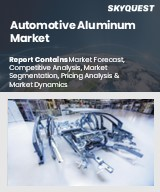
자동차용 알루미늄 시장 - 세계 산업 규모, 점유율, 동향, 기회, 예측 : 차종별, 제품 유형별, 용도별, 지역별 및 경쟁(2021-2031년)Automotive Aluminum Market - Global Industry Size, Share, Trends, Opportunity, and Forecast, Segmented By Vehicle Type, By Product Type, By Application Type, By Region & Competition, 2021-2031F |
||||||

세계의 자동차용 알루미늄 시장은 2025년 319억 1,000만 달러에서 2031년까지 451억 4,000만 달러로 확대되어 CAGR 5.95%를 기록할 것으로 예측됩니다.
이 시장은 차량의 파워트레인 및 구조물에 내장되어 총중량 감소에 기여하는 알루미늄 합금 및 압출재, 압연판, 주조품 등의 가공 형태를 포함하고 있습니다. 정부의 엄격한 연비 규제와 전 세계 전기화로의 급속한 전환이 이 시장의 기반이 되고 있습니다. 경량화는 무거운 배터리 팩의 부하를 상쇄하고 항속거리를 연장하는 데 필수적입니다. 이러한 중요한 촉진요인으로 인해 OEM은 규제 기준과 성능 최적화 목표를 달성하기 위해 기존 중금속보다 알루미늄을 선호하게 되었습니다.
| 시장 개요 | |
|---|---|
| 예측 기간 | 2027-2031년 |
| 시장 규모 : 2025년 | 319억 1,000만 달러 |
| 시장 규모 : 2031년 | 451억 4,000만 달러 |
| CAGR : 2026-2031년 | 5.95% |
| 가장 빠르게 성장하는 부문 | 압출 성형 |
| 최대 시장 | 아시아태평양 |
'알루미늄 협회'에 따르면, '2024년 상반기 캐나다와 미국 전체 알루미늄 수요는 5.2% 증가하였습니다. 이 증가는 주로 운송 부문에 기인한 것으로 추정됩니다. 이러한 확장에도 불구하고 시장은 원자재 및 에너지 비용의 변동성과 관련된 심각한 도전에 직면해 있습니다. 1차 알루미늄 생산은 막대한 에너지를 소비하기 때문에 변동하는 전력 요금은 공급망에 혼란을 초래하고 최종 부품 비용을 증가시킬 수 있습니다. 이로 인해 가격에 민감한 차량 부문에서 철강재가 여전히 경쟁력 있는 대체재로 남아있는 상황에서 철강재의 채택률을 저해할 수 있습니다.
시장 촉진요인
전기자동차로의 전환 가속화가 시장 확대의 주요 촉매제로 작용하고 있으며, 항속거리 불안을 완화하기 위한 재료 선택 전략을 근본적으로 바꾸고 있습니다. 충전당 에너지 효율을 높이기 위해 자동차 제조업체들은 배터리 팩의 무게 증가를 상쇄하기 위해 구조 부품과 배터리 케이스에 알루미늄 압연판과 압출재를 통합하는 것을 표준화하고 있습니다. 이러한 소재 전환을 통해 안전 성능이나 구조적 무결성을 훼손하지 않고 차량의 차체 중량을 크게 줄일 수 있습니다. Norsk Hydro(2024년 3월)의 '2023년 연차보고서'에 따르면, 전기자동차는 기존 내연기관차 대비 약 30% 더 많은 알루미늄을 사용하고 있으며, 이 차이는 전 세계 전동화 목표의 확대에 따라 수요량을 직접적으로 증가시키는 요인으로 작용하고 있습니다.
전동화와 함께 총 탄소 배출량을 줄이기 위해 무한히 재활용 가능한 지속가능한 자동차 소재에 대한 업계의 수요가 증가하고 있습니다. 제조업체는 순환 경제 모델을 적극적으로 추구하고, 기업의 지속가능성 목표와 규제 준수를 충족하기 위해 여러 번의 재활용 주기를 통해 특성을 유지하는 재료를 우선시합니다. 자동차 제조업체와 알루미늄 생산업체 간의 폐쇄형 재활용 시스템이 구축되고 있으며, 스크랩을 효율적으로 재사용함으로써 에너지 집약적인 1차 금속에 대한 의존도를 낮추고 있습니다. Novelis가 2024년 5월에 발표한 '2024 회계연도 결산 보고서'에 따르면, 회사의 전체 제품 포트폴리오에서 평균 63%의 재활용 소재 함유량을 달성했다고 보고했으며, 이는 주로 이러한 폐쇄 루프 제휴를 통해 추진된 것으로 나타났습니다. 유럽 알루미늄 협회(European Aluminium)에 따르면, 2024년 운송 부문이 유럽 시장에서 반가공 알루미늄의 총 사용량의 42%를 차지하며 수요를 주도할 것으로 예상했습니다.
시장의 과제
에너지 집약적인 1차 생산에 대한 시장의 의존도는 변동하는 전력 및 원자재 비용에 대한 심각한 취약성을 야기하고 있습니다. 알루미늄 제련에는 막대한 전력 투입이 필요하기 때문에 세계 에너지 가격의 변동은 생산자의 운영 비용에 직접적인 영향을 미칩니다. 에너지 요금이 급등할 경우, 제조업체는 생산량을 줄이거나 이러한 비용 상승분을 자동차 제조사(OEM)에 전가할 수밖에 없는 상황에 처하게 되는 경우가 많습니다. 이러한 가격 불안정성은 특히 엄격한 비용 목표 준수가 수익성에 매우 중요한 가격 민감도가 높은 차량 부문에서 철강에 비해 알루미늄의 경쟁 우위를 약화시키는 요인으로 작용할 수 있습니다.
이러한 재정적 압박은 최근 에너지 비용이 높은 지역의 생산 데이터에서 알 수 있듯이 공급망에 구체적인 혼란을 가져옵니다. 국제알루미늄협회(IAI)에 따르면, 2024년 서유럽과 중부유럽의 1차 알루미늄 생산량은 283만 톤으로 감소할 것으로 예상했습니다. 이러한 공급 감소는 엄청난 에너지 비용으로 인해 자동차 부품에 필요한 고품질 금속의 안정적인 공급을 위협하고 있습니다. 그 결과, 자동차 제조업체는 불확실성 증가와 조달 비용 상승에 직면하여 알루미늄 솔루션의 보급을 직접적으로 저해하고 전체 시장의 성장 궤도를 둔화시키고 있습니다.
시장 동향
메가 캐스팅 제조 기술의 보급은 거대한 일체형 알루미늄 차체 제조를 가능하게 하고, 수십 개의 용접 조인트와 스탬핑 부품을 대체하여 자동차 생산에 혁명을 일으키고 있습니다. 이 제조 방식을 통해 OEM은 조립 공정의 복잡성을 크게 줄이고, 로봇 수를 최소화하며, 바닥 공간을 최적화할 수 있어 대량 생산 차량 프로그램의 수익성을 높일 수 있는 효율적인 경로를 제공합니다. 자동차 제조업체들은 생산 비용을 줄이면서 구조적 강성을 높이기 위해 이 기술을 점점 더 많이 활용하고 있습니다. DailyRevs의 2025년 4월호 기사 "Toyota의 EV 부활 : 15개의 새로운 모델, 세계 출시, 그리고 100만대 판매 야망"에 따르면, Toyota는 2026년 출시 예정인 EV 모델에 이 기가캐스팅 기술을 통합할 계획이며, 이는 2027년까지 연간 100만대 판매 목표를 달성하기 위한 전략적 조치입니다. 2027년까지 연간 100만대의 전기자동차 판매 목표를 달성하기 위한 전략적 조치입니다.
동시에 충돌 안전 시스템에서 알루미늄 압출 소재의 채택이 가속화되고 있습니다. 무게가 늘어난 EV 플랫폼에서 탑승자를 보호하기 위해 차체 구조에 우수한 에너지 흡수 능력이 요구되기 때문입니다. 기존의 강철 보강재와 달리, 알루미늄 압출재는 높은 강도 대 중량비를 가지고 있어 충돌 시 예상대로 변형되는 복잡한 단면 형상을 설계할 수 있습니다. 이 용도는 안전 성능을 극대화하면서 지속가능한 소재를 통합하는 합금 개발의 혁신을 주도하고 있습니다. Constellium은 2025년 9월 보도자료 'Constellium, Cenex 2025에서 공동 연구 프로젝트 CirConAl의 첨단 알루미늄 솔루션 전시'를 통해 소비 후 알루미늄 스크랩을 90% 이상 사용하여 제조한 충돌 관리 시스템 시제품을 공개했습니다. 프로토타입을 공개하였습니다. 이를 통해 중요한 안전 영역에서 동 소재의 높은 내충격성을 입증했습니다.
자주 묻는 질문
목차
제1장 개요
제2장 조사 방법
제3장 주요 요약
제4장 고객의 소리
제5장 세계의 자동차용 알루미늄 시장 전망
제6장 북미의 자동차용 알루미늄 시장 전망
제7장 유럽의 자동차용 알루미늄 시장 전망
제8장 아시아태평양의 자동차용 알루미늄 시장 전망
제9장 중동 및 아프리카의 자동차용 알루미늄 시장 전망
제10장 남미의 자동차용 알루미늄 시장 전망
제11장 시장 역학
제12장 시장 동향과 발전
제13장 세계의 자동차용 알루미늄 시장 : SWOT 분석
제14장 Porter's Five Forces 분석
제15장 경쟁 구도
제16장 전략적 제안
제17장 조사 회사 소개 및 면책사항
KSM 26.03.30The Global Automotive Aluminum Market is projected to expand from a valuation of USD 31.91 Billion in 2025 to USD 45.14 Billion by 2031, reflecting a CAGR of 5.95%. This market encompasses aluminum alloys and processed forms, including extrusions, rolled sheets, and castings, which are integrated into vehicle powertrains and structures to decrease total mass. Stringent government-mandated fuel economy regulations and the rapid global shift toward electrification underpin this market, as lightweighting is crucial for offsetting heavy battery packs and extending driving ranges. These essential drivers urge Original Equipment Manufacturers to favor aluminum over heavier traditional metals to meet regulatory standards and performance optimization goals.
| Market Overview | |
|---|---|
| Forecast Period | 2027-2031 |
| Market Size 2025 | USD 31.91 Billion |
| Market Size 2031 | USD 45.14 Billion |
| CAGR 2026-2031 | 5.95% |
| Fastest Growing Segment | Extruded |
| Largest Market | Asia Pacific |
According to 'The Aluminum Association', in '2024', aluminum demand across Canada and the United States increased by 5.2% during the first half of the year, a rise primarily attributed to the transportation sector. Despite this expansion, the market faces significant hurdles related to the volatility of raw material and energy costs. Since primary aluminum production consumes vast amounts of energy, fluctuating electricity rates can disrupt supply chains and increase final component costs, potentially hindering adoption rates in price-sensitive vehicle segments where steel remains a viable competitive alternative.
Market Driver
The accelerating transition to electric vehicles acts as a major catalyst for market expansion, fundamentally changing material selection strategies to mitigate range anxiety. To enhance energy efficiency per charge, automakers have standardized the integration of aluminum rolled sheets and extrusions into structural components and battery enclosures to counterbalance the substantial mass of battery packs. This material shift enables manufacturers to significantly lower vehicle curb weight without compromising safety performance or structural integrity. According to Norsk Hydro, March 2024, in the 'Annual Report 2023', electric vehicles typically utilize approximately 30% more aluminum than traditional internal combustion engine vehicles, a disparity that directly bolsters volume demand as global electrification targets grow.
Alongside electrification, there is rising industry demand for infinitely recyclable and sustainable automotive materials to reduce total carbon footprints. Manufacturers are actively pursuing circular economy models, preferring materials that maintain their properties through multiple recycling cycles to satisfy corporate sustainability goals and regulatory compliance. Closed-loop recycling systems between carmakers and aluminum producers are becoming increasingly established to efficiently reuse scrap, thereby decreasing dependence on energy-intensive primary metal. According to Novelis, May 2024, in the 'Fiscal Year 2024 Earnings Release', the company reported achieving an average of 63% recycled content across its portfolio, largely driven by these closed-loop partnerships. This reliance is evident in consumption patterns; according to European Aluminium, the transport sector led demand in 2024, accounting for 42% of total semi-fabricated aluminum usage in the European market.
Market Challenge
The market's dependence on energy-intensive primary production creates significant vulnerability to volatile electricity and raw material costs. Because aluminum smelting requires substantial power input, any fluctuation in global energy prices directly impacts operational expenses for producers. When energy rates surge, manufacturers are often forced to curtail output or pass these inflated costs downstream to automotive Original Equipment Manufacturers (OEMs). This price instability diminishes the material's competitive advantage over steel, particularly within price-sensitive vehicle segments where adhering to strict cost targets is critical for profitability.
These financial pressures cause tangible disruptions in the supply chain, as demonstrated by recent production data in high-cost energy regions. According to the 'International Aluminium Institute', in '2024', primary aluminum production in Western and Central Europe declined to 2.83 million tonnes. Such a contraction in supply, driven by prohibitive energy expenses, destabilizes the availability of high-grade metal required for automotive components. Consequently, automakers face heightened uncertainty and elevated procurement costs, which directly hampers the broader adoption of aluminum solutions and slows the market's overall growth trajectory.
Market Trends
The Widespread Adoption of Mega-Casting Manufacturing Techniques is revolutionizing automotive production by facilitating the creation of massive, single-piece aluminum underbodies, thereby replacing dozens of welded joints and stamped components. This manufacturing paradigm allows Original Equipment Manufacturers to significantly reduce assembly complexity, minimize robot count, and optimize floor space, offering a streamlined path to profitability for high-volume vehicle programs. Automakers are increasingly leveraging this technology to enhance structural rigidity while lowering production costs. According to DailyRevs, April 2025, in the 'Toyota's EV Comeback: 15 New Models, Global Expansion, and a Million-Unit Ambition' article, Toyota plans to incorporate this gigacasting technology into a 2026 EV model, a strategic move supporting its goal to reach 1 million annual electric vehicle sales by 2027.
Simultaneously, the Expansion of Aluminum Extrusions in Crash Management Systems is gaining momentum as vehicle architectures require superior energy absorption capabilities to protect passengers in heavier electric platforms. Unlike traditional steel reinforcements, extruded aluminum offers a high strength-to-weight ratio, allowing engineers to design complex cross-sections that crumple predictably during impact. This application is driving innovation in alloy development to maximize safety performance while integrating sustainable inputs. According to Constellium, September 2025, in the 'Constellium to Showcase Advanced Aluminum Solutions from Collaborative Research Project CirConAl at Cenex 2025' press release, the company displayed prototype Crash Management Systems manufactured using over 90% post-consumer aluminum scrap, validating the material's high-impact resistance in critical safety zones.
Key Market Players
- Alcoa Corporation
- Hindalco Industries Limited.
- Rio Tinto Group
- Constellium group
- AMG Critical Materials N.V.
- UACJ Corporation
- Norsk Hydro ASA
- Dana Incorporated
- PWO AG
- Kaiser Aluminum Corporation
Report Scope
In this report, the Global Automotive Aluminum Market has been segmented into the following categories, in addition to the industry trends which have also been detailed below:
Automotive Aluminum Market, By Vehicle Type
- Passenger Cars
- Light Commercial Vehicles
- Medium & Heavy Commercial Vehicles
Automotive Aluminum Market, By Product Type
- Cast
- Rolled
- Extruded
Automotive Aluminum Market, By Application Type
- Powertrain
- Chassis & Suspension
- Car Body
- Others
Automotive Aluminum Market, By Region
- North America
- United States
- Canada
- Mexico
- Europe
- France
- United Kingdom
- Italy
- Germany
- Spain
- Asia Pacific
- China
- India
- Japan
- Australia
- South Korea
- South America
- Brazil
- Argentina
- Colombia
- Middle East & Africa
- South Africa
- Saudi Arabia
- UAE
Competitive Landscape
Company Profiles: Detailed analysis of the major companies present in the Global Automotive Aluminum Market.
Available Customizations:
Global Automotive Aluminum Market report with the given market data, TechSci Research offers customizations according to a company's specific needs. The following customization options are available for the report:
Company Information
- Detailed analysis and profiling of additional market players (up to five).
Table of Contents
1. Product Overview
- 1.1. Market Definition
- 1.2. Scope of the Market
- 1.2.1. Markets Covered
- 1.2.2. Years Considered for Study
- 1.2.3. Key Market Segmentations
2. Research Methodology
- 2.1. Objective of the Study
- 2.2. Baseline Methodology
- 2.3. Key Industry Partners
- 2.4. Major Association and Secondary Sources
- 2.5. Forecasting Methodology
- 2.6. Data Triangulation & Validation
- 2.7. Assumptions and Limitations
3. Executive Summary
- 3.1. Overview of the Market
- 3.2. Overview of Key Market Segmentations
- 3.3. Overview of Key Market Players
- 3.4. Overview of Key Regions/Countries
- 3.5. Overview of Market Drivers, Challenges, Trends
4. Voice of Customer
5. Global Automotive Aluminum Market Outlook
- 5.1. Market Size & Forecast
- 5.1.1. By Value
- 5.2. Market Share & Forecast
- 5.2.1. By Vehicle Type (Passenger Cars, Light Commercial Vehicles, Medium & Heavy Commercial Vehicles)
- 5.2.2. By Product Type (Cast, Rolled, Extruded)
- 5.2.3. By Application Type (Powertrain, Chassis & Suspension, Car Body, Others)
- 5.2.4. By Region
- 5.2.5. By Company (2025)
- 5.3. Market Map
6. North America Automotive Aluminum Market Outlook
- 6.1. Market Size & Forecast
- 6.1.1. By Value
- 6.2. Market Share & Forecast
- 6.2.1. By Vehicle Type
- 6.2.2. By Product Type
- 6.2.3. By Application Type
- 6.2.4. By Country
- 6.3. North America: Country Analysis
- 6.3.1. United States Automotive Aluminum Market Outlook
- 6.3.1.1. Market Size & Forecast
- 6.3.1.1.1. By Value
- 6.3.1.2. Market Share & Forecast
- 6.3.1.2.1. By Vehicle Type
- 6.3.1.2.2. By Product Type
- 6.3.1.2.3. By Application Type
- 6.3.1.1. Market Size & Forecast
- 6.3.2. Canada Automotive Aluminum Market Outlook
- 6.3.2.1. Market Size & Forecast
- 6.3.2.1.1. By Value
- 6.3.2.2. Market Share & Forecast
- 6.3.2.2.1. By Vehicle Type
- 6.3.2.2.2. By Product Type
- 6.3.2.2.3. By Application Type
- 6.3.2.1. Market Size & Forecast
- 6.3.3. Mexico Automotive Aluminum Market Outlook
- 6.3.3.1. Market Size & Forecast
- 6.3.3.1.1. By Value
- 6.3.3.2. Market Share & Forecast
- 6.3.3.2.1. By Vehicle Type
- 6.3.3.2.2. By Product Type
- 6.3.3.2.3. By Application Type
- 6.3.3.1. Market Size & Forecast
- 6.3.1. United States Automotive Aluminum Market Outlook
7. Europe Automotive Aluminum Market Outlook
- 7.1. Market Size & Forecast
- 7.1.1. By Value
- 7.2. Market Share & Forecast
- 7.2.1. By Vehicle Type
- 7.2.2. By Product Type
- 7.2.3. By Application Type
- 7.2.4. By Country
- 7.3. Europe: Country Analysis
- 7.3.1. Germany Automotive Aluminum Market Outlook
- 7.3.1.1. Market Size & Forecast
- 7.3.1.1.1. By Value
- 7.3.1.2. Market Share & Forecast
- 7.3.1.2.1. By Vehicle Type
- 7.3.1.2.2. By Product Type
- 7.3.1.2.3. By Application Type
- 7.3.1.1. Market Size & Forecast
- 7.3.2. France Automotive Aluminum Market Outlook
- 7.3.2.1. Market Size & Forecast
- 7.3.2.1.1. By Value
- 7.3.2.2. Market Share & Forecast
- 7.3.2.2.1. By Vehicle Type
- 7.3.2.2.2. By Product Type
- 7.3.2.2.3. By Application Type
- 7.3.2.1. Market Size & Forecast
- 7.3.3. United Kingdom Automotive Aluminum Market Outlook
- 7.3.3.1. Market Size & Forecast
- 7.3.3.1.1. By Value
- 7.3.3.2. Market Share & Forecast
- 7.3.3.2.1. By Vehicle Type
- 7.3.3.2.2. By Product Type
- 7.3.3.2.3. By Application Type
- 7.3.3.1. Market Size & Forecast
- 7.3.4. Italy Automotive Aluminum Market Outlook
- 7.3.4.1. Market Size & Forecast
- 7.3.4.1.1. By Value
- 7.3.4.2. Market Share & Forecast
- 7.3.4.2.1. By Vehicle Type
- 7.3.4.2.2. By Product Type
- 7.3.4.2.3. By Application Type
- 7.3.4.1. Market Size & Forecast
- 7.3.5. Spain Automotive Aluminum Market Outlook
- 7.3.5.1. Market Size & Forecast
- 7.3.5.1.1. By Value
- 7.3.5.2. Market Share & Forecast
- 7.3.5.2.1. By Vehicle Type
- 7.3.5.2.2. By Product Type
- 7.3.5.2.3. By Application Type
- 7.3.5.1. Market Size & Forecast
- 7.3.1. Germany Automotive Aluminum Market Outlook
8. Asia Pacific Automotive Aluminum Market Outlook
- 8.1. Market Size & Forecast
- 8.1.1. By Value
- 8.2. Market Share & Forecast
- 8.2.1. By Vehicle Type
- 8.2.2. By Product Type
- 8.2.3. By Application Type
- 8.2.4. By Country
- 8.3. Asia Pacific: Country Analysis
- 8.3.1. China Automotive Aluminum Market Outlook
- 8.3.1.1. Market Size & Forecast
- 8.3.1.1.1. By Value
- 8.3.1.2. Market Share & Forecast
- 8.3.1.2.1. By Vehicle Type
- 8.3.1.2.2. By Product Type
- 8.3.1.2.3. By Application Type
- 8.3.1.1. Market Size & Forecast
- 8.3.2. India Automotive Aluminum Market Outlook
- 8.3.2.1. Market Size & Forecast
- 8.3.2.1.1. By Value
- 8.3.2.2. Market Share & Forecast
- 8.3.2.2.1. By Vehicle Type
- 8.3.2.2.2. By Product Type
- 8.3.2.2.3. By Application Type
- 8.3.2.1. Market Size & Forecast
- 8.3.3. Japan Automotive Aluminum Market Outlook
- 8.3.3.1. Market Size & Forecast
- 8.3.3.1.1. By Value
- 8.3.3.2. Market Share & Forecast
- 8.3.3.2.1. By Vehicle Type
- 8.3.3.2.2. By Product Type
- 8.3.3.2.3. By Application Type
- 8.3.3.1. Market Size & Forecast
- 8.3.4. South Korea Automotive Aluminum Market Outlook
- 8.3.4.1. Market Size & Forecast
- 8.3.4.1.1. By Value
- 8.3.4.2. Market Share & Forecast
- 8.3.4.2.1. By Vehicle Type
- 8.3.4.2.2. By Product Type
- 8.3.4.2.3. By Application Type
- 8.3.4.1. Market Size & Forecast
- 8.3.5. Australia Automotive Aluminum Market Outlook
- 8.3.5.1. Market Size & Forecast
- 8.3.5.1.1. By Value
- 8.3.5.2. Market Share & Forecast
- 8.3.5.2.1. By Vehicle Type
- 8.3.5.2.2. By Product Type
- 8.3.5.2.3. By Application Type
- 8.3.5.1. Market Size & Forecast
- 8.3.1. China Automotive Aluminum Market Outlook
9. Middle East & Africa Automotive Aluminum Market Outlook
- 9.1. Market Size & Forecast
- 9.1.1. By Value
- 9.2. Market Share & Forecast
- 9.2.1. By Vehicle Type
- 9.2.2. By Product Type
- 9.2.3. By Application Type
- 9.2.4. By Country
- 9.3. Middle East & Africa: Country Analysis
- 9.3.1. Saudi Arabia Automotive Aluminum Market Outlook
- 9.3.1.1. Market Size & Forecast
- 9.3.1.1.1. By Value
- 9.3.1.2. Market Share & Forecast
- 9.3.1.2.1. By Vehicle Type
- 9.3.1.2.2. By Product Type
- 9.3.1.2.3. By Application Type
- 9.3.1.1. Market Size & Forecast
- 9.3.2. UAE Automotive Aluminum Market Outlook
- 9.3.2.1. Market Size & Forecast
- 9.3.2.1.1. By Value
- 9.3.2.2. Market Share & Forecast
- 9.3.2.2.1. By Vehicle Type
- 9.3.2.2.2. By Product Type
- 9.3.2.2.3. By Application Type
- 9.3.2.1. Market Size & Forecast
- 9.3.3. South Africa Automotive Aluminum Market Outlook
- 9.3.3.1. Market Size & Forecast
- 9.3.3.1.1. By Value
- 9.3.3.2. Market Share & Forecast
- 9.3.3.2.1. By Vehicle Type
- 9.3.3.2.2. By Product Type
- 9.3.3.2.3. By Application Type
- 9.3.3.1. Market Size & Forecast
- 9.3.1. Saudi Arabia Automotive Aluminum Market Outlook
10. South America Automotive Aluminum Market Outlook
- 10.1. Market Size & Forecast
- 10.1.1. By Value
- 10.2. Market Share & Forecast
- 10.2.1. By Vehicle Type
- 10.2.2. By Product Type
- 10.2.3. By Application Type
- 10.2.4. By Country
- 10.3. South America: Country Analysis
- 10.3.1. Brazil Automotive Aluminum Market Outlook
- 10.3.1.1. Market Size & Forecast
- 10.3.1.1.1. By Value
- 10.3.1.2. Market Share & Forecast
- 10.3.1.2.1. By Vehicle Type
- 10.3.1.2.2. By Product Type
- 10.3.1.2.3. By Application Type
- 10.3.1.1. Market Size & Forecast
- 10.3.2. Colombia Automotive Aluminum Market Outlook
- 10.3.2.1. Market Size & Forecast
- 10.3.2.1.1. By Value
- 10.3.2.2. Market Share & Forecast
- 10.3.2.2.1. By Vehicle Type
- 10.3.2.2.2. By Product Type
- 10.3.2.2.3. By Application Type
- 10.3.2.1. Market Size & Forecast
- 10.3.3. Argentina Automotive Aluminum Market Outlook
- 10.3.3.1. Market Size & Forecast
- 10.3.3.1.1. By Value
- 10.3.3.2. Market Share & Forecast
- 10.3.3.2.1. By Vehicle Type
- 10.3.3.2.2. By Product Type
- 10.3.3.2.3. By Application Type
- 10.3.3.1. Market Size & Forecast
- 10.3.1. Brazil Automotive Aluminum Market Outlook
11. Market Dynamics
- 11.1. Drivers
- 11.2. Challenges
12. Market Trends & Developments
- 12.1. Merger & Acquisition (If Any)
- 12.2. Product Launches (If Any)
- 12.3. Recent Developments
13. Global Automotive Aluminum Market: SWOT Analysis
14. Porter's Five Forces Analysis
- 14.1. Competition in the Industry
- 14.2. Potential of New Entrants
- 14.3. Power of Suppliers
- 14.4. Power of Customers
- 14.5. Threat of Substitute Products
15. Competitive Landscape
- 15.1. Alcoa Corporation
- 15.1.1. Business Overview
- 15.1.2. Products & Services
- 15.1.3. Recent Developments
- 15.1.4. Key Personnel
- 15.1.5. SWOT Analysis
- 15.2. Hindalco Industries Limited.
- 15.3. Rio Tinto Group
- 15.4. Constellium group
- 15.5. AMG Critical Materials N.V.
- 15.6. UACJ Corporation
- 15.7. Norsk Hydro ASA
- 15.8. Dana Incorporated
- 15.9. PWO AG
- 15.10. Kaiser Aluminum Corporation