|
시장보고서
상품코드
1961268
부하 분산기 시장 : 세계 산업 규모, 점유율, 동향, 기회, 예측 - 컴포넌트별, 서비스별, 최종 사용별, 배포별, 지역별, 경쟁(2021-2031년)Load Balancer Market - Global Industry Size, Share, Trends, Opportunity, and Forecast, Segmented By Component, By Service, By End Use, By Deployment, By Region & Competition, 2021-2031F |
||||||

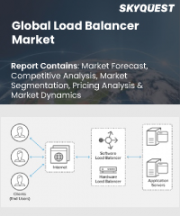
세계의 로드 밸런서 시장은 2025년 88억 2,000만 달러에서 2031년까지 202억 5,000만 달러로 대폭 확대하며, CAGR 14.86%로 추이할 것으로 예측되고 있습니다.
중요한 리버스 프록시 역할을 하는 로드 밸런서는 들어오는 용도 트래픽을 여러 서버에 분산시켜 시스템의 높은 가용성과 안정성을 보장합니다. 이러한 성장은 주로 디지털 전환의 가속화와 기업내 용도의 지속적인 가동 시간을 보장하기 위한 필수적인 필요성에 의해 주도되고 있습니다. 기업이 분산 컴퓨팅 모델로 전환함에 따라 리소스 효율성을 극대화하는 효과적인 트래픽 관리 시스템에 대한 수요가 증가하고 있으며, 이러한 추세는 동적 라우팅이 필요한 마이크로서비스와 컨테이너화된 구조의 광범위한 채택으로 더욱 강화되고 있습니다. 이러한 변화를 지원하듯, 클라우드 네이티브 컴퓨팅 재단(CNCF)은 2024년 89%의 조직이 클라우드 네이티브 기술을 채택할 것이라고 보고하며, 복잡한 현대의 워크로드를 관리하기 위한 고급 애플리케이션 딜리버리 컨트롤러(ADC)의 필요성을 강조했습니다. 필요성이 높아지고 있음을 강조하고 있습니다.
| 시장 개요 | |
|---|---|
| 예측 기간 | 2027-2031 |
| 시장 규모 : 2025년 | 88억 2,000만 달러 |
| 시장 규모 : 2031년 | 202억 5,000만 달러 |
| CAGR : 2026-2031년 | 14.86% |
| 가장 빠르게 성장하는 부문 | 제조업 |
| 최대 시장 | 북미 |
이러한 견고한 확장에도 불구하고 하이브리드 및 멀티 클라우드 인프라의 운영상의 복잡성과 관련된 심각한 장벽에 직면해 있습니다. 네트워크 환경이 점점 더 분산화됨에 따라 IT 부서는 서로 다른 플랫폼에서 통일된 보안 정책과 가시성을 유지하는 것이 어려워지고 있습니다. 이러한 기술적 복잡성과 더불어 사이버 위협의 고도화는 특히 비용 민감도가 우선시되는 분야에서 부하분산 솔루션의 원활한 도입과 확장을 방해할 수 있는 큰 장벽이 되고 있습니다.
시장 성장 촉진요인
클라우드 및 하이브리드 멀티 클라우드 아키텍처로의 빠른 전환은 분산된 인프라에서 일관된 사용자 경험을 보장하기 위해 첨단 트래픽 관리를 필요로 하는 클라우드 및 하이브리드 멀티 클라우드 아키텍처로의 빠른 전환이 시장의 주요 촉진요인으로 작용하고 있습니다. 기업이 용도를 중앙 집중식 데이터센터에서 분산형 환경으로 전환함에 따라 서버의 건전성, 지연, 근접성에 따라 트래픽을 라우팅하는 세계 서버 부하 분산(GSLB) 시스템에 대한 의존도가 크게 증가하고 있습니다. 조직이 워크로드 배치를 최적화하고 시스템 장애시 중복성을 확보하기 위해 노력하는 가운데, 이러한 구조적 전환이 시장 성장을 가속하고 있습니다. 2024년 3월 발표된 뉴타닉스 기업 클라우드 인덱스 보고서에 따르면 IT 의사결정권자의 90%가 하이브리드 IT 접근 방식을 채택하고 있으며, 프라이빗 클라우드, 퍼블릭 클라우드, 엣지 로케이션을 활용하여 유연성을 향상시키고 있다고 합니다. 이에 따라 벤더들은 분산형 생태계를 지원하기 위해 크로스 플랫폼 가시성과 자동화를 솔루션에 통합해야 할 필요성이 대두되고 있습니다.
동시에 통합 사이버 보안과 DDoS 방어의 필요성이 증가함에 따라 로드밸런서는 단순한 트래픽 분배 장치에서 중요한 최전방 보안 메커니즘으로 진화했습니다. 현대의 애플리케이션 딜리버리 컨트롤러는 보안 게이트웨이 역할을 하며, 악성 요청이 백엔드 서버에 도달하기 전에 완화 프로토콜이나 웹 애플리케이션 방화벽(WAF)을 배포하고 스크리닝하는 것이 점점 더 요구되고 있습니다. 요구되고 있습니다. 이 융합은 매우 중요합니다. 공격 벡터의 자동화 및 대규모화 추세가 강화되고 있으며, 2024년 7월에 발표된 클라우드플레어의 '2024년 2분기 DDoS 위협 보고서'에서도 분산형 서비스 거부 공격이 전년 대비 20% 증가했다고 지적한 바 있습니다. 또한 이러한 네트워크에 흐르는 방대한 양의 데이터는 안전하고 처리량이 높은 솔루션에 대한 수요를 더욱 증가시키고 있습니다. 에릭슨에 따르면 2023년 1분기부터 2024년 1분기까지 모바일 네트워크의 데이터 트래픽이 전년 동기 대비 25% 급증하고 있으며, 기업은 안전한 전송 파이프라인을 효율적으로 확장해야 한다는 큰 압박에 직면해 있습니다.
시장이 해결해야 할 과제
하이브리드 및 멀티 클라우드 인프라 관리에 따른 운영상의 복잡성은 세계 로드밸런서 시장 확대에 큰 걸림돌로 작용하고 있습니다. 기업이 네트워크 환경을 여러 플랫폼에 분산시키는 경향이 높아지면서 IT 팀은 일관된 가시성을 유지하고 표준화된 보안 조치를 시행하는 데 어려움을 겪고 있습니다. 이러한 복잡성으로 인해 조직은 트래픽 관리 전략을 강화하는 대신 기본적인 인프라를 조정하고 문제를 해결하는 데 중요한 기술 리소스를 투입할 수밖에 없습니다. 그 결과, 의사결정권자들은 애플리케이션 딜리버리 레이어를 추가하면 현재의 관리 취약점이 악화되고 보안 위험이 발생할 것을 우려하여 고급 부하 분산 솔루션의 도입을 미루는 경우가 많습니다.
이러한 망설임은 통합 장벽의 심각성을 보여주는 데이터에 의해 더욱 지원되고 있습니다. ISC2에 따르면 2024년에는 55%의 조직이 멀티 클라우드 환경의 보안을 주요 운영 과제로 꼽았습니다. 이 수치는 대부분의 기업이 다양한 클라우드 생태계를 통합하는 데 큰 어려움을 겪고 있으며, 이는 종합적인 애플리케이션 딜리버리 컨트롤러에 대한 투자를 주저하게 만드는 직접적인 요인으로 작용하고 있음을 시사합니다. 기업이 원활한 보안 정책 적용을 보장할 수 없는 경우, 운영 리스크 증가를 방지하기 위해 로드밸런싱 아키텍처의 확장을 반드시 중단해야 합니다.
시장 동향
예측적 트래픽 오케스트레이션을 위한 인공지능(AI)의 통합은 반응적 유지보수에서 예측적 자가 복구 시스템으로 전환함으로써 네트워크 운영을 변화시키고 있습니다. 기존의 정적 알고리즘과 달리 AI 기반 로드밸런서는 머신러닝을 활용하여 과거 트래픽 데이터를 분석하여 지연 문제가 발생하기 전에 트래픽 급증을 예측하고 워크로드를 재할당하는 방식으로, 지연 문제가 발생하기 전에 미리 예측하고 워크로드를 재할당합니다. 이 기능은 수동 모니터링을 줄이고 네트워크 성능을 동적으로 향상시키고자 하는 IT 책임자에게 필수적인 기능이 되고 있습니다. 시스코가 지난 7월 발표한 '2024 세계 네트워킹 동향 보고서'에 따르면 IT 리더 및 전문가의 60%가 향후 2년내 모든 영역에서 AI 기반 예측 네트워크 자동화를 구축해 인프라 리소스를 변화하는 용도 요구사항에 맞게 조정할 수 있는 세밀한 실시간 의사결정을 내릴 것으로 예상했습니다. 실시간 의사결정을 실현하고, 기술팀의 운영 부담을 줄일 수 있을 것으로 기대하고 있습니다.
동시에 클라우드 네이티브 인그레스 컨트롤러와 서비스 메시 통합의 채택이 빠르게 진행되면서 기업이 마이크로 서비스를 위한 세밀한 트래픽 관리를 중요시하는 가운데, 기존의 전용 장비를 대체하고 있습니다. 용도이 분산된 소규모 요소로 분해됨에 따라 로드밸런서는 컨테이너 환경 내에서 빠른 동서방향 트래픽 관리를 목적으로 하는 API 중심의 잉글리쉬 포인트로 진화하고 있습니다. 이러한 추세는 라우팅 로직을 물리적 인프라와 분리하여 민첩한 개발 주기와 자동화된 딜리버리 파이프라인을 구현하는 소프트웨어 정의 아키텍처로 전환하고 있음을 보여줍니다. 2024년 6월 발표된 F5의 '2024 용도 전략 보고서'에 따르면 95%의 조직이 관리 효율화를 위해 API 게이트웨이를 도입하고 있으며, 서비스 간 통신 가시성을 높이고, 복잡하고 일시적인 용도 환경 전반에서 안정적인 연결성을 보장하기 위해 API 게이트웨이를 도입하고 있습니다. 소프트웨어 기반 중간 계층에 대한 의존도가 크게 증가하고 있는 것으로 나타났습니다.
자주 묻는 질문
목차
제1장 개요
제2장 조사 방법
제3장 개요
제4장 고객의 소리
제5장 세계의 부하 분산기 시장 전망
제6장 북미의 부하 분산기 시장 전망
제7장 유럽의 부하 분산기 시장 전망
제8장 아시아태평양의 부하 분산기 시장 전망
제9장 중동 및 아프리카의 부하 분산기 시장 전망
제10장 남미의 부하 분산기 시장 전망
제11장 시장 역학
제12장 시장 동향과 발전
제13장 세계의 부하 분산기 시장 : SWOT 분석
제14장 Porter's Five Forces 분석
제15장 경쟁 구도
제16장 전략적 제안
제17장 조사회사 소개·면책사항
KSA 26.03.19The Global Load Balancer Market is projected to expand significantly, rising from a valuation of USD 8.82 Billion in 2025 to USD 20.25 Billion by 2031, reflecting a CAGR of 14.86%. Functioning as a critical reverse proxy, a load balancer allocates incoming application traffic across various servers to guarantee high system availability and reliability. This growth is chiefly driven by the acceleration of digital transformation initiatives and the essential need for uninterrupted application uptime within enterprises. As businesses shift toward distributed computing models, there is a heightened demand for effective traffic management systems that maximize resource efficiency, a trend further bolstered by the broad adoption of microservices and containerized structures requiring dynamic routing. Highlighting this shift, the Cloud Native Computing Foundation reported in 2024 that 89% of organizations have adopted cloud-native techniques, emphasizing the growing need for advanced application delivery controllers to manage complex modern workloads.
| Market Overview | |
|---|---|
| Forecast Period | 2027-2031 |
| Market Size 2025 | USD 8.82 Billion |
| Market Size 2031 | USD 20.25 Billion |
| CAGR 2026-2031 | 14.86% |
| Fastest Growing Segment | Manufacturing |
| Largest Market | North America |
Despite this robust expansion, the market encounters substantial obstacles related to the operational complexity of handling hybrid and multi-cloud infrastructures. As network environments become increasingly scattered, IT departments find it difficult to maintain uniform security policies and visibility across disparate platforms. This technical intricacy, coupled with the rising sophistication of cyber threats, establishes a significant hurdle that may hinder the smooth implementation and scaling of load balancing solutions, particularly within sectors where cost sensitivity is a priority.
Market Driver
The rapid shift toward cloud and hybrid multi-cloud architectures acts as a major catalyst for the market, requiring sophisticated traffic management to guarantee consistent user experiences across scattered infrastructures. As companies move applications from centralized data centers to distributed settings, the dependence on Global Server Load Balancing (GSLB) systems to route traffic based on server health, latency, and proximity has grown significantly. This structural transition fuels market growth as organizations aim to refine workload placement and secure redundancy during system failures. According to the Nutanix 'Enterprise Cloud Index' report from March 2024, 90% of IT decision-makers have adopted a hybrid IT approach, utilizing private clouds, public clouds, and edge locations to enhance flexibility, prompting vendors to incorporate cross-platform visibility and automation into their solutions to support these decentralized ecosystems.
Concurrently, the rising need for integrated cybersecurity and DDoS defense has evolved the load balancer from a basic traffic distributor into a crucial frontline security mechanism. Modern application delivery controllers are increasingly relied upon to act as security gateways, deploying mitigation protocols and Web Application Firewalls (WAF) to screen malicious requests before they access backend servers. This convergence is vital as attack vectors become more automated and volumetric, a trend highlighted by Cloudflare's 'DDoS Threat Report 2024 Q2' in July 2024, which noted a 20% year-over-year rise in distributed denial-of-service attacks. Additionally, the massive amount of data flowing through these networks intensifies the demand for secure, high-throughput solutions; according to Ericsson, mobile network data traffic surged by 25% year-on-year between the first quarter of 2023 and the same period in 2024, placing immense pressure on enterprises to efficiently scale their secure delivery pipelines.
Market Challenge
The operational complexity involved in managing hybrid and multi-cloud infrastructures poses a significant barrier to the expansion of the Global Load Balancer Market. As businesses increasingly disperse their network environments across multiple platforms, IT teams struggle to uphold consistent visibility and enforce standardized security measures. This complication compels organizations to redirect vital technical resources toward fundamental infrastructure alignment and troubleshooting rather than enhancing traffic management strategies. As a result, the implementation of sophisticated load balancing solutions is frequently postponed, as decision-makers worry that adding further application delivery layers might worsen current management vulnerabilities and introduce security risks.
This hesitation is further substantiated by data illustrating the severity of these integration obstacles. According to the ISC2, in 2024, 55% of organizations cited securing multi-cloud environments as a major operational difficulty. This figure suggests that most enterprises encounter considerable struggles in unifying diverse cloud ecosystems, a factor that leads directly to a reluctance to invest in comprehensive application delivery controllers. When companies are unable to ensure seamless security policy enforcement, they invariably halt the scaling of their load balancing architectures to prevent the compounding of operational risks.
Market Trends
The incorporation of Artificial Intelligence for Predictive Traffic Orchestration is transforming network operations by moving from reactive maintenance to proactive, self-healing systems. In contrast to traditional static algorithms, AI-powered load balancers employ machine learning to examine historical traffic data, forecasting surges and reallocating workloads before latency issues arise. This functionality is becoming essential for IT executives aiming to reduce manual oversight and dynamically enhance network performance. As stated in Cisco's '2024 Global Networking Trends Report' from July 2024, 60% of IT leaders and professionals anticipate having AI-driven predictive network automation established across all domains within the next two years, facilitating granular, real-time decision-making that matches infrastructure resources with changing application needs and lowers the operational strain on technical teams.
At the same time, the adoption of Cloud-Native Ingress Controllers and Service Mesh Integration is quickly replacing legacy appliances as businesses emphasize granular traffic management for microservices. As applications break down into smaller, distributed elements, the load balancer is developing into an API-centric ingress point designed to manage high-velocity east-west traffic within containerized settings. This trend signifies a shift toward software-defined architectures where routing logic is separated from physical infrastructure to enable agile development cycles and automated delivery pipelines. According to F5's '2024 State of Application Strategy Report' from June 2024, 95% of organizations have implemented an API gateway to streamline management, indicating a significant increase in the dependence on software-based intermediaries that provide enhanced visibility into service-to-service communications and ensure reliable connectivity across complex, ephemeral application landscapes.
Key Market Players
- A10Networks, Inc.
- Amazon web services, Inc.
- ARRAY Technologies, Inc.
- Cloudflare, Inc.
- Cisco Systems, Inc.
- Citrix Systems, Inc.
- Google LLC
- Hewlett Packard Enterprise Company
- Progress Software Corporation
- IBM Corporation
Report Scope
In this report, the Global Load Balancer Market has been segmented into the following categories, in addition to the industry trends which have also been detailed below:
Load Balancer Market, By Component
- Hardware
- Software
Load Balancer Market, By Service
- Training & Consulting
- Integration & Deployment
- Support & Maintenance
Load Balancer Market, By End Use
- BFSI
- Retail
- Government
- Manufacturing
- Others
Load Balancer Market, By Deployment
- On-premises
- Cloud
Load Balancer Market, By Region
- North America
- United States
- Canada
- Mexico
- Europe
- France
- United Kingdom
- Italy
- Germany
- Spain
- Asia Pacific
- China
- India
- Japan
- Australia
- South Korea
- South America
- Brazil
- Argentina
- Colombia
- Middle East & Africa
- South Africa
- Saudi Arabia
- UAE
Competitive Landscape
Company Profiles: Detailed analysis of the major companies present in the Global Load Balancer Market.
Available Customizations:
Global Load Balancer Market report with the given market data, TechSci Research offers customizations according to a company's specific needs. The following customization options are available for the report:
Company Information
- Detailed analysis and profiling of additional market players (up to five).
Table of Contents
1. Product Overview
- 1.1. Market Definition
- 1.2. Scope of the Market
- 1.2.1. Markets Covered
- 1.2.2. Years Considered for Study
- 1.2.3. Key Market Segmentations
2. Research Methodology
- 2.1. Objective of the Study
- 2.2. Baseline Methodology
- 2.3. Key Industry Partners
- 2.4. Major Association and Secondary Sources
- 2.5. Forecasting Methodology
- 2.6. Data Triangulation & Validation
- 2.7. Assumptions and Limitations
3. Executive Summary
- 3.1. Overview of the Market
- 3.2. Overview of Key Market Segmentations
- 3.3. Overview of Key Market Players
- 3.4. Overview of Key Regions/Countries
- 3.5. Overview of Market Drivers, Challenges, Trends
4. Voice of Customer
5. Global Load Balancer Market Outlook
- 5.1. Market Size & Forecast
- 5.1.1. By Value
- 5.2. Market Share & Forecast
- 5.2.1. By Component (Hardware, Software)
- 5.2.2. By Service (Training & Consulting, Integration & Deployment, Support & Maintenance)
- 5.2.3. By End Use (BFSI, Retail, Government, Manufacturing, Others)
- 5.2.4. By Deployment (On-premises, Cloud)
- 5.2.5. By Region
- 5.2.6. By Company (2025)
- 5.3. Market Map
6. North America Load Balancer Market Outlook
- 6.1. Market Size & Forecast
- 6.1.1. By Value
- 6.2. Market Share & Forecast
- 6.2.1. By Component
- 6.2.2. By Service
- 6.2.3. By End Use
- 6.2.4. By Deployment
- 6.2.5. By Country
- 6.3. North America: Country Analysis
- 6.3.1. United States Load Balancer Market Outlook
- 6.3.1.1. Market Size & Forecast
- 6.3.1.1.1. By Value
- 6.3.1.2. Market Share & Forecast
- 6.3.1.2.1. By Component
- 6.3.1.2.2. By Service
- 6.3.1.2.3. By End Use
- 6.3.1.2.4. By Deployment
- 6.3.1.1. Market Size & Forecast
- 6.3.2. Canada Load Balancer Market Outlook
- 6.3.2.1. Market Size & Forecast
- 6.3.2.1.1. By Value
- 6.3.2.2. Market Share & Forecast
- 6.3.2.2.1. By Component
- 6.3.2.2.2. By Service
- 6.3.2.2.3. By End Use
- 6.3.2.2.4. By Deployment
- 6.3.2.1. Market Size & Forecast
- 6.3.3. Mexico Load Balancer Market Outlook
- 6.3.3.1. Market Size & Forecast
- 6.3.3.1.1. By Value
- 6.3.3.2. Market Share & Forecast
- 6.3.3.2.1. By Component
- 6.3.3.2.2. By Service
- 6.3.3.2.3. By End Use
- 6.3.3.2.4. By Deployment
- 6.3.3.1. Market Size & Forecast
- 6.3.1. United States Load Balancer Market Outlook
7. Europe Load Balancer Market Outlook
- 7.1. Market Size & Forecast
- 7.1.1. By Value
- 7.2. Market Share & Forecast
- 7.2.1. By Component
- 7.2.2. By Service
- 7.2.3. By End Use
- 7.2.4. By Deployment
- 7.2.5. By Country
- 7.3. Europe: Country Analysis
- 7.3.1. Germany Load Balancer Market Outlook
- 7.3.1.1. Market Size & Forecast
- 7.3.1.1.1. By Value
- 7.3.1.2. Market Share & Forecast
- 7.3.1.2.1. By Component
- 7.3.1.2.2. By Service
- 7.3.1.2.3. By End Use
- 7.3.1.2.4. By Deployment
- 7.3.1.1. Market Size & Forecast
- 7.3.2. France Load Balancer Market Outlook
- 7.3.2.1. Market Size & Forecast
- 7.3.2.1.1. By Value
- 7.3.2.2. Market Share & Forecast
- 7.3.2.2.1. By Component
- 7.3.2.2.2. By Service
- 7.3.2.2.3. By End Use
- 7.3.2.2.4. By Deployment
- 7.3.2.1. Market Size & Forecast
- 7.3.3. United Kingdom Load Balancer Market Outlook
- 7.3.3.1. Market Size & Forecast
- 7.3.3.1.1. By Value
- 7.3.3.2. Market Share & Forecast
- 7.3.3.2.1. By Component
- 7.3.3.2.2. By Service
- 7.3.3.2.3. By End Use
- 7.3.3.2.4. By Deployment
- 7.3.3.1. Market Size & Forecast
- 7.3.4. Italy Load Balancer Market Outlook
- 7.3.4.1. Market Size & Forecast
- 7.3.4.1.1. By Value
- 7.3.4.2. Market Share & Forecast
- 7.3.4.2.1. By Component
- 7.3.4.2.2. By Service
- 7.3.4.2.3. By End Use
- 7.3.4.2.4. By Deployment
- 7.3.4.1. Market Size & Forecast
- 7.3.5. Spain Load Balancer Market Outlook
- 7.3.5.1. Market Size & Forecast
- 7.3.5.1.1. By Value
- 7.3.5.2. Market Share & Forecast
- 7.3.5.2.1. By Component
- 7.3.5.2.2. By Service
- 7.3.5.2.3. By End Use
- 7.3.5.2.4. By Deployment
- 7.3.5.1. Market Size & Forecast
- 7.3.1. Germany Load Balancer Market Outlook
8. Asia Pacific Load Balancer Market Outlook
- 8.1. Market Size & Forecast
- 8.1.1. By Value
- 8.2. Market Share & Forecast
- 8.2.1. By Component
- 8.2.2. By Service
- 8.2.3. By End Use
- 8.2.4. By Deployment
- 8.2.5. By Country
- 8.3. Asia Pacific: Country Analysis
- 8.3.1. China Load Balancer Market Outlook
- 8.3.1.1. Market Size & Forecast
- 8.3.1.1.1. By Value
- 8.3.1.2. Market Share & Forecast
- 8.3.1.2.1. By Component
- 8.3.1.2.2. By Service
- 8.3.1.2.3. By End Use
- 8.3.1.2.4. By Deployment
- 8.3.1.1. Market Size & Forecast
- 8.3.2. India Load Balancer Market Outlook
- 8.3.2.1. Market Size & Forecast
- 8.3.2.1.1. By Value
- 8.3.2.2. Market Share & Forecast
- 8.3.2.2.1. By Component
- 8.3.2.2.2. By Service
- 8.3.2.2.3. By End Use
- 8.3.2.2.4. By Deployment
- 8.3.2.1. Market Size & Forecast
- 8.3.3. Japan Load Balancer Market Outlook
- 8.3.3.1. Market Size & Forecast
- 8.3.3.1.1. By Value
- 8.3.3.2. Market Share & Forecast
- 8.3.3.2.1. By Component
- 8.3.3.2.2. By Service
- 8.3.3.2.3. By End Use
- 8.3.3.2.4. By Deployment
- 8.3.3.1. Market Size & Forecast
- 8.3.4. South Korea Load Balancer Market Outlook
- 8.3.4.1. Market Size & Forecast
- 8.3.4.1.1. By Value
- 8.3.4.2. Market Share & Forecast
- 8.3.4.2.1. By Component
- 8.3.4.2.2. By Service
- 8.3.4.2.3. By End Use
- 8.3.4.2.4. By Deployment
- 8.3.4.1. Market Size & Forecast
- 8.3.5. Australia Load Balancer Market Outlook
- 8.3.5.1. Market Size & Forecast
- 8.3.5.1.1. By Value
- 8.3.5.2. Market Share & Forecast
- 8.3.5.2.1. By Component
- 8.3.5.2.2. By Service
- 8.3.5.2.3. By End Use
- 8.3.5.2.4. By Deployment
- 8.3.5.1. Market Size & Forecast
- 8.3.1. China Load Balancer Market Outlook
9. Middle East & Africa Load Balancer Market Outlook
- 9.1. Market Size & Forecast
- 9.1.1. By Value
- 9.2. Market Share & Forecast
- 9.2.1. By Component
- 9.2.2. By Service
- 9.2.3. By End Use
- 9.2.4. By Deployment
- 9.2.5. By Country
- 9.3. Middle East & Africa: Country Analysis
- 9.3.1. Saudi Arabia Load Balancer Market Outlook
- 9.3.1.1. Market Size & Forecast
- 9.3.1.1.1. By Value
- 9.3.1.2. Market Share & Forecast
- 9.3.1.2.1. By Component
- 9.3.1.2.2. By Service
- 9.3.1.2.3. By End Use
- 9.3.1.2.4. By Deployment
- 9.3.1.1. Market Size & Forecast
- 9.3.2. UAE Load Balancer Market Outlook
- 9.3.2.1. Market Size & Forecast
- 9.3.2.1.1. By Value
- 9.3.2.2. Market Share & Forecast
- 9.3.2.2.1. By Component
- 9.3.2.2.2. By Service
- 9.3.2.2.3. By End Use
- 9.3.2.2.4. By Deployment
- 9.3.2.1. Market Size & Forecast
- 9.3.3. South Africa Load Balancer Market Outlook
- 9.3.3.1. Market Size & Forecast
- 9.3.3.1.1. By Value
- 9.3.3.2. Market Share & Forecast
- 9.3.3.2.1. By Component
- 9.3.3.2.2. By Service
- 9.3.3.2.3. By End Use
- 9.3.3.2.4. By Deployment
- 9.3.3.1. Market Size & Forecast
- 9.3.1. Saudi Arabia Load Balancer Market Outlook
10. South America Load Balancer Market Outlook
- 10.1. Market Size & Forecast
- 10.1.1. By Value
- 10.2. Market Share & Forecast
- 10.2.1. By Component
- 10.2.2. By Service
- 10.2.3. By End Use
- 10.2.4. By Deployment
- 10.2.5. By Country
- 10.3. South America: Country Analysis
- 10.3.1. Brazil Load Balancer Market Outlook
- 10.3.1.1. Market Size & Forecast
- 10.3.1.1.1. By Value
- 10.3.1.2. Market Share & Forecast
- 10.3.1.2.1. By Component
- 10.3.1.2.2. By Service
- 10.3.1.2.3. By End Use
- 10.3.1.2.4. By Deployment
- 10.3.1.1. Market Size & Forecast
- 10.3.2. Colombia Load Balancer Market Outlook
- 10.3.2.1. Market Size & Forecast
- 10.3.2.1.1. By Value
- 10.3.2.2. Market Share & Forecast
- 10.3.2.2.1. By Component
- 10.3.2.2.2. By Service
- 10.3.2.2.3. By End Use
- 10.3.2.2.4. By Deployment
- 10.3.2.1. Market Size & Forecast
- 10.3.3. Argentina Load Balancer Market Outlook
- 10.3.3.1. Market Size & Forecast
- 10.3.3.1.1. By Value
- 10.3.3.2. Market Share & Forecast
- 10.3.3.2.1. By Component
- 10.3.3.2.2. By Service
- 10.3.3.2.3. By End Use
- 10.3.3.2.4. By Deployment
- 10.3.3.1. Market Size & Forecast
- 10.3.1. Brazil Load Balancer Market Outlook
11. Market Dynamics
- 11.1. Drivers
- 11.2. Challenges
12. Market Trends & Developments
- 12.1. Merger & Acquisition (If Any)
- 12.2. Product Launches (If Any)
- 12.3. Recent Developments
13. Global Load Balancer Market: SWOT Analysis
14. Porter's Five Forces Analysis
- 14.1. Competition in the Industry
- 14.2. Potential of New Entrants
- 14.3. Power of Suppliers
- 14.4. Power of Customers
- 14.5. Threat of Substitute Products
15. Competitive Landscape
- 15.1. A10Networks, Inc.
- 15.1.1. Business Overview
- 15.1.2. Products & Services
- 15.1.3. Recent Developments
- 15.1.4. Key Personnel
- 15.1.5. SWOT Analysis
- 15.2. Amazon web services, Inc.
- 15.3. ARRAY Technologies, Inc.
- 15.4. Cloudflare, Inc.
- 15.5. Cisco Systems, Inc.
- 15.6. Citrix Systems, Inc.
- 15.7. Google LLC
- 15.8. Hewlett Packard Enterprise Company
- 15.9. Progress Software Corporation
- 15.10. IBM Corporation