|
시장보고서
상품코드
1961337
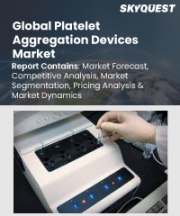
혈소판 응집 기기 시장 : 세계 산업 규모, 점유율, 동향, 기회, 예측 - 제품 유형별, 용도별, 최종사용자별, 지역별, 경쟁(2021-2031년)Platelet Aggregation Devices Market - Global Industry Size, Share, Trends, Opportunity, and Forecast, Segmented By Product Type, By Application, By End User, By Region & Competition, 2021-2031F |
||||||

세계의 혈소판 응집 기기 시장은 2025년 9억 2,268만 달러에서 2031년까지 12억 5,211만 달러로 확대하며, CAGR 5.22%를 기록할 것으로 예측되고 있습니다.
이러한 전문 진단 기기는 혈소판이 응집하여 혈전을 형성하는 능력을 평가하기 위해 설계되었으며, 이는 지혈 평가 및 항혈소판 요법의 효과를 판단하는 데 기초적인 역할을 합니다. 이러한 시장 성장을 이끄는 주요 요인으로는 전 세계에서 심혈관 질환의 발생률 증가와 이에 따른 임상 및 수술 환경에서 엄격한 혈소판 기능 검사에 대한 필요성이 증가하고 있다는 점을 들 수 있습니다. 또한 고령화 인구 증가로 혈전 위험에 대한 정기적인 모니터링이 필수적이어서 이러한 진단 시스템에 대한 안정적인 수요가 유지되고 있습니다. 영국 심장 재단의 데이터에 따르면 2023년 순환기계 및 심혈관 질환은 전 세계 사망 원인의 약 1/3을 차지할 것으로 예측됩니다.
| 시장 개요 | |
|---|---|
| 예측 기간 | 2027-2031 |
| 시장 규모 : 2025년 | 9억 2,268만 달러 |
| 시장 규모 : 2031년 | 12억 5,211만 달러 |
| CAGR : 2026-2031년 | 5.22% |
| 가장 빠르게 성장하는 부문 | 소모품·액세서리 |
| 최대 시장 | 북미 |
그러나 이 시장의 광범위한 확장을 제한하는 가장 큰 문제는 첨단 자동 응집 측정 시스템과 이에 필요한 정비와 관련된 높은 비용입니다. 이러한 재정적 부담은 특히 개발도상국의 소규모 진료소나 의료시설에 장벽이 되어 이러한 전문 장비에 대한 투자를 어렵게 만들고 있습니다. 결과적으로, 이러한 경제적 제약은 시장 침투를 방해하고 자원이 제한된 환경에서 신속한 혈소판 기능 검사의 가용성을 제한하고 있습니다.
시장 성장 촉진요인
만성질환 및 심혈관계 질환의 유병률 증가가 혈소판 응집 측정기 도입의 주요 촉진요인으로 작용하고 있습니다. 뇌졸중, 관상동맥질환 등의 질환으로 인한 전 세계 질병 부담이 증가하는 가운데, 임상검사실에서는 항혈소판 요법 관리와 혈전 위험을 최소화하기 위한 엄격한 혈소판 기능 검사를 우선적으로 시행하고 있습니다. 이는 특히 출혈이나 스텐트 혈전증과 같은 부작용을 예방하기 위해 지혈 상태 모니터링이 필수적인 중재시술을 받는 환자들에게 매우 중요합니다. 2024년 1월 발표된 미국심장협회의 '심장병 및 뇌졸중 통계-2024년판'에 따르면 미국 성인의 약 48.6%가 심혈관 질환을 앓고 있으며, 이 대규모 환자군에 대한 효과적인 진단 모니터링이 시급한 것으로 나타났습니다.
동시에 고령 인구의 급속한 증가가 시장 수요를 크게 견인하고 있습니다. 노인은 혈소판 관련 질환에 걸리기 쉽고, 만성적인 약물 관리가 필요한 경우가 많기 때문입니다. 고령화 사회에서는 치료 계획의 조정과 복잡한 수술 중 환자 안전 확보를 위해 빈번한 진단 검사가 필수적입니다. 2024년 5월 발표된 세계보건기구(WHO)의 '세계보건통계 2024'에 따르면 60세 이상 세계 인구는 2023년 11억 명에서 2030년까지 14억 명으로 증가할 것으로 예측됩니다. 이러한 인구통계학적 변화에 따른 인터벤션 기술에 대한 수요를 반영하여, 주요 의료기술 기업은 강력한 성장세를 보이고 있습니다. Abbott Laboratories는 2024년 10월, 3분기 세계 의료기기 매출이 11.7% 증가했다고 발표했습니다.
시장이 해결해야 할 과제
첨단 자동 응집 측정 시스템을 도입하고 유지하는 데는 많은 비용이 소요되므로 세계 혈소판 응집 측정 장치 시장의 성장에 큰 장애물이 되고 있습니다. 이러한 장비들은 많은 초기 투자가 필요하며, 특히 예산이 한정된 개발도상국의 소규모 진료소나 의료시설의 경우 도입이 어려운 경우가 많습니다. 구매 가격 외에도 교정, 특수 시약, 기술 서비스 등의 반복적인 비용도 진단센터 운영 자금에 큰 부담을 주고 있습니다. 그 결과, 재정적 부담으로 인해 최신 혈소판 기능 검사의 도입은 주로 자금력이 있는 대형 병원에 국한되어 잠재적 시장의 상당 부분이 미개발 상태로 남아있습니다.
이러한 경제적 압박은 진단 서비스 프로바이더의 재정적 환경 악화로 인해 더욱 심화되고 있습니다. 미국진단검사의학회(ADLM)에 따르면 2024년 주요 진단 검사에 대한 메디케어 지불을 최대 15% 삭감할 계획으로 인해 임상검사실은 심각한 재정적 불확실성에 직면하게 되었다고 합니다. 이러한 상환율의 제약은 인프라 갱신에 투입될 수 있는 자금을 크게 제한합니다. 그 결과, 시설에서 고가의 자동화 시스템에 투자할 가능성이 낮아져 이러한 중요한 진단 장비 시장 침투를 직접적으로 저해하고 있습니다.
시장 동향
시설들이 인력 부족을 해소하고 검사량 증가에 대응하기 위해 자동화된 고처리량 검사 시스템으로의 전환이 전 세계 혈소판 응집 기기 시장을 재편하고 있습니다. 검사실에서는 수작업으로 수고로운 광투과식 응집 측정법에서 벗어나 검체 처리와 데이터 관리를 효율화하는 통합형 지혈 워크셀로 전환이 진행되고 있습니다. 이 전환은 워크플로우의 효율성을 높일 뿐만 아니라, 대규모 의료 네트워크 전체에서 결과를 표준화하여 기존 방식에서 발생하기 쉬운 운영자 간 편차를 줄일 수 있습니다. 확장 가능한 자동화 솔루션에 대한 수요는 시장 리더의 재무 실적에서도 알 수 있습니다. 2025년 3월에 발표된 워펜의 '2024년 연차보고서'에 따르면 워펜의 지혈 부문은 2024년 6.6%의 매출 성장을 달성했으며, 그 주요 요인은 전문 자동화 및 데이터 관리 솔루션의 도입에 기인합니다.
동시에 머신러닝(ML)과 인공지능(AI)의 통합은 복잡한 혈소판 기능 데이터의 해석에 혁명을 일으키고 있습니다. 각 제조업체들은 진단 소프트웨어에 AI 알고리즘을 내장하여 응집 곡선을 보다 정밀하게 분석함으로써 혈전 위험이나 항혈소판 요법에 대한 비반응성을 나타낼 수 있는 이상 징후를 조기에 발견할 수 있도록 하고 있습니다. 이러한 고급 분석 툴은 예측적 지식을 제공함으로써 임상적 판단을 지원하고, 심혈관 질환 환자를 위한 보다 개인화된 치료 전략을 수립할 수 있도록 돕습니다. 이 기술을 지원하는 규제 상황도 빠르게 진화하고 있습니다. 2025년 7월 The Medical Futurist가 발표한 FDA 승인 AI 의료기기 관련 보고서에 따르면 FDA는 2025년 상반기에만 148개의 새로운 AI 탑재 기기를 승인하여 지능형 진단 기술의 보급이 강력하게 가속화되고 있음을 보여줍니다.
자주 묻는 질문
목차
제1장 개요
제2장 조사 방법
제3장 개요
제4장 고객의 소리
제5장 세계의 혈소판 응집 기기 시장 전망
제6장 북미의 혈소판 응집 기기 시장 전망
제7장 유럽의 혈소판 응집 기기 시장 전망
제8장 아시아태평양의 혈소판 응집 기기 시장 전망
제9장 중동 및 아프리카의 혈소판 응집 기기 시장 전망
제10장 남미의 혈소판 응집 기기 시장 전망
제11장 시장 역학
제12장 시장 동향과 발전
제13장 세계의 혈소판 응집 기기 시장 : SWOT 분석
제14장 Porter's Five Forces 분석
제15장 경쟁 구도
제16장 전략적 제안
제17장 조사회사 소개·면책사항
KSA 26.03.20The Global Platelet Aggregation Devices Market is projected to expand from USD 922.68 Million in 2025 to USD 1252.11 Million by 2031, registering a CAGR of 5.22%. These specialized diagnostic instruments are designed to assess the ability of thrombocytes to cluster and form clots, which is fundamental for evaluating hemostasis and determining the effectiveness of antiplatelet therapies. Key drivers fueling this market growth include the rising global incidence of cardiovascular conditions and the subsequent need for rigorous platelet function testing in both clinical and surgical settings. Furthermore, the expanding geriatric population necessitates regular monitoring for thrombotic risks, thereby maintaining a steady demand for these diagnostic systems. Data from the British Heart Foundation indicates that in 2023, circulatory and cardiovascular diseases were responsible for approximately one-third of all global deaths.
| Market Overview | |
|---|---|
| Forecast Period | 2027-2031 |
| Market Size 2025 | USD 922.68 Million |
| Market Size 2031 | USD 1252.11 Million |
| CAGR 2026-2031 | 5.22% |
| Fastest Growing Segment | Consumables & Accessories |
| Largest Market | North America |
However, a significant challenge limiting the broader expansion of this market is the high cost linked to advanced automated aggregometry systems and their required maintenance. These financial demands pose a barrier for smaller clinics and healthcare facilities, particularly in developing regions, making it difficult to invest in such specialized equipment. Consequently, these economic constraints hinder market penetration and restrict the availability of rapid platelet function testing in resource-limited environments.
Market Driver
The increasing prevalence of chronic and cardiovascular diseases serves as a primary catalyst for the adoption of platelet aggregation devices. As the global burden of conditions such as stroke and coronary artery disease grows, clinical laboratories are prioritizing rigorous platelet function testing to manage antiplatelet therapies and minimize thrombotic risks. This is especially critical for patients undergoing interventional procedures, where monitoring hemostasis is vital to prevent adverse events like bleeding or stent thrombosis. According to the American Heart Association's "Heart Disease and Stroke Statistics-2024 Update" from January 2024, approximately 48.6% of adults in the United States have some form of cardiovascular disease, highlighting the urgent need for effective diagnostic monitoring for this large patient population.
Simultaneously, the rapid expansion of the geriatric population significantly drives market demand, as elderly individuals are more susceptible to platelet-related disorders and often require chronic medication management. An aging demographic necessitates frequent diagnostic screenings to adjust therapeutic regimens and ensure patient safety during complex surgeries. According to the World Health Organization's "World Health Statistics 2024" released in May 2024, the global population aged 60 years and older is expected to rise from 1.1 billion in 2023 to 1.4 billion by 2030. Reflecting the demand for interventional technologies driven by these demographic shifts, major medtech companies are seeing strong growth; Abbott Laboratories reported in October 2024 that global medical device sales increased by 11.7% on a reported basis in the third quarter.
Market Challenge
The substantial cost associated with acquiring and maintaining advanced automated aggregometry systems represents a major obstacle to the growth of the Global Platelet Aggregation Devices Market. These instruments require a significant initial capital investment, which is often prohibitive for smaller clinics and healthcare facilities, particularly in developing regions with limited budgets. Beyond the purchase price, recurring expenses for calibration, specialized reagents, and technical servicing further strain the operational finances of diagnostic centers. As a result, the financial burden limits the adoption of modern platelet function testing primarily to large, well-funded hospitals, leaving a significant portion of the potential market untapped.
This economic pressure is exacerbated by a tightening financial landscape for diagnostic providers. According to the Association for Diagnostics & Laboratory Medicine, clinical laboratories faced significant fiscal uncertainty in 2024 due to proposed Medicare payment reductions of up to 15% for key diagnostic tests. Such constraints on reimbursement rates severely limit the capital available for infrastructure upgrades. Consequently, facilities are less likely to invest in expensive automated systems, which directly hampers the broader market penetration of these critical diagnostic devices.
Market Trends
The shift toward automated high-throughput laboratory systems is reshaping the Global Platelet Aggregation Devices Market as facilities aim to address staffing shortages and handle increasing testing volumes. Laboratories are moving away from manual, labor-intensive light transmission aggregometry in favor of integrated hemostasis workcells that streamline sample processing and data management. This transition not only improves workflow efficiency but also standardizes results across large healthcare networks, reducing the inter-operator variability common in traditional methods. The demand for scalable, automated solutions is evident in the financial performance of market leaders; Werfen's "Annual Review 2024," published in March 2025, noted that its Hemostasis division achieved 6.6% revenue growth in 2024, driven significantly by the adoption of its specialized automation and data management solutions.
Concurrently, the integration of Machine Learning (ML) and Artificial Intelligence (AI) is revolutionizing the interpretation of complex platelet function data. Manufacturers are embedding AI algorithms into diagnostic software to analyze aggregation curves with greater precision, allowing for the early detection of anomalies that may indicate thrombotic risks or non-responsiveness to antiplatelet therapy. These advanced analytics tools support clinical decision-making by providing predictive insights, facilitating more personalized treatment strategies for cardiovascular patients. The regulatory landscape is rapidly evolving to support this technology; according to a July 2025 report by The Medical Futurist on FDA-approved AI-based medical devices, the FDA authorized 148 new AI-enabled devices in the first half of 2025 alone, signaling a robust acceleration in the deployment of intelligent diagnostic technologies.
Key Market Players
- AggreDyne, Inc.
- Bio/Data Corporation
- Chrono-Log Corporation
- F. Hoffmann-La Roche Ltd.
- Haemonetics Corporation
- Siemens Healthineers AG
- Werfen, S.A.
- Sysmex Corporation
- Sienco, Inc.
- Drucker Diagnostics
Report Scope
In this report, the Global Platelet Aggregation Devices Market has been segmented into the following categories, in addition to the industry trends which have also been detailed below:
Platelet Aggregation Devices Market, By Product Type
- Systems & Instruments
- Consumables & Accessories
Platelet Aggregation Devices Market, By Application
- Clinical Applications
- Outsourced
Platelet Aggregation Devices Market, By End User
- Hospital
- Diagnostic Centers
- Research
- Academic Institutes
Platelet Aggregation Devices Market, By Region
- North America
- United States
- Canada
- Mexico
- Europe
- France
- United Kingdom
- Italy
- Germany
- Spain
- Asia Pacific
- China
- India
- Japan
- Australia
- South Korea
- South America
- Brazil
- Argentina
- Colombia
- Middle East & Africa
- South Africa
- Saudi Arabia
- UAE
Competitive Landscape
Company Profiles: Detailed analysis of the major companies present in the Global Platelet Aggregation Devices Market.
Available Customizations:
Global Platelet Aggregation Devices Market report with the given market data, TechSci Research offers customizations according to a company's specific needs. The following customization options are available for the report:
Company Information
- Detailed analysis and profiling of additional market players (up to five).
Table of Contents
1. Product Overview
- 1.1. Market Definition
- 1.2. Scope of the Market
- 1.2.1. Markets Covered
- 1.2.2. Years Considered for Study
- 1.2.3. Key Market Segmentations
2. Research Methodology
- 2.1. Objective of the Study
- 2.2. Baseline Methodology
- 2.3. Key Industry Partners
- 2.4. Major Association and Secondary Sources
- 2.5. Forecasting Methodology
- 2.6. Data Triangulation & Validation
- 2.7. Assumptions and Limitations
3. Executive Summary
- 3.1. Overview of the Market
- 3.2. Overview of Key Market Segmentations
- 3.3. Overview of Key Market Players
- 3.4. Overview of Key Regions/Countries
- 3.5. Overview of Market Drivers, Challenges, Trends
4. Voice of Customer
5. Global Platelet Aggregation Devices Market Outlook
- 5.1. Market Size & Forecast
- 5.1.1. By Value
- 5.2. Market Share & Forecast
- 5.2.1. By Product Type (Systems & Instruments, Consumables & Accessories)
- 5.2.2. By Application (Clinical Applications, Outsourced)
- 5.2.3. By End User (Hospital, Diagnostic Centers, Research, Academic Institutes)
- 5.2.4. By Region
- 5.2.5. By Company (2025)
- 5.3. Market Map
6. North America Platelet Aggregation Devices Market Outlook
- 6.1. Market Size & Forecast
- 6.1.1. By Value
- 6.2. Market Share & Forecast
- 6.2.1. By Product Type
- 6.2.2. By Application
- 6.2.3. By End User
- 6.2.4. By Country
- 6.3. North America: Country Analysis
- 6.3.1. United States Platelet Aggregation Devices Market Outlook
- 6.3.1.1. Market Size & Forecast
- 6.3.1.1.1. By Value
- 6.3.1.2. Market Share & Forecast
- 6.3.1.2.1. By Product Type
- 6.3.1.2.2. By Application
- 6.3.1.2.3. By End User
- 6.3.1.1. Market Size & Forecast
- 6.3.2. Canada Platelet Aggregation Devices Market Outlook
- 6.3.2.1. Market Size & Forecast
- 6.3.2.1.1. By Value
- 6.3.2.2. Market Share & Forecast
- 6.3.2.2.1. By Product Type
- 6.3.2.2.2. By Application
- 6.3.2.2.3. By End User
- 6.3.2.1. Market Size & Forecast
- 6.3.3. Mexico Platelet Aggregation Devices Market Outlook
- 6.3.3.1. Market Size & Forecast
- 6.3.3.1.1. By Value
- 6.3.3.2. Market Share & Forecast
- 6.3.3.2.1. By Product Type
- 6.3.3.2.2. By Application
- 6.3.3.2.3. By End User
- 6.3.3.1. Market Size & Forecast
- 6.3.1. United States Platelet Aggregation Devices Market Outlook
7. Europe Platelet Aggregation Devices Market Outlook
- 7.1. Market Size & Forecast
- 7.1.1. By Value
- 7.2. Market Share & Forecast
- 7.2.1. By Product Type
- 7.2.2. By Application
- 7.2.3. By End User
- 7.2.4. By Country
- 7.3. Europe: Country Analysis
- 7.3.1. Germany Platelet Aggregation Devices Market Outlook
- 7.3.1.1. Market Size & Forecast
- 7.3.1.1.1. By Value
- 7.3.1.2. Market Share & Forecast
- 7.3.1.2.1. By Product Type
- 7.3.1.2.2. By Application
- 7.3.1.2.3. By End User
- 7.3.1.1. Market Size & Forecast
- 7.3.2. France Platelet Aggregation Devices Market Outlook
- 7.3.2.1. Market Size & Forecast
- 7.3.2.1.1. By Value
- 7.3.2.2. Market Share & Forecast
- 7.3.2.2.1. By Product Type
- 7.3.2.2.2. By Application
- 7.3.2.2.3. By End User
- 7.3.2.1. Market Size & Forecast
- 7.3.3. United Kingdom Platelet Aggregation Devices Market Outlook
- 7.3.3.1. Market Size & Forecast
- 7.3.3.1.1. By Value
- 7.3.3.2. Market Share & Forecast
- 7.3.3.2.1. By Product Type
- 7.3.3.2.2. By Application
- 7.3.3.2.3. By End User
- 7.3.3.1. Market Size & Forecast
- 7.3.4. Italy Platelet Aggregation Devices Market Outlook
- 7.3.4.1. Market Size & Forecast
- 7.3.4.1.1. By Value
- 7.3.4.2. Market Share & Forecast
- 7.3.4.2.1. By Product Type
- 7.3.4.2.2. By Application
- 7.3.4.2.3. By End User
- 7.3.4.1. Market Size & Forecast
- 7.3.5. Spain Platelet Aggregation Devices Market Outlook
- 7.3.5.1. Market Size & Forecast
- 7.3.5.1.1. By Value
- 7.3.5.2. Market Share & Forecast
- 7.3.5.2.1. By Product Type
- 7.3.5.2.2. By Application
- 7.3.5.2.3. By End User
- 7.3.5.1. Market Size & Forecast
- 7.3.1. Germany Platelet Aggregation Devices Market Outlook
8. Asia Pacific Platelet Aggregation Devices Market Outlook
- 8.1. Market Size & Forecast
- 8.1.1. By Value
- 8.2. Market Share & Forecast
- 8.2.1. By Product Type
- 8.2.2. By Application
- 8.2.3. By End User
- 8.2.4. By Country
- 8.3. Asia Pacific: Country Analysis
- 8.3.1. China Platelet Aggregation Devices Market Outlook
- 8.3.1.1. Market Size & Forecast
- 8.3.1.1.1. By Value
- 8.3.1.2. Market Share & Forecast
- 8.3.1.2.1. By Product Type
- 8.3.1.2.2. By Application
- 8.3.1.2.3. By End User
- 8.3.1.1. Market Size & Forecast
- 8.3.2. India Platelet Aggregation Devices Market Outlook
- 8.3.2.1. Market Size & Forecast
- 8.3.2.1.1. By Value
- 8.3.2.2. Market Share & Forecast
- 8.3.2.2.1. By Product Type
- 8.3.2.2.2. By Application
- 8.3.2.2.3. By End User
- 8.3.2.1. Market Size & Forecast
- 8.3.3. Japan Platelet Aggregation Devices Market Outlook
- 8.3.3.1. Market Size & Forecast
- 8.3.3.1.1. By Value
- 8.3.3.2. Market Share & Forecast
- 8.3.3.2.1. By Product Type
- 8.3.3.2.2. By Application
- 8.3.3.2.3. By End User
- 8.3.3.1. Market Size & Forecast
- 8.3.4. South Korea Platelet Aggregation Devices Market Outlook
- 8.3.4.1. Market Size & Forecast
- 8.3.4.1.1. By Value
- 8.3.4.2. Market Share & Forecast
- 8.3.4.2.1. By Product Type
- 8.3.4.2.2. By Application
- 8.3.4.2.3. By End User
- 8.3.4.1. Market Size & Forecast
- 8.3.5. Australia Platelet Aggregation Devices Market Outlook
- 8.3.5.1. Market Size & Forecast
- 8.3.5.1.1. By Value
- 8.3.5.2. Market Share & Forecast
- 8.3.5.2.1. By Product Type
- 8.3.5.2.2. By Application
- 8.3.5.2.3. By End User
- 8.3.5.1. Market Size & Forecast
- 8.3.1. China Platelet Aggregation Devices Market Outlook
9. Middle East & Africa Platelet Aggregation Devices Market Outlook
- 9.1. Market Size & Forecast
- 9.1.1. By Value
- 9.2. Market Share & Forecast
- 9.2.1. By Product Type
- 9.2.2. By Application
- 9.2.3. By End User
- 9.2.4. By Country
- 9.3. Middle East & Africa: Country Analysis
- 9.3.1. Saudi Arabia Platelet Aggregation Devices Market Outlook
- 9.3.1.1. Market Size & Forecast
- 9.3.1.1.1. By Value
- 9.3.1.2. Market Share & Forecast
- 9.3.1.2.1. By Product Type
- 9.3.1.2.2. By Application
- 9.3.1.2.3. By End User
- 9.3.1.1. Market Size & Forecast
- 9.3.2. UAE Platelet Aggregation Devices Market Outlook
- 9.3.2.1. Market Size & Forecast
- 9.3.2.1.1. By Value
- 9.3.2.2. Market Share & Forecast
- 9.3.2.2.1. By Product Type
- 9.3.2.2.2. By Application
- 9.3.2.2.3. By End User
- 9.3.2.1. Market Size & Forecast
- 9.3.3. South Africa Platelet Aggregation Devices Market Outlook
- 9.3.3.1. Market Size & Forecast
- 9.3.3.1.1. By Value
- 9.3.3.2. Market Share & Forecast
- 9.3.3.2.1. By Product Type
- 9.3.3.2.2. By Application
- 9.3.3.2.3. By End User
- 9.3.3.1. Market Size & Forecast
- 9.3.1. Saudi Arabia Platelet Aggregation Devices Market Outlook
10. South America Platelet Aggregation Devices Market Outlook
- 10.1. Market Size & Forecast
- 10.1.1. By Value
- 10.2. Market Share & Forecast
- 10.2.1. By Product Type
- 10.2.2. By Application
- 10.2.3. By End User
- 10.2.4. By Country
- 10.3. South America: Country Analysis
- 10.3.1. Brazil Platelet Aggregation Devices Market Outlook
- 10.3.1.1. Market Size & Forecast
- 10.3.1.1.1. By Value
- 10.3.1.2. Market Share & Forecast
- 10.3.1.2.1. By Product Type
- 10.3.1.2.2. By Application
- 10.3.1.2.3. By End User
- 10.3.1.1. Market Size & Forecast
- 10.3.2. Colombia Platelet Aggregation Devices Market Outlook
- 10.3.2.1. Market Size & Forecast
- 10.3.2.1.1. By Value
- 10.3.2.2. Market Share & Forecast
- 10.3.2.2.1. By Product Type
- 10.3.2.2.2. By Application
- 10.3.2.2.3. By End User
- 10.3.2.1. Market Size & Forecast
- 10.3.3. Argentina Platelet Aggregation Devices Market Outlook
- 10.3.3.1. Market Size & Forecast
- 10.3.3.1.1. By Value
- 10.3.3.2. Market Share & Forecast
- 10.3.3.2.1. By Product Type
- 10.3.3.2.2. By Application
- 10.3.3.2.3. By End User
- 10.3.3.1. Market Size & Forecast
- 10.3.1. Brazil Platelet Aggregation Devices Market Outlook
11. Market Dynamics
- 11.1. Drivers
- 11.2. Challenges
12. Market Trends & Developments
- 12.1. Merger & Acquisition (If Any)
- 12.2. Product Launches (If Any)
- 12.3. Recent Developments
13. Global Platelet Aggregation Devices Market: SWOT Analysis
14. Porter's Five Forces Analysis
- 14.1. Competition in the Industry
- 14.2. Potential of New Entrants
- 14.3. Power of Suppliers
- 14.4. Power of Customers
- 14.5. Threat of Substitute Products
15. Competitive Landscape
- 15.1. AggreDyne, Inc.
- 15.1.1. Business Overview
- 15.1.2. Products & Services
- 15.1.3. Recent Developments
- 15.1.4. Key Personnel
- 15.1.5. SWOT Analysis
- 15.2. Bio/Data Corporation
- 15.3. Chrono-Log Corporation
- 15.4. F. Hoffmann-La Roche Ltd.
- 15.5. Haemonetics Corporation
- 15.6. Siemens Healthineers AG
- 15.7. Werfen, S.A.
- 15.8. Sysmex Corporation
- 15.9. Sienco, Inc.
- 15.10. Drucker Diagnostics