|
시장보고서
상품코드
1968397
고성능 세라믹 첨가제 시장 : 세계 산업 규모, 점유율, 동향, 기회, 예측 - 제품별, 용도별, 지역별, 경쟁(2021-2031년)Advanced Ceramic Additives Market - Global Industry Size, Share, Trends, Opportunity, & Forecast, Segmented By Product, By Application, By Region & Competition, 2021-2031F |
||||||

세계의 첨단 세라믹 첨가제 시장은 2025년 6억 4,566만 달러에서 2031년까지 8억 9,381만 달러로 확대하며, CAGR 5.57%를 기록할 것으로 예측되고 있습니다.
이러한 특수 화학제(바인더, 분산제, 소포제, 가소제 등)는 기술 세라믹 가공 공정에서 슬러리 안정성, 생체 강도, 소결 특성을 향상시키기 위해 첨가됩니다. 성장의 주요 요인은 전자기기 및 반도체 산업에서 고성능 부품에 대한 수요 증가입니다. 이러한 산업에서 첨가제는 정밀 세라믹 기판 및 패키지 제조에 필수적인 요소입니다. 또한 의료 분야에서도 생체 적합성과 구조적 건전성을 보장하기 위해 고순도 가공 보조제를 필요로 하는 생체 세라믹 임플란트 및 치과 보철물의 생산 증가가 이러한 확대에 기여하고 있습니다. 이러한 수요는 반도체산업협회(SIA)의 데이터에 의해 지원되고 있으며, 2024년 7월 세계 반도체 산업 매출은 513억 달러로 전년 대비 18.7% 증가한 것으로 나타났습니다. 이로 인해 이러한 장치에 사용되는 세라믹 소재에 대한 수요가 더욱 증가하고 있습니다.
| 시장 개요 | |
|---|---|
| 예측 기간 | 2027-2031 |
| 시장 규모 : 2025년 | 6억 4,566만 달러 |
| 시장 규모 : 2031년 | 8억 9,381만 달러 |
| CAGR : 2026-2031년 | 5.57% |
| 가장 빠르게 성장하는 부문 | 분산제 |
| 최대 시장 | 북미 |
이러한 긍정적인 지표에도 불구하고 시장은 첨가제 배합과 관련된 막대한 비용과 기술적 복잡성이라는 큰 장벽에 직면해 있습니다. 고급 세라믹 분말을 위한 호환 가능한 첨가제 시스템을 구축하려면 최고의 성능을 달성하기 위해 엄격한 맞춤화 및 테스트가 필요한 경우가 많으며, 이 프로세스는 생산 비용을 높이고 기술적 장벽을 생성합니다. 이러한 복잡성은 비용에 민감한 응용 분야에서의 채택을 방해하고, 특히 고급 가공 보조제를 필요로 하지 않는 저렴한 대체 재료가 있는 상황에서는 시장 성장을 제한할 수 있습니다.
시장 성장 촉진요인
전기자동차(EV) 분야의 급속한 성장과 첨단 자동차 센서의 채택은 세계 첨단 세라믹 첨가제 시장의 주요 원동력이 되고 있습니다. 자동차 제조업체들이 전동화로 전환하면서 열관리 기판, 배터리 분리기, 압전 센서 등 첨단 세라믹 부품에 대한 중요한 수요가 발생하고 있습니다. 이들 부품은 모두 특수 가공 첨가제에 크게 의존하고 있습니다. 분산제 및 결합제는 열악한 작동 환경을 견뎌야 하는 이러한 세라믹 부품의 구조적 균일성과 밀도를 보장하는 데 필수적입니다. 이를 지원하듯 국제에너지기구(IEA)는 지난 4월, 2024년 세계 전기자동차 판매량이 2024년 약 1,700만 대에 달하고, 전 세계 자동차 판매량의 20% 이상을 차지할 것으로 예측했습니다. 이러한 추세는 고순도 세라믹 가공 보조제의 소비를 직접적으로 증가시킬 것입니다.
또한 민생 전자기기 및 자동차 분야에서의 다층 세라믹 커패시터(MLCC) 수요 증가가 시장 성장을 촉진하고 있습니다. 디바이스의 소형화에 따라 절연층을 극도로 얇게 만든 MLCC 제조가 요구되고 있으며, 첨단 가소제 및 소포제를 통한 우수한 유변학적인 제어가 필수적입니다. 이러한 의존성은 주요 부품 제조업체의 재무 결과에도 반영되어 있습니다. 예를 들어 Samsung Electronics는 지난 1월 자동차 및 AI 서버용 고부가 MLCC 판매 증가를 바탕으로 2024년 연간 매출액이 처음으로 10조원을 돌파할 것으로 예상했습니다. 이 분야는 산업 전반의 성장에 힘입어 더욱 탄력을 받고 있습니다. 일본전자정보기술산업협회(JEITA)는 2024년 12월, 세계 전자-IT 부문 생산액이 전년 대비 9% 증가한 3조 7,000억 달러에 달할 것으로 예측했습니다.
시장이 해결해야 할 과제
첨가제 배합에는 막대한 비용과 첨단 기술이 요구되므로 세계 첨단 세라믹 첨가제 시장의 성장에 큰 장벽으로 작용하고 있습니다. 다양한 세라믹 분말에 적합한 첨가제 시스템을 배합하려면 최적의 기능을 보장하기 위해 심층적인 맞춤화와 엄격한 테스트가 필요합니다. 이러한 엄격한 개발 주기는 생산 비용을 크게 증가시켜 제조업체가 극복해야 할 기술적 장벽을 쌓고 있습니다. 결과적으로, 이러한 비용 증가는 더 저렴한 대체 재료로 기본 요구 사항을 충분히 충족할 수 있는 예산 제약이 심한 응용 분야에서의 채택을 방해하고 있습니다.
이러한 기술적 요구사항에 따른 재정적 부담은 산업 투입 비용의 상승이라는 광범위한 경제 상황으로 인해 더욱 심화되고 있습니다. 공급관리협회(ISM)에 따르면 2024년 3월 제조업 가격지수는 55.8%에 달하고, 산업 부문의 원자재 비용이 지속적으로 상승하고 있습니다. 이러한 가격 상승 추세로 인해 제조업체가 고순도 세라믹 첨가제의 추가 비용을 정당화하기가 점점 더 어려워지고 있으며, 고성능 재료 특성보다 비용 효율성을 중시하는 분야에서 시장 침투를 직접적으로 제한하고 있습니다.
시장 동향
세라믹 적층조형용 특수 바인더의 급속한 보급은 생산 규모를 근본적으로 변화시키고, 단순한 시제품 단계에서 대량 생산 단계로 기술을 진화시키고 있습니다. 이러한 움직임은 기존 성형 부품에 필적하는 기계적 특성을 가진 결함 없는 복잡한 세라믹 형상을 제조할 수 있는 첨단 감광성 수지 및 바인더 시스템의 개발을 촉진하고 있습니다. 제조업체들이 이러한 적층제조 기술을 표준 공급망에 통합함에 따라 배합의 신속성과 일관성에 대한 요구가 증가하고 있습니다. 이러한 대량 생산으로의 전환을 보여주는 사례로, 리토즈는 2024년 6월 '세라믹 3D 팩토리' 네트워크를 도입하고, 연계된 3D 프린터 시스템을 통해 연간 최대 1,400만 개의 세라믹 부품을 연속 생산할 수 있게 되었다고 발표했습니다.
동시에 박층 고체 배터리 전해질 용으로 설계된 첨가제 개발이 시장에서 눈에 띄게 증가하고 있습니다. 표준 분리막을 사용하는 기존의 액체 전해질 배터리와 달리 차세대 고체 배터리 설계는 고체 산화물 또는 황화물 전해질 층을 전극과 밀착시켜 높은 이온 전도도를 달성하기 위해 특수 바인더와 분산제를 필요로 합니다. 이러한 기술적 전환을 위해서는 전기화학적 성능을 저해하지 않으면서 최적의 치밀화와 균일한 입자 분포를 촉진하는 첨가제가 필요합니다. 이러한 재료 기술의 발전은 업계의 주요 성과에 의해 지원되고 있습니다. 예를 들어 삼성 SDI는 2024년 12월, 이러한 엄격한 세라믹 가공 보조제가 필요한 전고체 배터리 파일럿 라인에서 리터당 900 와트시(Watt-hour)의 검증된 에너지 밀도를 달성했음을 확인했습니다.
자주 묻는 질문
목차
제1장 개요
제2장 조사 방법
제3장 개요
제4장 고객의 소리
제5장 세계의 고성능 세라믹 첨가제 시장 전망
제6장 북미의 고성능 세라믹 첨가제 시장 전망
제7장 유럽의 고성능 세라믹 첨가제 시장 전망
제8장 아시아태평양의 고성능 세라믹 첨가제 시장 전망
제9장 중동 및 아프리카의 고성능 세라믹 첨가제 시장 전망
제10장 남미의 고성능 세라믹 첨가제 시장 전망
제11장 시장 역학
제12장 시장 동향과 발전
제13장 세계의 고성능 세라믹 첨가제 시장 : SWOT 분석
제14장 Porter's Five Forces 분석
제15장 경쟁 구도
제16장 전략적 제안
제17장 조사회사 소개·면책사항
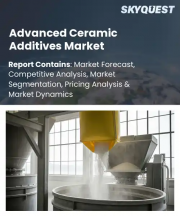
KSA 26.03.25The Global Advanced Ceramic Additives Market is projected to expand from USD 645.66 Million in 2025 to USD 893.81 Million by 2031, registering a CAGR of 5.57%. These specialized chemical agents-comprising binders, dispersants, defoamers, and plasticizers-are integrated during technical ceramic processing to improve slurry stability, green body strength, and sintering characteristics. Growth is chiefly driven by the rising need for high-performance components within the electronics and semiconductor industries, where such additives are essential for fabricating precise ceramic substrates and packages. Furthermore, the medical sector contributes to this expansion through the heightened production of bioceramic implants and dental prosthetics, which demand high-purity processing aids to guarantee biocompatibility and structural soundness. This demand is underscored by data from the Semiconductor Industry Association, which noted that global semiconductor industry sales hit $51.3 billion in July 2024, marking an 18.7% year-over-year increase and subsequently boosting the need for ceramic materials used in these devices.
| Market Overview | |
|---|---|
| Forecast Period | 2027-2031 |
| Market Size 2025 | USD 645.66 Million |
| Market Size 2031 | USD 893.81 Million |
| CAGR 2026-2031 | 5.57% |
| Fastest Growing Segment | Dispersants |
| Largest Market | North America |
Despite these positive indicators, the market confronts a major obstacle involving the significant expense and technical intricacy linked to additive formulation. Creating compatible additive systems for advanced ceramic powders frequently requires rigorous customization and testing to attain peak performance, a process that elevates production costs and creates technical hurdles. This complexity can discourage adoption in applications sensitive to cost and restrict market growth, especially in scenarios where less expensive material alternatives are available that do not necessitate such advanced processing aids.
Market Driver
The swift growth of the electric vehicle (EV) sector and the incorporation of sophisticated automotive sensors serve as a primary catalyst for the Global Advanced Ceramic Additives Market. As automakers shift toward electrification, there is a crucial demand for advanced ceramic components, including thermal management substrates, battery separators, and piezoelectric sensors, all of which depend heavily on specialized processing additives. Dispersants and binders are vital for guaranteeing the structural consistency and density of these ceramic parts, which must endure rigorous operating conditions. Highlighting this trend, the International Energy Agency projected in April 2024 that global electric car sales would reach roughly 17 million units in 2024, representing over 20% of worldwide vehicle sales, a development that directly increases the consumption of high-purity ceramic processing aids.
Additionally, the escalating demand for Multi-Layer Ceramic Capacitors (MLCCs) within consumer electronics and automotive fields further propels market expansion. Device miniaturization requires the manufacture of MLCCs with progressively thinner dielectric layers, necessitating the superior rheological control offered by advanced plasticizers and defoamers. This dependency is reflected in the financial results of leading component manufacturers; for instance, Samsung Electro-Mechanics reported in January 2025 that its annual revenue for 2024 surpassed 10 trillion won for the first time, fueled by increased sales of high-value MLCCs for automotive and AI server uses. This segment is bolstered by wider industry growth, as the Japan Electronics and Information Technology Industries Association forecast in December 2024 that the global production value of the electronics and IT sectors would grow by 9% year-on-year to hit $3.7 trillion.
Market Challenge
The substantial cost and technical sophistication involved in additive formulation present a significant hurdle to the growth of the global advanced ceramic additives market. Formulating compatible additive systems for distinct ceramic powders requires deep customization and strict testing to guarantee optimal functionality. This rigorous development cycle considerably raises production costs and establishes technical barriers that manufacturers are forced to navigate. As a result, these increased expenses deter adoption in applications with strict budget limitations where cheaper material alternatives can adequately satisfy fundamental requirements.
The financial strain of these technical demands is intensified by a broader economic context of increasing industrial input expenses. According to the Institute for Supply Management, the Manufacturing Prices Index reached 55.8 percent in March 2024, signaling a persistent rise in raw material costs for the industrial sector. This trend of escalating prices makes it increasingly challenging for manufacturers to validate the extra cost of high-purity ceramic additives, thereby directly limiting market penetration in sectors that value cost-efficiency over high-performance material characteristics.
Market Trends
The rapid expansion of specialized binders for ceramic additive manufacturing is fundamentally reshaping production scales, moving the technology from mere prototyping to high-volume industrial output. This movement fuels the creation of advanced photosensitive resins and binder systems that enable the production of defect-free, intricate ceramic geometries with mechanical traits comparable to traditionally formed components. As producers incorporate these additive technologies into standard supply chains, the need for formulation speed and consistency has grown. Illustrating this transition toward mass production, Lithoz introduced its "Ceramic 3D Factory" network in June 2024, announcing that its linked system of 3D printers now supports the serial production of up to 14 million ceramic parts per year.
Simultaneously, the market is witnessing a notable rise in the creation of additives designed for thin-layer solid-state battery electrolytes. In contrast to traditional liquid-electrolyte batteries that use standard separators, next-generation solid-state designs demand specialized binders and dispersants to process solid oxide or sulfide electrolyte layers with intimate electrode contact and high ionic conductivity. This technological shift requires additives that facilitate optimal densification and uniform particle distribution without inhibiting electrochemical performance. This material progress is highlighted by key industry achievements; for example, Samsung SDI confirmed in December 2024 that its pilot line for all-solid-state batteries, which requires these exacting ceramic processing aids, successfully attained a verified energy density of 900 watt-hours per liter.
Key Market Players
- Advanced Materials Technologies, Inc.
- BASF SE
- Clariant AG
- Cabot Corporation
- H.C. Starck GmbH
- Sumitomo Chemical Co., Ltd.
- 3M Company
- Ceradyne, Inc.
- Henkel AG & Co. KGaA
- Eastman Chemical Company
Report Scope
In this report, the Global Advanced Ceramic Additives Market has been segmented into the following categories, in addition to the industry trends which have also been detailed below:
Advanced Ceramic Additives Market, By Product
- Dispersants
- Binders
- Others
Advanced Ceramic Additives Market, By Application
- Electrical & Electronics
- Automotive
- Machinery
- Environmental
- Medical
- Others
Advanced Ceramic Additives Market, By Region
- North America
- United States
- Canada
- Mexico
- Europe
- France
- United Kingdom
- Italy
- Germany
- Spain
- Asia Pacific
- China
- India
- Japan
- Australia
- South Korea
- South America
- Brazil
- Argentina
- Colombia
- Middle East & Africa
- South Africa
- Saudi Arabia
- UAE
Competitive Landscape
Company Profiles: Detailed analysis of the major companies present in the Global Advanced Ceramic Additives Market.
Available Customizations:
Global Advanced Ceramic Additives Market report with the given market data, TechSci Research offers customizations according to a company's specific needs. The following customization options are available for the report:
Company Information
- Detailed analysis and profiling of additional market players (up to five).
Table of Contents
1. Product Overview
- 1.1. Market Definition
- 1.2. Scope of the Market
- 1.2.1. Markets Covered
- 1.2.2. Years Considered for Study
- 1.2.3. Key Market Segmentations
2. Research Methodology
- 2.1. Objective of the Study
- 2.2. Baseline Methodology
- 2.3. Key Industry Partners
- 2.4. Major Association and Secondary Sources
- 2.5. Forecasting Methodology
- 2.6. Data Triangulation & Validation
- 2.7. Assumptions and Limitations
3. Executive Summary
- 3.1. Overview of the Market
- 3.2. Overview of Key Market Segmentations
- 3.3. Overview of Key Market Players
- 3.4. Overview of Key Regions/Countries
- 3.5. Overview of Market Drivers, Challenges, Trends
4. Voice of Customer
5. Global Advanced Ceramic Additives Market Outlook
- 5.1. Market Size & Forecast
- 5.1.1. By Value
- 5.2. Market Share & Forecast
- 5.2.1. By Product (Dispersants, Binders, Others)
- 5.2.2. By Application (Electrical & Electronics, Automotive, Machinery, Environmental, Medical, Others)
- 5.2.3. By Region
- 5.2.4. By Company (2025)
- 5.3. Market Map
6. North America Advanced Ceramic Additives Market Outlook
- 6.1. Market Size & Forecast
- 6.1.1. By Value
- 6.2. Market Share & Forecast
- 6.2.1. By Product
- 6.2.2. By Application
- 6.2.3. By Country
- 6.3. North America: Country Analysis
- 6.3.1. United States Advanced Ceramic Additives Market Outlook
- 6.3.1.1. Market Size & Forecast
- 6.3.1.1.1. By Value
- 6.3.1.2. Market Share & Forecast
- 6.3.1.2.1. By Product
- 6.3.1.2.2. By Application
- 6.3.1.1. Market Size & Forecast
- 6.3.2. Canada Advanced Ceramic Additives Market Outlook
- 6.3.2.1. Market Size & Forecast
- 6.3.2.1.1. By Value
- 6.3.2.2. Market Share & Forecast
- 6.3.2.2.1. By Product
- 6.3.2.2.2. By Application
- 6.3.2.1. Market Size & Forecast
- 6.3.3. Mexico Advanced Ceramic Additives Market Outlook
- 6.3.3.1. Market Size & Forecast
- 6.3.3.1.1. By Value
- 6.3.3.2. Market Share & Forecast
- 6.3.3.2.1. By Product
- 6.3.3.2.2. By Application
- 6.3.3.1. Market Size & Forecast
- 6.3.1. United States Advanced Ceramic Additives Market Outlook
7. Europe Advanced Ceramic Additives Market Outlook
- 7.1. Market Size & Forecast
- 7.1.1. By Value
- 7.2. Market Share & Forecast
- 7.2.1. By Product
- 7.2.2. By Application
- 7.2.3. By Country
- 7.3. Europe: Country Analysis
- 7.3.1. Germany Advanced Ceramic Additives Market Outlook
- 7.3.1.1. Market Size & Forecast
- 7.3.1.1.1. By Value
- 7.3.1.2. Market Share & Forecast
- 7.3.1.2.1. By Product
- 7.3.1.2.2. By Application
- 7.3.1.1. Market Size & Forecast
- 7.3.2. France Advanced Ceramic Additives Market Outlook
- 7.3.2.1. Market Size & Forecast
- 7.3.2.1.1. By Value
- 7.3.2.2. Market Share & Forecast
- 7.3.2.2.1. By Product
- 7.3.2.2.2. By Application
- 7.3.2.1. Market Size & Forecast
- 7.3.3. United Kingdom Advanced Ceramic Additives Market Outlook
- 7.3.3.1. Market Size & Forecast
- 7.3.3.1.1. By Value
- 7.3.3.2. Market Share & Forecast
- 7.3.3.2.1. By Product
- 7.3.3.2.2. By Application
- 7.3.3.1. Market Size & Forecast
- 7.3.4. Italy Advanced Ceramic Additives Market Outlook
- 7.3.4.1. Market Size & Forecast
- 7.3.4.1.1. By Value
- 7.3.4.2. Market Share & Forecast
- 7.3.4.2.1. By Product
- 7.3.4.2.2. By Application
- 7.3.4.1. Market Size & Forecast
- 7.3.5. Spain Advanced Ceramic Additives Market Outlook
- 7.3.5.1. Market Size & Forecast
- 7.3.5.1.1. By Value
- 7.3.5.2. Market Share & Forecast
- 7.3.5.2.1. By Product
- 7.3.5.2.2. By Application
- 7.3.5.1. Market Size & Forecast
- 7.3.1. Germany Advanced Ceramic Additives Market Outlook
8. Asia Pacific Advanced Ceramic Additives Market Outlook
- 8.1. Market Size & Forecast
- 8.1.1. By Value
- 8.2. Market Share & Forecast
- 8.2.1. By Product
- 8.2.2. By Application
- 8.2.3. By Country
- 8.3. Asia Pacific: Country Analysis
- 8.3.1. China Advanced Ceramic Additives Market Outlook
- 8.3.1.1. Market Size & Forecast
- 8.3.1.1.1. By Value
- 8.3.1.2. Market Share & Forecast
- 8.3.1.2.1. By Product
- 8.3.1.2.2. By Application
- 8.3.1.1. Market Size & Forecast
- 8.3.2. India Advanced Ceramic Additives Market Outlook
- 8.3.2.1. Market Size & Forecast
- 8.3.2.1.1. By Value
- 8.3.2.2. Market Share & Forecast
- 8.3.2.2.1. By Product
- 8.3.2.2.2. By Application
- 8.3.2.1. Market Size & Forecast
- 8.3.3. Japan Advanced Ceramic Additives Market Outlook
- 8.3.3.1. Market Size & Forecast
- 8.3.3.1.1. By Value
- 8.3.3.2. Market Share & Forecast
- 8.3.3.2.1. By Product
- 8.3.3.2.2. By Application
- 8.3.3.1. Market Size & Forecast
- 8.3.4. South Korea Advanced Ceramic Additives Market Outlook
- 8.3.4.1. Market Size & Forecast
- 8.3.4.1.1. By Value
- 8.3.4.2. Market Share & Forecast
- 8.3.4.2.1. By Product
- 8.3.4.2.2. By Application
- 8.3.4.1. Market Size & Forecast
- 8.3.5. Australia Advanced Ceramic Additives Market Outlook
- 8.3.5.1. Market Size & Forecast
- 8.3.5.1.1. By Value
- 8.3.5.2. Market Share & Forecast
- 8.3.5.2.1. By Product
- 8.3.5.2.2. By Application
- 8.3.5.1. Market Size & Forecast
- 8.3.1. China Advanced Ceramic Additives Market Outlook
9. Middle East & Africa Advanced Ceramic Additives Market Outlook
- 9.1. Market Size & Forecast
- 9.1.1. By Value
- 9.2. Market Share & Forecast
- 9.2.1. By Product
- 9.2.2. By Application
- 9.2.3. By Country
- 9.3. Middle East & Africa: Country Analysis
- 9.3.1. Saudi Arabia Advanced Ceramic Additives Market Outlook
- 9.3.1.1. Market Size & Forecast
- 9.3.1.1.1. By Value
- 9.3.1.2. Market Share & Forecast
- 9.3.1.2.1. By Product
- 9.3.1.2.2. By Application
- 9.3.1.1. Market Size & Forecast
- 9.3.2. UAE Advanced Ceramic Additives Market Outlook
- 9.3.2.1. Market Size & Forecast
- 9.3.2.1.1. By Value
- 9.3.2.2. Market Share & Forecast
- 9.3.2.2.1. By Product
- 9.3.2.2.2. By Application
- 9.3.2.1. Market Size & Forecast
- 9.3.3. South Africa Advanced Ceramic Additives Market Outlook
- 9.3.3.1. Market Size & Forecast
- 9.3.3.1.1. By Value
- 9.3.3.2. Market Share & Forecast
- 9.3.3.2.1. By Product
- 9.3.3.2.2. By Application
- 9.3.3.1. Market Size & Forecast
- 9.3.1. Saudi Arabia Advanced Ceramic Additives Market Outlook
10. South America Advanced Ceramic Additives Market Outlook
- 10.1. Market Size & Forecast
- 10.1.1. By Value
- 10.2. Market Share & Forecast
- 10.2.1. By Product
- 10.2.2. By Application
- 10.2.3. By Country
- 10.3. South America: Country Analysis
- 10.3.1. Brazil Advanced Ceramic Additives Market Outlook
- 10.3.1.1. Market Size & Forecast
- 10.3.1.1.1. By Value
- 10.3.1.2. Market Share & Forecast
- 10.3.1.2.1. By Product
- 10.3.1.2.2. By Application
- 10.3.1.1. Market Size & Forecast
- 10.3.2. Colombia Advanced Ceramic Additives Market Outlook
- 10.3.2.1. Market Size & Forecast
- 10.3.2.1.1. By Value
- 10.3.2.2. Market Share & Forecast
- 10.3.2.2.1. By Product
- 10.3.2.2.2. By Application
- 10.3.2.1. Market Size & Forecast
- 10.3.3. Argentina Advanced Ceramic Additives Market Outlook
- 10.3.3.1. Market Size & Forecast
- 10.3.3.1.1. By Value
- 10.3.3.2. Market Share & Forecast
- 10.3.3.2.1. By Product
- 10.3.3.2.2. By Application
- 10.3.3.1. Market Size & Forecast
- 10.3.1. Brazil Advanced Ceramic Additives Market Outlook
11. Market Dynamics
- 11.1. Drivers
- 11.2. Challenges
12. Market Trends & Developments
- 12.1. Merger & Acquisition (If Any)
- 12.2. Product Launches (If Any)
- 12.3. Recent Developments
13. Global Advanced Ceramic Additives Market: SWOT Analysis
14. Porter's Five Forces Analysis
- 14.1. Competition in the Industry
- 14.2. Potential of New Entrants
- 14.3. Power of Suppliers
- 14.4. Power of Customers
- 14.5. Threat of Substitute Products
15. Competitive Landscape
- 15.1. Advanced Materials Technologies, Inc.
- 15.1.1. Business Overview
- 15.1.2. Products & Services
- 15.1.3. Recent Developments
- 15.1.4. Key Personnel
- 15.1.5. SWOT Analysis
- 15.2. BASF SE
- 15.3. Clariant AG
- 15.4. Cabot Corporation
- 15.5. H.C. Starck GmbH
- 15.6. Sumitomo Chemical Co., Ltd.
- 15.7. 3M Company
- 15.8. Ceradyne, Inc.
- 15.9. Henkel AG & Co. KGaA
- 15.10. Eastman Chemical Company