|
시장보고서
상품코드
2030218
차량용 인휠 모터 시장 - 세계 산업 규모, 점유율, 동향, 기회, 예측 : 차종별, 추진 방식별, 모터 유형별, 지역별 및 경쟁(2021-2031년)In-Wheel Motor Market - Global Industry Size, Share, Trends, Opportunity, and Forecast, Segmented By Vehicle Type, By Propulsion Type, By Motor Type, By Region & Competition, 2021-2031F |
||||||

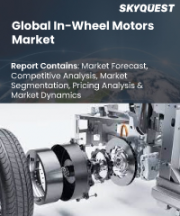
세계의 인휠 모터 시장은 2025년 37억 8,000만 달러에서 2031년까지 56억 6,000만 달러로 성장할 것으로 예상되며, CAGR은 6.96%에 달할 것으로 예측됩니다. 휠 허브 모터라고도 불리는 이 장치는 차량의 휠 허브에 직접 내장되어 기존의 드라이브 트레인, 차축, 차동 장치를 완전히 대체합니다. 이 시장의 성장은 전 세계적으로 전기자동차로의 전환이 큰 원동력이 되고 있으며, 차량 레이아웃의 최적화, 고도의 토크 벡터링이 가능한 개별 휠 제어와 같은 이점을 활용하고 있습니다. 유럽자동차산업협회(ACEA)의 데이터에 따르면, 2025년 유럽연합(EU) 신차 등록대수의 17.4%를 배터리 전기자동차가 차지할 것으로 전망하는 등 전기 구동 기반이 확대되고 있습니다.
| 시장 개요 | |
|---|---|
| 예측 기간 | 2027-2031년 |
| 시장 규모 : 2025년 | 37억 8,000만 달러 |
| 시장 규모 : 2031년 | 56억 6,000만 달러 |
| CAGR : 2026-2031년 | 6.96% |
| 가장 성장이 현저한 부문 | 상용차 |
| 최대 시장 | 아시아태평양 |
그러나 시장 성장에 큰 걸림돌이 되고 있는 것은 바퀴 내부에 모터를 장착함으로써 발생하는 추가적인 비현가중량입니다. 이 여분의 질량은 차량의 핸들링과 승차감에 악영향을 미칠 수 있으며, 기술적 해결책을 필요로 합니다. 그 결과, 제조 비용과 구조의 복잡성이 모두 증가하게 됩니다.
시장 촉진요인
전기자동차(EV)의 인기 급상승은 세계 인휠 모터 시장의 주요 원동력이 되고 있습니다. 이는 이 모터가 전기 드라이브에 최적의 구조적 이점을 제공하기 때문입니다. 인휠 모터는 더 나은 공간 레이아웃을 실현하고 각 바퀴를 독립적으로 제어할 수 있게함으로써 전기자동차의 안전성과 핸들링을 향상시키는 고급 토크 벡터링을 지원합니다. 켈리블루북이 2026년 4월 국제에너지기구(IEA)의 데이터를 인용해 보도한 바와 같이, 2025년 세계 자동차 판매량의 25%를 전기자동차가 차지할 것으로 예상되며, 이는 이 기술의 기반이 빠르게 확대되고 있음을 보여줍니다. 이러한 전기자동차 시장의 확대는 인휠 모터가 미래 교통수단의 필수 요소로 자리 잡을 수 있는 절호의 기회를 제공하고 있습니다.
자동차 엔지니어링 및 전기자동차 플랫폼의 지속적인 혁신은 기존의 설계 제약을 해소하고 모터 성능을 향상시킴으로써 시장 성장을 촉진하고 있습니다. 최근 기술 발전으로 비용 효율성, 고출력 밀도 및 비 현가 질량 감소가 우선순위가 되고 있으며, 이로 인해 이러한 시스템은 다양한 차종에서 점점 더 매력적으로 변모하고 있습니다. 예를 들어, Elaphe Propulsion Technologies는 2025년 7월, 자사의 Sonic X 플랫폼이 바퀴당 최대 300kW의 출력을 실현하고 무게 증가는 25kg에 불과하다고 보고했습니다. 이는 기존 e-액슬을 크게 능가하는 성능입니다. 이러한 기술적 이정표와 더불어 2024년 Protean Electric의 1,500대 생산과 같은 구체적인 생산 실적은 기술의 광범위한 상용화를 보장하고 그 실용성을 입증하는 데 매우 중요합니다.
시장의 과제
인휠 모터의 보급에 있어 가장 큰 장애물 중 하나는 차량의 비현가 중량이 크게 증가한다는 점입니다. 바퀴에 직접 질량을 추가하면 핸들링 특성과 승차감에 부정적인 영향을 미치고, 현대 소비자가 원하는 부드럽고 반응성이 좋은 운전 경험을 제공하려는 노력을 복잡하게 만듭니다. 이 여분의 무게는 견인력 저하, 핸들링 반응 둔화, 서스펜션의 경직으로 이어져 탑승자의 편안함과 차량의 안정성을 저해할 위험이 있습니다.
이러한 차량 역학에 대한 부정적인 영향을 해결하기 위해 제조업체는 복잡한 설계 조정에 많은 투자를 해야 하며, 그 결과 개발 비용과 생산 비용이 모두 상승하게 됩니다. 이러한 재정적 부담은 경쟁이 치열한 전기자동차 시장에서 인휠 모터를 장착한 차량의 경제성을 떨어뜨릴 수 있습니다. 독일자동차공업협회(VDA)가 2025년 독일의 전기자동차 생산량이 전년 대비 23% 증가한 167만 대에 달할 것이라고 보고한 것에서 알 수 있듯이, 전기자동차 시장 전체가 호황을 누리고 있지만, 인휠 기술은 스프링 하중이라는 뿌리 깊은 문제로 인해 이 호황을 충분히 활용하지 못하고 있습니다. 충분히 활용하지 못하고 있습니다. 결국, 이러한 근본적인 성능 타협을 극복할 수 없다는 것은 여전히 인휠 모터 시장 세계 시장 확대에 큰 제약요인으로 작용하고 있습니다.
시장 동향
모듈식 전기자동차 아키텍처의 등장은 인휠 모터 산업을 형성하는 주요 트렌드로, 통합의 효율성과 광범위한 설계 자유도를 가져왔습니다. 이러한 프레임워크를 통해 제조업체는 통일된 기본 구조를 활용하면서 차체 및 기능을 사용자 정의할 수 있으며, 이 전략은 허브 모터의 독립적인 설계와 완벽하게 조화를 이룹니다. 개발 비용과 복잡성을 최소화하는 모듈식 접근 방식은 다양한 차종에 인휠 시스템을 매력적인 옵션으로 만들어 줍니다. 이러한 변화를 상징적으로 보여주기 위해 프로테안 일렉트릭은 2025년 9월 최신 '프로테안드라이브' 시스템이 2026년 생산에 돌입할 것이며, 그 비용은 기존 트윈 e-액슬과 비슷할 것이라고 밝혔습니다. 이를 통해 다양한 모듈형 플랫폼에 대한 도입을 간소화하여 자동차 제조업체가 인휠 모터를 장착한 전기자동차 보급을 가속화하는 데 도움이 될 것입니다.
또 다른 중요한 시장 동향은 오프로드 및 상용차 부문에서 인휠 모터 기술을 적용하는 것입니다. 이러한 특수한 카테고리에서는 내구성이 높고 높은 토크의 메커니즘이 요구되며, 허브 모터의 효율적인 패키징, 독립 제어 및 다이렉트 드라이브 기능에서 큰 가치를 얻습니다. 대형 전기 운송 차량으로의 전환이 가속화됨에 따라 인휠 모터 도입의 새로운 길이 열리고 있습니다. 2025년 9월 블룸버그 프로페셔널 서비스 데이터에 따르면, 전기 트럭은 전 세계 판매량의 약 4%를 차지했으며, 중국에서는 같은 해 상반기에 약 8만 대가 판매되었습니다. 이러한 꾸준한 확대는 인휠 모터가 일반 승용차의 틀을 넘어 상용차의 까다로운 성능과 효율성에 대한 요구를 충족시키고 있음을 보여줍니다.
자주 묻는 질문
목차
제1장 개요
제2장 조사 방법
제3장 주요 요약
제4장 고객의 소리
제5장 세계의 차량용 인휠 모터 시장 전망
제6장 북미의 차량용 인휠 모터 시장 전망
제7장 유럽의 차량용 인휠 모터 시장 전망
제8장 아시아태평양의 차량용 인휠 모터 시장 전망
제9장 중동 및 아프리카의 차량용 인휠 모터 시장 전망
제10장 남미의 차량용 인휠 모터 시장 전망
제11장 시장 역학
제12장 시장 동향과 발전
제13장 세계의 차량용 인휠 모터 시장 : SWOT 분석
제14장 Porter's Five Forces 분석
제15장 경쟁 구도
제16장 전략적 제안
제17장 조사 회사 소개 및 면책사항
KSM 26.05.22The Global In-Wheel Motor Market is expected to expand from USD 3.78 billion in 2025 to USD 5.66 billion by 2031, reflecting a compound annual growth rate of 6.96%. Also referred to as wheel hub motors, these devices are built directly into a vehicle's wheel hub, entirely replacing conventional drivetrains, axles, and differentials. This market's growth is heavily fueled by the rising worldwide transition to electric vehicles, capitalizing on benefits like optimized vehicle layout and individual wheel control that enables sophisticated torque vectoring. Data from the European Automobile Manufacturers' Association (ACEA) highlights this growing foundation for electric propulsion, noting that battery-electric vehicles accounted for 17.4% of all new car registrations in the European Union in 2025.
| Market Overview | |
|---|---|
| Forecast Period | 2027-2031 |
| Market Size 2025 | USD 3.78 Billion |
| Market Size 2031 | USD 5.66 Billion |
| CAGR 2026-2031 | 6.96% |
| Fastest Growing Segment | Commercial Vehicles |
| Largest Market | Asia Pacific |
However, a major obstacle to market growth is the additional unsprung weight that comes from housing motors inside the wheels. This extra mass can adversely affect the handling and ride quality of a vehicle, necessitating engineering workarounds that ultimately increase both manufacturing expenses and structural complexity.
Market Driver
The surging popularity of electric vehicles serves as a major catalyst for the Global In-Wheel Motor Market, given that these motors provide structural benefits perfectly suited for electric propulsion. By facilitating better spatial layouts and allowing independent control over each wheel, in-wheel motors support advanced torque vectoring that enhances safety and handling in electric vehicles. As reported by Kelley Blue Book, referencing the International Energy Agency in April 2026, electric vehicles made up 25% of global car sales in 2025, highlighting a rapidly growing foundation for this technology. This expanding EV market offers a tremendous opportunity for in-wheel motors to establish themselves as essential elements of tomorrow's transportation.
Ongoing innovations in automotive engineering and electric vehicle platforms are also driving market growth by resolving older design limitations and boosting motor performance. Recent breakthroughs prioritize cost-efficiency, higher power density, and lower unsprung mass, which makes these systems increasingly attractive across multiple vehicle categories. For example, Elaphe Propulsion Technologies reported in July 2025 that its Sonic X platform delivers up to 300 kW per wheel with a weight penalty of just 25 kg, vastly outperforming conventional e-axles. These technical milestones, alongside tangible production achievements like Protean Electric manufacturing 1,500 units in 2024, are vital for securing widespread commercial adoption and proving the technology's viability.
Market Challenge
A prominent hurdle to the widespread adoption of in-wheel motors is the significant increase in a vehicle's unsprung weight. Adding mass directly to the wheels negatively affects handling traits and ride comfort, complicating the effort to deliver the smooth and responsive driving experience that today's consumers demand. This extra weight can result in decreased traction, sluggish handling responses, and stiffer suspension behavior, which together risk degrading passenger comfort and vehicle stability.
To counter these negative impacts on vehicle dynamics, manufacturers must invest heavily in complex engineering adjustments that drive up both development and production costs. Such financial burdens can render vehicles featuring in-wheel motors less economically viable within the highly competitive electric vehicle space. Even as the broader EV sector thrives-evidenced by the German Association of the Automotive Industry (VDA) noting a 23% year-over-year jump to 1.67 million electric cars produced in Germany during 2025-the persistent issue of unsprung mass prevents in-wheel technology from fully capitalizing on this boom. Ultimately, overcoming these fundamental performance compromises remains a major limiting factor for the global expansion of the in-wheel motor market.
Market Trends
The rise of modular electric vehicle architectures is a major trend shaping the in-wheel motor industry, offering streamlined integration and extensive design freedom. Such frameworks permit manufacturers to utilize uniform base structures while tailoring vehicle bodies and features, a strategy that pairs perfectly with the independent design of hub motors. By minimizing developmental expenses and complexities, this modular approach makes in-wheel systems attractive for a broad array of vehicles. Highlighting this shift, Protean Electric revealed in September 2025 that its newest ProteanDrive system would begin production in 2026 at a cost equivalent to conventional twin e-axles, thereby simplifying adoption into diverse modular platforms and helping automakers speed up the rollout of in-wheel-equipped EVs.
Another pivotal market trend is the application of in-wheel motor technology within the off-highway and commercial vehicle sectors. These specialized categories demand durable, high-torque mechanisms and gain immense value from the efficient packaging, independent control, and direct drive capabilities of hub motors. As the shift toward electric heavy-duty transport accelerates, it creates fresh avenues for in-wheel motor implementation. Data from Bloomberg Professional Services in September 2025 indicated that electric trucks accounted for nearly 4% of global sales, alongside roughly 80,000 units sold in China during the first half of the year. This steady expansion illustrates how in-wheel motors are moving past standard passenger cars to meet the rigorous performance and efficiency needs of commercial fleets.
Key Market Players
- Protean Electric Limited
- Elaphe Propulsion Technologies Ltd.
- NTN Corporation
- Nidec Corporation
- Schaeffler AG
- ZF Friedrichshafen AG
- Hyundai Mobis Co., Ltd.
- Printed Motor Works Limited
- DeepDrive GmbH
Report Scope
In this report, the Global In-Wheel Motor Market has been segmented into the following categories, in addition to the industry trends which have also been detailed below:
In-Wheel Motor Market, By Vehicle Type
- Passenger Cars
- Commercial Vehicles
In-Wheel Motor Market, By Propulsion Type
- Battery Electric Vehicle (BEV)
- Plug-in Hybrid Vehicle (PHEV)
- Fuel Cell Electric Vehicle (FCEV)
In-Wheel Motor Market, By Motor Type
- Radial
- Axial
In-Wheel Motor Market, By Region
- North America
- United States
- Canada
- Mexico
- Europe
- France
- United Kingdom
- Italy
- Germany
- Spain
- Asia Pacific
- China
- India
- Japan
- Australia
- South Korea
- South America
- Brazil
- Argentina
- Colombia
- Middle East & Africa
- South Africa
- Saudi Arabia
- UAE
Competitive Landscape
Company Profiles: Detailed analysis of the major companies present in the Global In-Wheel Motor Market.
Available Customizations:
Global In-Wheel Motor Market report with the given market data, TechSci Research offers customizations according to a company's specific needs. The following customization options are available for the report:
Company Information
- Detailed analysis and profiling of additional market players (up to five).
Table of Contents
1. Product Overview
- 1.1. Market Definition
- 1.2. Scope of the Market
- 1.2.1. Markets Covered
- 1.2.2. Years Considered for Study
- 1.2.3. Key Market Segmentations
2. Research Methodology
- 2.1. Objective of the Study
- 2.2. Baseline Methodology
- 2.3. Key Industry Partners
- 2.4. Major Association and Secondary Sources
- 2.5. Forecasting Methodology
- 2.6. Data Triangulation & Validation
- 2.7. Assumptions and Limitations
3. Executive Summary
- 3.1. Overview of the Market
- 3.2. Overview of Key Market Segmentations
- 3.3. Overview of Key Market Players
- 3.4. Overview of Key Regions/Countries
- 3.5. Overview of Market Drivers, Challenges, Trends
4. Voice of Customer
5. Global In-Wheel Motor Market Outlook
- 5.1. Market Size & Forecast
- 5.1.1. By Value
- 5.2. Market Share & Forecast
- 5.2.1. By Vehicle Type (Passenger Cars, Commercial Vehicles)
- 5.2.2. By Propulsion Type (Battery Electric Vehicle (BEV), Plug-in Hybrid Vehicle (PHEV), Fuel Cell Electric Vehicle (FCEV))
- 5.2.3. By Motor Type (Radial, Axial)
- 5.2.4. By Region
- 5.2.5. By Company (2025)
- 5.3. Market Map
6. North America In-Wheel Motor Market Outlook
- 6.1. Market Size & Forecast
- 6.1.1. By Value
- 6.2. Market Share & Forecast
- 6.2.1. By Vehicle Type
- 6.2.2. By Propulsion Type
- 6.2.3. By Motor Type
- 6.2.4. By Country
- 6.3. North America: Country Analysis
- 6.3.1. United States In-Wheel Motor Market Outlook
- 6.3.1.1. Market Size & Forecast
- 6.3.1.1.1. By Value
- 6.3.1.2. Market Share & Forecast
- 6.3.1.2.1. By Vehicle Type
- 6.3.1.2.2. By Propulsion Type
- 6.3.1.2.3. By Motor Type
- 6.3.1.1. Market Size & Forecast
- 6.3.2. Canada In-Wheel Motor Market Outlook
- 6.3.2.1. Market Size & Forecast
- 6.3.2.1.1. By Value
- 6.3.2.2. Market Share & Forecast
- 6.3.2.2.1. By Vehicle Type
- 6.3.2.2.2. By Propulsion Type
- 6.3.2.2.3. By Motor Type
- 6.3.2.1. Market Size & Forecast
- 6.3.3. Mexico In-Wheel Motor Market Outlook
- 6.3.3.1. Market Size & Forecast
- 6.3.3.1.1. By Value
- 6.3.3.2. Market Share & Forecast
- 6.3.3.2.1. By Vehicle Type
- 6.3.3.2.2. By Propulsion Type
- 6.3.3.2.3. By Motor Type
- 6.3.3.1. Market Size & Forecast
- 6.3.1. United States In-Wheel Motor Market Outlook
7. Europe In-Wheel Motor Market Outlook
- 7.1. Market Size & Forecast
- 7.1.1. By Value
- 7.2. Market Share & Forecast
- 7.2.1. By Vehicle Type
- 7.2.2. By Propulsion Type
- 7.2.3. By Motor Type
- 7.2.4. By Country
- 7.3. Europe: Country Analysis
- 7.3.1. Germany In-Wheel Motor Market Outlook
- 7.3.1.1. Market Size & Forecast
- 7.3.1.1.1. By Value
- 7.3.1.2. Market Share & Forecast
- 7.3.1.2.1. By Vehicle Type
- 7.3.1.2.2. By Propulsion Type
- 7.3.1.2.3. By Motor Type
- 7.3.1.1. Market Size & Forecast
- 7.3.2. France In-Wheel Motor Market Outlook
- 7.3.2.1. Market Size & Forecast
- 7.3.2.1.1. By Value
- 7.3.2.2. Market Share & Forecast
- 7.3.2.2.1. By Vehicle Type
- 7.3.2.2.2. By Propulsion Type
- 7.3.2.2.3. By Motor Type
- 7.3.2.1. Market Size & Forecast
- 7.3.3. United Kingdom In-Wheel Motor Market Outlook
- 7.3.3.1. Market Size & Forecast
- 7.3.3.1.1. By Value
- 7.3.3.2. Market Share & Forecast
- 7.3.3.2.1. By Vehicle Type
- 7.3.3.2.2. By Propulsion Type
- 7.3.3.2.3. By Motor Type
- 7.3.3.1. Market Size & Forecast
- 7.3.4. Italy In-Wheel Motor Market Outlook
- 7.3.4.1. Market Size & Forecast
- 7.3.4.1.1. By Value
- 7.3.4.2. Market Share & Forecast
- 7.3.4.2.1. By Vehicle Type
- 7.3.4.2.2. By Propulsion Type
- 7.3.4.2.3. By Motor Type
- 7.3.4.1. Market Size & Forecast
- 7.3.5. Spain In-Wheel Motor Market Outlook
- 7.3.5.1. Market Size & Forecast
- 7.3.5.1.1. By Value
- 7.3.5.2. Market Share & Forecast
- 7.3.5.2.1. By Vehicle Type
- 7.3.5.2.2. By Propulsion Type
- 7.3.5.2.3. By Motor Type
- 7.3.5.1. Market Size & Forecast
- 7.3.1. Germany In-Wheel Motor Market Outlook
8. Asia Pacific In-Wheel Motor Market Outlook
- 8.1. Market Size & Forecast
- 8.1.1. By Value
- 8.2. Market Share & Forecast
- 8.2.1. By Vehicle Type
- 8.2.2. By Propulsion Type
- 8.2.3. By Motor Type
- 8.2.4. By Country
- 8.3. Asia Pacific: Country Analysis
- 8.3.1. China In-Wheel Motor Market Outlook
- 8.3.1.1. Market Size & Forecast
- 8.3.1.1.1. By Value
- 8.3.1.2. Market Share & Forecast
- 8.3.1.2.1. By Vehicle Type
- 8.3.1.2.2. By Propulsion Type
- 8.3.1.2.3. By Motor Type
- 8.3.1.1. Market Size & Forecast
- 8.3.2. India In-Wheel Motor Market Outlook
- 8.3.2.1. Market Size & Forecast
- 8.3.2.1.1. By Value
- 8.3.2.2. Market Share & Forecast
- 8.3.2.2.1. By Vehicle Type
- 8.3.2.2.2. By Propulsion Type
- 8.3.2.2.3. By Motor Type
- 8.3.2.1. Market Size & Forecast
- 8.3.3. Japan In-Wheel Motor Market Outlook
- 8.3.3.1. Market Size & Forecast
- 8.3.3.1.1. By Value
- 8.3.3.2. Market Share & Forecast
- 8.3.3.2.1. By Vehicle Type
- 8.3.3.2.2. By Propulsion Type
- 8.3.3.2.3. By Motor Type
- 8.3.3.1. Market Size & Forecast
- 8.3.4. South Korea In-Wheel Motor Market Outlook
- 8.3.4.1. Market Size & Forecast
- 8.3.4.1.1. By Value
- 8.3.4.2. Market Share & Forecast
- 8.3.4.2.1. By Vehicle Type
- 8.3.4.2.2. By Propulsion Type
- 8.3.4.2.3. By Motor Type
- 8.3.4.1. Market Size & Forecast
- 8.3.5. Australia In-Wheel Motor Market Outlook
- 8.3.5.1. Market Size & Forecast
- 8.3.5.1.1. By Value
- 8.3.5.2. Market Share & Forecast
- 8.3.5.2.1. By Vehicle Type
- 8.3.5.2.2. By Propulsion Type
- 8.3.5.2.3. By Motor Type
- 8.3.5.1. Market Size & Forecast
- 8.3.1. China In-Wheel Motor Market Outlook
9. Middle East & Africa In-Wheel Motor Market Outlook
- 9.1. Market Size & Forecast
- 9.1.1. By Value
- 9.2. Market Share & Forecast
- 9.2.1. By Vehicle Type
- 9.2.2. By Propulsion Type
- 9.2.3. By Motor Type
- 9.2.4. By Country
- 9.3. Middle East & Africa: Country Analysis
- 9.3.1. Saudi Arabia In-Wheel Motor Market Outlook
- 9.3.1.1. Market Size & Forecast
- 9.3.1.1.1. By Value
- 9.3.1.2. Market Share & Forecast
- 9.3.1.2.1. By Vehicle Type
- 9.3.1.2.2. By Propulsion Type
- 9.3.1.2.3. By Motor Type
- 9.3.1.1. Market Size & Forecast
- 9.3.2. UAE In-Wheel Motor Market Outlook
- 9.3.2.1. Market Size & Forecast
- 9.3.2.1.1. By Value
- 9.3.2.2. Market Share & Forecast
- 9.3.2.2.1. By Vehicle Type
- 9.3.2.2.2. By Propulsion Type
- 9.3.2.2.3. By Motor Type
- 9.3.2.1. Market Size & Forecast
- 9.3.3. South Africa In-Wheel Motor Market Outlook
- 9.3.3.1. Market Size & Forecast
- 9.3.3.1.1. By Value
- 9.3.3.2. Market Share & Forecast
- 9.3.3.2.1. By Vehicle Type
- 9.3.3.2.2. By Propulsion Type
- 9.3.3.2.3. By Motor Type
- 9.3.3.1. Market Size & Forecast
- 9.3.1. Saudi Arabia In-Wheel Motor Market Outlook
10. South America In-Wheel Motor Market Outlook
- 10.1. Market Size & Forecast
- 10.1.1. By Value
- 10.2. Market Share & Forecast
- 10.2.1. By Vehicle Type
- 10.2.2. By Propulsion Type
- 10.2.3. By Motor Type
- 10.2.4. By Country
- 10.3. South America: Country Analysis
- 10.3.1. Brazil In-Wheel Motor Market Outlook
- 10.3.1.1. Market Size & Forecast
- 10.3.1.1.1. By Value
- 10.3.1.2. Market Share & Forecast
- 10.3.1.2.1. By Vehicle Type
- 10.3.1.2.2. By Propulsion Type
- 10.3.1.2.3. By Motor Type
- 10.3.1.1. Market Size & Forecast
- 10.3.2. Colombia In-Wheel Motor Market Outlook
- 10.3.2.1. Market Size & Forecast
- 10.3.2.1.1. By Value
- 10.3.2.2. Market Share & Forecast
- 10.3.2.2.1. By Vehicle Type
- 10.3.2.2.2. By Propulsion Type
- 10.3.2.2.3. By Motor Type
- 10.3.2.1. Market Size & Forecast
- 10.3.3. Argentina In-Wheel Motor Market Outlook
- 10.3.3.1. Market Size & Forecast
- 10.3.3.1.1. By Value
- 10.3.3.2. Market Share & Forecast
- 10.3.3.2.1. By Vehicle Type
- 10.3.3.2.2. By Propulsion Type
- 10.3.3.2.3. By Motor Type
- 10.3.3.1. Market Size & Forecast
- 10.3.1. Brazil In-Wheel Motor Market Outlook
11. Market Dynamics
- 11.1. Drivers
- 11.2. Challenges
12. Market Trends & Developments
- 12.1. Merger & Acquisition (If Any)
- 12.2. Product Launches (If Any)
- 12.3. Recent Developments
13. Global In-Wheel Motor Market: SWOT Analysis
14. Porter's Five Forces Analysis
- 14.1. Competition in the Industry
- 14.2. Potential of New Entrants
- 14.3. Power of Suppliers
- 14.4. Power of Customers
- 14.5. Threat of Substitute Products
15. Competitive Landscape
- 15.1. Protean Electric Limited
- 15.1.1. Business Overview
- 15.1.2. Products & Services
- 15.1.3. Recent Developments
- 15.1.4. Key Personnel
- 15.1.5. SWOT Analysis
- 15.2. Elaphe Propulsion Technologies Ltd.
- 15.3. NTN Corporation
- 15.4. Nidec Corporation
- 15.5. Schaeffler AG
- 15.6. ZF Friedrichshafen AG
- 15.7. Hyundai Mobis Co., Ltd.
- 15.8. Printed Motor Works Limited
- 15.9. DeepDrive GmbH