|
시장보고서
상품코드
2037667
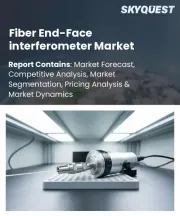
광섬유 종단면 검사 간섭계 시장 : 규모, 유형별, 용도별, 지역별 예측Fiber End-Face Inspection Interferometers Market Size By Type (Portable, Desktop), By Application (Single Fiber Connector, Multi-fiber Connector), By Geographic Scope And Forecast |
||||||

세계의 광섬유 종단면 검사 간섭계 시장 규모 및 예측
광섬유 종단면 검사 간섭계 시장 규모는 2025년에 1억 9,600만 달러에 이르렀고, 2027년부터 2033년까지 예측 기간중 CAGR 9.12%로 견조한 성장을 유지할 것으로 전망되고 있습니다. 자동 분석과 클라우드 접속 플랫폼에 중점을 둔 전사적인 방침이, 이 현저한 성장 주요 요인이 되고 있습니다. 이 시장은 2033년까지 3억 9,500만 달러에 이를 것으로 예측되며, 경제 정세 전체에 큰 재평가를 시사하고 있습니다.
세계 광섬유 종단면 검사 간섭계 시장 개요
광섬유 종단면 검사 간섭계 시장은 광섬유 커넥터의 종단면 형상 및 표면 품질을 평가하기 위해 설계된 정밀 광학 측정 시스템과 관련된 특정 사업 활동을 지칭하는 분류 용어입니다. 이 용어는 성능을 주장하는 것이 아니라 정의된 기술 표준, 검사 매개변수 및 업계 컴플라이언스 요구사항에 따라 무엇이 포함되고 무엇이 제외되는지를 나타내는 경계 설정 역할을 합니다. 일반적으로 통신, 항공우주, 방위 및 고속 데이터 전송 환경에서 단일 광섬유 및 다중 광섬유 커넥터의 정점 오프셋, 곡률 반경, 광섬유 높이 및 표면 결함을 측정하는 데 사용되는 간섭계 검사 시스템을 포괄합니다.
시장 조사에서 광섬유 종단면 검사 간섭계 시장은 데이터 수집, 비교 및 보고의 전체 프로세스에 걸쳐 범위를 표준화하는 명명 체계로 취급됩니다. 이를 통해 이 범주에 대한 언급이 이해관계자나 시기에 관계없이 항상 동일한 기본 측정 기술을 가리키도록 보장합니다. 이러한 접근 방식을 통해 장비 구성, 자동화 수준, 커넥터 유형, 지역별 수요 패턴에 관계없이 일관된 평가가 가능합니다.
이 시장은 빠른 양산 확대보다는 광성능의 정확성과 국제 커넥터 표준 준수를 우선시하는 업계의 안정적인 수요에 의해 형성되고 있습니다. 구매자는 주로 통신 인프라 제공업체, 광섬유 컴포넌트 제조업체 및 정밀 시험 연구소에 집중되어 있습니다. 조달 결정은 단기적인 가격 변동보다는 측정 정확도, 반복성, 소프트웨어 분석 기능, 교정 지원 및 장기적인 서비스 신뢰성에 의해 좌우됩니다.
가격은 일반적으로 시스템의 정확도, 자동화 기능, 소프트웨어 통합 및 애프터 서비스 계약과 연동되어 있기 때문에 시장 동향은 통신 네트워크 업그레이드, 데이터센터 확장 및 국방 통신에 대한 투자와 연동되는 경향이 있습니다. 단기적인 수요는 광섬유의 배포 주기, 품질 인증 요건, 커넥터의 성능과 검사 프로토콜을 규정하는 국제 표준의 발전에 따라 달라질 것으로 예측됩니다.
세계 광섬유 종단면 검사 간섭계 시장 성장 촉진요인은 무엇인가?
광 네트워크 성능 요구 사항에 대한 높은 기준: 통신 품질 프레임워크 전반에 걸친 엄격한 규제 압력으로 인해 간섭계 도입이 가속화되고 있습니다. 이는 삽입 손실 및 반사 손실 사양에 대한 보다 엄격한 시행으로 인해 고속 광 네트워크 전체에서 종단면의 형상을 정확하게 검증할 필요가 있기 때문입니다. 40개 이상의 커넥터 인터페이스 표준을 포괄하는 컴플라이언스 요건이 확대됨에 따라 광섬유 종단 품질에 대한 정밀한 조사가 강화되고 있으며, 곡률 반경 및 정점 오프셋 측정에 대한 모니터링 요건이 강화되고 있습니다. 공식적인 인증 의무는 섬유 제조 시설 내 체계적인 품질 관리를 강화하고 있으며, 자동화된 간섭계를 통한 제어로 광 성능 불량 발생 건수가 크게 감소하고 있습니다.
네트워크 성능 저하 문제의 빈번한 발생: 광신호 품질 관련 사고가 빈번하게 발생함에 따라 광단면 간섭계에 대한 수요가 증가하고 있습니다. 커넥터의 형상 결함 및 연마 불균일성은 여전히 네트워크 전송 품질 저하의 주요 원인이 되고 있기 때문입니다. 현장 설치의 약 15-20%에 영향을 미치는 삽입 손실 결함에 대한 보고가 증가하고 있으며, 커넥터 종단면 형상의 자동 간섭계 검사에 대한 관심이 높아지고 있습니다. 기록된 네트워크 다운타임과 문제 해결 비용으로 인해 통신 사업자들은 커넥터 제조 및 현장 종단 프로세스에 내장된 예방적 품질 관리에 초점을 맞추었습니다.
고속 데이터센터 상호접속 확대: 400G 및 800G 광트랜시버 기술 채택 확대가 간섭계 수요를 견인하고 있습니다. 초고속 전송 환경에서는 기존의 육안 검사 능력을 넘어서는 종단면 품질 검증 요구사항이 발생하기 때문입니다. 전 세계 600개 이상의 주요 시설로 확장되는 하이퍼스케일 데이터센터 구축으로 MPO/MTP 멀티파이버 커넥터 제조 공정 내에서 직접 적용되는 고정밀 간섭계 측정에 대한 의존도가 높아지고 있습니다. 대역폭 밀도 요구사항이 높아짐에 따라, 고성능 광학 상호 연결 시스템 전체에서 서브나노미터 수준의 표면 특성화 정확도에 대한 요구가 더욱 강화되고 있습니다.
제조 품질 및 수율 최적화에 대한 관심 증가: 제조 공정에서 연마 공정의 편차가 광학 성능에 영향을 미치는 기하학적 공차 편차에 여전히 취약하기 때문에 커넥터의 생산 효율과 결함 방지에 대한 관심이 높아지면서 시장 성장을 뒷받침하고 있습니다. 광섬유 컴포넌트 업계 전반의 경쟁 심화로 인해 종단면의 품질 일관성과 생산 수율에 대한 민감도가 향상되고 있습니다. 장기적인 수익성에 대한 우려로 자동 품질 검증을 통해 50 마이크로미터를 초과하는 정점 오프셋과 10-25mm의 사양을 초과하는 반경 편차를 감지하도록 설계된 예방적 간섭계 검사 관리가 강화될 것으로 예측됩니다.
세계 광섬유 종단면 검사 간섭계 시장 성장 억제요인
복잡한 교정 및 기술 운영 요건: 도입의 복잡성과 운영의 복잡성으로 인해 광섬유 간섭계 채택이 저해되고 있습니다. 다양한 커넥터 형태에 대응하는 폭넓은 장비 구성으로 도입 기간이 크게 연장되기 때문입니다. 고급 스트라이프 패턴 분석 및 위상 측정 파라미터의 조정은 변동하는 섬유 종단면 조건에서 측정 오차를 줄이기 위해 지속적인 최적화가 필요합니다. 지속적인 유지보수 절차에는 전담 측정팀과 전문적인 광학 간섭에 대한 지식이 필요합니다. 일일 교정 프로토콜을 포함한 운영상의 부담으로 인해 일관성 있는 사용을 방해하고 있습니다.
장비 고장으로 인한 측정 중단 위험: 간섭계 오작동으로 인한 품질 관리 중단 위험이 높아져 운영상의 신뢰성이 제한됩니다. 이는 광학 부품의 드리프트와 광원의 불일치가 중요한 광섬유 제조 환경에서 의도치 않은 측정 오류와 검사 누락이 발생할 수 있기 때문입니다. 연마 검증, 청결도 평가, 형상 검증과 같은 중요한 검사 단계에서는 환경 오염이나 광학계의 위치 이탈로 인해 중단이 발생할 수 있습니다. 장비 고장이 품질 관리 일정에 영향을 미치면 작업자의 불만이 높아집니다.
높은 조달 및 인프라 투자 부담: 중소 광섬유 제조업체에 대한 비용 압박이 가중되어 간섭계 시장 침투를 저해하고 있습니다. 장비 구매 요구 사항과 지속적인 운영 비용이 사용 가능한 품질 관리 예산을 초과하기 때문입니다. 방진 시스템, 환경 조정 요구 사항 및 특수 표준 표준과 관련된 추가 지출로 인해 초기 장비 구매 비용을 넘어 총 소유 비용이 증가합니다. 재정적 유연성이 부족하여 측정 능력 확장 계획과 기술 도입률을 제한하고 있습니다.
측정 정확도 및 공정 최적화 과제: 광섬유 네트워크의 성능 요구 사항과 단일 모드 연결에 대한 요구사항이 증가함에 따라 간섭계 도입에 어려움을 겪고 있습니다. 이는 정점 오프셋 특성화, 곡률 반경 평가 및 섬유 높이 변동에서 측정의 불확실성이 심각한 정확도 문제를 야기할 수 있기 때문입니다. 품질 보증 업무는 측정의 추적성 및 불확실성 정량화에 대한 엄격한 모니터링에 직면하고 있으며, 정확성을 중시하는 제조 관리 부문의 저항이 증가하고 있습니다. 정확도 향상을 위한 요구사항은 커넥터별 파라미터에 대한 광범위한 검증을 필요로 합니다.
목차
제1장 서론
제2장 조사 방법
제3장 주요 요약
제4장 시장 전망
제5장 유형별
제6장 용도별
제7장 지역별
제8장 경쟁 구도
제9장 기업 개요
JHS 26.05.22Global Fiber End-Face Inspection Interferometers Market Size And Forecast
Market capitalization in fiber end-face inspection interferometers market reached a significant USD 196 Million in 2025 and is projected to maintain a strong 9.12% CAGR during the forecast period from 2027 to 2033. A company-wide policy adopting high focus on automated analysis and cloud-connected platforms runs as the main strong factor for great growth. The market is projected to reach a figure of USD 395 Million by 2033, indicating a significant reassessment of the entire economic landscape.
Global Fiber End-Face Inspection Interferometers Market Overview
The fiber end-face inspection interferometers market is a classification term used to designate a specific area of business activity associated with precision optical measurement systems designed to evaluate the geometry and surface quality of fiber optic connector end-faces. The term serves as a boundary-setting device rather than a performance claim, indicating what is included and excluded based on defined technical standards, inspection parameters, and industry compliance requirements. It typically covers interferometric inspection systems used for measuring apex offset, radius of curvature, fiber height, and surface defects in single-fiber and multi-fiber connectors across telecommunications, aerospace, defense, and high-speed data transmission environments.
In market research, the fiber end-face inspection interferometers market is treated as a naming construct that standardizes scope across data collection, comparison, and reporting, ensuring that references to this category point to the same underlying measurement technology across stakeholders and time. This approach allows consistent evaluation across equipment configurations, automation levels, connector types, and regional demand patterns.
The market is shaped by steady demand from industries where optical performance accuracy and compliance with international connector standards are prioritized over rapid volume expansion. Buyers are typically concentrated among telecom infrastructure providers, fiber optic component manufacturers, and precision testing laboratories. Procurement decisions are influenced by measurement accuracy, repeatability, software analysis capability, calibration support, and long-term service reliability rather than short-term price fluctuations.
With pricing generally linked to system precision, automation features, software integration, and after-sales support agreements, market activity tends to align with telecom network upgrades, data center expansion, and defense communication investments. Near-term demand is expected to follow fiber deployment cycles, quality certification requirements, and evolving international standards governing connector performance and inspection protocols.
Global Fiber End-Face Inspection Interferometers Market Drivers
The market drivers for the fiber end-face inspection interferometers market can be influenced by various factors. These may include:
High Standards for Optical Network Performance Requirements: High regulatory pressure across telecommunications quality frameworks is accelerating interferometer adoption, as stricter enforcement of insertion loss and return loss specifications requires precise end-face geometry verification across high-speed optical networks. Expanded compliance mandates covering over 40 connector interface standards are increasing scrutiny of fiber termination quality, where radius of curvature and apex offset measurements face heightened monitoring requirements. Formal certification obligations reinforce structured quality enforcement within fiber manufacturing facilities, where automated interferometric controls reduce optical performance failure events significantly.
Growing Frequency of Network Performance Degradation Issues: The growing frequency of optical signal quality incidents is strengthening demand for fiber end-face interferometers, as connector geometry defects and polishing irregularities remain primary sources of network transmission degradation. Increased reporting of insertion loss failures affecting approximately 15-20% of field installations is intensifying focus on automated interferometric inspection of connector end-face topography. Documented network downtime and troubleshooting costs have raised telecommunications operator attention toward preventive quality controls embedded within connector manufacturing and field termination processes.
Increasing Adoption of High-Speed Data Center Interconnects: Increasing adoption of 400G and 800G optical transceiver technologies is driving interferometer demand, as ultra-high-speed transmission environments are increasing end-face quality verification requirements beyond traditional visual inspection capabilities. Expanded hyperscale data center deployments exceeding 600 major facilities globally are elevating reliance on precision interferometric measurement applied directly within MPO/MTP multi-fiber connector manufacturing. Rising bandwidth density requirements are reinforcing demand for sub-nanometer surface characterization accuracy across high-performance optical interconnection systems.
Rising Focus on Manufacturing Quality and Yield Optimization: Rising focus on connector production efficiency and defect prevention is supporting market growth, as polishing process variations within manufacturing remain vulnerable to geometric tolerance deviations affecting optical performance. Heightened competition across fiber optic component industries is increasing sensitivity around end-face quality consistency and production yield rates. Long-term profitability concerns are estimated to reinforce preventive interferometric inspection controls designed to detect apex offset exceeding 50 micrometers and radius deviations beyond 10-25 millimeter specifications through automated quality verification.
Global Fiber End-Face Inspection Interferometers Market Restraints
Several factors act as restraints or challenges for the fiber end-face inspection interferometers market. These may include:
Complex Calibration and Technical Operation Requirements: High deployment complexity and operational sophistication restrain fiber interferometer adoption, as extensive instrument configuration across diverse connector geometries increases implementation timelines significantly. Advanced fringe pattern interpretation and phase measurement parameter adjustments require continuous optimization to reduce measurement errors across variable fiber end-face conditions. Ongoing maintenance procedures demand dedicated metrology teams and specialized optical interference expertise. Operational burdens including daily calibration protocols discourage consistent utilization.
Measurement Interruption Risks From Instrument Failures: Growing risk of quality control disruptions from interferometer malfunctions limits operational reliability, as optical component drift and laser source inconsistencies cause unintended measurement inaccuracies or inspection gaps within critical fiber production environments. Critical inspection stages including polishing verification, cleanliness assessment, and geometry validation experience interruptions due to environmental contamination or optical misalignment. Operator frustration increases when instrument failures affect quality schedules.
High Procurement and Infrastructure Investment Burden: Increasing cost pressure on small and medium fiber optic manufacturers restrains interferometer market penetration, as instrument acquisition requirements and ongoing operational expenses exceed available quality control budgets. Additional expenditures related to vibration isolation systems, environmental conditioning requirements, and specialized reference standards elevate total ownership costs beyond initial equipment purchases. Limited financial flexibility restricts measurement capability expansion planning and technology adoption rates.
Measurement Accuracy and Process Optimization Challenges: Rising fiber network performance demands and single-mode connectivity requirements hinder interferometer deployment, as measurement uncertainties generate significant accuracy concerns during apex offset characterization, radius of curvature assessment, and fiber height variations. Quality assurance operations face heightened scrutiny regarding measurement traceability and uncertainty quantification, increasing resistance from precision-focused manufacturing management. Accuracy improvement requirements demand extensive validation across connector-specific parameters.
Global Fiber End-Face Inspection Interferometers Market Segmentation Analysis
The Global Fiber End-Face Inspection Interferometers Market is segmented based on Type, Application, and Geography.
Fiber End-Face Inspection Interferometers Market, By Type
In the fiber end-face inspection interferometers market, desktop systems represent the dominant segment due to their high measurement accuracy, stable configurations, and widespread use in laboratory, manufacturing, and quality control environments. Portable systems are witnessing the fastest growth, driven by increasing field deployment of fiber networks, on-site testing requirements, and demand for compact, easy-to-use inspection solutions. The market dynamics for each type are detailed as follows:
Desktop: Desktop interferometers account for the largest share of the market, supported by extensive use in fiber optic component manufacturing, R&D laboratories, and production quality assurance processes. These systems provide high-resolution 3D surface profiling, precise end-face geometry measurements, and compliance verification with international fiber standards. Their stability, automation features, and integration into manufacturing lines sustain segment dominance.
Portable: Portable interferometers are the fastest-growing segment, driven by rising fiber optic installations in telecom networks, data centers, and FTTH deployments. Lightweight design, battery operation, and user-friendly interfaces enable on-site inspection and rapid troubleshooting. Growing emphasis on minimizing connector-related signal loss and ensuring field-level compliance supports strong adoption of portable solutions across service providers and installation teams.
Fiber End-Face Inspection Interferometers Market, By Application
In the fiber end-face inspection interferometers market, single fiber connectors represent the dominant application segment due to their widespread use in telecommunications networks, data centers, and enterprise connectivity systems. Multi-fiber connectors are witnessing the fastest growth, driven by rising deployment of high-density fiber infrastructure and hyperscale data centers requiring parallel optical transmission. The market dynamics for each application are detailed as follows:
Single Fiber Connector: Single fiber connectors account for the largest share of the fiber end-face inspection interferometers market, supported by extensive deployment in FTTH networks, long-haul telecom lines, and enterprise communication systems. Interferometers are widely used to measure end-face geometry, apex offset, radius of curvature, and fiber height to ensure compliance with international performance standards. Continuous network upgrades and maintenance activities sustain strong demand in this segment.
Multi-fiber Connector: Multi-fiber connectors are the fastest-growing segment, driven by increasing adoption of MPO/MTP connectors in high-density data centers and 5G infrastructure. These connectors require precise end-face geometry inspection across multiple fibers simultaneously, increasing reliance on advanced interferometric measurement systems. Growth in cloud computing, high-speed data transmission, and compact network architecture supports accelerated adoption of multi-fiber inspection solutions.
Fiber End-Face Inspection Interferometers Market, By Geography
In the fiber end-face inspection interferometers market, Asia Pacific represents the dominant regional segment due to extensive fiber optic manufacturing capacity, large-scale telecom infrastructure deployment, and strong presence of connector and component production facilities. North America is the fastest-growing region, driven by rising investments in high-speed broadband networks, 5G expansion, and hyperscale data center construction. Europe maintains steady demand supported by advanced telecom standards and precision manufacturing capabilities, while Latin America and Middle East & Africa show gradual growth linked to expanding fiber network installations and digital infrastructure projects. The market dynamics for each region are detailed as follows:
North America: North America is witnessing the fastest growth, driven by increasing deployment of FTTH networks, data center interconnect upgrades, and stringent fiber certification standards. The United States leads regional demand due to ongoing broadband expansion programs, defense communication upgrades, and adoption of automated optical inspection technologies to ensure connector performance and minimize signal loss.
Asia Pacific: Asia Pacific captures the largest share of the fiber end-face inspection interferometers market, supported by high concentration of fiber optic component manufacturing in China, Japan, South Korea, and Taiwan. Rapid 5G rollout, large-scale FTTH expansion, and continuous growth in electronics production sustain strong demand for precision interferometric inspection systems.
Europe: Europe records steady expansion, supported by modernization of telecom infrastructure, strong presence of precision optical engineering firms, and adherence to strict network performance standards. Germany, the U.K., and France contribute notably to regional demand. Focus on high-reliability fiber networks and industrial automation supports continued equipment adoption.
Latin America: Latin America shows gradual growth, supported by expanding broadband coverage, increasing fiber deployments in urban areas, and telecom modernization initiatives in Brazil and Mexico. Demand remains concentrated among major telecom operators and network contractors.
Middle East & Africa: The Middle East & Africa region is experiencing moderate growth, driven by fiber network expansion, smart city projects, and investments in digital connectivity infrastructure across Gulf countries and selected African markets. Adoption remains centered in telecom upgrades and new fiber backbone installations.
Key Players
- The competitive landscape is increasingly determined by how well players adjust to new consumer values, even though it is still based on brand equity and scale. Even though market consolidation continues to change the strategic map, supply chain ethics, scientific innovation in comfort, and verifiable eco-credentials are now the main areas of strategic differentiation.
- Key Players Operating in the Global Fiber End-Face Inspection Interferometers Market
- Thorlabs
- Arden Photonics
- Dimension Technology
- Promet Optics
- Data-pixel
- Nyfors
- Norland Products
- Northlab Photonics
- Sumix
- Market Outlook and Strategic Implications
- Growth momentum is remaining stable, while strategic focus is increasingly prioritizing compliance readiness, premiumization, and consumer trust reinforcement. Investment allocation is shifting toward scalable innovation and lifecycle value, as transparency, safety assurance, and access expansion are emerging as long-term competitive differentiators.
- Key Developments in Fiber End-Face Inspection Interferometers Market
- Thorlabs announced the launch of an upgraded fiber end-face interferometer platform tailored for high-precision optical connector analysis. The development highlights the company's focus on measurement accuracy and advanced photonics solutions, strengthening its position in fiber optic testing applications.
- Arden Photonics introduced an enhanced interferometric inspection system designed to improve fiber geometry and end-face characterization. This move reinforces its emphasis on high-accuracy optical metrology and supports growing demand in telecom manufacturing.
- Recent Milestones
2024: Thorlabs expanded its optical metrology portfolio with enhanced fiber end-face interferometry solutions designed for high-precision connector inspection in telecom and laboratory environments, strengthening its position in advanced photonics instrumentation.
2024: Arden Photonics introduced upgraded interferometric fiber inspection systems featuring improved analysis software and automation capabilities to support high-throughput fiber manufacturing and R&D applications.
TABLE OF CONTENTS
1 INTRODUCTION
- 1.1 MARKET DEFINITION
- 1.2 MARKET SEGMENTATION
- 1.3 RESEARCH TIMELINES
- 1.4 ASSUMPTIONS
- 1.5 LIMITATIONS
2 RESEARCH METHODOLOGY
- 2.1 DATA MINING
- 2.2 SECONDARY RESEARCH
- 2.3 PRIMARY RESEARCH
- 2.4 SUBJECT MATTER EXPERT ADVICE
- 2.5 QUALITY CHECK
- 2.6 FINAL REVIEW
- 2.7 DATA TRIANGULATION
- 2.8 BOTTOM-UP APPROACH
- 2.9 TOP-DOWN APPROACH
- 2.10 RESEARCH FLOW
- 2.11 DATA SOURCES
3 EXECUTIVE SUMMARY
- 3.1 GLOBAL FIBER END-FACE INSPECTION INTERFEROMETERS MARKET OVERVIEW
- 3.2 GLOBAL FIBER END-FACE INSPECTION INTERFEROMETERS MARKET ESTIMATES AND FORECAST (USD MILLION)
- 3.3 GLOBAL FIBER END-FACE INSPECTION INTERFEROMETERS MARKET ECOLOGY MAPPING
- 3.4 COMPETITIVE ANALYSIS: FUNNEL DIAGRAM
- 3.5 GLOBAL FIBER END-FACE INSPECTION INTERFEROMETERS MARKET ABSOLUTE MARKET OPPORTUNITY
- 3.6 GLOBAL FIBER END-FACE INSPECTION INTERFEROMETERS MARKET ATTRACTIVENESS ANALYSIS, BY REGION
- 3.7 GLOBAL FIBER END-FACE INSPECTION INTERFEROMETERS MARKET ATTRACTIVENESS ANALYSIS, BY TYPE
- 3.8 GLOBAL FIBER END-FACE INSPECTION INTERFEROMETERS MARKET ATTRACTIVENESS ANALYSIS, BY APPLICATION
- 3.9 GLOBAL FIBER END-FACE INSPECTION INTERFEROMETERS MARKET GEOGRAPHICAL ANALYSIS (CAGR %)
- 3.10 GLOBAL FIBER END-FACE INSPECTION INTERFEROMETERS MARKET, BY TYPE (USD MILLION)
- 3.11 GLOBAL FIBER END-FACE INSPECTION INTERFEROMETERS MARKET, BY APPLICATION (USD MILLION)
- 3.12 GLOBAL FIBER END-FACE INSPECTION INTERFEROMETERS MARKET, BY GEOGRAPHY (USD MILLION)
- 3.13 FUTURE MARKET OPPORTUNITIES
4 MARKET OUTLOOK
- 4.1 GLOBAL FIBER END-FACE INSPECTION INTERFEROMETERS MARKET EVOLUTION
- 4.2 GLOBAL FIBER END-FACE INSPECTION INTERFEROMETERS MARKET OUTLOOK
- 4.3 MARKET DRIVERS
- 4.4 MARKET RESTRAINTS
- 4.5 MARKET TRENDS
- 4.6 MARKET OPPORTUNITY
- 4.7 PORTER'S FIVE FORCES ANALYSIS
- 4.7.1 THREAT OF NEW ENTRANTS
- 4.7.2 BARGAINING POWER OF SUPPLIERS
- 4.7.3 BARGAINING POWER OF BUYERS
- 4.7.4 THREAT OF SUBSTITUTE USER APPLICATIONS
- 4.7.5 COMPETITIVE RIVALRY OF EXISTING COMPETITORS
- 4.8 VALUE CHAIN ANALYSIS
- 4.9 PRICING ANALYSIS
- 4.10 MACROECONOMIC ANALYSIS
5 MARKET, BY TYPE
- 5.1 OVERVIEW
- 5.2 GLOBAL FIBER END-FACE INSPECTION INTERFEROMETERS MARKET: BASIS POINT SHARE (BPS) ANALYSIS, BY TYPE
- 5.3 DESKTOP
- 5.4 PORTABLE
6 MARKET, BY APPLICATION
- 6.1 OVERVIEW
- 6.2 GLOBAL FIBER END-FACE INSPECTION INTERFEROMETERS MARKET: BASIS POINT SHARE (BPS) ANALYSIS, BY APPLICATION
- 6.3 SINGLE FIBER CONNECTOR
- 6.4 MULTI-FIBER CONNECTOR
7 MARKET, BY GEOGRAPHY
- 7.1 OVERVIEW
- 7.2 NORTH AMERICA
- 7.2.1 U.S.
- 7.2.2 CANADA
- 7.2.3 MEXICO
- 7.3 EUROPE
- 7.3.1 GERMANY
- 7.3.2 U.K.
- 7.3.3 FRANCE
- 7.3.4 ITALY
- 7.3.5 SPAIN
- 7.3.6 REST OF EUROPE
- 7.4 ASIA PACIFIC
- 7.4.1 CHINA
- 7.4.2 JAPAN
- 7.4.3 INDIA
- 7.4.4 REST OF ASIA PACIFIC
- 7.5 LATIN AMERICA
- 7.5.1 BRAZIL
- 7.5.2 ARGENTINA
- 7.5.3 REST OF LATIN AMERICA
- 7.6 MIDDLE EAST AND AFRICA
- 7.6.1 UAE
- 7.6.2 SAUDI ARABIA
- 7.6.3 SOUTH AFRICA
- 7.6.4 REST OF MIDDLE EAST AND AFRICA
8 COMPETITIVE LANDSCAPE
- 8.1 OVERVIEW
- 8.2 KEY DEVELOPMENT STRATEGIES
- 8.3 COMPANY REGIONAL FOOTPRINT
- 8.4 ACE MATRIX
- 8.5.1 ACTIVE
- 8.5.2 CUTTING EDGE
- 8.5.3 EMERGING
- 8.5.4 INNOVATORS
9 COMPANY PROFILES
- 9.1 OVERVIEW
- 9.2 THORLABS
- 9.3 ARDEN PHOTONICS
- 9.4 DIMENSION TECHNOLOGY
- 9.5 PROMET OPTICS
- 9.6 DATA-PIXEL
- 9.7 NYFORS
- 9.8 NORLAND PRODUCTS
- 9.9 NORTHLAB PHOTONICS
- 9.10 SUMIX