

|
시장보고서
상품코드
2027683
방위용 자이로스코프 시장Global Defense Gyroscope Market |
||||||

세계의 방위용 자이로스코프 시장
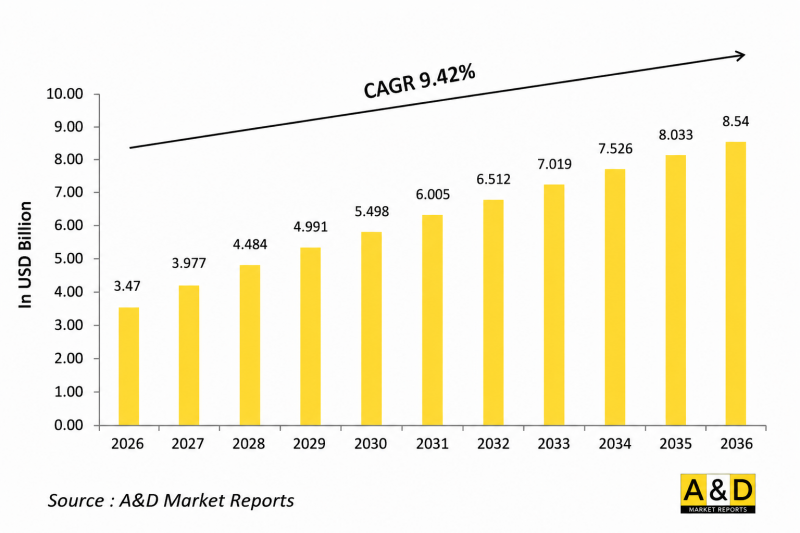
세계의 방위용 자이로스코프 시장 규모는 2026년에 34억 7,000만 달러로 추계되고 있으며, 2026-2036년의 예측 기간 중 CAGR 9.42%로 성장하며, 2036년에는 85억 4,000만 달러에 달할 것으로 전망되고 있습니다.
1. 소개
세계의 국방용 자이로스코프 시장은 군용 항법 및 제어 시스템에서 중요한 부문으로, 항공, 육상, 해군, 우주 플랫폼에서 정확한 방위 측정, 안정화 및 동작 감지를 가능하게 합니다. 자이로스코프는 전투기, 잠수함, 미사일, 자율방위시스템에 사용되는 관성항법시스템의 기본 구성요소입니다. 외부 신호에 의존하지 않고 작동하는 능력으로 인해 GPS를 사용할 수 없는 환경이나 전자전 환경에서 자이로스코프는 필수적인 존재가 되었습니다.
현대의 국방 전략은 정밀 유도 작전 및 자율 시스템에 대한 의존도를 높이고 있으며, 이 두 가지 모두 매우 신뢰할 수 있는 관성 센싱을 필요로 합니다. 그 결과, 자이로스코프는 기존의 기계식 설계에서 첨단 고체 기술 및 광학 기술로 진화해 왔습니다. 이러한 시스템은 표적 포착, 감시, 안정화, 항법 등 미션 크리티컬한 애플리케이션을 지원합니다.
또한 이 시장은 확대되는 국방 현대화 프로그램, 증가하는 지정학적 긴장, 상황 인식 능력 향상에 대한 필요성에 의해 형성되고 있습니다. 각국의 군대가 차세대 플랫폼과 디지털 전투 능력에 투자하는 가운데, 자이로스코프는 현대 전장에서 정확성, 복원력, 작전 우위를 달성하는 데 있으며, 계속해서 기초적인 역할을 하고 있습니다.
2. 글로벌 방위용 자이로스코프 시장에서 기술의 영향력
기술의 발전은 정확도 향상, 소형화, 시스템 통합 개선을 통해 전 세계 방위용 자이로스코프 시장을 변화시키고 있습니다. 기존 기계식 자이로스코프에서 MEMS, 광섬유 자이로스코프, 링 레이저 자이로스코프로의 전환으로 다양한 방위 응용 분야에서 성능이 크게 향상되었습니다. 특히 MEMS 자이로스코프는 무인 시스템 및 휴대용 군사 장비에 적합한 컴팩트하고 비용 효율적인 솔루션을 제공합니다.
광섬유 자이로스코프와 링 레이저 자이로스코프는 더 높은 정확도와 안정성을 제공하므로 잠수함 항법이나 미사일 유도 등 전략적인 용도에 적합합니다. 양자 자이로스코프나 냉간 원자 간섭법 같은 신기술은 특히 위성항법장치를 사용할 수 없는 환경에서 정확도의 한계를 더욱 넓혀가고 있습니다.
AI 및 센서 융합 기술과의 통합도 또 다른 주요 발전입니다. 이러한 발전으로 자이로스코프는 가속도계, GPS 및 기타 센서와 원활하게 연동하여 상황 인식 능력을 향상시키고 실시간 의사결정을 내릴 수 있습니다. 또한 시스템온칩(SoC) 설계를 통해 전력 소비를 줄이고 신뢰성을 향상시킨 완벽한 관성측정장치(IMU)를 구현하고 있습니다.
3. 글로벌 국방 자이로스코프 시장의 주요 시장 촉진요인
세계의 국방용 자이로스코프 시장은 주로 현대 군사 작전에서 정밀 항법 및 유도 시스템에 대한 수요 증가에 의해 주도되고 있습니다. 국방부대가 정밀 유도탄, 자율주행 차량 등 첨단 무기 시스템을 채택함에 따라 고정밀 자이로스코프 센서에 대한 수요는 지속적으로 증가하고 있습니다. 이러한 시스템은 복잡하고 역동적인 전투 환경에서 임무 성공을 보장하는 데 필수적입니다.
또 다른 주요 촉진요인은 모든 영역에서 무인 및 자율주행 플랫폼의 확산입니다. 드론, 무인 지상 차량, 자율 해군 시스템에는 작고 신뢰할 수 있는 관성 항법 솔루션이 필요하며, 자이로스코프는 필수적인 구성 요소로 자리 잡고 있습니다. 이러한 플랫폼의 확장은 시장 성장을 크게 가속화하고 있습니다.
전 세계 국방 현대화 노력의 활성화도 중요한 역할을 하고 있습니다. 각국 정부는 첨단 항공전자장비, 항법시스템, 전자전에 대한 내성에 중점을 두고 군사력 향상에 많은 투자를 하고 있습니다. 자이로스코프는 특히 GPS를 사용할 수 없는 환경에서 작동하는 시스템에서 이러한 업그레이드의 핵심입니다.
또한 소형화, 내구성 향상, 가혹한 환경에 대한 내성 강화와 같은 기술적 진보도 채택을 더욱 촉진하고 있습니다. 자이로스코프와 AI 기반 분석 기능 및 멀티센서 시스템과의 통합은 운영 효율성과 상황 인식 능력을 향상시켜 국방 분야 전반에 걸쳐 강력한 장기적 수요를 창출하고 있습니다.
4. 세계 방산용 자이로스코프 시장의 지역별 동향
세계의 방산용 자이로스코프 시장의 지역별 동향은 방위비 지출 패턴, 기술력, 지정학적 우선순위에 따라 형성되고 있습니다. 북미는 첨단 국방 인프라, 탄탄한 산업 기반, 차세대 군사 기술에 대한 지속적인 투자로 인해 여전히 지배적인 지역으로 자리매김하고 있습니다. 주요 방산업체들의 존재와 광범위한 연구 구상은 이 지역의 리더십을 더욱 공고히 하고 있습니다.
유럽은 공동 방위 프로그램과 고성능 항공우주 시스템에 대한 강한 집중이 특징입니다. 이 지역 국가들은 특히 항법 및 항공전자 기술의 혁신과 공동 개발 구상에 중점을 두고 있습니다. 이러한 협력 관계는 다국적 방위 프로젝트를 위한 첨단 자이로스코프 시스템 개발을 지원하고 있습니다.
아시아태평양에서는 국방 예산의 증가와 국내 제조 역량 강화를 위한 움직임에 힘입어 급속한 성장을 보이고 있습니다. 인도, 중국, 일본, 한국 등의 국가들은 자율 시스템 및 정밀 항법 솔루션을 포함한 첨단 군사 기술에 투자하고 있습니다. 이러한 추세는 자이로스코프 제조업체에게 큰 사업 기회를 창출하고 있습니다.
한편, 중동과 라틴아메리카 등의 지역에서는 현대화와 전략적 조달에 중점을 두고 국방 역량을 점차 확대하고 있습니다. 이들 지역에서는 작전 준비태세와 국가 안보를 강화하기 위해 첨단 항법 기술을 점점 더 많이 채택하고 있습니다.
세계의 방위용 자이로스코프(Gyroscope) 시장을 조사했으며, 시장 배경, 시장 영향요인 분석, 시장 규모 추이 및 예측, 각종 부문별-지역별 상세 분석 등의 정보를 정리하여 전해드립니다.
목차
방산용 자이로스코프 시장: 목차
국방용 자이로스코프 시장 : 보고서 정의
방산용 자이로스코프 시장: 세분화
향후 10년간의 국방용 자이로스코프 시장 분석
글로벌 방산용 자이로스코프 시장: 전망
방산용 자이로스코프 시장 동향 및 전망: 지역별
시장 예측 및 시나리오 분석
방산용 자이로스코프 시장: 국가별 분석
시장 예측 및 시나리오 분석
방산용 자이로스코프 시장의 기회 매트릭스
결론
KSA 26.05.19Global Defense Gyroscope Market
The Global Defense Gyroscope Market is estimated at USD 3.47 billion in 2026, projected to grow to USD 8.54 billion by 2036 at a Compound Annual Growth Rate (CAGR) of 9.42% over the forecast period 2026-2036.
1. Introduction
The Global Defense Gyroscope Market represents a critical segment within military navigation and control systems, enabling accurate orientation, stabilization, and motion sensing across air, land, naval, and space platforms. Gyroscopes are fundamental components of inertial navigation systems used in fighter aircraft, submarines, missiles, and autonomous defense systems. Their ability to function independently of external signals makes them indispensable in GPS-denied or electronically contested environments.
Modern defense strategies increasingly rely on precision-guided operations and autonomous systems, both of which require highly reliable inertial sensing. As a result, gyroscopes have evolved from traditional mechanical designs to advanced solid-state and optical technologies. These systems support mission-critical applications such as targeting, surveillance, stabilization, and navigation.
The market is also shaped by growing defense modernization programs, rising geopolitical tensions, and the need for improved situational awareness. As militaries invest in next-generation platforms and digital warfare capabilities, gyroscopes continue to play a foundational role in enabling precision, resilience, and operational superiority across modern battlefields.
2. Technology Impact in Global Defense Gyroscope Market
Technological advancements are transforming the Global Defense Gyroscope Market by enhancing accuracy, reducing size, and improving system integration. The transition from conventional mechanical gyroscopes to Micro-Electro-Mechanical Systems (MEMS), fiber-optic gyroscopes, and ring laser gyroscopes has significantly improved performance across various defense applications. MEMS gyroscopes, in particular, enable compact, cost-effective solutions suitable for unmanned systems and portable military devices.
Fiber-optic and ring laser gyroscopes provide higher precision and stability, making them ideal for strategic applications such as submarine navigation and missile guidance. Emerging technologies such as quantum gyroscopes and cold-atom interferometry are further pushing the boundaries of accuracy, especially in environments where satellite navigation is unavailable.
Integration with artificial intelligence and sensor fusion technologies is another major development. These advancements allow gyroscopes to work seamlessly with accelerometers, GPS, and other sensors to provide enhanced situational awareness and real-time decision-making. Additionally, system-on-chip designs are enabling complete inertial measurement units with reduced power consumption and improved reliability.
3. Key Drivers in Global Defense Gyroscope Market
The Global Defense Gyroscope Market is primarily driven by the increasing need for precision navigation and guidance systems in modern military operations. As defense forces adopt advanced weapon systems, including precision-guided munitions and autonomous vehicles, the demand for highly accurate gyroscopic sensors continues to rise. These systems are essential for ensuring mission success in complex and dynamic combat environments.
Another major driver is the growing deployment of unmanned and autonomous platforms across all domains. Drones, unmanned ground vehicles, and autonomous naval systems require compact and reliable inertial navigation solutions, making gyroscopes indispensable components. The expansion of these platforms is significantly accelerating market growth.
Rising global defense modernization initiatives also play a crucial role. Governments are investing heavily in upgrading military capabilities, focusing on advanced avionics, navigation systems, and electronic warfare resilience. Gyroscopes are central to these upgrades, particularly in systems operating in GPS-denied environments.
Additionally, technological advancements such as miniaturization, improved durability, and enhanced resistance to harsh conditions are further boosting adoption. The integration of gyroscopes with AI-driven analytics and multi-sensor systems enhances operational efficiency and situational awareness, creating strong long-term demand across defense sectors.
4. Regional Trends in Global Defense Gyroscope Market
Regional dynamics in the Global Defense Gyroscope Market are shaped by defense spending patterns, technological capabilities, and geopolitical priorities. North America remains a dominant region due to its advanced defense infrastructure, strong industrial base, and continuous investment in next-generation military technologies. The presence of major defense contractors and extensive research initiatives further strengthens the region's leadership.
Europe is characterized by collaborative defense programs and a strong focus on high-performance aerospace systems. Countries in this region emphasize innovation and joint development initiatives, particularly in navigation and avionics technologies. These collaborations support the development of advanced gyroscopic systems for multinational defense projects.
The Asia-Pacific region is witnessing rapid growth driven by increasing defense budgets and the push for indigenous manufacturing capabilities. Countries such as India, China, Japan, and South Korea are investing in advanced military technologies, including autonomous systems and precision navigation solutions. This trend is creating significant opportunities for gyroscope manufacturers.
Meanwhile, regions such as the Middle East and Latin America are gradually expanding their defense capabilities, focusing on modernization and strategic procurement. These regions are increasingly adopting advanced navigation technologies to enhance operational readiness and national security.
5. Key Global Defense Gyroscope Market Program
Key programs within the Global Defense Gyroscope Market are closely linked to broader military modernization and advanced weapons development initiatives. One of the most significant areas of deployment is missile guidance systems, where high-precision gyroscopes are essential for trajectory control and targeting accuracy. These programs demand extremely reliable and high-performance inertial sensors.
Naval programs also play a crucial role, particularly in submarine navigation systems that require long-duration accuracy without external references. Fiber-optic gyroscopes are widely used in such applications due to their stability and resistance to environmental disturbances.
In the aerospace sector, gyroscopes are integral to aircraft navigation, flight control systems, and stabilization mechanisms. Modern fighter jets and transport aircraft rely on advanced inertial measurement units to maintain operational efficiency in contested environments.
Unmanned system programs are another major focus area. Military investments in drones and autonomous platforms are driving the adoption of compact, lightweight gyroscopes that support real-time navigation and control. Additionally, emerging programs in space defense and satellite navigation are expanding the application scope of gyroscopic technologies, highlighting their strategic importance in future warfare systems.
Table of Contents
Defense Gyroscope Market - Table of Contents
Defense Gyroscope Market Report Definition
Defense Gyroscope Market Segmentation
By Type
By Region
By Platform
Defense Gyroscope Market Analysis for next 10 Years
The 10-year Defense Gyroscope Market analysis would give a detailed overview of Defense Gyroscope Market growth, changing dynamics, technology adoption overviews and the overall market attractiveness is covered in this chapter.
Market Technologies of Defense Gyroscope Market
This segment covers the top 10 technologies that is expected to impact this market and the possible implications these technologies would have on the overall market.
Global Defense Gyroscope Market Forecast
The 10-year Defense Gyroscope Market forecast of this market is covered in detailed across the segments which are mentioned above.
Regional Defense Gyroscope Market Trends & Forecast
The regional Defense Gyroscope Market trends, drivers, restraints and Challenges of this market, the Political, Economic, Social and Technology aspects are covered in this segment. The market forecast and scenario analysis across regions are also covered in detailed in this segment. The last part of the regional analysis includes profiling of the key companies, supplier landscape and company benchmarking. The current market size is estimated based on the normal scenario.
North America
Drivers, Restraints and Challenges
PEST
Market Forecast & Scenario Analysis
Key Companies
Supplier Tier Landscape
Company Benchmarking
Europe
Middle East
APAC
South America
Country Analysis of Defense Gyroscope Market
This chapter deals with the key defense programs in this market, it also covers the latest news and patents which have been filed in this market. Country level 10 year market forecast and scenario analysis are also covered in this chapter.
US
Defense Programs
Latest News
Patents
Current levels of technology maturation in this market
Market Forecast & Scenario Analysis
Canada
Italy
France
Germany
Netherlands
Belgium
Spain
Sweden
Greece
Australia
South Africa
India
China
Russia
South Korea
Japan
Malaysia
Singapore
Brazil
Opportunity Matrix for Defense Gyroscope Market
The opportunity matrix helps the readers understand the high opportunity segments in this market.
Expert Opinions on Defense Gyroscope Market Report
Hear from our experts their opinion of the possible analysis for this market.
Conclusions
About Aviation and Defense Market Reports


