|
시장보고서
상품코드
1887061
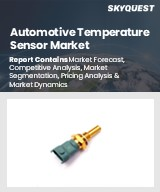
자동차 온도 센서 시장 규모, 점유율, 성장 및 산업 분석 : 유형별, 용도별, 지역별 인사이트 및 예측(2024-2032년)Automotive Temperature Sensor Market Size, Share, Growth and Global Industry Analysis By Type & Application, Regional Insights and Forecast to 2024-2032 |
||||||

자동차 온도 센서 시장의 성장 요인
차량의 전기화, 지능화 및 에너지 효율화가 가속화됨에 따라 글로벌 자동차 온도 센서 시장이 꾸준히 확장되고 있습니다. 최근 조사에 따르면 2024년 시장 규모는 21억 2,000만 달러로 평가되고 있으며, 이는 자동차 생산 대수 증가, 파워트레인 기술의 진보, 전기자동차(EV)의 보급 확대에 힘입은 결과입니다. 배출가스 규제, 차량안전기준, 열관리기술의 혁신을 배경으로 2025년에는 22억 달러 규모로 성장할 전망입니다. 2032년까지 세계의 시장은 32억 2,000만 달러로 평가되었고, 예측 기간 동안 CAGR은 5.6%를 나타낼 전망입니다.
북미는 기술 혁신, 강력한 자동차 제조업 기반, 미국과 캐나다 전역의 전기차(EV) 조기 도입에 힘입어 2023년 53.30%의 점유율을 차지하며 영향력 있는 시장 참여자로 남아 있습니다.
시장 인사이트와 주요 촉진요인
자동차 온도 센서는 엔진, 변속기, HVAC 시스템, 배기 후처리 장치, 전기차 파워트레인, 배터리 팩 전반의 열 조건 모니터링 및 제어에 핵심적인 역할을 수행합니다. 이러한 센서는 열 변동을 전기 신호로 변환하여 연비 효율성, 규제 준수, 부품 안전성 및 차량 전반의 신뢰성을 보장합니다.
전기자동차(EV)와 하이브리드 차량의 증가로 온도 센서 수요가 크게 가속화되었습니다. 전기차는 배터리 온도, 모터 열, 인버터 성능, 충전 시스템을 조절하기 위해 정교한 열 관리 시스템에 의존합니다. 예를 들어, 2025년 3월 TDK는 전기차 파워트레인 냉각 시스템 전용으로 설계된 침수형 온도 센서를 출시했으며, 이는 전기화 모빌리티에 맞춤화된 빠른 혁신을 보여줍니다.
전기차 도입을 위한 정부 인센티브, 상승하는 연료 가격, 무공해 교통수단으로의 전환은 모든 차량 범주에 걸쳐 고급 열 센서의 통합을 촉진하고 있습니다. 또한 자율주행차의 성장으로 지속적인 부하 하에서 작동하는 부품에 대한 고정밀 실시간 온도 모니터링이 필수적입니다.
시장 동향
파워트레인 관리의 첨단 센서
현대식 파워트레인은 연소 효율 향상, 배출가스 저감, 시스템 안정성 유지를 위해 첨단 온도 센서에 크게 의존합니다. 이 추세는 내연기관 및 전기 파워트레인 모두에 걸쳐 확장되고 있습니다.
온도 센서는 이제 MEMS 기술과 통합되어 소형화, 빠른 응답 시간, 고정밀도를 제공합니다. 2024년 10월, 허니웰은 안전성과 에너지 효율성이 향상된 차량에 대한 수요 증가에 부응하는 전기차 전용 센싱 기술을 공개했습니다.
전기차 배터리 안전성이 전 세계적 과제로 부상함에 따라, 열폭주를 방지하고 배터리 팩 상태를 모니터링하며 고속 충전을 개선하기 위한 첨단 센서가 필수적입니다. 2025년 1월, 허니웰은 전기차 리튬이온 배터리 안전성 향상을 목표로 하는 배터리 안전 전해질 센서를 출시했습니다.
부문 개요
제품 유형별
2024년에는 MEMS 온도 센서가 소형 크기, 신뢰성, 전기차 배터리 관리 시스템, 기후 제어 및 스마트 파워트레인에 적합하다는 점으로 인해 가장 큰 시장 점유율을 차지했습니다.
IC 온도 센서는 전기자동차와 하이브리드 자동차의 사용 증가를 반영하여 큰 점유율을 차지했습니다.
차종별
2024년 승용차 부문이 시장을 주도했습니다. 승용차 생산의 글로벌 급증과 편의성, 안전성, 규제 준수에 대한 수요가 해당 부문 성장을 지속적으로 견인하고 있습니다. 특히 브로제(Brose)의 고전압 전기차 컴프레서(2023)와 같은 혁신은 열 관리 시스템 내 온도 센서 통합 증가를 부각시킵니다.
상용차 부문도 세계 물류 수요 증가와 대형 차량 생산 확대로 계속 견조한 추이를 보이고 있습니다.
용도별
2024년 파워트레인 부문이 가장 큰 비중을 차지했으며, 이는 전기차 플랫폼 투자와 엔진 최적화에 힘입은 결과입니다. 2025년 2월 BMW는 ‘노이에 클라세(Neue Klasse)’ 모델용 800V 전기 구동 시스템을 발표하며 고성능 열 모니터링 수요를 더욱 증대시켰습니다.
차체 전자장치 부문도 기후 제어 시트, 실내 편의 시스템, 실내 환경 모니터링에 대한 수요 증가로 상당한 기여를 했습니다.
지역별 전망
아시아태평양-세계 성장 주도
아시아태평양 시장은 2024년 11억 3,000만 달러에 이르렀으며 주요 지역이 되었습니다. 중국, 인도, 일본, 한국의 견조한 자동차 생산과 유리한 제조 인센티브가 함께 시장 확대를 지원하고 있습니다.
유럽-전기자동차의 영향력이 강함
유럽은 엄격한 배출가스 규제와 EV제조 활동 확대로 여전히 큰 점유율을 유지하고 있습니다. 유럽의 EV용 고도 열 관리 요건이 온도 센서 수요를 밀어 올리고 있습니다.
북미-안정적인 성장
북미 시장은 미국의 EV 판매량 증가와 자동차 전자기기 투자 확대에 힘입어 꾸준한 성장이 예상됩니다.
목차
제1장 서론
제2장 주요 요약
제3장 시장 역학
- 시장 성장 촉진요인
- 시장 성장 억제요인
- 시장 기회
제4장 주요 인사이트
- 산업의 주요 동향-합병, 인수, 제휴
- Porter's Five Forces 분석
- PEST 분석
- 기술 개발
제5장 세계 자동차 온도 센서 시장 분석, 인사이트 및 예측(2019-2032년)
- 주요 조사 결과/정의
- 시장 분석, 인사이트 및 예측 : 제품 유형별
- 서미스터
- 저항 온도 검출기
- 열전대
- IC 온도 센서
- MEMS 온도 센서
- 적외선 센서
- 시장 분석, 인사이트 및 예측 : 차종별
- 승용차
- 상용차
- 시장 분석, 인사이트 및 예측 : 용도별
- 파워트레인
- 차체 전자장치
- 대체 연료 차량
- 기타
- 시장 분석, 인사이트 및 예측 : 지역별
- 북미
- 유럽
- 아시아태평양
- 기타
제6장 북미의 자동차 온도 센서 시장 분석, 인사이트 및 예측(2019-2032년)
- 국가별
- 미국
- 캐나다
- 멕시코
제7장 유럽의 자동차 온도 센서 시장 분석, 인사이트 및 예측(2019-2032년)
- 국가별
- 영국
- 독일
- 프랑스
- 기타 유럽
제8장 아시아태평양의 자동차 온도 센서 시장 분석, 인사이트 및 예측(2019-2032년)
- 국가별
- 일본
- 중국
- 인도
- 기타 아시아태평양
제9장 기타 자동차 온도 센서 시장 분석, 인사이트 및 예측(2019-2032년)
제10장 경쟁 분석
- 주요 산업 동향
- 세계의 시장 랭킹 분석(2024년)
- 경쟁 대시보드
- 주요 기업 비교 분석
- 기업 프로파일
- Robert Bosch(독일)
- ZF Friedrichshafen(독일)
- Texas Instruments(미국)
- Continental AG(독일)
- Delphi Technologies(영국)
- PVB Piezotronics(중국)
- Valeo(프랑스)
- Balluff Automation(독일)
- Denso Corporation(일본)
- Thyssenkrupp(독일)
- Hella GmbH(독일)
- NXP Semiconductors(네덜란드)
Growth Factors of automotive temperature sensor Market
The global automotive temperature sensor market is expanding steadily as vehicles become more electrified, intelligent, and energy-efficient. According to the latest assessment, the market was valued at USD 2.12 billion in 2024, supported by growing vehicle production, advancements in powertrain technologies, and increasing adoption of Electric Vehicles (EVs). The market is expected to rise to USD 2.20 billion in 2025, driven by emission regulations, vehicle safety standards, and thermal management innovations. By 2032, the global market is projected to reach USD 3.22 billion, recording a CAGR of 5.6% over the forecast period.
North America remains an influential market player and held a 53.30% share in 2023, supported by technological innovation, strong automotive manufacturing presence, and early adoption of EVs across the U.S. and Canada.
Market Insights and Key Drivers
Automotive temperature sensors play a vital role in monitoring and controlling thermal conditions across engines, transmissions, HVAC systems, exhaust after-treatment, EV powertrains, and battery packs. These sensors convert thermal variations into electrical signals, ensuring fuel efficiency, regulatory compliance, component safety, and overall vehicle reliability.
The rise in Electric Vehicles and hybrid vehicles has significantly accelerated demand for temperature sensors. EVs rely on sophisticated thermal management systems to regulate battery temperature, motor heat, inverter performance, and charging systems. For example, in March 2025, TDK introduced an immersion temperature sensor specifically designed for EV powertrain cooling systems, indicating rapid innovations tailored to electrified mobility.
Government incentives for EV adoption, rising fuel prices, and the shift toward zero-emission transportation are contributing to greater integration of advanced thermal sensors across all vehicle categories. Additionally, the growth of autonomous vehicles demands highly accurate real-time temperature monitoring for components operating under continuous load.
Market Trends
Advanced Sensors in Powertrain Management
Modern powertrains depend heavily on advanced temperature sensors to enhance combustion efficiency, reduce emissions, and maintain system stability. The trend extends across both internal combustion and electric powertrains.
Temperature sensors are now integrated with MEMS technologies, offering miniaturization, rapid response time, and high precision. In October 2024, Honeywell unveiled new EV-focused sensing technologies aligned with the growing demand for safer and more energy-efficient vehicles.
Rising Innovation in Battery Thermal Management
With EV battery safety being a global priority, advanced sensors are essential for preventing thermal runaway, monitoring battery pack conditions, and improving fast charging. In January 2025, Honeywell launched a Battery Safety Electrolyte Sensor aimed at enhancing lithium-ion battery safety in EVs.
Segmentation Overview
By Product Type
In 2024, MEMS temperature sensors represented the largest market share due to their compact size, reliability, and suitability for EV battery management systems, climate control, and smart powertrains.
IC temperature sensors also held a significant share, reflecting their rising use in electric and hybrid vehicles.
By Vehicle Type
The passenger car segment dominated the market in 2024. The global surge in passenger vehicle production and demand for comfort, safety, and regulatory compliance continue to fuel segment growth. Notably, innovations like Brose's high-voltage EV compressor (2023) highlight increased integration of temperature sensors in thermal management systems.
The commercial vehicle segment also remains strong due to rising global logistics needs and heavy-duty vehicle production.
By Application
The powertrain segment held the largest share in 2024, driven by investments in EV platforms and engine optimization. In February 2025, BMW announced an 800V electric drive system for the Neue Klasse models, further enhancing the need for high-performance thermal monitoring.
The body electronics segment also contributed substantially, powered by growing demand for climate-controlled seating, cabin comfort systems, and interior environment monitoring.
Regional Outlook
Asia Pacific - Leading Global Growth
The Asia Pacific market reached USD 1.13 billion in 2024, making it the leading region. Strong automotive production in China, India, Japan, and South Korea, combined with favorable manufacturing incentives, continues to support market expansion.
Europe - Strong EV Influence
Europe maintains a significant share due to strict emission regulations and growing EV manufacturing activity. Advanced thermal management requirements for European EVs boost demand for temperature sensors.
North America - Stable Growth
North America is projected to grow steadily, supported by rising EV sales across the U.S. and increased investment in automotive electronics.
Conclusion
With the global market rising from USD 2.12 billion in 2024 to USD 3.22 billion by 2032, automotive temperature sensors will remain essential for EV innovation, vehicle safety, emission compliance, and optimized powertrain performance. Continued advancements in MEMS and integrated sensor technologies will shape the next generation of intelligent and energy-efficient vehicles worldwide.
Segmentation By Product Type
- Thermistor
- Resistance Temperature Detector
- Thermocouple
- IC Temperature Sensor
- MEMS Temperature Sensor
- Infrared Sensor
By Vehicle Type
- Passenger Car
- Commercial Vehicle
By Application
- Powertrain
- Body Electronics
- Alternative Fuel Vehicles
- Other Applications
By Region
- North America (By Product Type, By Vehicle Type, By Application, and By Country)
- U.S. (By Vehicle Type)
- Canada (By Vehicle Type)
- Mexico (By Vehicle Type)
- Europe (By Product Type, By Vehicle Type, and By Application, and By Country)
- U.K. (By Vehicle Type)
- Germany (By Vehicle Type)
- France (By Vehicle Type)
- Rest of Europe (By Vehicle Type)
- Asia Pacific (By Product Type, By Vehicle Type, and By Application, and By Country)
- China (By Vehicle Type)
- India (By Vehicle Type)
- Japan (By Vehicle Type)
- Rest of Asia Pacific (By Vehicle Type)
- Rest of the World (By Product Type, By Vehicle Type, and By Application)
Table of Content
1. Introduction
- 1.1. Research Scope
- 1.2. Market Segmentation
- 1.3. Research Methodology
- 1.4. Definitions and Assumptions
2. Executive Summary
3. Market Dynamics
- 3.1. Market Drivers
- 3.2. Market Restraints
- 3.3. Market Opportunities
4. Key Insights
- 4.1. Key Industry Developments -Mergers, Acquisitions and Partnerships
- 4.2. Porters Five Forces Analysis
- 4.3. PEST Analysis
- 4.4. Technological Development
5. Global Automotive Temperature Sensor Market Analysis, Insights and Forecast, 2019-2032
- 5.1. Key Findings / Definitions
- 5.2. Market Analysis, Insights and Forecast - By Product Type
- 5.2.1. Thermistor
- 5.2.2. Resistance Temperature Detector
- 5.2.3. Thermocouple
- 5.2.4. IC Temperature Sensor
- 5.2.5. MEMS Temperature Sensor
- 5.2.6. Infrared Sensor
- 5.3. Market Analysis, Insights and Forecast - By Vehicle Type
- 5.3.1. Passenger Car
- 5.3.2. Commercial Vehicle
- 5.4. Market Analysis, Insights and Forecast - By Application
- 5.4.1. Powertrain
- 5.4.2. Body Electronics
- 5.4.3. Alternative Fuel Vehicles
- 5.4.4. Other Applications
- 5.5. Market Analysis, Insights and Forecast - By Region
- 5.5.1. North America
- 5.5.2. Europe
- 5.5.3. Asia pacific
- 5.5.4. Rest of the world
6. North America Automotive Temperature Sensor Market Analysis, Insights and Forecast, 2019-2032
- 6.1. Market Analysis, Insights and Forecast - By Product Type
- 6.1.1. Thermistor
- 6.1.2. Resistance Temperature Detector
- 6.1.3. Thermocouple
- 6.1.4. IC Temperature Sensor
- 6.1.5. MEMS Temperature Sensor
- 6.1.6. Infrared Sensor
- 6.2. Market Analysis, Insights and Forecast - By Vehicle Type
- 6.2.1. Passenger Car
- 6.2.2. Commercial Vehicle
- 6.3. Market Analysis, Insights and Forecast - By Application
- 6.3.1. Powertrain
- 6.3.2. Body Electronics
- 6.3.3. Alternative Fuel Vehicles
- 6.3.4. Other Applications
- 6.4. Market Analysis - By Country
- 6.4.1. The U.S.
- 6.4.1.1. By Vehicle Type
- 6.4.2. Canada
- 6.4.2.1. By Vehicle Type
- 6.4.3. Mexico
- 6.4.3.1. By Vehicle Type
- 6.4.1. The U.S.
7. Europe Automotive Temperature Sensor Market Analysis, Insights and Forecast, 2019-2032
- 7.1. Market Analysis, Insights and Forecast - By Product Type
- 7.1.1. Thermistor
- 7.1.2. Resistance Temperature Detector
- 7.1.3. Thermocouple
- 7.1.4. IC Temperature Sensor
- 7.1.5. MEMS Temperature Sensor
- 7.1.6. Infrared Sensor
- 7.2. Market Analysis, Insights and Forecast - By Vehicle Type
- 7.2.1. Passenger Car
- 7.2.2. Commercial Vehicle
- 7.3. Market Analysis, Insights and Forecast - By Application
- 7.3.1. Powertrain
- 7.3.2. Body Electronics
- 7.3.3. Alternative Fuel Vehicles
- 7.3.4. Other Applications
- 7.4. Market Analysis - By Country
- 7.4.1. The U.K
- 7.4.1.1. By Vehicle Type
- 7.4.2. Germany
- 7.4.2.1. By Vehicle Type
- 7.4.3. France
- 7.4.3.1. By Vehicle Type
- 7.4.4. Rest of Europe
- 7.4.4.1. By Vehicle Type
- 7.4.1. The U.K
8. Asia Pacific Automotive Temperature Sensor Market Analysis, Insights and Forecast, 2019-2032
- 8.1. Market Analysis, Insights and Forecast - By Product Type
- 8.1.1. Thermistor
- 8.1.2. Resistance Temperature Detector
- 8.1.3. Thermocouple
- 8.1.4. IC Temperature Sensor
- 8.1.5. MEMS Temperature Sensor
- 8.1.6. Infrared Sensor
- 8.2. Market Analysis, Insights and Forecast - By Vehicle Type
- 8.2.1. Passenger Car
- 8.2.2. Commercial Vehicle
- 8.3. Market Analysis, Insights and Forecast - By Application
- 8.3.1. Powertrain
- 8.3.2. Body Electronics
- 8.3.3. Alternative Fuel Vehicles
- 8.3.4. Other Applications
- 8.4. Market Analysis - By Country
- 8.4.1. Japan
- 8.4.1.1. By Vehicle Type
- 8.4.2. China
- 8.4.2.1. By Vehicle Type
- 8.4.3. India
- 8.4.3.1. By Vehicle Type
- 8.4.4. Rest of Asia Pacific
- 8.4.4.1. By Vehicle Type
- 8.4.1. Japan
9. Rest of the World Automotive Temperature Sensor Market Analysis, Insights and Forecast, 2019-2032
- 9.1. Market Analysis, Insights and Forecast - By Product Type
- 9.1.1. Thermistor
- 9.1.2. Resistance Temperature Detector
- 9.1.3. Thermocouple
- 9.1.4. IC Temperature Sensor
- 9.1.5. MEMS Temperature Sensor
- 9.1.6. Infrared Sensor
- 9.2. Market Analysis, Insights and Forecast - By Vehicle Type
- 9.2.1. Passenger Car
- 9.2.2. Commercial Vehicle
- 9.3. Market Analysis, Insights and Forecast - By Application
- 9.3.1. Powertrain
- 9.3.2. Body Electronics
- 9.3.3. Alternative Fuel Vehicles
- 9.3.4. Other Applications
10. Competitive Analysis
- 10.1. Key Industry Development
- 10.2. Global Market Ranking Analysis (2024)
- 10.3. Competition Dashboard
- 10.4. Comparative Analysis - Major Players
- 10.5. Company Profiles
- 10.5.1. Robert Bosch (Germany)
- 10.5.1.1. Overview
- 10.5.1.2. Products & services
- 10.5.1.3. SWOT Analysis
- 10.5.1.4. Recent Developments
- 10.5.1.5. Strategies
- 10.5.1.6. Financials (Based on Availability)
- 10.5.2. ZF Friedrichshafen (Germany)
- 10.5.2.1. Overview
- 10.5.2.2. Products & services
- 10.5.2.3. SWOT Analysis
- 10.5.2.4. Recent Developments
- 10.5.2.5. Strategies
- 10.5.2.6. Financials (Based on Availability)
- 10.5.3. Texas Instruments (U.S.)
- 10.5.3.1. Overview
- 10.5.3.2. Products & services
- 10.5.3.3. SWOT Analysis
- 10.5.3.4. Recent Developments
- 10.5.3.5. Strategies
- 10.5.3.6. Financials (Based on Availability)
- 10.5.4. Continental AG (Germany)
- 10.5.4.1. Overview
- 10.5.4.2. Products & services
- 10.5.4.3. SWOT Analysis
- 10.5.4.4. Recent Developments
- 10.5.4.5. Strategies
- 10.5.4.6. Financials (Based on Availability)
- 10.5.5. Delphi Technologies (U.K.)
- 10.5.5.1. Overview
- 10.5.5.2. Products & services
- 10.5.5.3. SWOT Analysis
- 10.5.5.4. Recent Developments
- 10.5.5.5. Strategies
- 10.5.5.6. Financials (Based on Availability)
- 10.5.6. PVB Piezotronics(China)
- 10.5.6.1. Overview
- 10.5.6.2. Products & services
- 10.5.6.3. SWOT Analysis
- 10.5.6.4. Recent Developments
- 10.5.6.5. Strategies
- 10.5.6.6. Financials (Based on Availability)
- 10.5.7. Valeo (France)
- 10.5.7.1. Overview
- 10.5.7.2. Products & services
- 10.5.7.3. SWOT Analysis
- 10.5.7.4. Recent Developments
- 10.5.7.5. Strategies
- 10.5.7.6. Financials (Based on Availability)
- 10.5.8. Balluff Automation (Germany)
- 10.5.8.1. Overview
- 10.5.8.2. Products & services
- 10.5.8.3. SWOT Analysis
- 10.5.8.4. Recent Developments
- 10.5.8.5. Strategies
- 10.5.8.6. Financials (Based on Availability)
- 10.5.9. Denso Corporation (Japan)
- 10.5.9.1. Overview
- 10.5.9.2. Products & services
- 10.5.9.3. SWOT Analysis
- 10.5.9.4. Recent Developments
- 10.5.9.5. Strategies
- 10.5.9.6. Financials (Based on Availability)
- 10.5.10. Thyssenkrupp (Germany)
- 10.5.10.1. Overview
- 10.5.10.2. Products & services
- 10.5.10.3. SWOT Analysis
- 10.5.10.4. Recent Developments
- 10.5.10.5. Strategies
- 10.5.10.6. Financials (Based on Availability)
- 10.5.11. Hella GmbH (Germany)
- 10.5.11.1. Overview
- 10.5.11.2. Products & services
- 10.5.11.3. SWOT Analysis
- 10.5.11.4. Recent Developments
- 10.5.11.5. Strategies
- 10.5.11.6. Financials (Based on Availability)
- 10.5.12. NXP Semiconductors (Netherlands)
- 10.5.12.1. Overview
- 10.5.12.2. Products & services
- 10.5.12.3. SWOT Analysis
- 10.5.12.4. Recent Developments
- 10.5.12.5. Strategies
- 10.5.12.6. Financials (Based on Availability)
- 10.5.1. Robert Bosch (Germany)