|
시장보고서
상품코드
1954685
클로르 알칼리 장비 시장 : 규모, 점유율, 성장, 산업 분석, 유형별, 용도별, 지역별 인사이트, 예측(2026-2034년)Chlor Alkali Equipment Market Size, Share, Growth and Global Industry Analysis By Type & Application, Regional Insights and Forecast to 2026-2034 |
||||||

클로르 알칼리 장비 시장의 성장 요인
세계 클로르 알칼리 장비 시장 규모는 2025년 8억 8,580만 달러로 평가되었고, 2026년 9억 1,390만 달러, 2034년까지 12억 6,640만 달러에 이르고, 예측기간(2026-2034년) 동안 CAGR은 4.20%를 나타낼 것으로 예상됩니다. 아시아태평양은 강력한 화학 생산 능력과 가성소다 및 염소 유도체에 대한 수요 증가에 힘입어 2025년 44.20%의 점유율로 세계 시장을 선도했습니다.
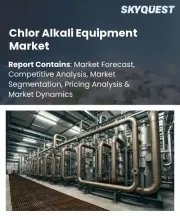
클로르 알칼리 장비는 염수(염화나트륨 용액)의 전기분해에 의해 염소, 수소, 수산화나트륨을 제조하는데 사용됩니다. 종래의 격막 방식은 보다 에너지 효율이 높고 환경 안전성이 뛰어난 첨단 이온 교환막 기술로 진화를 이루었습니다. 이러한 화학물질은 펄프 및 제지, 섬유, 금속화학, 화학, 수처리, 제약, 자동차 제조 등의 산업에서 필수적인 역할을 하고 있습니다.
시장 역학
시장 성장 촉진요인
필수공업화학제품에 대한 수요 증가
염소와 가성소다는 여러 산업에서 필수적인 제품입니다. 염소는 PVC 제조, 물 소독, 표백 공정에서 널리 사용되며, 가성소다는 비누, 세제, 섬유 및 제지 제조에 필수적입니다. 도시화의 진전과 인구 증가에 의해 세정제나 처리수의 소비량이 증가하고 있어, 이것이 클로르 알칼리 장비 수요를 더욱 끌어 올리고 있습니다.
세계의 도시 하수 처리 인프라의 확충도 장비 수요를 더욱 뒷받침하고 있습니다. 또한 자동차 생산이 증가함에 따라 클로르 알칼리 공정 유래의 금속 처리 및 코팅용 화학 약품의 사용량도 증가하고 있습니다.
의료·수처리 분야에서의 용도 확대
염소계 화학제품은 의료기기의 멸균과 수질 정화에 중요한 역할을 합니다. 세계의 의료·위생 인프라의 지속적인 확충이 시장 성장에 호영향을 주고 있습니다.
시장 성장 억제요인
엄격한 안전 규제 및 취급 과제
염소는 위험 화학 물질이며 엄격한 취급 및 운송 규정이 필요합니다. 정부는 특히 도시와 생태계에 민감한 지역에서 엄격한 환경 및 안전 기준을 시행하고 있습니다. 클로르 알칼리 플랜트의 설립에는 염화나트륨과 같은 많은 양의 원료와 안정적인 전력 공급에 대한 접근이 필요하며 운영의 유연성을 제한합니다.
또한 전기분해는 에너지 집약적이기 때문에 높은 전력 비용도 생산 경제성에 큰 영향을 미칩니다. 염소 및 그 유도체의 수송에는 국제적인 안전 프로토콜의 준수가 요구되어 추가적인 비용과 운용상의 부담이 생깁니다.
COVID-19의 영향
2020년, 세계 화학 공급망의 중단, 통화 변동, 가동률 감소로 인해 시장은 일시적인 혼란을 겪었습니다. 가성소다 수요는 여러 지역에서 감소했습니다. 그러나 세제, 계면활성제, 소독제 수요 회복이 시장을 안정화시켰습니다. 유행 후 무역과 산업 생산의 재개가 새로운 성장의 기세를 지원했습니다.
최신 동향
그린 수소 생산을 위한 기술 혁신
주요 신흥 동향은 클로르 알칼리 장비와 그린 수소 생산 이니셔티브의 통합을 포함합니다. 세계 각국의 정부와 산업은 2050년까지 탄소 중립 목표 달성을 위해 지속 가능한 전해 기술에 대한 투자를 추진하고 있습니다. 이온 교환막 시스템은 높은 효율성과 낮은 환경 부하로 채택이 확대되고 있습니다.
수소 생성을 지원하기 위한 기존 시설의 업그레이드는 세계 클로르 알칼리 장비 제조업체의 기술적 범위를 확대되고 있습니다.
부문 분석
유형별
시장 세분화는 다이어프램 기술과 이온 교환막 기술을 구분합니다.
이온 교환막 부문은 에너지 효율이 뛰어난 환경 규제에 적합한 시스템에 대한 수요 증가를 배경으로 2026년에는 69.23%의 점유율로 시장을 견인했습니다. 이 기술은 폐수처리, 건설용 화학약품, 제조시설 등에서 널리 활용되고 있습니다.
기존의 다이어프램 기술은 특정 시설에서 계속 운영되고 있지만, 규제 압력과 지속가능성 목표에 따라 점차 막 시스템으로 대체되고 있습니다.
용도별
시장 세분화는 클로르 알칼리 산업, 야금 산업 및 기타(화학, 펄프 및 제지, 수처리 산업 포함)로 구분됩니다.
클로르 알칼리 산업 부문은 화학 제조 사업 확대에 힘입어 2026년 56.65%의 시장 점유율을 차지했습니다. 자동차 페인트, 금속 처리, 의약품 및 페로알로이 산업에서의 수요 증가가 이 부문의 성장에 기여하고 있습니다.
지역별 인사이트력
아시아태평양
아시아태평양은 2025년에 3억 9,140만 달러, 2026년에는 4억 520만 달러 시장 규모를 기록해 주도적인 지위를 유지하고 있습니다. 중국, 인도, 호주에서 급속한 산업화, 도시 인구 증가, 수처리 시설 확대가 주요 성장 요인입니다. 화학·야금 수요의 높이로부터 중국이 계속해서 최대의 공헌국이 되고 있습니다.
북미
북미는 미국, 캐나다, 멕시코에서 염소, 소다재, 가성소다 수요에 힘입어 꾸준한 성장이 예상됩니다. 미국 시장은 수처리 및 산업용 화학제품 생산 성장을 배경으로 2026년에는 1억 7,320만 달러에 이를 것으로 예측됩니다.
유럽
유럽 시장 성장은 지속가능성에 대한 규제와 수소 이용의 확대에 의해 지원됩니다. 독일과 영국은 주요 공헌국이며 첨단 막 기술에 대한 강한 수요를 볼 수 있습니다.
남미, 중동, 아프리카
이 지역에서는 화학제품, 석유 화학제품 및 농약에 대한 수요 증가 외에도 제조 인프라 투자로 꾸준한 확대가 예상됩니다.
목차
제1장 도입
제2장 주요 요약
제3장 시장 역학
- 매크로 및 마이크로 경제 지표
- 성장 촉진요인, 억제요인, 기회 및 동향
- COVID-19의 영향
제4장 경쟁 구도
- 주요 기업이 채택하는 비즈니스 전략
- 주요 기업의 통합 SWOT 분석
- 2025년에 있어서의 세계의 클로르 알칼리 장비 주요 기업의 시장 점유율/순위
제5장 세계의 클로르 알칼리 장비 시장 규모의 추정 및 예측(정량 데이터), 부문별, 2021-2034년
- 주요 조사 결과
- 유형별(금액 및 수량)
- 이온 교환막법
- 격막 방식
- 용도별(금액, 수량)
- 클로르 알칼리 공업
- 금속 공학
- 기타(화학공업 등)
- 지역별(금액 및 수량)
- 북미
- 유럽
- 아시아태평양
- 남미
- 중동 및 아프리카
제6장 북미의 클로르 알칼리 장비 시장 규모의 추정 및 예측(정량 데이터), 부문별, 2021-2034년
- 주요 조사 결과
- 유형별(금액 및 수량)
- 이온 교환막법
- 격막 방식
- 용도별(금액, 수량)
- 클로르 알칼리 공업
- 금속 공학
- 기타(화학공업 등)
- 국가별(금액 및 수량)
- 미국
- 캐나다
- 멕시코
제7장 유럽의 클로르 알칼리 장비 시장 규모의 추정 및 예측(정량 데이터), 부문별, 2021-2034년
- 주요 조사 결과
- 유형별(금액 및 수량)
- 이온 교환막법
- 격막 방식
- 용도별(금액, 수량)
- 클로르 알칼리 공업
- 금속 공학
- 기타(화학공업 등)
- 국가별(금액 및 수량)
- 독일
- 프랑스
- 영국
- 이탈리아
- 러시아
- 기타 유럽 국가
제8장 아시아태평양의 클로르 알칼리 장비 시장 규모의 추정 및 예측(정량 데이터), 부문별, 2021-2034년
- 주요 조사 결과
- 유형별(금액 및 수량)
- 이온 교환막법
- 격막 방식
- 용도별(금액, 수량)
- 클로르 알칼리 공업
- 금속 공학
- 기타(화학공업 등)
- 국가별(금액 및 수량)
- 중국
- 일본
- 인도
- 한국
- 대만
- 동남아시아
- 호주
- 기타 아시아태평양
제9장 남미의 클로르 알칼리 장비 시장 규모의 추정 및 예측(정량 데이터), 부문별, 2021-2034년
- 주요 조사 결과
- 유형별(금액 및 수량)
- 이온 교환막법
- 격막 방식
- 용도별(금액, 수량)
- 클로르 알칼리 공업
- 금속 공학
- 기타(화학공업 등)
- 국가별(금액 및 수량)
- 브라질
- 아르헨티나
- 기타 남미
제10장 중동 및 아프리카의 클로르 알칼리 장비 시장 규모의 추정 및 예측(정량 데이터), 부문별, 2021-2034년
- 주요 조사 결과
- 유형별(금액 및 수량)
- 이온 교환막법
- 격막 방식
- 용도별(금액, 수량)
- 클로르 알칼리 공업
- 금속 공학
- 기타(화학공업 등)
- 국가별(금액 및 수량)
- GCC
- 남아프리카
- 기타 중동 및 아프리카 국가
제11장 주요 10개 기업의 기업 프로파일
- Alfa Laval AB
- Asahi Kasei Corporation
- Azienda Chimica Genovese SRL
- Bluestar(Beijing) Chemical Machinery Co Ltd.
- Evoqua Water Technologies Corp
- Hitachi Zosen Corporation
- Industrie De Nora SpA
- INEOS Limited
- Mitsubishi Heavy Industries Group
- ThyssenKrupp AG
Growth Factors of chlor alkali equipment Market
The global chlor alkali equipment market size was valued at USD 885.8 million in 2025 and is projected to grow from USD 913.9 million in 2026 to USD 1,266.40 million by 2034, exhibiting a CAGR of 4.20% during the forecast period (2026-2034). Asia Pacific dominated the global market with a 44.20% share in 2025, supported by strong chemical production capacity and rising demand for caustic soda and chlorine derivatives.
Chlor alkali equipment is used for the electrolysis of brine (sodium chloride solution) to produce chlorine, hydrogen, and sodium hydroxide (caustic soda). Over time, the traditional diaphragm method has evolved into advanced ion exchange membrane technology, which is more energy-efficient and environmentally safer. These chemicals are essential in industries such as pulp & paper, textiles, metallurgy, chemicals, water treatment, pharmaceuticals, and automotive manufacturing.
Market Dynamics
Market Drivers
Growing Demand for Essential Industrial Chemicals
Chlorine and caustic soda are vital commodities across multiple industries. Chlorine is widely used in PVC production, water disinfection, and bleaching processes, while caustic soda is essential in soap, detergent, textile, and paper manufacturing. Increasing urbanization and rising population levels are driving higher consumption of cleaning agents and treated water, which in turn fuels demand for chlor alkali equipment.
The expansion of municipal wastewater treatment infrastructure globally further supports equipment demand. Additionally, growth in automotive production increases the use of metal treatment and coating chemicals derived from chlor-alkali processes.
Rising Applications in Medical and Water Treatment Sectors
Chlorine-based chemicals play a critical role in medical device sterilization and water purification. The continuous expansion of healthcare and sanitation infrastructure worldwide is contributing positively to market growth.
Market Restraints
Strict Safety Regulations and Handling Challenges
Chlorine is a hazardous chemical requiring strict handling and transportation regulations. Governments enforce stringent environmental and safety standards, especially in urban and ecologically sensitive zones. Establishing chlor alkali plants demands large quantities of raw materials such as sodium chloride and access to stable electricity supply, limiting operational flexibility.
High electricity costs also significantly impact production economics, as electrolysis is energy-intensive. Transporting chlorine and its derivatives involves compliance with international safety protocols, creating additional cost and operational burdens.
COVID-19 Impact
During 2020, the market experienced temporary disruption due to halted global chemical supply chains, volatile currencies, and lower operating rates. Demand for caustic soda declined in several regions. However, recovery in cleaning chemicals, surfactants, and disinfectant demand stabilized the market. Post-pandemic resumption of trade and industrial production supported renewed growth momentum.
Latest Trends
Technological Advancements for Green Hydrogen Production
A major emerging trend is the integration of chlor alkali equipment with green hydrogen production initiatives. Governments and industries worldwide are investing in sustainable electrolysis technologies to achieve carbon neutrality targets by 2050. Ion exchange membrane systems are increasingly being adopted due to their higher efficiency and lower environmental footprint.
Upgrading existing facilities to support hydrogen generation is expanding the technological scope of chlor alkali equipment manufacturers globally.
Segmentation Analysis
By Type
The market is segmented into diaphragm technology and ion exchange membrane technology.
The ion exchange membrane segment dominated with a 69.23% share in 2026, driven by growing demand for energy-efficient and environmentally compliant systems. The technology is widely used in wastewater treatment, construction chemicals, and manufacturing facilities.
Traditional diaphragm technology continues to operate in certain facilities but is gradually being replaced by membrane systems due to regulatory pressure and sustainability goals.
By Application
The market is segmented into chlor-alkali industry, metallurgical industry, and others (including chemical, pulp & paper, and water treatment industries).
The chlor-alkali industry segment accounted for 56.65% market share in 2026, supported by expanding chemical manufacturing operations. Rising demand from automotive paint, metal treatment, pharmaceuticals, and ferroalloys industries is contributing to segment growth.
Regional Insights
Asia Pacific
Asia Pacific generated USD 391.4 million in 2025 and reached USD 405.2 million in 2026, maintaining its leadership position. Rapid industrialization, urban population growth, and expanding water treatment facilities in China, India, and Australia are key growth drivers. China remains the dominant contributor due to high chemical and metallurgical demand.
North America
North America is projected to grow steadily, supported by demand for chlorine, soda ash, and caustic soda in the U.S., Canada, and Mexico. The U.S. market is projected to reach USD 173.2 million in 2026, driven by growth in water treatment and industrial chemical production.
Europe
Europe's market growth is supported by sustainability regulations and increasing hydrogen adoption. Germany and the U.K. are key contributors, with strong demand for advanced membrane technologies.
South America & Middle East & Africa
These regions are expected to witness steady expansion due to increasing chemical, petrochemical, and agrochemical demand, along with investments in manufacturing infrastructure.
Competitive Landscape
Key players operating in the chlor alkali equipment market include:
- Alfa Laval AB
- Asahi Kasei Corporation
- Industrie De Nora S.p.A
- Mitsubishi Heavy Industries Group
- ThyssenKrupp AG
- INEOS Limited
- Evoqua Water Technologies Corp
- Hitachi Zosen Corporation
- Bluestar Chemical Machinery Co., Ltd.
- Azienda Chimica Genovese S.R.L.
Companies are focusing on service expansion, technology upgrades, hydrogen integration, and strategic acquisitions to strengthen their market presence.
Conclusion
The chlor alkali equipment market is projected to grow from USD 885.8 million in 2025 to USD 1,266.40 million by 2034, reflecting stable growth at a CAGR of 4.20%. Rising demand for caustic soda and chlorine derivatives, expansion of wastewater treatment infrastructure, and the shift toward ion exchange membrane technology are key growth drivers. Although strict safety regulations and energy costs pose challenges, technological advancements in sustainable electrolysis and green hydrogen production are expected to support long-term market expansion through 2034.
Segmentation By Type, By Application, By Region
By Type * Ion Exchange Membrane Method
- Diaphragm Method
By Application * Chlor-alkali Industry
- Metallurgical Engineering
- Others (Chemical Industry, etc.)
By Region * North America (By Type, By Application, By Country)
- U.S. (By Application)
- Canada (By Application)
- Mexico (By Application)
- Europe (By Type, By Application, By Country)
- Germany (By Application)
- France (By Application)
- U.K. (By Application)
- Italy (By Application)
- Russia (By Application)
- Rest of Europe
- Asia Pacific (By Type, By Application, By Country)
- China (By Application)
- India (By Application)
- Japan (By Application)
- South Korea (By Application)
- Taiwan (By Application)
- Southeast Asia (By Application)
- Australia (By Application)
- Rest of Asia Pacific
- South America (By Type, By Application, By Country)
- Brazil (By Application)
- Argentina (By Application)
- Rest of South America
- Middle East & Africa (By Type, By Application, By Country)
- GCC (By Application)
- South Africa (By Application)
- Rest of the Middle East & Africa
Table of Content
1. Introduction
- 1.1. Definition, By Segment
- 1.2. Research Methodology/Approach
- 1.3. Data Sources
2. Executive Summary
3. Market Dynamics
- 3.1. Macro and Micro Economic Indicators
- 3.2. Drivers, Restraints, Opportunities and Trends
- 3.3. Impact of COVID-19
4. Competition Landscape
- 4.1. Business Strategies Adopted by Key Players
- 4.2. Consolidated SWOT Analysis of Key Players
- 4.3. Global Chlor-alkali Equipment Key Players Market Share/Ranking, 2025
5. Global Chlor-alkali Equipment Market Size Estimates and Forecasts (Quantitative Data), By Segments, 2021-2034
- 5.1. Key Findings
- 5.2. By Type (Value, and Volume)
- 5.2.1. Ion Exchange Membrane Method
- 5.2.2. Diaphragm Method
- 5.3. By Application (Value, and Volume)
- 5.3.1. Chlor-alkali Industry
- 5.3.2. Metallurgical Engineering
- 5.3.3. Others (Chemical Industry, etc.)
- 5.4. By Region (Value, and Volume)
- 5.4.1. North America
- 5.4.2. Europe
- 5.4.3. Asia Pacific
- 5.4.4. South America
- 5.4.5. Middle East and Africa
6. North America Chlor-alkali Equipment Market Size Estimates and Forecasts (Quantitative Data), By Segments, 2021-2034
- 6.1. Key Findings
- 6.2. By Type (Value, and Volume)
- 6.2.1. Ion Exchange Membrane Method
- 6.2.2. Diaphragm Method
- 6.3. By Application (Value, and Volume)
- 6.3.1. Chlor-alkali Industry
- 6.3.2. Metallurgical Engineering
- 6.3.3. Others (Chemical Industry, etc.)
- 6.4. By Country (Value, and Volume)
- 6.4.1. U.S.
- 6.4.2. Canada
- 6.4.3. Mexico
7. Europe Chlor-alkali Equipment Market Size Estimates and Forecasts (Quantitative Data), By Segments, 2021-2034
- 7.1. Key Findings
- 7.2. By Type (Value, and Volume)
- 7.2.1. Ion Exchange Membrane Method
- 7.2.2. Diaphragm Method
- 7.3. By Application (Value, and Volume)
- 7.3.1. Chlor-alkali Industry
- 7.3.2. Metallurgical Engineering
- 7.3.3. Others (Chemical Industry, etc.)
- 7.4. By Country (Value, and Volume)
- 7.4.1. Germany
- 7.4.2. France
- 7.4.3. U.K.
- 7.4.4. Italy
- 7.4.5. Russia
- 7.4.6. Rest of Europe
8. Asia Pacific Chlor-alkali Equipment Market Size Estimates and Forecasts (Quantitative Data), By Segments, 2021-2034
- 8.1. Key Findings
- 8.2. By Type (Value, and Volume)
- 8.2.1. Ion Exchange Membrane Method
- 8.2.2. Diaphragm Method
- 8.3. By Application (Value, and Volume)
- 8.3.1. Chlor-alkali Industry
- 8.3.2. Metallurgical Engineering
- 8.3.3. Others (Chemical Industry, etc.)
- 8.4. By Country (Value, and Volume)
- 8.4.1. China
- 8.4.2. Japan
- 8.4.3. India
- 8.4.4. South Korea
- 8.4.5. Taiwan
- 8.4.6. Southeast Asia
- 8.4.7. Australia
- 8.4.8. Rest of Asia Pacific
9. South America Chlor-alkali Equipment Market Size Estimates and Forecasts (Quantitative Data), By Segments, 2021-2034
- 9.1. Key Findings
- 9.2. By Type (Value, and Volume)
- 9.2.1. Ion Exchange Membrane Method
- 9.2.2. Diaphragm Method
- 9.3. By Application (Value, and Volume)
- 9.3.1. Chlor-alkali Industry
- 9.3.2. Metallurgical Engineering
- 9.3.3. Others (Chemical Industry, etc.)
- 9.4. By Country (Value, and Volume)
- 9.4.1. Brazil
- 9.4.2. Argentina
- 9.4.3. Rest of South America
10. Middle East and Africa Chlor-alkali Equipment Market Size Estimates and Forecasts (Quantitative Data), By Segments, 2021-2034
- 10.1. Key Findings
- 10.2. By Type (Value, and Volume)
- 10.2.1. Ion Exchange Membrane Method
- 10.2.2. Diaphragm Method
- 10.3. By Application (Value, and Volume)
- 10.3.1. Chlor-alkali Industry
- 10.3.2. Metallurgical Engineering
- 10.3.3. Others (Chemical Industry, etc.)
- 10.4. By Country (Value, and Volume)
- 10.4.1. GCC
- 10.4.2. South Africa
- 10.4.3. Rest of Middle East and Africa
11. Company Profiles for Top 10 Players (Based on data availability in public domain and/or on paid databases)
- 11.1. Alfa Laval AB
- 11.1.1. Overview
- 11.1.1.1. Key Management
- 11.1.1.2. Headquarters
- 11.1.1.3. Offerings/Business Segments
- 11.1.2. Key Details (Key details are consolidated data and not product/service specific)
- 11.1.2.1. Employee Size
- 11.1.2.2. Past and Current Revenue
- 11.1.2.3. Geographical Share
- 11.1.2.4. Business Segment Share
- 11.1.2.5. Recent Developments
- 11.1.1. Overview
- 11.2. Asahi Kasei Corporation
- 11.2.1. Overview
- 11.2.1.1. Key Management
- 11.2.1.2. Headquarters
- 11.2.1.3. Offerings/Business Segments
- 11.2.2. Key Details (Key details are consolidated data and not product/service specific)
- 11.2.2.1. Employee Size
- 11.2.2.2. Past and Current Revenue
- 11.2.2.3. Geographical Share
- 11.2.2.4. Business Segment Share
- 11.2.2.5. Recent Developments
- 11.2.1. Overview
- 11.3. Azienda Chimica Genovese S.R.L.
- 11.3.1. Overview
- 11.3.1.1. Key Management
- 11.3.1.2. Headquarters
- 11.3.1.3. Offerings/Business Segments
- 11.3.2. Key Details (Key details are consolidated data and not product/service specific)
- 11.3.2.1. Employee Size
- 11.3.2.2. Past and Current Revenue
- 11.3.2.3. Geographical Share
- 11.3.2.4. Business Segment Share
- 11.3.2.5. Recent Developments
- 11.3.1. Overview
- 11.4. Bluestar (Beijing) Chemical Machinery Co Ltd.
- 11.4.1. Overview
- 11.4.1.1. Key Management
- 11.4.1.2. Headquarters
- 11.4.1.3. Offerings/Business Segments
- 11.4.2. Key Details (Key details are consolidated data and not product/service specific)
- 11.4.2.1. Employee Size
- 11.4.2.2. Past and Current Revenue
- 11.4.2.3. Geographical Share
- 11.4.2.4. Business Segment Share
- 11.4.2.5. Recent Developments
- 11.4.1. Overview
- 11.5. Evoqua Water Technologies Corp
- 11.5.1. Overview
- 11.5.1.1. Key Management
- 11.5.1.2. Headquarters
- 11.5.1.3. Offerings/Business Segments
- 11.5.2. Key Details (Key details are consolidated data and not product/service specific)
- 11.5.2.1. Employee Size
- 11.5.2.2. Past and Current Revenue
- 11.5.2.3. Geographical Share
- 11.5.2.4. Business Segment Share
- 11.5.2.5. Recent Developments
- 11.5.1. Overview
- 11.6. Hitachi Zosen Corporation
- 11.6.1. Overview
- 11.6.1.1. Key Management
- 11.6.1.2. Headquarters
- 11.6.1.3. Offerings/Business Segments
- 11.6.2. Key Details (Key details are consolidated data and not product/service specific)
- 11.6.2.1. Employee Size
- 11.6.2.2. Past and Current Revenue
- 11.6.2.3. Geographical Share
- 11.6.2.4. Business Segment Share
- 11.6.2.5. Recent Developments
- 11.6.1. Overview
- 11.7. Industrie De Nora S.p.A.
- 11.7.1. Overview
- 11.7.1.1. Key Management
- 11.7.1.2. Headquarters
- 11.7.1.3. Offerings/Business Segments
- 11.7.2. Key Details (Key details are consolidated data and not product/service specific)
- 11.7.2.1. Employee Size
- 11.7.2.2. Past and Current Revenue
- 11.7.2.3. Geographical Share
- 11.7.2.4. Business Segment Share
- 11.7.2.5. Recent Developments
- 11.7.1. Overview
- 11.8. INEOS Limited
- 11.8.1. Overview
- 11.8.1.1. Key Management
- 11.8.1.2. Headquarters
- 11.8.1.3. Offerings/Business Segments
- 11.8.2. Key Details (Key details are consolidated data and not product/service specific)
- 11.8.2.1. Employee Size
- 11.8.2.2. Past and Current Revenue
- 11.8.2.3. Geographical Share
- 11.8.2.4. Business Segment Share
- 11.8.2.5. Recent Developments
- 11.8.1. Overview
- 11.9. Mitsubishi Heavy Industries Group
- 11.9.1. Overview
- 11.9.1.1. Key Management
- 11.9.1.2. Headquarters
- 11.9.1.3. Offerings/Business Segments
- 11.9.2. Key Details (Key details are consolidated data and not product/service specific)
- 11.9.2.1. Employee Size
- 11.9.2.2. Past and Current Revenue
- 11.9.2.3. Geographical Share
- 11.9.2.4. Business Segment Share
- 11.9.2.5. Recent Developments
- 11.9.1. Overview
- 11.10. ThyssenKrupp AG
- 11.10.1. Overview
- 11.10.1.1. Key Management
- 11.10.1.2. Headquarters
- 11.10.1.3. Offerings/Business Segments
- 11.10.2. Key Details (Key details are consolidated data and not product/service specific)
- 11.10.2.1. Employee Size
- 11.10.2.2. Past and Current Revenue
- 11.10.2.3. Geographical Share
- 11.10.2.4. Business Segment Share
- 11.10.2.5. Recent Developments
- 11.10.1. Overview