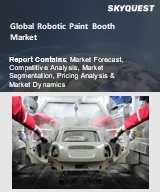
|
시장보고서
상품코드
1955058
로봇 페인트 부스 시장 : 규모, 점유율, 성장, 산업 분석, 유형별, 용도별, 지역별 인사이트, 예측(2026-2034년)Robotic Paint Booth Market Size, Share, Growth and Global Industry Analysis By Type & Application, Regional Insights and Forecast to 2026-2034 |
||||||

로봇 페인트 부스 시장의 성장 요인
세계 로봇 페인트 부스 시장 규모는 2025년에 39억 달러로 평가되었고, 2026년 41억 2,000만 달러, 2034년까지 78억 2,000만 달러에 이르고, 예측 기간(2026년-2034년) 동안 CAGR 8.40%를 나타낼 것으로 예측되고 있습니다.
2025년에는 아시아태평양이 세계 시장을 선도하여 39.30%의 점유율을 차지했습니다. 이것은 자동차 생산의 견조함과 산업 자동화의 급속한 진전에 힘입은 것입니다.
로봇 페인트 부스는 제어된 환경에서 로봇 암을 사용하여 언더코팅, 도장, 마무리, 스프레이 작업을 수행하는 자동화 시스템입니다. 이러한 시스템은 자동차 제조에 널리 사용되고 있으며 항공우주, 방위, 가구, 산업 분야에서도 채택이 확대되고 있습니다. 방폭 사양의 로봇 암을 장착하면 환경에 미치는 영향과 작업자의 노출을 최소화하면서 안전하고 효율적이며 고품질의 도장을 보장합니다.
COVID-19의 영향
COVID-19 팬데믹은 자동차, 항공우주, 방위 산업에서 공급망의 혼란과 제조 활동을 중단시켰습니다. 일시적인 공장 폐쇄와 소비자 수요 감소로 로봇 페인트 부스의 신규 도입이 크게 감소했습니다.
예를 들어 자동차 부문의 순매출은 2020년 전년 대비 37.9% 감소했습니다. ABB Ltd.와 같은 기업은 2020년 순매출이 6.6% 감소했다고 보고했습니다. 그러나 자동차 생산의 회복과 자동화·직장 안전에 대한 주목이 높아짐에 따라, 유행 후 수요는 회복해, 예측 기간중 시장 성장을 지지하고 있습니다.
시장 동향
Industry 4.0과 IoT 통합
주요 제조업체는 로봇 페인트 부스에 AI, 머신러닝, IoT 기술을 통합하고 있습니다. 이러한 기술은 페인트 정확도를 높이고 재료 사용량을 최적화하고 폐기물을 줄이고 예지 보전을 가능하게 하여 다운타임을 최소화합니다.
방폭 시스템
특히 자동차 및 항공우주 산업에서 엄격한 안전 및 규정 준수 요구 사항으로 인해 폭발 방지 부스에 대한 수요가 증가하고 있습니다.
지속가능성에 대한 주력
차세대 부스는 휘발성 유기 화합물(VOC), 에너지 소비 및 탄소 배출량을 줄이기 위해 고안되었습니다. 기업은 환경 규제를 충족하기 위해 친환경 솔루션에 대한 투자를 추진하고 있습니다.
AR 및 VR 교육
증강현실(AR) 및 가상현실(VR) 기술은 운영자 교육 및 원격 시스템 모니터링에 활용되어 운영 효율성 향상에 기여하고 있습니다.
촉진요인
자동차 분야에서 자동화의 진전
자동차 제조에 있어서의 로봇 공학 및 자동화 생산 시스템의 채택 확대가, 주요한 성장 요인이 되고 있습니다. 로봇 부스는 인적 오류를 줄이고 생산성을 향상시키고 일관된 마감 품질을 보장합니다.
업계의 예측에 의하면 세계의 자율주행차 시장은 2025년까지 3,000억-4,000억 달러 규모에 달할 것으로 전망되고 있어 자동차 자동화의 강력한 성장 가능성을 나타내고 있습니다.
품질과 효율성 향상
로봇 시스템은 마무리 정확도를 높이고 오버 스프레이를 줄이고 처리량을 향상시켜 대량 생산 환경에 이상적입니다.
노동력과 안전성의 장점
이 시스템은 인건비를 최소화하고 작업자의 해로운 페인트 가스에 대한 노출을 줄이고 노동 안전 기준을 준수합니다.
제약 요인
높은 초기 투자와 운영 비용은 여전히 주요 장벽입니다. 미국 환경보호청(EPA)에 따르면 도장 부스 비용은 구성에 따라 5,400달러에서 2만 3,000달러 사이일 수 있습니다. 로봇 암과 고급 소프트웨어의 통합으로 설치 비용이 더욱 증가하기 때문에 중소 제조업체에서의 도입이 제한되고 있습니다.
세분화 분석
유형별
- 방폭 유형
- 비방폭 유형
방폭형 부문은 시장을 독점하고 있으며, 그 내화성과 자동차 및 항공우주 용도에의 적합성으로부터 2026년에는 73.30%의 점유율을 차지할 것으로 예측되고 있습니다.
용도별
- 도장 부스
- 도장 부스 로봇
페인트 부스 분야는 여러 산업 분야의 제어된 페인트 환경에 대한 수요에 견인되었으며, 2026년에는 전 세계적으로 62.62%의 점유율을 차지할 것으로 예측됩니다.
최종 사용자별
- 자동차
- 비자동차
자동차 섹터가 시장을 독점하고 로봇 페인트 부스가 차체 도장이나 부품 마무리에 널리 이용되고 있기 때문에 2026년에는 76.46%의 점유율을 차지할 것으로 예측되고 있습니다.
지역별 인사이트
아시아태평양
2025년 아시아태평양은 15억 3,000만 달러 시장 규모로 세계 시장을 선도해 39.30%의 점유율을 차지했습니다. 중국, 인도, 일본, 한국의 급속한 산업화가 성장을 지원하고 있습니다.
2026년까지:
- 중국 시장 : 7억 1,000만 달러로 예측
- 일본 시장 : 3억 3,000만 달러로 예측
- 인도 시장 : 2억 5,000만 달러로 예측
중국은 자동차 생산에서 여전히 주도적인 지위를 유지하며 세계 자동차 생산량의 약 30%를 차지하고 있습니다.
북미
북미는 자동화 기술에 대한 투자에 힘입어 큰 성장이 예상됩니다. 미국 시장은 2026년까지 7억 2,000만 달러에 이를 것으로 예측됩니다.
유럽
유럽에서는 독일, 프랑스, 이탈리아의 자동차 산업 확대로 꾸준한 성장이 예상됩니다. 영국 시장은 2026년까지 1억 6,000만 달러, 독일 시장은 2026년까지 3억 1,000만 달러에 이를 것으로 예측됩니다.
중동, 아프리카 및 라틴아메리카
이 지역에서는 자동차 생산 확대와 IoT 대응 도장 시스템의 도입 증가로 꾸준한 성장이 예상됩니다.
주요 기업
주요 기업에는 다음이 포함됩니다.
- ABB Ltd.
- 야스카와 전기 주식회사
- 쿠카 AG
- 듀르그룹
- 파낙 주식회사
- 가와사키 중공업 주식회사
- 스타우부리 인터내셔널 주식회사
최근의 혁신 기술로는 ABB사의 PixelPaint 시스템이나 듀르그룹의 EcoProBooth 컨셉 등이 있으며, 이들은 지속가능성과 효율성의 향상에 초점을 맞춘 것입니다.
목차
제1장 서론
제2장 주요 요약
제3장 시장 역학
- 매크로 및 마이크로 경제 지표
- 성장 촉진요인, 억제요인, 기회 및 동향
- COVID-19의 영향
제4장 경쟁 구도
- 주요 기업이 채택하는 비즈니스 전략
- 주요 기업의 통합 SWOT 분석
- 세계의 로봇 페인트 부스 시장에서 주요 기업의 시장 점유율/순위(2025년)
제5장 세계의 로봇 페인트 부스 시장 규모의 추정 및 예측(부문별, 2021년-2034년)
- 주요 조사 결과
- 유형별
- 방폭 유형
- 비방폭 유형
- 용도별
- 도장 부스
- 도장 부스 로봇
- 최종 사용자별
- 자동차
- 비자동차
- 지역별
- 북미
- 유럽
- 아시아태평양
- 중동 및 아프리카
- 라틴아메리카
제6장 북미의 로봇 페인트 부스 시장 규모의 추정 및 예측(부문별, 2021년-2034년)
- 국가별
- 미국
- 캐나다
제7장 유럽의 로봇 페인트 부스 시장 규모의 추정 및 예측(부문별, 2021년-2034년)
- 국가별
- 독일
- 영국
- 프랑스
- 이탈리아
- 기타 유럽
제8장 아시아태평양의 로봇 페인트 부스 시장 규모의 추정 및 예측(부문별, 2021년-2034년)
- 국가별
- 중국
- 일본
- 인도
- 한국
- 동남아시아
- 기타 아시아태평양
제9장 중동 및 아프리카의 로봇 페인트 부스 시장 규모의 추정 및 예측(부문별, 2021년-2034년)
- 국가별
- GCC
- 남아프리카
- 기타 중동 및 아프리카
제10장 라틴아메리카의 로봇 페인트 부스 시장 규모의 추정 및 예측(부문별, 2021년-2034년)
- 국가별
- 브라질
- 멕시코
- 아르헨티나
- 기타 라틴아메리카
제11장 주요 10개 기업의 기업 프로파일
- ABB Ltd
- Yaskawa Electric Corporation
- Effort Intelligence Equipment Co Ltd
- Staubli International AG
- Kawasaki Heavy Industry Co. Ltd
- Durr Group
- Giffin
- Fanuc Corporation
- KUKA AG
- SAIMA Meccanica SpA
Growth Factors of robotic paint booth Market
The global robotic paint booth market size was valued at USD 3.9 billion in 2025 and is projected to grow from USD 4.12 billion in 2026 to USD 7.82 billion by 2034, exhibiting a CAGR of 8.40% during the forecast period (2026-2034).
Asia Pacific dominated the global market in 2025, accounting for 39.30% market share, driven by strong automotive production and rapid industrial automation.
A robotic paint booth is an automated system designed to perform priming, coating, finishing, and spraying operations using robotic arms in controlled environments. These systems are widely used in automotive manufacturing and are increasingly adopted in aerospace, defense, furniture, and industrial sectors. Equipped with explosion-proof robotic arms, they ensure safe, efficient, and high-quality paint application while minimizing environmental impact and worker exposure.
COVID-19 Impact
The COVID-19 pandemic disrupted supply chains and halted manufacturing activities across automotive, aerospace, and defense sectors. Temporary plant shutdowns and reduced consumer demand significantly lowered new installations of robotic paint booths.
For instance, automotive net sales dropped by 37.9% in 2020 compared to 2019. Companies such as ABB Ltd. reported a 6.6% decline in net sales in 2020. However, recovery in automotive production and increased focus on automation and workplace safety have restored demand post-pandemic, supporting market growth during the forecast period.
Market Trends
Industry 4.0 and IoT Integration
Leading manufacturers are incorporating AI, machine learning, and IoT technologies into robotic paint booths. These technologies enhance paint precision, optimize material usage, reduce waste, and enable predictive maintenance, minimizing downtime.
Explosion-Proof Systems
There is rising demand for explosion-proof booths, especially in automotive and aerospace industries, due to strict safety and compliance requirements.
Sustainability Focus
New-generation booths are designed to reduce volatile organic compounds (VOCs), energy consumption, and carbon emissions. Companies are investing in eco-friendly solutions to meet environmental regulations.
AR & VR Training
Augmented Reality (AR) and Virtual Reality (VR) technologies are being used for operator training and remote system monitoring, improving operational efficiency.
Driving Factors
Growing Automation in Automotive Sector
Increasing adoption of robotics and automated production systems in automotive manufacturing is a key growth driver. Robotic booths reduce manual errors, improve productivity, and ensure consistent finish quality.
According to industry estimates, the global autonomous vehicle sector is projected to reach USD 300-400 billion by 2025, indicating strong growth potential in automotive automation.
Quality and Efficiency Improvements
Robotic systems enhance finishing precision, reduce overspray, and improve throughput, making them ideal for high-volume manufacturing environments.
Labor and Safety Benefits
These systems minimize labor costs and reduce worker exposure to hazardous paint fumes, ensuring compliance with occupational safety standards.
Restraining Factors
High capital investment and operational costs remain major barriers. According to the U.S. Environmental Protection Agency (EPA), spray painting booths can cost between USD 5,400 and USD 23,000 depending on configuration. Integration of robotic arms and advanced software further increases installation costs, limiting adoption among small manufacturers.
Segmentation Analysis
By Type
- Explosion-Proof Type
- Non-Explosion-Proof Type
The explosion-proof segment dominates the market and is projected to account for 73.30% share in 2026, owing to its fire-resistant properties and suitability for automotive and aerospace applications.
By Application
- Paint Booth
- Paint Booth Robots
The paint booth segment is projected to contribute 62.62% share globally in 2026, driven by demand for controlled painting environments across multiple industries.
By End User
- Automotive
- Non-Automotive
The automotive sector dominates and is projected to account for 76.46% share in 2026, as robotic booths are extensively used for vehicle body painting and component finishing.
Regional Insights
Asia Pacific
Asia Pacific led the global market in 2025 with a value of USD 1.53 billion, accounting for 39.30% share. Rapid industrialization in China, India, Japan, and South Korea supports growth.
By 2026:
- China market projected at USD 0.71 billion
- Japan projected at USD 0.33 billion
- India projected at USD 0.25 billion
China remains a dominant automotive producer, contributing nearly 30% of global automotive output.
North America
North America is expected to register significant growth, supported by investments in automation technologies. The U.S. market is projected to reach USD 0.72 billion by 2026.
Europe
Europe will witness steady growth due to automotive expansion in Germany, France, and Italy. The UK market is projected to reach USD 0.16 billion by 2026, and Germany is projected to reach USD 0.31 billion by 2026.
Middle East & Africa and Latin America
These regions are projected to grow steadily due to expanding automotive production and increasing adoption of IoT-enabled painting systems.
Key Industry Players
Major companies include:
- ABB Ltd.
- Yaskawa Electric Corporation
- KUKA AG
- Durr Group
- Fanuc Corporation
- Kawasaki Heavy Industries
- Staubli International AG
Recent innovations include ABB's PixelPaint system and Durr Group's EcoProBooth concept, focusing on sustainability and efficiency improvements.
Conclusion
The global robotic paint booth market is set to grow from USD 3.9 billion in 2025 to USD 7.82 billion by 2034, at a CAGR of 8.40%. Growth is driven by increasing automation in automotive manufacturing, technological advancements such as AI and IoT integration, and rising demand for explosion-proof and sustainable systems. Despite high capital costs, expanding industrial automation and quality-focused production strategies will continue to fuel market expansion through 2034.
Segmentation By Type
- Explosion Proof Type
- Non-explosion Proof Type
By Application
- Paint Booth
- Paint Booth Robots
By End User
- Automotive
- Non-automotive
By Region
- North America (By Type, By Application, By End User, and By Country)
- U.S. (By Type)
- Canada (By Type)
- Europe (By Type, By Application, By End User, and By Country)
- Germany (By Type)
- U.K. (By Type)
- France (By Type)
- Italy (By Type)
- Rest of Europe
- Asia Pacific (By Type, By Application, By End User, and By Country)
- China (By Type)
- Japan (By Type)
- India (By Type)
- South Korea (By Type)
- Southeast Asia (By Type)
- Rest of Asia Pacific
- Middle East and Africa (By Type, By Application, By End User, and By Country)
- GCC (By Type)
- South Africa (By Type)
- Rest of Middle East and Africa
- Latin America (By Type, By Application, By End User, and By Country)
- Brazil (By Type)
- Mexico (By Type)
- Argentina (By Type)
- Rest of Latin America
Table of Content
1. Introduction
- 1.1. Definition, By Segment
- 1.2. Research Methodology/Approach
- 1.3. Data Sources
2. Executive Summary
3. Market Dynamics
- 3.1. Macro and Micro Economic Indicators
- 3.2. Drivers, Restraints, Opportunities and Trends
- 3.3. Impact of COVID-19
4. Competition Landscape
- 4.1. Business Strategies Adopted by Key Players
- 4.2. Consolidated SWOT Analysis of Key Players
- 4.3. Global Robotic Paint Booth Market Key Players Market Share/Ranking, 2025
5. Global Robotic Paint Booth Market Size Estimates and Forecasts, By Segments, 2021-2034
- 5.1. Key Findings
- 5.2. By Type (USD)
- 5.2.1. Explosion Proof Type
- 5.2.2. Non-explosion Proof Type
- 5.3. By Application (USD)
- 5.3.1. Paint Booth
- 5.3.2. Paint Booth Robots
- 5.4. By End User (USD)
- 5.4.1. Automotive
- 5.4.2. Non-automotive
- 5.5. By Region (USD)
- 5.5.1. North America
- 5.5.2. Europe
- 5.5.3. Asia Pacific
- 5.5.4. Middle East and Africa
- 5.5.5. Latin America
6. North America Robotic Paint Booth Market Size Estimates and Forecasts, By Segments, 2021-2034
- 6.1. Key Findings
- 6.2. By Type (USD)
- 6.2.1. Explosion Proof Type
- 6.2.2. Non-explosion Proof Type
- 6.3. By Application (USD)
- 6.3.1. Paint Booth
- 6.3.2. Paint Booth Robots
- 6.4. By End User (USD)
- 6.4.1. Automotive
- 6.4.2. Non-automotive
- 6.5. By Country (USD)
- 6.5.1. U.S.
- 6.5.2. Canada
7. Europe Robotic Paint Booth Market Size Estimates and Forecasts, By Segments, 2021-2034
- 7.1. Key Findings
- 7.2. By Type (USD)
- 7.2.1. Explosion Proof Type
- 7.2.2. Non-explosion Proof Type
- 7.3. By Application (USD)
- 7.3.1. Paint Booth
- 7.3.2. Paint Booth Robots
- 7.4. By End User (USD)
- 7.4.1. Automotive
- 7.4.2. Non-automotive
- 7.5. By Country (USD)
- 7.5.1. Germany
- 7.5.2. U.K.
- 7.5.3. France
- 7.5.4. Italy
- 7.5.5. Rest of Europe
8. Asia Pacific Robotic Paint Booth Market Size Estimates and Forecasts, By Segments, 2021-2034
- 8.1. Key Findings
- 8.2. By Type (USD)
- 8.2.1. Explosion Proof Type
- 8.2.2. Non-explosion Proof Type
- 8.3. By Application (USD)
- 8.3.1. Paint Booth
- 8.3.2. Paint Booth Robots
- 8.4. By End User (USD)
- 8.4.1. Automotive
- 8.4.2. Non-automotive
- 8.5. By Country (USD)
- 8.5.1. China
- 8.5.2. Japan
- 8.5.3. India
- 8.5.4. South Korea
- 8.5.5. Southeast Asia
- 8.5.6. Rest of Asia Pacific
9. Middle East and Africa Robotic Paint Booth Market Size Estimates and Forecasts, By Segments, 2021-2034
- 9.1. Key Findings
- 9.2. By Type (USD)
- 9.2.1. Explosion Proof Type
- 9.2.2. Non-explosion Proof Type
- 9.3. By Application (USD)
- 9.3.1. Paint Booth
- 9.3.2. Paint Booth Robots
- 9.4. By End User (USD)
- 9.4.1. Automotive
- 9.4.2. Non-automotive
- 9.5. By Country (USD)
- 9.5.1. GCC
- 9.5.2. South Africa
- 9.5.3. Rest of Middle East and Africa
10. Latin America Robotic Paint Booth Market Size Estimates and Forecasts, By Segments, 2021-2034
- 10.1. Key Findings
- 10.2. By Type (USD)
- 10.2.1. Explosion Proof Type
- 10.2.2. Non-explosion Proof Type
- 10.3. By Application (USD)
- 10.3.1. Paint Booth
- 10.3.2. Paint Booth Robots
- 10.4. By End User (USD)
- 10.4.1. Automotive
- 10.4.2. Non-automotive
- 10.5. By Country (USD)
- 10.5.1. Brazil
- 10.5.2. Mexico
- 10.5.3. Argentina
- 10.5.4. Rest of Latin America
11. Company Profiles for Top 10 Players (Based on data availability in public domain and/or on paid databases)
- 11.1. ABB Ltd
- 11.1.1. Overview
- 11.1.1.1. Key Management
- 11.1.1.2. Headquarters
- 11.1.1.3. Offerings/Business Segments
- 11.1.2. Key Details (Key details are consolidated data and not product/service specific)
- 11.1.2.1. Employee Size
- 11.1.2.2. Past and Current Revenue
- 11.1.2.3. Geographical Share
- 11.1.2.4. Business Segment Share
- 11.1.2.5. Recent Developments
- 11.1.1. Overview
- 11.2. Yaskawa Electric Corporation
- 11.2.1. Overview
- 11.2.1.1. Key Management
- 11.2.1.2. Headquarters
- 11.2.1.3. Offerings/Business Segments
- 11.2.2. Key Details (Key details are consolidated data and not product/service specific)
- 11.2.2.1. Employee Size
- 11.2.2.2. Past and Current Revenue
- 11.2.2.3. Geographical Share
- 11.2.2.4. Business Segment Share
- 11.2.2.5. Recent Developments
- 11.2.1. Overview
- 11.3. Effort Intelligence Equipment Co Ltd
- 11.3.1. Overview
- 11.3.1.1. Key Management
- 11.3.1.2. Headquarters
- 11.3.1.3. Offerings/Business Segments
- 11.3.2. Key Details (Key details are consolidated data and not product/service specific)
- 11.3.2.1. Employee Size
- 11.3.2.2. Past and Current Revenue
- 11.3.2.3. Geographical Share
- 11.3.2.4. Business Segment Share
- 11.3.2.5. Recent Developments
- 11.3.1. Overview
- 11.4. Staubli International AG
- 11.4.1. Overview
- 11.4.1.1. Key Management
- 11.4.1.2. Headquarters
- 11.4.1.3. Offerings/Business Segments
- 11.4.2. Key Details (Key details are consolidated data and not product/service specific)
- 11.4.2.1. Employee Size
- 11.4.2.2. Past and Current Revenue
- 11.4.2.3. Geographical Share
- 11.4.2.4. Business Segment Share
- 11.4.2.5. Recent Developments
- 11.4.1. Overview
- 11.5. Kawasaki Heavy Industry Co. Ltd
- 11.5.1. Overview
- 11.5.1.1. Key Management
- 11.5.1.2. Headquarters
- 11.5.1.3. Offerings/Business Segments
- 11.5.2. Key Details (Key details are consolidated data and not product/service specific)
- 11.5.2.1. Employee Size
- 11.5.2.2. Past and Current Revenue
- 11.5.2.3. Geographical Share
- 11.5.2.4. Business Segment Share
- 11.5.2.5. Recent Developments
- 11.5.1. Overview
- 11.6. Durr Group
- 11.6.1. Overview
- 11.6.1.1. Key Management
- 11.6.1.2. Headquarters
- 11.6.1.3. Offerings/Business Segments
- 11.6.2. Key Details (Key details are consolidated data and not product/service specific)
- 11.6.2.1. Employee Size
- 11.6.2.2. Past and Current Revenue
- 11.6.2.3. Geographical Share
- 11.6.2.4. Business Segment Share
- 11.6.2.5. Recent Developments
- 11.6.1. Overview
- 11.7. Giffin
- 11.7.1. Overview
- 11.7.1.1. Key Management
- 11.7.1.2. Headquarters
- 11.7.1.3. Offerings/Business Segments
- 11.7.2. Key Details (Key details are consolidated data and not product/service specific)
- 11.7.2.1. Employee Size
- 11.7.2.2. Past and Current Revenue
- 11.7.2.3. Geographical Share
- 11.7.2.4. Business Segment Share
- 11.7.2.5. Recent Developments
- 11.7.1. Overview
- 11.8. Fanuc Corporation
- 11.8.1. Overview
- 11.8.1.1. Key Management
- 11.8.1.2. Headquarters
- 11.8.1.3. Offerings/Business Segments
- 11.8.2. Key Details (Key details are consolidated data and not product/service specific)
- 11.8.2.1. Employee Size
- 11.8.2.2. Past and Current Revenue
- 11.8.2.3. Geographical Share
- 11.8.2.4. Business Segment Share
- 11.8.2.5. Recent Developments
- 11.8.1. Overview
- 11.9. KUKA AG
- 11.9.1. Overview
- 11.9.1.1. Key Management
- 11.9.1.2. Headquarters
- 11.9.1.3. Offerings/Business Segments
- 11.9.2. Key Details (Key details are consolidated data and not product/service specific)
- 11.9.2.1. Employee Size
- 11.9.2.2. Past and Current Revenue
- 11.9.2.3. Geographical Share
- 11.9.2.4. Business Segment Share
- 11.9.2.5. Recent Developments
- 11.9.1. Overview
- 11.10. SAIMA Meccanica S.p.A.
- 11.10.1. Overview
- 11.10.1.1. Key Management
- 11.10.1.2. Headquarters
- 11.10.1.3. Offerings/Business Segments
- 11.10.2. Key Details (Key details are consolidated data and not product/service specific)
- 11.10.2.1. Employee Size
- 11.10.2.2. Past and Current Revenue
- 11.10.2.3. Geographical Share
- 11.10.2.4. Business Segment Share
- 11.10.2.5. Recent Developments
- 11.10.1. Overview