|
시장보고서
상품코드
1955104
이소부티르산 시장 : 규모, 점유율, 성장률, 산업 분석, 유형별, 용도별, 지역별 고찰, 예측(2026-2034년)Isobutyric Acid Market Size, Share, Growth and Global Industry Analysis By Type & Application, Regional Insights and Forecast to 2026-2034 |
||||||

이소부티르산 시장의 성장 요인
세계의 이소부티르산 시장은 의약품, 화장품, 식품·향료, 사료 산업에 있어서 수요 증가에 의해 예측 기간 중에 현저한 성장이 전망되고 있습니다. 2025년 시장 규모는 2억 1,710만 달러로 평가되었고, 2026년에는 2억 3,380만 달러, 2034년까지 4억 2,750만 달러에 이를 것으로 예측되고 있으며, 2026년부터 2034년까지의 연평균 성장률(CAGR)은 8.00%를 나타낼 전망입니다. 2025년에는 북미가 32.00%의 점유율로 시장을 선도했으며, 의약품, 화장품, 사료 분야에 있어서의 고부가가치 용도로부터의 강한 수요가 이를 견인하고 있습니다.
시장 개요
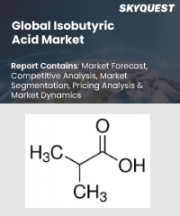
이소부티르산(2-메틸프로피온산)은 구조식(CH3)2CHCOOH를 갖는 카르복실산입니다. n-부티르산의 이성체이며, 이소부티로니트릴의 가수분해, 이소부탄올의 산화, 클로로포름이나 아세톤을 이용한 반응 등 여러 방법으로 제조됩니다. 이 무색의 액체는 화학제품, 의약품, 화장품, 사료, 식품·향료 등의 분야에서 이용되고 있습니다. 성장을 지속하는 의약품 산업과 바이오 및 천연 유래 제품에 대한 소비자의 선호도가 증가함에 따라 시장 수요가 주도되고 있습니다.
주요 시장 성장 촉진요인
1. 의약품 및 화장품 업계에서의 수요 증가: 2026년에는 의약품 및 화장품 분야가 시장 전체의 46.49%(약 1억870만 달러)를 차지해 최대의 점유율을 획득했습니다. 이는 의약품 유효성분(API)의 제조, 크림, 로션, 향수, 데오도란트, 샴푸 등에서의 사용량이 많은 것이 요인입니다. 이소부티르산은 용매 및 중간체로서의 역할도 하고 있어, 의약품 제제나 화장품에의 채택을 더욱 뒷받침하고 있습니다.
2. 사료, 식품, 향료 용도의 성장 : 본산은 사료의 기호성을 높이고 성장을 가속합니다. 이것은 유제품 및 고기 제품 수요 증가 중 매우 중요합니다. 또한 버터, 치즈, 고기제품 등의 가공식품에서 향료로서의 사용도 시장을 견인하고 있습니다. 식품 및 향료 부문은 2024년에 11.3%의 점유율을 차지했고, 세계의 식품 가공 산업과 함께 성장을 계속할 것으로 예측됩니다.
3. 재생 가능 원료로의 이행: 환경문제에 대한 우려로부터, 제조업체는 식물 유래의 바이오 베이스 이소부티르산의 생산을 추진하고 있어, 북미, 유럽, 아시아태평양에서 새로운 기회가 태어나고 있습니다. 북미 시장에서는 신재생제품의 채택 확대를 반영하여 2025년 6,990만 달러, 2026년에는 7,540만 달러로 성장할 전망입니다.
억제요인
이소부티르산의 취급과 보관은 부식성과 가연성으로 인해 안전상의 과제를 초래합니다. 노출은 화상, 호흡기 자극, 눈 손상을 일으킬 수 있으며, 고온이나 장기 보관은 용기의 파손이나 폭발성 증기의 발생을 초래할 수 있습니다. 이러한 안전 우려는 특히 소규모 제조 시설 및 안전 프로토콜이 엄격하지 않은 지역에서 시장 도입을 제한할 수 있습니다.
시장 세분화
유형별:
- 합성: 비용 효율적인 석유 기반 생산으로 2026년에는 92.51%의 점유율(약 2억 1,630만 달러)으로 시장을 독점하고 있습니다.
- 재생가능: 지속가능성에 대한 노력과 바이오기반 제품에 대한 수요 증가를 배경으로 상당한 성장이 예상됩니다.
용도별:
- 의약품 및 화장품: API(의약품 원약) 및 퍼스널케어 제품에 대한 높은 수요로 인해 가장 큰 부문입니다.
- 사료, 화학제품, 식품, 향료 분야: 산업 확대와 가공 식품 소비 증가에 힘입어 성장을 계속하는 분야입니다.
지역별 인사이트력
- 북미: 2025년에는 6,990만 달러로 가장 규모가 큰 지역 시장이 되었으며, 2026년에는 7,540만 달러로 성장할 것으로 예측됩니다. 미국이 의약품, 화장품, 동물사료, 식품·향료 용도로 주도하고 있습니다.
- 아시아태평양: 중국, 인도, 일본이 견인하는 큰 성장이 예상됩니다. 2026년 중국 시장 규모는 2,180만 달러, 인도는 840만 달러, 일본은 1,250만 달러로 예측됩니다. 의약품, 화장품, 가공 식품 산업의 확대가 수요를 지원합니다.
- 유럽: 의약품·화학 분야에서는 성숙시장이며 독일과 영국은 2026년 각각 1,510만 달러, 1,210만 달러로 예측됩니다. EU의 지속가능성 이니셔티브는 재생가능한 제품의 채택을 뒷받침하고 있습니다.
- 라틴아메리카, 중동, 아프리카 : 산업화, 유리한 세제, 비용 효율적인 노동력으로 수요가 확대되고 시장 성장을 가속하고 있습니다.
유행에 따라 공급망이 혼란스럽고 원료 부족과 제조의 일부 정지가 발생했습니다. 2022년 초까지 생산은 정상화되고, 기업은 풀 가동으로 조업을 재개, 시장의 회복을 견인하고 있습니다.
목차
제1장 서론
제2장 주요 요약
제3장 시장 역학
- 시장 성장 촉진요인
- 시장 성장 억제요인
- 시장 기회
제4장 주요 고찰
- 주요 시장 동향
- 주요 동향 : 생산 능력 확대, 기업 인수, 사업 제휴 등
- 최신 기술 진보
- 규제 환경에 대한 인사이트
- Porter's Five Forces 분석
제5장 COVID-19의 영향 분석
- 공급망의 과제
- 영향 극복을 위한 기업의 대처
- COVID-19의 발생에 의한 잠재적인 기회
제6장 세계의 이소부티르산 시장 분석 : 고찰과 예측(2021-2034년)
- 주요 분석 결과/요약
- 유형별
- 합성
- 재생 가능
- 용도별
- 의약품 및 화장품
- 사료
- 화학제품
- 식품 및 향료
- 기타
- 지역별
- 북미
- 유럽
- 아시아태평양
- 라틴아메리카
- 중동 및 아프리카
제7장 북미의 이소부티르산 시장 분석 : 고찰과 예측(2021-2034년)
- 국가별
- 미국
- 캐나다
제8장 유럽의 이소부티르산 시장 분석 : 고찰과 예측(2021-2034년)
- 국가별
- 독일
- 영국
- 프랑스
- 이탈리아
- 기타 유럽 국가
제9장 아시아태평양의 이소부티르산 시장 분석 : 고찰과 예측(2021-2034년)
- 국가별
- 중국
- 인도
- 일본
- 한국
- 기타 아시아태평양
제10장 라틴아메리카의 이소부티르산 시장 분석 : 고찰과 예측(2021-2034년)
- 국가별
- 브라질
- 멕시코
- 기타 라틴아메리카 국가
제11장 중동 및 아프리카의 이소부티르산 시장 분석 : 고찰과 예측(2021-2034년)
- 국가별
- GCC
- 남아프리카
- 기타 중동 및 아프리카
제12장 경쟁 구도
- 시장 점유율/순위 분석 : 주요 기업별
- 기업 프로파일
- Eastman Chemical Company
- OQ Chemicals GmbH
- Tokyo Chemical Industry Co., Ltd.
- AFYREN
- Shanghai Aladdin Biochemical Technology Co., Ltd.
- Evonik Industries AG
- Snowco
- Nanjing Chemical Material Corp.
- CAMEO Chemicals
- Yufeng International Group Co., Ltd.
제13장 전략적 제안
SHW 26.04.22Growth Factors of isobutyric acid Market
The global isobutyric acid market is projected to experience significant growth during the forecast period due to increasing demand across pharmaceutical, cosmetics, food & flavor, and animal feed industries. The market was valued at USD 217.1 million in 2025, is expected to grow to USD 233.8 million in 2026, and reach USD 427.5 million by 2034, reflecting a CAGR of 8.00% between 2026 and 2034. North America led the market in 2025 with a 32.00% share, driven by strong demand from high-value applications in pharmaceuticals, cosmetics, and animal feed.
Market Overview
Isobutyric acid, also known as 2-methylpropanoic acid, is a carboxylic acid with the structural formula (CH3)2CHCOOH. It is an isomer of n-butyric acid and can be produced through several methods, including hydrolysis of isobutyronitrile, oxidation of isobutanol, and reactions involving chloroform and acetone. This colorless liquid finds applications in chemicals, pharmaceuticals, cosmetics, animal feed, and food & flavors. The growing pharmaceutical industry and increasing consumer preference for bio-based and natural products are driving market demand.
Key Market Drivers
1. Rising Demand from Pharmaceutical & Cosmetics Industries: The pharmaceutical & cosmetics segment accounted for the largest share in 2026, 46.49% of the market (~USD 108.7 million), due to high usage in active pharmaceutical ingredient (API) manufacturing, creams, lotions, perfumes, deodorants, and shampoos. Isobutyric acid's role as a solvent and intermediate further supports its adoption in drug formulation and cosmetic products.
2. Growth in Animal Feed and Food & Flavor Applications: The acid enhances the palatability of animal feed and promotes growth, which is critical amid rising demand for dairy and meat products. Its use as a flavoring agent in processed foods, such as butter, cheese, and meat products, also drives the market. The food & flavors segment is expected to hold an 11.3% share in 2024 and continue growing alongside the global food processing industry.
3. Shift Toward Renewable Raw Materials: Environmental concerns are pushing manufacturers to produce bio-based isobutyric acid from plant sources, creating new opportunities in North America, Europe, and Asia Pacific. In North America, the market grew from USD 69.9 million in 2025 to USD 75.4 million in 2026, reflecting the increasing adoption of renewable products.
Restraining Factors
The handling and storage of isobutyric acid pose safety challenges due to its corrosive nature and flammability. Exposure can cause burns, respiratory irritation, and eye damage, while heat or prolonged storage may result in container rupture or explosive vapors. Such safety concerns can limit market adoption, especially in smaller manufacturing setups or regions with less stringent safety protocols.
Market Segmentation
By Type:
- Synthetic: Dominated the market in 2026 with 92.51% share (~USD 216.3 million) due to cost-effective petroleum-based production.
- Renewable: Expected to witness significant growth driven by sustainability initiatives and rising demand for bio-based products.
By Application:
- Pharmaceutical & Cosmetics: Largest segment due to high demand for APIs and personal care products.
- Animal Feed, Chemical, Food & Flavors: Growing segments supported by industrial expansion and increasing processed food consumption.
Regional Insights
- North America: Largest regional market in 2025 at USD 69.9 million, projected to grow to USD 75.4 million in 2026. The U.S. leads due to pharmaceutical, cosmetic, animal feed, and food & flavor applications.
- Asia Pacific: Significant growth driven by China, India, and Japan. China's market is projected at USD 21.8 million in 2026, India at USD 8.4 million, and Japan at USD 12.5 million. Expansion in pharmaceuticals, cosmetics, and processed food industries supports demand.
- Europe: Mature market in pharmaceuticals and chemicals, with Germany and the UK projected at USD 15.1 million and USD 12.1 million in 2026, respectively. EU sustainability initiatives support renewable product adoption.
- Latin America & Middle East & Africa: Growing demand due to industrialization, favorable tax regimes, and cost-effective labor, boosting market expansion.
Competitive Landscape
The market is moderately fragmented, with key players investing in capacity expansion and renewable products. Leading companies include Eastman Chemical Company (U.S.), OQ Chemicals GmbH (Germany), Tokyo Chemical Industry Co., Ltd. (Japan), AFYREN (France), Evonik Industries AG (Germany), and Shanghai Aladdin Biochemical Technology Co., Ltd. (China). Major strategies involve R&D for bio-based products, facility expansion, and strategic partnerships, such as AFYREN and Mitr Phol's bio-refinery project in Thailand targeting the Asian market.
COVID-19 Impact
The pandemic disrupted supply chains, leading to raw material shortages and partial manufacturing stoppages. By early 2022, production normalized, and companies resumed operations at full capacity, driving market recovery.
Conclusion
The global isobutyric acid market is expected to grow from USD 217.1 million in 2025 to USD 427.5 million by 2034, at a CAGR of 8.00%. Growth is driven by rising demand in pharmaceutical & cosmetics, animal feed, and food & flavor applications, along with the increasing adoption of renewable and bio-based products. North America dominates, while Asia Pacific presents strong growth potential. Despite handling and storage challenges, the market is poised for robust expansion, supported by industrial growth, sustainability initiatives, and rising consumer demand for bio-based chemicals.
Segmentation By Type
- Synthetic
- Renewable
By Application
- Pharmaceuticals & Cosmetics
- Animal Feed
- Chemical
- Food & Flavors
- Others
By Geography
- North America (By Type, Application, and Country)
- U.S.
- Canada
- Europe (By Type, Application, and Country)
- Germany
- U.K.
- France
- Italy
- Rest of Europe
- Asia Pacific (By Type, Application, and Country)
- China
- India
- Japan
- South Korea
- Rest of Asia Pacific
- Latin America (By Type, Application, and Country)
- Brazil
- Mexico
- Rest of Latin America
- Middle East & Africa (By Type, Application, and Country)
- GCC
- South Africa
- Rest of the Middle East & Africa
Table of Content
1. Introduction
- 1.1. Research Scope
- 1.2. Market Segmentation
- 1.3. Research Methodology
- 1.4. Definitions and Assumptions
2. Executive Summary
3. Market Dynamics
- 3.1. Market Drivers
- 3.2. Market Restraints
- 3.3. Market Opportunities
4. Key Insights
- 4.1. Key Market Trends
- 4.2. Key Developments: Capacity Expansions, Acquisitions, Partnerships, etc.
- 4.3. Latest Technological Advancement
- 4.4. Insights on Regulatory Scenario
- 4.5. Porter's Five Forces Analysis
5. Covid-19 Impact Analysis
- 5.1. Supply Chain Challenges
- 5.2. Steps taken by companies to overcome the impact
- 5.3. Potential Opportunities Due to COVID-19 Outbreak
6. Global Isobutyric Acid Market Analysis, Insights and Forecast, 2021-2034
- 6.1. Key Findings / Summary
- 6.2. By Type
- 6.2.1. Synthetic
- 6.2.2. Renewable
- 6.3. By Application (Value & Volume)
- 6.3.1. Pharmaceuticals & Cosmetics
- 6.3.2. Animal Feed
- 6.3.3. Chemical
- 6.3.4. Food & Flavours
- 6.3.5. Others
- 6.4. By Region (Value & Volume)
- 6.4.1. North America
- 6.4.2. Europe
- 6.4.3. Asia Pacific
- 6.4.4. Latin America
- 6.4.5. Middle East & Africa
7. North America Isobutyric Acid Market Analysis, Insights and Forecast, 2021-2034
- 7.1. Key Findings / Summary
- 7.2. By Type
- 7.2.1. Synthetic
- 7.2.2. Renewable
- 7.3. By Application (Value & Volume)
- 7.3.1. Pharmaceuticals & Cosmetics
- 7.3.2. Animal Feed
- 7.3.3. Chemical
- 7.3.4. Food & Flavours
- 7.3.5. Others
- 7.4. By Country (Value & Volume)
- 7.4.1. U.S.
- 7.4.2. Canada
8. Europe Isobutyric Acid Market Analysis, Insights and Forecast, 2021-2034
- 8.1. Key Findings / Summary
- 8.2. By Type
- 8.2.1. Synthetic
- 8.2.2. Renewable
- 8.3. By Application (Vale & Volume)
- 8.3.1. Pharmaceuticals & Cosmetics
- 8.3.2. Animal Feed
- 8.3.3. Chemical
- 8.3.4. Food & Flavours
- 8.3.5. Others
- 8.4. By Country (Value & Volume)
- 8.4.1. Germany
- 8.4.2. U.K.
- 8.4.3. France
- 8.4.4. Italy
- 8.4.5. Rest of Europe
9. Asia Pacific Isobutyric Acid Market Analysis, Insights and Forecast, 2021-2034
- 9.1. Key Findings / Summary
- 9.2. By Type
- 9.2.1. Synthetic
- 9.2.2. Renewable
- 9.3. By Application (Value & Volume)
- 9.3.1. Pharmaceuticals & Cosmetics
- 9.3.2. Animal Feed
- 9.3.3. Chemical
- 9.3.4. Food & Flavours
- 9.3.5. Others
- 9.4. By Country (Value & Volume)
- 9.4.1. China
- 9.4.2. India
- 9.4.3. Japan
- 9.4.4. South Korea
- 9.4.5. Rest of Asia Pacific
10. Latin America Isobutyric Acid Market Analysis, Insights and Forecast, 2021-2034
- 10.1. Key Findings / Summary
- 10.2. By Type
- 10.2.1. Synthetic
- 10.2.2. Renewable
- 10.3. By Application (Value & Volume)
- 10.3.1. Pharmaceuticals & Cosmetics
- 10.3.2. Animal Feed
- 10.3.3. Chemical
- 10.3.4. Food & Flavours
- 10.3.5. Others
- 10.4. By Country (Value & Volume)
- 10.4.1. Brazil
- 10.4.2. Mexico
- 10.4.3. Rest of Latin America
11. Middle East & Africa Isobutyric Acid Market Analysis, Insights and Forecast, 2021-2034
- 11.1. Key Findings / Summary
- 11.2. By Type
- 11.2.1. Synthetic
- 11.2.2. Renewable
- 11.3. By Application (Value & Volume)
- 11.3.1. Pharmaceuticals & Cosmetics
- 11.3.2. Animal Feed
- 11.3.3. Chemical
- 11.3.4. Food & Flavours
- 11.3.5. Others
- 11.4. By Country (Value & Volume)
- 11.4.1. GCC
- 11.4.2. South Africa
- 11.4.3. Rest of Middle East & Africa
12. Competitive Landscape
- 12.1. Market Share/Ranking Analysis, By Key Companies
- 12.2. Company Profiles
- 12.2.1. Eastman Chemical Company
- 12.2.1.1. Overview
- 12.2.1.2. Description
- 12.2.1.3. Product Portfolio
- 12.2.1.4. Financials (Data as available in public domain and/or on paid databases)
- 12.2.1.5. Recent Developments
- 12.2.2. OQ Chemicals GmbH
- 12.2.2.1. Overview
- 12.2.2.2. Description
- 12.2.2.3. Product Portfolio
- 12.2.2.4. Financials (Data as available in public domain and/or on paid databases)
- 12.2.2.5. Recent Developments
- 12.2.3. Tokyo Chemical Industry Co., Ltd.
- 12.2.3.1. Overview
- 12.2.3.2. Description
- 12.2.3.3. Product Portfolio
- 12.2.3.4. Financials (Data as available in public domain and/or on paid databases)
- 12.2.3.5. Recent Developments
- 12.2.4. AFYREN
- 12.2.4.1. Overview
- 12.2.4.2. Description
- 12.2.4.3. Product Portfolio
- 12.2.4.4. Financials (Data as available in public domain and/or on paid databases)
- 12.2.4.5. Recent Developments
- 12.2.5. Shanghai Aladdin Biochemical Technology Co., Ltd.
- 12.2.5.1. Overview
- 12.2.5.2. Description
- 12.2.5.3. Product Portfolio
- 12.2.5.4. Financials (Data as available in public domain and/or on paid databases)
- 12.2.5.5. Recent Developments
- 12.2.6. Evonik Industries AG
- 12.2.6.1. Overview
- 12.2.6.2. Description
- 12.2.6.3. Product Portfolio
- 12.2.6.4. Financials (Data as available in public domain and/or on paid databases)
- 12.2.6.5. Recent Developments
- 12.2.7. Snowco
- 12.2.7.1. Overview
- 12.2.7.2. Description
- 12.2.7.3. Product Portfolio
- 12.2.7.4. Financials (Data as available in public domain and/or on paid databases)
- 12.2.7.5. Recent Developments
- 12.2.8. Nanjing Chemical Material Corp.
- 12.2.8.1. Overview
- 12.2.8.2. Description
- 12.2.8.3. Product Portfolio
- 12.2.8.4. Financials (Data as available in public domain and/or on paid databases)
- 12.2.8.5. Recent Developments
- 12.2.9. CAMEO Chemicals
- 12.2.9.1. Overview
- 12.2.9.2. Description
- 12.2.9.3. Product Portfolio
- 12.2.9.4. Financials (Data as available in public domain and/or on paid databases)
- 12.2.9.5. Recent Developments
- 12.2.10. Yufeng International Group Co., Ltd.
- 12.2.10.1. Overview
- 12.2.10.2. Description
- 12.2.10.3. Product Portfolio
- 12.2.10.4. Financials (Data as available in public domain and/or on paid databases)
- 12.2.10.5. Recent Developments
- 12.2.1. Eastman Chemical Company