|
시장보고서
상품코드
2005743
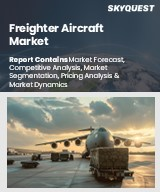
화물기 시장 규모, 점유율, 성장 및 산업 분석 : 기종, 용도별, 지역별 인사이트 및 예측(2026-2034년)Freighter Aircraft Market Size, Share, Growth and Global Industry Analysis By Type & Application, Regional Insights and Forecast to 2026-2034 |
||||||

화물기 시장의 성장 요인
전 세계 물류 및 전자상거래가 급속히 확장됨에 따라 글로벌 화물기 시장은 꾸준한 성장세를 보이고 있습니다. 화물기(cargo aircraft)는 승객이 아닌 화물을 운송하기 위해 특별히 설계되거나 개조된 항공기입니다. 이러한 항공기는 대형 화물칸 문, 보강된 바닥, 그리고 대형 화물을 효율적으로 적재하고 운송할 수 있는 넓은 기체를 특징으로 합니다.
산업 분석에 따르면 2025년 세계의 화물기 시장 규모는 41억 6,000만 달러로 평가됐습니다. 이 시장은 2026년에는 48억 1,000만 달러로 성장해 2034년까지 68억 8,000만 달러에 이를 것으로 보이며, 예측 기간(2026-2034년)의 CAGR은 5.81%를 나타낼 전망입니다.
2025년 북미는 세계의 화물기 시장에서 39.25%의 점유율을 차지하고 시장을 선도했습니다. 이는 주로 항공화물 서비스에 대한 강한 수요와 전자상거래 산업의 급속한 확대 때문입니다.
화물기는 원자재, 부패하기 쉬운 상품, 의약품 및 고가 화물을 운송함으로써 글로벌 물류에서 중요한 역할을 수행합니다. 국제 시장 전반에 걸쳐 빠르고 신뢰할 수 있는 화물 운송에 대한 수요가 증가함에 따라 이 산업의 확장이 지속적으로 뒷받침되고 있습니다.
시장 동향
화물기 시장을 형성하는 주요 트렌드 중 하나는 지속가능 항공 연료(SAF)의 도입입니다. SAF는 사용된 식용유, 농업 폐기물, 동물성 지방과 같은 재생 가능한 원료에서 생산됩니다.
이 연료는 기존 제트 연료에 비해 수명 주기 온실가스 배출량을 최대 80%까지 줄일 수 있습니다. 또한 SAF는 항공기 엔진을 개조할 필요 없이 기존 연료와 혼합하여 사용할 수 있습니다. 현재 규정은 최대 50% 혼합을 허용하고 있으나, 기술 발전에 따라 2030년까지 100% SAF 사용이 가능해질 것으로 예상됩니다.
지속 가능한 연료 솔루션의 도입은 항공 산업이 2050년까지 탄소 중립을 달성하는 데 큰 도움이 될 것입니다.
COVID-19의 영향
COVID-19의 유행은 항공 산업에 큰 영향을 미쳤지만 항공화물 부문에게는 새로운 기회를 창출했습니다.
팬데믹 기간 동안 여객편 운항이 대부분 중단되면서 여객기 화물 적재 용량이 감소했습니다. 그 결과, 항공사들은 필수 물품, 의료용품 및 전자상거래 화물을 운송하기 위해 전용 화물기에 크게 의존하게 되었습니다.
또한 많은 항공사가 물류 서비스에 대한 수요 증가에 대응하기 위해 유휴 여객기를 화물기로 개조했습니다. 이러한 추세는 화물기 및 개조 기술에 대한 투자를 가속화했습니다.
시장 역학
시장 성장 촉진요인
전자상거래와 세계 무역의 급속한 성장은 화물기 시장의 주요 촉진요인 중 하나입니다.
온라인 소매 플랫폼은 신속하고 신뢰할 수 있는 배송 서비스를 요구하며, 항공화물은 세계 공급망에서 필수적인 요소가 되고 있습니다. 산업 추계에 따르면 온라인 플랫폼은 하루에 1만 톤 이상의 화물을 운송하고 있으며, 이는 보잉 777형 화물기 약 100기분의 운송 능력에 해당합니다.
게다가 세계경제의 확대와 국경을 넘는 무역 증가로 항공사는 화물기대 확대와 최신 화물기 투자를 촉진하고 있습니다.
시장 성장 억제요인
수요는 견조하고, 화물기 시장은 몇 가지 과제에 직면하고 있습니다. 높은 도입 비용과 운영 비용은 여전히 주요 억제요인 중 하나입니다.
화물기에는 전문적인 화물 취급 인프라가 필요하며 무거운 적재 작업을 수행하기 위해 자주 유지 보수가 필요합니다. 또한 연료 가격 변동과 엄격한 환경 규제로 운영 비용이 증가하고 있습니다.
지정학적 긴장과 무역 제한도 항공화물 루트의 혼란을 초래하여 시장 성장에 영향을 줄 수 있습니다.
시장 기회
이 산업의 큰 기회가 되는 것이, 여객기에서 화물기로의 개조(P2F)입니다.
P2F 개조란, 퇴역한 여객기의 객실 내장을 제거해, 화물용 도어를 설치해, 기체 구조를 강화하는 것으로, 화물기로 전환하는 것입니다.
이 방법은 비용 효과적이며 신형 화물기가 1억 5,000만-2억 달러를 받는 반면, 개조된 화물기의 비용은 약 2,500만 달러입니다. 이를 통해 항공사는 투자 비용을 줄이면서 화물 운송 능력을 신속하게 확장할 수 있습니다.
시장의 과제
시장의 주요 과제 중 하나는 화물 운송에 사용되는 고급 제트기와의 경쟁입니다.
제트기는 보다 빠르고 항속거리가 길고 장거리를 효율적으로 운항할 수 있는 이점이 있습니다. 항공사가 보다 신속한 배송 서비스를 선호함에 따라 국제화물 노선에서는 제트기가 점점 더 선호되고 있습니다.
그러나 단거리 화물 운송과 활주로가 짧은 공항에서는 화물 전용기가 여전히 중요한 역할을 하고 있습니다.
세분화 분석
화물기 유형별
화물기 유형에 따라 시장은 OEM 사양기와 P2F 개조기로 구분됩니다.
2026년에는 항공사의 장비 업데이트와 연비 효율이 높은 항공기에 대한 수요에 주도되어 OEM 사양기 부문이 87.19%라는 최대 시장 점유율을 차지했습니다.
엔진별
엔진 유형별로는 시장 세분화에서 터보 팬 엔진과 터보프롭 엔진으로 분류됩니다.
터보 팬 엔진은 2026년 75.27%의 점유율로 시장을 독점하여 뛰어난 연료 효율, 더 긴 항속 거리 및 화물 운송의 성능 향상을 실현했습니다.
용도별
용도별로 시장은 민간 및 군사 부문으로 나뉩니다.
2026년에는 민간 부문이 88.41%라는 최대 점유율을 차지했습니다. 이는 화물기가 특히 전자상거래 및 물류 분야에서 세계 공급망을 통한 화물 운송에 널리 사용되기 때문입니다.
항공기 유형별
항공기 유형별로 시장은 내로우 바디, 와이드 바디, 지역 항공기 등으로 분류됩니다.
2026년에는 와이드 바디 머신 부문이 63.38%의 점유율을 차지하고 시장을 독점했습니다. 이는 높은 화물 적재 능력과 장거리 화물 운송에 대한 적합성 때문입니다.
지역별 전망
북미
북미는 가장 규모가 큰 지역 시장으로, 2025년에는 16억 3,000만 달러, 2026년에는 18억 8,000만 달러 규모에 이를 것으로 전망됩니다. 전자상거래 수요 증가와 주요 물류기업의 화물기 함대 투자는 이 지역의 성장을 이끌고 있습니다.
유럽
유럽은 2025년 11억 6,000만 달러를 차지하고 있으며, 화물 수요 증가와 항공사 장비 갱신 계획으로 꾸준한 성장이 예상됩니다.
아시아태평양
아시아태평양은 가장 성장하는 지역이며 2025년에는 8억 3,000만 달러로 평가되고 있습니다. 이는 무역 네트워크의 확대와 전자상거래 산업의 급속한 성장에 지지되고 있습니다.
세계 기타 지역
세계 기타 지역 시장은 2025년 5억 4,000만 달러에 이르렀으며, 화물 물류에 대한 투자 증가와 항공기 함대 확대로 성장이 예상됩니다.
이 기업들은 시장의 지위를 강화하기 위해 제품 혁신, 파트너십, 항공기 납품 및 여객기에서 화물기로의 개조 프로그램에 주력하고 있습니다.
목차
제1장 서론
제2장 주요 요약
제3장 시장 역학
- 시장 성장 촉진요인
- 시장 성장 억제요인
- 시장 기회
제4장 주요 고찰
- 주요 산업 동향 : 주요 계약, 합의, 합병, 인수, 제휴
- 최신 기술적 진보
- Porter's Five Forces 분석
- 공급망 분석
제5장 세계의 화물기 시장 분석, 인사이트 및 예측(2021-2034년)
- 주요 조사 결과, 정의
- 시장 분석, 인사이트 및 예측 : 화물기 유형별
- OEM 사양
- P2F 개조기
- 시장 분석, 인사이트 및 예측 : 엔진별
- 터보프롭
- 터보팬
- 시장 분석, 인사이트 및 예측 : 용도별
- 상업
- 군사
- 시장 분석, 인사이트 및 예측 : 항공기 유형별
- 내로우 바디
- 와이드 바디
- 지역 항공기
- 기타
- 시장 분석, 인사이트 및 예측 : 지역별
- 북미
- 유럽
- 아시아태평양
- 세계 기타 지역
제6장 북미의 화물기 시장 분석, 인사이트 및 예측(2021-2034년)
- 국가별
- 미국
- 캐나다
제7장 유럽의 화물기 시장 분석, 인사이트 및 예측(2021-2034년)
- 국가별
- 영국
- 독일
- 프랑스
- 러시아
- 기타 유럽 국가
제8장 아시아태평양의 화물기 시장 분석, 인사이트 및 예측(2021-2034년)
- 국가별
- 중국
- 인도
- 일본
- 기타 아시아태평양 국가
제9장 세계 기타 지역의 화물기 시장 분석, 인사이트 및 예측(2021-2034년)
제10장 경쟁 분석
- 세계의 화물기 시장 순위 분석(2025년)
- 경쟁 대시보드
- 기업 프로파일
- Airbus SE(Netherlands)
- The Boeing Company(US)
- Embraer SA(Brazil)
- Bombardier Inc.(Canada)
- Textron Aviation Inc.(US)
- Antonov(Ukraine)
- Lockheed Martin Corporation(US)
- Ilyushin Aviation Complex(Russia)
- ST engineering Inc.(Singapore)
- ATR Aircraft(France)
Growth Factors of freighter aircraft Market
The global freighter aircraft market is witnessing steady growth as global logistics and e-commerce continue to expand rapidly. A freighter aircraft, also called a cargo aircraft, is specifically designed or modified to transport goods rather than passengers. These aircraft feature large cargo doors, strengthened floors, and wide bodies that allow efficient loading and transportation of large cargo shipments.
According to industry analysis, the global freighter aircraft market size was valued at USD 4.16 billion in 2025. The market is projected to grow to USD 4.81 billion in 2026 and is expected to reach USD 6.88 billion by 2034, registering a CAGR of 5.81% during the forecast period (2026-2034).
In 2025, North America dominated the global freighter aircraft market with a 39.25% market share, mainly due to the strong demand for air cargo services and rapid expansion of the e-commerce industry.
Freighter aircraft play a critical role in global logistics by transporting raw materials, perishable goods, pharmaceuticals, and high-value shipments. The growing need for fast and reliable transportation of goods across international markets continues to support the expansion of this industry.
Market Trends
One of the major trends shaping the freighter aircraft market is the adoption of Sustainable Aviation Fuel (SAF). SAF is produced from renewable sources such as used cooking oils, agricultural waste, and animal fats.
This fuel can reduce lifecycle greenhouse gas emissions by up to 80% compared to traditional jet fuel. Additionally, SAF can be blended with conventional fuel without requiring modifications to aircraft engines. Currently, regulations allow blends of up to 50%, but technological advancements are expected to enable 100% SAF usage by 2030.
The adoption of sustainable fuel solutions will help the aviation industry achieve its net-zero carbon emission target by 2050.
Impact of COVID-19
The COVID-19 pandemic significantly affected the aviation industry, but it created new opportunities for the air cargo sector.
During the pandemic, passenger flights were largely suspended, which reduced belly cargo capacity. As a result, airlines relied heavily on dedicated freighter aircraft to transport essential goods, medical supplies, and e-commerce shipments.
Many airlines also converted idle passenger aircraft into cargo planes to meet the rising demand for logistics services. This trend accelerated investments in freighter aircraft and conversion technologies.
Market Dynamics
Market Drivers
The rapid growth of e-commerce and global trade is one of the primary drivers of the freighter aircraft market.
Online retail platforms require fast and reliable delivery services, making air cargo an essential part of global supply chains. According to industry estimates, online platforms ship more than 10,000 tons of goods daily, equivalent to the capacity of approximately 100 Boeing 777 freighters.
Additionally, global economic expansion and increasing cross-border trade are encouraging airlines to expand their cargo fleets and invest in modern freighter aircraft.
Market Restraints
Despite strong demand, the freighter aircraft market faces several challenges. High acquisition and operational costs remain one of the major restraints.
Freighter aircraft require specialized cargo handling infrastructure and frequent maintenance due to heavy loading operations. In addition, fluctuating fuel prices and strict environmental regulations increase operational costs.
Geopolitical tensions and trade restrictions can also disrupt air cargo routes and affect market growth.
Market Opportunities
A significant opportunity for the industry lies in Passenger-to-Freighter (P2F) conversions.
P2F conversion involves transforming retired passenger aircraft into cargo aircraft by removing passenger interiors, installing cargo doors, and strengthening the aircraft structure.
This approach is cost-effective, as a converted freighter costs approximately USD 25 million, compared to USD 150-200 million for a new freighter aircraft. This allows airlines to expand their cargo capacity quickly while reducing investment costs.
Market Challenges
One of the key challenges in the market is competition from advanced jet aircraft used in cargo operations.
Jet aircraft offer higher speeds, longer flight ranges, and the ability to operate efficiently over long distances. As airlines prioritize faster delivery services, jets are increasingly preferred for international cargo routes.
However, freighter aircraft remain important for short-haul cargo operations and airports with shorter runways.
Segmentation Analysis
By Freighter Type
Based on freighter type, the market is divided into OEM configured aircraft and P2F converted aircraft.
The OEM configured segment held the largest market share of 87.19% in 2026, driven by airline fleet modernization programs and the demand for fuel-efficient aircraft.
By Engine
By engine type, the market is segmented into turbofan and turboprop engines.
The turbofan segment dominated the market with a 75.27% share in 2026, as these engines provide better fuel efficiency, longer flight range, and improved performance for cargo operations.
By Application
Based on application, the market includes commercial and military segments.
The commercial segment accounted for the largest share of 88.41% in 2026, as freighter aircraft are widely used for transporting goods across global supply chains, particularly in the e-commerce and logistics sectors.
By Aircraft Type
By aircraft type, the market is categorized into narrow-body, wide-body, regional aircraft, and others.
The wide-body segment dominated the market with a 63.38% share in 2026, due to its higher cargo capacity and suitability for long-haul cargo transportation.
Regional Outlook
North America
North America is the largest regional market, valued at USD 1.63 billion in 2025 and USD 1.88 billion in 2026. Strong e-commerce demand and major logistics companies investing in cargo aircraft fleets drive regional growth.
Europe
Europe accounted for USD 1.16 billion in 2025 and is expected to grow steadily due to increasing cargo demand and airline fleet modernization programs.
Asia Pacific
Asia Pacific is the fastest-growing region, valued at USD 0.83 billion in 2025, supported by expanding trade networks and the rapid growth of the e-commerce industry.
Rest of the World
The Rest of the World market reached USD 0.54 billion in 2025 and is expected to grow due to increasing investments in cargo logistics and aircraft fleet expansion.
Competitive Landscape
The freighter aircraft market is highly competitive, with major aerospace manufacturers investing heavily in research and development.
Key industry players include **Airbus SE, The Boeing Company, Embraer S.A., Bombardier Inc., Textron Aviation Inc., Lockheed Martin Corporation, Antonov, Ilyushin Aviation Complex, ST Engineering Inc., and ATR Aircraft.
These companies focus on product innovation, partnerships, aircraft deliveries, and passenger-to-freighter conversion programs to strengthen their market positions.
Conclusion
In conclusion, the global freighter aircraft market is expected to witness steady growth in the coming years. The market is projected to expand from USD 4.16 billion in 2025 to USD 4.81 billion in 2026 and reach USD 6.88 billion by 2034. Growth is primarily driven by the expansion of e-commerce, increasing global trade, and rising demand for fast cargo transportation. Although high operational costs and environmental regulations pose challenges, technological advancements, sustainable aviation fuels, and passenger-to-freighter conversion programs are expected to support long-term market growth.
Segmentation By Freighter Type
- OEM Configured
- P2F Converted
By Engine
- Turboprop
- Turbofan
By Application
- Commercial
- Military
By Aircraft Type
- Narrow Body
- Wide Body
- Regional Aircraft
- Others
By Region
- North America (By Freighter Type, Engine, Application, Aircraft Type, and Country)
- U.S. (By Freighter Type)
- Canada (By Freighter Type)
- Europe (By Freighter Type, Engine, Application, Aircraft Type, and Country)
- U.K. (By Freighter Type)
- Germany (By Freighter Type)
- France (By Freighter Type)
- Russia (By Freighter Type)
- Rest of Europe (By Freighter Type)
- Asia Pacific (By Freighter Type, Engine, Application, Aircraft Type, and Country)
- China (By Freighter Type)
- India (By Freighter Type)
- Japan (By Freighter Type)
- Rest of Asia Pacific (By Freighter Type)
- Rest of the World (By Freighter Type, Engine, Application, Aircraft Type, and sub-region)
- Middle East & Africa (By Freighter Type)
- Latin America (By Freighter Type)
Table of Content
1. Introduction
- 1.1. Research Scope
- 1.2. Market Segmentation
- 1.3. Research Methodology
- 1.4. Definitions and Assumptions
2. Executive Summary
3. Market Dynamics
- 3.1. Market Drivers
- 3.2. Market Restraints
- 3.3. Market Opportunities
4. Key Insights
- 4.1. Key Industry Developments - Key Contracts & Agreements, Mergers, Acquisitions and Partnerships
- 4.2. Latest technological Advancements
- 4.3. Porters Five Forces Analysis
- 4.4. Supply Chain Analysis
5. Global Freighter Aircraft Market Market Analysis, Insights and Forecast, 2021-2034
- 5.1. Key Findings / Definitions
- 5.2. Market Analysis, Insights, and Forecast - By Freighter Type
- 5.2.1. OEM Configured
- 5.2.2. P2F converted
- 5.3. Market Analysis, Insights, and Forecast - By Engine
- 5.3.1. Turboprop
- 5.3.2. Turbofan
- 5.4. Market Analysis, Insights, and Forecast - By Application
- 5.4.1. Commercial
- 5.4.2. Military
- 5.5. Market Analysis, Insights, and Forecast - By Aircraft Type
- 5.5.1. Narrow Body
- 5.5.2. Wide Body
- 5.5.3. Regional Aircraft
- 5.5.4. Others
- 5.6. Market Analysis, Insights, and Forecast - By Region
- 5.6.1. North America
- 5.6.2. Europe
- 5.6.3. Asia Pacific
- 5.6.4. Rest of the World
6. North America Freighter Aircraft Market Market Analysis, Insights and Forecast, 2021-2034
- 6.1. Market Analysis, Insights, and Forecast - By Freighter Type
- 6.1.1. OEM Configured
- 6.1.2. P2F converted
- 6.2. Market Analysis, Insights, and Forecast - By Engine
- 6.2.1. Turboprop
- 6.2.2. Turbofan
- 6.3. Market Analysis, Insights, and Forecast - By Application
- 6.3.1. Commercial
- 6.3.2. Military
- 6.4. Market Analysis, Insights, and Forecast - By Aircraft Type
- 6.4.1. Narrow Body
- 6.4.2. Wide Body
- 6.4.3. Regional Aircraft
- 6.4.4. Others
- 6.5. Market Analysis, Insights, and Forecast - By Country
- 6.5.1. U.S.
- 6.5.1.1. Market Analysis, Insights, and Forecast - By Freighter Type
- 6.5.1.1.1. OEM Configured
- 6.5.1.1.2. P2F converted
- 6.5.1.1. Market Analysis, Insights, and Forecast - By Freighter Type
- 6.5.2. Canada
- 6.5.2.1. Market Analysis, Insights, and Forecast - By Freighter Type
- 6.5.2.1.1. OEM Configured
- 6.5.2.1.2. P2F converted
- 6.5.2.1. Market Analysis, Insights, and Forecast - By Freighter Type
- 6.5.1. U.S.
7. Europe Freighter Aircraft Market Market Analysis, Insights and Forecast, 2021-2034
- 7.1. Market Analysis, Insights, and Forecast - By Freighter Type
- 7.1.1. OEM Configured
- 7.1.2. P2F converted
- 7.2. Market Analysis, Insights, and Forecast - By Engine
- 7.2.1. Turboprop
- 7.2.2. Turbofan
- 7.3. Market Analysis, Insights, and Forecast - By Application
- 7.3.1. Commercial
- 7.3.2. Military
- 7.4. Market Analysis, Insights, and Forecast - By Aircraft Type
- 7.4.1. Narrow Body
- 7.4.2. Wide Body
- 7.4.3. Regional Aircraft
- 7.4.4. Others
- 7.5. Market Analysis, Insights, and Forecast - By Country
- 7.5.1. U.K.
- 7.5.1.1. Market Analysis, Insights, and Forecast - By Freighter Type
- 7.5.1.1.1. OEM Configured
- 7.5.1.1.2. P2F converted
- 7.5.1.1. Market Analysis, Insights, and Forecast - By Freighter Type
- 7.5.2. Germany
- 7.5.2.1. Market Analysis, Insights, and Forecast - By Freighter Type
- 7.5.2.1.1. OEM Configured
- 7.5.2.1.2. P2F converted
- 7.5.2.1. Market Analysis, Insights, and Forecast - By Freighter Type
- 7.5.3. France
- 7.5.3.1. Market Analysis, Insights, and Forecast - By Freighter Type
- 7.5.3.1.1. OEM Configured
- 7.5.3.1.2. P2F converted
- 7.5.3.1. Market Analysis, Insights, and Forecast - By Freighter Type
- 7.5.4. Russia
- 7.5.4.1. Market Analysis, Insights, and Forecast - By Freighter Type
- 7.5.4.1.1. OEM Configured
- 7.5.4.1.2. P2F converted
- 7.5.4.1. Market Analysis, Insights, and Forecast - By Freighter Type
- 7.5.5. Rest of Europe
- 7.5.5.1. Market Analysis, Insights, and Forecast - By Freighter Type
- 7.5.5.1.1. OEM Configured
- 7.5.5.1.2. P2F converted
- 7.5.5.1. Market Analysis, Insights, and Forecast - By Freighter Type
- 7.5.1. U.K.
8. Asia Pacific Freighter Aircraft Market Market Analysis, Insights and Forecast, 2021-2034
- 8.1. Market Analysis, Insights, and Forecast - By Freighter Type
- 8.1.1. OEM Configured
- 8.1.2. P2F converted
- 8.2. Market Analysis, Insights, and Forecast - By Engine
- 8.2.1. Turboprop
- 8.2.2. Turbofan
- 8.3. Market Analysis, Insights, and Forecast - By Application
- 8.3.1. Commercial
- 8.3.2. Military
- 8.4. Market Analysis, Insights, and Forecast - By Aircraft Type
- 8.4.1. Narrow Body
- 8.4.2. Wide Body
- 8.4.3. Regional Aircraft
- 8.4.4. Others
- 8.5. Market Analysis, Insights, and Forecast - By Country
- 8.5.1. China
- 8.5.1.1. Market Analysis, Insights, and Forecast - By Freighter Type
- 8.5.1.1.1. OEM Configured
- 8.5.1.1.2. P2F converted
- 8.5.1.1. Market Analysis, Insights, and Forecast - By Freighter Type
- 8.5.2. India
- 8.5.2.1. Market Analysis, Insights, and Forecast - By Freighter Type
- 8.5.2.1.1. OEM Configured
- 8.5.2.1.2. P2F converted
- 8.5.2.1. Market Analysis, Insights, and Forecast - By Freighter Type
- 8.5.3. Japan
- 8.5.3.1. Market Analysis, Insights, and Forecast - By Freighter Type
- 8.5.3.1.1. OEM Configured
- 8.5.3.1.2. P2F converted
- 8.5.3.1. Market Analysis, Insights, and Forecast - By Freighter Type
- 8.5.4. Rest of Asia Pacific
- 8.5.4.1. Market Analysis, Insights, and Forecast - By Freighter Type
- 8.5.4.1.1. OEM Configured
- 8.5.4.1.2. P2F converted
- 8.5.4.1. Market Analysis, Insights, and Forecast - By Freighter Type
- 8.5.1. China
9. Rest of the World Freighter Aircraft Market Market Analysis, Insights and Forecast, 2021-2034
- 9.1. Market Analysis, Insights, and Forecast - By Freighter Type
- 9.1.1. OEM Configured
- 9.1.2. P2F converted
- 9.2. Market Analysis, Insights, and Forecast - By Engine
- 9.2.1. Turboprop
- 9.2.2. Turbofan
- 9.3. Market Analysis, Insights, and Forecast - By Application
- 9.3.1. Commercial
- 9.3.2. Military
- 9.4. Market Analysis, Insights, and Forecast - By Aircraft Type
- 9.4.1. Narrow Body
- 9.4.2. Wide Body
- 9.4.3. Regional Aircraft
- 9.4.4. Others
- 9.5. Market Analysis, Insights, and Forecast - By sub-region
- 9.5.1. Latin America
- 9.5.1.1. Market Analysis, Insights, and Forecast - By Freighter Type
- 9.5.1.1.1. OEM Configured
- 9.5.1.1.2. P2F converted
- 9.5.1.1. Market Analysis, Insights, and Forecast - By Freighter Type
- 9.5.2. Middle East & Africa
- 9.5.2.1. Market Analysis, Insights, and Forecast - By Freighter Type
- 9.5.2.1.1. OEM Configured
- 9.5.2.1.2. P2F converted
- 9.5.2.1. Market Analysis, Insights, and Forecast - By Freighter Type
- 9.5.1. Latin America
10. Competitive Analysis
- 10.1. Global Freighter Aircraft Market Market Rank Analysis (2025)
- 10.2. Competition Dashboard
- 10.3. Company Profiles
- 10.3.1. Airbus SE (Netherlands)
- 10.3.1.1. Overview
- 10.3.1.2. Products & services
- 10.3.1.3. SWOT Analysis
- 10.3.1.4. Recent Developments
- 10.3.1.5. Strategies
- 10.3.1.6. Financials (Based on Availability)
- 10.3.2. The Boeing Company (U.S.)
- 10.3.2.1. Overview
- 10.3.2.2. Products & services
- 10.3.2.3. SWOT Analysis
- 10.3.2.4. Recent Developments
- 10.3.2.5. Strategies
- 10.3.2.6. Financials (Based on Availability)
- 10.3.3. Embraer S.A. (Brazil)
- 10.3.3.1. Overview
- 10.3.3.2. Products & services
- 10.3.3.3. SWOT Analysis
- 10.3.3.4. Recent Developments
- 10.3.3.5. Strategies
- 10.3.3.6. Financials (Based on Availability)
- 10.3.4. Bombardier Inc. (Canada)
- 10.3.4.1. Overview
- 10.3.4.2. Products & services
- 10.3.4.3. SWOT Analysis
- 10.3.4.4. Recent Developments
- 10.3.4.5. Strategies
- 10.3.4.6. Financials (Based on Availability)
- 10.3.5. Textron Aviation Inc. (U.S.)
- 10.3.5.1. Overview
- 10.3.5.2. Products & services
- 10.3.5.3. SWOT Analysis
- 10.3.5.4. Recent Developments
- 10.3.5.5. Strategies
- 10.3.5.6. Financials (Based on Availability)
- 10.3.6. Antonov (Ukraine)
- 10.3.6.1. Overview
- 10.3.6.2. Products & services
- 10.3.6.3. SWOT Analysis
- 10.3.6.4. Recent Developments
- 10.3.6.5. Strategies
- 10.3.6.6. Financials (Based on Availability)
- 10.3.7. Lockheed Martin Corporation (U.S.)
- 10.3.7.1. Overview
- 10.3.7.2. Products & services
- 10.3.7.3. SWOT Analysis
- 10.3.7.4. Recent Developments
- 10.3.7.5. Strategies
- 10.3.7.6. Financials (Based on Availability)
- 10.3.8. Ilyushin Aviation Complex (Russia)
- 10.3.8.1. Overview
- 10.3.8.2. Products & services
- 10.3.8.3. SWOT Analysis
- 10.3.8.4. Recent Developments
- 10.3.8.5. Strategies
- 10.3.8.6. Financials (Based on Availability)
- 10.3.9. ST engineering Inc. (Singapore)
- 10.3.9.1. Overview
- 10.3.9.2. Products & services
- 10.3.9.3. SWOT Analysis
- 10.3.9.4. Recent Developments
- 10.3.9.5. Strategies
- 10.3.9.6. Financials (Based on Availability)
- 10.3.10. ATR Aircraft (France)
- 10.3.10.1. Overview
- 10.3.10.2. Products & services
- 10.3.10.3. SWOT Analysis
- 10.3.10.4. Recent Developments
- 10.3.10.5. Strategies
- 10.3.10.6. Financials (Based on Availability)
- 10.3.1. Airbus SE (Netherlands)