|
시장보고서
상품코드
1740840
알루미늄 2차 제련 및 합금 시장 기회, 성장 촉진요인, 산업 동향 분석 및 예측(2025-2034년)Secondary Smelting and Alloying of Aluminium Market Opportunity, Growth Drivers, Industry Trend Analysis, and Forecast 2025 - 2034 |
||||||

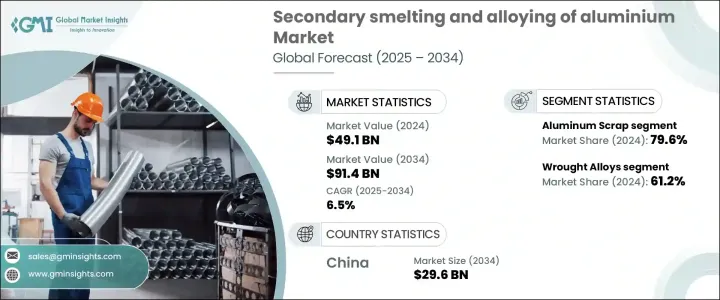
세계의 알루미늄 2차 제련 및 합금 시장은 2024년에 491억 달러로 평가되었으며, 지속가능성으로의 세계 변화, 재활용 인프라 강화, 주요 최종 이용 산업 수요 증가로 CAGR 6.5%를 나타내 2034년에는 914억 달러에 이를 것으로 추정됩니다.
산업계가 이산화탄소 배출량의 삭감과 자원의 효율적인 이용을 추진하는 움직임을 강화하는 가운데, 알루미늄 2차재는 세계의 제조업체에게 선호되는 옵션으로서 부상하고 있습니다. 저환경 부하로 고성능의 2차 제련은 큰 지지를 얻고 있습니다.스크랩 처리 기술, 합금 공학의 진보, 세계의 리사이클 효율의 현저한 향상(현재 약 76%)이, 이 기세를 가속시키고 있습니다.
건설, 자동차, 포장, 일렉트로닉스 등의 부문로부터의 소비의 개척은 특히 지속 가능한 산업화에 중점을 둔 신흥 경제 국가에서 시장의 확대를 뒷받침하고 있습니다. 또한 에너지 효율적인 솔루션에 대한 주목 증가, 순환형 경제의 실천을 촉진하는 정부의 정책, 재생 가능 에너지 인프라에의 알루미늄 시장의 진화는 기술 혁신과 밀접하게 연결되어 있어 AI를 활용한 스크랩 선별, 블록체인을 활용한 추적 가능성, 스마트 로지스틱스가 새로운 효율성을 낳고 있습니다.
| 시장 범위 | |
|---|---|
| 시작 연도 | 2024년 |
| 예측 연도 | 2025-2034년 |
| 시작 금액 | 491억 달러 |
| 예측 금액 | 914억 달러 |
| CAGR | 6.5% |
탄소 삭감과 자원의 최적화가 중시되게 됨으로써, 제조업체는 알루미늄 2차 이용을 적극적으로 실시하게 되어, 스크랩 처리와 합금공학의 진보가 알루미늄의 경쟁력을 높여 계속하고 있습니다. 전 세계적으로 재활용률의 상승이 이행을 가속화하고 있으며, 신흥 경제국은 기술 주도공급 체인 최적화에 힘입어 중요한 역할을 하고 있습니다. 강화된 추적 시스템과 디지털화된 스크랩 관리 솔루션 이로 인해 재료 회수율이 향상되고 업계 전반에 걸쳐 더 나은 제품 품질이 확보되고 있습니다. 보다 깨끗한 생산 방법과 1차 추출 방법에 대한 의존을 줄이는데 세계적으로 초점이 맞추어져 있기 때문에 2차 제련 및 합금이 알루미늄의 밸류체인의 매우 중요한 기둥이 되고 있습니다.
알루미늄 스크랩 분야는 입수가 용이하고 건설 및 운송에 널리 이용되고 지속가능성에 큰 이점이 있기 때문에 2024년 시장 점유율은 79.6%를 차지했습니다. 실현하고 기업의 탈탄소화 목표와 세계의 환경 규제를 직접 지원합니다.기술 혁신은 기업이 폐기물 삭감 노력을 강화하는 가운데, 드로스나 스키밍과 같은 이전에는 폐기되고 있던 재료에 새로운 생명을 불어넣어, 귀중하고 환경 친화적인 알루미늄 자원으로 바꾸고 있습니다.
자동차 산업은 전기자동차 개발에 경량화 전략이 필수적이기 때문에 알루미늄 2차 제품의 최대 소비자로 지속되고 있습니다.
2024년 중국의 알루미늄 2차 제련 및 합금 시장 규모는 159억 달러에 달했고, 2034년에는 296억 달러에 이를 것으로 예측되고 있습니다. 이 나라의 성장 원동력은 강력한 제조 능력, 인프라 및 EV에서 알루미늄의 보급 및 재활용을 지원하는 정부의 적극적인 노력입니다. 스크랩 처리에 있어서의 스마트 기술의 채용이, 생산 효율을 한층 더 밀어 올리고 있습니다.
주요 시장 기업으로는 DOWA Holdings, Real Alloy, Hydro Aluminium AS, Novelis Inc. Constellium SE, Kaiser Aluminum Corporation, Raffmetal SpA, ELVALHALCOR Hellenic Copper and Aluminium Industry SA, Befesa SA, Century Aluminum Company 등이 있습니다. 각 회사는 차세대 재활용 기술 투자, 스크랩 공급업체와의 파트너십 구축, 지역 실적 확대, 규정 준수 및 추적성을 위한 디지털 플랫폼을 채택하여 경쟁 우위를 확보하고 있습니다.
목차
제1장 조사 방법과 범위
제2장 주요 요약
제3장 업계 인사이트
- 생태계 분석
- 밸류체인에 영향을 주는 요인
- 이익률 분석
- 파괴적 혁신
- 향후 전망
- 제조업체
- 유통업체
- 트럼프 정권의 관세 영향 - 구조화된 개요
- 무역에 미치는 영향
- 무역량의 혼란
- 보복 조치
- 업계에 미치는 영향
- 공급측의 영향(원재료)
- 주요 원재료의 가격 변동
- 공급망 재구성
- 생산 비용에 미치는 영향
- 수요측의 영향(판매가격)
- 최종 시장에의 가격 전달
- 시장 점유율 동향
- 소비자의 반응 패턴
- 공급측의 영향(원재료)
- 영향을 받는 주요 기업
- 전략적인 업계 대응
- 공급망 재구성
- 가격 설정 및 제품 전략
- 정책관여
- 전망과 향후 검토 사항
- 무역에 미치는 영향
- 무역 통계(HS코드 : 7601.20)
- 공급자의 상황
- 이익률 분석
- 주요 뉴스와 대처
- 규제 상황
- 영향요인
- 성장 촉진요인
- 자동차 및 운송 분야에 있어서의 경량 소재 수요 증가
- 지속가능성과 이산화탄소 배출량 저감 노력에 중점 강화
- 1차 알루미늄 생산에 비해 적은 2차 알루미늄 생산의 에너지 소비량
- 세계 건설 활동과 도시 인프라 개발 확대
- 재활용과 순환형 경제의 실천을 촉진하는 정부의 정책
- 합금화 기술과 스크랩 회수 프로세스의 진보
- 업계의 잠재적 위험 및 과제
- 알루미늄 스크랩공급과 품질의 변동
- 재활용에 있어서의 드로스와 폐기물 관리에 관한 환경 우려
- 제련 및 가공 인프라에 대한 높은 초기 투자액
- 성장 촉진요인
- 성장 가능성 분석
- Porter's Five Forces 분석
- PESTEL 분석
제4장 경쟁 구도
- 서론
- 기업의 시장 점유율 분석
- 경쟁 포지셔닝 매트릭스
- 전략적 전망 매트릭스
제5장 시장 추계·예측 : 원료별(2021-2034년)
- 주요 동향
- 알루미늄 스크랩
- 드로스 및 스키밍
- 기타 2차 원료
제6장 시장 추계·예측 : 합금 유형별(2021-2034년)
- 주요 동향
- 단조 합금
- 주조 합금
- 기타
제7장 시장 추계·예측 : 최종 이용 산업별(2021-2034년)
- 주요 동향
- 자동차
- 건축 및 건설
- 전기 및 전자공학
- 포장
- 기타
제8장 시장 추계·예측 : 지역별(2021-2034년)
- 주요 동향
- 북미
- 미국
- 캐나다
- 유럽
- 독일
- 영국
- 프랑스
- 스페인
- 이탈리아
- 아시아태평양
- 중국
- 인도
- 일본
- 호주
- 한국
- 라틴아메리카
- 브라질
- 멕시코
- 중동 및 아프리카
- 사우디아라비아
- 남아프리카
- 아랍에미리트(UAE)
제9장 기업 프로파일
- Novelis Inc.
- Hydro Aluminium AS
- Constellium SE
- Real Alloy
- Kaiser Aluminum Corporation
- Century Aluminum Company
- Raffmetal SpA
- ELVALHALCOR Hellenic Copper and Aluminium Industry SA
- Befesa SA
- Dowa Holdings Co.Ltd.
The Global Secondary Smelting and Alloying of Aluminium Market was valued at USD 49.1 billion in 2024 and is estimated to grow at a CAGR of 6.5% to reach USD 91.4 billion by 2034, driven by the global shift toward sustainability, stronger recycling infrastructure, and heightened demand from major end-use industries. As industries intensify their push toward reducing carbon emissions and promoting efficient resource utilization, secondary aluminum has emerged as a preferred choice for manufacturers worldwide. Offering a low-impact, high-performance alternative to primary aluminum, secondary smelting has gained significant traction. Advancements in scrap processing technologies, alloy engineering, and a notable increase in global recycling efficiency-currently standing around 76%-are accelerating the momentum.
Growing consumption from sectors like construction, automotive, packaging, and electronics is reinforcing market expansion, especially across developing economies focused on sustainable industrialization. Additionally, a heightened focus on energy-efficient solutions, government policies promoting circular economy practices, and increased integration of aluminum in renewable energy infrastructure are further fueling demand. The market's evolution is tightly linked to technological innovations, with AI-driven scrap sorting, blockchain-enabled traceability, and smart logistics creating new efficiencies. As industries continue to prioritize lightweight materials for electrification, especially in transport and energy, secondary aluminum is securing its role as a cornerstone material for future global development.
| Market Scope | |
|---|---|
| Start Year | 2024 |
| Forecast Year | 2025-2034 |
| Start Value | $49.1 Billion |
| Forecast Value | $91.4 Billion |
| CAGR | 6.5% |
Growing emphasis on carbon reduction and resource optimization has pushed manufacturers to aggressively adopt secondary aluminum, while advancements in scrap processing and alloy engineering continue to enhance the material's competitiveness. Rising recycling rates worldwide are speeding up the transition, with emerging economies playing a critical role, supported by technology-driven supply chain optimization. Enhanced tracking systems and digitized scrap management solutions are improving material recovery rates and ensuring better product quality across industries. As the use of aluminum intensifies in electrical grids, battery systems, and renewable installations, demand for secondary sources is witnessing an unprecedented surge. The global focus on cleaner production methods and reducing reliance on primary extraction methods is making secondary smelting and alloying a pivotal pillar of the aluminum value chain.
The aluminum scrap segment accounted for a 79.6% market share in 2024, driven by its easy accessibility, widespread use in construction and transportation, and significant sustainability advantages. Scrap-based aluminum production, offering lower emissions and major energy savings, directly supports corporate decarbonization targets and global environmental regulations. Technological innovations are breathing new life into previously discarded materials like dross and skimming, turning them into valuable, eco-friendly aluminum sources as companies intensify waste reduction efforts.
The automotive industry remains the top consumer of secondary aluminum, with lightweighting strategies critical for electric vehicle development. Aluminum alloys are increasingly used in battery housings, chassis systems, and structural frames to boost performance and meet stringent carbon neutrality goals.
China Secondary Smelting and Alloying of Aluminium Market generated USD 15.9 billion in 2024 and is forecasted to reach USD 29.6 billion by 2034. The country's growth is fueled by strong manufacturing capabilities, widespread aluminum use in infrastructure and EVs, and proactive government initiatives supporting recycling. The adoption of smart technologies in scrap handling is further driving production efficiency.
Key market players include Dowa Holdings Co., Ltd., Real Alloy, Hydro Aluminium AS, Novelis Inc., Constellium SE, Kaiser Aluminum Corporation, Raffmetal S.p.A., ELVALHALCOR Hellenic Copper and Aluminium Industry S.A., Befesa S.A., and Century Aluminum Company. Companies are securing competitive advantages by investing in next-gen recycling technologies, forging partnerships with scrap suppliers, expanding regional footprints, and adopting digital platforms for compliance and traceability.
Table of Contents
Chapter 1 Methodology & Scope
- 1.1 Market scope & definition
- 1.2 Base estimates & calculations
- 1.3 Forecast calculation
- 1.4 Data sources
- 1.4.1 Primary
- 1.4.2 Secondary
- 1.4.2.1 Paid sources
- 1.4.2.2 Public sources
- 1.5 Primary research and validation
- 1.5.1 Primary sources
- 1.5.2 Data mining sources
Chapter 2 Executive Summary
- 2.1 Industry synopsis, 2021-2034
Chapter 3 Industry Insights
- 3.1 Industry ecosystem analysis
- 3.1.1 Factor affecting the value chain
- 3.1.2 Profit margin analysis
- 3.1.3 Disruptions
- 3.1.4 Future outlook
- 3.1.5 Manufacturers
- 3.1.6 Distributors
- 3.2 Impact of trump administration tariffs – structured overview
- 3.2.1 Impact on trade
- 3.2.1.1 Trade volume disruptions
- 3.2.1.2 Retaliatory measures
- 3.2.2 Impact on the industry
- 3.2.2.1 Supply-side impact (raw materials)
- 3.2.2.1.1 Price volatility in key materials
- 3.2.2.1.2 Supply chain restructuring
- 3.2.2.1.3 Production cost implications
- 3.2.2.2 Demand-side impact (selling price)
- 3.2.2.2.1 Price transmission to end markets
- 3.2.2.2.2 Market share dynamics
- 3.2.2.2.3 Consumer response patterns
- 3.2.2.1 Supply-side impact (raw materials)
- 3.2.3 Key companies impacted
- 3.2.4 Strategic industry responses
- 3.2.4.1 Supply chain reconfiguration
- 3.2.4.2 Pricing and product strategies
- 3.2.4.3 Policy engagement
- 3.2.5 Outlook and future considerations
- 3.2.1 Impact on trade
- 3.3 Trade statistics (HS Code: 7601.20)
- 3.4 Supplier landscape
- 3.5 Profit margin analysis
- 3.6 Key news & initiatives
- 3.7 Regulatory landscape
- 3.8 Impact forces
- 3.8.1 Growth drivers
- 3.8.1.1 Rising demand for lightweight materials in automotive and transportation sectors
- 3.8.1.2 Increased emphasis on sustainability and carbon footprint reduction initiatives
- 3.8.1.3 Lower energy consumption in secondary aluminum production vs. primary aluminum
- 3.8.1.4 Expanding construction activities and urban infrastructure development worldwide
- 3.8.1.5 Government policies promoting recycling and circular economy practices
- 3.8.1.6 Advancements in alloying technology and scrap recovery processes
- 3.8.2 Industry pitfalls & challenges
- 3.8.2.1 Fluctuations in aluminum scrap supply and quality availability
- 3.8.2.2 Environmental concerns over dross and waste management in recycling
- 3.8.2.3 High initial investment in smelting and processing infrastructure
- 3.8.1 Growth drivers
- 3.9 Growth potential analysis
- 3.10 Porter's analysis
- 3.11 PESTEL analysis
Chapter 4 Competitive Landscape, 2024
- 4.1 Introduction
- 4.2 Company market share analysis
- 4.3 Competitive positioning matrix
- 4.4 Strategic outlook matrix
Chapter 5 Market Estimates and Forecast, By Source, 2021 – 2034 (USD Billion) (Kilo Tons)
- 5.1 Key trends
- 5.2 Aluminum scrap
- 5.3 Dross and skimmings
- 5.4 Other secondary sources
Chapter 6 Market Estimates and Forecast, By Alloy Type, 2021 – 2034 (USD Billion) (Kilo Tons)
- 6.1 Key trends
- 6.2 Wrought alloys
- 6.3 Cast alloys
- 6.4 Others
Chapter 7 Market Estimates and Forecast, By End Use Industry, 2021 – 2034 (USD Billion) (Kilo Tons)
- 7.1 Key trends
- 7.2 Automotive
- 7.3 Building & construction
- 7.4 Electrical & electronics
- 7.5 Packaging
- 7.6 Others
Chapter 8 Market Estimates and Forecast, By Region, 2021 – 2034 (USD Billion) (Kilo Tons)
- 8.1 Key trends
- 8.2 North America
- 8.2.1 U.S.
- 8.2.2 Canada
- 8.3 Europe
- 8.3.1 Germany
- 8.3.2 UK
- 8.3.3 France
- 8.3.4 Spain
- 8.3.5 Italy
- 8.4 Asia Pacific
- 8.4.1 China
- 8.4.2 India
- 8.4.3 Japan
- 8.4.4 Australia
- 8.4.5 South Korea
- 8.5 Latin America
- 8.5.1 Brazil
- 8.5.2 Mexico
- 8.6 Middle East and Africa
- 8.6.1 Saudi Arabia
- 8.6.2 South Africa
- 8.6.3 UAE
Chapter 9 Company Profiles
- 9.1 Novelis Inc.
- 9.2 Hydro Aluminium AS
- 9.3 Constellium SE
- 9.4 Real Alloy
- 9.5 Kaiser Aluminum Corporation
- 9.6 Century Aluminum Company
- 9.7 Raffmetal S.p.A
- 9.8 ELVALHALCOR Hellenic Copper and Aluminium Industry S.A.
- 9.9 Befesa S.A.
- 9.10 Dowa Holdings Co., Ltd.