|
시장보고서
상품코드
1755224
화학 고온 산업용 보일러 시장 : 기회, 성장 촉진 요인, 산업 동향 분석, 예측(2025-2034년)Chemical High Temperature Industrial Boiler Market Opportunity, Growth Drivers, Industry Trend Analysis, and Forecast 2025 - 2034 |
||||||

화학 고온 산업용 보일러 세계 시장 규모는 2024년에 22억 달러로 평가되었고, 신흥 경제 국가에서의 급속한 도시화에 추진된 고도의 가열 기술에 대한 수요 증가에 의해 CAGR 4.1%로 성장하여 2034년에는 34억 달러에 이를 것으로 예측되고 있습니다.
화학 합성, 중합 및 증류를 포함한 화학 생산 공정의 복잡화와 규모 확대는 효율적인 고온 증기 시스템의 필요성을 뒷받침하고 있습니다.

또한 IoT와 자동화 기술을 채택하여 실시간 모니터링, 유지 보수 예측 및 성능 최적화를 강화하여 이러한 보일러를 점점 더 효율적으로 만듭니다. 이 전환은 에너지 효율 향상, 다운타임 최소화, 엄격한 배출 기준 준수에 필수적입니다. 기존의 보일러를 첨단 기술로 개조하는 것은 화학 플랜트들 사이에서 보편화되고 있으며, 보일러의 수명을 연장하고 업데이트된 규제를 준수하도록 합니다. 그러나 세계 무역의 혼란, 특히 트럼프 대통령 취임 중 수입 부품에 대한 관세는 국제 무역 역학과 운영 비용에 영향을 미치며 장기적으로 국내 제조로의 전환을 일으킬 수 있습니다.
| 시장 범위 | |
|---|---|
| 시작 연도 | 2024년 |
| 예측 연도 | 2025-2034년 |
| 시작 금액 | 22억 달러 |
| 예측 금액 | 34억 달러 |
| CAGR | 4.1% |
화학 고온 산업용 보일러 시장의 천연가스 부문은 천연가스 인프라의 지속적인 확장과 업계 전반에 걸친 에너지 안보에 대한 관심이 높아지며 2034년까지 CAGR 5%로 성장할 것으로 예상됩니다. 천연가스는 석탄과 석유보다 친환경적이라고 여겨지고 있으며, 보다 깨끗한 에너지원에 대한 수요가 높아지면서 이 시장 전환을 더욱 뒷받침하고 있습니다.
응축 보일러 분야는 2034년까지 연평균 복합 성장률(CAGR) 4%로 성장할 것으로 예상됩니다. 이러한 보일러는 뛰어난 에너지 효율로 인기가 높아지고 있습니다. 가스 배출량도 감소합니다. 환경 문제에 대한 관심이 높아지고 환경 친화적인 기술이 요구되는 반면 산업계는 보다 엄격한 배출 규제 기준을 준수하고 운영 비용을 줄이기 위해 컨덴싱 보일러를 채택했습니다.
미국의 화학 고온 산업용 보일러 2024년 시장 규모는 3억 8,420만 달러로 평가되었고, 기존 인프라의 근대화와 노후화된 보일러 시스템의 교환을 위한 지속적인 대처에 의한 것입니다. 신 규제와 개정규제에 의해 지원되고 있으며, 화학 플랜트 및 기타 산업사업자는 선진 보일러 기술에 대한 투자를 촉구하고 있습니다.
이 시장에 진출하는 기업은 Babcock & Wilcox Enterprises, Bharat Heavy Electricals, Clayton Industries, Cleaver-Brooks, Cochran, Doosan Heavy Industries & ConstructionFERROLI, Fonderie Sime, FONDITAL, Forbes Marshall Boiler and Welding, IHI Corporation, John Cockerill, John Wood Group, 미쓰비시 중공업, Miura America, Rentech Boilers, Robert Bosch, Siemens, Sofinter, The Fulton Companies, Thermax, Victory Energy Operations, Viessmann, Walchandnagar Industries등이 있습니다.화학 고온 산업용 보일러 시장의 주요 전략에는 IoT나 AI등의 혁신적 기술을 통합하기 위한 광범위한 연구개발 투자가 포함되어, 이것에 의해 운전 성능이 향상해, 유지관리 코스트가 삭감됩니다. 또한, 기업들은 에너지 효율적인 솔루션으로 구형 유닛을 개조하여 더 엄격한 환경 및 배출 기준을 준수하도록 하는 데 주력하고 있습니다.
목차
제1장 조사 방법과 범위
제2장 주요 요약
제3장 업계 인사이트
- 생태계 분석
- 트럼프 정권의 관세 분석
- 무역에 미치는 영향
- 무역량의 혼란
- 보복 조치
- 업계에 미치는 영향
- 공급측의 영향(원재료)
- 주요 원재료의 가격 변동
- 공급망 재구성
- 생산 비용에 미치는 영향
- 수요측의 영향(판매가격)
- 최종 시장에의 가격 전달
- 시장 점유율 동향
- 소비자의 반응 패턴
- 공급측의 영향(원재료)
- 영향을 받는 주요 기업
- 전략적인 업계 대응
- 공급망 재구성
- 가격 설정 및 제품 전략
- 정책관여
- 전망과 향후 검토 사항
- 무역에 미치는 영향
- 규제 상황
- 업계에 미치는 영향요인
- 성장 촉진요인
- 업계의 잠재적 위험 및 과제
- 성장 가능성 분석
- Porter's Five Forces 분석
- PESTEL 분석
제4장 경쟁 구도
- 소개
- 기업의 시장 점유율 분석
- 전략적 대시보드
- 전략적 노력
- 경쟁 벤치마킹
- 혁신과 지속가능성의 정세
제5장 시장 규모와 예측 : 온도별, 2021년-2034년
- 주요 동향
- 180-200°F
- 200-220°F
- 220-240°F
- 240°F 이상
제6장 시장 규모와 예측 : 제품별, 2021년-2034년
- 주요 동향
- 화관
- 수관
제7장 시장 규모와 예측 : 용량별, 2021년-2034년
- 주요 동향
- 10 MMBTU/시 미만
- 10-25 MMBTU/시
- 25-50 MMBTU/시
- 50-75 MMBTU/시
- 75-100 MMBTU/시
- 100-175 MMBTU/시
- 175-250 MMBTU/시
- 250 MMBTU/시 이상
제8장 시장 규모와 예측 : 연료별, 2021년-2034년
- 주요 동향
- 천연가스
- 오일
- 석탄
- 기타
제9장 시장 규모와 예측 : 기술별, 2021년-2034년
- 주요 동향
- 응축
- 불응축
제10장 시장 규모와 예측 : 지역별, 2021년-2034년
- 주요 동향
- 북미
- 미국
- 캐나다
- 멕시코
- 유럽
- 프랑스
- 영국
- 폴란드
- 이탈리아
- 스페인
- 오스트리아
- 독일
- 스웨덴
- 러시아
- 아시아태평양
- 중국
- 인도
- 필리핀
- 일본
- 한국
- 호주
- 인도네시아
- 중동 및 아프리카
- 사우디아라비아
- 이란
- 아랍에미리트(UAE)
- 나이지리아
- 남아프리카
- 라틴아메리카
- 아르헨티나
- 칠레
- 브라질
제11장 기업 프로파일
- Babcock and Wilcox Enterprises
- Bharat Heavy Electricals
- Clayton Industries
- Cleaver-Brooks
- Cochran
- Doosan Heavy Industries &Construction
- FERROLI
- Fonderie Sime
- FONDITAL
- Forbes Marshall
- GE Vernova
- Groupe Atlantic
- Hoval
- Hurst Boiler and Welding
- IHI Corporation
- John Cockerill
- John Wood Group
- Mitsubishi Heavy Industries
- Miura America
- Rentech Boilers
- Robert Bosch
- Siemens
- Sofinter
- The Fulton Companies
- Thermax
- Victory Energy Operations
- Viessmann
- Walchandnagar Industries
The Global Chemical High Temperature Industrial Boiler Market was valued at USD 2.2 billion in 2024 and is estimated to grow at a CAGR of 4.1% to reach USD 3.4 billion by 2034, driven by the rising demand for advanced heating technologies in in industries across developing economies, fueled by rapid urbanization. The increasing complexity and scale of chemical production processes, including chemical synthesis, polymerization, and distillation, propel the need for efficient, high-temperature steam systems.
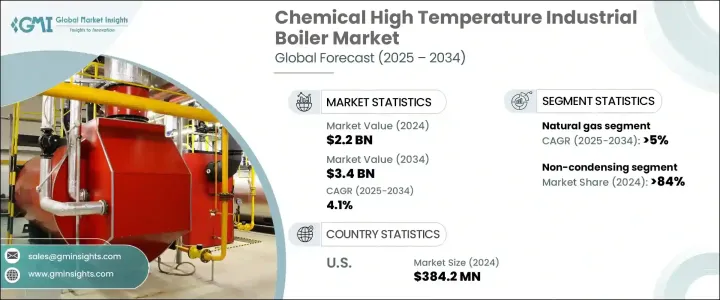
Furthermore, adopting IoT and automation technologies enhances real-time monitoring, maintenance predictions, and performance optimization, making these boilers increasingly efficient. This shift is critical for improving energy efficiency, minimizing downtime, and complying with strict emissions standards. Retrofitting existing boilers with advanced technologies is becoming common among chemical plants, extending boiler lifespans and ensuring compliance with updated regulations. However, global trade disruptions, particularly tariffs on imported components during the Trump presidency, could impact international trade dynamics and operational costs, creating a shift toward domestic manufacturing in the long term.
| Market Scope | |
|---|---|
| Start Year | 2024 |
| Forecast Year | 2025-2034 |
| Start Value | $2.2 Billion |
| Forecast Value | $3.4 Billion |
| CAGR | 4.1% |
The natural gas-powered segment of the chemical high-temperature industrial boiler market is poised for significant growth, with an anticipated CAGR of 5% by 2034 fueled by the continuous expansion of natural gas infrastructure and a heightened focus on energy security across industries. The increasing demand for cleaner energy sources, natural gas is considered more environmentally friendly than coal or oil, further supports this market shift. Additionally, natural gas boilers offer several advantages, including lower emissions and better fuel efficiency, making them an attractive choice for industries aiming to comply with stricter environmental regulations.
The condensing boilers segment will grow at a 4% CAGR by 2034. These boilers are becoming increasingly popular due to their superior energy efficiency. Condensing technology enables the capture and reuse of heat from exhaust gases, which not only reduces energy consumption but lowers greenhouse gas emissions. With growing environmental concerns and the push for greener technologies, industries are adopting condensing boilers to comply with more stringent emission control standards and to reduce operational costs.
United States Chemical High Temperature Industrial Boiler Market was valued at USD 384.2 million by 2024 attributed to the ongoing efforts toward modernizing existing infrastructure and replacing outdated boiler systems. The U.S. market has been supported by new and revised regulations concerning energy efficiency and emission controls, which have prompted chemical plants and other industrial operators to invest in advanced boiler technologies. The government's increasing focus on sustainability and the need for businesses to meet environmental standards are key drivers of this growth.
Companies operating in this market include Babcock & Wilcox Enterprises, Bharat Heavy Electricals, Clayton Industries, Cleaver-Brooks, Cochran, Doosan Heavy Industries & Construction, FERROLI, Fonderie Sime, FONDITAL, Forbes Marshall, GE Vernova, Groupe Atlantic, Hoval, Hurst Boiler and Welding, IHI Corporation, John Cockerill, John Wood Group, Mitsubishi Heavy Industries, Miura America, Rentech Boilers, Robert Bosch, Siemens, Sofinter, The Fulton Companies, Thermax, Victory Energy Operations, Viessmann, and Walchandnagar Industries. Key strategies in the chemical high-temperature industrial boiler market include extensive R&D investment to integrate innovative technologies, such as IoT and AI, which improve operational performance and reduce maintenance costs. Additionally, companies are focusing on retrofitting older units with energy-efficient solutions, ensuring compliance with stricter environmental and emissions standards.
Table of Contents
Chapter 1 Methodology & Scope
- 1.1 Research design
- 1.2 Market estimates & forecast parameters
- 1.3 Forecast calculation
- 1.4 Data sources
- 1.4.1 Primary
- 1.4.2 Secondary
- 1.4.2.1 Paid
- 1.4.2.2 Public
- 1.5 Market definitions
Chapter 2 Executive Summary
- 2.1 Industry synopsis, 2021 - 2034
Chapter 3 Industry Insights
- 3.1 Industry ecosystem analysis
- 3.2 Trump administration tariffs analysis
- 3.2.1 Impact on trade
- 3.2.1.1 Trade volume disruptions
- 3.2.1.2 Retaliatory measures
- 3.2.2 Impact on the industry
- 3.2.2.1 Supply-side impact (raw materials)
- 3.2.2.1.1 Price volatility in key materials
- 3.2.2.1.2 Supply chain restructuring
- 3.2.2.1.3 Production cost implications
- 3.2.2.2 Demand-side impact (selling price)
- 3.2.2.2.1 Price transmission to end markets
- 3.2.2.2.2 Market share dynamics
- 3.2.2.2.3 Consumer response patterns
- 3.2.2.1 Supply-side impact (raw materials)
- 3.2.3 Key companies impacted
- 3.2.4 Strategic industry responses
- 3.2.4.1 Supply chain reconfiguration
- 3.2.4.2 Pricing and product strategies
- 3.2.4.3 Policy engagement
- 3.2.5 Outlook and future considerations
- 3.2.1 Impact on trade
- 3.3 Regulatory landscape
- 3.4 Industry impact forces
- 3.4.1 Growth drivers
- 3.4.2 Industry pitfalls & challenges
- 3.5 Growth potential analysis
- 3.6 Porter's analysis
- 3.6.1 Bargaining power of suppliers
- 3.6.2 Bargaining power of buyers
- 3.6.3 Threat of new entrants
- 3.6.4 Threat of substitutes
- 3.7 PESTEL analysis
Chapter 4 Competitive Landscape, 2025
- 4.1 Introduction
- 4.2 Company market share analysis, 2024
- 4.3 Strategic dashboard
- 4.4 Strategic initiatives
- 4.5 Competitive benchmarking
- 4.6 Innovation & sustainability landscape
Chapter 5 Market Size and Forecast, By Temperature, 2021 - 2034 (USD Million, MMBTU/hr & Units)
- 5.1 Key trends
- 5.2 180°F - 200°F
- 5.3 > 200°F - 220°F
- 5.4 > 220°F - 240°F
- 5.5 > 240°F
Chapter 6 Market Size and Forecast, By Product, 2021 - 2034 (USD Million, MMBTU/hr & Units)
- 6.1 Key trends
- 6.2 Fire-tube
- 6.3 Water-tube
Chapter 7 Market Size and Forecast, By Capacity, 2021 - 2034 (USD Million, MMBTU/hr & Units)
- 7.1 Key trends
- 7.2 < 10 MMBTU/hr
- 7.3 10 - 25 MMBTU/hr
- 7.4 25 - 50 MMBTU/hr
- 7.5 50 - 75 MMBTU/hr
- 7.6 75 - 100 MMBTU/hr
- 7.7 100 - 175 MMBTU/hr
- 7.8 175 - 250 MMBTU/hr
- 7.9 > 250 MMBTU/hr
Chapter 8 Market Size and Forecast, By Fuel, 2021 - 2034 (USD Million, MMBTU/hr & Units)
- 8.1 Key trends
- 8.2 Natural gas
- 8.3 Oil
- 8.4 Coal
- 8.5 Others
Chapter 9 Market Size and Forecast, By Technology, 2021 - 2034 (USD Million, MMBTU/hr & Units)
- 9.1 Key trends
- 9.2 Condensing
- 9.3 Non-condensing
Chapter 10 Market Size and Forecast, By Region, 2021 - 2034 (USD Million, MMBTU/hr & Units)
- 10.1 Key trends
- 10.2 North America
- 10.2.1 U.S.
- 10.2.2 Canada
- 10.2.3 Mexico
- 10.3 Europe
- 10.3.1 France
- 10.3.2 UK
- 10.3.3 Poland
- 10.3.4 Italy
- 10.3.5 Spain
- 10.3.6 Austria
- 10.3.7 Germany
- 10.3.8 Sweden
- 10.3.9 Russia
- 10.4 Asia Pacific
- 10.4.1 China
- 10.4.2 India
- 10.4.3 Philippines
- 10.4.4 Japan
- 10.4.5 South Korea
- 10.4.6 Australia
- 10.4.7 Indonesia
- 10.5 Middle East & Africa
- 10.5.1 Saudi Arabia
- 10.5.2 Iran
- 10.5.3 UAE
- 10.5.4 Nigeria
- 10.5.5 South Africa
- 10.6 Latin America
- 10.6.1 Argentina
- 10.6.2 Chile
- 10.6.3 Brazil
Chapter 11 Company Profiles
- 11.1 Babcock and Wilcox Enterprises
- 11.2 Bharat Heavy Electricals
- 11.3 Clayton Industries
- 11.4 Cleaver-Brooks
- 11.5 Cochran
- 11.6 Doosan Heavy Industries & Construction
- 11.7 FERROLI
- 11.8 Fonderie Sime
- 11.9 FONDITAL
- 11.10 Forbes Marshall
- 11.11 GE Vernova
- 11.12 Groupe Atlantic
- 11.13 Hoval
- 11.14 Hurst Boiler and Welding
- 11.15 IHI Corporation
- 11.16 John Cockerill
- 11.17 John Wood Group
- 11.18 Mitsubishi Heavy Industries
- 11.19 Miura America
- 11.20 Rentech Boilers
- 11.21 Robert Bosch
- 11.22 Siemens
- 11.23 Sofinter
- 11.24 The Fulton Companies
- 11.25 Thermax
- 11.26 Victory Energy Operations
- 11.27 Viessmann
- 11.28 Walchandnagar Industries