|
시장보고서
상품코드
1782163
고령자 이동 보조 장치 시장 : 시장 기회, 성장 촉진요인, 산업 동향 분석, 예측(2025-2034년)Senior Mobility Aid Devices Market Opportunity, Growth Drivers, Industry Trend Analysis, and Forecast 2025 - 2034 |
||||||

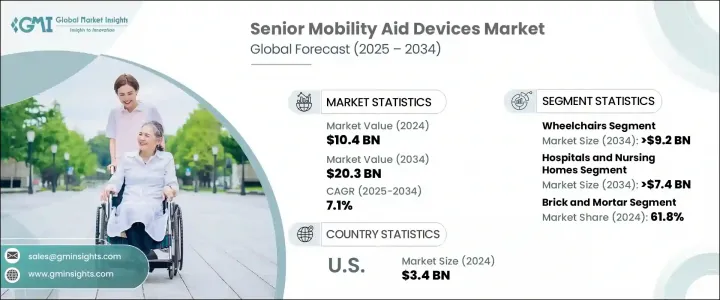
세계의 고령자 이동 보조 장치 시장 규모는 2024년에 104억 달러로 평가되었고, CAGR 7.1%로 성장할 전망이며, 2034년에는 203억 달러에 이를 것으로 예측됩니다.
수요 급증의 배경으로는 노인 인구 증가, 노화에 따른 운동장애 증가, 기술적으로 고급 보조 기구의 채용 증가 등이 있습니다. 만성적인 건강 문제로 인해 이동이 어려워지는 사람들이 늘어남에 따라 보조 기구의 필요성은 점점 높아지고 있습니다. 기업은 안전성, 기능성, 쾌적성을 높이는 혁신으로 대응하고 있습니다. 고령화 사회로의 세계의 시프트에 가세해 이러한 기기에의 접근성이 향상한 것으로, 시설과 가정의 양쪽의 환경에 있어서, 고령자 케어 전략의 중요한 일부가 되고 있습니다.
근골격계 장애, 뇌졸중, 신경 증상 등 이동과 관련된 건강 문제는 평균 수명이 연장됨에 따라 보다 일반적으로 되어 왔습니다. 이러한 장애는, 자립의 제한 및 전도 리스크의 상승으로 이어져, 헬스케어 제공자나 간병인에게 이동 보조구를 권유하도록 재촉하고 있습니다. 인체공학적 구조, 전도 감지, 통합 GPS 시스템 등의 강화된 기능으로 최신 기기의 설계 및 효율은 크게 변화하고 있습니다. 이용자들은 보다 자유로운 움직임과 보다 안전한 내비게이션의 혜택을 받을 수 있게 되었고, 일상 업무를 관리하는 데 있어 삶의 질과 자신감이 직접 향상되고 있습니다.
| 시장 범위 | |
|---|---|
| 시작 연도 | 2024년 |
| 예측 연도 | 2025-2034년 |
| 시작 금액 | 104억 달러 |
| 예측 금액 | 203억 달러 |
| CAGR | 7.1% |
휠체어 분야는 CAGR 7.3%로 2034년까지 92억 달러의 매출이 예상되고 있습니다. 노인들이 장수함에 따라 관절염 및 뇌졸중 후유증 등 만성질환 때문에 이동이 제한되는 사람들이 많아지고 있습니다. 이동 기구, 특히 휠체어는 임상과 재택 간호 모두에서 회복과 일상적인 움직임을 지원합니다. 자택에서의 수술 후 재활이 중시되게 되고, 외래 치료의 인기가 높아짐에 따라, 주택용으로 맞춤화된 모빌리티 솔루션의 수요가 높아지고 있습니다.
병원 및 간병 시설 분야는 2034년까지 74억 달러를 창출해 CAGR 6.9%를 보일 것으로 예측됩니다. 이 시설에서는 수술, 만성 질환 및 장기 장애에서 회복된 노인 환자를 정기적으로 관리하기 위해 신뢰할 수 있는 이동 보조기구가 필수적입니다. 보행기, 이승 장치, 인체 공학에 기반한 휠체어는 이동성을 높이고 전도를 방지하기 위해 일반적으로 사용됩니다. 다양한 지역의 헬스케어 규제에서는 전도 방지 대책을 실시해, 안전한 이동을 확보하는 것이 의료기관에 의무화되고 있기 때문에, 최신으로 유지보수가 잘 된 이동 기구에 대한 투자가 계속되고 있습니다.
미국의 고령자용 이동 보조 장치 2024년 시장 규모는 34억 달러로 평가되었습니다. 이 나라에서는, 메디케어 및 메디케이드 등의 헬스 케어 인프라와 보험 제도가 확립되어 있기 때문에, 고령자에게 있어서는 보조 기구가 보다 친숙한 것이 되고 있습니다. 이러한 상환 제도는 고령자의 경제적 부담을 경감해, 시설과 재택의 양 분야의 성장을 지지하고 있습니다. 병원, 재활 센터, 재택 의료 프로바이더에 의한 의료 기기에 대한 액세스는, 특히 고령자가 자립을 유지할 수 있는 선택사항을 요구하는 가운데, 계속 수요를 촉진하고 있습니다.
이 시장을 적극적으로 형성하고 있는 주요 기업은 LEVO, CAREX, Drive DeVilbiss Healthcare, PERMOBIL, GF Health Products, MEDLINE, MEYRA, nova, PRIDE MOBILITY, Ottobock, INVACARE, SUNRISE MEDICAL, BESCO, Hoveround Mobility, 21st Century SCIENTIFIC 등입니다. 고령자용 이동 보조 장치 시장에서 확고한 지위를 유지하기 위해, 대기업은 보다 인간공학적, 하이테크를 구사한, 유저 친화적인 제품을 제공하기 위한 연구 개발을 우선하고 있습니다. 많은 기업은 GPS 추적, 음성 명령, 전도 경보 등의 스마트 기능을 도입하여 하이테크에 정통한 간병인이나 최종 사용자에게 어필하고 있습니다.
헬스케어 기관 및 노인 간호 시설과의 전략적 파트너십을 통해 대규모 제품을 도입할 수 있습니다. 기업은 또한 제품 설계를 현지화하고 유통 채널을 합리화함으로써 신흥 시장에 진출하고 있습니다. 게다가 기업은 글로벌한 안전 및 품질 기준에 대한 준거에 주력하는 한편, 디지털 플랫폼에 대한 투자를 확대해, 제품에 대한 접근성과 고객 서포트를 향상시키고 있습니다.
목차
제1장 조사 방법 및 범위
제2장 주요 요약
제3장 업계 인사이트
- 생태계 분석
- 업계에 미치는 영향요인
- 성장 촉진요인
- 운동기능장애 증가
- 디바이스 설계에서 기술적 진보
- 고령화 인구 증가
- 제품의 인지도 및 접근성 향상
- 업계의 잠재적 위험 및 과제
- 이동 보조 장치의 고비용
- 시장 기회
- 커스터마이징 및 모듈형 디바이스에 대한 수요 증가
- 재택 고령자 간병로의 이행 확대
- 성장 촉진요인
- 성장 가능성 분석
- 규제 상황
- 미국
- 유럽
- 기술의 상황
- 상환 시나리오
- 가격 분석
- 소비자구매행동분석
- 갭 분석
- Porter's Five Forces 분석
- PESTEL 분석
- 장래 시장 동향
- 밸류체인 분석
제4장 경쟁 구도
- 서문
- 기업 매트릭스 분석
- 기업의 시장 점유율 분석
- 지역별
- 북미
- 유럽
- 아시아태평양
- 지역별
- 주요 시장 기업의 경쟁 분석
- 경쟁 포지셔닝 매트릭스
- 전략 대시보드
- 주요 발전
- 합병 및 인수
- 파트너십 및 협업
- 신제품 발매
- 확장 계획
제5장 시장 추계 및 예측 : 제품 유형별(2021-2034년)
- 주요 동향
- 휠체어
- 수동
- 전동
- 보행 보조구
- 크레인
- 마츠바 지팡이
- 워커
- 이동용 리프트
- 스쿠터
- 로드 스쿠터
- 부츠 스쿠터
- 중형 스쿠터
- 기타 제품 유형
제6장 시장 추계 및 예측 : 최종 용도별(2021-2034년)
- 주요 동향
- 병원과 노인 홈
- 개인
- 간병가 있는 주택
- 기타 용도
제7장 시장 추계 및 예측 : 유통 채널별(2021-2034년)
- 주요 동향
- 점포
- 전자상거래
제8장 시장 추계 및 예측 : 지역별(2021-2034년)
- 주요 동향
- 북미
- 미국
- 캐나다
- 유럽
- 독일
- 영국
- 프랑스
- 스페인
- 이탈리아
- 네덜란드
- 아시아태평양
- 중국
- 일본
- 인도
- 호주
- 한국
- 라틴아메리카
- 브라질
- 멕시코
- 아르헨티나
- 중동 및 아프리카
- 남아프리카
- 사우디아라비아
- 아랍에미리트(UAE)
제9장 기업 프로파일
- BESCO
- 21st Century SCIENTIFIC
- CAREX
- Drive DeVilbiss Healthcare
- GF Health Products
- Hoveround Mobility
- INVACARE
- LEVO
- MEDLINE
- MEYRA
- nova
- ottobock
- peromobil
- PRIDE MOBILITY
- SUNRISE MEDICAL
The Global Senior Mobility Aid Devices Market was valued at USD 10.4 billion in 2024 and is estimated to grow at a CAGR of 7.1% to reach USD 20.3 billion by 2034. The surge in demand is being driven by a growing elderly population, rising cases of age-related mobility issues, and increasing adoption of technologically advanced assistive devices. As more individuals face difficulty with movement due to chronic health problems, the need for supportive devices is becoming more critical. Companies are responding with innovations that enhance safety, functionality, and comfort. The global shift toward aging in place, along with improved accessibility to these devices, has made them a vital part of elder care strategies across both institutional and home-based environments.
Mobility-related health issues such as musculoskeletal disorders, stroke, and neurological conditions are becoming more prevalent as life expectancy rises. These impairments lead to limited independence and a higher risk of falls, prompting healthcare providers and caregivers to recommend mobility aids. Enhanced features like ergonomic construction, fall detection, and integrated GPS systems are transforming the design and efficiency of modern devices. Users now benefit from greater freedom of movement and safer navigation, which directly improves their quality of life and confidence in managing daily tasks.
| Market Scope | |
|---|---|
| Start Year | 2024 |
| Forecast Year | 2025-2034 |
| Start Value | $10.4 Billion |
| Forecast Value | $20.3 Billion |
| CAGR | 7.1% |
The wheelchair segment is expected to generate USD 9.2 billion by 2034 at a CAGR of 7.3%. As seniors live longer, many experience mobility limitations due to chronic diseases such as arthritis and post-stroke conditions. Mobility devices, particularly wheelchairs, support recovery and day-to-day movement both in clinical and home-based care. The increasing emphasis on post-surgical rehabilitation at home and the growing popularity of outpatient therapy have fueled demand for personalized mobility solutions tailored for residential use.
The hospitals and nursing homes segment is projected to generate USD 7.4 billion by 2034, growing at a CAGR of 6.9%. These facilities regularly care for aging patients recovering from surgery, chronic illness, or long-term disability, making reliable mobility aids essential. Walkers, transfer devices, and ergonomic wheelchairs are commonly used to enhance mobility and prevent falls. Healthcare regulations in multiple regions require institutions to implement fall-prevention measures and ensure safe movement, which drives continued investment in up-to-date, well-maintained mobility devices.
United States Senior Mobility Aid Devices Market was valued at USD 3.4 billion in 2024. The country's well-established healthcare infrastructure and insurance systems, including Medicare and Medicaid, make assistive devices more accessible to older adults. These reimbursement programs have eased financial burdens for seniors and have supported growth in both institutional and home-based segments. Access to medical equipment through hospitals, rehab centers, and home health providers continues to fuel demand, especially as seniors seek options that allow them to maintain independence.
Key players actively shaping this market include LEVO, CAREX, Drive DeVilbiss Healthcare, PERMOBIL, GF Health Products, MEDLINE, MEYRA, nova, PRIDE MOBILITY, Ottobock, INVACARE, SUNRISE MEDICAL, BESCO, Hoveround Mobility, and 21st Century SCIENTIFIC. To maintain a strong position in the senior mobility aid devices market, leading firms are prioritizing R&D to deliver more ergonomic, tech-enabled, and user-friendly products. Many are introducing smart features like GPS tracking, voice commands, and fall alerts to appeal to tech-savvy caregivers and end-users.
Strategic partnerships with healthcare institutions and aging care facilities allow for larger product adoption at scale. Companies are also expanding into emerging markets by localizing product design and streamlining distribution channels. Additionally, firms are focusing on compliance with global safety and quality standards while increasing investments in digital platforms to improve product accessibility and customer support.
Table of Contents
Chapter 1 Methodology and Scope
- 1.1 Market scope and definitions
- 1.2 Research design
- 1.2.1 Research approach
- 1.2.2 Data collection methods
- 1.3 Data mining sources
- 1.3.1 Global
- 1.3.2 Regional/country
- 1.4 Base estimates and calculations
- 1.4.1 Base year calculation
- 1.4.2 Key trends for market estimation
- 1.5 Primary research and validation
- 1.5.1 Primary sources
- 1.6 Forecast model
- 1.7 Research assumptions and limitations
Chapter 2 Executive Summary
- 2.1 Industry 3600 synopsis
- 2.2 Key market trends
- 2.2.1 Regional trends
- 2.2.2 Product type trends
- 2.2.3 End use trends
- 2.2.4 Distribution channel trends
- 2.3 CXO perspectives: Strategic imperatives
- 2.3.1 Key decision points for industry executives
- 2.3.2 Critical success factors for market players
Chapter 3 Industry Insights
- 3.1 Industry ecosystem analysis
- 3.2 Industry impact forces
- 3.2.1 Growth drivers
- 3.2.1.1 Increase in mobility impairment disorders
- 3.2.1.2 Technological advancements in device design
- 3.2.1.3 Growing geriatric population
- 3.2.1.4 Growing awareness and accessibility of products
- 3.2.2 Industry pitfalls and challenges
- 3.2.2.1 High cost of mobility aid devices
- 3.2.3 Market opportunities
- 3.2.3.1 Surging demand for customization and modular devices
- 3.2.3.2 Growing shift toward home-based elderly care
- 3.2.1 Growth drivers
- 3.3 Growth potential analysis
- 3.4 Regulatory landscape
- 3.4.1 U.S.
- 3.4.2 Europe
- 3.5 Technology landscape
- 3.6 Reimbursement scenarios
- 3.7 Pricing analysis
- 3.8 Consumer buying behavior analysis
- 3.9 Gap analysis
- 3.10 Porter's analysis
- 3.11 PESTEL analysis
- 3.12 Future market trends
- 3.13 Value chain analysis
Chapter 4 Competitive Landscape, 2024
- 4.1 Introduction
- 4.2 Company matrix analysis
- 4.3 Company market share analysis
- 4.3.1 By Region
- 4.3.1.1 North America
- 4.3.1.2 Europe
- 4.3.1.3 Asia Pacific
- 4.3.1 By Region
- 4.4 Competitive analysis of major market players
- 4.5 Competitive positioning matrix
- 4.6 Strategy dashboard
- 4.7 Key developments
- 4.7.1 Mergers & acquisitions
- 4.7.2 Partnerships & collaborations
- 4.7.3 New product launches
- 4.7.4 Expansion plans
Chapter 5 Market Estimates and Forecast, By Product Type, 2021 - 2034 ($ Mn)
- 5.1 Key trends
- 5.2 Wheelchairs
- 5.2.1 Manual
- 5.2.2 Power
- 5.3 Walking aids
- 5.3.1 Crane
- 5.3.2 Crutches
- 5.3.3 Walker
- 5.3.4 Mobility lifts
- 5.4 Scooters
- 5.4.1 Road scooter
- 5.4.2 Boot scooter
- 5.4.3 Midsize scooter
- 5.5 Other product types
Chapter 6 Market Estimates and Forecast, By End Use, 2021 - 2034 ($ Mn)
- 6.1 Key trends
- 6.2 Hospitals and nursing homes
- 6.3 Individual
- 6.4 Assisted living
- 6.5 Other end use
Chapter 7 Market Estimates and Forecast, By Distribution Channel, 2021 - 2034 ($ Mn)
- 7.1 Key trends
- 7.2 Brick and mortar
- 7.3 E-commerce
Chapter 8 Market Estimates and Forecast, By Region, 2021 - 2034 ($ Mn)
- 8.1 Key trends
- 8.2 North America
- 8.2.1 U.S.
- 8.2.2 Canada
- 8.3 Europe
- 8.3.1 Germany
- 8.3.2 UK
- 8.3.3 France
- 8.3.4 Spain
- 8.3.5 Italy
- 8.3.6 Netherlands
- 8.4 Asia Pacific
- 8.4.1 China
- 8.4.2 Japan
- 8.4.3 India
- 8.4.4 Australia
- 8.4.5 South Korea
- 8.5 Latin America
- 8.5.1 Brazil
- 8.5.2 Mexico
- 8.5.3 Argentina
- 8.6 Middle East and Africa
- 8.6.1 South Africa
- 8.6.2 Saudi Arabia
- 8.6.3 UAE
Chapter 9 Company Profiles
- 9.1 BESCO
- 9.2 21st Century SCIENTIFIC
- 9.3 CAREX
- 9.4 Drive DeVilbiss Healthcare
- 9.5 GF Health Products
- 9.6 Hoveround Mobility
- 9.7 INVACARE
- 9.8 LEVO
- 9.9 MEDLINE
- 9.10 MEYRA
- 9.11 nova
- 9.12 ottobock
- 9.13 peromobil
- 9.14 PRIDE MOBILITY
- 9.15 SUNRISE MEDICAL