|
시장보고서
상품코드
1801800
특수 채소 종자 시장 : 기회, 성장 촉진요인, 산업 동향 분석 및 예측(2025-2034년)Specialty Vegetable Seeds Market Opportunity, Growth Drivers, Industry Trend Analysis, and Forecast 2025 - 2034 |
||||||

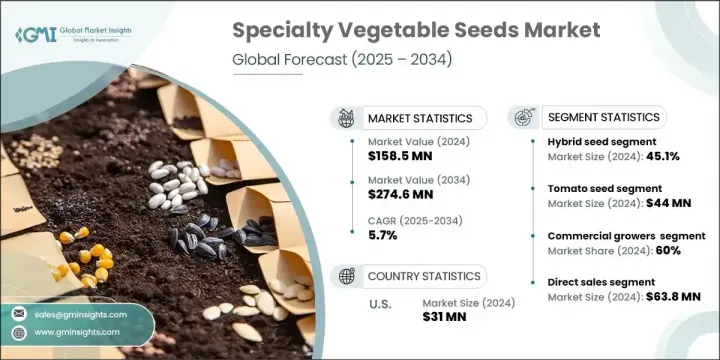
세계의 특수 채소 종자 시장은 2024년에 1억 5,850만 달러로 평가되어 CAGR 5.7%로 성장할 전망이며 2034년에는 2억 7,460만 달러에 이를 것으로 예측됩니다.
이러한 상승 동향은 식습관 변화와 영양 및 웰빙에 대한 관심 증가로 인해 건강하고 유기농이며 특수한 채소에 대한 소비자 수요가 증가함에 따라 촉진되고 있습니다. 특수 종자는 하이브리드, 유기농, 전통 품종, 고수확 품종 등 다양한 유형으로 제공되며, 모두 특정 영양적 또는 요리적 요구를 충족시키기 위해 개발되었습니다. 이러한 종자는 지속 가능한 농업을 지원하면서도 우수한 맛, 품질 및 영양적 이점을 제공할 수 있다는 점에서 점점 더 선호되고 있습니다.
식품 선호도가 변화함에 따라 재배자들은 소비자 기대에 부응하기 위해 이러한 특수 종자 품종으로 전환하고 있습니다. 친환경 농업, 도시 정원 가꾸기, 고부가가치 작물의 인기가 높아지면서 시장도 혜택을 보고 있습니다. 지역 농업 운영이든 대규모 상업적 사업이든, 유기농, 프리미엄, 비유전자변형(Non-GMO) 농산물로의 전환은 전 세계 농업에서 특수 채소 종자의 역할을 지속적으로 높이고 있습니다. 이러한 변화로 인해 해당 부문은 최근 친환경 농업 관행과 지역을 초월한 건강 중심 식품 생산 발전에 핵심 기여자가 되었습니다.
| 시장 범위 | |
|---|---|
| 시작 연도 | 2024년 |
| 예측 연도 | 2025-2034년 |
| 시작 금액 | 1억 5,850만 달러 |
| 예측 금액 | 2억 7,460만 달러 |
| CAGR | 5.7% |
토마토 종자 분야는 2024년 4,400만 달러를 차지하며, 2034년까지 연평균 성장률(CAGR) 5.4%를 보일 것으로 예측됩니다. 토마토 종자는 유기농, 전통 품종, 지속 가능한 채소 생산에 주력하는 상업적 재배자와 도시 농부 모두로부터 높은 수요를 반영하여 특수 종자 부문에서 선두 위치를 차지하고 있습니다. 풍미 있고 화학 물질이 없는 농산물에 대한 소비자의 강한 관심으로 인해 토마토 종자는 특수 채소 부문에서 가장 빠르게 성장하는 하위 카테고리 중 하나가 되었습니다.
상업 재배자 부문은 2024년 60%의 점유율을 기록했으며, 2034년까지 연평균 5.7%의 성장률을 보일 것으로 전망됩니다. 이 재배자들은 영양가 높고 이국적인 채소에 대한 수요 증가를 충족시키기 위해 프리미엄 및 고급 종자 품종을 적극적으로 도입하며 시장 급성장의 핵심 역할을 하고 있습니다. 대규모 생산에 대한 전략적 집중과 최신기술 농업 기술의 도입이 결합되어 특수 종자 분야의 전반적인 성장세를 지속적으로 촉진하고 있습니다.
미국의 특수 채소 종자 시장은 2024년에 3,100만 달러를 창출해 2034년까지 연평균 성장률(CAGR) 4.7%를 보일 것으로 예측됩니다. 미국 시장은 비유전자변형(non-GMO), 전통 품종(heirloom), 독특한 채소 품종에 대한 관심 증가로 꾸준한 확장을 보여왔습니다. 미국과 캐나다 전역에서 가정용 정원 가꾸기, 도시 농업, 유기농 식품 소비 증가로 프리미엄 종자 옵션에 대한 수요가 더욱 높아졌습니다. 소비자들이 지속 가능한 식품 원에 및 向함에 따라 종자 제조업체들은 더 다양하고 전문화된 제품을 개발하고 있습니다. 지역적이고 친환경적인 식품 생산에 대한 이러한 증가하는 선호도는 해당 지역 전반의 수요를 지속적으로 형성하고 있습니다.
특수 채소 종자 시장의 주요 기업은 자사의 존재감을 높이고 경쟁 우위에 서기 위해 기술 혁신, 지속가능성, 시장의 다양화 전략을 도입하고 있습니다.
많은 기업들이 고수확, 병해 저항성, 기후 적응성을 갖춘 종자 품종 개발에 주력하는 육종 프로그램에 집중하고 있습니다. 또한 발아율과 식물 건강 증진을 위한 고급 생명공학 및 종자 처리 기술에도 투자하고 있습니다. 또한 기업들은 유통망을 확대되고 지역별 파트너십을 구축하여 신규 시장 진출을 도모하고 있습니다. 지역별 농업 수요에 맞춘 종자 제품 맞춤화와 함께 강력한 사후 지원 및 재배자 교육 프로그램을 통해, 이들 기업은 진화하는 특수 종자 미래에 입지를 공고히 하고 있습니다.
목차
제1장 조사 방법
제2장 주요 요약
제3장 업계 인사이트
- 생태계 분석
- 공급자의 상황
- 이익률
- 각 단계에서의 부가가치
- 밸류체인에 영향을 주는 요인
- 혁신
- 업계에 미치는 영향요인
- 성장 촉진요인
- 업계의 잠재적 위험 및 과제
- 시장 기회
- 성장 가능성 분석
- 규제 상황
- 북미
- 유럽
- 아시아태평양
- 라틴아메리카
- 중동 및 아프리카
- Porter's Five Forces 분석
- PESTEL 분석
- 가격 동향
- 지역별
- 종자 유형별
- 장래 시장 동향
- 기술과 혁신 미래
- 현재의 기술 동향
- 신흥기술
- 특허 상황
- 무역 통계(HS코드)
(참고 : 무역 통계는 주요 국가에서만 제공됩니다)
- 주요 수입국
- 주요 수출국
- 지속가능성과 환경 측면
- 지속가능한 관행
- 폐기물 감축 전략
- 생산 에너지 효율
- 친환경 이니셔티브
제4장 경쟁 구도
- 소개
- 기업의 시장 점유율 분석
- 지역별
- 북미
- 유럽
- 아시아태평양
- 라틴아메리카
- 중동 및 아프리카
- 지역별
- 기업 매트릭스 분석
- 주요 시장 기업의 경쟁 분석
- 경쟁 포지셔닝 매트릭스
- 주요 발전
- 합병과 인수
- 파트너십 및 협업
- 신제품 발매
- 확장 계획
제5장 시장 추계 및 예측 : 종자 유형별(2021-2034년)
- 주요 동향
- 하이브리드 종자
- 잡종 종자
- 유기농 종자
- 유전자 변형(GM) 종자
제6장 시장 추계 및 예측 : 작물 유형별(2021-2034년)
- 주요 경향
- 토마토 종자
- 후추 종자
- 잎채소 종자
- 상추 및 샐러드용 잎채소 품종
- 시금치 및 케일
- 마이크로그린 및 베이비 리프 카테고리
- 박과 종자
- 오이 품종
- 호박 및 주키니
- 멜론 및 수박
- 십자화과 종자
- 양배추 및 콜리플라워
- 브로콜리와 브뤼셀 콩나물
- 기타 특수 채소
- 가지
- 허브 및 향신료 종자
- 뿌리 채소
제7장 시장 추계 및 예측 : 최종 용도별(2021-2034년)
- 주요 동향
- 상업 재배자
- 대규모 농업 경영
- 온실과 시설 재배
- 가정채원
- 주택 원예 동향
- 도시 및 컨테이너 원예
- 종자 팩 및 소량 판매
- 조사교육기관
제8장 시장 추계 및 예측 : 유통 채널별(2021-2034년)
- 주요 동향
- 직접 판매
- 소매 채널
- 원예 센터 및 묘상
- 농업 용품점
- 온라인 판매
- 전자상거래 플랫폼 성장
- 소비자 직접 판매 모델
- 협동조합과 협회
제9장 시장 추계 및 예측 : 지역별(2021-2034년)
- 주요 동향
- 북미
- 미국
- 캐나다
- 유럽
- 독일
- 영국
- 프랑스
- 이탈리아
- 스페인
- 기타 유럽
- 아시아태평양
- 중국
- 인도
- 일본
- 호주
- 한국
- 기타 아시아태평양
- 라틴아메리카
- 브라질
- 멕시코
- 아르헨티나
- 기타 라틴아메리카
- 중동 및 아프리카
- 사우디아라비아
- 남아프리카
- 아랍에미리트(UAE)
- 기타 중동 및 아프리카
제10장 기업 프로파일
- Bayer AG(Crop Science Division)
- Syngenta AG
- Corteva Agriscience
- BASF SE(Agricultural Solutions)
- Limagrain Group
- Sakata Seed Corporation
- Takii &Co., Ltd.
- Johnny's Selected Seeds
- Stokes Seeds Ltd.
- Territorial Seed Company
- Burpee Seeds and Plants
- Semillas Fito SA
The Global Specialty Vegetable Seeds Market was valued at USD 158.5 million in 2024 and is estimated to grow at a CAGR of 5.7% to reach USD 274.6 million by 2034. This upward trend is driven by rising consumer demand for healthier, organic, and specialty vegetables, fueled by shifts in dietary preferences and a focus on nutrition and wellness. Specialty seeds are offered in a variety of types, including hybrid, organic, heirloom, and high-yielding varieties, all developed to meet specific nutritional or culinary demands. These seeds are increasingly favored for their ability to support sustainable agriculture while delivering superior taste, quality, and nutritional benefits.
As food preferences evolve, growers are turning to these specialty seed varieties to align with consumer expectations. The market is also benefiting from the growing popularity of eco-friendly farming, urban gardening, and high-value crops. Whether in local farming operations or larger-scale commercial ventures, the shift toward organic, premium, and non-GMO produce continues to elevate the role of specialty vegetable seeds in global agriculture. This shift has made the segment a key contributor to modern green farming practices and the advancement of health-conscious food production across regions.
| Market Scope | |
|---|---|
| Start Year | 2024 |
| Forecast Year | 2025-2034 |
| Start Value | $158.5 million |
| Forecast Value | $274.6 million |
| CAGR | 5.7% |
The tomato seeds segment accounted for USD 44 million in 2024 and is forecasted to grow at a 5.4% CAGR through 2034. They hold the top position in the specialty seed category, reflecting high demand from both commercial and urban growers focused on producing organic, heirloom, and sustainable vegetables. This strong consumer interest in flavorful and chemical-free produce has made tomato seeds one of the fastest-growing subcategories in the specialty vegetable segment.
The commercial growers segment held a 60% share in 2024 and is projected to grow at a CAGR of 5.7% through 2034. These growers are key to the rapid expansion of the market, actively adopting premium and advanced seed varieties to fulfill growing demand for nutrient-rich and exotic vegetables. Their strategic focus on large-scale production, combined with the implementation of cutting-edge agricultural techniques, continues to drive the overall momentum in the specialty seed space.
United States Specialty Vegetable Seeds Market generated USD 31 million in 2024 and is anticipated to grow at a CAGR of 4.7% through 2034. The U.S. market has seen steady expansion due to increased interest in non-GMO, heirloom, and distinctive vegetable varieties. The rise in home-based gardening, urban farming, and organic food consumption across both the U.S. and Canada has intensified the need for premium seed options. Consumers are now leaning toward sustainable food sources, prompting seed manufacturers to develop broader and more specialized offerings. This growing inclination toward local, eco-friendly food production continues to shape demand across the region.
Notable companies actively involved in the Specialty Vegetable Seeds Market include Corteva Agriscience, Sakata Seed Corporation, BASF SE (Agricultural Solutions), Territorial Seed Company, Syngenta AG, Johnny's Selected Seeds, Limagrain Group, Stokes Seeds Ltd., Semillas Fito S.A., Takii & Co., Ltd., Bayer AG (Crop Science Division), and Burpee Seeds and Plants. To enhance their presence and gain a competitive edge, key players in the specialty vegetable seeds market are embracing innovation, sustainability, and diversification strategies.
Many companies are focusing on breeding programs that develop high-yield, disease-resistant, and climate-adaptive seed varieties. They're also investing in advanced biotechnology and seed treatment techniques to improve germination and plant health. Additionally, firms are expanding their distribution networks and forming regional partnerships to penetrate new markets. Customization of seed offerings to meet local agricultural needs, along with strong after-sales support and educational programs for growers, further helps these companies to solidify their foothold in the evolving specialty seed landscape.
Table of Contents
Chapter 1 Methodology
- 1.1 Market scope and definition
- 1.2 Research design
- 1.2.1 Research approach
- 1.2.2 Data collection methods
- 1.3 Data mining sources
- 1.3.1 Global
- 1.3.2 Regional/Country
- 1.4 Base estimates and calculations
- 1.4.1 Base year calculation
- 1.4.2 Key trends for market estimation
- 1.5 Primary research and validation
- 1.5.1 Primary sources
- 1.6 Forecast model
- 1.7 Research assumptions and limitations
Chapter 2 Executive Summary
- 2.1 Industry 3600 synopsis
- 2.2 Key market trends
- 2.2.1 Regional
- 2.2.2 Seed type
- 2.2.3 Crop type
- 2.2.4 End use
- 2.2.5 Distribution channel
- 2.3 TAM Analysis, 2025-2034
- 2.4 CXO perspectives: Strategic imperatives
- 2.4.1 Executive decision points
- 2.4.2 Critical success factors
- 2.5 Future Outlook and Strategic Recommendations
Chapter 3 Industry Insights
- 3.1 Industry ecosystem analysis
- 3.1.1 Supplier landscape
- 3.1.2 Profit margin
- 3.1.3 Value addition at each stage
- 3.1.4 Factor affecting the value chain
- 3.1.5 Disruptions
- 3.2 Industry impact forces
- 3.2.1 Growth drivers
- 3.2.2 Industry pitfalls and challenges
- 3.2.3 Market opportunities
- 3.3 Growth potential analysis
- 3.4 Regulatory landscape
- 3.4.1 North America
- 3.4.2 Europe
- 3.4.3 Asia Pacific
- 3.4.4 Latin America
- 3.4.5 Middle East & Africa
- 3.5 Porter’s analysis
- 3.6 PESTEL analysis
- 3.7 Price trends
- 3.7.1 By region
- 3.7.2 By seed type
- 3.8 Future market trends
- 3.9 Technology and Innovation landscape
- 3.9.1 Current technological trends
- 3.9.2 Emerging technologies
- 3.10 Patent Landscape
- 3.11 Trade statistics (HS code)
( Note: the trade statistics will be provided for key countries only)
- 3.11.1 Major importing countries
- 3.11.2 Major exporting countries
- 3.12 Sustainability and environmental aspects
- 3.12.1 Sustainable practices
- 3.12.2 Waste reduction strategies
- 3.12.3 Energy efficiency in production
- 3.12.4 Eco-friendly initiatives
Chapter 4 Competitive Landscape, 2024
- 4.1 Introduction
- 4.2 Company market share analysis
- 4.2.1 By region
- 4.2.1.1 North America
- 4.2.1.2 Europe
- 4.2.1.3 Asia Pacific
- 4.2.1.4 LATAM
- 4.2.1.5 MEA
- 4.2.1 By region
- 4.3 Company matrix analysis
- 4.4 Competitive analysis of major market players
- 4.5 Competitive positioning matrix
- 4.6 Key developments
- 4.6.1 Mergers & acquisitions
- 4.6.2 Partnerships & collaborations
- 4.6.3 New product launches
- 4.6.4 Expansion plans
Chapter 5 Market Estimates & Forecast, By Seed Type, 2021-2034 (USD Million) (Kilo Tons)
- 5.1 Key trends
- 5.2 Hybrid seeds
- 5.3 Open-pollinated seeds
- 5.4 Organic seeds
- 5.5 Genetically modified (GM) seeds
Chapter 6 Market Estimates & Forecast, By Crop Type, 2021-2034 (USD Million) (Kilo Tons)
- 6.1 Key trend
- 6.2 Tomato seeds
- 6.3 Pepper seeds
- 6.4 Leafy greens seeds
- 6.4.1 Lettuce and salad green varieties
- 6.4.2 Spinach and kale
- 6.4.3 Microgreens and baby leaf categories
- 6.5 Cucurbit seeds
- 6.5.1 Cucumber varieties
- 6.5.2 Squash and zucchini
- 6.5.3 Melon and watermelon
- 6.6 Brassica seeds
- 6.6.1 Cabbage and cauliflower
- 6.6.2 Broccoli and brussels sprouts
- 6.7 Other specialty vegetables
- 6.7.1 Eggplant and aubergine
- 6.7.2 Herb and aromatic plant seeds
- 6.7.3 Root vegetable specialties
Chapter 7 Market Estimates & Forecast, By End Use, 2021-2034 (USD Million) (Kilo Tons)
- 7.1 Key trends
- 7.2 Commercial growers
- 7.2.1 Large-scale agricultural operations
- 7.2.2 Greenhouse and protected cultivation
- 7.3 Home gardeners
- 7.3.1 Residential gardening trends
- 7.3.2 Urban and container gardening
- 7.3.3 Seed packet and small quantity sales
- 7.4 Research and educational institutions
Chapter 8 Market Estimates & Forecast, By Distribution Channel, 2021-2034 (USD Million) (Kilo Tons)
- 8.1 Key trends
- 8.2 Direct sales
- 8.3 Retail channels
- 8.3.1 Garden centers and nurseries
- 8.3.2 Agricultural supply stores
- 8.4 Online sales
- 8.4.1 E-commerce platform growth
- 8.4.2 Direct-to-consumer models
- 8.5 Cooperatives and associations
Chapter 9 Market Estimates & Forecast, By Region, 2021-2034 (USD Million) (Kilo Tons)
- 9.1 Key trends
- 9.2 North America
- 9.2.1 U.S.
- 9.2.2 Canada
- 9.3 Europe
- 9.3.1 Germany
- 9.3.2 UK
- 9.3.3 France
- 9.3.4 Italy
- 9.3.5 Spain
- 9.3.6 Rest of Europe
- 9.4 Asia Pacific
- 9.4.1 China
- 9.4.2 India
- 9.4.3 Japan
- 9.4.4 Australia
- 9.4.5 South Korea
- 9.4.6 Rest of Asia Pacific
- 9.5 Latin America
- 9.5.1 Brazil
- 9.5.2 Mexico
- 9.5.3 Argentina
- 9.5.4 Rest of Latin America
- 9.6 Middle East & Africa
- 9.6.1 Saudi Arabia
- 9.6.2 South Africa
- 9.6.3 UAE
- 9.6.4 Rest of Middle East & Africa
Chapter 10 Company Profiles
- 10.1 Bayer AG (Crop Science Division)
- 10.2 Syngenta AG
- 10.3 Corteva Agriscience
- 10.4 BASF SE (Agricultural Solutions)
- 10.5 Limagrain Group
- 10.6 Sakata Seed Corporation
- 10.7 Takii & Co., Ltd.
- 10.8 Johnny's Selected Seeds
- 10.9 Stokes Seeds Ltd.
- 10.10 Territorial Seed Company
- 10.11 Burpee Seeds and Plants
- 10.12 Semillas Fito S.A.